
News
Refugees In Libya condemns Eastern Libya decision to ban entry of nationals from Sudan, Eritrea, Ethiopia, Somalia

A refugee rights organisation, Refugees In Libya, has condemned the decision by authorities in eastern Libya to ban the entry of nationals from Sudan, Eritrea, Ethiopia and Somalia, while ordering the deportation of those considered to be in an “irregular situation.”
In a statement issued on Wednesday, the organisation described the move as part of a wider campaign targeting migrants, refugees and asylum seekers across Libya.
The group alleged that, in recent months, thousands of Black Africans have been arbitrarily detained, subjected to forced labour, abandoned in the desert, forcibly deported or returned to detention camps because of their nationality, race or migration status.
According to the organisation, the policy promotes racism, encourages collective punishment and denies people fleeing conflict and persecution their right to seek safety.
Refugees in Libya also accused the European Union of contributing to the worsening situation through its continued engagement with authorities in eastern Libya.
The statement claimed that the EU provides funding, political recognition, equipment and legitimacy to forces linked to eastern Libyan commander Khalifa Haftar despite allegations of serious human rights violations and crimes against humanity.
The group further criticised the proposed Rescue Coordination Centre in eastern Libya, describing it as an “Abduction Coordination Centre.” It alleged that security forces involved in migration control have repeatedly intercepted migrants at sea and subjected them to arbitrary detention, torture, rape, forced labour, extortion, enforced disappearances and racial violence.
The organisation argued that responsibility for abuses against migrants should not rest solely with Libyan authorities, insisting that the European Union and its member states share accountability because of their long-standing financial, political and operational support for migration policies in Libya.
It called on eastern Libyan authorities to immediately reverse the entry ban, end what it described as campaigns targeting Black migrants and refugees, and guarantee the rights and dignity of all people regardless of nationality or migration status.
The group also urged the European Union to halt all political, financial and operational support for policies and actors it said were responsible for ongoing human rights abuses against migrants and refugees in Libya.




News
Jeff Crisp s’interroge sur la représentation des migrants à la Conférence de Vienne sur les migrations
L’ancien responsable de la politique et de l’évaluation au HCR, Jeff Crisp, s’est interrogé sur la représentation des migrants à la prochaine Conférence de Vienne sur les migrations 2026, demandant combien de migrants y participeront par rapport aux responsables chargés des affaires intérieures, de la sécurité et du contrôle des frontières.
Crisp a soulevé cette question en réaction à une publication du Centre international pour le développement des politiques migratoires (ICMPD), annonçant l’ouverture des inscriptions pour suivre en ligne sa conférence annuelle phare.
« Combien de migrants seront présents à cette conférence ? Et combien de responsables des affaires intérieures, de la sécurité et du contrôle des frontières ? », a écrit Crisp.
L’ICMPD a indiqué que la 11e édition de la Conférence de Vienne sur les migrations se tiendra les 16 et 17 novembre et réunira des décideurs de haut niveau, des praticiens et des experts d’Europe et d’ailleurs pour un échange de haut niveau sur les politiques migratoires.
Dans sa publication, l’organisation n’a pas précisé combien de migrants ou de représentants d’organisations dirigées par des migrants participeraient à la conférence.
L’intervention de Crisp attire l’attention sur la composition des forums consacrés aux politiques migratoires, notamment sur la mesure dans laquelle les personnes ayant une expérience directe de la migration y sont représentées aux côtés des responsables gouvernementaux et des professionnels des politiques migratoires.
La Conférence de Vienne sur les migrations est organisée chaque année par l’ICMPD, une organisation internationale qui travaille avec les gouvernements et d’autres parties prenantes sur les politiques migratoires et de mobilité.
La conférence de 2026 doit se tenir à Vienne, avec un accès en ligne disponible pour les participants inscrits.
Former UNHCR policy chief Jeff Crisp has questioned the representation of migrants at the forthcoming Vienna Migration Conference 2026, asking how many migrants will participate compared with officials responsible for interior affairs, security and border control.
Crisp raised the question in response to a post by the International Centre for Migration Policy Development (ICMPD) announcing that registration had opened for the livestream of its annual flagship conference.
“How many migrants will be at this conference? And how many officials from the interior, security and border control establishment?” Crisp wrote.
ICMPD said the 11th edition of the Vienna Migration Conference will be held on November 16 and 17, bringing together senior decision-makers, practitioners and experts from Europe and beyond for a high-level exchange on migration policy.
The organisation did not indicate in the post how many migrants or representatives of migrant-led organisations would participate in the conference.
Crisp’s intervention draws attention to the composition of migration-policy forums, particularly the extent to which people with direct experience of migration are represented alongside government officials and policy practitioners.
The Vienna Migration Conference is organised annually by ICMPD, an international organisation that works with governments and other stakeholders on migration and mobility policy.
The 2026 conference is scheduled to take place in Vienna, with livestream access available to registered participants.

The UN refugee agency, UNHCR, has expressed concerns over Malaysia’s recent return of 1,476 people to Myanmar amid the country’s continuing conflict and dire human rights and humanitarian situation.
The UNHCR Assistant High Commissioner for Protection Edem Wosorn., in a statement said: “We are concerned by these returns at a time when people sent back to Myanmar may face serious risks, and some within the group may be in need of international protection.
“While authorities say the returns are voluntary, those returned had been held in immigration detention. This raises serious questions about whether decisions to return were genuinely free and informed. UNHCR did not have access to the individuals to assess this.”
UNHCR said it fully recognizes Malaysia’s sovereign responsibility to manage asylum and migration. However, it urged Malaysia to ensure that all returns are subject to robust safeguards, including individual assessments and access to protection procedures. Decisions to return must be voluntary and assessed outside detention settings.
Under the principle of non-refoulement, no one should be returned to a country where they may face persecution, torture or other serious threats to their life or freedom.
Until conditions in Myanmar allow for safe, dignified and sustainable returns, States must continue to provide access to asylum and uphold international protection obligations.
UNHCR added that it remains ready to work with Malaysia to strengthen national asylum and protection arrangements.
“Greater regional and international support is needed to advance a political solution to the crisis and end the hostilities in Myanmar. UNHCR calls on the international community to maintain support for countries in the region hosting refugees from Myanmar.”

Jeff Crisp s’interroge sur la représentation des migrants à la Conférence de Vienne sur les migrations
Jeff Crisp questions migrant representation at Vienna Migration Conference

Le HCR dénonce le renvoi par la Malaisie de 1 476 personnes au Myanmar

UNHCR decries Malaysia’s return of 1,476 people to Myanmar

Deux morts, six disparus après le sauvetage de 28 personnes par le navire de Sea-Watch
-

 Features1 week ago
Retour volontaire assisté, assistance post-arrivée et réintégration : le rôle de l’OIM expliqué
-
 Interviews2 weeks ago
The Jamboree and Re-Exodus Fund: A Failed Reintegration Promise for Returnee Migrants
-

 Features1 week ago
IOM explains work in countries receiving third-country nationals
-

 Features1 week ago
L’OIM explique son travail dans les pays qui accueillent des ressortissants de pays tiers
-

 Features1 week ago
Assisted Voluntary Return, Post-Arrival Assistance, and Reintegration: IOM’s Role Explained
-
 News1 week ago
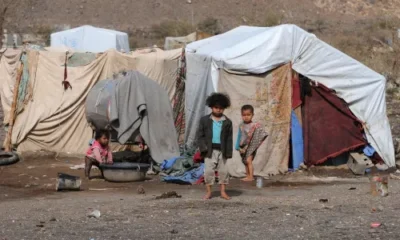
Yémen :21 573 ménages déplacés dans sept gouvernorats
-
 Features1 week ago
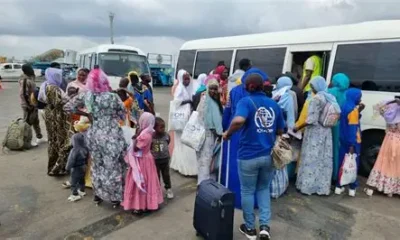
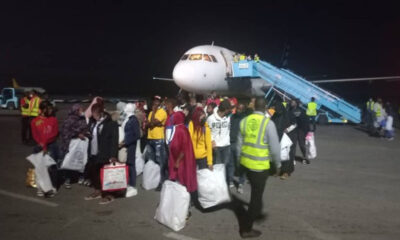
IOM helps more than 81,000 migrants return home from 115 countries
-
 Features1 week ago
L’OIM aide plus de 81 000 migrants à retourner dans leur pays depuis 115 pays