
News
Sudan: Absence of essential services, infrastructure poses threat to voluntary returns


The International Organization for Migration (IOM) has warned that without urgent investment to restore essential services, rebuild infrastructure and revive livelihoods, people returning to Sudan risk becoming unsustainable.
Nearly 4 million people have voluntarily returned across Sudan with many hoping to rebuild their lives after months of conflict.
Returns have been concentrated particularly in Aj Jazirah and Khartoum, driven by a combination of factors, including improved security in some areas, economic pressures, family reunification, limited services in displacement sites, and growing challenges faced by Sudanese living in neighbouring countries. While these movements reflect people’s determination to return home, many are arriving in places still deeply affected by conflict and collapse.
“For many people, returning home should mark the beginning of recovery. Instead, too often it means confronting destroyed services, damaged homes and new uncertainty,” said IOM Deputy Director General for Management and Reform SungAh Lee, during her visit to Sudan. “People need access to basic services, safe housing and ways to restore their livelihoods. Without that support, safe and dignified returns become much harder to sustain.”
Across Sudan, evolving patterns of displacement and spontaneous return continue to reshape communities and strain already weakened systems. At the height of the conflict, nearly 12 million people fled heavily affected areas, particularly Aj Jazirah, Khartoum, and parts of Sennar and Kordofan, seeking safety in other regions; more than 4 million fled to neighbouring countries.
Eastern states such as Kassala, Gedaref, and Red Sea, as well as Northern and River Nile states, became critical reception areas, hosting internally displaced persons, and migrants, while also serving as key transit points within wider regional mobility routes. Today, nearly 9 million people remain internally displaced.
The influx of displaced populations places persistent pressure on services and resources in host communities. Health systems, water infrastructure, protection services, and livelihood opportunities remain stretched. Host communities, many already facing economic hardship and climate-related challenges, are carrying increasing social and economic burdens.
In Khartoum, returns are rising rapidly, placing additional strain on urban infrastructure already damaged by months of fighting. Water systems, electricity networks, health facilities, and housing remain heavily affected, complicating efforts to restore basic services.
In Aj Jazirah, one of Sudan’s most important agricultural regions, returnees are confronted with damaged systems and equipment. These conditions threaten livelihoods and food production at a critical moment for recovery, against a wider backdrop of food insecurity and economic turmoil.
These challenges affect returnees, displaced populations, and host communities alike. As populations move between areas of displacement, transit and return, pressure on services, livelihoods and social cohesion continues. Displacement and return are not separate dynamics, but deeply interconnected realities that require coordinated responses across regions.
During her visit, DDG Lee met with key government actors, including the Ministers of Water and Irrigation, Health, and Education. Through close partnerships with national authorities and local actors, IOM is working to help communities move beyond emergency assistance toward recovery, stability, and longer-term peace, in furtherance of the UN Secretary-General’s Action Agenda on Internal Displacement.
This includes supporting life-saving humanitarian assistance while investing in solutions and resilience to strengthen local systems and communities over time. Reliable data and coordinated responses remain essential to monitor movements, identify needs, and help ensure assistance reaches communities most affected by displacement.
However, with IOM Sudan’s 2026 Crisis Response Plan underfunded by USD 97.2 million, and with more than 2 million additional people expected to voluntarily return to Khartoum alone this year, the work to stabilize areas of return in Sudan has just begun. Sustained partnership, coordinated action, and adequate resources are essential to support Sudan at this pivotal moment and to ensure that return movements contribute to long-term recovery and stability.





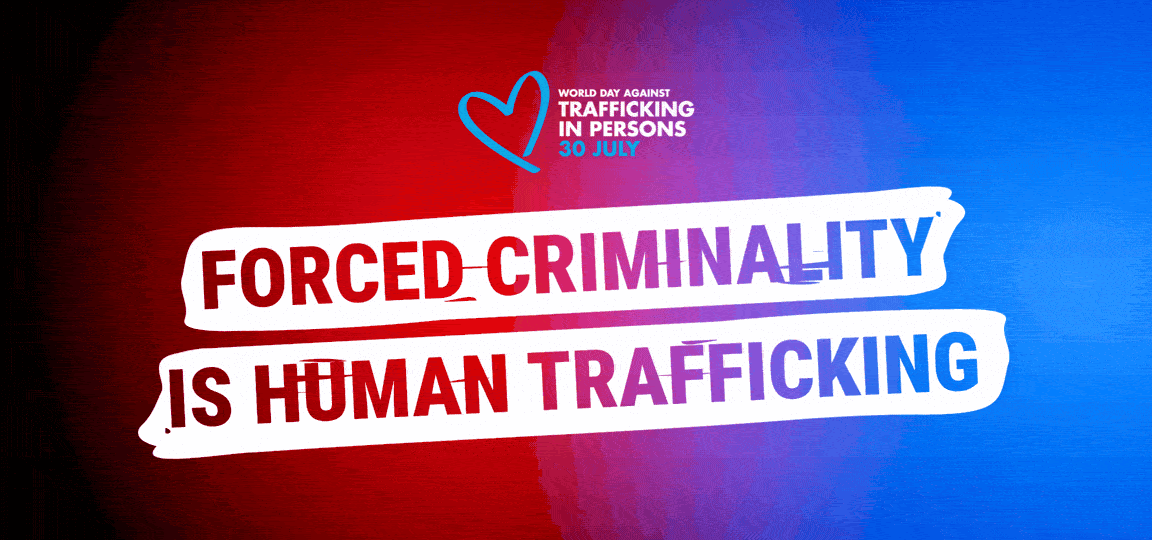
Ahead of July 30 which marks World Day Against Trafficking in Persons under the theme “Trapped Behind the Scam, the International Organization for Migration (IOM) has warned that Hundreds of thousands of people worldwide have been trafficked by criminal networks and forced to participate in online scams in a multibillion-dollar criminal industry.
Trafficked victims are often lured by fake job ads promising legitimate work abroad. Once they arrive, many are locked inside compounds, stripped of their documents, subjected to constant surveillance, and forced through violence, threats and debt bondage to carry out online scam operations targeting people worldwide. Survivors report enduring torture, sexual abuse, starvation and solitary confinement.
“People trapped in scam compounds are victims of trafficking, forced to commit crimes through violence, threats and coercion. They deserve protection, not punishment,” said IOM Director General Amy Pope. “We must work together to support survivors, stop traffickers and close the gaps these criminal networks exploit. No country can tackle this alone.”
The scale of the crime is staggering. New United Nations Office on Drugs and Crime (UNODC) data estimates combined annual losses from scam offences across East Asia, South-East Asia, Australia, and New Zealand are between USD 88.3 billion and USD 114.1 billion for 2025 alone, much of it tied to organized crime, and scam compounds across the region are believed to hold hundreds of thousands of trafficked workers.
As trafficking in persons for forced criminality continues to expand across Asia and increasingly beyond the region, IOM has launched its new Regional Strategy Response to Trafficking in Persons for Forced Criminality in Asia and the Pacific (2026–2030). The strategy outlines IOM’s vision for addressing one of the fastest-growing forms of human trafficking, with a strong focus on victim protection, prevention, cross-border cooperation and stronger partnerships to disrupt trafficking networks.
Between 2022 and 2025, IOM assisted more than 3,500 victims of trafficking for forced criminality across South-East Asia, from 39 countries, with the largest numbers originating from Indonesia, India, Sri Lanka, Ethiopia, Kenya, and Bangladesh.
The message at the heart of this year’s campaign is clear: people forced to commit crimes inside scam centres are victims of trafficking, not criminals, and should be protected, not punished.
Rescue is only the first step. Survivors often face severe trauma, stigma, debt, missing identity documents and the fear of prosecution, requiring sustained support to return home safely and rebuild their lives. IOM’s response includes identifying victims, referring them to protection services, providing direct assistance, coordinating with consular authorities, supporting safe return and reintegration, and working with governments and law enforcement partners to strengthen victim identification, cross-border cooperation and accountability for traffickers.
To strengthen its response, IOM calls for continued support to assist victims of trafficking through protection, safe return and reintegration, while scaling up efforts to raise awareness of traffickers’ tactics so that people can recognize risks and know where to seek help.
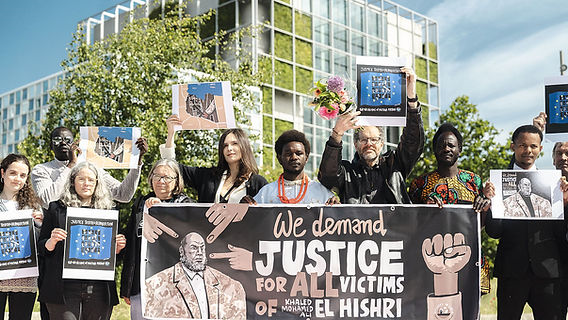
Human rights organisations and migrant rights advocates have welcomed the International Criminal Court’s (ICC) decision to confirm all 17 charges against Osama El-Hishri, describing it as a landmark step towards justice for victims of abuses committed at Libya’s notorious Mitiga Prison.
The ICC’s confirmation of the charges clears the way for El-Hishri to stand trial over allegations linked to murder, torture, sexual violence and other crimes allegedly committed against detainees at the prison in Tripoli.
Reacting to the decision, migrant distress network Alarm Phone described the ruling as “historic” for survivors of crimes committed at Mitiga Prison.
“The International Criminal Court confirmed all 17 charges against El-Hishri. This is a historic decision for survivors of crimes committed at Mitiga prison in Libya,” the organisation said in a statement posted on X.
Alarm Phone also echoed calls by refugee advocacy group Refugees in Libya, saying the prosecution should mark the beginning of broader efforts to hold perpetrators of abuses in Libya accountable.
Similarly, Sea-Watch International hailed the ICC’s decision, noting that the confirmation means the case will now proceed to trial.
The organisation alleged that El-Hishri was a senior member of Libya’s Special Deterrence Force (SDF/RADA) militia and headed parts of Mitiga Prison, where migrants and refugees were subjected to severe human rights violations.
“The ICC confirmed all 17 charges against El-Hishri today. The case is going to trial,” Sea-Watch International said.
It added that people on the move detained at Mitiga Prison had been subjected to murder, torture and sexual violence, describing the prosecution as an important step in addressing longstanding impunity for abuses against migrants in Libya.
Activist Yousef Ismail also welcomed the court’s decision, saying it represented the kind of justice victims had long demanded.
“This is the real number; this is the truth we seek. We always speak of justice and respect for human rights. The International Criminal Court has fairly proven 17 charges against the so-called ‘Hashri,’ the rapist and the gatekeeper of Mitiga,” he wrote on X.
The ICC’s decision has been widely viewed by rights advocates as a significant milestone in efforts to secure accountability for crimes allegedly committed against migrants and refugees held in Libya’s detention system.
Campaigners, however, stressed that the prosecution of El-Hishri should not be the end of international efforts, urging authorities to investigate other individuals allegedly responsible for serious human rights violations in Libya’s detention facilities.

A former Head of Policy Development and Evaluation at the UN Refugee Agency (UNHCR), Jeff Crisp, has suggested that the organization’s newly announced leadership appointments could signal a shift in its priorities away from refugee protection and asylum toward humanitarian assistance and development.
Reacting to the appointments in a post on X, Crisp said the selection of the agency’s new senior officials “suggest that the agency might be going to focus on humanitarian assistance & development issues rather than refugee protection & asylum.”
He added that his concerns were reinforced by UNHCR’s support for the European Union’s Pact on Migration and Asylum.
“A suspicion strengthened by UNHCR’s endorsement of the EU Pact on Migration & Asylum,” Crisp wrote.
His comments came shortly after United Nations Secretary-General António Guterres announced the appointments of Tressa Rae Finerty as Deputy High Commissioner for Refugees, Antón Leis García as Assistant High Commissioner for Operations, and Edem Wosornu as Assistant High Commissioner for Protection.
UN High Commissioner for Refugees Barham Salih welcomed the appointments, saying the three officials bring extensive experience in humanitarian affairs, international cooperation and refugee protection. They are expected to assume their duties in the coming weeks.
Crisp’s remarks reflect concerns held by some refugee rights advocates and migration experts who have argued that UNHCR faces increasing pressure to balance its traditional mandate of protecting refugees and defending the right to asylum with expanding responsibilities in humanitarian response, development cooperation and migration management.
The appointments come at a time when the agency is grappling with record levels of forced displacement worldwide, shrinking humanitarian funding and increasingly restrictive asylum policies in many parts of the world.

Migration Won the 2026 World Cup. It Is Still Treated Like a Crime at the Border

Ukraine: 87 per cent of displaced households have had to take at least one difficult step to cope

IOM assists over 3,500 victims of trafficking across 39 countries

ICC confirmation of 17 charges against El-Hishri draws praise from rights groups

Expert raises questions over UNHCR’s strategic direction after new leadership appointments
-

 News3 weeks ago
IYAMIDR commends Okpebholo for ₦1m support to South Africa returnees
-

 News Extra3 weeks ago
Solomon Okoduwa: An accomplished migration expert champions reforms, diaspora engagement
-
 Uncategorized3 weeks ago
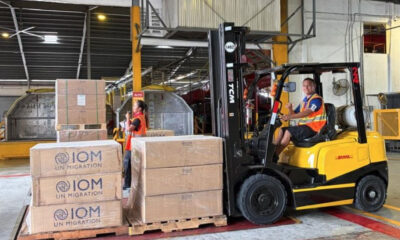
Venezuela: IOM delivers support via in-kind cargo flight funded by DHL’s Disaster Response Team
-
 Features3 weeks ago
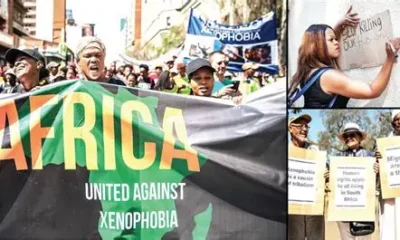
Sixth batch of Nigerians stranded in South Africa return home
-
 News3 weeks ago
‘AI has potential to transform humanitarian action’
-

 News Extra2 weeks ago
50 die as boat carrying about 60 people capsizes
-

 News Extra2 weeks ago
‘Eight people die in the Mediterranean per day’
-

 News Extra2 weeks ago
Frontex must be replaced with real European rescue program- Sea Watch International