
News Extra
From Venezuela to Sudan, 2026 is make-or-break for millions in desperate need – NRC

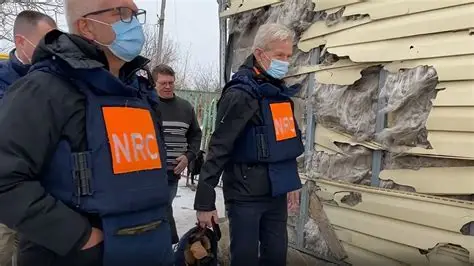
As the reality of funding cuts begins to show, millions of people are being completely abandoned by the world, warns the Norwegian Refugee Council (NRC).
Half-way through 2026, NRC regrettably noted that humanitarian funding for some of the world’s most neglected displacement crises remains at rock bottom.
“2026 is a make-or-break year for millions in desperate need around the world from Venezuela to Sudan. Families whose lives have been shattered by conflict are increasingly struggling to survive. Violence and displacement continue unabated, while spiraling inflation puts basic goods out of reach all at a time when aid is declining due to a lack of funding. If the world doesn’t choose to change course, we will see a massive loss of lives,” said Jan Egeland, NRC’s secretary general.
Six months into the year only 30 per cent of the funding needed to support 143 million people out of the 252 million people in need of aid globally has been received.
“Global generosity for victims of conflict and disasters is abysmal. Without a dramatic increase of support, countless communities in need of aid will have little chance of being helped this year. We urgently need to see countries able to fund space missions and World Cups step up to support people living through crisis,” said Egeland.
“Families I have spoken to in Sudan, Iran, Gaza and Ukraine this year all told me they felt forgotten by the world. But it is not too late to change this.”
The drop off in funding from countries in North America, Europe and other affluent nations is hurting certain regions especially hard. Some of the world’s most chronically neglected crises are seeing desperately low levels of funding.
“Countries must allocate funding based on the level of need, not their own geopolitical and nationalistic interests. They must not simply focus on those featured on the frontpages. We commend the effort of Sweden who continue to give based on the objective assessment of needs, and hope others will follow suit,” said Egeland.
Afghans, that for many years saw a robust humanitarian response and a huge and expensive Western military operation, is now one of the peoples with the least funding. This shift is in part due to the ending of all US humanitarian support to the country, despite the US having contributed more than 40 per cent of all aid to Afghanistan up to 2024. This drop in funding comes at a time when 21.9 million people require aid, and millions are returning from neighbouring countries. Just 11 per cent of adults who have returned to Afghanistan are fully employed.
“This year for the first time Afghanistan features on NRC’s list of the world’s most neglected crises. Now we are seeing funding for Afghanistan hit record low levels with just one in every six dollars needed for aid currently available. Families tell us the drop in aid has left them without a lifeline and without access to even basic services. Donors must heed the warnings before millions more fall into hunger and desperation,” said Egeland.
“Our lives have got worse from the last two years. My husband used to work from time-to-time and humanitarian organisations also used to come in this area to assist us. Now, we don’t see much of that assistance, and my husband is unemployed and most days is unable to get work,” said Momina, a 45-year-old mother of six from Nangarhar province in Afghanistan.
Countries in the Central Sahel dominate the list of lowest funded humanitarian responses with Niger, Burkina Faso and Mali making up three of the five least funded plans in 2026. Millions face displacement, worsening protection conditions, and the loss of basic services. Alongside the dire levels of humanitarian funding, the region has also seen a sharp decline in development financing that has weakened already fragile systems and left schools and health facilities struggling to function.
“For too long, the Central Sahel has faced chronic underfunding and neglect. Humanitarian funding is essential, but without longer-term investment the conditions that leave people increasingly vulnerable, such as lack of services, limited opportunities, and rising displacement, will only deepen. Investing now is key to reducing future crises and unlocking the region’s potential. It is both a necessity and an opportunity for millions of people,” said Egeland.
“We must ensure parents can give hope and opportunities to their children that ends the cycle of neglect. 2026 must not go down in the record books as the year the world turned its back.”






L’agence des Nations Unies pour les réfugiés, le HCR, s’est inquiétée du récent renvoi par la Malaisie de 1 476 personnes au Myanmar, alors que le conflit se poursuit dans le pays et que la situation en matière de droits humains et sur le plan humanitaire demeure extrêmement grave.
Dans une déclaration, le Haut-Commissaire adjoint du HCR chargé de la protection, Edem Wosorn, a déclaré : « Nous sommes préoccupés par ces renvois, car les personnes renvoyées au Myanmar pourraient être exposées à de graves risques, et certaines d’entre elles pourraient avoir besoin d’une protection internationale.
« Bien que les autorités affirment que ces retours sont volontaires, les personnes renvoyées étaient détenues dans des centres d’immigration. Cela soulève de sérieuses questions quant au caractère véritablement libre et éclairé des décisions de retour. Le HCR n’a pas eu accès à ces personnes pour pouvoir l’évaluer. »
Le HCR a déclaré reconnaître pleinement la responsabilité souveraine de la Malaisie en matière de gestion de l’asile et des migrations. Il a toutefois exhorté la Malaisie à veiller à ce que tous les retours soient soumis à de solides garanties, notamment à des évaluations individuelles et à un accès aux procédures de protection. Les décisions de retour doivent être volontaires et évaluées en dehors de tout contexte de détention.
En vertu du principe de non-refoulement, nul ne devrait être renvoyé dans un pays où il pourrait être exposé à des persécutions, à la torture ou à d’autres menaces graves pour sa vie ou sa liberté.
Tant que les conditions au Myanmar ne permettront pas des retours sûrs, dignes et durables, les États doivent continuer à garantir l’accès à l’asile et à respecter leurs obligations en matière de protection internationale.
Le HCR a ajouté qu’il restait prêt à travailler avec la Malaisie afin de renforcer les dispositifs nationaux d’asile et de protection.
« Un soutien régional et international accru est nécessaire pour faire progresser une solution politique à la crise et mettre fin aux hostilités au Myanmar. Le HCR appelle la communauté internationale à maintenir son soutien aux pays de la région qui accueillent des réfugiés du Myanmar. »
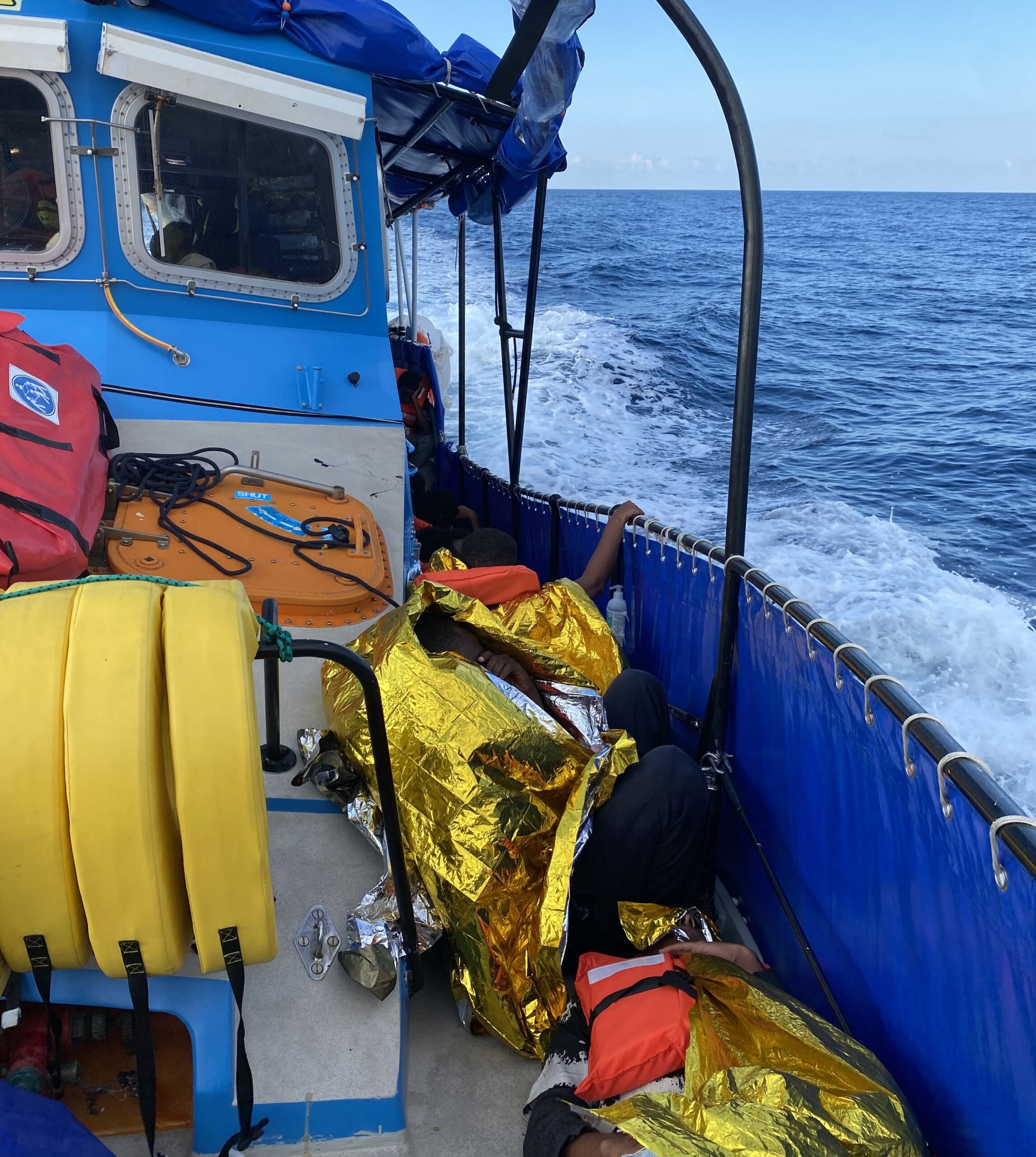
L’équipage de sauvetage de Sea-Watch affirme avoir secouru 28 personnes après un naufrage dans les eaux internationales tôt le 29 septembre, récupérant deux corps et apprenant auprès des survivants qu’au moins six personnes sont toujours portées disparues, dont trois enfants d’une même famille.
Selon Sea-Watch, son navire de sauvetage Aurora a découvert une embarcation pneumatique presque dégonflée vers 4 heures du matin, après que la ligne d’urgence civile Alarm Phone eut alerté les autorités de la présence du bateau.
Cinq survivants et deux corps, dont celui d’un enfant, ont été retrouvés à bord de l’embarcation pneumatique, a indiqué l’organisation.
Sea-Watch a déclaré que les 23 autres survivants du naufrage avaient atteint la plateforme gazière Hasdrubal, située dans les eaux internationales relevant de la zone de recherche et de sauvetage de la Tunisie.
Avec l’autorisation du Centre tunisien de coordination des opérations de sauvetage maritime, l’Aurora s’est ensuite dirigé vers la plateforme, où son équipage a distribué des gilets de sauvetage et embarqué les autres survivants. Sea-Watch a indiqué qu’un jeune enfant figurait parmi les personnes secourues.
L’organisation a déclaré que les survivants avaient signalé la disparition d’au moins six personnes, dont trois enfants d’une même famille. Elle a ajouté qu’il n’était pas encore établi si l’enfant dont le corps a été récupéré était l’un des trois enfants portés disparus.
Les autorités italiennes ont ensuite désigné Lampedusa comme port sûr pour le navire, et l’Aurora fait actuellement route vers cette destination, selon Sea-Watch.
La porte-parole de Sea-Watch, Julia Winkler, a lié cet incident aux critiques de l’organisation à l’égard des politiques migratoires européennes, affirmant que les gouvernements présentaient la baisse du nombre d’arrivées comme un succès alors que des personnes continuaient de mourir ou de disparaître en mer.
Sea-Watch a également appelé à la mise en place d’un programme européen de sauvetage maritime géré par les États, estimant que le sauvetage en mer constitue une obligation plutôt qu’une mesure laissée à la discrétion des autorités.
L’organisation affirme que plus de 1 970 personnes sont mortes ou portées disparues en Méditerranée en 2026 alors qu’elles cherchaient à obtenir une protection. Ce chiffre, ainsi que l’évaluation faite par Sea-Watch des politiques européennes de dissuasion migratoire, constitue des affirmations de l’organisation qui n’ont pas été vérifiées de manière indépendante dans les informations fournies.
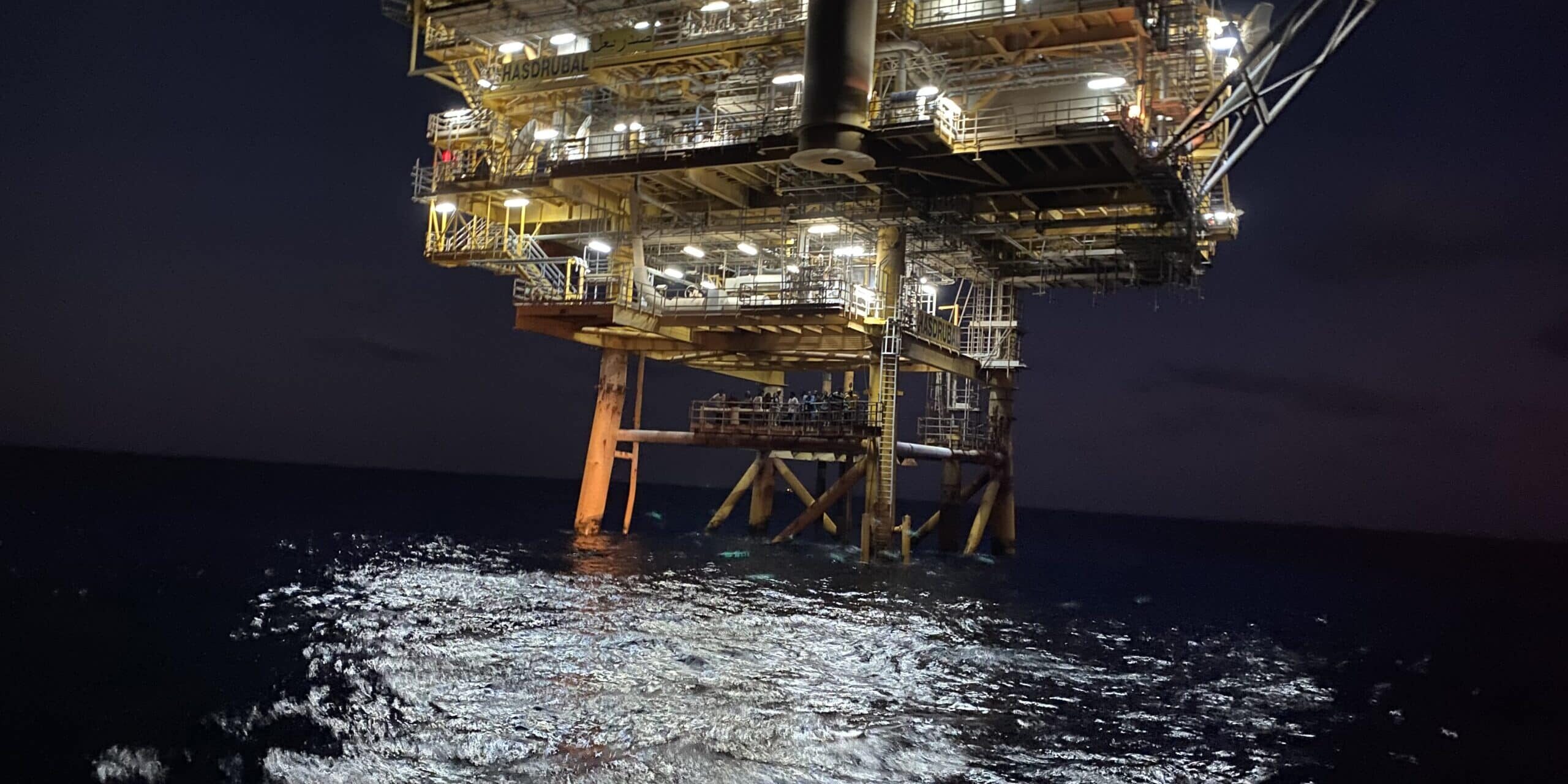
A Sea-Watch rescue crew says it rescued 28 people from a shipwreck in international waters early on September 29, recovering two bodies and learning from survivors that at least six people remain missing, including three children from the same family.
According to Sea-Watch, its rescue vessel Aurora found a nearly deflated rubber boat at about 4 a.m. after the civilian emergency hotline Alarm Phone alerted authorities to the boat.
Five survivors and two bodies, including the body of a child, were found on the rubber boat, the organisation said.
Sea-Watch said the other 23 survivors from the shipwreck had reached the Hasdrubal gas platform, which is located in international waters within Tunisia’s search and rescue zone.
With permission from the Tunisian Maritime Rescue Coordination Centre, the Aurora then proceeded to the platform, where its crew distributed life jackets and brought the remaining survivors aboard. Sea-Watch said a small child was among those rescued.
The organisation said survivors reported that at least six people were missing, including three children from one family. It added that it was not yet known whether the child whose body was recovered was one of the three missing children.
The Italian authorities subsequently assigned Lampedusa as the vessel’s safe port, and the Aurora is now heading there, according to Sea-Watch.
Sea-Watch spokesperson Julia Winkler linked the incident to the organisation’s criticism of European migration policies, saying governments were presenting declining arrival figures as a success while people continued to die or disappear at sea.
Sea-Watch also called for a state-run European maritime rescue programme, describing maritime rescue as an obligation rather than a discretionary measure.
The organisation said more than 1,970 people had died or gone missing in the Mediterranean in 2026 while seeking protection. That figure and Sea-Watch’s assessment of European deterrence policies are claims made by the organisation and were not independently verified in the information provided.

Jeff Crisp s’interroge sur la représentation des migrants à la Conférence de Vienne sur les migrations
Jeff Crisp questions migrant representation at Vienna Migration Conference

Le HCR dénonce le renvoi par la Malaisie de 1 476 personnes au Myanmar

UNHCR decries Malaysia’s return of 1,476 people to Myanmar

Deux morts, six disparus après le sauvetage de 28 personnes par le navire de Sea-Watch
-
 Features1 week ago
Retour volontaire assisté, assistance post-arrivée et réintégration : le rôle de l’OIM expliqué
-
 Interviews2 weeks ago
The Jamboree and Re-Exodus Fund: A Failed Reintegration Promise for Returnee Migrants
-

 Features1 week ago
IOM explains work in countries receiving third-country nationals
-

 Features1 week ago
L’OIM explique son travail dans les pays qui accueillent des ressortissants de pays tiers
-
 Features1 week ago
Assisted Voluntary Return, Post-Arrival Assistance, and Reintegration: IOM’s Role Explained
-
 News1 week ago
Yémen :21 573 ménages déplacés dans sept gouvernorats
-
 Features1 week ago
IOM helps more than 81,000 migrants return home from 115 countries
-
 Features1 week ago
L’OIM aide plus de 81 000 migrants à retourner dans leur pays depuis 115 pays