
Interviews
EU border control and externalization is nothing but racism and neocolonialism in 21st century- Doctor CHEHOU Azizou


Doctor CHEHOU Azizou is the founder of the local Non-Governmental Organization “Jeunesse Nigérienne au Service du Développement Durable JNSDD AIKIN KASA” that implements several projects since 2015. As Executive Secretary, he’s the head of the organization and play the role of coordinating the various projects implemented on behalf of JNSDD AIKIN KASA. While noting that the main domain of JNSDD AIKIN KASA interventions is migration and freedom of movement, Dr Azizou, in this interview with voiceforafricanmigrants.org, decried the EU border externalization policy, describing it as racism and neocolonialism in the 21st century. Excerpts:
How did you get into migration issues?
I am a migration actor due to certain reasons. I was born and grew up in one of Sahel village in the center of Niger Republic. In my village, migration plays an important role in the life of people. There is no single compound in that village without at least one migrant working abroad to support the family. And that has been going on for several years. Now my home village has been developed as results of migration. I have not been interested to migrate myself. But my forefathers, father, uncles, brothers and cousins were migrants. I had the chance to be educated and graduated. As a civil servant in Agadez region, I realized how my fellows suffer on migration routes from different human rights violations. I decided to take actions assisting them to complain when they are offended. My teacher’s union engagement background had been a deep source of inspiration for me. At the very beginning I used to help young people in self-organization to defend their rights. Then I started writing articles in a local newspaper known as Aïr Info for ten years. In that media I occupied the position of chief editor some years after. My media motivation led me to hold radio shows for mass education. After running a program in United States of America during the year 2014, I founded JNSDD AIKIN KASA to defend human rights in general and freedom of movement particularly.
Tell us about Alarm Phone Sahara. What led to its establishment?
Alarm Phone Sahara or APS is a transnational network inspired by African and European activists who were active against Africans deportations from Europe years before 2016. Mediterranean shipwrecks drew the “Afrique-Europe-Interact” and other organizations to initiate “Alarm Phone Watch The Med” to sensitize western opinion about deaths as a result of European Union policy to protect Europe borders. But, it was then noticed that few things are known about Sahara desert crossing from West African countries to the Maghreb ones until the Mediterranean Sea. After at least two years discussions and debates, Alarm Phone Sahara or APS was then decided as another sister project to sensitize, document and rescue people crossing the desert or in distress on the multiple routes.
How will you say the organization has done since inception?
JNSDD and APS have similar aims because the moto of APS network that JNSDD implements as a dynamic initiative is “Right to go, Right to stay!” Our assistance does not encourage nor discourage migration. We want it to be humanistic since movement of human beings on earth is a universal right. But we don’t want to register a single case of death. Because, a migrant who dies during a trip is a loss not from the person, but for the family, the community, the country, the continent and consequently for the world. From 2016 to now important results are reached because of the hard work teams are doing to protect people from death, disappearance, injuries stress and trauma. But, the humanitarian assistance work is very demanding. Despite all its requirements somebody ought to do it because it is saving.

What challenges does APS face in the course of doing its work?
At its very beginning APS dynamic was seen as encouraging irregular migration from Africa to Europe via Maghreb. It seems that countries political leaders don’t investigate the deep reasons why citizens flee their homes. There are many challenges that cause migration. Instead of stopping people from escaping dangers, the best attitude might be how to tackle and stop the thread. The use of land routes is found worth it by people on move since the visa regime is tough. The world geopolitics is let’s say rude when the interest of poor people has to be taken in consideration.
Do you have antagonisms from the government or international bodies because of your work?
We used to face antagonism from many sides. But our lobbying work and data collection shown as evidence have changed narratives. At the moment governments or international bodies that hate our actions appreciate it more and more. We are approached to share our experiences in high level discussions and forums. Film makers, journalist and university or institute researchers, institutions and foundations appreciate our work and value it. We participate in clusters discussions. We amplify our voice at parliaments. And we initiate new forms of participation through regional networks such ROA-PRODMAC. We get closer to the vulnerable people and engage in family reunification. We organize burials of migrants that starve on migration trajectories at the time when others install traps to harm survivals. We protect children, women and elder people by referring them to appropriate services for accommodations.
Tell us about your experience working with migrants all these years.
For a decade, we have been involving to raise the voice of voiceless people. The work is embarrassing for sure. We receive threats from all sides. From those who believe in fake news sent on social media as well from other parts of decision centers. It is necessary to differentiate sources of information. We are particular because we are on the field that majority of observers don’t really know. We have deployed teams of volunteers acting as fire fighters. Days and nights we receive calls of distress from very far in the Sahara desert. We defeat the weather and the space to meet widows, orphan children, and disabled, old people victims of sexual harassment, rapes, knocks, whacks or hits. But our motivation does weaken. We don’t dare hold back though we lack resources. Our conviction is our faith to help. A day or another we are confident that those who remain reluctant in our work will valorize it.
What is the situation in Agadez as we speak?
At the time being, there are thousands of people on move who are stranded in Agadez. They still have hope that the current situation will change. Desperate people are waiting to return back home after they experienced nightmares. Disabled and injured ones receive assistance from our courageous ground teams. In fact, there are families who won’t see their dearest because they are buried somewhere in the desert or drown after shipwrecks. The dilemma is those families still keep faith that one day they will meet their loved ones. It is an opportunity to congratulate Niger population and authorities in general and particularly Agadez local communities because of their resilience despite all the challenges they face. They develop strongly the solidarity with people on move. The general social context doesn’t spare any person. But they share love with victims of racism and pray for better future conditions that African continent lives.

Assamaka has turned a dumping ground for North Africans deporting black Africans. What is your take on this?
In the middle of the Sahara desert, Assamaka has turned a dumping ground for North Africans deporting black Africans. My point of view is that of sorrow for those young men and women victims of border externalization with complicity of some of the African leaders who think that their country localization withdraws them from being member of the continent on behalf of their skin color. They play the worst role in the history. If my voice could be heard in all West African countries, my appeal is to ask their leaders to visit the ground and witness the atrocity in which their citizens are because of the way they rule the countries. At the opposite of the western leaders who organize charter flights to carry their citizens in case of insecurity or crisis, Africans feel proud to blame theirs. They have in mind that no human being is intended to live home and properties if there is well-fare.
Paint a vivid picture of the migrants you come across in both Agadez and Assamaka every time. What do they look like?
Migrants we come across in both Agadez and Assamaka every time show pity and despair. Their faces show the image of being born stateless. They need shelter, clothing and health care. They are stressed and traumatized. Because of the bad physical and psychological treatment they experienced, they often prefer death to life. Before departing from their countries of origin, they thought they have backed the right horse. Unfortunately they have lost their bet and returning back home empty hand is highly risky.
What is the average number of people dumped in Assamaka on a daily basis?
On a daily basis the average number of people dumped in Assamaka is 1,000.
Do you have a situation where the migrants die? What is the death rate?
Of course we have situation where migrants die. Reports from various sources are shared. As ground actors we don’t consider word of mouth reports. Only cases that our teams witness are taken into consideration. Thus, we registered around 50 migrants that died in 2025.
For vulnerable group like pregnant women, do they have access to ante-natal care? Pregnant women have access to ante-natal care in places where there are health commodities. Also, what is the condition of children in both Agadez and Assamaka? Do they have access to basic education and healthcare?
Niger law allows migrant children to have basic education and healthcare for free. But the fact that migrants don’t last too long at the same places reduces the chance of children from this right. Another challenge is related to the language used by teachers in schools as Niger is a francophone country. Above all these, some children become beggars because mothers don’t have incomes.
What type of sickness is common in both Agadez and Assamaka among the migrants?
The common diseases among the migrants in both Agadez and Assamaka are dermatosis, stomachache, malaria, diarrhea, toothache and earache.
Do you have the feeling that African Union is aloof in what is happening to black African migrants in North Africa?
Not me only! But lots of people have the feeling that African Union is aloof to black African migrants in North Africa. Otherwise, the deportation processes would have ended and black Africans would have been better integrated in North African countries. See what is going in Algeria, Tunisia, Libya and Morocco. We cannot talk about African Union when we observe how migrants are treated there.
Let’s talk about EU border control and externalization. What is your view about this?
EU border control and externalization is nothing apart racism and neocolonialism going on during this 21st century. EU leaders still think that Africa continent is their protectorate. And the disappointing thing is that African leaders continue to accept being dominated by the so-called super-powerful nations. Thanks to the new generations the situation is being reversed.
Share an unforgettable experience you had attending to migrants.
There are plenty of unforgettable experiences witnessed in my humanitarian work. But I will share one of a lady migrant engaged in sex work. She unfortunately had a broken leg during an accident and had to feed a baby. As she had no other alternative to earn money, she had to prostitute with the uncured broken leg to earn money, eat feed her new born baby. What a disaster!

General comment about migration in Africa
Migration is a transnational and universal phenomenon. Apart from the legs provided to a human being since birth to move, transportations means for instance animals are offered to people to be ride from a place to another. Then with techniques progress, faster transportation means are provided from the bicycle to the train and plane only for the use of the people. In other continents people move freely. It is only in African continent that even the circular migration is restricted depriving parents, brothers, relatives and siblings to visit each other. It is time for Africans to re-appropriate their destiny. The management of the migration flux must include the Road Based Approach (RBA) to break the chains that tie the Africans from laying on their rights.
The brown color that covers African sky will become completely blue thanks to the pan Africanism in action.


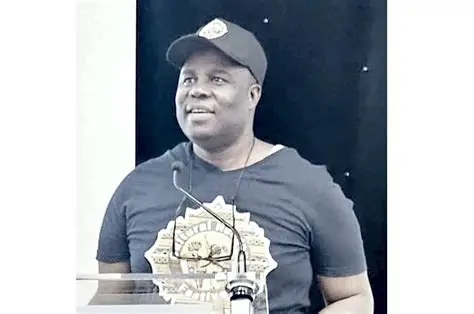
Spain, France, and a tournament built on the movement of people — and the double standard that greeted it
On Sunday night, 19 July 2026, in New Jersey, Nico Williams cut down the left wing, cushioned a header into the path of Ferran Torres, and watched Torres send Spain to a second World Cup title. It was the goal that beat Argentina. It was also, in a quiet way, the story of the whole tournament.
After the final whistle, Williams did something that said more than the assist did. He took his winner’s medal, walked over to his mother, María Arthuer, and put it around her neck. Years earlier, while pregnant with Nico’s older brother Iñaki, María had crossed the Sahara Desert on foot, leaving Ghana in search of a safer, better life.
She eventually reached Spain. Both her sons grew up to play for the national team. One of them just became a world champion. A few metres away, eighteen-year-old Lamine Yamal was doing his own kind of history. Yamal’s father, Mounir Nasraoui, left Larache in Morocco as a boy. His mother, Sheila Ebana, left Bata in Equatorial Guinea.
They met in Catalonia, raising their son in a working-class neighbourhood outside Barcelona. That son is now one of the best footballers alive, and openly proud of all three flags he carries — Spanish, Moroccan, Equatoguinean.
Spain’s champions were not an exception in this tournament. They were the pattern. France told the same story from a different angle. Kylian Mbappé, who closed the tournament as the World Cup’s all-time leading scorer, grew up in Bondy, a working-class suburb outside Paris, the son of a father who moved from Cameroon and a mother whose family came from Algeria’s Kabyle region.
Mbappé has never hidden where he comes from. He has also never been in any doubt about who he plays for. “My nationality is French,” he has said, “but my origins are Algerian and Cameroonian.” Nearly a third of France’s squad this tournament were born in Africa or carry family roots there — not a quirk of one generation, but the ordinary shape of French football for decades.
Nearly every serious contender in this World Cup told some version of the same story. That is worth sitting with, because it is usually the part of the migration story that gets left out.
What migration actually is
It helps to say plainly what the word means, because it gets thrown around loosely. Migration is simply the movement of people from one place to another — across a town, a country, or a continent — in search of work, safety, family, or opportunity. It is not one thing. It includes the trader who moves from Ibadan to Ghana for better business. The nurse who moves from Lagos to London for a job. The mother who crosses a desert on foot, pregnant, because staying was worse than leaving.
The father who leaves Morocco as a nine-year-old with no say in the matter at all.
Most migration in the world is not dramatic. It is ordinary people making ordinary, difficult decisions about where their families will have a better shot at life. María Arthuer’s crossing was extraordinary. Most migration stories are not — they are quieter, slower, and no less deserving of dignity.
The part nobody wants to say out loud
Here is the uncomfortable truth this World Cup also showed. The same movement of people that produces Nico Williams and Lamine Yamal is, in dozens of countries right now, treated as a crime. Migrants are held in detention centres for the offence of arriving without the right paperwork. Families are separated at borders. Asylum seekers are described in political speeches as invaders, floods, or threats, long before anyone asks who they actually are or why they left home.
During this very tournament, football delegations themselves were not spared that suspicion. There were reports of players from African teams facing extended customs checks simply for arriving to compete. If a national team travelling under FIFA’s own banner can be treated as suspect at the border, it says something about how much harder that same border is for a migrant with no federation behind them, no visa sponsor, no stadium waiting.
That is criminalisation — treating the act of migrating itself as something closer to a crime than a decision. It rarely gets named that plainly, but it is what is happening when movement is met first with suspicion and only later, if ever, with a fair hearing.
The double standard nobody wants to own
Here is what makes this so hard to defend. The same governments, commentators, and ordinary fans who treat migration as a threat when it shows up at a border checkpoint spent the last month on their feet cheering it in a stadium. Nobody watching Nico Williams’ assist paused the celebration to ask whether his mother’s crossing was legal.
Nobody watching Mbappé lift the Golden Boot demanded to see his father’s original entry papers into France. The migration was not just tolerated in that moment — it was the reason for the joy.
That is the double standard in plain sight. Migration is magic when it wins you a trophy and a menace when it asks you for asylum. The same journey — leaving one country because another one offers more — is applauded on a football pitch and criminalised at passport control, sometimes by the very same people, often in the very same week. A double standard this obvious does not need a research paper to prove it. It needs only a scoreboard and a headline printed side by side.
The benefit is not an afterthought
It is worth being direct about what migration actually gives the places that receive it, because that side of the story is usually told in half-sentences, if at all. Spain did not win a World Cup despite migration. It won partly because of it. The same is true well beyond football.
Migrants build homes, staff hospitals, start businesses, fill labour gaps, pay taxes, send money home that lifts entire communities, and raise children who go on to represent the only country they have ever known — sometimes at the very highest level a country can offer.
Nico Williams did not simply overcome his mother’s journey. He was the return on it. Lamine Yamal did not simply survive his parents’ migration. He is, right now, one of the finest footballers on earth because of the life they built after it. That is not a sentimental point. It is the actual, measurable outcome of migration done right — given time, given dignity, given a fair chance to belong.
Why this shouldn’t end with the trophy
Spain lifted the World Cup on July 19. The stadiums are empty now, the flags are being packed away, and the conversation is already moving on to next season’s club fixtures. But the questions this tournament raised about migration do not go away because the football stopped.
For those of us working on migration governance across West Africa and beyond, the lesson is not that football should be more grateful to migrants. It is that the way we talk about migration everywhere else — in our policies, our borders, our news coverage — should catch up to what football already knows without needing to be told: that people who move, and are given a fair chance, tend to build extraordinary things. Not despite where they came from. Because of the courage it took to leave.
María Arthuer crossed a desert so her sons could have a chance. Nobody handed her that chance. She and thousands like her earned it the hard way, and it is long past time the systems meant to receive them recognised that.
Aihawu Victor is the Director of the Centre for Youths Integrated Development (CYID) and the Platform for Cooperation on Mixed Migration (PCMM).
Interviews
How we support Nigerian girls, others trafficked to Italy for prostitution- Francesca De Masi, Be Free President

Fracesca De Masi is the President of Be Free Cooperative Against Trafficking Violence and Discrimination, an association of women taking care of women-victim of trafficking and violence. The organization was established in Roma in 2007.
According to her, Be Free is part of the national anti-trafficking system. “In Italy , we have a system which can accept women or men victim of exploitation- sexual exploitation and labor exploitation too,”she said, adding that there are in Italy, 1,500 places for victim of trafficking. 1,500 shelters founded by the government.
“We manage shelter with 6 places available for women who are escaping from sexual exploitation.”
In the course of doing her work, Fracesca has met and supported many Nigerian girls fleeing from violations occasioned by being used for sexual exploitation. Her love and support for Nigerian girls saw her visiting the country and even uses words spoken by the different tribes in her conversation. “In my journey in Nigeria, I stayed 40 days, more than one month. I spent 20 days in Lagos with these religious sisters and 20 days in Benin City. It was around the time the Oba of Benin placed a curse on human traffickers.
“And it was very beautiful, because the Nigerian girls in Italy that I supported, they knew that I was in Nigeria that period. And they sent me some message telling me, but is it true Oba spoke about us. And it was very beautiful, because for the first time, the victims had someone speaking about them.
What the Oba did was okay but not enough to stop the traffickers. Human traffickers are criminals. They break human laws, and break even God’s laws too.

She noted that many trafficked girls that her organisation came across and supported suffered from mental health problems and other health challenges.
“They have symptoms of depression as part of the consequences of exploitation they have experienced. They have difficulty sleeping and also suffer from even physical problems. Some come up with HIV. In our shelter, we are, we support them in every kind of procedure. We accompany them to the hospital, and make them have some healthcare checks.”
Fracesca decried Nigerian girls’ attitude to seeing psychologist for examination.
“Nigerian girls think that if they go to the psychologist, it means that they are crazy. But it’s not so. So please, please, if you can write this, let them know that going to a psychologist is not aboutbeing crazy. Going to the psychologist means that you take care about your mental wellness, that it’s very hard to buy. With all the violence these girls passed through during their journey, the exploitation, the rape, they psychologist support. it just helps them to be okay and happy in life.I know that there are just 200 psychiatrists in all over Nigeria of 200 million people. I know a lot of things.”
In spite of their reluctance to go for psychological checks, Francesca described Nigerian girls as fighters and strong willed people “because they are heroic in even finding some way to escape from their madam.
“I have a lot of stories of life about the girls I met in these years. They are able to escape from their madam. And if they have some support, like our support, they can reach their freedom.
“But on the other side, this rebellion is very hard, because obviously they have a lot of fear and I agree with them.The fear is about the family in Nigeria, because the traffickers know where the families are. And so they have fears that the traffickers, if they escape from prostitution, the traffickers can assault the family.”
She noted that the number of Nigerians being trafficked to Italy through irregular pathways has drastically reduced in recent time. “The trafficking changed a little bit in this area because until 2021, we had most of girls coming from Nigeria. Now the data is a little bit different. There are even other nationalities like Ivory Coast, Guinea, Mali etc .
“On the contrary, in the past, even in the national system, almost 80% of the people identified by the anti-trafficking system were Nigerians. So we have a lot of experience with Nigerian girls. For example, in 2016, in those years, Nigeria was one of the first people arriving by boat. Today, the data is different because we were thinking and asking, where are the Nigerian girls now? Because they don’t arrive anymore by boat to Italy.I think that they remain blocked, for example, in Libya or in other places.”

Fracesca added that Nigerian girls now are less than the pastors in Italy but “they remain very vulnerable following their situation. Because even if they are able to escape from the exploitation, they don’t find a very good environment. Italy, especially with the new government, is not welcoming the migrants. It’s a little bit difficult to build with the migrant people a stable project of life. They remain in precarious situation. So, for them, it’s very difficult to have a good life. We try our best, okay, because in Italy there are law protecting people escaping from exploitation and trafficking.
“And this law can help them, first of all, to get a residence permit because they are victim of a big crime. Trafficking in my opinion, is the most serious violation of human rights in the world, because in trafficking, there are different types of violence. There is rape inside trafficking, there is prostitution, there is even, for example, sometimes domestic slavery. In my opinion, one of the most dreadful crimes is trafficking. I cannot tell you, in a sense, the volume of money around this phenomenon, because we have just the world data and not the Italian data.It’s very hard to, first of all, understand how many people are involved in trafficking as victim and how much money the traffickers earn.
“The data of the national anti-trafficking system is lesser than the reality. This data is just the people whom we are able to identify as victims. For example, in 2025, the national anti-trafficking system identified 3,000 people as victims of trafficking. Just in 2025. But we think that there are more and more, because it’s very difficult to find them, especially after COVID. Before COVID, there were a lot of girls on the road and they were more visible. But after COVID, the exploitation moved in closed places something like connection houses.And this kind of places is very hard to identify.”

Jeremiah Adelu is a young, vibrant, and success-driven Nigerian who did not allow his past to define him.
After a failed attempt at travelling to Europe through Libya, Jerry returned home and against all odds, founded Voice of Migrant Association (VOMA) a non- governmental Organisation supporting returnees. With VOMA, Jerry uses his love for art to remould shattered hearts ,restore confidence and redefine the lives of many returnees, some of who are battling depression and other challenges.
Excerpts:
Tell us about yourself
I am a returned migrant, a social advocate, and the Director of the Voice of Migrant Association (VOMA). I currently work to raise awareness about the dangers of irregular migration, human trafficking, and migrant smuggling while promoting safe and legal migration pathways. Through my work, I also mentor returnees and vulnerable youth, helping them rebuild their lives through advocacy, skills development, and creative expression.
How did you get recruited to travel?
My journey started through information and promises from people who portrayed migration as an easy and guaranteed path to success. Like many others, I was influenced by stories of people who supposedly made it abroad. Recruiters and middlemen often present migration as simple and safe, but they rarely talk about the risks involved.
What was your migration journey like?
My migration journey is one that changed my life forever.
Like many young Africans searching for better opportunities, I once believed that traveling abroad was the fastest way to success,I saw friends and acquaintances posting pictures of beautiful lives in Europe on social media. From the outside, it looked like once you arrived there, life automatically would become better. Those images and stories strengthened my desire to travel to Germany in search of a better future
At that time, I was working hard and trying to build a better life for myself, but like many young people, I believed that going abroad would open greater opportunities. A friend eventually introduced me to people who claimed they could help me travel to Europe through the land route. They told me the journey would cost about ₦300,000, which sounded affordable compared to the promises of a new life abroad. Determined to change my life, I struggled and managed to raise the money.
The journey soon began. I traveled from Nigeria through the northern part of the country into Niger, heading toward Libya, which is a major transit point for migrants trying to reach Europe through the Mediterranean Sea. However, what started as a hopeful journey quickly turned into a nightmare.
Like many migrants who attempt irregular migration, the reality of the journey was far from what I imagined. At every stage of the trip, new agents appeared demanding additional money before allowing us to continue. The cost kept increasing far beyond what I had originally been told. By the time I finally reached Libya, I had spent about ₦1.15 million, far more than the initial agreement.
One of the most frightening parts of the journey was crossing the Sahara Desert. We were packed into pickup trucks and driven across a vast desert with very little food and water. During the day, the heat was unbearable, and at night the cold was extreme. Along the way, I saw something I will never forget dead bodies of migrants scattered across the desert. Some had died from dehydration, others from exhaustion. The desert had become the final resting place for many people who once had dreams just like mine.
When I finally arrived in Libya, the situation became even worse. Migrants were taken to detention camps and places controlled by traffickers and militias. One of the places we were held was known as the “Land of No Mercy. The conditions there were terrible. Many of us were crowded into small spaces with little food, poor sanitation, and constant fear.
People were beaten regularly, especially if they could not pay more money. Traffickers would force migrants to call their families back home while they were being beaten so their relatives could hear their cries and send money quickly. I personally experienced this. I had to call my sister while I was being beaten so that she would send money to secure my release.
Women in the camps suffered even more, as many of them were forced into prostitution. At that point, I realized that the journey I thought would bring a better life had instead become a fight just to stay alive. I experienced hardship, uncertainty, and the harsh realities many migrants face during irregular migration. These experiences exposed me to the risks of trafficking, exploitation, and extremely difficult living conditions.
Later, while preparing to cross the Mediterranean Sea, I witnessed another heartbreaking tragedy. A boat carrying migrants capsized, and more than 100 people lost their lives in the sea. Seeing that moment shook me deeply. I began to think seriously about the possibility of dying in the desert or in the sea, far away from home where my family might never even know what happened to me.
That experience completely changed my mindset. I realized that no dream was worth losing my life.
Eventually, I was able to return to Nigeria through an assisted voluntary return program supported by the International Organization for Migration (IOM). Returning home was not easy, but it gave me another chance to start again.
When I came back, I carried not only my personal story but also a strong desire to ensure that others would not fall into the same trap. I restarted my laundry business and began to reflect deeply on everything I had experienced during the journey.
Instead of keeping my experience to myself, I decided to use my story as a tool for awareness and change. That decision led me to establish the Voice of Migrant Association (VOMA), an organization dedicated to raising awareness about the dangers of irregular migration, human trafficking, and migrant smuggling.
Today, through VOMA, I speak to young people, mentor returnee migrants, and advocate for safe and legal migration pathways. My goal is to ensure that others do not have to go through the same suffering many migrants experience during irregular migration.
My story is not just about pain; it is about transformation. From someone who once chased the dream of Europe through dangerous routes, I have become a voice advocating for safer choices and better opportunities for others.
My message is simple: migration is not wrong, but it must be done safely and legally.

What was your experience returning home?
Returning home was both emotional and challenging. Many returnees struggle with stigma, disappointment, and the pressure to rebuild their lives. However, my return also became a turning point. Instead of seeing it as a failure, I decided to transform my experience into a platform to educate others and support fellow returnees.
Tell us about your organization
Voice of Migrant Association (VOMA) is a community-based organization led by returned migrants. The organization focuses on raising awareness about irregular migration, human trafficking, and migrant smuggling while advocating for safe migration pathways. VOMA also works on reintegration support by empowering returnees through mentorship, livelihood opportunities, and psychosocial support.
Why did you establish it?
I established VOMA because I realized that many migrants return home without support, guidance, or opportunities to rebuild their lives. I wanted to create a platform where returnees could share their experiences, heal, and become advocates who educate others about the realities of irregular migration.
How well have you touched the lives of the people you are mentoring?
Through VOMA, we have been able to mentor and support many young people and returnees by providing awareness sessions, community engagements, and empowerment programs. Many of the individuals we mentor have gained confidence, learned skills, and now participate in advocacy activities themselves. Some have even become peer educators who help spread awareness in their communities.
What are the challenges you face doing your work?
One of the major challenges is limited funding and resources to expand our programs. There is also the challenge of stigma faced by returnees, which sometimes makes reintegration difficult. Additionally, reaching vulnerable youth who are strongly influenced by migration myths can be challenging, but continuous awareness helps address this.
Tell us about your deployment of art to support returnees
At VOMA, we use art as a powerful tool for storytelling, healing, and advocacy. This includes spoken word, music, visual art, podcasts, and creative performances that allow returnees to express their experiences. Art helps transform painful migration experiences into powerful messages that educate others.

What do you observe when returnees you are helping engage in art?
When returnees engage in art, we notice a significant change in their confidence and emotional well-being. Art provides them with a safe space to express their stories and emotions. It also helps them reconnect with their creativity and build a positive identity beyond their migration experiences.
How did you come about the use of art to support returnees?
The idea came from observing that many returnees struggle to talk openly about their experiences. Art became a natural and effective way for them to communicate their stories without feeling judged. It also allows their voices to reach wider audiences in a powerful and engaging way.
What do you need to enhance the work you do for returnees especially in the area of art?
To strengthen this initiative, we need more support in terms of training, creative equipment, funding, and partnerships with artists and organizations. Establishing a creative hub where returnees can learn and practice different forms of art would greatly improve the impact of this program.

Any plan to spread your work to other parts of the country?
Yes, we have plans to expand our work to other parts of Nigeria. Migration challenges affect many communities, and we believe our model of peer-led advocacy and creative engagement can be replicated in other states. We hope to build partnerships that will help scale our impact nationally.

What is your take on migration awareness?
Migration awareness is not just about discouraging travel; it is about providing accurate information and promoting safe opportunities. Our goal at VOMA is to empower people with knowledge so they can make informed decisions about migration while also supporting returnees to rebuild their lives with dignity and purpose.
For support and collaboration, you can reach Jerry via:
Instagram: #thisisvoma
Phone :+ 234 9010976301
Email: voiceofmigrantassociation@gmail.com
Twitter: voiceofmigrant
Facebook: voice of migrant association
TikTok: voiceofmigrantassociation
Linkedln: voiceofmigrant

Migration Won the 2026 World Cup. It Is Still Treated Like a Crime at the Border

Ukraine: 87 per cent of displaced households have had to take at least one difficult step to cope

IOM assists over 3,500 victims of trafficking across 39 countries

ICC confirmation of 17 charges against El-Hishri draws praise from rights groups

Expert raises questions over UNHCR’s strategic direction after new leadership appointments
-
 News3 weeks ago
IYAMIDR commends Okpebholo for ₦1m support to South Africa returnees
-
 News Extra3 weeks ago
Solomon Okoduwa: An accomplished migration expert champions reforms, diaspora engagement
-
 Uncategorized3 weeks ago
Venezuela: IOM delivers support via in-kind cargo flight funded by DHL’s Disaster Response Team
-
 News3 weeks ago
‘AI has potential to transform humanitarian action’
-
 Features3 weeks ago
Sixth batch of Nigerians stranded in South Africa return home
-
 News Extra2 weeks ago
50 die as boat carrying about 60 people capsizes
-
 News3 weeks ago
Over 200 migrants intercepted in Sirte, Tobruk
-
 News Extra2 weeks ago
‘Eight people die in the Mediterranean per day’