
Features
Venezuela: 6.76 million people could be affected by devastating earthquakes- Report


Initial estimates by the International Organization for Migration (IOM) reveal that up to 6.76 million people could be affected by the devastating earthquakes that struck Venezuela on 24th June.
The projections, based on the available population and damage analysis, include up to 2 million people in Caracas alone and highlight the potentially vast humanitarian impact of the disaster as assessments continue.
Early damage assessments are beginning to reveal the scale of the destruction. Working with Microsoft AI for Good Lab, IOM has received initial satellite mapping analysis showing that 31.5 per cent of buildings in Catia La Mar have been damaged. These assessments are helping humanitarian responders identify the communities most affected and to prioritize the delivery of life-saving assistance while ground assessments continue.
“The first hours and days after a disaster are decisive. They shape everything that follows,” said Amy Pope, IOM Director General. “IOM is scaling up rapidly: prepositioned relief items are already being deployed, and we are working with the Government and partners to deliver emergency shelter, essential supplies, and protection.
“It is already clear that displacement will increase, as people seek safety. A swift response is essential as we deliver life-saving assistance and support the people of Venezuela through the difficult days and months ahead.”
The humanitarian needs are both immediate and significant. Families who have lost everything require emergency shelter, safe water, sanitation and hygiene services, health care, protection support and essential relief items. As the emergency response evolves, sustained assistance will also be needed to help affected communities rebuild homes, restore livelihoods and recover with dignity.
IOM is working closely with the Government of Venezuela, the United Nations and humanitarian partners to coordinate the response. The Organization has prepositioned emergency relief supplies in Caracas, which are now being prepared for distribution to communities with the greatest needs.
While search and rescue operations remain the immediate priority, the humanitarian consequences of this disaster will extend well beyond the coming days. Recovery will require sustained investment to help families rebuild their lives, restore essential services and strengthen community resilience.
IOM calls on the international community to act swiftly in support of the response. Timely humanitarian assistance will save lives, alleviate suffering and help affected communities begin the long road to recovery.











Features
ENBIC : À qui appartiennent les données biométriques de l’Afrique de l’Ouest et quel rôle l’OIM joue-t-elle ?

Une petite carte en plastique pourrait bientôt devenir l’un des documents les plus importants détenus par des millions d’Ouest-Africains.
La Carte nationale d’identité biométrique de la CEDEAO (ENBIC) est conçue pour faciliter les déplacements dans la région, remplacer l’ancien certificat de voyage et offrir un moyen plus sécurisé d’établir l’identité. Mais derrière la promesse d’une circulation sans entrave se cache une question qui mérite beaucoup plus d’attention du public :
Lorsqu’un citoyen fournit ses empreintes digitales, ses images faciales, ses informations biographiques et d’autres données d’identité pour obtenir une carte biométrique de la CEDEAO, qui contrôle finalement ces informations ?
Et, peut-être plus important encore, quelle est la place de l’Organisation internationale pour les migrations (OIM) dans un système qui implique la collecte, la vérification, le partage et potentiellement l’utilisation transfrontalière de certaines des informations les plus sensibles qu’une personne puisse posséder ?
Il ne s’agit pas simplement de questions technologiques. Ce sont des questions de souveraineté, de vie privée, de responsabilité et de droits des citoyens.
Un projet d’identité régional avec des empreintes digitales nationales
L’ENBIC n’est pas simplement une autre carte d’identité.
La CEDEAO indique que la carte a été établie conformément à la Décision A/DEC/01/12/14 et qu’elle vise à faciliter la libre circulation, à servir de preuve d’identité et de résidence, et à fonctionner de plus en plus comme un document de voyage. L’organisation régionale indique également que la carte peut soutenir des services tels que l’identification nationale, les services financiers et le commerce électronique.
Au Nigeria, la plateforme de demande d’ENBIC est gérée par le Service nigérian de l’immigration (NIS). Le portail officiel invite les citoyens nigérians à faire une demande, à renouveler leur carte, à corriger leurs informations, à suivre leurs demandes et à prendre rendez-vous.
Cela soulève immédiatement une distinction importante.
L’ENBIC peut être un instrument régional, mais les informations biométriques recueillies auprès d’un citoyen nigérian ne deviennent pas automatiquement la propriété d’une organisation régionale — ou d’une organisation internationale participant au soutien du programme.
En effet, le cadre nigérian de protection des données impose des obligations aux organisations qui déterminent les finalités et les moyens du traitement des informations personnelles.
La politique de confidentialité du Service nigérian de l’immigration identifie le NIS comme responsable du traitement de ses services numériques et inclut expressément les images faciales et les empreintes digitales parmi les informations personnelles qu’il peut recueillir.
C’est important.
Cela signifie que le débat public devrait aller au-delà de la question simpliste : « À qui appartient l’ENBIC ? »
Les questions les plus pertinentes sont :
Qui est le responsable du traitement des données ? Qui est le sous-traitant ? Où la base de données est-elle hébergée ? Qui peut y accéder ? En vertu de quelle loi ? À quelles fins ? Pendant combien de temps ? Les données peuvent-elles être transférées hors du Nigeria ? Et qui peut en ordonner la divulgation ?
Ces questions deviennent particulièrement importantes lorsque les systèmes d’identité franchissent les frontières nationales.
L’OIM est impliquée — mais implication ne signifie pas propriété
La participation de l’OIM à l’ENBIC n’est pas nouvelle.
La CEDEAO a documenté l’implication de l’OIM dans cette initiative dès 2016, lorsque l’organisation a aidé les États membres à examiner les possibilités et les défis liés au déploiement d’une carte nationale d’identité biométrique pour les pays de la CEDEAO.
En 2019, la CEDEAO a également indiqué que l’OIM avait soutenu une campagne de plaidoyer et de sensibilisation sur l’ENBIC au Nigeria, au Bénin et au Togo. L’exercice impliquait des agents des frontières, des transporteurs et des communautés et était présenté comme faisant partie des efforts visant à améliorer la libre circulation, la gestion des frontières et la lutte contre la traite des personnes.
Plus récemment, en septembre 2026, la CEDEAO et l’OIM ont de nouveau échangé avec les médias nigérians sur l’initiative ENBIC, expliquant sa contribution attendue à la mobilité, à la vérification de l’identité et à la gestion des frontières.
Mais une distinction importante ne doit pas être perdue dans le débat public :
Le fait de soutenir, conseiller, sensibiliser ou fournir une assistance technique n’établit pas, à lui seul, la propriété des informations biométriques des citoyens.
Les documents de la CEDEAO et du Nigeria accessibles au public examinés pour cet article n’établissent pas que l’OIM est propriétaire de la base de données ENBIC.
Ils établissent en revanche que l’OIM a joué un rôle dans le soutien à certains aspects du programme plus large d’identité biométrique et de gestion des migrations.
Cette distinction est essentielle, car les accusations selon lesquelles une organisation internationale « possède » les données biométriques des citoyens nécessitent des preuves de propriété juridique ou de statut de responsable du traitement des données — et pas simplement des preuves de participation à un programme.
Mais qui contrôle les informations une fois que les frontières disparaissent ?
C’est ici que le débat sur l’ENBIC devient plus complexe.
Une carte d’identité biométrique est précieuse précisément parce que différentes autorités peuvent faire confiance à l’identité qui lui est associée.
La CEDEAO cherche à assurer l’interopérabilité entre les systèmes nationaux d’identification fondamentaux et l’ENBIC. En février 2026, l’organisation régionale a indiqué que ses travaux sur la feuille de route visaient à établir des passerelles entre les systèmes nationaux d’identification fondamentaux et l’ENBIC, et à clarifier les fonctions des parties prenantes impliquées dans la planification, la conception, le développement, le déploiement, l’exploitation et la gestion de la carte tout au long de son cycle de vie.
L’interopérabilité présente des avantages évidents.
Un voyageur ne devrait pas avoir à prouver son identité à plusieurs reprises à chaque frontière.
Mais l’interopérabilité crée également un défi de gouvernance :
Plus les systèmes communiquent entre eux, plus il devient important de savoir exactement quelles informations sont échangées.
Un agent chargé du contrôle aux frontières peut avoir besoin de savoir qu’une personne est bien celle qu’elle prétend être.
Cela ne signifie pas nécessairement que cet agent doit avoir un accès illimité à l’intégralité du dossier d’identité de cette personne.
La différence entre la vérification de l’identité et la surveillance de l’identité est donc une question que les décideurs ne peuvent se permettre d’ignorer.
Les données biométriques ne sont pas des données ordinaires
Un mot de passe perdu peut être modifié.
Une empreinte digitale compromise ne peut pas l’être.
Une personne peut obtenir un nouveau numéro de passeport.
Elle ne peut pas obtenir un nouvel ensemble d’empreintes digitales.
Elle ne peut pas simplement remplacer le visage avec lequel elle est née.
C’est pourquoi les bases de données biométriques nécessitent un niveau de contrôle plus élevé.
La propre publication de l’OIM de 2026 sur la biométrie et la gestion de l’identité reconnaît les avantages potentiels des systèmes biométriques tout en identifiant les risques liés à la vie privée, à la discrimination, à la responsabilité, à la sécurité, à l’interopérabilité, à la « dérive fonctionnelle » (« function creep ») et aux utilisations abusives. Elle recommande d’accorder une attention particulière aux cadres juridiques, aux évaluations d’impact sur la protection des données, à la cybersécurité, aux mécanismes de contrôle et aux voies de recours.
L’avertissement concernant la dérive fonctionnelle est particulièrement pertinent.
Un système créé pour faciliter les déplacements pourrait potentiellement acquérir des fonctions supplémentaires au fil du temps.
Aujourd’hui, l’ENBIC peut principalement répondre à la question :
« Qui est ce voyageur ? »
Demain, les décideurs pourraient être tentés de demander :
« Où cette personne a-t-elle voyagé ? »
Ou :
« Quels services gouvernementaux cette personne a-t-elle utilisés ? »
Ou :
« Dans quelles bases de données de sécurité cette identité devrait-elle être comparée ? »
Certaines de ces utilisations peuvent être légales ou légitimes dans certaines circonstances.
Mais le principe fondamental demeure :
Une nouvelle utilisation des données biométriques ne devrait pas être automatiquement considérée comme acceptable simplement parce que la technologie la rend possible.
Que dit le droit de la CEDEAO ?
L’Afrique de l’Ouest n’est pas dépourvue de règles en matière de protection des données.
L’Acte additionnel de la CEDEAO relatif à la protection des données à caractère personnel établit des principes régissant le traitement et le transfert des données personnelles.
Entre autres dispositions, il exige des informations sur l’identité du responsable du traitement et sur les finalités pour lesquelles les informations sont traitées, et impose des conditions concernant les transferts de données personnelles vers des pays situés en dehors de la CEDEAO.
La CEDEAO a également reconnu que son cadre régional actuel de protection des données doit être actualisé. En novembre 2024, des experts des États membres et des autorités nationales de protection des données se sont réunis pour valider un Acte additionnel révisé destiné à répondre aux évolutions de l’environnement numérique.
Cette évolution est révélatrice.
La technologie a évolué rapidement.
La gouvernance régionale tente de rattraper son retard.
Et l’ENBIC se situe directement dans cet écart.
Le Nigeria a ses propres obligations en matière de protection de la vie privée
La Loi nigériane de 2023 sur la protection des données offre un niveau supplémentaire de protection.
La Commission nigériane de protection des données (NDPC) indique que la loi régit le traitement des données personnelles, protège les droits des personnes concernées et établit un régulateur indépendant chargé de superviser les responsables du traitement et les sous-traitants.
La NDPC énumère également des droits, notamment le droit d’être informé, d’accéder aux informations personnelles, de demander leur rectification, de s’opposer au traitement, d’en demander la limitation et de signaler les préoccupations à l’autorité de contrôle.
Cela crée une importante chaîne de responsabilité pour l’ENBIC au Nigeria.
Si le NIS recueille les informations, les citoyens devraient pouvoir comprendre :
- quelles informations sont recueillies ;
- pourquoi chaque catégorie d’informations est recueillie ;
- qui détermine les finalités du traitement ;
- quelles organisations traitent les informations pour le compte du NIS ;
- si les informations sont transférées hors du Nigeria ;
- pendant combien de temps les informations sont conservées ;
- qui peut y accéder ;
- comment les violations de données sont signalées ;
- et quels recours sont disponibles pour les citoyens.
La politique de confidentialité du NIS indique que les informations personnelles peuvent être partagées avec des agences gouvernementales, des services de sécurité, des prestataires de services, des autorités internationales chargées de l’immigration ou des frontières lorsque la loi l’exige, ainsi qu’avec les organismes chargés de l’application de la loi répondant à des demandes valides ou à des procédures légales. Elle indique également que des transferts hors du Nigeria peuvent avoir lieu lorsque cela est nécessaire à la fourniture de services ou à la coopération internationale, sous réserve de garanties juridiques et de sécurité.
Pour un citoyen ordinaire, cependant, la formule « lorsque la loi l’exige » ne devrait pas mettre fin à la discussion.
La question suivante devrait être :
Quelle loi, quelle autorité et quelle procédure ?
Les questions sans réponse concernant l’OIM
L’implication de l’OIM mérite donc un examen attentif — non pas parce que sa participation prouverait une quelconque propriété, mais parce que les organisations internationales qui interviennent dans les systèmes d’identité peuvent occuper des positions influentes dans la conception des programmes, l’assistance technique, la gestion des migrations et la gouvernance des frontières.
Le public mérite des éclaircissements sur plusieurs questions.
1. L’OIM a-t-elle accès aux dossiers biométriques de l’ENBIC ?
Si oui, à quelles catégories d’informations peut-elle accéder ?
L’accès est-il direct ou passe-t-il par une autre institution ?
Cet accès est-il temporaire, permanent ou limité à un projet ?
2. L’OIM est-elle responsable du traitement, responsable conjoint du traitement, sous-traitant ou simplement organisation chargée du soutien au programme ?
Ces descriptions ne sont pas interchangeables.
Chacune peut entraîner des responsabilités juridiques différentes.
3. Où les données sont-elles stockées ?
Les données ENBIC nigérianes sont-elles physiquement hébergées au Nigeria ?
Une partie est-elle hébergée ailleurs ?
Qui exploite les serveurs ?
Qui détient les clés de chiffrement ?
4. Les données peuvent-elles circuler entre les pays de la CEDEAO ?
Si oui, quelles informations sont échangées lors de la vérification aux frontières ?
L’autorité destinataire reçoit-elle l’intégralité du dossier biométrique, une réponse de vérification ou seulement des informations d’identité limitées ?
5. Que se passe-t-il lorsqu’un partenaire international quitte un projet ?
Conserve-t-il des copies ?
Ces copies sont-elles détruites ?
Qui vérifie de manière indépendante leur suppression ?
6. Que se passe-t-il après une violation de données ?
Qui doit informer les citoyens concernés ?
Quel régulateur enquête ?
Quelle institution prend en charge les mesures correctives ?
Et un citoyen peut-il obtenir une indemnisation ?
Ces questions ne constituent pas des accusations.
Ce sont des questions fondamentales de gouvernance pour tout système biométrique régional.
La question de la souveraineté
Il existe également une question plus profonde.
Les systèmes d’identité biométrique deviennent de plus en plus une partie des infrastructures à travers lesquelles les gouvernements comprennent leurs populations.
Celui qui contrôle l’infrastructure ne « possède » pas nécessairement les personnes — mais peut acquérir un pouvoir considérable sur la manière dont les individus sont identifiés, vérifiés et autorisés à se déplacer.
C’est pourquoi la gouvernance des données devrait être considérée comme faisant partie de la souveraineté nationale et régionale.
Les autorités nigérianes de l’immigration mettent déjà l’accent sur la cybersécurité, la confidentialité des données et la protection des infrastructures critiques d’information dans le cadre de leur programme de transformation numérique.
Le même principe devrait s’appliquer aux infrastructures régionales d’identité.
Si l’ENBIC doit devenir un titre d’identité régional digne de confiance, les citoyens ont besoin de plus que des assurances selon lesquelles la carte est sécurisée.
Ils doivent savoir qui est responsable lorsque quelque chose tourne mal.
Le danger de confondre intégration et partage illimité des données
La logique de l’intégration numérique est séduisante :
Une région.
Une norme d’identité.
Un système interopérable.
Mais l’intégration régionale ne doit pas nécessairement signifier un partage illimité des informations.
Un système bien conçu peut permettre à un agent chargé du contrôle aux frontières de vérifier qu’un voyageur est bien autorisé à voyager sans exposer toutes les informations contenues dans son profil d’identité.
C’est là que la minimisation des données devient importante.
Ne recueillir que ce qui est nécessaire.
N’utiliser les données qu’à des fins clairement définies.
N’accorder l’accès qu’aux personnes qui en ont besoin.
Ne conserver les données que pendant la durée nécessaire.
Et créer une trace vérifiable indiquant qui a accédé à quelles informations et pourquoi.
Ces garanties deviennent encore plus importantes parce que la vision de la CEDEAO pour l’ENBIC dépasse largement la simple production d’une carte en plastique. La Commission indique que la carte est de plus en plus développée comme un instrument capable de soutenir l’identification et d’autres services au-delà des déplacements transfrontaliers.
Plus le système devient vaste, plus la nécessité de définir clairement ses limites est grande.
Une carte n’est pas le véritable sujet
La véritable histoire est celle de la base de données qui se trouve derrière la carte.
Le voyageur voit une photographie, un nom, un numéro de carte et des dispositifs de sécurité.
Derrière cette carte peuvent se trouver des empreintes digitales, des informations faciales, des données biographiques et des liens vers d’autres systèmes d’identité.
C’est dans cette infrastructure invisible que réside le véritable pouvoir.
Et c’est pourquoi la question centrale autour de l’ENBIC ne devrait pas simplement être :
« Cette carte facilitera-t-elle les déplacements en Afrique de l’Ouest ? »
C’est probablement le cas.
La question plus difficile est :
« L’Afrique de l’Ouest peut-elle construire un système d’identité régional qui facilite les déplacements sans exposer les informations les plus sensibles des citoyens à des accès inutiles, à une conservation indéfinie ou à des utilisations secondaires incontrôlées ? »
C’est ce test qui compte.
Ce que le rôle de l’OIM devrait signifier — et ce qu’il ne devrait pas signifier
La participation de longue date de l’OIM à l’ENBIC et aux discussions connexes sur la gestion de l’identité fait de l’organisation un acteur important pour comprendre l’évolution du projet. Mais les éléments disponibles n’établissent pas que l’OIM possède les données biométriques des citoyens nigérians enregistrées dans l’ENBIC. La CEDEAO et les autorités nigérianes restent des acteurs centraux dans l’architecture institutionnelle et opérationnelle du système.
Cette distinction doit être préservée.
Dans le même temps, la participation internationale ne devrait jamais être considérée comme un substitut à la responsabilité publique.
Si l’OIM fournit une assistance technique, le public devrait pouvoir connaître les limites de cette assistance.
Si elle traite des informations, la base juridique devrait être claire.
Si elle n’a aucun accès aux bases de données biométriques, cela devrait être clairement indiqué.
Si elle y a effectivement accès, les citoyens ont le droit de savoir quelles garanties sont en place.
Et si elle ne contrôle pas les données, les institutions qui les contrôlent devraient être clairement identifiées.
Les questions que l’Afrique de l’Ouest ne peut pas se permettre de reporter
L’ENBIC promet de rendre les frontières moins contraignantes.
Mais les frontières numériques peuvent devenir invisibles dans un autre sens : les citoyens pourraient ne jamais voir les bases de données à travers lesquelles ils sont identifiés.
C’est précisément pourquoi la transparence doit précéder la commodité.
La Commission de la CEDEAO a reconnu que la mise en œuvre de l’ENBIC nécessite des dispositions institutionnelles claires, des considérations juridiques, des infrastructures, une gestion des risques et une coordination entre les parties prenantes.
Ces dispositions devraient être visibles pour les personnes dont les identités sont numérisées.
Les Ouest-Africains ne devraient pas avoir à découvrir, après une violation de données, une utilisation abusive ou une décision contestée à une frontière, qui avait accès à leurs informations.
Ils devraient le savoir avant de remettre leurs empreintes digitales.
Le principe fondamental est simple :
Le citoyen peut porter la carte, mais le véritable pouvoir réside entre les mains de ceux qui contrôlent les données qui se trouvent derrière cette carte.
Et alors que l’Afrique de l’Ouest se dirige vers des systèmes d’identité de plus en plus interconnectés, la question de savoir qui contrôle ce pouvoir — et qui peut lui demander des comptes — doit devenir une partie intégrante du débat sur l’ENBIC.
A small plastic card may soon become one of the most consequential documents carried by millions of West Africans.
The ECOWAS National Biometric Identity Card, ENBIC, is designed to make movement across the region easier, replace the old travel certificate and provide a more secure means of establishing identity. But beneath the promise of seamless travel lies a question that deserves far more public attention:
When a citizen submits fingerprints, facial images, biographical information and other identity details for an ECOWAS biometric card, who ultimately controls that information?
And, perhaps more importantly, where does the International Organization for Migration (IOM) fit into a system that involves the collection, verification, sharing and potentially cross-border use of some of the most sensitive information a person possesses?
These are not merely technological questions. They are questions of sovereignty, privacy, accountability and citizens’ rights.
A regional identity project with national fingerprints
ENBIC is not simply another identity card.
ECOWAS says the card was established pursuant to Decision A/DEC/01/12/14 and is intended to facilitate free movement, serve as proof of identity and residence, and increasingly function as a travel document. The regional body says the card can also support services such as national identification, financial services and e-commerce.
In Nigeria, the ENBIC application platform is operated through the Nigeria Immigration Service. The official portal invites Nigerian citizens to apply, reissue cards, correct information, track applications and book appointments.
That immediately raises an important distinction.
ENBIC may be a regional instrument, but the biometric information collected from a Nigerian citizen does not automatically become the property of a regional organisation—or of an international organisation involved in supporting the programme.
Indeed, Nigeria’s own data-protection framework places obligations on organisations that determine the purposes and means of processing personal information.
The Nigeria Immigration Service’s privacy policy identifies NIS as the data controller for its digital services and expressly includes facial images and fingerprints among the personal information it may collect.
That is significant.
It means that the public conversation should move beyond the simplistic question of “Who owns ENBIC?”
The more useful questions are:
Who is the data controller? Who is the processor? Where is the database hosted? Who can access it? Under what law? For what purpose? For how long? Can it be transferred outside Nigeria? And who can order its disclosure?
Those questions become particularly important when identity systems cross national boundaries.
IOM is involved—but involvement is not ownership
IOM’s participation in ENBIC is not new.
ECOWAS documented IOM’s involvement in the initiative as far back as 2016, when the organisation supported member states by examining opportunities and challenges associated with rolling out a national biometric identity card for ECOWAS countries.
In 2019, ECOWAS also said IOM supported an advocacy and sensitisation campaign on ENBIC in Nigeria, Benin and Togo. The exercise involved border officials, transporters and communities and was presented as part of efforts to improve free movement, border management and the fight against trafficking.
More recently, in September 2026, ECOWAS and IOM again engaged the Nigerian media on the ENBIC initiative, explaining its anticipated contribution to mobility, identity verification and border management.
But there is an important distinction that should not be lost in the public debate:
Supporting, advising, sensitising or providing technical assistance does not, by itself, establish ownership of citizens’ biometric information.
Publicly available ECOWAS and Nigerian documents reviewed for this story do not establish that IOM owns the ENBIC database.
What they do establish is that IOM has had a role in supporting aspects of the broader biometric identity and migration-management agenda.
That distinction is crucial because allegations that an international organisation “owns” citizens’ biometric data require evidence of legal ownership or data-controller status—not simply evidence of participation in a programme.
But who controls the information once borders disappear?
This is where the ENBIC debate becomes more complicated.
A biometric identity card is valuable precisely because different authorities can trust the identity attached to it.
ECOWAS is pursuing interoperability between national foundational identification systems and ENBIC. In February 2026, the regional body said its roadmap work was intended to establish pathways from national foundational ID systems to ENBIC and clarify the functions of stakeholders involved in planning, designing, developing, deploying, operating and managing the card throughout its life cycle.
Interoperability brings obvious benefits.
A traveller should not have to prove identity repeatedly at every border.
But interoperability also creates a governance challenge:
The more systems communicate, the more important it becomes to know exactly what information is being exchanged.
A border official may need to know that a person is who they claim to be.
That does not necessarily mean the official needs unrestricted access to the person’s entire identity record.
The difference between identity verification and identity surveillance is therefore one that policymakers cannot afford to ignore.
Biometrics are not ordinary data
A lost password can be changed.
A compromised fingerprint cannot.
A person can obtain a new passport number.
They cannot obtain a new set of fingerprints.
They cannot simply replace the face they were born with.
That is why biometric databases require a higher level of scrutiny.
IOM’s own 2026 publication on biometrics and identity management acknowledges the potential benefits of biometric systems while identifying risks involving privacy, discrimination, accountability, security, interoperability, “function creep” and misuse. It recommends attention to legal frameworks, data-protection impact assessments, cybersecurity, oversight and redress mechanisms.
The warning about function creep is particularly relevant.
A system created to facilitate travel could potentially acquire additional functions over time.
Today, ENBIC may primarily answer:
“Who is this traveller?”
Tomorrow, policymakers could be tempted to ask:
“Where has this person travelled?”
Or:
“Which government services has this person accessed?”
Or:
“Which security databases should this identity be compared against?”
Some of those uses may be lawful or legitimate under particular circumstances.
But the central principle remains:
A new use of biometric data should not simply be assumed because the technology makes it possible.
What does ECOWAS law say?
West Africa is not without data-protection rules.
The ECOWAS Supplementary Act on Personal Data Protection establishes principles governing the processing and transfer of personal data.
Among other provisions, it requires information about the identity of the data controller and the purposes for which information is being processed, and places conditions around transfers of personal data to countries outside ECOWAS.
ECOWAS has also acknowledged that its existing regional data-protection framework requires updating. In November 2024, experts from member states and national data-protection authorities met to validate a revised Supplementary Act designed to respond to changes in the digital environment.
That development is revealing.
Technology has moved rapidly.
Regional governance is trying to catch up.
And ENBIC sits directly in that gap.
Nigeria has its own privacy obligations
Nigeria’s Data Protection Act 2023 provides another layer of protection.
The Nigeria Data Protection Commission says the law regulates the processing of personal data, protects data subjects’ rights and establishes an independent regulator responsible for supervising data controllers and processors.
The NDPC also lists rights including the right to be informed, access personal information, seek rectification, object to processing, restrict processing and report concerns to the supervisory authority.
This creates an important accountability chain for ENBIC in Nigeria.
If NIS is collecting the information, citizens should be able to understand:
what information is collected;
why each category is collected;
who determines the purposes of processing;
which organisations process the information on behalf of NIS;
whether information is transferred outside Nigeria;
how long the information is retained;
who can access it;
how breaches are reported;
and what remedies are available to citizens.
The NIS privacy policy states that personal information may be shared with government agencies, security services, service providers, international immigration or border authorities where legally required, and law-enforcement agencies responding to valid requests or legal processes. It also says transfers outside Nigeria may occur where necessary for service provision or international cooperation, subject to legal and security safeguards.
For an ordinary citizen, however, “where legally required” should not end the conversation.
The next question should be:
Which law, which authority and which procedure?
The unanswered IOM questions
IOM’s involvement therefore deserves scrutiny—not because participation proves ownership, but because international organisations operating around identity systems can occupy influential positions in programme design, technical assistance, migration management and border governance.
The public deserves clarity on several issues.
1. Does IOM have any access to ENBIC biometric records?
If yes, what categories of information can it access?
Is the access direct or through another institution?
Is the access temporary, permanent or project-specific?
2. Is IOM a data controller, joint controller, processor or simply a programme-support organisation?
These are not interchangeable descriptions.
Each can carry different legal responsibilities.
3. Where is the data stored?
Is Nigerian ENBIC data physically hosted in Nigeria?
Is any component hosted elsewhere?
Who operates the servers?
Who holds encryption keys?
4. Can data move between ECOWAS countries?
If yes, what information is exchanged during border verification?
Does the receiving authority obtain the complete biometric record, a verification response, or only limited identity information?
5. What happens when an international partner leaves a project?
Does it retain copies?
Are those copies destroyed?
Who independently verifies deletion?
6. What happens after a data breach?
Who must notify affected citizens?
Which regulator investigates?
Which institution pays for remediation?
And can a citizen obtain compensation?
These questions are not accusations.
They are basic governance questions for any regional biometric system.
The sovereignty question
There is also a deeper issue.
Biometric identity systems are increasingly becoming part of the infrastructure through which governments understand their populations.
Whoever controls the infrastructure does not necessarily “own” the people—but can acquire significant power over how people are identified, verified and permitted to move.
That is why data governance should be treated as part of national and regional sovereignty.
Nigeria’s immigration authorities are already emphasising cybersecurity, data privacy and protection of critical information infrastructure as part of their digital transformation agenda.
The same principle should apply to regional identity infrastructure.
If ENBIC is to become a trusted regional credential, citizens need more than assurances that the card is secure.
They need to know who is accountable when something goes wrong.
The danger of confusing integration with unrestricted data sharing
There is a seductive logic behind digital integration:
One region.
One identity standard.
One interoperable system.
But regional integration does not have to mean unlimited information sharing.
A well-designed system can allow a border officer to verify that a traveller is legitimate without exposing every piece of information contained in that person’s identity profile.
This is where data minimisation becomes important.
Collect only what is necessary.
Use it only for clearly defined purposes.
Give access only to those who need it.
Keep it only as long as necessary.
And create an auditable trail showing who accessed what information and why.
These safeguards become even more important because the ECOWAS vision for ENBIC is broader than merely producing a plastic card. The Commission says the card is increasingly being developed as an instrument capable of supporting identification and other services beyond border travel.
The broader the system becomes, the greater the need for clearly defined boundaries.
A card is not the real story
The real story is the database behind the card.
The traveller sees a photograph, name, card number and security features.
Behind that card could sit fingerprints, facial information, biographical records and links to other identity systems.
That invisible infrastructure is where the real power lies.
And that is why the central question surrounding ENBIC should not simply be:
“Will this card make travelling across West Africa easier?”
It probably can.
The more difficult question is:
“Can West Africa build a regional identity system that makes movement easier without making citizens’ most sensitive information vulnerable to unnecessary access, indefinite retention or uncontrolled secondary use?”
That is the test that matters.
What IOM’s role should mean—and what it should not mean
IOM’s long-standing involvement in ENBIC and related identity-management discussions makes the organisation an important stakeholder in understanding the project’s development. But the available evidence does not establish that IOM owns Nigerian citizens’ ENBIC biometric data. ECOWAS and Nigerian authorities remain central actors in the system’s institutional and operational architecture.
That distinction should be preserved.
At the same time, international involvement should never be treated as a substitute for public accountability.
If IOM provides technical assistance, the public should be able to know the boundaries of that assistance.
If it processes information, the legal basis should be clear.
If it has no access to biometric databases, that should be clearly stated.
If it does have access, citizens deserve to know under what safeguards.
And if it does not control the data, the institutions that do should be clearly identified.
The questions West Africa cannot afford to postpone
ENBIC promises to make borders less cumbersome.
But digital borders can become invisible in another sense: citizens may never see the databases through which they are being identified.
That is precisely why transparency must precede convenience.
The ECOWAS Commission has acknowledged that the implementation of ENBIC requires clear institutional arrangements, legal considerations, infrastructure, risk management and coordination among stakeholders.
Those arrangements should be visible to the people whose identities are being digitised.
West Africans should not have to discover after a breach, a misuse or a disputed border decision who had access to their information.
They should know before handing over their fingerprints.
The fundamental principle is simple:
The citizen may carry the card, but the real power lies with whoever controls the data behind it.
And as West Africa moves toward increasingly interconnected identity systems, the question of who controls that power—and who can hold them accountable—must become part of the ENBIC conversation.
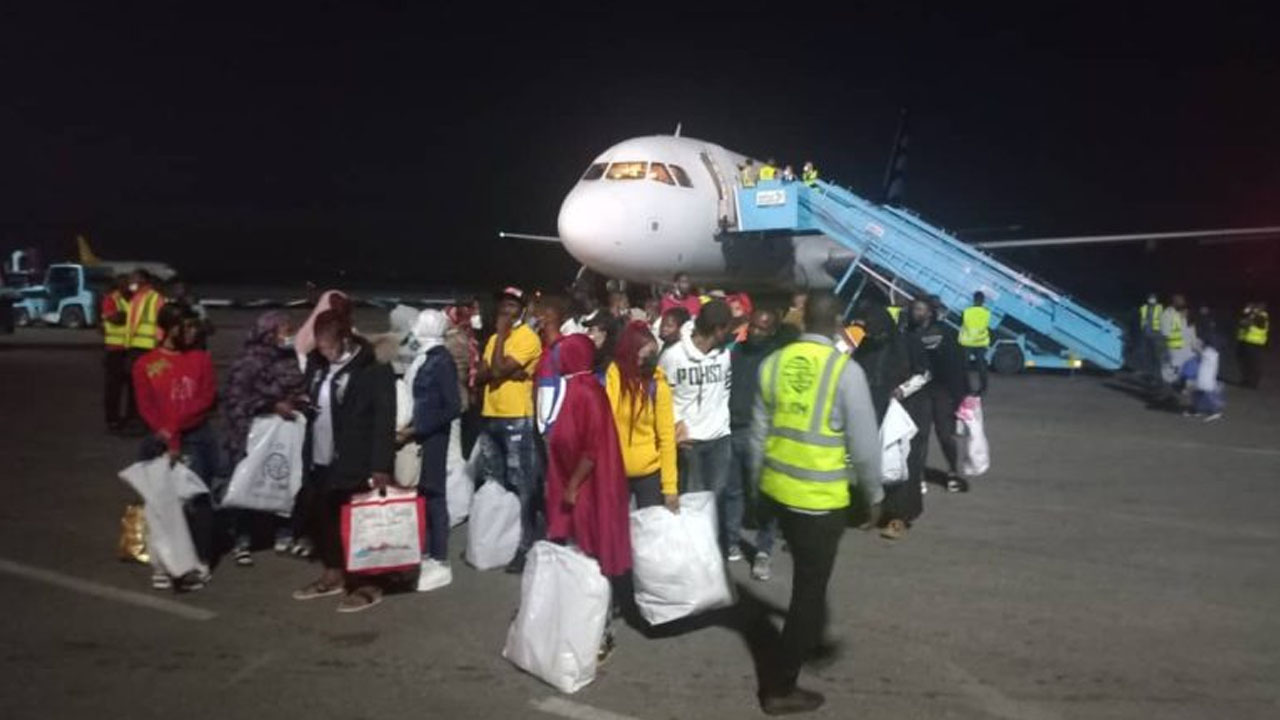
L’Organisation internationale pour les migrations (OIM) indique avoir aidé plus de 81 000 migrants à retourner dans leur pays d’origine ou dans des pays où ils avaient légalement le droit de séjourner en 2025, dans le cadre de ses programmes d’aide au retour volontaire et à la réintégration (AVRR).
Ce chiffre concerne les personnes qui ont expressément sollicité l’aide de l’OIM et ne doit pas être interprété comme représentant le nombre total de migrants retournés dans le monde, a précisé l’organisation.
L’OIM a expliqué que son travail en matière de retour des migrants s’effectue par deux voies distinctes : l’AVRR, qui est initié par les migrants qui choisissent de rentrer, et l’assistance après l’arrivée destinée aux personnes ayant été renvoyées dans le cadre d’opérations menées par des gouvernements ou d’autres acteurs.
Dans le cadre de l’AVRR, les migrants prennent eux-mêmes la décision de retourner dans leur pays et sollicitent l’aide de l’OIM. L’organisation affirme qu’elle n’initie pas les retours et ne procède pas aux expulsions.
Avant de fournir une assistance, l’OIM mène des séances de conseil individuelles afin d’informer les migrants sur les options qui s’offrent à eux et sur le soutien qu’elle peut leur apporter. Les personnes qui décident de poursuivre la procédure donnent leur consentement par écrit et peuvent se retirer du processus sans conséquences.
L’aide peut comprendre l’organisation du voyage et les dispositions logistiques, l’assistance pour l’obtention de documents d’identité et de voyage, l’identification des vulnérabilités, l’évaluation individuelle des besoins ainsi qu’une assistance spécialisée destinée aux personnes en situation de vulnérabilité, notamment les enfants non accompagnés, les victimes de traite des personnes et les personnes ayant des besoins médicaux.
L’OIM fournit également une assistance après l’arrivée et à la réintégration, destinée, selon elle, à favoriser l’autonomie économique, le bien-être psychosocial et la stabilité sociale.
En 2025, l’agence indique avoir aidé plus de 81 000 personnes à retourner depuis 115 pays dans le cadre de l’AVRR et avoir fourni un soutien à la réintégration à plus de 82 000 personnes dans 147 pays d’origine.
L’organisation souligne que l’AVRR est distinct du processus d’expulsion ou de renvoi forcé, qui relève des gouvernements.
Assistance après une expulsion
L’OIM indique que son rôle est différent lorsque les gouvernements procèdent à des expulsions ou à d’autres formes de renvoi forcé.
Dans de tels cas, le gouvernement du pays d’accueil peut demander à l’OIM de fournir une assistance aux personnes après leur arrivée. L’organisation précise qu’elle ne mène pas les opérations de renvoi, ne participe pas aux décisions d’expulsion, ne négocie pas les accords bilatéraux de renvoi et ne détermine pas le cadre juridique régissant ces opérations.
Son intervention ne commence qu’après l’arrivée des personnes et uniquement à la demande de l’État d’accueil.
Lorsque des migrants sont renvoyés dans leur pays d’origine, l’OIM peut fournir des soins de santé, des services de conseil, un contrôle des besoins en matière de protection, des services essentiels et un soutien à la réintégration, sous réserve d’une évaluation indépendante de la protection.
Cette évaluation vise à vérifier que la personne a été officiellement admise, que ses droits et sa dignité peuvent être protégés, que les conditions permettent à l’OIM d’intervenir et qu’un consentement véritable peut être obtenu.
L’OIM affirme qu’elle ne fournira pas d’assistance lorsque ces garanties ne peuvent être respectées.
Renvois vers des pays tiers
L’organisation distingue également les situations dans lesquelles des migrants sont renvoyés vers un pays autre que leur pays d’origine.
Ces transferts peuvent avoir lieu dans le cadre d’accords entre États. L’OIM précise qu’elle ne négocie ni n’approuve ces accords et ne participe pas directement aux transferts.
Lorsqu’un gouvernement d’accueil demande son assistance, l’OIM peut fournir des soins de santé, des services de conseil et un contrôle des besoins en matière de protection, sous réserve des mêmes garanties que celles appliquées aux retours vers les pays d’origine.
Les migrants présents dans un pays tiers qui décident par la suite de retourner volontairement dans leur pays d’origine peuvent demander l’aide de l’OIM dans le cadre de ses procédures habituelles d’AVRR.
L’organisation indique qu’elle évalue notamment les garanties relatives au statut légal, à la liberté de circulation et à l’accès à la protection internationale avant d’accepter d’intervenir. Lorsque ces conditions ne peuvent être garanties, elle peut refuser son intervention ou limiter l’assistance fournie.
L’OIM affirme qu’elle ne force pas les personnes à retourner dans leur pays, ne procède pas aux expulsions ou aux renvois forcés, ne négocie ni n’approuve les accords bilatéraux de renvoi et ne fournit pas d’assistance lorsque son intervention pourrait contribuer au refoulement, à la discrimination ou à des violations des garanties procédurales.
Environ 800 personnes aidées après des renvois des États-Unis vers des pays tiers
L’OIM indique que des informations publiques font état de dizaines de milliers de personnes renvoyées des États-Unis vers des pays tiers entre le début de 2025 et septembre 2026.
Cependant, l’organisation précise que son implication dans ces cas est restée limitée, car elle ne peut intervenir que lorsqu’elle est sollicitée par le gouvernement du pays d’accueil et lorsque les garanties de protection qu’elle exige sont réunies.
En septembre 2026, l’OIM indique avoir apporté son soutien à environ 800 personnes dans ce contexte, en leur fournissant des soins de santé, des services de conseil et un contrôle des besoins en matière de protection. Environ 300 de ces personnes ont ensuite choisi de retourner volontairement dans leur pays d’origine.
Selon l’organisation, l’écart entre les quelque 800 personnes qu’elle a assistées et les dizaines de milliers de personnes qui auraient été renvoyées s’explique par le nombre limité de gouvernements ayant demandé le soutien de l’OIM ainsi que par les cas dans lesquels les conditions nécessaires à son intervention n’étaient pas réunies.

Jeff Crisp s’interroge sur la représentation des migrants à la Conférence de Vienne sur les migrations
Jeff Crisp questions migrant representation at Vienna Migration Conference

Le HCR dénonce le renvoi par la Malaisie de 1 476 personnes au Myanmar

UNHCR decries Malaysia’s return of 1,476 people to Myanmar

Deux morts, six disparus après le sauvetage de 28 personnes par le navire de Sea-Watch
-

 Features1 week ago
Retour volontaire assisté, assistance post-arrivée et réintégration : le rôle de l’OIM expliqué
-

 Interviews2 weeks ago
The Jamboree and Re-Exodus Fund: A Failed Reintegration Promise for Returnee Migrants
-

 Features1 week ago
Assisted Voluntary Return, Post-Arrival Assistance, and Reintegration: IOM’s Role Explained
-

 Features1 week ago
IOM explains work in countries receiving third-country nationals
-

 Features1 week ago
L’OIM explique son travail dans les pays qui accueillent des ressortissants de pays tiers
-
 News1 week ago
Yémen :21 573 ménages déplacés dans sept gouvernorats
-

 News Extra1 week ago
Ebola: Amy Pope seeks urgent support as DRC faces largest outbreak
-

 Interviews2 weeks ago
Le Jamboree et le Fonds du réexode : une promesse échouée de réintégration des migrants de retour