
Features
Nigeria, champion nation for GCM set to make impact at 2026 IMRF

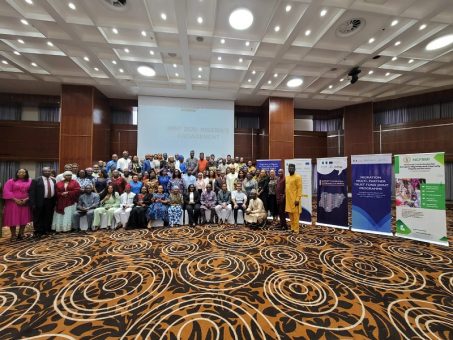
Nigeria, the giant of Africa and champion country for the Global Compact for Safe, Orderly and Regular Migration (GCM) is set for an outstanding outing at the 2026 International Migration Review Forum (IMRF) in New York.
This was the position of participants at the just concluded Voluntary National Review (VNR) on the implementation of the Global Compact for Safe, Orderly and Regular Migration (GCM) ahead of the IMRF. The event which took place between February 17 and 21 at the Lagos Continental Hotel, Victoria Island, Lagos was organised by the National Commission For Refugees, Migrants and Internally Displaced Persons (NCFRMI) in collaboration with the International Organisation for Migration (IOM). The meeting, characterised by rigorous brainstorming and deliveries also had other international partners, federal and state government agencies, members of the civil society among others in attendance.
Delivering his remark at the beginning of the meeting, the Federal Commissioner, NCFRMI, Hon. Dr. Tijani Aliyu Ahmed, reiterated the Commission’s commitment to effective implementation of the Global Compact for Migration.
He recalled that Nigeria adopted the Global Compact for Migration following its endorsement by the United Nations General Assembly in December 2018, and “since then we have demonstrated sustained political will and institutional commitment to its implementation. As a Champion Country, Nigeria has taken deliberate steps to domesticate the principles and objectives of the GCM within our national migration governance framework.
“The recently validated revised National Migration Policy and its integrated Implementation Plan, which doubles as Nigeria’s National GCM Implementation Plan, stand as clear evidence of this alignment between global commitments and national action.”
He added that in preparation for the first IMRF in 2022, Nigeria conducted its inaugural Voluntary National Review in Lagos through a whole-of-government and whole-of-society approach. “The process strengthened coordination among stakeholders and informed Nigeria’s national report, pledge and interventions at IMRF 2022. Building on that foundation, Nigeria convened a second Voluntary National Review in August 2024 in Abuja, structured around Technical Working Groups covering Labour Migration, Migration Data, Border Management, Return, Readmission and Reintegration, and Diaspora Engagement. The outcomes informed Nigeria’s engagement at the regional review and reinforced sustained national monitoring.”
This 2026 Review according to him is required to track progress since the 2024 regional review, assess implementation across the twenty-three objectives of the Compact, and consolidate national priorities, challenges and areas for improvement ahead of IMRF 2026. “Over the next three days, discussions will follow the GCM review template and align with the thematic areas of the IMRF roundtables. Breakout sessions chaired by members of the United Nations Network on Migration and supported by national thematic leads will evaluate progress, identify lessons learned and generate structured talking points to guide Nigeria’s participation at IMRF 2026.
“This consultation also provides an opportunity to stock take Nigeria’s pledges made at IMRF 2022, highlighting achievements, gaps and opportunities for renewed commitment. Furthermore, building on the evidence of impact from Nigeria’s side event at IMRF 2022, preparations are underway for a side event at IMRF 2026 to showcase practical achievements, lessons learned and pathways for strengthening regular migration channels.”
He went on to reiterate the unwavering commitment of the National Commission for Refugees, Migrants and Internally Displaced Persons, to the effective implementation of the Global Compact for Migration and to sustaining the whole-of-government and whole-of-society approach that underpins this national process, assuring that : “We remain deeply appreciative of the consistent support of the International Organization for Migration and other members of the United Nations Network on Migration in strengthening Nigeria’s migration governance efforts. As we prepare for IMRF 2026, we look forward to sustained technical collaboration and partnership to facilitate Nigeria’s effective engagement at the Review Forum and the successful delivery of our proposed side event. Continued cooperation will be critical in transforming commitments into tangible, evidence-based results.”
Speaking to The Nation about Nigeria’s readiness for the 2026 IMRF, Civil Society Network on Migration coordinator and facilitator for Nigeria Voluntary National Review for International Migration Forum 2026, Fr. Emeka Chris-Obiezu, said the country is good to go as the just concluded event places it on the right pedestal to excel at the global event.

He described the VNR as an enormous three days of active engagement in reviewing Nigeria’s implementation of the global compact for safe, orderly and regular migration, and assessing its progress since 2022 International Migration Forum Review.
He said: “We engaged in structural activities that focus on tracking Nigeria’s progress, underscoring our challenges and highlighting lessons learned and reviewed Nigeria’s pledges in 2022 and how much those have been implemented.
“And of course, we had the opportunity to repledge for 2026. In a nutshell, I think it was a very successful engagement. The active participation was great and the outcome was also significant. Yes, I would mark it 100%.”
Speaking on the success that Nigeria had recorded after the last review, Fr Emeka said “the country has improved a lot in data management and has improved a lot in governance systems. We’ve aligned most of the GCM objectives and principles in our national migration policies. We’ve also improved in bilateral relationships, and in coordination within the government and non-government actors. We’ve also made some tremendous records in strengthening regular migration pathway for mobility of labour and protecting migrants’ rights, and as much as the fact that some challenges still remain.”
He noted that the best practices “we have seen and that we identified in these three days include strengthened migration coordination by the NCFRMI, effective collaboration between government and non-government actors, as well as structural engagement by stakeholders from international partners. I think they also came up as significant areas that migration has improved in terms of governance in Nigeria. We are very much good to go as far as the 2026 IMRF is concerned.
We have our national report to be submitted to the UN system. We will have Nigerian talking points at the round tables in New York. We have Nigeria’s side events figured out.
We have reviewed and repledged Nigeria’s commitments to implementing the GCM. So we are good to go. We are waiting for May 5th to 8th to go to New York and deliver Nigeria’s position.”
Speaking in the same vein, Geofrey Akor, the National Migration Data Working Group, Focal Person and Desk Officer on Migration at National Bureau of Statistics, said Nigeria is 100 percent prepared for the IMRF.
His words: “If you look at what happened yesterday with the key priority issues and the key message that has been presented by the four different groups, you will have no doubt that, of course, we will have a better representation come May, 2026 in New York.
“It will positively impact migration issues back at home because that’s like the highest gathering in migration space.”
He described the three-day engagement as awesome “because the National Voluntary Review is preceding the International Migration Review that will hold in New York.
So this gathering gives the opportunity for Nigerians in the migration space to prepare adequately to carry the key message for Nigeria to the New York gathering. And of course, this will afford us that needed attention that Nigeria has been desiring as a champion country. The last one was 2022, and I believe this one will be better because we have better coordination and better preparation that precedes the IMRF 2026 in New York.
“In 2022, some of these policies were yet to be strengthened. Take, for example, the overarching policy, which is the national policy on migration, was yet to be reviewed. But now, before this IMRF, I can beat my chest to tell you that it has been reviewed to include all the extant activities and happenings globally so that we can run with it. And of course, in this period, we have equally reviewed the national labour migration policy to include the extant happenings. I’m going to tell you that the West African sub-region even borrowed from the Nigerian model to develop the ECOWAS labour migration policy. And we have what we call the data management strategy which was equally reviewed in 2025. Then the review of MOU for data sharing.
“We equally have the successful database for the first time. We have had the harmonized migration data template. Another thing we achieved greatly and immensely in this period is the emergence and, of course, the notice of the civil society’s space to include the whole of government, whole of society approach. So there are so many messages. And the migrants themselves, which is a subject of discussion have been given enormous voice.
So we have had several migrant associations within Nigeria to have their voice heard, unlike what happened before now in 2022. So migrants have their associations and they can speak.”
We made tremendous progress brainstorming on many issues- NIDCOM
Head of Programs Development Department for Nigerians in Diaspora Commission, NIDCOM, Abiodun Akanbi said the three-day event helped players in the sector to make tremendous progress brainstorming on many issues.
“Wow, It’s been an amazing time.
It’s been an amazing event for all of us, especially some of us who have been following this migration governance in Nigeria, being coordinated by the NCFRMI, bringing together all the stakeholders in the migration space to harmonize, to discourse, to brainstorm on how we can make migration governance better in Nigeria.
“And going by the reason why we’re here this time around, preparing for the IMRF program coming up in New York in May to discuss how to present our case, our achievements so far in the migration space for national development, I think it’s a wonderful idea bringing all the stakeholders, both government, both non-state actors, CSOs and even the media and everyone together to see how we can make things better for the country.”
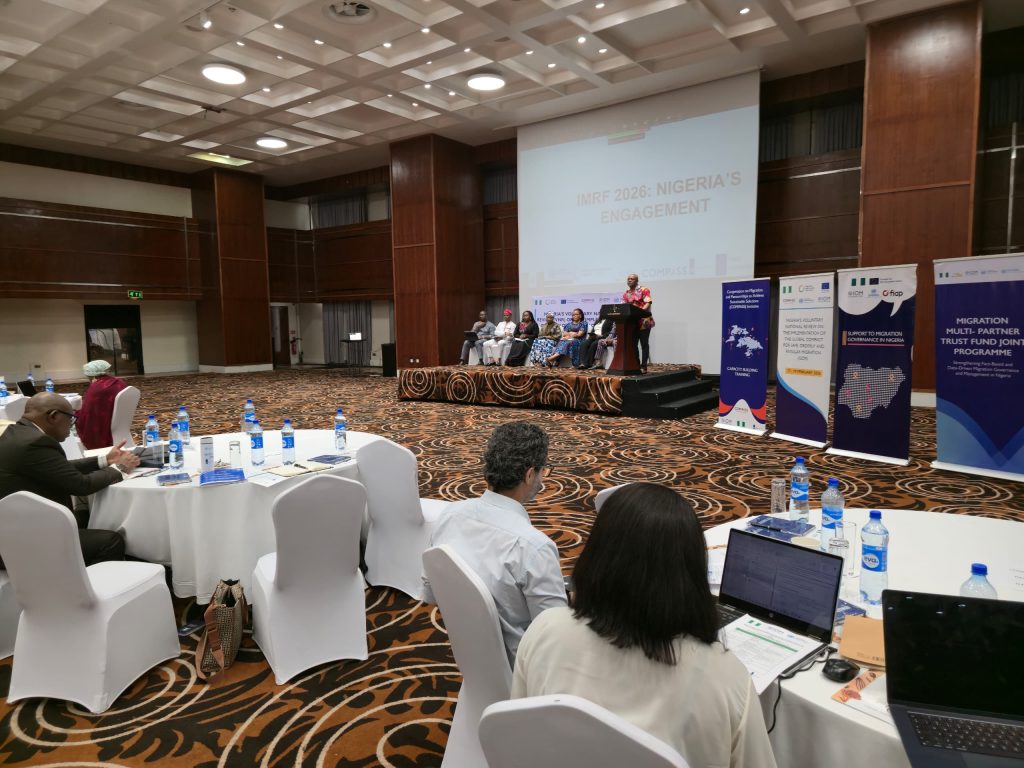
Stating that his expectations were fully met, Abiodun said: “We have made a very tremendous progress in brainstorming about so many issues. Even myself, I’ve learned so many other things that I didn’t know before when it comes to some issues in migration space.
And I think, yes, they have done so well. And with the help of IOM, who has been at the forefront of ensuring that migration governance takes that center stage in Nigeria, it’s been an amazing time.”
On how the engagement will impact on the work of NIDCOM, Abiodun said: “As you know, NIDCOM is an establishment of government set up and saddled with responsibility to harness the skills, the talent, the resources and the global exposures of over 20 million Nigerians we have in the diaspora for national development. Everything we do in NIDCOM is towards national development. Many of our programs and activities tend towards national development, and that’s why we try as much as possible to encourage Nigerians in the diaspora to come back home, to give back to the society beyond social remittances,encourage foreign direct investment and do other things that can make Nigeria better.
And this has been going on. And now, a lot of Nigerians and the diaspora are beginning to believe in this government, are beginning to trust this government and are willing to come back home and give back to the society for national development.”
Oyo, Edo governments applaud engagement
Officials of Oyo and Edo state migration bodies separately applauded the VNR, describing it as a good thing to happen to migration governance in the country.
Special adviser to Oyo State governor on Migration and Homeland Security, ACG Barrister Segun Adegoke(rtd) said the engagement was quite informative. “The body of knowledge on migration that we have acquired in these last three days, cannot be found anywhere in any textbook. When you have the mixture of participants from the MDA’s, the partner agencies, the CSOs and NGOs, and their international partners; ILO, IOM, UNODC, UNICEF, everybody now gathered in one place for the past three days to talk about migration. The focus is to review Nigerian preparation for the International Migration Review Forum but the depth of knowledge shows that migration is human being. It’s no longer phenomenal. It’s no longer history. It’s human being now. Migration has moved from what we used to call- the negative part of migration. The positive part of it- the Budget Office is involved, Nigerian Bureau of Statistics is involved, education is involved, CBN is involved.”
He added that the level of networking that “I have been able to do, both with the regulators, the National Commission for Refugees, and the international partners, we are going to bring it in now. For example, the GIZ and international partners said they have a desk office, and they are planning to establish one in Oyo State, whereby our citizens will be advised, will have awareness, will be enlightened on the path to regular migration. I know, as an immigration expert, that every country in Europe has what we call quota system for highly skilled workers, whereby in the comfort of their home, they can apply online for any job that is available in these countries. And they will be invited to the embassy. They will be invited, not that they will go and queue at the embassy for their visa. This is the kind of migration we want to have and we now know the partners to link with and get it done.”
He further said: “The remittances from the diaspora is a booster for the Nigerian economy. But we as operators, we as government, how do we encourage more of regular migration and reduce irregular migration? For we in Oyo State, that is why the governor established the Office of Migration and Homeland Security, which is an executive office.
“It’s established by the governor of Oyo State in 2022 to provide professional advice for movement of people and goods into and out of Oyo State. Remember, Oyo State is a border state. Bordered in the north by Kwara, bordered in the west by Ogun and the Republic of Benin, bordered in the east by Osun. We need to strengthen our border to prevent banditry, kidnappings and all, especially by non-Nigerians.

On his part, Hon Chief Lucky Agazuma, the Director General Edo State Migration Agency (EDMA), said the VNR was quite impressive, because “what we learnt is in line with what we do. It is in line with our core mandate.What we do in practical terms in EDMA, we are seeing here in theory. It will go a long way in shaping all we are doing, because it’s in line with the law.”
Agazuma said the lessons learnt will improve migration issues in Nigeria because “it has to do with policy document. Of course, it’s going to help.And it will go a long way to protect the migrant workers, the diaporans , and the rest of them. Because, for example, in the Gulf Nation, we know how people are suffering when they get to their employers. Automatically, they seize their documents, seize their residence permit, and enslave them. This will go a long way to reshapping all that, and avoid somebody treating Nigerians outside as if they are not from any nation.I think it’s going to help, and I must commend the federal government of Nigeria, I must commend the IOM, and, of course, all the relevant stakeholders who are present for this strategic meeting.”
Applauding the level of participation, he said: “ the engagement was quite good because we believe that no organization succeeds in isolation.
So, with this collaboration effort from the state level to federal level working together towards one goal, it’s going to yield a strategic result for Nigeria as a country.
When it comes to the area of migration, Nigeria is doing so well compared to other countries around the world.
And through the policies we have adopted so far, it’s going to help in reshaping and reducing the issue of irregular migration. For example, in the case of Edo, before now, we all know that Edo had been the hub of human trafficking. Since Governor Opkebholo who is a strategist emerged, I can tell you now that Edo has dropped in the area of irregular migration. Kano State and the rest are taking the lead. I must commend our governor, who is bringing out strategies. He brought out the rules and regulations’ strategies we should take.We followed the strategies and started getting awards.
“Other states, for example, Lagos State, Kano state, have started admiring what we are doing. As a matter of fact, we got a signal through the IOM that they will be coming to Edo to learn from us how we are doing it in Edo State. I repeat, Kano State and Lagos State are coming soon to join us in Edo State to learn from us what we are doing because the governor of Edo State, Senator Okpebholo is investing more on migration. As you can see, with his new developmental stride, where he spent billions on infrastructure, he knows that Edo people will stay back and enjoy those facilities. Therefore, that is helping to reduce this irregular migration, and creating job opportunities.”
Meeting strengthened civil society relationship with government partners- Osita Osemene
Director of Patriotic Citizen Initiative and National Secretary cum Head of Programs at Network Against Child Trafficking, Abuse and Labour in Nigeria, Osita Osemene thumbed up the VNR engagement saying that it strengthened the civil society relationship with government partners.
“We (civil society) are playing a vital role here. You can see that we are complementing and supporting government efforts in the coordination of migration governance structure in Nigeria, and also in the coordination of anti-trafficking issues in all the states of Nigeria.For me, the meeting is very, very resourceful, and very, very timely and apt. Nigeria has come a long way in the fight against the smuggling of migrants and human trafficking. From the angle of civil society, we are not actually happy with the way a lot of Nigerians have been forced and deported back to Nigeria and left to their fate without taking care of them. And they die emotionally and even psychosocially, they are not properly balanced. So we at the level of civil society are ensuring that we fight to ensure that Nigerians are brought back in dignified manner and taken care of. So that is what this program has also made us to do as civil society contribution.
Commenting on how the event is going to affect the workings of the civil society going forward Osita said: “One of the things I have seen here is that it has strengthened our relationship with the government partners. The relationship is going to help strengthen the service provision. When government and the civil society that are providing services, especially giving voice to the voiceless, partner, it will help to facilitate support. The support system has been activated because without the government structure, we will continue to make noise in Nigeria and nothing will happen. Now that the civil society has been able to harmonize their differences and the relationship with government partners, it’s going to help us respond to the needs of these people who are the vulnerable groups.
“So our relationship with the government will help us to support them while they return back or even protect their rights over there in the countries of destination.”









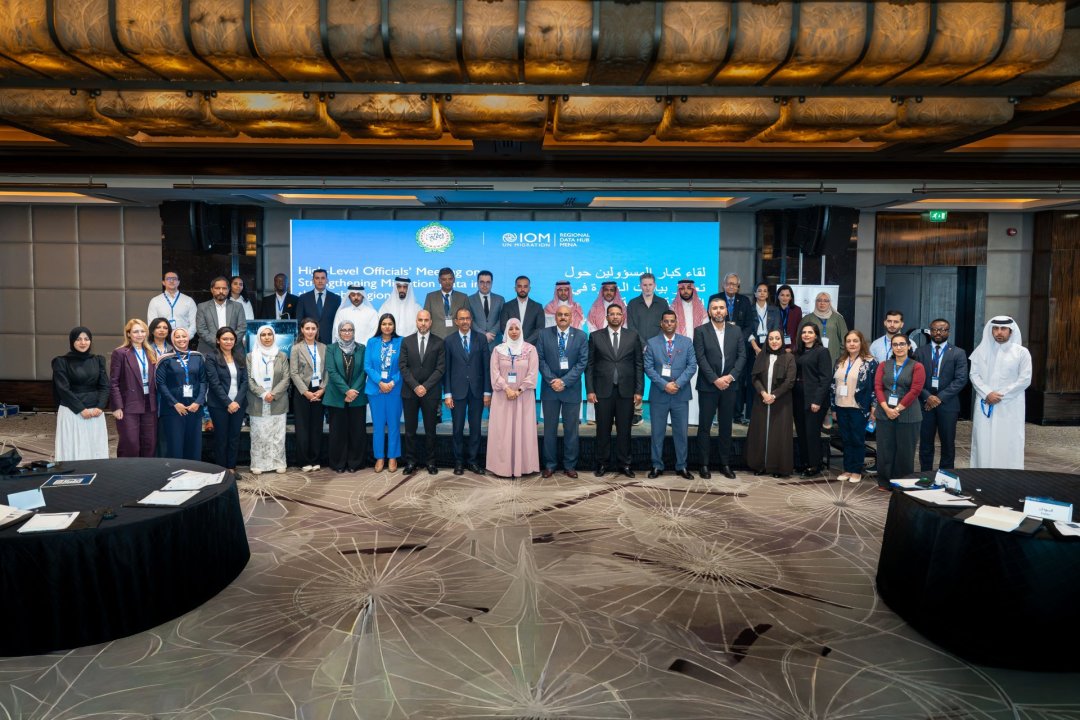
La Ligue des États arabes et l’Organisation internationale pour les migrations (OIM) ont officiellement lancé le Réseau arabe des données sur les migrations, le premier réseau arabe consacré aux données migratoires. Le lancement a eu lieu lors d’une cérémonie de signature au siège du Secrétariat général de la Ligue, au Caire, à l’occasion de l’adoption du premier plan d’action du Réseau pour la période 2026-2028.
Le Réseau constitue un mécanisme régional de coopération technique placé sous la direction des États arabes. Pour la première fois, il rassemble les offices nationaux de statistique et les organismes gouvernementaux chargés des données migratoires dans les 22 États arabes, au sein d’un cadre permanent d’action commune.
Les 22 États arabes accueillent environ 44,5 millions de migrants internationaux, soit près de 14,7 % du total mondial, tandis que 37,2 millions de personnes originaires des pays arabes vivent en dehors de leur pays d’origine, dont environ la moitié dans d’autres États arabes. Toutefois, les données migratoires restent dispersées entre plusieurs institutions et continuent de présenter des difficultés en matière de couverture, d’actualité et de comparabilité.
Le Réseau aidera les États arabes à harmoniser les concepts et les méthodologies, à échanger leurs expertises et à mieux comprendre les dynamiques migratoires dans les pays d’origine, de transit, de destination et de retour.
Le plan d’action a été signé par Mme Abeer Al-Jalahma, ministre plénipotentiaire et directrice du Département des statistiques et des bases de données de la Ligue des États arabes, et M. Justin MacDermott, directeur régional adjoint de l’OIM chargé des opérations pour le Moyen-Orient et l’Afrique du Nord. La cérémonie s’est déroulée en présence d’ambassadeurs et de représentants de missions diplomatiques, de directeurs généraux d’offices nationaux de statistique, de hauts responsables gouvernementaux ainsi que de partenaires régionaux et internationaux.
Elle a marqué la conclusion d’une réunion de deux jours de hauts responsables consacrée au renforcement des données migratoires dans la région arabe, tenue les 27 et 28 octobre. Cette rencontre a réuni des représentants de haut niveau de 13 États arabes : l’Algérie, Bahreïn, l’Égypte, l’Irak, la Jordanie, la Libye, la Mauritanie, le Maroc, le Qatar, l’Arabie saoudite, le Soudan, la Tunisie et le Yémen. Les participants ont examiné les priorités de l’action commune et contribué à l’élaboration du plan d’action avant son adoption.
« Le lancement du Réseau arabe des données sur les migrations marque une étape importante dans le processus de coopération statistique arabe. Pour la première fois, nos pays se réunissent autour d’une plateforme permanente consacrée aux données migratoires, dirigée par les États arabes et guidée par leurs priorités. Ce que nous avons mis en place aujourd’hui n’est pas simplement une nouvelle initiative, mais un langage statistique arabe commun au service des décideurs et qui reflète les réalités de nos populations », a déclaré Mme Abeer Al-Jalahma, ministre plénipotentiaire.
Pour l’OIM, Justin MacDermott a souligné : « Le lancement du Réseau arabe des données sur les migrations ne marque pas l’aboutissement de nos efforts, mais le début d’un nouveau chapitre de la coopération régionale, fondé sur la confiance, le partage des connaissances, l’appropriation nationale et l’action collective. »
Dans le cadre du plan d’action, le Réseau aura pour missions de :
– coordonner les travaux des équipes nationales de points focaux au sein des offices de statistique et des organismes gouvernementaux concernés ;
– harmoniser les concepts, les méthodologies et les classifications, et élaborer un cadre commun d’indicateurs aligné sur les Recommandations des Nations Unies de 2025 sur les statistiques des migrations internationales ;
– renforcer les capacités nationales, notamment dans les domaines des données administratives, de l’analyse géospatiale et de l’utilisation responsable de l’intelligence artificielle ;
– produire des analyses régionales conjointes, renforcer la protection des données et promouvoir leur partage responsable.
Les États arabes ont manifesté un engagement clair dès le lancement du Réseau, puisque dix pays ont déjà désigné leurs points focaux nationaux. Les délégations ont également présenté des propositions concrètes visant à développer davantage les mécanismes de fonctionnement du Réseau.
The League of Arab States and the International Organization for Migration (IOM) have formally launched the Arab Migration Data Network, the first Arab network dedicated to migration data. The launch took place at a signing ceremony at the headquarters of the League’s General Secretariat in Cairo, where the Network’s first Action Plan (2026-2028) was first adopted.
The Network is a regional mechanism for technical cooperation led by Arab States. For the first time, it brings together national statistical offices and government entities responsible for migration data across all 22 Arab States within a permanent framework for joint action.
The 22 Arab States host approximately 44.5 million international migrants, around 14.7 per cent of the global total, while 37.2 million people from Arab countries live outside their countries of origin, about half of them in other Arab States. Yet migration data remain spread across multiple institutions and continue to face challenges in coverage, timeliness and comparability.
The Network will help Arab States harmonize concepts and methodologies, exchange expertise, and build a clearer picture of migration across countries of origin, transit, destination and return.
The Action Plan was signed by H.E. Minister Plenipotentiary Abeer Al-Jalahma, Director of the Statistics and Databases Department at the League of Arab States, and Mr. Justin MacDermott, IOM Deputy Regional Director for Operations for the Middle East and North Africa. The ceremony was attended by ambassadors and representatives of diplomatic missions, directors-general of national statistical offices, senior government officials, and regional and international partners.
It concluded a two-day Senior Officials Meeting on Strengthening Migration Data in the Arab Region (27-28 October), which brought together high-level representatives from 13 Arab States: Algeria, Bahrain, Egypt, Iraq, Jordan, Libya, Mauritania, Morocco, Qatar, Saudi Arabia, Sudan, Tunisia and Yemen. Participants discussed priorities for joint action and helped shape the Action Plan ahead of its adoption.
“The launch of the Arab Migration Data Network marks a milestone in the journey of joint Arab statistical cooperation. For the first time, our countries are coming together around a permanent platform dedicated to migration data, led by Arab States and driven by their priorities. What we have built today is not simply a new initiative, but a shared Arab statistical language that serves decision-makers and reflects the realities of our people,” said H.E. Minister Plenipotentiary Abeer Al-Jalahma.
For IOM, Justin MacDermott noted: “The launch of the Arab Migration Data Network is not the culmination of our efforts; it is the beginning of a new chapter in regional cooperation, built on trust, shared knowledge, national ownership and collective action.”
Under the Action Plan, the Network will:
- coordinate the work of national focal point teams in statistical offices and relevant government entities;
- harmonize concepts, methodologies and classifications, and develop a common indicator framework aligne with the 2025 United Nations Recommendations on Statistics of International Migration;
- strengthen national capacities, including in administrative data, geospatial analysis and the responsible use of artificial intelligence; and produce joint regional analyses and strengthen data protection and responsible data sharing.
Arab States showed clear commitment from the outset, with 10 countries already designating national focal points. Delegations also presented practical proposals to further develop the Network’s working mechanisms.
Features
Gaza : Près de deux millions de personnes ont besoin d’une aide d’urgence en matière d’hébergement
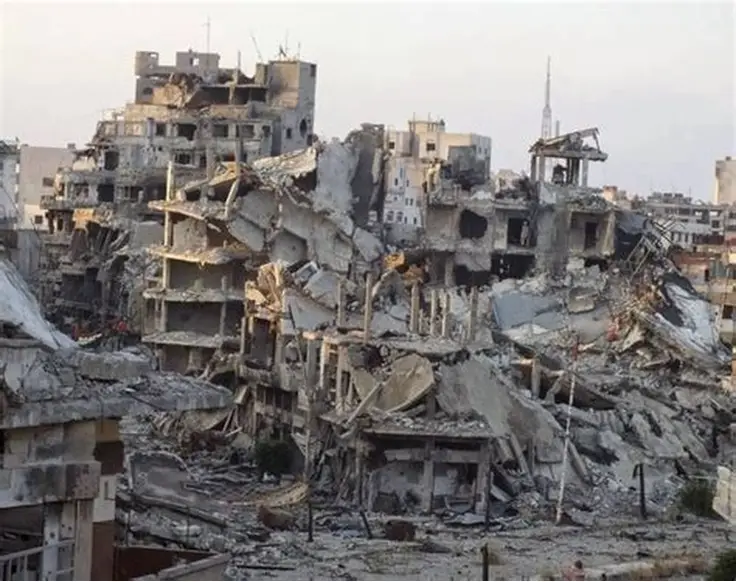
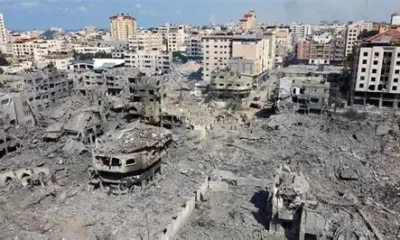
Près de deux millions de personnes, soit la quasi-totalité de la population de Gaza, ont toujours besoin d’une aide en matière d’hébergement, un an après l’annonce d’un cessez-le-feu. Alors que les pluies hivernales commencent, l’ensemble des approvisionnements prévus par les partenaires humanitaires intervenant dans le domaine de l’hébergement ne couvre qu’à peine 17 % des besoins identifiés pour l’hiver, a averti aujourd’hui Amy Pope, Directrice générale de l’Organisation internationale pour les migrations (OIM).
Après des années de déplacements et de destructions généralisées, les Palestiniens affrontent un quatrième hiver sans protection adéquate contre la pluie, les inondations et le froid. L’insuffisance des financements et les restrictions persistantes imposées par les autorités israéliennes à l’entrée de fournitures essentielles destinées aux abris empêchent les organisations humanitaires d’apporter une réponse à la hauteur des besoins.
« Les familles qui ont déjà subi des déplacements répétés et des pertes dévastatrices doivent pouvoir affronter l’hiver dans la sécurité et la dignité », a déclaré Pope. « Les matériaux destinés aux abris doivent pouvoir entrer rapidement, de manière prévisible et en quantités suffisantes pour répondre aux besoins. »
Plus de la moitié des tentes et des abris de fortune actuellement utilisés sont en mauvais état et doivent être remplacés. Les tentes sont conçues comme une mesure d’urgence temporaire et ne durent généralement que six à douze mois.
Faute d’autres solutions, de nombreuses familles vivent dans des bâtiments endommagés par la guerre qui présentent de graves risques pour leur vie. Le mois dernier seulement, des dizaines de personnes ont été tuées dans la ville de Gaza lorsqu’un bâtiment endommagé par la guerre s’est effondré. En août, un partenaire de l’OIM avait recensé plus de 3 600 structures jugées dangereuses et présentant un risque d’effondrement.
Le renforcement du phénomène El Niño devrait entraîner des précipitations plus abondantes, susceptibles de fragiliser davantage les bâtiments déjà dangereux, tandis que les systèmes de drainage fortement endommagés exposent les communautés aux inondations.
L’OIM et ses partenaires chargés de la gestion des sites ont recensé près de 1,8 million de personnes vivant dans des sites de déplacement, dont la plupart se trouvent dans des zones exposées aux risques d’inondation. Les eaux de crue pourraient endommager les abris, détruire les derniers biens des familles et contraindre les populations à se déplacer une nouvelle fois.
Environ 8 600 kits d’hébergement d’urgence de l’OIM sont prépositionnés à l’extérieur de Gaza et prêts à être acheminés, mais les autorités israéliennes continuent de leur refuser l’accès aux points de passage. Pendant ce temps, les équipes humanitaires utilisent, dans la mesure du possible, des matériaux disponibles localement et des matériaux récupérés. Ces efforts apportent un soutien temporaire limité, mais restent insuffisants pour répondre à l’ampleur des besoins en matière d’hébergement.
« Les solutions sont connues, les fournitures sont prêtes et les équipes humanitaires sont préparées à les acheminer », a déclaré Pope. « Un accès humanitaire immédiat et durable est essentiel pour protéger des vies, renforcer les abris endommagés et aider les familles à dépasser le stade des solutions temporaires. Toutes les parties doivent faciliter une action humanitaire fondée sur les principes humanitaires et soutenir une réponse à la hauteur de la gravité de la crise. »
L’OIM appelle à autoriser immédiatement et durablement l’entrée de tentes, de kits d’hébergement d’urgence, d’unités de logement de secours, de bois, d’outils et d’autres matériaux nécessaires pour renforcer les abris, réparer les habitations endommagées et aider les familles à trouver des logements plus sûrs.
Un accès prévisible aux équipements spécialisés, au carburant, aux pièces de rechange et aux matériaux de construction sera également essentiel pour permettre l’enlèvement des décombres et progresser vers un relèvement précoce.

La Ligue des États arabes et l’OIM lancent le Réseau arabe des données sur les migrations
League of Arab States, IOM launch Arab Migration Data Network

Ebola : la RDC confirme 10 000 cas, le NRC appelle à un renforcement urgent de la réponse

Ebola:DRC confirms 10,000 cases, NRC seeks scale-up

Libye : des centaines de migrants rapatriés, des renforts déployés à Tobrouk
-
 Features3 weeks ago
Gaza : Près de deux millions de personnes ont besoin d’une aide d’urgence en matière d’hébergement
-

 News Extra3 weeks ago
NACTAL conteste le rapport américain sur la traite des personnes et exige la reconnaissance des contributions des organisations de la société civile nigérianes
-
 News Extra3 weeks ago
Un avocat ougandais exhorte l’UA à rejeter les accords migratoires avec l’Europe
-
 News Extra2 weeks ago
Sudan: Drone attacks disrupt school lessons in El Obeid- NRC
-
 Features3 weeks ago
Gaza: About two million need urgent shelter assistance
-

 News Extra3 weeks ago
NACTAL faults US trafficking report, demands recognition of Nigerian CSOs’ contributions
-

 News Extra3 weeks ago
US to deport fresh set of Nigerians over alleged criminal offences
-
 News3 weeks ago
Ugandan lawyer urges AU to reject Europe’s migration deals