
Features
Millions of displaced, migrant women, girls remain without access to safe adequate shelter- Amy Pope

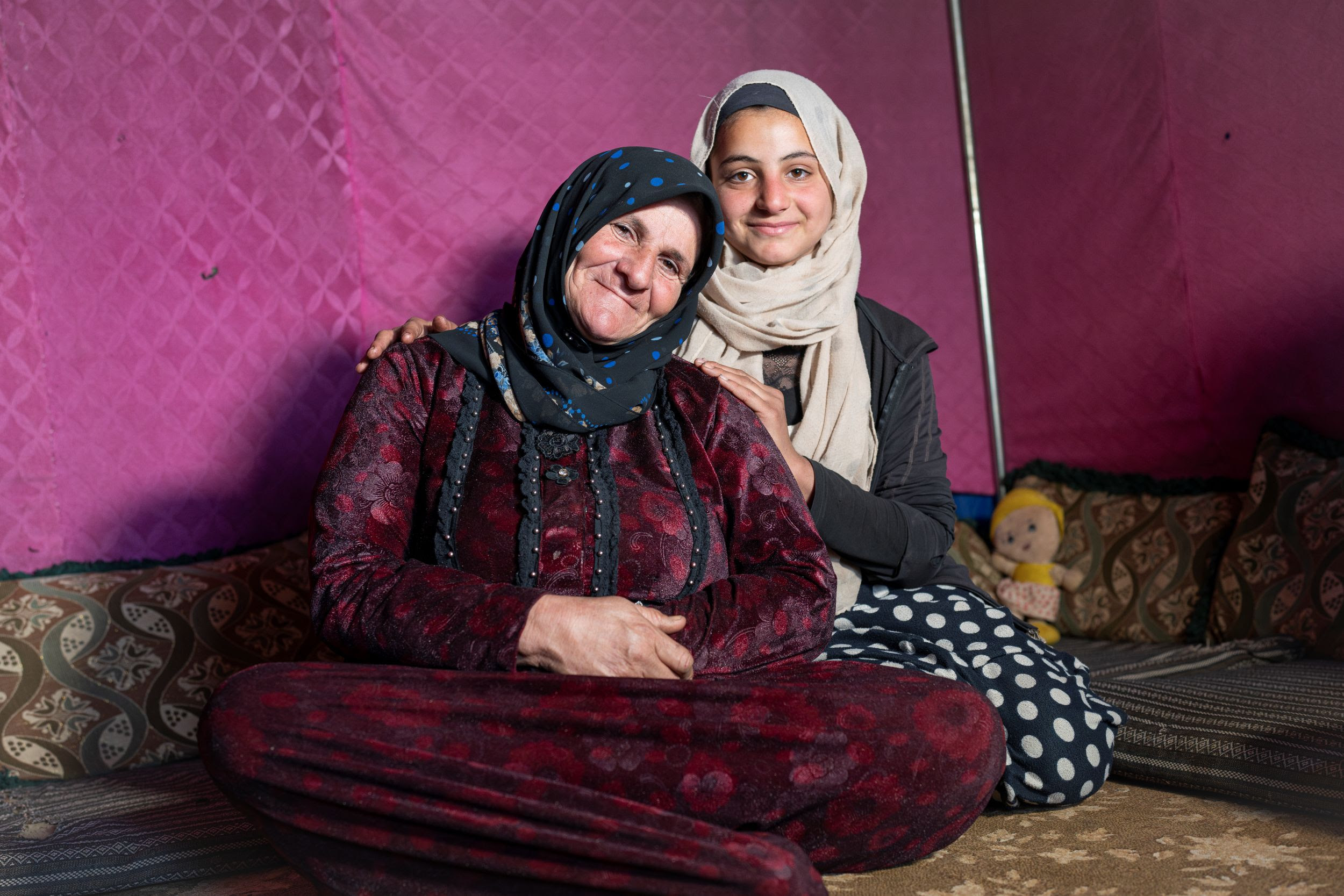
UN agency, the International Organization for Migration (IOM) warns that millions of displaced and migrant women and girls remain without access to safe and adequate shelter, exposing them to heightened risks of violence, exploitation and exclusion from essential services. The IOM said this as the world marks International Women’s Day. IOM calls on governments and partners to scale up investment in gender-responsive shelter solutions that protect rights, safety and dignity.
“For women and girls affected by crisis, safety, dignity and access to services cannot be taken for granted,” said IOM Director General Amy Pope. “Inadequate living conditions increase exposure to violence and limit the ability to access support and rebuild. These risks must be addressed through sustained investment, stronger protection systems and solutions designed with communities themselves.”
The consequences of inadequate shelter are both immediate and long-term. In crises, women and girls often face heightened risks of violence, exploitation and abuse. They account for nearly half of the world’s displaced population, yet millions still lack access to safe and dignified shelter – one of the most urgent needs in emergencies. Without it, recovery becomes significantly more difficult.
Across displacement settings, many women and girls continue to live in overcrowded, unsafe or makeshift conditions that expose them to harm and undermine their health, education and wellbeing. At the same time, the absence of identity documentation leaves many unable to access services, reclaim property or secure housing solutions, further deepening vulnerability.
The challenges often persist long after initial displacement. Women returning home frequently encounter barriers to reclaiming property or securing documentation, limiting their ability to rebuild livelihoods and participate fully in community life. Globally, women account for less than 20 per cent of landholders, reflecting persistent discrimination in land and property rights. Without secure tenure, women remain at risk of eviction, secondary displacement and exclusion from assistance.
In response, IOM works with women, community leaders and local authorities to design shelter interventions that are safe, dignified and responsive to local realities. By linking emergency shelter assistance with longer-term housing and tenure support, IOM aims to strengthen resilience and reduce future risks. However, sustained and predictable funding is essential. Current funding gaps continue to limit shelter and protection programming, leaving many women and girls without adequate housing or security.
IOM calls for gender-responsive humanitarian and development action that not only delivers shelter assistance but also supports legal and policy reforms to strengthen women’s and girls’ access to housing, land and tenure rights, ensuring lasting safety, dignity and wellbeing.
As IOM assumes the co-leadership of the Global Shelter, Land and Site Coordination Cluster, the Organization reaffirms its commitment to placing safe shelter at the centre of protection and recovery efforts. Advancing equality requires practical measures that ensure every woman and girl on the move has not only rights in principle, but a secure place from which to exercise them.





The United Nations has announced a new set of senior appointments to the leadership of the UN Refugee Agency (UNHCR), with Secretary-General António Guterres naming Tressa Rae Finerty as Deputy High Commissioner for Refugees, Antón Leis García as Assistant High Commissioner for Operations, and Edem Wosornu as Assistant High Commissioner for Protection.
The appointments, announced on Saturday, are expected to take effect in the coming weeks.
The three officials will occupy the most senior positions within UNHCR, supporting the High Commissioner in leading the agency’s global response to the protection and assistance of refugees, stateless persons and other people forced to flee their homes.
Welcoming the appointments, UN High Commissioner for Refugees Barham Salih expressed confidence that the incoming officials would strengthen the agency’s response to the growing global displacement crisis.
“I warmly welcome these appointments and look forward to working closely with Tressa, Anton and Edem,” Salih said.
“Their leadership, experience and commitment will be invaluable as UNHCR responds to displacement challenges around the world. Together, we will work to continue strengthening protection, expanding opportunities for self-reliance and pursuing lasting solutions that help refugees rebuild their lives with dignity.”
Finerty, a career member of the U.S. Senior Foreign Service, currently serves as Chargé d’Affaires at the United States Mission to the United Nations and Other International Organizations in Geneva. She previously served as Deputy Chief of Mission in Geneva and Deputy Executive Secretary in the Office of the U.S. Secretary of State. Her diplomatic career has also included postings at the U.S. Mission to the United Nations in New York and embassies in Malaysia, Iraq, Armenia and Thailand. In addition, she has taught refugee policy at New York University and Georgetown University.
Leis García currently heads the Spanish Agency for International Development Cooperation (AECID), Spain’s development and humanitarian agency. He has previously held senior positions at the Organisation for Economic Co-operation and Development (OECD), the Office of the President of the Spanish Government, and international financial institutions including the African Development Bank and the World Bank Group.
Wosornu currently serves as Director of the Crisis Response Division at the United Nations Office for the Coordination of Humanitarian Affairs (OCHA) and chairs the Inter-Agency Standing Committee Emergency Directors Group. She has held several senior headquarters and field positions within OCHA and began her United Nations career as an intern at UNHCR before working in the private legal sector in the United Kingdom.
The newly appointed officials will replace Kelly T. Clements, Deputy High Commissioner; Raouf Mazou, Assistant High Commissioner for Operations; and Ruvendrini Menikdiwela, Assistant High Commissioner for Protection, whose terms are coming to an end.
Paying tribute to the outgoing leaders, Salih praised their contributions to the agency’s humanitarian mission.
“The organization owes a profound debt of gratitude to Kelly, Raouf and Ruven for their exceptional service and dedication,” he said. “Their leadership has strengthened UNHCR’s ability to protect and assist millions of displaced and stateless people around the world.”
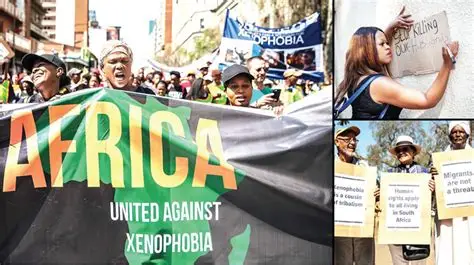
The final batch of 40 stranded Nigerians evacuated from South Africa has arrived at the Murtala Muhammed International Airport (MMIA) in Lagos, bringing to a close the Federal Government’s evacuation exercise that returned a total of 1,174 citizens.
The returnees landed on Friday night aboard a chartered Air Peace flight, marking the sixth and final phase of the evacuation programme.
In a statement issued on Saturday, the Director of Media, Public Relations and Protocols of the Nigerians in Diaspora Commission (NiDCOM), Abdur-Rahman Balogun, said the exercise was carried out through six flights operated by Air Peace and ValueJet.
According to the commission, the first five batches brought home 258, 266, 262, 282 and 66 Nigerians, while the final chartered Air Peace flight evacuated the remaining 40 stranded citizens.
Balogun said the returnees expressed appreciation to President Bola Tinubu for approving the evacuation from South Africa. They also thanked the Minister of Foreign Affairs, Bianca Odumegwu-Ojukwu, the Acting Nigerian Ambassador to South Africa, Temitope Alexander-Ajayi, and NiDCOM Chairman and Chief Executive Officer, Abike Dabiri-Erewa, for facilitating their safe return.
The evacuees were received at the airport by NiDCOM officials, who also announced a series of support packages from government agencies, corporate organisations and individuals.
According to the statement, Governor Hope Uzodimma of Imo State approved a grant of N1 million for each returnee from the state. Telecommunications company MTN also donated free SIM packs with N50,000 worth of data and pledged to credit each returnee’s bank account with N100,000.
Officials from the Edo and Delta State governments similarly announced assistance for their indigenes among the evacuees.
The commission added that the JAAL Foundation pledged empowerment support for 50 female returnees, while the General Overseer of Omega Power Ministries Worldwide, Apostle Dr Chibuzor Gift Chinwe, was commended for providing free accommodation for about 52 returnees, skills acquisition opportunities for their families and free education for their children up to university level.
The returnees also acknowledged Pastor Bolaji Idowu of Harvesters Church for donating N100,000 each to 66 evacuees, while real estate firm Cruxstone provided financial support to the first batch of returnees.
Balogun said officials of the National Emergency Management Agency (NEMA), the National Commission for Refugees, Migrants and Internally Displaced Persons (NCFRMI), the Nigerian Immigration Service (NIS), the Federal Airports Authority of Nigeria (FAAN), the National Identity Management Commission (NIMC) and other security agencies were present at the airport to receive and document the returnees.
“The returnees were full of gratitude for the donations, support and warm welcome received,” the statement said.
The UN Refugee Agency, UNHCR, and the UN Migration Agency, IOM have welcomed the entry into force today of the European Union’s Pact on Migration and Asylum as an opportunity to move beyond crisis-driven responses and implement a more predictable, fair and effective approach to the issues across Europe.
EU Member States should seize this moment to strengthen migration management and refugee protection while advancing solidarity and responsibility-sharing in line with European values and international obligations, the agencies’ chiefs said.
“The Pact’s entry into full effect today is an important step toward a more predictable and coherent European migration system. What matters now is steady implementation over time that is effective, humane, sustainably resourced and grounded in cooperation,” said Amy Pope, Director General of the International Organization for Migration. “The priority is turning the reforms into practical results for States, communities, and people on the move.”
The Pact aims to make EU asylum systems more efficient and consistent, offering a structured framework for Member State cooperation. This can reduce backlogs while maintaining the quality of assessments, provide greater certainty for asylum-seekers, and enable refugees to begin rebuilding their lives and contributing to their communities sooner.
“This Pact is an important step in the right direction, advancing shared responsibility and more predictable, sustainable approaches across the European Union,” said Barham Salih, UN High Commissioner for Refugees. “UNHCR stands ready to support all Member States in strengthening asylum systems – ensuring access to protection for those in need, upholding human rights and dignity, and enabling safe, lawful and dignified returns for those not in need of international protection.”
IOM and UNHCR welcome the EU’s renewed focus on partnerships with all affected countries. Reducing irregular movements means addressing root causes, ensuring access to protection, tackling smuggling networks, and enabling safe, regular pathways. The organizations will continue to support route-based approaches that ensure policies deliver on protection, dignity and shared responsibility, while contributing to sustainable solutions that benefit both countries and communities along migration routes.
UNHCR and IOM welcome several key elements of the Pact, including earlier identification of people with specific needs, strengthened legal assistance, and new independent monitoring mechanisms at external borders. Returns of those with no legal right to stay must be both effective and humane. Alongside enforcement, they should ensure access to informed voluntary return, early case management, and reintegration support, working with countries of origin, transit and first asylum as part of a balanced approach that upholds dignity and fundamental rights.
These measures can help ensure that asylum processing and return procedures are faster and fairer, reducing uncertainty for asylum-seekers while strengthening public confidence in the migration and asylum system.
UNHCR and IOM stress that implementation will be the decisive test. Procedures must be carried out with adequate safeguards to ensure that no one is returned or transferred to a situation where they may face persecution, conflict or other forms of serious harm.

Migration Won the 2026 World Cup. It Is Still Treated Like a Crime at the Border

Ukraine: 87 per cent of displaced households have had to take at least one difficult step to cope

IOM assists over 3,500 victims of trafficking across 39 countries

ICC confirmation of 17 charges against El-Hishri draws praise from rights groups

Expert raises questions over UNHCR’s strategic direction after new leadership appointments
-

 News3 weeks ago
IYAMIDR commends Okpebholo for ₦1m support to South Africa returnees
-

 News Extra3 weeks ago
Solomon Okoduwa: An accomplished migration expert champions reforms, diaspora engagement
-
 Uncategorized3 weeks ago
Venezuela: IOM delivers support via in-kind cargo flight funded by DHL’s Disaster Response Team
-
 Features3 weeks ago
Sixth batch of Nigerians stranded in South Africa return home
-
 News3 weeks ago
‘AI has potential to transform humanitarian action’
-

 News Extra2 weeks ago
50 die as boat carrying about 60 people capsizes
-
 News3 weeks ago
Over 200 migrants intercepted in Sirte, Tobruk
-

 News Extra3 weeks ago
‘Eight people die in the Mediterranean per day’