
Features
Reintegration or a facade? Nigerian returnees challenge promise of starting again


At the World Social Forum in Cotonou, Nigerian return migrants questioned the promise of reintegration, arguing that returning people home without addressing trauma, poverty, stigma and the reasons they left is not the same as helping them rebuild their lives.
For many migration programmes, the story appears simple: a migrant leaves, encounters difficulties, returns home and receives support to start again.
But for Nigerian return migrants who gathered at the World Social Forum in Cotonou in 2026, the reality is far more complicated.
Behind the language of assisted voluntary return and reintegration are stories of detention, coercion, trauma, stigma, inadequate training, failed businesses and a painful question that echoed through the panel discussion:
Reintegration into what?
The participants did not speak as statistics or beneficiaries of migration programmes. They spoke as people who had lived through the migration system and returned to confront many of the same social and economic conditions that had pushed them to leave.
Their central argument was stark: physical return is not reintegration.
And where programmes present packages, training or financial assistance as evidence of successful reintegration while deeper problems remain unresolved, they described the process as a “reintegration façade.”
“I Was Sent on My Way”
For Udo, the failure began almost immediately after returning to Nigeria.
He said he came back in a severely distressed mental state after being held in what he described as a notorious detention centre. What he needed, he said, was medical attention, psychological support and time to recover.
Instead, he was lodged for one night.
The following morning, he was sent on his way.
Two months later, he was recalled for business training and given a small amount of money to start a business he had no prior knowledge of. He was also paired with people he did not know as business partners.
For Udo, the arrangement was almost destined to fail.
The experience, he said, destroyed much of the confidence he had left in the reintegration process.
His story exposes one of the central weaknesses raised at the Forum: support cannot be meaningful if it is disconnected from the person’s actual condition, skills, interests and circumstances.
A returnee who has just emerged from detention and trauma may need counselling before entrepreneurship. Someone without business experience may require sustained training and mentorship rather than a small start-up grant. And someone whose original reasons for migrating remain unchanged may find little reason to believe that returning home has solved anything.
“The push factor of my migration was still evident and untreated,” Ude’s testimony suggested.
That, for him, was the fundamental contradiction.
He had been returned.
But he had not been rebuilt.
When “Voluntary” Does Not Feel Voluntary
For several participants, the problem begins even before reintegration—with the word “voluntary.”
Rhoda questioned whether a return can genuinely be called voluntary when a migrant is detained and returning home appears to be the only available route out.
“If someone is in detention and the only option available to them to leave that situation is to return to their country, can we really say that the return is voluntary?” she asked.
Awe offered an even more personal account.
He described his return from Libya as anything but voluntary, saying he was confronted with conditions in which remaining appeared to mean risking his life.
He recalled being presented with two choices: return to Nigeria or remain in Libya amid violence and insecurity.
“I had to return back instead of staying in Libya to die,” his testimony stated.
For the participants, such experiences challenge the neat language often used to describe return programmes.
A decision made under detention, fear, violence, insecurity or the absence of realistic alternatives may technically be recorded as a return, but the participants argued that the circumstances surrounding that decision matter.
Consent cannot be understood separately from the conditions under which it is given.
The Business Package Is Not the Person
Another major criticism centred on the economic component of reintegration.
The participants questioned a model in which returnees are frequently directed towards small businesses and short vocational courses, as though entrepreneurship were a universal solution to the complex consequences of migration.
Rhoda put the question simply:
Why should entrepreneurship be the answer for everybody?
Some returnees want employment. Others want to return to school. Some want to learn technology, pursue a profession or develop a completely different career.
The problem, she argued, is what happens when programmes are designed for returnees without being designed with them.
Olu made the same point from a broader perspective.
For him, reintegration must empower migrants rather than become a mechanism for discouraging migration.
People with lived experience, he argued, must be involved in shaping migration and reintegration policies.
“Nothing about migrants without the voice of migrants,” was the principle underpinning his intervention.
Ido was particularly critical of the vocational training component of reintegration programmes.
He argued that training lasting only a few days or a few months cannot necessarily produce competent artisans or professionals capable of sustaining themselves in competitive markets.
He cited examples of returnees being trained as tailors, barbers, hairstylists and solar-energy installers within very short periods.
The question is not whether these skills are useful.
It is whether the intervention provides enough time, equipment, mentorship, market access and follow-up for those skills to become sustainable livelihoods.
A sewing machine, barbering kit or business grant may make for an attractive programme statistic.
But a returnee’s survival cannot be measured by the number of items contained in a reintegration package.
The Trauma That Does Not Appear in the Package
Perhaps the most persistent concern raised at Cotonou was the psychological dimension of return.
Immaculate argued that reintegration must recognize the whole person.
A migrant may return carrying trauma from detention, violence, exploitation, disappointment and dangerous journeys. Those experiences do not disappear at the border.
Yet economic support can sometimes dominate reintegration programmes while psychosocial care receives less attention.
The result can be a person who has technically received “reintegration assistance” but remains emotionally and socially unable to rebuild.
Immaculate posed a series of questions that go beyond whether a package has been delivered:
Is the business sustainable?
Does the returnee have access to counselling?
Is the family supportive?
Are there employment opportunities?
Has the community accepted the person?
And what happens when the initial assistance runs out?
These questions point to a different definition of reintegration—one based not on delivery of assistance, but on whether a person’s life is actually improving.
From Survivor to “Success Story”
Ife and Ewa raised another uncomfortable dimension: the way return migrants’ stories can be used by institutions and campaigns.
Ife described a situation in which migrants are invited to recount experiences of trauma, only for those stories to become tools for discouraging others from migrating.
The returnee’s suffering becomes a campaign message.
The migrant’s pain becomes evidence.
The survivor becomes a warning.
But what happens to the person behind the story?
Ife challenged the tendency to portray migrants primarily as helpless victims, arguing that their skills, knowledge, resilience and capacity to create change are frequently overlooked.
The labels can be damaging.
Returnees may be described as victims, greedy, ungrateful, entitled, unruly or insatiable, while their abilities and aspirations disappear behind the label.
The participants called for a shift from the victim narrative towards one that recognizes return migrants as people with agency.
That does not mean denying the trauma they experienced.
It means refusing to allow trauma to become their entire identity.
“They Covered Their Noses”
Ewa’s testimony brought the issue of stigma into sharp focus.
She recalled returning to Nigeria in 2017 and encountering people who presented themselves as humanitarians but responded to survivors with discrimination.
She remembered people covering their noses because they believed survivors smelled.
It was a small gesture, but for her it represented something much larger: the humiliation that can accompany return.
Instead of being welcomed with dignity, survivors can return to judgment.
Some are told they were greedy.
Others are told they should never have travelled.
Some are made to feel that the abuse, exploitation or violence they experienced was ultimately their own fault.
For survivors, such attitudes can compound trauma rather than heal it.
Ewa also recounted experiences in which organizations allegedly took returnees to rehabilitation centres without adequate consent, restricted communication with families and placed people in skills programmes they had not chosen.
She said she had to fight for her own release before she could return to her family.
Her account raises a fundamental principle for reintegration programmes:
Support should never become another form of control.
A System Designed Without the People It Claims to Help?
Ara described reintegration as a mechanism that can be used to control migrants and consolidate power rather than provide the support promised.
Ido went further, arguing that the concept of reintegration can allow European migration policies to distance themselves from the consequences of those policies while responsibility is shifted onto African governments.
His criticism reflects a broader concern expressed during the Forum about externalization—the shifting of migration-control responsibilities beyond Europe’s borders.
For the participants, this creates a troubling sequence.
Movement is restricted.
People become stranded or detained.
They return under difficult circumstances.
They receive limited assistance.
Their stories are then used to discourage other migrants from making similar journeys.
And all of this can be presented as a successful reintegration intervention.
Ife captured the contradiction bluntly:
After restricting people’s freedom of movement and returning them under difficult circumstances, institutions then use their experiences to advance migration-control agendas—and call that reintegration.
Reintegration Must Begin With Listening
The Nigerian participants at the World Social Forum were not simply rejecting support.
They were demanding a different kind of support.
One that begins with listening.
One that recognizes that returnees are not identical.
One that does not assume that everyone wants to become an entrepreneur.
One that provides psychosocial support alongside economic assistance.
One that offers meaningful training rather than short courses designed primarily to tick programme boxes.
One that includes long-term follow-up.
One that respects consent and freedom of choice.
And, above all, one that allows returnees to participate in designing the interventions that are supposed to rebuild their lives.
The participants’ argument is ultimately about accountability.
A reintegration programme should not be judged simply by how many people returned, how many received packages, how many attended training or how many businesses were launched.
The more difficult questions are:
Did the person recover?
Did the business survive?
Did they find meaningful work?
Did their mental health improve?
Did their family and community accept them?
Did they regain control over their lives?
And are the conditions that drove them to migrate still there?
If the answer to these questions is no, then a return may have taken place—but reintegration remains incomplete.
The Question Cotonou Leaves Behind
The debate at the World Social Forum did not end with a rejection of reintegration.
Instead, it demanded that the word itself be taken more seriously.
For Ude, reintegration failed because a traumatized person was given inadequate support and expected to build an unfamiliar business.
For Rhoda, the word “voluntary” deserves scrutiny when people make decisions under detention or extreme pressure.
For Awe, return was a choice made against the backdrop of danger.
For Ido, short vocational training and inadequate economic interventions cannot deliver the independence programmes promise.
For Immaculate, reintegration must extend beyond a package to encompass mental health, family, community, employment and sustainability.
For Olu, migrants with lived experience must have a seat at the table.
For Ife, returnees must not be reduced to stories of suffering that serve other people’s agendas.
For Ewa, dignity must be at the centre of the return experience.
And for Ara, the power dynamics behind reintegration must be confronted.
Together, their testimonies point towards one uncomfortable conclusion:
A person cannot be reintegrated simply because they have been returned.
Reintegration is not a suitcase handed over at the airport.
It is not a cash grant.
It is not a three-month skills course.
It is not a photograph of a returnee receiving equipment.
And it is certainly not a success story written before the returnee has had the chance to rebuild.
True reintegration must mean restoring agency, dignity, opportunity, belonging and hope.
Until those things become central to the process, the question raised in Cotonou will remain difficult to escape:
Reintegration into what?







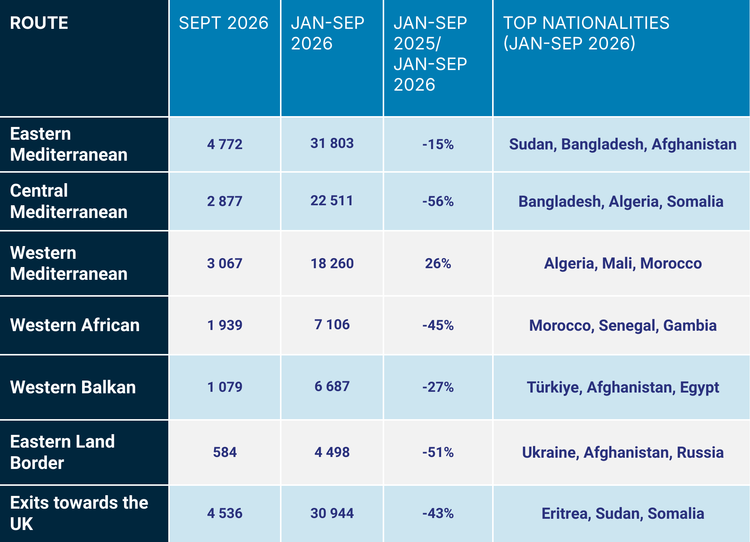
Le nombre de franchissements irréguliers des frontières de l’Union européenne (UE) a continué de diminuer au cours des neuf premiers mois de 2026, avec une baisse de près d’un tiers des détections par rapport à la même période de l’année dernière. Un peu plus de 91 000 franchissements ont été enregistrés, selon les données préliminaires recueillies par Frontex.
Cette baisse sur presque toutes les principales routes migratoires reflète la coopération soutenue avec les pays partenaires ainsi que les mesures préventives mises en place dans les principaux pays de départ, qui continuent de réduire le nombre d’embarcations prenant la mer en direction de l’Europe.
Au cours du seul mois de septembre, environ 14 300 franchissements ont été détectés, soit 28 % de moins qu’en septembre 2025, mais 11 % de plus qu’en août, en raison de l’amélioration des conditions le long des principaux corridors maritimes.
Cette période a également couvert le premier été complet d’application du Pacte de l’UE sur la migration et l’asile, qui instaure une procédure unique et harmonisée de filtrage aux frontières extérieures de l’Union. Les agents de Frontex apportent leur soutien aux États membres dans les principales étapes de cette nouvelle procédure, notamment la détermination de la nationalité des personnes arrivant sur le territoire, la collecte de données biométriques et la vérification des documents.
« Sur la plupart des routes menant vers l’Europe, moins de personnes tentent le voyage, et cette tendance s’est maintenue tout au long de l’été et jusqu’à l’automne. Mais la situation peut évoluer rapidement : les détections sur la route atlantique vers les îles Canaries ont été quatre fois plus nombreuses en septembre qu’en août. Les réseaux de passeurs ne disparaissent pas lorsque les chiffres diminuent. Ils se déplacent et attendent une occasion favorable. Notre mission est d’être prêts lorsqu’ils la trouvent », a déclaré le directeur exécutif de Frontex, Hans Leijtens.
Principaux faits marquants
- La Méditerranée orientale et la Méditerranée centrale sont restées les routes les plus fréquentées, représentant ensemble près de 60 % de toutes les entrées irrégulières dans l’UE.
- La Méditerranée centrale a enregistré la plus forte baisse, avec une diminution de 56 % des détections par rapport à la même période de l’année dernière.
- La Méditerranée occidentale a été la seule grande route migratoire à enregistrer une hausse, avec une augmentation de 26 % des détections.
- Les détections sur la route de l’Afrique de l’Ouest ont fortement augmenté en septembre, même si cette route affiche toujours une baisse de 45 % sur les neuf premiers mois de l’année.
Le nombre global d’arrivées irrégulières continue de diminuer, mais le coût humain reste élevé. Selon l’Organisation internationale pour les migrations (OIM), près de 2 000 personnes ont perdu la vie en Méditerranée depuis le début de l’année. Chacun de ces décès rappelle les risques auxquels les personnes sont contraintes de s’exposer. Les réseaux de passeurs continuent de les envoyer en mer à bord d’embarcations surchargées et inaptes à la navigation, quelles que soient les conditions météorologiques.
Les évolutions au-delà des frontières extérieures de l’UE demeurent une source d’incertitude. Les retours à grande échelle de ressortissants afghans depuis l’Iran et le Pakistan continuent d’influencer les mouvements migratoires vers l’Europe, tandis que l’instabilité dans l’ensemble du Sahel pousse des personnes à partir en direction de l’Atlantique et de la Méditerranée occidentale.
Jusqu’à présent, ces évolutions ne se sont pas traduites par un changement significatif aux frontières extérieures de l’UE, mais Frontex continue de suivre la situation de près.
Avec 3 800 agents déployés aux frontières extérieures de l’UE, Frontex continue de soutenir les autorités nationales dans la protection des frontières européennes et le sauvetage de vies en mer.
Les routes migratoires les plus fréquentées
La Méditerranée orientale a été la route la plus fréquentée au cours des neuf premiers mois de l’année, avec environ 31 800 franchissements enregistrés, soit une baisse de 15 % par rapport à la même période de l’année dernière.
Le corridor reliant la Libye à la Crète a constitué le principal axe de cette route, devant les îles de la mer Égée orientale et la frontière terrestre avec la Türkiye, tandis que Chypre n’a représenté qu’une faible proportion des arrivées.
Les arrivées ont rebondi vers la fin de l’été après une baisse liée aux conditions météorologiques, et environ 4 800 franchissements ont été détectés en septembre. Les principales nationalités recensées étaient soudanaise, bangladaise et afghane.
La Méditerranée centrale a enregistré environ 22 500 arrivées, soit 56 % de moins qu’au cours de la même période de l’année dernière. Il s’agit de la baisse la plus importante parmi toutes les routes migratoires.
La Libye est restée le principal point de départ, représentant environ les trois quarts des arrivées sur cette route, devant les corridors tunisien et algérien. Les principales nationalités recensées étaient bangladaise, algérienne et somalienne.
La Méditerranée occidentale a été la seule grande route migratoire à enregistrer une hausse, avec environ 18 300 détections, soit une augmentation de 26 % sur un an.
Cette hausse s’est concentrée à la frontière terrestre, où les détections ont plus que doublé, tandis que les arrivées par voie maritime ont augmenté de 8 %.
L’Algérie est restée le principal pays de départ pour les traversées maritimes, les îles Baléares et le continent espagnol constituant les principales destinations. Les Baléares demeurent le point d’entrée le plus dangereux sur cette route.
Les principales nationalités recensées étaient algérienne, malienne et marocaine.
La route de l’Afrique de l’Ouest a enregistré environ 7 100 détections, soit une baisse de 45 %.
Les mesures préventives mises en œuvre par la Mauritanie, puis plus récemment par le Sénégal et la Gambie, en coopération avec l’Espagne et l’UE, ont considérablement réduit les départs. Les flux migratoires restent toutefois instables.
Les détections ont fortement augmenté en septembre, atteignant environ 1 900, soit quatre fois le chiffre enregistré en août. Des départs depuis le Maroc et la Gambie en direction des îles Canaries ont été signalés.
Les principales nationalités recensées étaient marocaine, sénégalaise et gambienne.
Les tentatives de départ vers le Royaume-Uni à travers la Manche, qui comprennent aussi bien les personnes ayant réussi à atteindre le Royaume-Uni que celles qui ont été empêchées de partir, ont diminué de 43 %, pour atteindre environ 30 900 cas, dont près de 4 500 enregistrés en septembre.
Les principales nationalités recensées étaient érythréenne, soudanaise et somalienne.
Les réseaux de passeurs ont de plus en plus recours à des embarcations pneumatiques de très grande capacité, communément appelées « méga-canots pneumatiques ». Un record de 230 personnes, dont plus de 20 enfants, a ainsi atteint le Royaume-Uni en août à bord d’une seule embarcation pneumatique.
L’accord signé entre le Royaume-Uni et la France en avril devrait permettre de renforcer davantage les patrouilles le long des côtes françaises au cours des prochains mois.
Features
Une opération menée par Frontex saisit plus de 700 véhicules et 34 bateaux et conduit à 334 arrestations en Europe
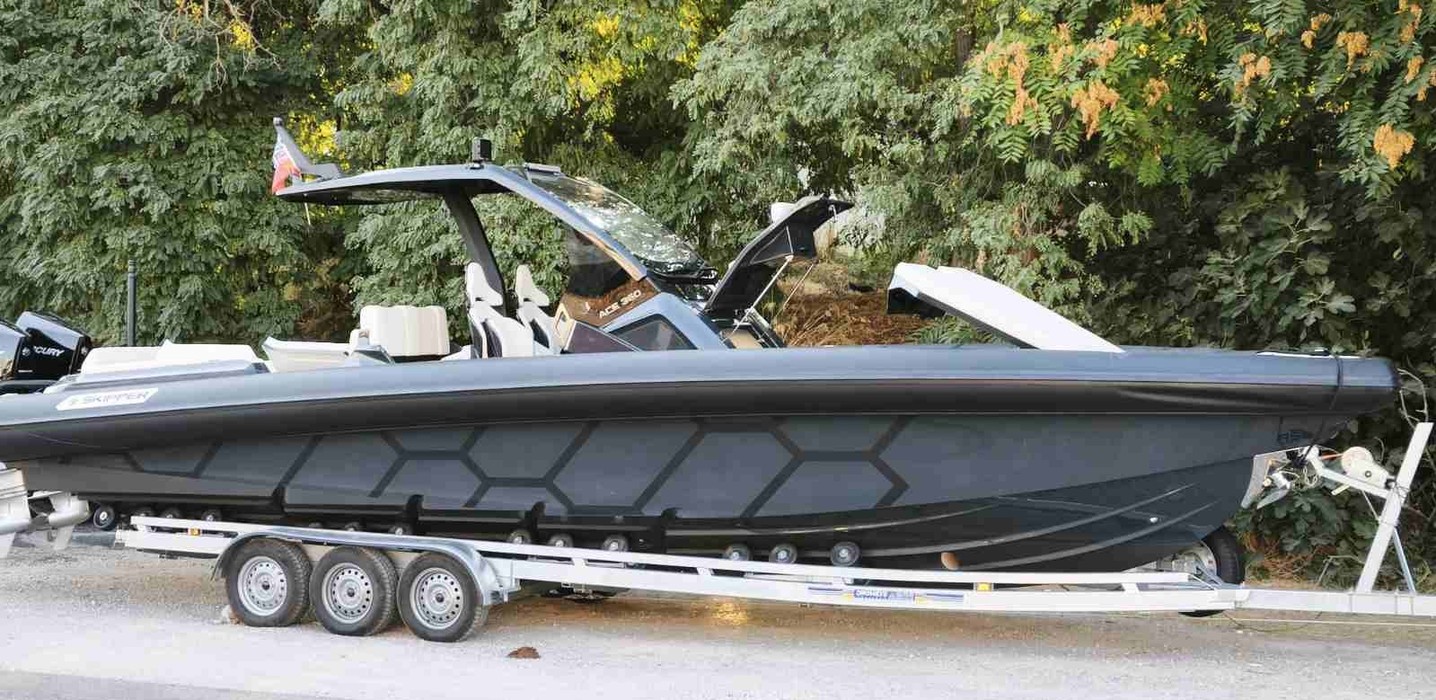
Une opération menée à l’échelle européenne par l’Agence européenne de garde-frontières et de garde-côtes (Frontex) a permis la saisie de plus de 700 véhicules, 34 bateaux et 41 moteurs de bateaux, ainsi que l’arrestation de 334 personnes soupçonnées d’être impliquées dans des activités criminelles transfrontalières.
Baptisée Joint Action Days (JAD) Mobile 9, cette opération a été menée dans 26 pays avec le soutien de l’Organisation internationale de police criminelle (INTERPOL), dans le but de lutter contre la criminalité transfrontalière, notamment le vol de véhicules, le trafic de migrants et le commerce illicite de marchandises.
Selon un communiqué publié par Frontex le 26 octobre, l’opération a également permis de détecter 2 202 migrants en situation irrégulière et de saisir plus de 7,4 tonnes de cocaïne, 2,3 tonnes de cannabis et plus de 10,6 millions de cigarettes.
Parmi les autres objets saisis figurent 115 pièces détachées de véhicules, 127 faux documents, 44 600 comprimés de benzodiazépines, plus de 3 160 litres d’alcool, 80 armes à feu, 17 autres armes et 3 466 cartouches de munitions.
Les autorités ont également récupéré des espèces non déclarées et des sommes présumées provenir d’activités criminelles, d’une valeur de 621 645 euros, 24 500 dollars, 20 000 livres sterling et 27 400 zlotys polonais.
L’opération a en outre permis de saisir 38 259 articles vestimentaires contrefaits, 2 773 parfums contrefaits et deux drones qui auraient été utilisés pour des activités de contrebande.
Les pays participants comprenaient notamment l’Autriche, la Bulgarie, la Croatie, la France, l’Allemagne, la Grèce, l’Italie, les Pays-Bas, la Pologne, le Portugal, l’Espagne et la Suisse, ainsi que d’autres pays européens et des États des Balkans occidentaux.
Le directeur exécutif de Frontex, Hans Leijtens, a déclaré que cette opération démontrait l’importance de la coopération internationale et du partage rapide des informations dans la lutte contre les réseaux criminels transfrontaliers.
« Une voiture volée peut franchir plusieurs frontières en très peu de temps. Si nous voulons l’arrêter, les informations doivent circuler tout aussi rapidement », a-t-il affirmé.
Il a ajouté que la coopération entre les services chargés de l’application de la loi permettait aux agents de différents pays d’échanger des renseignements et de coordonner leurs interventions.
Au cours de l’opération, les autorités ont effectué des contrôles sur 150 631 personnes, 129 286 véhicules, 39 322 documents, 2 721 bateaux et 1 393 moteurs de bateaux aux points de passage frontaliers et dans les ports.
Dans 75 cas, les résultats des contrôles ont révélé des liens avec des réseaux criminels et des individus classés parmi les réseaux et individus criminels les plus menaçants (Most Threatening Criminal Networks and Individuals, MTCNI), dans le cadre de la Plateforme pluridisciplinaire européenne contre les menaces criminelles (EMPACT).
Ces affaires ont donné lieu à 51 arrestations en lien avec ces activités en Grèce, en Lituanie, au Portugal et en Espagne. Les agents de Frontex ont également participé à 25 % de l’ensemble des détections de véhicules volés aux frontières extérieures de l’Union européenne.
Plusieurs enquêtes menées dans le cadre de l’opération ont mis en évidence les avantages du partage de renseignements entre pays.
Dans un premier cas, des informations échangées par l’intermédiaire du centre de coordination de Frontex ont permis d’identifier un véhicule volé en Allemagne et localisé sur une autoroute près de Varsovie, en Pologne.
À la suite de cet échange d’informations entre les autorités allemandes et polonaises, la police polonaise a intercepté le véhicule dans la périphérie de Varsovie et arrêté un suspect.
Dans une autre affaire, la coopération entre les autorités serbes et croates a permis d’intercepter un véhicule volé en France alors qu’il était transporté en direction de la Serbie.
Au port de Gênes, en Italie, les agents de Frontex, la police d’État italienne et INTERPOL ont identifié deux véhicules volés en Italie et destinés à la Tunisie. Ces véhicules étaient munis de documents d’immatriculation contrefaits et de numéros d’identification falsifiés.
Les autorités ont retrouvé leurs numéros d’identification d’origine à l’aide d’un lecteur de diagnostic embarqué.
Au poste-frontière de Tabanovce, en Macédoine du Nord, les agents de Frontex ont également aidé les autorités locales à détecter un permis de conduire slovène contrefait. Le document a été confisqué, le conducteur placé en détention et l’affaire transmise aux services compétents pour une enquête approfondie.
L’opération comprenait également des activités ciblant les bateaux volés en Croatie, sous la direction d’experts allemands et néerlandais avec le soutien de Frontex, ainsi que des campagnes de sensibilisation et des opérations de contrôle au port de Bari, en Italie.
En complément des opérations sur le terrain, Frontex a organisé des sessions de sensibilisation en ligne auxquelles ont participé environ 1 300 personnes. Ces sessions ont porté sur les techniques d’identification des véhicules, la fraude aux plaques d’immatriculation, la criminalité liée aux engins lourds et le vol de véhicules transfrontaliers.
L’agence a accueilli le centre de coordination de l’opération à son siège de Varsovie, du 28 septembre au 9 octobre 2026. Des représentants des pays participants y ont échangé des informations et coordonné leurs enquêtes en temps réel.
Les agents du corps permanent de Frontex ont apporté leur soutien aux autorités nationales aux postes-frontières, dans les ports et les aéroports, en effectuant des inspections supplémentaires, des vérifications de documents, des contrôles de véhicules et des entretiens.
INTERPOL a également déployé des représentants de son siège en France, de ses bureaux régionaux au Cameroun et en Côte d’Ivoire, ainsi que de ses Bureaux centraux nationaux au Canada et au Maroc, afin de contribuer à la recherche des véhicules volés et de faciliter leur saisie.
Des officiers de liaison de l’Organisation mondiale des douanes (OMD) ont également pris part à l’opération.
Frontex a coordonné l’opération dans le cadre de l’EMPACT, tandis que la France en assurait la direction opérationnelle.
L’agence a indiqué que cette opération démontrait comment le partage rapide de renseignements et la coopération directe entre les autorités nationales pouvaient renforcer les efforts visant à intercepter les véhicules volés et autres marchandises illicites avant qu’ils n’atteignent leurs destinations prévues.
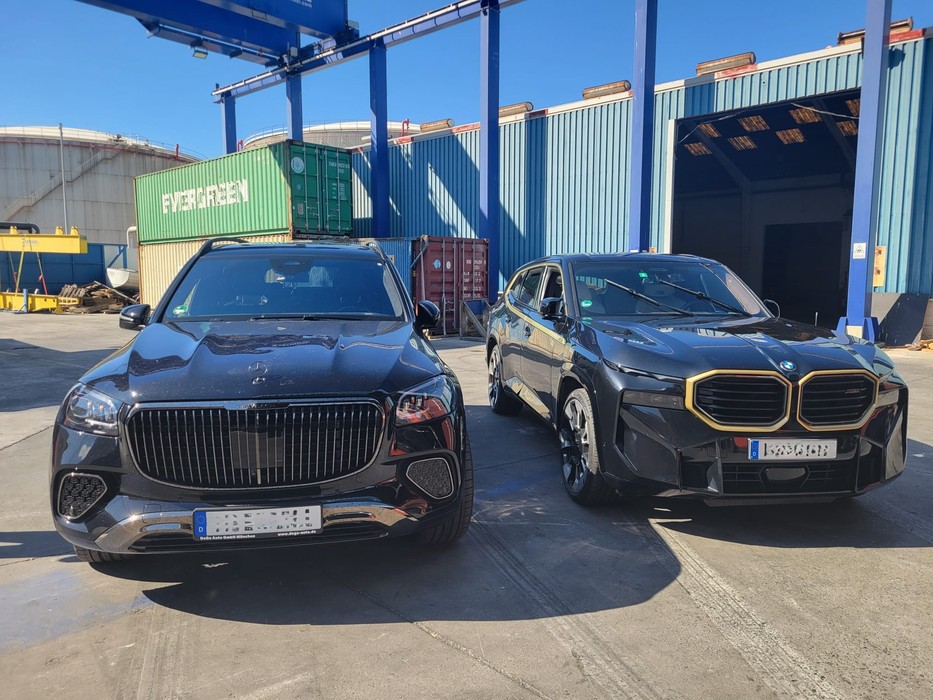
A Europe-wide operation led by the European Border and Coast Guard Agency (Frontex) has resulted in the seizure of more than 700 vehicles, 34 boats and 41 boat engines, as well as the arrest of 334 people suspected of involvement in cross-border criminal activities.
The operation, known as Joint Action Days (JAD) Mobile 9, was conducted across 26 countries with support from the International Criminal Police Organisation (INTERPOL) to combat cross-border crime, including vehicle theft, human smuggling and the trafficking of illicit goods.
According to a statement published by Frontex on October 26, the operation also led to the detection of 2,202 irregular migrants and the seizure of more than 7.4 tonnes of cocaine, 2.3 tonnes of cannabis and over 10.6 million cigarettes.
Other items seized included 115 vehicle spare parts, 127 forged documents, 44,600 benzodiazepine pills, more than 3,160 litres of alcohol, 80 firearms, 17 other weapons and 3,466 rounds of ammunition.
Authorities also recovered undeclared cash and suspected proceeds of crime worth €621,645, $24,500, £20,000 and 27,400 Polish zlotys.
The operation further resulted in the seizure of 38,259 counterfeit clothing items, 2,773 counterfeit perfumes and two drones allegedly used for smuggling.
The participating countries included Austria, Bulgaria, Croatia, France, Germany, Greece, Italy, the Netherlands, Poland, Portugal, Spain and Switzerland, alongside other European countries and the Western Balkan states.
Frontex Executive Director Hans Leijtens said the operation demonstrated the importance of international cooperation and rapid information sharing in tackling cross-border criminal networks.
“A stolen car can cross several borders in a very short time. If we want to stop it, information has to travel just as quickly,” Leijtens said.
He added that cooperation among law enforcement agencies enabled officers in different countries to exchange intelligence and coordinate their responses.
During the operation, authorities conducted checks on 150,631 people, 129,286 vehicles, 39,322 documents, 2,721 boats and 1,393 boat engines at border crossing points and ports.
In 75 cases, the findings were linked to criminal networks and individuals classified as the Most Threatening Criminal Networks and Individuals (MTCNI) under the European Multidisciplinary Platform Against Criminal Threats (EMPACT).
The cases resulted in 51 related arrests in Greece, Lithuania, Portugal and Spain. Frontex officers were also involved in 25 per cent of all stolen vehicle detections at the European Union’s external borders.
Several investigations during the operation highlighted the benefits of cross-border intelligence sharing.
In one case, information exchanged through Frontex’s coordination centre helped identify a vehicle stolen in Germany and located on a motorway near Warsaw, Poland.
Following the exchange of information between German and Polish authorities, Polish police intercepted the vehicle on the outskirts of Warsaw and arrested a suspect.
In another incident, cooperation between Serbian and Croatian authorities led to the interception of a vehicle stolen in France while it was being transported towards Serbia.
At the port of Genoa in Italy, Frontex officers, the Italian State Police and INTERPOL identified two vehicles stolen in Italy and destined for Tunisia. The vehicles had counterfeit registration documents and falsified identification numbers.
Authorities recovered their original identification numbers using an onboard diagnostic reader.
At the Tabanovce border crossing in North Macedonia, Frontex officers also assisted local authorities in detecting a counterfeit Slovenian driving licence. The document was confiscated, the driver detained and the case referred for further investigation.
The operation also included activities targeting stolen boats in Croatia, led by experts from Germany and the Netherlands with Frontex support, as well as awareness campaigns and enforcement activities at the port of Bari in Italy.
Beyond the field operations, Frontex organised online awareness sessions attended by approximately 1,300 participants. The sessions covered vehicle identification techniques, licence plate fraud, heavy machinery crime and cross-border vehicle theft.
The agency hosted the operation’s coordination centre at its headquarters in Warsaw from September 28 to October 9, 2026, where representatives from participating countries exchanged information and coordinated investigations in real time.
Frontex Standing Corps officers supported national authorities at border crossing points, ports and airports through additional inspections, document verification, vehicle examinations and interviews.
INTERPOL also deployed representatives from its headquarters in France, regional bureaux in Cameroon and Côte d’Ivoire, and National Central Bureaux in Canada and Morocco to assist in tracing stolen vehicles and facilitating seizures.
Liaison officers from the World Customs Organisation also participated in the operation.
Frontex coordinated the operation under EMPACT, while France served as the operational leader of JAD Mobile 9.
The agency said the operation demonstrated how rapid intelligence sharing and direct cooperation among national authorities could improve efforts to intercept stolen vehicles and other illicit goods before they reached their intended destinations.

Des migrants égyptiens et d’autres nationalités portés disparus ou présumés morts après le naufrage d’une embarcation au large de la Libye

Egyptian migrants, others feared dead, missing after boat sinks off Libya

Les traversées en Méditerranée occidentale augmentent de 26 %

Western Mediterranean crossings rise by 26%
Frontex se félicite de la baisse des franchissements irréguliers aux frontières de l’UE
-

 News Extra2 weeks ago
IOM’s Displacement Tracking Matrix monitors 97.2 million people in 2025
-
 News2 weeks ago
Libya repatriates hundreds of migrants, deploys reinforcements to Tobruk
-
News2 weeks ago
Libye : des centaines de migrants rapatriés, des renforts déployés à Tobrouk
-
 News Extra1 week ago
SOS Humanity accuses Frontex of aiding migrant pushbacks to Libya
-
 News Extra2 weeks ago
La Matrice de suivi des déplacements de l’OIM a suivi 97,2 millions de personnes en 2025
-
 News2 weeks ago
Ebola:DRC confirms 10,000 cases, NRC seeks scale-up
-
 News2 days ago
Sea-Watch condemns proposed EU plan to expand Frontex powers
-
 Features2 weeks ago
League of Arab States, IOM launch Arab Migration Data Network