
Uncategorized
More than 200 organisations inhumane deportation rules should be rejected

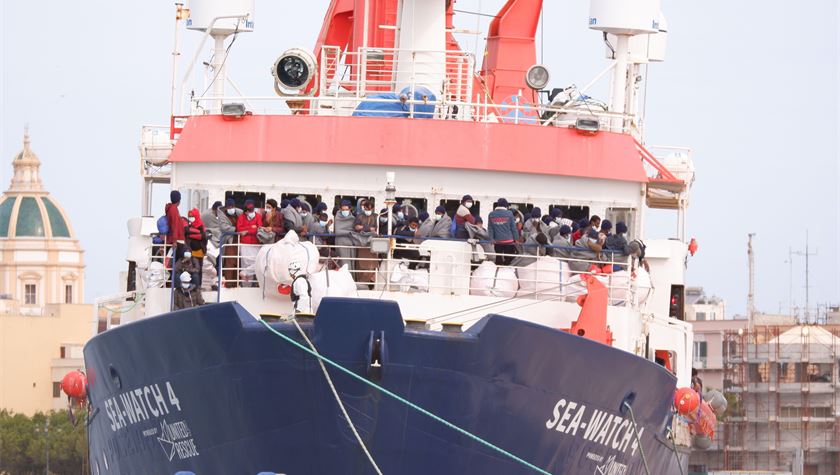
On 11 March 2025, the European Commission presented a new proposal for a Return Regulation to replace the current Return Directive. Behind the euphemistic name, the proposal outlines coercive, traumatising, and rights-violating measures premised on an imperative of increasing deportation rates. Instead of focusing on protection, housing, healthcare and education, the Regulation is premised on punitive policies, detention centres, deportation and enforcement.
The “Deportation Regulation,” as it would be more aptly called, is part of a broader shift in EU migration policy to characterise human movement as a threat to justify derogations from fundamental rights guarantees. EU institutions and Member States have increasingly made criminalisation, surveillance, and discrimination the default tools of migration governance – as opposed to protection, safety, social inclusion measures, the expansion of safe and regular routes and rights based residence permits.
Our organisations are unequivocal: this Regulation must be rejected. It is driven by detention, deportation, externalisation, and punishment, particularly of racialised people, and will result in more people being pushed into legal limbo and dangerous conditions. We call on the European Commission to withdraw the proposal and urge the European Parliament and the Council of the European Union to reject it in its current form.
The Regulation must be rejected for the following reasons:
1. DEPORTATIONS TO COUNTRIES WITH NO PRIOR TIES AND OFFSHORE DEPORTATION CENTRES (Arts. 4, 17)
This proposal – together with proposed changes to the Asylum Procedures Regulation – would make it possible, for the first time, to deport a person against their will to a non-EU country to which they have no personal connection, either through which they have only briefly transited, or in which they have never set foot.
Sending someone against their will to a country to which they have no link can in no way be considered reasonable, just, or sustainable. Such measures would tear apart families and communities across Europe, undermining the fabric of solidarity that people rely on to live with dignity. Expanding the options for “return” raises serious concerns about fundamental rights, including the risk of people being stranded in third countries, the safety and dignity of removal, the sustainability of inclusion and reintegration, and access to support, rights, and services. Such measures also apply to families and children, with limited exceptions.
The proposed Regulation also enables the establishment of so-called “return hubs”; highly likely to become prison-like detention centres hosting those awaiting deportations, outside of EU territory. This is an egregious departure from international law and human rights standards. These are likely to result in a range of rights violations, including automatic arbitrary detention, direct and indirect refoulement (in return hubs or through onward deportations), and denial of access to legal and procedural safeguards. At the same time, they would reinforce discriminatory practices as well as raising substantial challenges in monitoring human rights conditions and determining legal responsibility and jurisdiction. The current provisions in the Regulation are, moreover, alarmingly vague and set no binding standards, exacerbating these concerns. In line with past attempts to offshore or externalise asylum responsibilities, such as those by Australia, the UK, or Italy, such proposals are likely to be exorbitant in cost, carry significant diplomatic and reputational risks, and widen the gaps and divergences between EU countries’ asylum and migration policies. They would divert resources to punitive modes of migration governance instead of policies prioritising protection, care and safety.
2. NEW OBLIGATIONS ON STATES TO ‘DETECT’ AND SURVEIL (Art. 6)
The proposal requires States to put in place measures to detect people staying irregularly in their territory. Over 80 organisations warned that similar provisions in the 2024 Screening Regulation would result in increased racial profiling and discriminatory treatment. Such provisions pave the way for the expansion of racist policing practices and immigration raids that foster fear in racialised and migrant communities. Moreover, detection measures tied to immigration enforcement create serious human rights risks, including those related to the right to health, labour rights, and human dignity, as fear of authorities discourages undocumented people from seeking healthcare, reporting abuse, or accessing protection. Such measures could raise ethical conflicts for professionals and undermine trust in public services. Finally, they risk threatening privacy rights through the unsafe sharing of sensitive personal data, including health data, breaching EU data protection standards and eroding the freedoms of society as a whole.
3. MORE PEOPLE PUSHED INTO IRREGULARITY AND LEGAL LIMBO (Arts. 7, 14)
The proposal requires states to issue deportation orders alongside any decision ending regular stay, without prior consideration of other national-level status options (such as permits for humanitarian, best interests of the child, medical or family reasons, as well as during statelessness determination procedures or in other cases where deportation is not possible). Combined with similar rules in the Pact on Migration and Asylum that link negative asylum and deportation decisions, this would raise further barriers to accessing national residence permits. Alarmingly, it even foresees issuing deportation orders listing multiple potential countries of return when a country of return cannot be identified.
The proposal also weakens protections for those who cannot be deported – often through no fault of their own. Although it allows for postponement of “removal” in cases where there is a risk of refoulement, it removes the current requirement to identify and assess other individual circumstances, ignoring that in many cases “return” may not be appropriate or even possible, such as if a person is stateless, or for other human rights reasons.
This highlights the inconsistency of a proposal developed with the flawed objective of “increasing return rates”, but which at the same time artificially inflates the number of people issued a deportation order. As a result, many more people will be pushed into irregularity and legal limbo, denied basic rights like healthcare, and exposed to destitution, homelessness, exploitation, or prolonged detention. These policies do not only harm individuals: they destabilise and create further fear and insecurity, particularly for migrant and racialised people, as well as the wider communities they are part of.
4. SEVERE EXPANSION OF DETENTION (Arts. 29-35)
The proposal promotes the systematic use of detention by states. It significantly extends the maximum length of detention, from 18 to 24 months. This extension is disproportionate and ineffective, and would only deepen harm to people’s rights, dignity and health. It also expands the grounds for detention, including criteria that, in effect, cover most people who have entered Europe irregularly or who are in an undocumented situation, against the principle of proportionality and necessity. For instance, a lack of documents or experiencing homelessness would be sufficient grounds for detention. The proposal allows for the detention of children, despite international human rights law and standards indicating that it is always a child rights violation and never in a child’s best interests, and global commitment by governments to work to end the practice. Other vulnerable groups, as well as people who cannot be deported, would also be subject to detention. The proposal appears to allow for indefinite detention of individuals deemed to pose “security risks”, by judicial decision. It also allows Member States to deviate from basic guarantees around detention if systems face a vaguely defined “unforeseen heavy burden.” The expansion of detention capacity will create lucrative opportunities for private contractors running detention centres, incentivising the growth of a detention industry at the expense of people’s rights and dignity.
The “alternatives to detention”, or non-custodial measures, as proposed by the Commission would not serve their purpose as genuine alternatives, and would not need to be considered before applying detention. Rather, they could now be used in addition to detention and after its time limits have been exceeded. Together, these developments amount to a significant expansion of immigration detention, whereby it would no longer even be treated as a measure of last resort or imposed for the shortest possible time, in clear tension with international law requirements.
5. PUNITIVE AND COERCIVE MEASURES (Arts. 10, 12, 13, 16, 22, 29)
The proposal introduces extensive, disproportionate and unrealistic cooperation requirements on people issued a deportation order, such as having to provide identity documents they may not possess, having their bodies and belongings searched, or cooperating with third countries to obtain travel documents. These are coupled with punitive and heavy sanctions in cases of ‘non-compliance’, including financial penalties, entry bans, restrictions on voluntary departure, as well as refusal of benefits, allowances or work permits. With no effective way to challenge the determination that they are not cooperating sufficiently or to ensure that people are not penalised for circumstances beyond their control – such as statelessness, digital or literacy barriers, age, health or trauma – these measures risk being applied arbitrarily and disproportionately punishing people in vulnerable socio-economic situations.
The proposal introduces a further shift from “voluntary departure” to “removals”, making deportation the default option. Even though the notion of voluntariness in such circumstances remains questionable, the proposal restricts people’s options and agency further. It does so by introducing broad grounds on which forced “returns” would be mandatory and by removing even the current minimum period of seven days for voluntary departure, or compliance with a deportation order.
Specific derogations are foreseen for people who “pose a threat to public policy, to public security or to national security” – grounds that are vaguely defined and may be applied abusively. Any cases posing a security risk or concerning a criminal conviction should be dealt with in the context of criminal justice proceedings with the fair trial safeguards required.
6. EROSION OF APPEAL RIGHTS (Art. 28)
In continuity with the erosion of these rights under the Pact, the proposal removes the automatic suspensive effect of appeals against the enforcement of a deportation decision. The suspensive effect will have to be requested together with the appeal, or granted ex-officio. This creates an additional layer of complexity for people at risk of being deported as well as judicial authorities, and removes an essential safeguard to the right to an effective remedy. With no mandatory minimum time for appeals (the proposal specifies only that the deadline shall not exceed 14 days), Member States could make it impossible for people to effectively challenge deportation orders in practice, against the established jurisprudence of European courts.
7. EXPANDED DIGITAL SURVEILLANCE AND DATA PROTECTION VIOLATIONS (Arts. 6-9, 23, 38-41)
The proposal expands the digital surveillance of people in deportation procedures, denounced by digital rights experts and the European Data Protection Supervisor. This includes the broad collection and sharing of personal data, including sensitive health and criminal records, between EU Member States and with third countries which may be lacking adequate data protection. It also enables the use of intrusive surveillance technologies in detention centres, and the use of digital “alternatives to detention”, such as GPS tracking and mobile phone surveillance, which, while supposedly considered an alternative to detention, remain highly intrusive and can amount to de facto detention. Such technologies also create profitable new markets for surveillance companies.
The creation of a ‘European Return Order’, stored in the Schengen Information System (SIS), further conflates migration management and policing, with foreseen data sharing with law enforcement. There are documented patterns of data abuse and non-compliance with legal standards on privacy and protection of personal data by authorities under SIS, increasing the likelihood of data breaches and misuse.
8. LACK OF IMPACT ASSESSMENT AND CONSULTATIONS
Like other recent legislative proposals on migration, this European Commission proposal was issued without a human rights impact assessment or formal consultations, including social partners, in an area in which evidence-based policymaking is especially crucial. This is contrary to the Interinstitutional Agreement on Better Law-Making and the Commission’s own Better Regulation Guidelines when a legislative proposal has significant social impacts and where a choice of policy options exists. A prior fundamental rights impact assessment is essential to ensure compliance with the Charter of Fundamental Rights, non-refoulement, the prohibition of torture and inhuman or degrading treatment or punishment, personal liberty, the rights of the child, effective remedy, private and family life, privacy and data protection, and non-discrimination.
9. OVERLOOKING ALTERNATIVES TO PUNITIVE MIGRATION CONTROL
The proposal reflects a false assumption that deportation should be the only option for people whose asylum application has been rejected or whose residence permits have expired or been revoked. To reduce the number of people trapped in irregularity, EU states should uphold access to existing human-rights-related permits, and expand avenues to a broad range of residence permits that allow people to plan their lives, engage in regular work, study, and fully participate in all the economic, social, and cultural facets of the societies in which they live.
—
We call on the EU to stop catering to racist and xenophobic sentiments and corporate interests and reverse the punitive and discriminatory shift in its migration policy, and instead direct resources towards policies rooted in safety, protection and inclusion, that strengthen communities, uphold dignity, and ensure that all people can live safely regardless of status.
EU institutions and Member States should reject deportation measures that are based on a punitive and coercive approach, lower human rights standards, and disproportionately affect racialised people. In light of the concerns outlined above, we call on the European Commission to withdraw this proposal and urge the European Parliament and the Council of the European Union to reject this proposal.
Signatories (List updated as of 15 September 2025)
EU/International
1. 11.11.11
2. Abolish Frontex
3. Academics for Peace-Germany
4. Access Now
5. ActionAid International
6. Africa Advocacy Foundation
7. AlgoRace
8. All Included
9. Alternatif Bilisim
10. Amnesty International
11. Apna Haq
12. ASAM Greece
13. Aspiration
14. Avocats Sans Frontières (ASF)
15. Border Violence Monitoring Network
16. borderline-europe – Menschenrechte ohne Grenzen e.V.
17. Bridge EU
18. Cairo Institute for Human Rights Studies (CIHRS)
19. CCFD-Terre Solidaire
20. Changemakers Lab
21. Civil Rights Defenders
22. COFACE Families Europe
23. Correlation-European Harm Reduction Network
24. COSPE
25. CPT – Aegean Migrant Solidarity
26. de:border // migration justice collective
27. DeZIM, German Centre for Migration and Integration Research
28. EAPN European Anti-Poverty Network
29. ECCHR European Center for Constitutional and Human Rights
30. EL*C – Eurocentralasian Lesbian* Community
31. EmpowerVan
32. EPSU
33. Equinox Initiative for Racial Justice
34. EuroMed Rights
35. European Alternatives
36. European Network Against Racism (ENAR)
37. European Network on Religion & Belief
38. European Network on Religion and Belief
39. European Network on Statelessness
40. Famiglie Accoglienti
41. FEANTSA
42. Fenix Humanitarian Legal Aid
43. Forum per Cambiare l’Ordine delle Cose
44. Global Alliance Against Traffic in Women (GAATW)
45. Global Asylum Seeker Human Rights Defenders Committee (GASHDC)
46. Hoffnung leben e.V.
47. Human Rights Watch
48. Humanity Diaspo
49. I Have Rights.
50. Inter Alia
51. InterEuropean Human Aid Association Germany e.V.
52. International Planned Parenthood Federation – European Network (IPPF EN)
53. International Women* Space e.V
54. iuventa
55. Kerk in Actie
56. La Strada International
57. Madera Creation
58. Médecins du Monde International Network
59. Médecins Sans Frontières
60. Mediterranea Bruxelles
61. Mediterranea Saving Humans
62. Missing Voices (REER)
63. Mission Lifeline International eV
64. Movimiento por la Paz (MPDL)
65. Mujeres Supervivientes
66. Mundo en Movimiento
67. Network Against Migrant Detention
68. New Horizons Project
69. New Women Connectors
70. No Name Kitchen
71. Northern Ireland Council for Racial Equality
72. Platform for International Cooperation on Undocumented Migrants – PICUM
73. Protestantse Kerk Nederland
74. Quaker Council for European Affairs (QCEA)
75. Recosol
76. Roma Feminist Collective
77. Romnja Feminist Library
78. SCI Catalunya
79. Sea-Watch e.V.
80. Service Civil International
81. SOLIDAR
82. SOS Humanity
83. SOS Racism Denmark
84. Spectrum
85. Statewatch
86. Symbiosis-Council of Europe School of Political Studies in Greece
87. Syrian Justice and Accountability Centre
88. Transnational Institute
89. UNESCO Inclusive Policy Lab -People of African Descent & SDGs E-Team
90. Validity Foundation – Mental Disability Advocacy Centre
91. WeMove Europe
92. Women Against Violence Europe (WAVE) Network
93. Yoga and Sport with Refugees National
94. Arbeitsgemeinschaft Migrationsrecht des Deutschen Anwaltvereins
95. Ariadni AMKE
96. ARSIS Association for the Social Support of Youth
97. ASGI
98. ASKV
99. Asociación Por Ti Mujer
100. Association for Integration and Migration (SIMI)
101. Associazione Arturo
102. AWO Bundesverband
103. Ban Ying e.V. coordination and counseling center against trafficking in
human beings
104. Boat Refugee Foundation
105. Brot für die Welt
106. CEAR – Comisión Española de Ayuda al Refugiado
107. Center for legal aid – Voice in Bulgaria
108. Centre Avec
109. Centre for Information Technology and Development (CITAD)
110. Centre for Labour Rights, CLR
111. CIEs NO MADRID
112. CIRÉ
113. CNCD-11.11.11
114. Community Rights in Greece
115. Congolese Anti-Poverty Network
116. coop. soc. APE06 – AlterProjectEmpowerment2006
117. Coordinadora CIE No Cádiz
118. Coordinadora Obrim Fronteres
119. Council of Churches Amsterdam
120. Danes je nov dan, Inštitut za druga vprašanja
121. Diaconaal Centrum De Bakkerij
122. Diásporas Association
123. Dutch Council for Refugees
124. ECHO100PLUS
125. Equal Legal Aid
126. Europasilo
127. Famiglie accoglienti Bologna e Torino
128. FEDERACIÓN ANDALUCIA ACOGE
129. Federación SOS Racismo
130. Feministas en Holanda
131. Flüchtlingsrat NRW e.V.
132. Flüchtlingsrat Schleswig-Holstein e.V.
133. forRefugees
134. GAT – Grupo de Ativistas em Tratamentos
135. Greek Council for Refugees (GCR)
136. Greek Forum of Migrants
137. Greek Forum of Refugees
138. Greek Housing Network
139. Hermes Center
140. HOTM
141. Huize Agnes
142. Human Rights Initiatives
143. ICS (Italian Consortium of Solidarity)
144. INTERSOS HELLAS
145. Irídia – Centre per la Defensa dels Drets Humans
146. Italy Must Act
147. Jeannette Noëlhuis
148. Jesuit Refugee Service Belgium
149. Jesuit Refugee Service Greece
150. JRS Malta
151. KOK – German NGO Network against Trafficking in Human Beings
152. Kopanang Africa Against Xenophobia (KAAX)
153. La Cimade
154. Legal Centre Lesvos
155. M.oV.I Caltanissetta
156. Meldpunt Vreemdelingendetentie
157. Migrant Rights Centre Ireland
158. Migrant Tales
159. Migrant Voice UK
160. Mobile Info Team
161. MOC
162. Move Coalition
163. Naga Odv
164. Nazione Umana
165. Network for Children’s Rights (Greece)
166. NOF
167. Nomada Association
168. ONE PEOPLE
169. Pauluskerk Rotterdam
170. POUR LA SOLIDARITE
171. PRO ASYL, National Working Group for Refugees
172. Racism and Technology Center
173. RADIO BULLETS APS
174. Red Acoge
175. RED AMINVI, SPAIN
176. RED ESPAÑOLA DE INMIGRACION Y AYUDA AL REFUGIADO
177. Red Interlavapies
178. Refugee Council of Lower Saxony
179. Refugee Legal Support (RLS)
180. Refugees Platform In Egypt-RPE
181. Refugees Welcome Italia
182. Rotterdams Ongedocumenteerden Steunpunt
183. S.P.E.A.K ( moslim woman collectif)
184. SAAMO Antwerpen
185. Salud por Derecho
186. SCI Switzerland
187. SNDVU Seguro
188. SolidarityNow
189. Solidary Wheels
190. Stem in de Stad
191. Steunpunt Ongedocumenteerden Pauluskerk
192. Stichting LOS (NL)
193. Stichting ShivA
194. Stichting Vluchteling Kansen
195. Stichting Vluchtelingen in de Knel
196. STIL Utrecht
197. Stowarzyszenie Interwencji Prawnej (Association for Legal Intervention)
198. The Norwegian Centre Against Racism
199. Tierramatria mujeres migrantes y Refugiadas en Andalucía
200. Turun Valkonauha ry, Finland
201. URGG
202. Villa Vrede
203. Vluchteling Onder Dak
204. Vluchtelingenwerk Nederland
205. Waterford Integration Services, Ireland
206. Wereldhuis – World House (STEK)
207. Wereldvrouwenhuis Mariam van Nijmege
Culled from Human Rights Watch’s website





The question in Sudan is no longer whether the war has crossed every red line. It crossed them long ago.
The real question now is brutal and urgent: How many more crimes, how many more bodies must the world see before Sudanese blood is worth an independent international investigation?
The Chemical Bombs Dossier That Shook The World
In September 2026, the most damning case yet exploded into the open.
The Washington Post revealed it had reviewed about 150 documents, photographs, videos and audio recordings, plus thousands of messages, detailing alleged chemical weapons use by the Sudanese army.
The newspaper did not act alone. It enlisted more than 20 former intelligence officials and experts in chemical weapons and human rights to assess the material.
According to PMNewsnigeria.com, what they found was chilling: a programme to assemble chlorine-filled bombs, tests conducted in remote desert areas, a stockpile that reportedly reached 290 chemical munitions, messages referring to hundreds of bombs stored at Merowe Air Base and 106 of them already used.
Experts who examined the cache said the indications were strongly consistent with a chemical weapons programme, while stressing that definitive proof requires independent investigators to gain access to sites and witnesses.
That is precisely where international action should have started, not where the debate ended.
Sudan has been a party to the Chemical Weapons Convention since 1999. Developing, stockpiling or using such weapons is not a footnote in a civil war. It is a violation of one of the clearest prohibitions in international law.
If the allegations are false, an investigation will expose that. If they are true, the Sudanese people and the world have the right to know who ordered, who manufactured, who stockpiled and who dropped these bombs.
Why has evidence of this scale not immediately triggered an independent international investigation under the Organisation for the Prohibition of Chemical Weapons and other relevant institutions?
Why the silence?
El Fasher Is Not Beyond Justice
But chemical weapons are not the only horror demanding answers reports PMNewsnigeria.com.
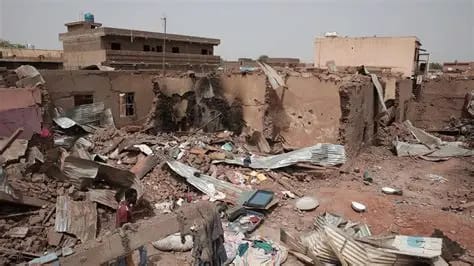
El Fasher and Darfur have become the graveyard of civilian protection.
The region is under sustained, indiscriminate aerial bombardment involving advanced Turkish drones and barrel bombs dropped by Sudanese army transport aircraft on civilians without distinction.
These crimes cannot be mitigated or justified under any circumstances or by any party to the conflict.
The Sudanese Armed Forces themselves have used aircraft, aerial bombardment and drones in civilian areas, while human rights organisations have documented the bombing of residential and commercial areas in Darfur with unguided aerial bombs.
Sudan has witnessed a massive escalation in drone warfare. According to the United Nations, more than 1,000 civilians were killed by drone strikes between January and May 2026 alone, making such strikes one of the largest sources of civilian deaths in the war.
In Darfur, Antonov aircraft have been used in aerial bombardment operations, while UN and human rights documents reveal widespread use of weapons and barrel bombs in populated areas.
Drones have fundamentally altered the nature of the war. Research reports indicate that the Sudanese army possesses Iranian and Turkish systems, including the Iranian Mohajer-6 and Ababil, as well as Turkish Bayraktar systems, in addition to Turkish-Pakistani types, allowing air operations to extend over greater distances.
The problem is not the nationality of the weapon alone, but how it is used and who bears the cost of its continued flow.
A bomb is still a war crime when it falls on a market, whether it was built in Ankara or Tehran.
Who Is Arming This War?
Here, international silence becomes even more perplexing, even criminal.
The Sudanese war is no longer a purely Sudanese war. It has become an arena where regional and international networks of support and arms supplies intersect, fueling the slaughter.
International reports indicate that the army has received military and technical support from countries including Egypt, Saudi Arabia, Türkiye and Iran.
This is not a call to hold one side accountable while exempting the other. Quite the opposite.
If foreign weapons reaching parties to the conflict and being used against civilians warrant investigation and accountability, then the weapons reaching the army must be subject to the same standard, added PMNewsnigeria.com.
There is no morally acceptable bomb because it was dropped by a side we favour, nor is there a legitimate drone because it came from an allied country.
When markets, hospitals and residential neighbourhoods are struck, the legal question is who targeted civilians and who provided them with the capacity to do so, not which political camp they belong to. Justice that pursues one crime while ignoring another is not justice.
A law that criminalises an adversary’s weapon while turning a blind eye to an ally’s weapon loses its meaning.
What Do Cairo, Ankara And Riyadh Know?
This is where the responsibility of countries with close ties to the Sudanese army comes into sharp focus.
Egypt has deep military and security cooperation with the army. Türkiye is linked by reports to the provision of technology and drone systems to it, while Saudi Arabia maintains close ties with the army leadership, although it took a notable position in April 2026 when it asked Pakistan to halt a $1.5 billion arms deal with Sudan and refused to finance it, following what was said to be US advice and warnings to Riyadh.
Does this mean that these countries are legally responsible for the army’s crimes? No.
But it imposes a question that cannot be evaded: What are these governments doing now that allegations of chemical weapons use have become public, and violations resulting from airstrikes and drone attacks have been internationally documented?
Moral and political responsibility does not begin only when a state’s involvement in a particular crime is proven. It also begins when an ally knows that weapons flowing into a war zone could be used amid civilians, yet support continues without guarantees, oversight or accountability.
If you know your drones may be used to bomb a hospital in Nyala and you keep supplying them, at what point do you share the guilt?
Why Is The World Silent?
This is the real question that haunts every Sudanese today.
How can the world speak of protecting civilians and then allow Sudan to become a laboratory for weapons and drones?
How can evidence on this scale emerge concerning the possible manufacture and use of a chemical weapon, while a comprehensive international investigation remains a demand rather than a reality?
And how can bombs fall on markets, hospitals and residential areas while arms and financing channels and political relationships continue as though nothing has happened?
Sudan does not need another local committee through which the authorities investigate themselves. It has had enough of that theatre.
Nor does it need more statements of concern from Geneva and New York. It needs action.
The Price Of Selective Justice
It needs an independent international investigation into the chemical weapons file, transparent investigations into air attacks, drone strikes and violations against civilians, and accountability for every party proven to be involved, regardless of its name, allies or supporters.
Scrutiny must also extend to the states, companies and intermediary networks supplying the parties to the war with weapons when there is evidence that they may be used in grave violations of international law.
The civilian killed in El Fasher, Nyala or Khartoum does not care whether the drone that killed him was Turkish or Iranian, nor whether the bomb was dropped by an Antonov or launched by another force.
What matters to him is that someone killed him, that someone armed the killer, and that there was a world watching the war expand and knowing the scale of the violations, yet failing to do enough to stop it.
That is justice at a price in Sudan: the problem is not merely the absence of evidence, but that the value of the evidence itself sometimes appears to be tied to the name of the accused, the identity of his allies, and the political cost of holding him accountable.
That is why the investigation must begin now, not against one side, nor in the service of one camp against another, but because the Sudanese person killed by chemical weapons, aerial bombardment or drones deserves the same standard of justice, regardless of the name of the person who pulled the trigger and regardless of the capital from which the aircraft, bomb or money came.
Uncategorized
Les autorités italiennes immobilisent un navire de sauvetage après avoir secouru 20 personnes
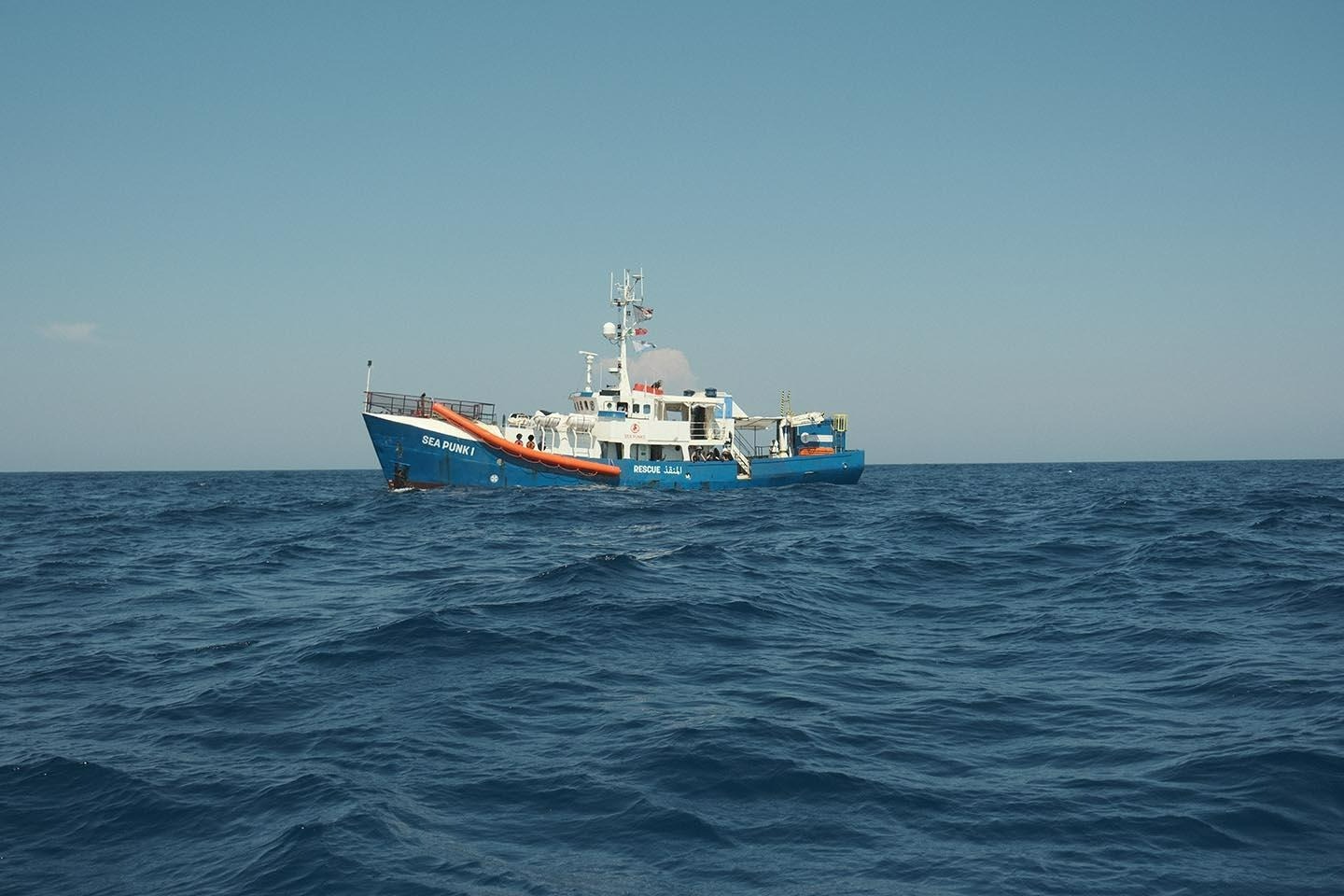
Les autorités italiennes ont immobilisé pendant 15 jours le navire de recherche et de sauvetage Sea Punk I et lui ont infligé une amende de 7 500 euros après le sauvetage de 20 personnes dans les eaux internationales.
L’opération de sauvetage a eu lieu le jeudi 10 septembre 2026, près de la plateforme pétrolière de Bouri. L’équipage du navire a déclaré que l’opération avait été menée en coordination avec les autorités italiennes et conformément aux conventions applicables et aux réglementations internationales.
Les autorités ont invoqué le décret dit Piantedosi et accusé le capitaine de ne pas avoir suivi les instructions des garde-côtes libyens dits « garde-côtes libyens ». Le Sea Punk I est partenaire de l’alliance Justice Fleet, une coalition d’organisations civiles de recherche et de sauvetage et de leurs soutiens.
Selon Justice Fleet, cette immobilisation porte à plus de 310 le nombre total de jours pendant lesquels les autorités italiennes ont bloqué ses navires depuis la création de l’alliance, en novembre 2025. Le Sea Punk I est le 11e navire de Justice Fleet à être immobilisé.
Selon Justice Fleet, les organisations civiles de recherche et de sauvetage ont recensé près de 80 incidents de violences extrêmes commises par des milices libyennes depuis 2016, dont la plupart seraient attribués aux garde-côtes libyens dits « garde-côtes libyens ». Le groupe affirme également que plus de 27 000 personnes ayant fui la Libye y ont été renvoyées de force l’an dernier, en violation du droit international. Il indique que les réfugiés et les migrants présents dans le pays sont confrontés à une recrudescence des violences et à des menaces de mort.
« Alors que des violences extrêmes contre les personnes en déplacement sont actuellement en cours en Libye, les autorités italiennes veulent nous contraindre à coopérer avec les garde-côtes libyens dits “garde-côtes libyens”. Pas question ! », a déclaré Giulia Messmer, porte-parole de Justice Fleet, appelant à mettre fin à la coopération européenne avec cette force.
Justice Fleet a été fondée en novembre 2025 par 13 organisations de recherche et de sauvetage, avec le soutien de groupes de la société civile. L’alliance indique notamment vouloir contester l’immobilisation des navires de sauvetage en Italie et s’opposer à la sous-traitance du contrôle migratoire à des acteurs libyens.

De nouvelles données de l’ONU révèlent que, sur les 31 100 enfants qui ont atteint l’Europe l’an dernier en empruntant des routes migratoires mixtes, plus de 20 000 sont arrivés sans parent ni tuteur.
La Directrice générale de l’Organisation internationale pour les migrations (OIM), Amy Pope, a appelé à une coopération plus étroite entre les États européens et les pays situés le long des routes migratoires afin de protéger les enfants qui voyagent seuls et de lutter contre les réseaux de passeurs et les réseaux criminels qui s’en prennent à eux.
Les conclusions indiquent que la réduction des possibilités de déplacement sûr et tenant compte des besoins de protection le long de ces routes pourrait pousser les jeunes à entreprendre des voyages plus risqués, à dépendre davantage des passeurs et à être davantage exposés à la violence, à l’exploitation et aux mauvais traitements.
« Des enfants entreprennent des voyages difficiles et dangereux sans parent ni tuteur à leurs côtés, a déclaré Amy Pope, Directrice générale de l’OIM. Ce rapport montre à quel point ils sont exposés à la violence et à l’exploitation lorsque les voies sûres sont limitées et qu’ils doivent compter sur des passeurs. Aucun enfant ne devrait avoir à affronter ces risques seul. Nous avons la responsabilité commune d’agir par-delà les frontières pour les protéger, défendre leurs droits et leur apporter les soins et le soutien dont ils ont besoin. »
Le nombre total d’enfants arrivés par voie maritime ou terrestre en Bulgarie, à Chypre, en Grèce, en Italie, à Malte et en Espagne a diminué de 25 % par rapport à 2024. Parmi les enfants arrivés, 78 % étaient des garçons et 22 % des filles. Toutefois, la proportion d’enfants recensés comme non accompagnés est passée à 67 %, contre 51 % l’année précédente. Les proportions les plus élevées ont été enregistrées en Italie et en Espagne, où 86 % des enfants sont arrivés seuls.
L’Italie a fait exception à la tendance à la baisse. Le nombre total d’arrivées y est resté stable, mais celui des enfants a augmenté de 12 %, pour atteindre près de 14 100. La plupart venaient d’Égypte, d’Érythrée, de Somalie, du Bangladesh et d’Éthiopie.
Ces voyages sont dangereux. L’OIM a interrogé plus de 4 600 adolescents et jeunes adultes âgés de 15 à 24 ans le long des routes de la Méditerranée, de l’Atlantique ouest-africain et des Balkans occidentaux. Près de la moitié des personnes interrogées au sujet de leur expérience ont déclaré avoir subi des violences physiques. Sur la route de la Méditerranée centrale, 28 % ont indiqué avoir été retenues contre leur gré et 17 % avoir été contraintes de travailler. La Libye est restée le pays le plus souvent cité comme lieu de ces mauvais traitements.
Dans le même temps, les solutions de remplacement sûres se sont raréfiées. Les enfants représentaient la moitié des 6 800 personnes engagées dans des procédures de réinstallation de réfugiés vers l’Europe en 2025 : 3 400 enfants, contre 8 900 un an plus tôt. Par ailleurs, seuls 199 enfants ont été relocalisés entre États européens dans le cadre du mécanisme de solidarité volontaire, soit une baisse de 67 %, et aucun n’était non accompagné.
Au total, 214 600 enfants ont demandé une protection internationale en Europe en 2025, dont 79 % étaient des primo-demandeurs. Environ 71 % des premières demandes ont été déposées dans seulement quatre pays : l’Allemagne (30 %), la France (19 %), l’Espagne (15 %) et la Grèce (7 %). Sur les 210 900 décisions rendues en première instance concernant des demandes d’enfants, 56 % étaient positives, tandis que les rejets ont augmenté de 25 %.
L’OIM exhorte les États membres de l’Union européenne à placer l’intérêt supérieur de l’enfant au cœur de chaque décision, à garantir un accès rapide aux services et à ne jamais placer des enfants en détention pour des motifs liés à l’immigration. Les enfants non accompagnés et séparés de leur famille devraient avoir immédiatement accès à une représentation juridique. Les évaluations de l’âge devraient rester rares, être adaptées aux enfants et pouvoir faire l’objet d’un recours.

Soudan : les attaques de drones perturbent les cours à El-Obeid, alerte le NRC

Sudan: Drone attacks disrupt school lessons in El Obeid- NRC

Sea-Watch secourt 227 migrants en Méditerranée en 48 heures

Sea-Watch rescues 227 migrants in Mediterranean within 48 hours

Un avocat ougandais exhorte l’UA à rejeter les accords migratoires avec l’Europe
-
 Features2 weeks ago
Gaza : Près de deux millions de personnes ont besoin d’une aide d’urgence en matière d’hébergement
-

 News Extra2 weeks ago
NACTAL conteste le rapport américain sur la traite des personnes et exige la reconnaissance des contributions des organisations de la société civile nigérianes
-
 News Extra2 weeks ago
Un avocat ougandais exhorte l’UA à rejeter les accords migratoires avec l’Europe
-
 News Extra1 week ago
Sudan: Drone attacks disrupt school lessons in El Obeid- NRC
-

 Features2 weeks ago
Nigerian immigrants face hidden mental health challenges despite success, expert warns
-
 Features2 weeks ago
Gaza: About two million need urgent shelter assistance
-

 News Extra2 weeks ago
NACTAL faults US trafficking report, demands recognition of Nigerian CSOs’ contributions
-

 News Extra2 weeks ago
US to deport fresh set of Nigerians over alleged criminal offences