
Uncategorized
SOS MEDITERRANEE, over 40 other CSOs write open letter to the EU Commission


SOS MEDITERRANEE together with more than 40 civil society organisations have co-signed an open letter to the European Commission asking for the suspension of Libyan Coast Guard funding following their attack on the Ocean Viking. As reported in the EU Observer, “The European Commission has dismissed civil society demands to cut Libyan Coast Guard funding after they shot up a charity rescue vessel in late August during a 20-minute gunfire assault. “I think it’s really important to say that if you want to improve the situation, we need to remain engaged,” Guillaume Mercier, a European Commission spokesperson, told reporters in Brussels on Wednesday (24 September).”
The letter reads:
Dear Magnus Brunner and Dubravka Šuica,
CC: Ursula von der Leyen, António Costa, and Roberta Metsola,
On 24 August, the Libyan Coast Guard opened fire without warning on rescue ship Ocean Viking, operated by humanitarian maritime organization SOS MEDITERRANEE in International waters.
Coastguards fired a significant number of rounds in an assault which endangered the lives of over thirty crew members and eighty-seven survivors rescued from distress at sea. Analysis of the attack indicates that it was carried out from a boat transferred by Italy to the Libyan Coast Guard under the EU-funded SIBMMIL programme.
The attack is part of a long pattern of violence against people in distress at sea as well as humanitarian workers for which the perpetrators have remained unaccountable in Libya. While the European Commission stated that Libyan authorities are investigating the incident, weeks after the attack, there is no indication that cooperation, or technical and financial assistance, has been suspended during the Course of this investigation.
The Libyan Coast Guard does not comply with the standards required to make it a legitimate search and rescue (SAR) actor, and is involved in violent attacks on people in distress during interceptions, as found by the Italian judiciary. Eight years of EU support has not improved this actor’s human rights records, but enabled and legitimised abuses, in violation of Article 29 of the NDICI regulation — which excludes activities that may result in human rights violations from EU funding.
While the EU and Member States’ cooperation with Libya are officially motivated by the need to save lives closer to Libyan shores, in reality, it prevents people seeking safety from reaching Europe. This involves steps by Libyan actors receiving EU funding and support to return people by force to a place where relevant UN mechanisms and many others have found evidence of inhumane acts at a scale amounting to crimes against humanity. This system leaves people seeking protection with two choices: risking death at sea or arbitrary detention, torture and extortion in Libya.
Despite overwhelming evidence, the Commission has denied that support to Libyan forces directly enables the perpetration of said human rights violations. Yet, it has committed maladministration by refusing to disclose the “do-no harm” assessments of its Libya projects, according to the EU Ombudsman.
This disastrous strategy has persisted for over a decade. It has cost lives, and it is high time that EU institutions stop tolerating unjustifiable attacks against people in distress at sea, and European citizens carrying out humanitarian work, by Libyan authorities funded by European taxpayers. This culture of impunity for violence has led to an erosion of respect for human rights and international and maritime law, and an escalation of aggression.
This year’s State of the EU address underlined the EU’s intention to seek a greater geopolitical role, as the bearer of values and standards in a turbulent world. To be taken seriously internationally in such an endeavour, words must match actions, starting near home.
Human lives must not be disregarded in the name of border control. The European Commission must restore the rule of law at its maritime border; suspend cooperation with Libya without further delay; urge Italy to terminate its 2017 Memorandum of Understanding with Libya; and urge other Member States to refrain from similar agreements. It must finance and coordinate a state-led European search and rescue programme in the Central Mediterranean. It must support states in opening safe routes for refugees and migrants to escape Libya, and reduce their reliance on dangerous routes. Finally, it must ensure that victims of the gross human rights abuses committed by EU-backed Libyan actors can access justice and reparation.
Yours,
SOS MEDITERRANEE
Refugees in Libya
EMERGENCY
Doctors Without Borders
MEDITERRANEA Saving Humans
SOS Humanity
SARAH-SEENOTRETTUNG
CompassCollective
Sea-Watch e.V.
Convenzione dei diritti nel Mediterraneo
Gruppo Melitea
Stop Border Violence
Border Violence Monitoring Network
No Name Kitchen
Missing Voices (REER)
M.V Louise Michel project
Maldusa project
Centre for Peace Studies
Queer Without Borders
From the Sea to the City
Grupa Granica (Border Group)
Egala Association
Nomada Association
Association for Legal Intervention, PL (Stowarzyszenie Interwencji Prawnej)
The Tunisian Forum for Social and Economic Rights (FTDES)
No To Ci Pomogę Association
Cairo Institute for Human Rights Studies (CIHRS) United4Rescue – Gemeinsam Retten e.V.
Seebrücke
European Center for Constitutional and Human Rights (ECCHR)
Channel Monitoring Project
Statewatch
Equinox Initiative for Racial Justice
Weaving Liberation
Volt Europa
Watch the Med AlarmPhone
EuroMed Rights
Europe Cares e.V.
ActionAid International
Amnesty International RESQSHIP
United Against Inhumanity

Uncategorized
Venezuela: IOM delivers support via in-kind cargo flight funded by DHL’s Disaster Response Team
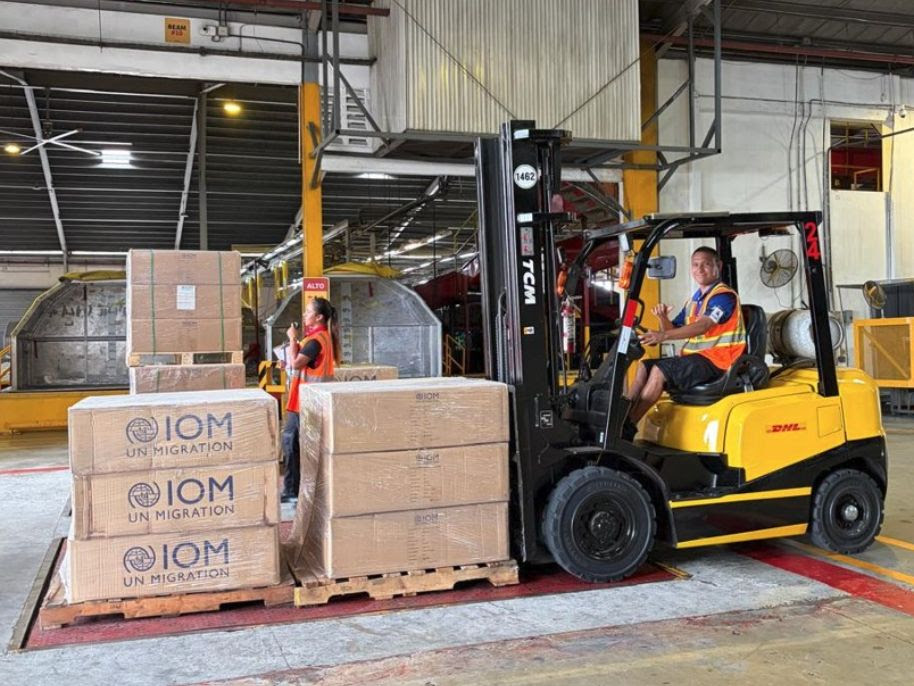
UN agency, the International Organization for Migration (IOM) has airlifted core relief supplies to support affected communities in Venezuela following the devastating earthquake on 24 June 2026, which caused widespread damage and urgent humanitarian needs.
“For families dealing with the aftermath of an earthquake, whether and when they receive initial assistance can make a big difference for how they are able to recover,” said Kim Eling, IOM Senior Director for Strategy and External Engagement. “Our partnership with DHL demonstrates how strategic collaboration with the private sector can help humanitarian organizations deliver essential assistance more quickly, ensuring affected communities receive the support they need when every moment counts.”
The humanitarian cargo was transported from IOM’s global stocks hub in Panama to Caracas on an in-kind cargo flight arranged and funded by DHL’s Disaster Response Team. The flight arrived at Simón Bolívar International Airport on 7 July 2026, carrying essential relief items, including jerry cans, solar lamps, and indoor privacy partitions, to support emergency shelter operations.
The movement was coordinated through close collaboration between IOM, the Government of Venezuela, and the United Nations Humanitarian Response Depot (UNHRD) in Panama. This joint effort enabled efficient planning, rapid execution, and timely delivery of assistance to communities most affected by the earthquake.
IOM sincerely thanks DHL’s Disaster Response Team for its generous in-kind logistics support, which was vital to the rapid mobilization and transport of IOM humanitarian supplies during this critical emergency.
This operation highlights IOM’s continued commitment to preparedness, rapid emergency response, and effective humanitarian supply chain coordination, using strategic partnerships and global prepositioning capacities to deliver life-saving assistance to crisis-affected populations.
Uncategorized
Irregular arrivals to EU have declined but human cost along migration routes remains high- IOM
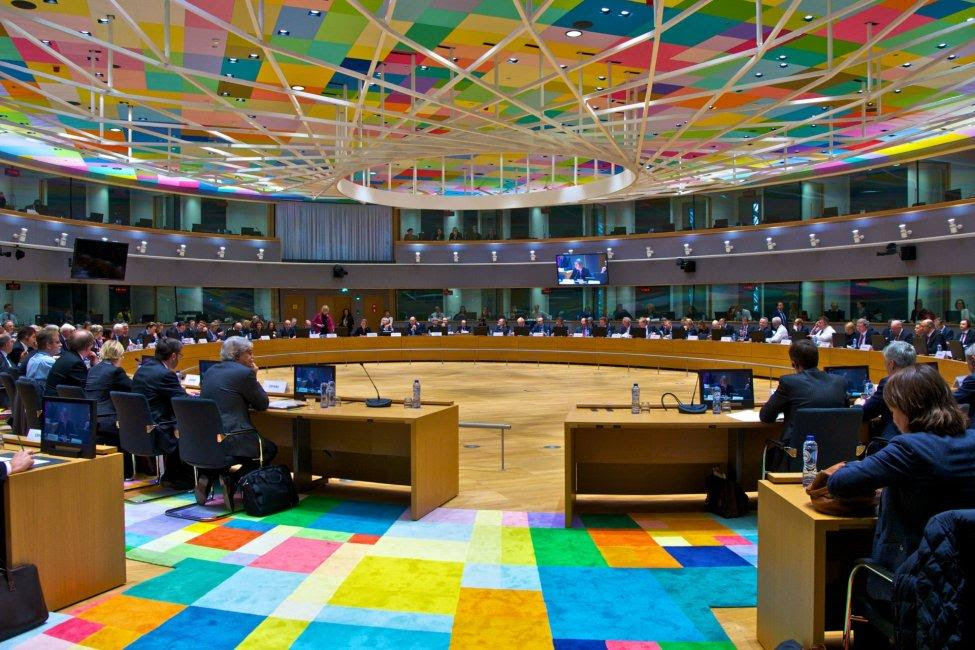
International Organization for Migration (IOM) has called on EU Member States to translate new migration reforms into practical, evidence-driven implementation, backed by strong partnerships and sustainable investment as Ireland prepares to assume the Presidency of the Council of the European Union (EU) at a decisive moment for migration management, the
With implementation of the Pact on Migration and Asylum and negotiations on the next long-term EU budget underway, IOM’s recommendations to the Irish EU Presidency outline four priority areas to help advance an effective and balanced migration agenda that supports the Presidency’s focus on competitiveness, security and values.
“Ireland’s Presidency arrives as the EU has begun the process of turning hard-fought reforms into credible results on migration,” said Lukas Gehrke, Director of IOM’s Global Office in Brussels. “That means keeping implementation practical, balanced and grounded in evidence, while ensuring the next EU budget provides the predictable, sustained investment needed to respond to migration and displacement within and beyond the EU.”
Migration trends show both progress and continuing challenges. While irregular arrivals to the EU have declined, the human cost along migration routes remains high, with the rate of fatalities in the Central Mediterranean underscoring persistent risks faced by migrants. At the same time, most migration to the EU continues through regular pathways, with millions of residence permits issued annually for work, family, and education, reflecting migration’s essential role in addressing labour market needs and competitiveness.
Against this backdrop, IOM’s recommendations call for strengthened evidence-driven migration governance to support more anticipatory and coordinated responses. This includes reinforcing data systems, foresight analysis, and early warning capacities to better understand evolving migration dynamics shaped by global crises, climate change, and shifting mobility patterns.
As EU Member States are actively involved in putting in place new systems and procedures for the implementation of the Pact on Migration and Asylum, the Irish Presidency will have a key role in facilitating practical solutions, addressing possible bottlenecks, and supporting a phased and flexible rollout that reflects diverse national contexts while maintaining common standards.
IOM stresses the need to advance a comprehensive approach to migration governance within the EU that balances border management, asylum, and return systems with strong support for integration, protection safeguards and respect for fundamental rights. This includes promoting fair and efficient return procedures, strengthening digitalization efforts, and improving coordination among Member States and EU agencies to ensure effective implementation.
The recommendations also highlight the importance of reinforcing the external dimension of EU migration policy through strategic partnerships with partner countries. Strengthening cooperation along migration routes, supporting countries of origin and transit, and promoting safe and regular migration pathways will be essential to address root causes, reduce irregular movements, and foster shared responsibility.
Given increasing global displacement driven by conflict, instability, and climate-related hazards, IOM calls for migration to be fully integrated into broader EU policy frameworks, including development, climate action, and humanitarian assistance.
Anticipating and responding to climate-related mobility, in particular, will require forward-looking, cross-sectoral approaches that link migration policy with resilience-building and adaptation strategies.
IOM’s recommendations further highlight the strategic importance of labour mobility and skills partnerships in addressing EU labour shortages and enhancing economic competitiveness. Initiatives such as the EU Talent Pool and Talent Partnerships offer opportunities to expand regular migration pathways while ensuring fair and ethical recruitment practices and protection of migrant rights.
Drawing on its global operational footprint and its presence across EU Member States and partner countries, IOM reiterates its commitment to supporting the Irish Presidency and EU Member States in advancing a pragmatic and principled migration agenda.

A new data released today by the International Organization for Migration (IOM) has revealed that about 8,000 migrants were reported dead or missing worldwide in 2025, bringing the total since 2014 to more than 82,000.
At least around 340,000 family members are estimated to have been directly affected. Despite declines in arrivals in some regions, the data shows migration routes are shifting rather than easing, with risks remaining high along increasingly dangerous journeys.
The findings draw on IOM’s Displacement Tracking Matrix (DTM) Global Overview of Migration Routes and new analysis from the Missing Migrants Project (MMP). DTM tracks movements, changing routes and conditions along migration corridors through direct field monitoring and governmental data sources, while MMP documents migrant deaths and disappearances using official records, media reports and information from IOM missions worldwide. Together, the reports show how drivers at origin and policy changes along the routes are reshaping migration journeys, while the human cost of unsafe migration continues to rise.
“Routes are shifting in response to conflict, climate pressures and policy changes, but the risks are still very real,” said IOM Director General Amy Pope. “Behind these numbers are people taking dangerous journeys and families left waiting for news that may never come. Data is critical to understanding these routes and designing interventions that can reduce risks, save lives and promote safer migration pathways.”
The 2025 Global Overview of Migration Routes shows that lower arrival figures in some regions do not reflect reduced migration pressure, but rather changing journeys as enforcement measures, conflict dynamics and environmental stress have altered established pathways.
In the Americas, northbound movements along the Central American route fell sharply compared to 2024. In Europe, overall arrivals declined, but the profile of movements changed, with Bangladeshi nationals becoming the largest group arriving while Syrian arrivals fell following political and policy shifts.
In the Horn of Africa, movements towards the Kingdom of Saudi Arabia decreased slightly from 2024 but remained above 2023 levels, while flows from East Africa towards Southern Africa increased late in the year due to shifting labour demands in southern Ethiopia. Along the Western African Atlantic route, arrivals to the Canary Islands dropped significantly after strengthened border cooperation, but journeys have become longer, riskier and more geographically dispersed.
Across regions, DTM data shows persistent pressures along migration routes. Thousands of migrants were stranded in border areas with limited access to shelter, health care and protection, while returns and relocations increased, placing additional strain on local services and complicating reintegration.
Together, the findings show that changing routes do not mean reduced harm. As journeys become more fragmented and hazardous, deaths, disappearances and the suffering of families left behind remain a persistent reality.
The reports reflect IOM’s route-based approach, linking mobility tracking with analysis of risks and fatalities to better target interventions, prioritize resources and support governments along key migration corridors.
Ahead of the International Migration Review Forum in May, IOM is calling for renewed commitments to protect migrants, prevent deaths and disappearances, and better support families affected by migration tragedies. The Organization says the evidence is clear: fewer movements do not automatically mean safer journeys, and saving lives requires stronger international cooperation and sustained investment in evidence-based responses.

ICC confirmation of 17 charges against El-Hishri draws praise from rights groups

Expert raises questions over UNHCR’s strategic direction after new leadership appointments

UN appoints new senior leadership for UNHCR

Migrant advocate laments death of asylum seeker, condemns Libya abuses

50 die as boat carrying about 60 people capsizes
-
 News3 weeks ago
Favour Henshaw appointed administrator of Platform for Cooperation on Mixed Migration
-

 News3 weeks ago
Lampedusa: built to accommodate 400 people, now holds thousands of migrants
-

 News Extra3 weeks ago
Pope urges European leaders to make greater investment in developing migrants’ countries of origin
-

 News2 weeks ago
IYAMIDR commends Okpebholo for ₦1m support to South Africa returnees
-
Features3 weeks ago
Lampedusa: Pope’s visit powerful reaffirmation migrants, refugees must remain at centre of global efforts
-
 News3 weeks ago
World silent as drone strikes, extreme hunger ravage El Obeid families
-
 Features3 weeks ago
IOM, UNDP, UNHCR, welcome growing investment in long-term solutions to internal displacement
-

 News Extra2 weeks ago
Solomon Okoduwa: An accomplished migration expert champions reforms, diaspora engagement