
News
Senegalese activist turns brother’s death on Atlantic migration route into campaign for change

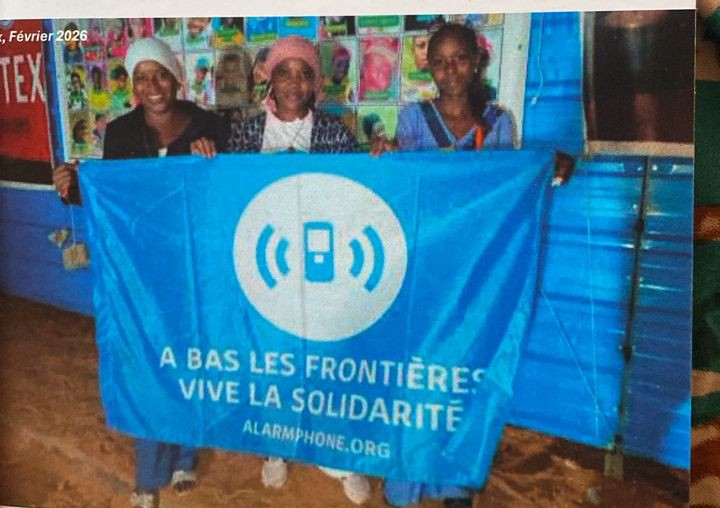
The death of her younger brother, Mbaye Dieye, during an Atlantic crossing to Spain has transformed Ndeye Fall Dieye’s life from one marked by grief and unanswered questions into a determined campaign to ensure that migrants who die on dangerous routes are not forgotten.
Mbaye was among migrants who lost their lives after a boat carrying people towards the Canary Islands capsized near El Hierro in April 2024.
For Dieye, the tragedy began with a phone conversation that would become her last with her brother.
“The last time I spoke to him was just before he and his companions set out on the ocean crossing,” she recalled, describing the days that followed as a period of intense fear and uncertainty.
For more than a week, the family waited desperately for news. Eventually, they learnt that the boat had met with disaster near the Canary Islands.
“All we received as an answer was the chilling image of a pirogue capsizing,” she said. “That image only added to our anxiety, doubts and endless questions.”
According to Dieye, her brother did not leave home recklessly. He was pursuing what he believed would be a better future.
Football, she said, was his greatest passion, and he dreamed of finding opportunities beyond the hardship and economic uncertainty that surrounded him.
“He was not leaving on a whim,” she said. “For him, football was everything. He wanted a bigger field, a better future and a way out of poverty.”
But the ocean swallowed those dreams.
Grief that refuses to disappear
More than two years after his death, Dieye said the pain remains deeply embedded in her daily life.
She described moments when she instinctively reaches for her phone, thinking she might still call her brother, despite knowing he will never answer. At other times, a notification or a memory triggers a brief, painful hope that he may somehow still be alive.
The grief, she said, is made more difficult by people who expect families to “move on.”
“The memories remain intact in our minds,” she said. “People ask us to forget, but that is impossible.”
Her brother, she added, was more than a sibling.
“Mbaye was my little brother, my confidant, my other half,” she said.
His presence, she explained, continues to return in dreams, where she briefly feels as though he is still alive before waking to the reality of his absence.
Finding strength among other bereaved families
Rather than endure the grief alone, Dieye eventually found support among other families who had lost relatives on migration routes.
Through networks including the Collective of Victims of Migration in Senegal (COVES) and the CommémorAction movement, she met other mothers, fathers, sisters and relatives carrying similar burdens.
The gatherings have provided families with a space to speak openly about their losses, share memories and resist what they describe as the reduction of migrant deaths to statistics.
“Being able to talk about my brother and his passion for football with other mothers and sisters who share the same pain helps us transform our enormous grief into collective strength,” she said.
Dieye participated in commemorative activities in Senegal, including a major gathering in Dakar, where families lit candles and remembered relatives who died while attempting dangerous migration journeys.
The aim, she said, is to ensure that the names, faces and stories of the dead do not disappear into silence.
Taking the campaign beyond Senegal
Her search for solidarity also took her to Cameroon, where she met families who had experienced similar losses.
The visit, she said, reinforced her understanding that her family’s tragedy was part of a much wider crisis affecting communities across Africa and beyond.
“It was there that I truly realised my tragedy was not an isolated one,” Dieye said.
During meetings and exchanges with bereaved families, participants listened to accounts of extreme poverty, isolation, broken families and the pressures that often push young people to undertake dangerous journeys.
Some parents, she said, blamed themselves for being unable to provide enough opportunities for their children.
Dieye and other activists sought to challenge that sense of guilt, arguing that families should not be held responsible for wider conditions that leave young people feeling they have no future at home.
“The parents are not responsible,” she said. “The real problems are closed borders, inequality and the lack of prospects for our young people.”
‘The ocean must not have the last word’
At the heart of the campaign is a demand for recognition, remembrance and greater attention to the circumstances that drive thousands of young Africans to risk their lives on land and sea routes.
Dieye believes poverty, inequality, social pressure and restrictive migration policies have combined to create conditions in which many young people see dangerous journeys as their only path towards a dignified life.
She said the commemorations and campaigns are therefore not only about mourning the dead but also about challenging the conditions that continue to put migrants at risk.
During a final commemoration with families from different countries, Dieye said national boundaries appeared to disappear as people came together around a shared experience of loss.
Today, she said, her brother’s memory has become part of a wider struggle.
“My brother no longer lives only in our regrets,” she said. “He continues to live through our struggles.”
Alongside families who have lost brothers, sons, daughters and other loved ones on migration routes, Dieye said she would continue to march, speak out and commemorate the dead.
“We will continue to walk, gather and remember,” she said, “so that their memories can light our path and so that the ocean will never have the last word.”






News
Des migrants égyptiens et d’autres nationalités portés disparus ou présumés morts après le naufrage d’une embarcation au large de la Libye

Des dizaines de migrants égyptiens et d’autres nationalités sont présumés morts ou portés disparus après le naufrage d’une embarcation au large des côtes libyennes, alors qu’ils tentaient de traverser la Méditerranée pour rejoindre l’Europe, selon des médias égyptiens.
L’embarcation aurait quitté la ville de Tobrouk, dans l’est de la Libye, jeudi soir, mais aurait commencé à sombrer quelques kilomètres seulement après son départ, poussant les passagers à lancer des appels de détresse.
Des sources citées par le journal égyptien Al-Masry Al-Youm ont indiqué que des vents violents et l’obscurité avaient entravé les opérations de sauvetage. Six personnes ont été secourues, tandis que le sort des autres passagers demeure inconnu.
Les équipes de recherche ont poursuivi leurs opérations le long des côtes libyennes afin de retrouver d’éventuels survivants, de localiser les migrants portés disparus et de récupérer les corps.
Le nombre exact de passagers à bord de l’embarcation ainsi que le bilan humain confirmé n’étaient pas immédiatement connus.
Selon le média, les migrants auraient rejoint la Libye par l’intermédiaire de réseaux de traite des êtres humains, qui les auraient retenus dans des entrepôts avant d’organiser leur traversée maritime vers l’Europe en échange d’argent.
Des habitants du village de Sindbis, situé dans le gouvernorat égyptien de Qalyubia, ont déclaré à Al-Masry Al-Youm qu’entre 22 et 27 jeunes hommes de leur localité auraient été à bord de l’embarcation. Des jeunes originaires de villages voisins auraient également participé à cette traversée.
Un habitant a indiqué que le groupe avait quitté le village environ un mois auparavant, en prenant un bus pour Alexandrie avant de poursuivre son voyage vers la Libye par voie maritime. Leurs familles auraient perdu tout contact avec eux plusieurs heures après leur embarquement.
La plupart des jeunes hommes portés disparus auraient moins de 20 ans et étaient à la recherche d’opportunités d’emploi à l’étranger, a ajouté cet habitant.
Ce nouveau naufrage met en évidence les dangers persistants auxquels sont confrontés les migrants qui tentent de rejoindre l’Europe par les voies migratoires irrégulières en Méditerranée depuis la Libye, où les traversées maritimes périlleuses et les réseaux de traite des êtres humains continuent d’exposer les migrants à l’exploitation et aux pertes en vies humaines.
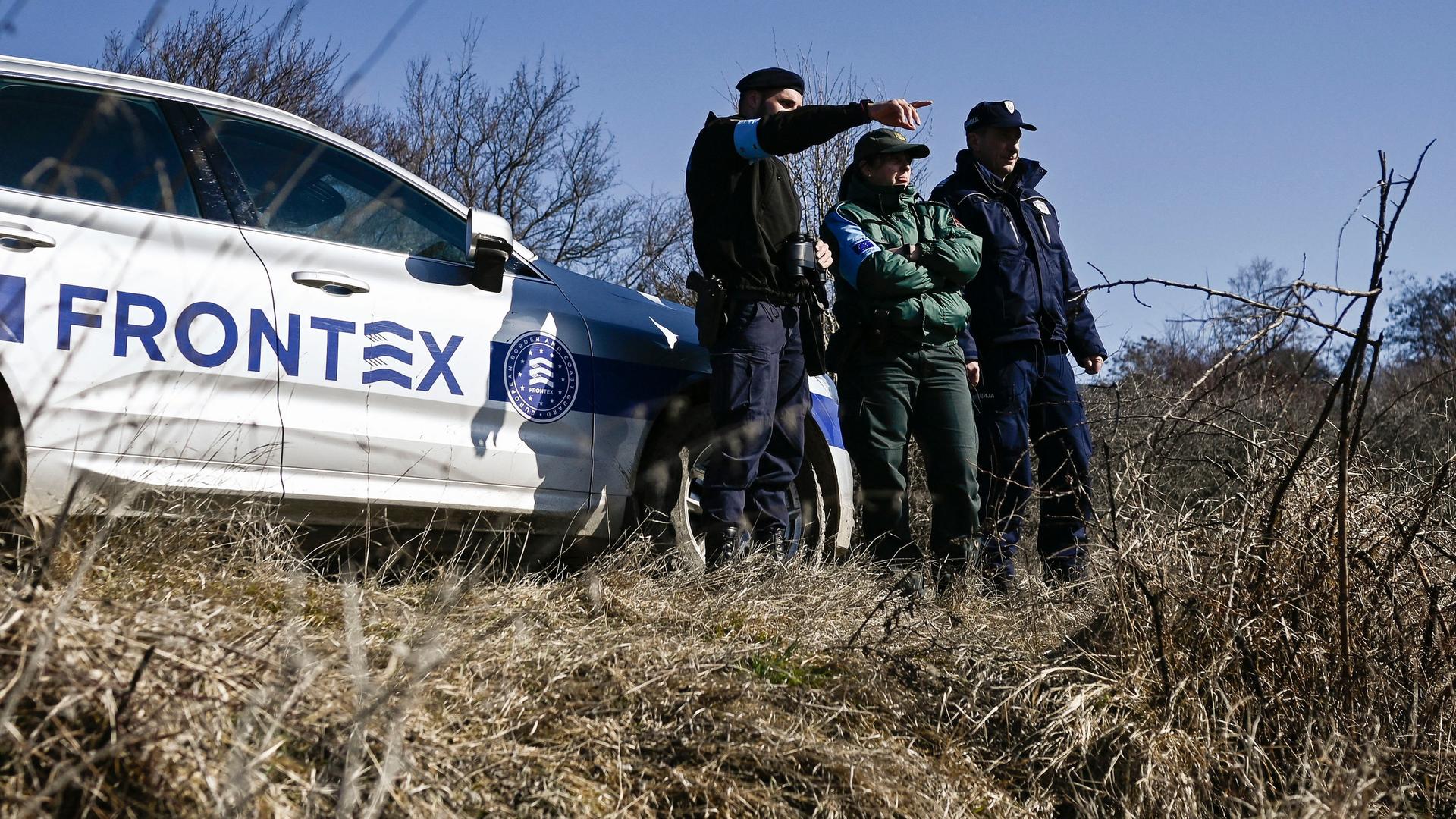
Les arrivées irrégulières dans l’Union européenne ont diminué sur la plupart des principales routes migratoires au cours des neuf premiers mois de 2026, bien que les traversées sur la route de la Méditerranée occidentale aient augmenté de 26 %, selon les chiffres publiés par l’Agence européenne de garde-frontières et de garde-côtes (Frontex).
Les données couvrant la période de janvier à septembre 2026 montrent que la route de la Méditerranée orientale a enregistré le plus grand nombre de franchissements irréguliers des frontières, avec 31 803 détections, soit une baisse de 15 % par rapport à la même période en 2025.
La route de la Méditerranée centrale arrive en deuxième position avec 22 511 détections, marquant une baisse de 56 %, tandis que celle de la Méditerranée occidentale a enregistré 18 260 traversées, soit une augmentation de 26 %.
La route de l’Afrique de l’Ouest a enregistré 7 106 traversées, en baisse de 45 %, tandis que celle des Balkans occidentaux a comptabilisé 6 687 franchissements, soit une diminution de 27 %.
Par ailleurs, les détections le long de la frontière terrestre orientale ont chuté de 51 %, pour s’établir à 4 498.
Les départs en direction du Royaume-Uni ont également diminué, avec 30 944 détections enregistrées au cours de cette période de neuf mois, soit une baisse de 43 % par rapport à la période correspondante en 2025.
Chiffres du mois de septembre
Pour le seul mois de septembre, la route de la Méditerranée orientale a enregistré 4 772 traversées irrégulières, le chiffre le plus élevé parmi les routes surveillées par Frontex.
La Méditerranée occidentale arrive ensuite avec 3 067 traversées, tandis que la Méditerranée centrale en a enregistré 2 877.
La route de l’Afrique de l’Ouest a comptabilisé 1 939 traversées, contre 1 079 dans les Balkans occidentaux et 584 à la frontière terrestre orientale.
Par ailleurs, 4 536 départs en direction du Royaume-Uni ont été enregistrés au cours du mois.
Principales nationalités
Les ressortissants soudanais, bangladais et afghans ont constitué les principales nationalités détectées sur la route de la Méditerranée orientale au cours des neuf premiers mois de 2026.
Sur la route de la Méditerranée centrale, les Bangladais, les Algériens et les Somaliens arrivaient en tête, tandis que les Algériens, les Maliens et les Marocains étaient les nationalités les plus fréquemment détectées sur la route de la Méditerranée occidentale.
Sur la route de l’Afrique de l’Ouest, les principales nationalités étaient les Marocains, les Sénégalais et les Gambiens.
Les ressortissants turcs, afghans et égyptiens étaient les plus fréquemment détectés sur la route des Balkans occidentaux, tandis que les Ukrainiens, les Afghans et les Russes arrivaient en tête à la frontière terrestre orientale.
Concernant les départs vers le Royaume-Uni, les Érythréens, les Soudanais et les Somaliens constituaient les principales nationalités recensées.
Ces chiffres mettent en évidence les différentes tendances migratoires aux frontières extérieures de l’Europe. Alors que la plupart des routes ont enregistré des baisses importantes, la Méditerranée occidentale a connu une augmentation des traversées au cours de la période étudiée.
Sea-Watch, a German-based sea rescue organisation, has criticised a proposed European Union regulation to expand the powers and operations of Frontex, warning that the plan could increase border violence, surveillance and deportations of migrants and asylum seekers.
In a series of posts on X on October 27, the organisation condemned the proposal presented by the European Commission and European Commissioner for Migration, Magnus Brunner, arguing that it would transform Frontex, the EU border agency, into a more powerful force capable of pushing back people seeking international protection, including beyond EU borders.
Sea-Watch said the proposed regulation would significantly expand Frontex’s operations through the deployment of more armed border officials, increased surveillance and expanded deportation activities.
The organisation also raised concerns over the financial implications of the proposal, stating that the European Commission intends to allocate €12 billion to Frontex between 2028 and 2034.
It contrasted the proposed funding with the €26 million allocated annually to the EU Agency for Fundamental Rights, arguing that the spending priorities placed greater emphasis on border enforcement than on protecting people’s rights and welfare.
Sea-Watch further criticised the language used by the European Commission to justify the proposed changes, particularly references to external threats, security crises and dangerous migration.
According to the organisation, such descriptions reflect narratives promoted by far-right political movements and parties, which it said are increasingly influencing EU migration policies.
The rescue organisation also recalled allegations of human rights violations involving Frontex, including illegal pushbacks and cooperation with Libyan actors accused of crimes against humanity.
It noted that a case concerning Frontex’s alleged role in pushbacks to Libya is currently before the Court of Justice of the European Union.
Sea-Watch argued that security should not be defined solely by border protection and migration control, but should also include affordable housing, functioning public services, freedom from violence and respect for fundamental rights.
” We must not sacrifice human rights in the name of protecting them,” the organisation said.
It stressed that the proposed regulation has not yet become law, as negotiations are expected to take place between the European Parliament and the Council of the European Union.
However, Sea-Watch warned that increasing border controls, surveillance and deportations would not create a safer or more inclusive Europe.
The organisation called for opposition to the proposed expansion of Frontex’s powers, reiterating its campaign slogan, #AbolishFrontex.

Des migrants égyptiens et d’autres nationalités portés disparus ou présumés morts après le naufrage d’une embarcation au large de la Libye

Egyptian migrants, others feared dead, missing after boat sinks off Libya

Les traversées en Méditerranée occidentale augmentent de 26 %

Western Mediterranean crossings rise by 26%
Frontex se félicite de la baisse des franchissements irréguliers aux frontières de l’UE
-

 News Extra2 weeks ago
IOM’s Displacement Tracking Matrix monitors 97.2 million people in 2025
-
 News Extra1 week ago
SOS Humanity accuses Frontex of aiding migrant pushbacks to Libya
-
 News2 weeks ago
Libya repatriates hundreds of migrants, deploys reinforcements to Tobruk
-
News2 weeks ago
Libye : des centaines de migrants rapatriés, des renforts déployés à Tobrouk
-
 News Extra2 weeks ago
La Matrice de suivi des déplacements de l’OIM a suivi 97,2 millions de personnes en 2025
-
 News2 days ago
Sea-Watch condemns proposed EU plan to expand Frontex powers
-
 News2 weeks ago
Ebola:DRC confirms 10,000 cases, NRC seeks scale-up
-
 Features2 weeks ago
League of Arab States, IOM launch Arab Migration Data Network