
News Extra
Europe’s “shield”: Hundreds presumed to have drowned off Greece


Off the coast of Greece, a large fishing boat has capsized. We fear that hundreds of people have drowned. Yesterday, 13 June 2023, we had alerted the Hellenic Coast Guard at 16:53 CEST to this boat in distress, as the people had called us for help. The Greek authorities, reportedly also Italy and Malta, had already been alerted several hours earlier. Greek and other European authorities were thus well aware of this overcrowded and unseaworthy vessel. A rescue operation was not launched. In the early hours of today, 14 June 2023, the boat capsized.
Already in the hours following this disaster at sea, the Hellenic Coast Guard has begun to justify their failure to assist by arguing that the people in distress had not wanted to be rescued to Greece.
We ask: Why are people at sea so afraid to encounter Greek forces?
It is because people on the move know about the horrible and systematic pushback practices carried out by the Greek authorities, practices that are sanctioned by the EU. Greece has become “Europe’s shield”, as European Commision president von der Leyen once noted, violently deterring people on the move.
People on the move know that thousands have been shot at, beaten, and abandoned at sea by these Greek forces. They know that encountering the Hellenic Coast Guard, the Hellenic Police or the Hellenic Border Guards often means violence and suffering. It is due to systematic pushbacks that boats are trying to avoid Greece, navigating much longer routes, and risking lives at sea.
As Alarm Phone, we have documented innumerable cases of pushbacks and also of cases where overcrowded boats capsized because they took longer routes, trying to avoid Greek forces. One of the most recent examples is a boat that was in distress on 22 May 2023, south of Methoni and pushed back 524 km into Turkish waters. Some of the people from this case are still imprisoned in Turkey.
In addition, Alarm Phone has documented how the passengers of another large boat that had also left from Tobruk, Libya, were abducted from deep within the Maltese Search and Rescue zone and towed back to Libya on 23 May 2023, where they were imprisoned. People on the move know that they need to travel as far as they can to heighten their chances to avoid pushbacks or pushbacks by proxy.
After the fishing boat capsized, Greek authorities were quick to publicly justify their failure to rescue. The reality is that they had been alerted many hours before the vessel capsized and had been informed by different sources that this was a boat in distress. Reportedly, assets of the Hellenic Coast Guard and a Frontex aircraft were on scene. European authorities could have sent out adequate rescue resources without delay. They failed to do so because their desire to prevent arrivals was stronger than the need to rescue hundreds of lives.
Stop blaming people on the move for trying to escape your violence!
Stop blaming people on the move for their own death!
Stop pushbacks, end death at sea, tear down Europe’s borders!
ALARM PHONE TIMELINE OF THE DISTRESS CASE – 13/14 JUNE 2023
In the morning of 13 June, from 9:35h CEST, the Twitter user Nawal Soufi alerts about a large boat in distress, carrying, according to them, 750 people. Over the following hours, Nawal Soufi adds further information, including the GPS position of the boat in distress and that authorities in Italy, Greece, and Malta have been alerted.
14:17 CEST: Alarm Phone receives the first call from the boat in distress. It is difficult to communicate with the distressed. They say that they cannot survive the night, that they are in heavy distress. Alarm Phone tries to receive their current GPS coordinates in order to be able to alert authorities – but the call cuts. We try to reconnect with them.
14:30 CEST: The distressed call again, telling Alarm Phone that they would send their location. However, they do not.
15:52 CEST: The distressed called Alarm Phone twice but it was impossible to understand them.
16:04 CEST: We speak to the distressed again. They say that they would send their GPS position.
16:13 CEST: We receive the position from the people in distress: N 36 15, 21 02. We try to gather further information but we cannot reconnect with them.
16:53 CEST: We alert the Greek authorities per email as well as other actors, including Frontex and UNHCR Greece.
17:13 CEST: We reestablish contact to the people in distress. We hear “hello, hello”, then the call drops. We try to reconnect, which is not possible.
17:14 CEST: We receive a call from the boat in distress but cannot hear anything.
17:20 CEST: We speak to the distressed and they report that the boat is not moving. They say: “The captain left on a small boat. Please, any solution.” They say they need food and water.
17:34 CEST: We receive another call from the boat in distress and their updated position: 36 18, 21 04 – very close to the previous position. They say that the boat is overcrowded and that the boat is moving from side to side.
18:00 CEST: We call the company of the merchant vessel “Lucky Sailor”, informing them about the boat in distress. They say that they only act under the authority of the Greek coastguards.
Over the following hours, Alarm Phone tries to re-establish contact to the distressed but either calls are not connected or it is impossible to understand one another.
20:05 CEST: Alarm Phone is informed by the distressed that they received water from the merchant vessel Lucky Sailor and that they have been in contact with the “police”. Alarm Phone also notices that a second merchant vessel, the “Faithful Warrior”, is close to the distressed.
Over the following hours, Alarm Phone tries to reestablish contact to the distressed but either calls are not connected or it is impossible to understand one another.
00:46 CEST on 14/06/2023: Last contact to the boat in distress. All we hear is: “Hello my friend. …. The ship you send is …”. The call cuts.
Credit: AlarmPhone.org





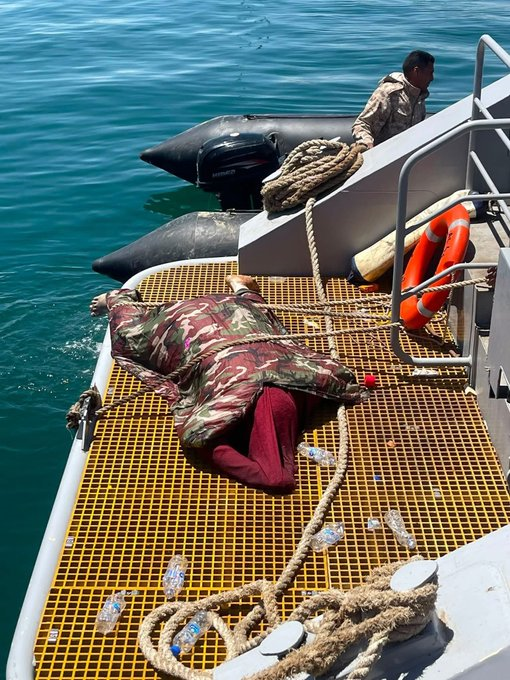
The Executive Director of Refugees in Libya, David Yambio, has mourned the death of a migrant whose body was recovered off the coast of Benghazi after reportedly being stranded at sea for 14 days, describing the incident as a stark reminder of the dangers faced by people fleeing conflict and persecution.
In a post on X, Yambio reflected on his own experience in Libya, saying that while detained in the North African country, he had often hoped that, if he were to die, it would be at sea rather than at the hands of violent militias.
According to him, the sea represented the only place where many migrants retained a sense of dignity, as they risked everything in pursuit of safety and international protection.
Yambio questioned what he described as a deeper humanitarian tragedy, arguing that many people seeking refuge would rather face the dangers of the Mediterranean than remain exposed to violence by armed groups in Libya.
He also criticised what he called Europe’s role in arming militias and accused African leaders of remaining silent in the face of abuses against migrants.
The activist said the photograph accompanying his post showed one of several people seeking protection who had been stranded at sea for two weeks. He noted that the man’s body, along with those of two others, was recovered off the coast of Benghazi a few days ago.
Ending his post on a poignant note, Yambio said the deceased asylum seeker had been portrayed as an “invader,” underscoring what he believes is the dehumanisation of migrants fleeing in search of safety.
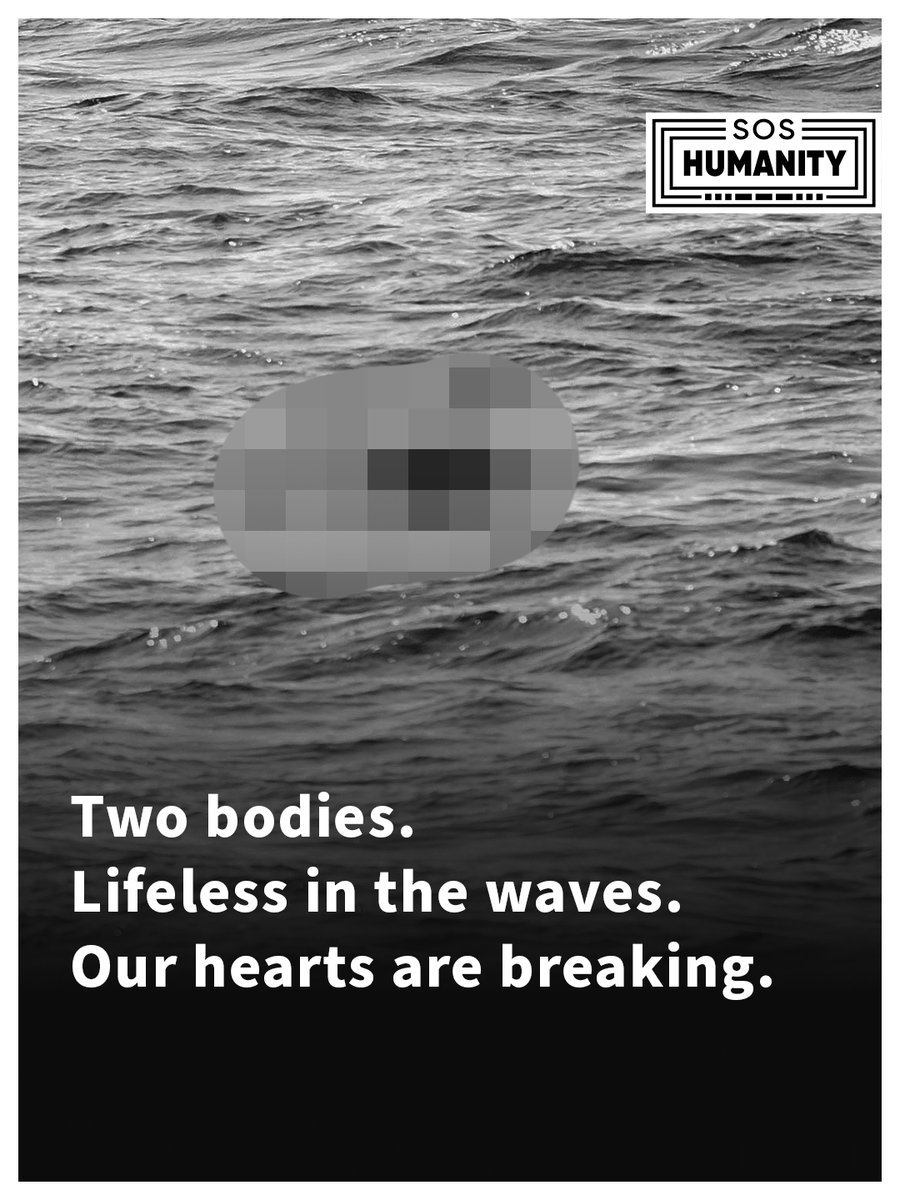
At least 50 migrants are feared dead or missing after a boat carrying about 60 people capsized off the eastern coast of Libya while attempting to cross the Mediterranean Sea to Europe, authorities have said.
The vessel overturned on Tuesday near Bardaa Island, off the coastal city of Tobruk, according to the Coast Guard in eastern Libya.
Officials said 10 passengers, including some women and children, survived by swimming to Bardaa Island. Search and rescue operations were still ongoing as authorities continued efforts to locate the remaining passengers.
The latest disaster is another in a series of deadly shipwrecks involving migrants departing from Libya, a major transit hub for people seeking to reach Europe in search of safety and better economic opportunities.
Just last month, another migrant boat sank off eastern Libya, leaving 51 people dead or missing.
Since the 2011 NATO-backed uprising that overthrew longtime ruler Moammar Gadhafi, Libya has remained politically unstable, making it a key departure point for migrants fleeing conflict, persecution and poverty across Africa and the Middle East.
Human traffickers frequently load migrants onto overcrowded and unseaworthy boats for the dangerous Mediterranean crossing, a route that has claimed thousands of lives over the years and remains one of the world’s deadliest migration corridors.
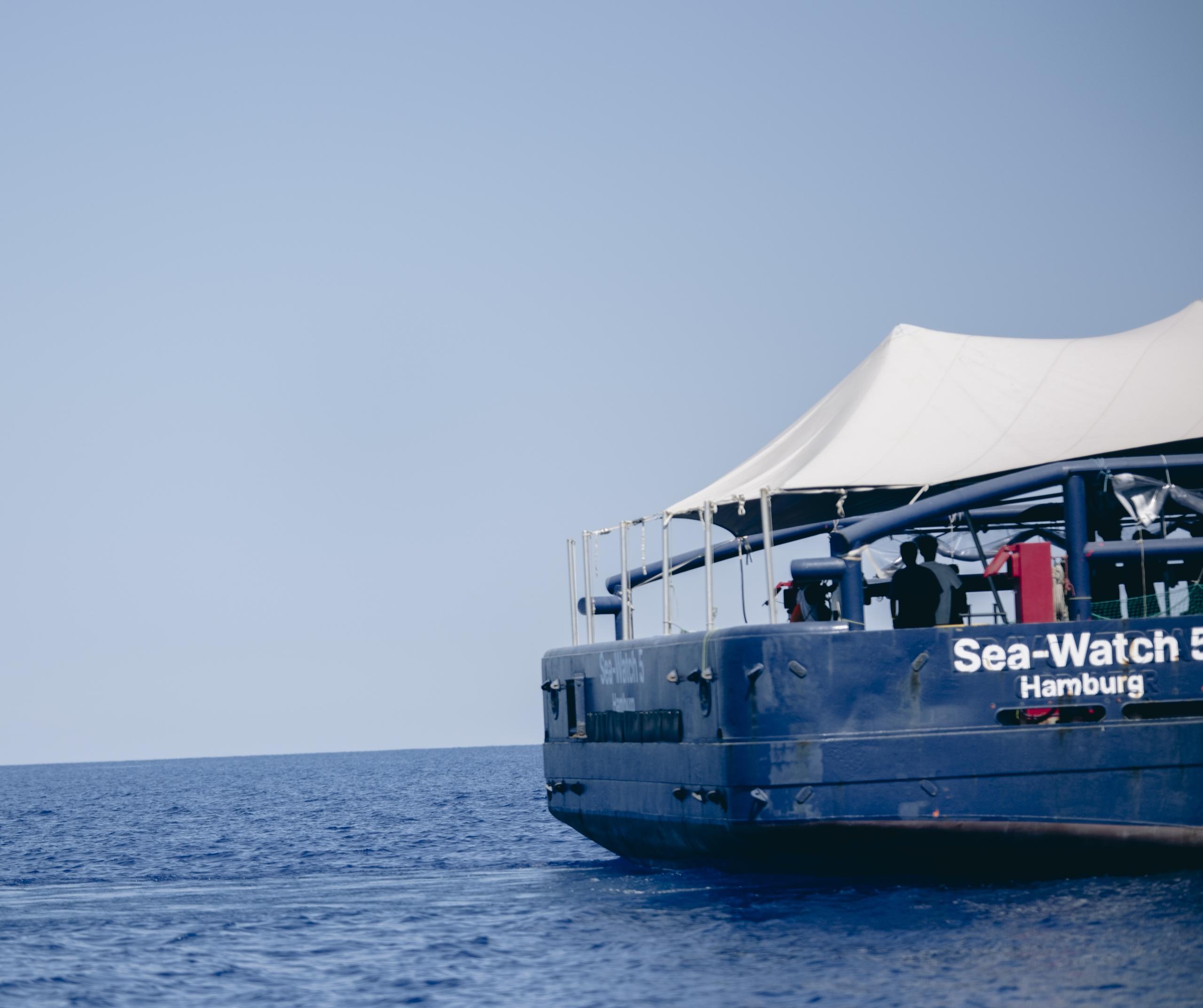
Sea-Watch International has announced that its rescue vessel, Sea-Watch 5, has returned to operations in the central Mediterranean after what it described as an attack by Libyan militias in May, saying it has already rescued 52 people in two separate operations.
In a post published on its verified X account, @seawatch_intl, the humanitarian organisation said 40 people were rescued on the first day of operations, followed by another 12 the next day. It added that one of the survivors, a pregnant woman, requires urgent medical care.
Sea-Watch also claimed that an average of eight people die every day while attempting to cross the Mediterranean Sea, renewing its criticism of European migration policies and rescue coordination.
The organisation accused the Italian government of assigning its rescue vessel to the northern port of Marina di Carrara, which it said is more than four days away from the rescue zone. According to Sea-Watch, the practice keeps humanitarian rescue ships away from areas where migrants are most at risk.
“To ensure that as few rescue ships as possible are in the rescue area, Italy sends us to the northern port Marina di Carrara, 4+ days away,” the group wrote, describing the decision as “cruel and irresponsible.”
Sea-Watch argued that the lengthy journey delays the disembarkation of rescued migrants and reduces the number of rescue vessels available to respond to emergencies at sea.
The organisation also directly criticised Italian Prime Minister Giorgia Meloni over the country’s migration policies, questioning the government’s approach to search-and-rescue operations in the Mediterranean.
Italian authorities have previously defended the assignment of distant ports to humanitarian vessels, saying the measure is part of efforts to manage migrant arrivals and coordinate disembarkation procedures.

ICC confirmation of 17 charges against El-Hishri draws praise from rights groups

Expert raises questions over UNHCR’s strategic direction after new leadership appointments

UN appoints new senior leadership for UNHCR

Migrant advocate laments death of asylum seeker, condemns Libya abuses

50 die as boat carrying about 60 people capsizes
-

 News2 weeks ago
Favour Henshaw appointed administrator of Platform for Cooperation on Mixed Migration
-
 News3 weeks ago
Former UNHCR official sparks debate with ‘there is no such thing as a race’ comment
-
 News2 weeks ago
Lampedusa: built to accommodate 400 people, now holds thousands of migrants
-

 News Extra2 weeks ago
Pope urges European leaders to make greater investment in developing migrants’ countries of origin
-

 News7 days ago
IYAMIDR commends Okpebholo for ₦1m support to South Africa returnees
-

 Features3 weeks ago
1,500 young Chadians to benefit from EU, IOM funds
-
 Features3 weeks ago
EU, IOM, launch regional programme to help countries respond to climate displacement
-
 News2 weeks ago
World silent as drone strikes, extreme hunger ravage El Obeid families