
News Extra
Europe’s “shield”: Hundreds presumed to have drowned off Greece


Off the coast of Greece, a large fishing boat has capsized. We fear that hundreds of people have drowned. Yesterday, 13 June 2023, we had alerted the Hellenic Coast Guard at 16:53 CEST to this boat in distress, as the people had called us for help. The Greek authorities, reportedly also Italy and Malta, had already been alerted several hours earlier. Greek and other European authorities were thus well aware of this overcrowded and unseaworthy vessel. A rescue operation was not launched. In the early hours of today, 14 June 2023, the boat capsized.
Already in the hours following this disaster at sea, the Hellenic Coast Guard has begun to justify their failure to assist by arguing that the people in distress had not wanted to be rescued to Greece.
We ask: Why are people at sea so afraid to encounter Greek forces?
It is because people on the move know about the horrible and systematic pushback practices carried out by the Greek authorities, practices that are sanctioned by the EU. Greece has become “Europe’s shield”, as European Commision president von der Leyen once noted, violently deterring people on the move.
People on the move know that thousands have been shot at, beaten, and abandoned at sea by these Greek forces. They know that encountering the Hellenic Coast Guard, the Hellenic Police or the Hellenic Border Guards often means violence and suffering. It is due to systematic pushbacks that boats are trying to avoid Greece, navigating much longer routes, and risking lives at sea.
As Alarm Phone, we have documented innumerable cases of pushbacks and also of cases where overcrowded boats capsized because they took longer routes, trying to avoid Greek forces. One of the most recent examples is a boat that was in distress on 22 May 2023, south of Methoni and pushed back 524 km into Turkish waters. Some of the people from this case are still imprisoned in Turkey.
In addition, Alarm Phone has documented how the passengers of another large boat that had also left from Tobruk, Libya, were abducted from deep within the Maltese Search and Rescue zone and towed back to Libya on 23 May 2023, where they were imprisoned. People on the move know that they need to travel as far as they can to heighten their chances to avoid pushbacks or pushbacks by proxy.
After the fishing boat capsized, Greek authorities were quick to publicly justify their failure to rescue. The reality is that they had been alerted many hours before the vessel capsized and had been informed by different sources that this was a boat in distress. Reportedly, assets of the Hellenic Coast Guard and a Frontex aircraft were on scene. European authorities could have sent out adequate rescue resources without delay. They failed to do so because their desire to prevent arrivals was stronger than the need to rescue hundreds of lives.
Stop blaming people on the move for trying to escape your violence!
Stop blaming people on the move for their own death!
Stop pushbacks, end death at sea, tear down Europe’s borders!
ALARM PHONE TIMELINE OF THE DISTRESS CASE – 13/14 JUNE 2023
In the morning of 13 June, from 9:35h CEST, the Twitter user Nawal Soufi alerts about a large boat in distress, carrying, according to them, 750 people. Over the following hours, Nawal Soufi adds further information, including the GPS position of the boat in distress and that authorities in Italy, Greece, and Malta have been alerted.
14:17 CEST: Alarm Phone receives the first call from the boat in distress. It is difficult to communicate with the distressed. They say that they cannot survive the night, that they are in heavy distress. Alarm Phone tries to receive their current GPS coordinates in order to be able to alert authorities – but the call cuts. We try to reconnect with them.
14:30 CEST: The distressed call again, telling Alarm Phone that they would send their location. However, they do not.
15:52 CEST: The distressed called Alarm Phone twice but it was impossible to understand them.
16:04 CEST: We speak to the distressed again. They say that they would send their GPS position.
16:13 CEST: We receive the position from the people in distress: N 36 15, 21 02. We try to gather further information but we cannot reconnect with them.
16:53 CEST: We alert the Greek authorities per email as well as other actors, including Frontex and UNHCR Greece.
17:13 CEST: We reestablish contact to the people in distress. We hear “hello, hello”, then the call drops. We try to reconnect, which is not possible.
17:14 CEST: We receive a call from the boat in distress but cannot hear anything.
17:20 CEST: We speak to the distressed and they report that the boat is not moving. They say: “The captain left on a small boat. Please, any solution.” They say they need food and water.
17:34 CEST: We receive another call from the boat in distress and their updated position: 36 18, 21 04 – very close to the previous position. They say that the boat is overcrowded and that the boat is moving from side to side.
18:00 CEST: We call the company of the merchant vessel “Lucky Sailor”, informing them about the boat in distress. They say that they only act under the authority of the Greek coastguards.
Over the following hours, Alarm Phone tries to re-establish contact to the distressed but either calls are not connected or it is impossible to understand one another.
20:05 CEST: Alarm Phone is informed by the distressed that they received water from the merchant vessel Lucky Sailor and that they have been in contact with the “police”. Alarm Phone also notices that a second merchant vessel, the “Faithful Warrior”, is close to the distressed.
Over the following hours, Alarm Phone tries to reestablish contact to the distressed but either calls are not connected or it is impossible to understand one another.
00:46 CEST on 14/06/2023: Last contact to the boat in distress. All we hear is: “Hello my friend. …. The ship you send is …”. The call cuts.
Credit: AlarmPhone.org





The UK has reopened its resettlement scheme to new refugee referrals, with roughly one in four expected to be Afghan women and girls or Palestinian refugees.
Home Secretary Shabana Mahmood said the UK Resettlement Scheme would provide a safe and legal route for people fleeing war and persecution. Referrals will be made in partnership with the UN Refugee Agency and the International Refugee Assistance Project.
The process has reopened immediately, working with local authorities. The first arrivals are expected before the end of the year.
The reopening comes alongside plans for three community-sponsored routes announced in November 2025. Applications for charities and non-profits to sponsor refugees through community and university placements are due to open in October, with the first arrivals expected in autumn 2027. Applications for a work sponsorship route, in which companies host refugees, are expected to open in spring 2027.
Sponsors will provide accommodation, integration support and help finding work. The government expects arrivals across the resettlement scheme and the three new routes to number in the hundreds initially, rising to the low thousands as illegal migration falls. An annual cap will apply.
People admitted through the routes will be placed on a five-year path to permanent settlement, the government said. It described the policy as part of its effort to encourage capped, legal routes and deter irregular migration.
The Home Office also cited enforcement figures, saying more than 48,000 attempted small-boat crossings had been stopped since the general election. It reported that more than 80,000 people with no right to remain in the UK had been removed since July 2024.
L’agence des Nations Unies pour les réfugiés, le HCR, s’est inquiétée du récent renvoi par la Malaisie de 1 476 personnes au Myanmar, alors que le conflit se poursuit dans le pays et que la situation en matière de droits humains et sur le plan humanitaire demeure extrêmement grave.
Dans une déclaration, le Haut-Commissaire adjoint du HCR chargé de la protection, Edem Wosorn, a déclaré : « Nous sommes préoccupés par ces renvois, car les personnes renvoyées au Myanmar pourraient être exposées à de graves risques, et certaines d’entre elles pourraient avoir besoin d’une protection internationale.
« Bien que les autorités affirment que ces retours sont volontaires, les personnes renvoyées étaient détenues dans des centres d’immigration. Cela soulève de sérieuses questions quant au caractère véritablement libre et éclairé des décisions de retour. Le HCR n’a pas eu accès à ces personnes pour pouvoir l’évaluer. »
Le HCR a déclaré reconnaître pleinement la responsabilité souveraine de la Malaisie en matière de gestion de l’asile et des migrations. Il a toutefois exhorté la Malaisie à veiller à ce que tous les retours soient soumis à de solides garanties, notamment à des évaluations individuelles et à un accès aux procédures de protection. Les décisions de retour doivent être volontaires et évaluées en dehors de tout contexte de détention.
En vertu du principe de non-refoulement, nul ne devrait être renvoyé dans un pays où il pourrait être exposé à des persécutions, à la torture ou à d’autres menaces graves pour sa vie ou sa liberté.
Tant que les conditions au Myanmar ne permettront pas des retours sûrs, dignes et durables, les États doivent continuer à garantir l’accès à l’asile et à respecter leurs obligations en matière de protection internationale.
Le HCR a ajouté qu’il restait prêt à travailler avec la Malaisie afin de renforcer les dispositifs nationaux d’asile et de protection.
« Un soutien régional et international accru est nécessaire pour faire progresser une solution politique à la crise et mettre fin aux hostilités au Myanmar. Le HCR appelle la communauté internationale à maintenir son soutien aux pays de la région qui accueillent des réfugiés du Myanmar. »
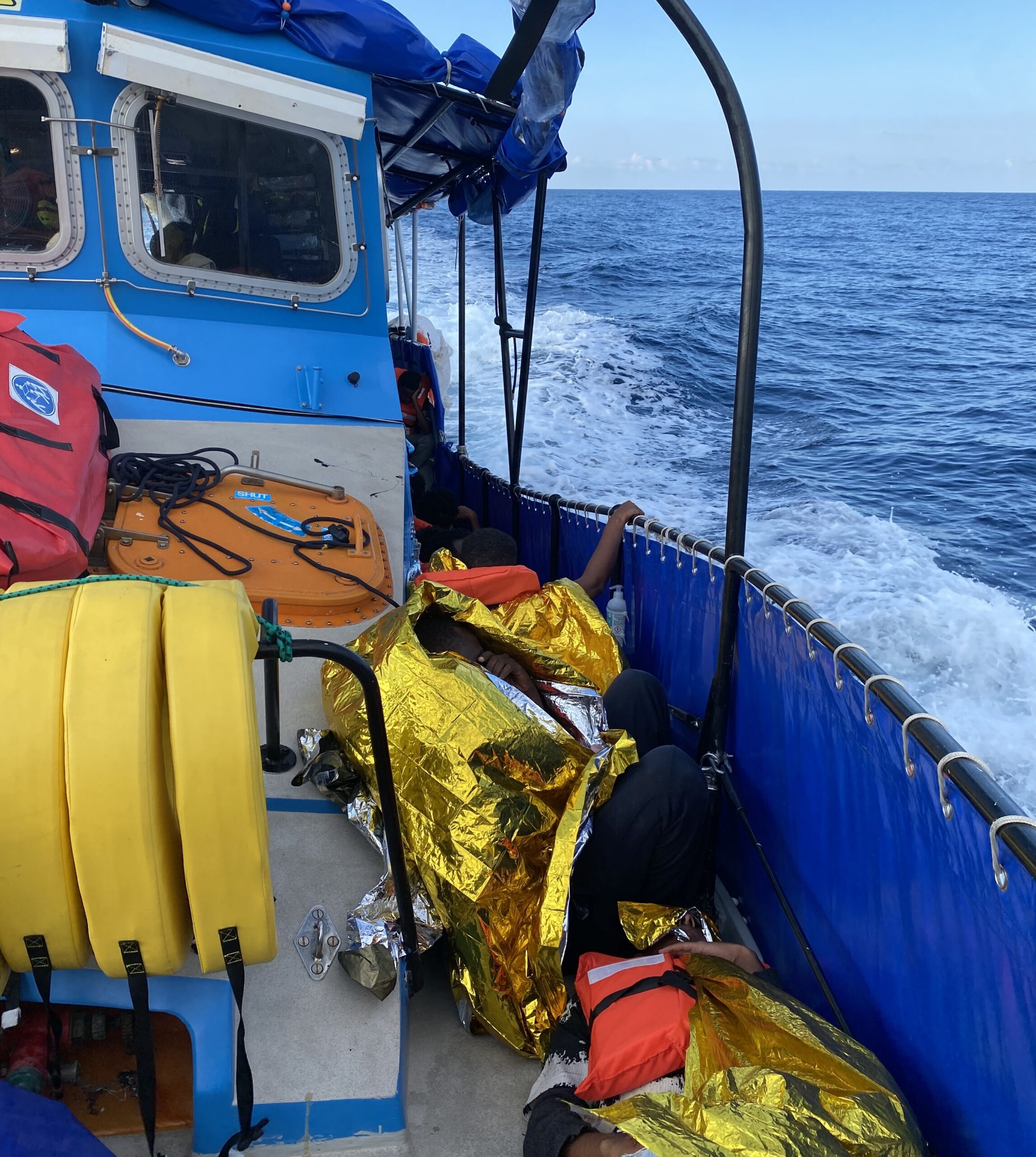
L’équipage de sauvetage de Sea-Watch affirme avoir secouru 28 personnes après un naufrage dans les eaux internationales tôt le 29 septembre, récupérant deux corps et apprenant auprès des survivants qu’au moins six personnes sont toujours portées disparues, dont trois enfants d’une même famille.
Selon Sea-Watch, son navire de sauvetage Aurora a découvert une embarcation pneumatique presque dégonflée vers 4 heures du matin, après que la ligne d’urgence civile Alarm Phone eut alerté les autorités de la présence du bateau.
Cinq survivants et deux corps, dont celui d’un enfant, ont été retrouvés à bord de l’embarcation pneumatique, a indiqué l’organisation.
Sea-Watch a déclaré que les 23 autres survivants du naufrage avaient atteint la plateforme gazière Hasdrubal, située dans les eaux internationales relevant de la zone de recherche et de sauvetage de la Tunisie.
Avec l’autorisation du Centre tunisien de coordination des opérations de sauvetage maritime, l’Aurora s’est ensuite dirigé vers la plateforme, où son équipage a distribué des gilets de sauvetage et embarqué les autres survivants. Sea-Watch a indiqué qu’un jeune enfant figurait parmi les personnes secourues.
L’organisation a déclaré que les survivants avaient signalé la disparition d’au moins six personnes, dont trois enfants d’une même famille. Elle a ajouté qu’il n’était pas encore établi si l’enfant dont le corps a été récupéré était l’un des trois enfants portés disparus.
Les autorités italiennes ont ensuite désigné Lampedusa comme port sûr pour le navire, et l’Aurora fait actuellement route vers cette destination, selon Sea-Watch.
La porte-parole de Sea-Watch, Julia Winkler, a lié cet incident aux critiques de l’organisation à l’égard des politiques migratoires européennes, affirmant que les gouvernements présentaient la baisse du nombre d’arrivées comme un succès alors que des personnes continuaient de mourir ou de disparaître en mer.
Sea-Watch a également appelé à la mise en place d’un programme européen de sauvetage maritime géré par les États, estimant que le sauvetage en mer constitue une obligation plutôt qu’une mesure laissée à la discrétion des autorités.
L’organisation affirme que plus de 1 970 personnes sont mortes ou portées disparues en Méditerranée en 2026 alors qu’elles cherchaient à obtenir une protection. Ce chiffre, ainsi que l’évaluation faite par Sea-Watch des politiques européennes de dissuasion migratoire, constitue des affirmations de l’organisation qui n’ont pas été vérifiées de manière indépendante dans les informations fournies.

Le budget d’aide proposé par la Norvège n’atteint pas l’objectif de 1 %, selon le NRC

Norway’s proposed aid budget falls short of 1% target, NRC says

Global powers fuel war as civilians die under drones, barrel bombs

Les autorités italiennes immobilisent un navire de sauvetage après avoir secouru 20 personnes
Italian authorities detain rescue vessel after saving 20 lives
-

 Features2 weeks ago
Retour volontaire assisté, assistance post-arrivée et réintégration : le rôle de l’OIM expliqué
-
 News2 weeks ago
Yémen :21 573 ménages déplacés dans sept gouvernorats
-

 Features2 weeks ago
L’OIM explique son travail dans les pays qui accueillent des ressortissants de pays tiers
-

 News2 weeks ago
Ebola : Amy Pope appelle à un soutien urgent alors que la RDC fait face à la plus grande épidémie
-
 Features2 weeks ago
L’OIM aide plus de 81 000 migrants à retourner dans leur pays depuis 115 pays
-

 Features2 weeks ago
IOM explains work in countries receiving third-country nationals
-

 Features2 weeks ago
Assisted Voluntary Return, Post-Arrival Assistance, and Reintegration: IOM’s Role Explained
-
 News2 weeks ago
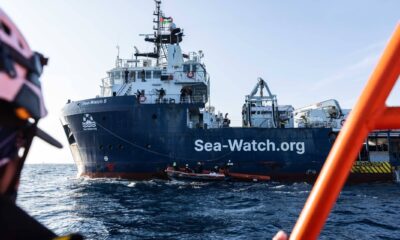
Un tribunal de Naples annule la détention de 45 jours du Sea-Watch 5