
News
Okoduwa urges FG to settle, empower returning Nigerian youths


By Noble Sunday (Benin City)
Human rights activist and advocate for returnee migrants, Comrade Solomon Okoduwa, has called on the Federal and State Governments to urgently provide resettlement packages and empowerment schemes for Nigerian youths being deported from Europe. He warned that abandoning them will worsen unemployment, poverty and social instability across the country.
Speaking to journalists on Monday, Okoduwa said many of the returnees are stranded after abandoning thriving businesses and years of hard work in the countries they were forced to leave.
“Starting life all over again in Nigeria is not easy,” he said. “These young men and women need immediate support from well-meaning Nigerians, especially the government. They need settlement grants, skills acquisition, and soft loans to restart their lives with dignity. We cannot watch them become a burden on society.”
*137 Deported in Five Months*
His appeal comes on the heels of fresh data showing that Germany deported at least 137 Nigerian citizens between February and June 2026 through five documented chartered operations.
According to figures monitored by the _DERS Team_ and _Refugees4refugees.org_, Germany has intensified the use of charter flights to return Nigerians whose migration cases have been determined.
The breakdown is as follows:
– *February:* 27
– *March:* 37
– *April:* 24
– *May:* 23
– *June:* 26
The March 10 operation was the largest, with 50 Nigerians deported in a joint EU exercise involving Germany, Spain, Austria and Belgium. Germany accounted for 37 of them.
On February 18, 2026, a World2fly-operated charter flight departed Stuttgart and landed at the Lagos Cargo Airport with 27 Nigerians on board.
Baden-Württemberg was identified as a major hub for the deportations, serving as the departure point for both the December 2025 and February 2026 flights.
*Due Process Concerns Raised*
The report also raised serious concerns about due process. Advocates alleged that some returnees had serious health conditions, while others had lived and worked in Germany for years.
In one case, a single mother and her three children were reportedly deported from Sindelfingen, Stuttgart, despite allegedly having valid residence documents. Following intervention by volunteers and local authorities, the deportation was later admitted to be an error and the family was allowed to return to Germany.
The DERS Team further alleged that no Nigerian government officials were present to receive deportees at the Lagos airport during the February operation. As a result, returnees were left to make their way out without counseling, medical screening, or reintegration support.
“Deportation without reception, rehabilitation and reintegration is a recipe for disaster,” Okoduwa stated. “Government must treat this as a humanitarian and economic issue, not just an immigration matter.”
*Root Causes and Policy Recommendations*
Migration rights advocates say the rising deportations underscore deeper push factors — conflict, exploitation, climate pressures, and economic inequality — that continue to drive irregular migration from Nigeria.
They are calling for stronger bilateral agreements with European nations to ensure humane treatment, proper notification, and safeguards against wrongful deportations.
As Nigeria prepares for the 2026 International Migration Review Forum in New York, Okoduwa insists the government must shift from reaction to action.
“We need a National Returnee Empowerment Fund,” he said. “If we empower these youths, they can become job creators instead of statistics. If we ignore them, we risk losing a generation.”
*About the Advocate*
Solomon Okoduwa is the Executive Director of the Initiative for Youth Awareness on Migration, Immigration, Development and Reintegration — IYAMIDR Nigeria. He is also a former Senior Special Assistant to the Edo State Government on Anti-Human Trafficking and Irregular Migration.








News
Des migrants égyptiens et d’autres nationalités portés disparus ou présumés morts après le naufrage d’une embarcation au large de la Libye

Des dizaines de migrants égyptiens et d’autres nationalités sont présumés morts ou portés disparus après le naufrage d’une embarcation au large des côtes libyennes, alors qu’ils tentaient de traverser la Méditerranée pour rejoindre l’Europe, selon des médias égyptiens.
L’embarcation aurait quitté la ville de Tobrouk, dans l’est de la Libye, jeudi soir, mais aurait commencé à sombrer quelques kilomètres seulement après son départ, poussant les passagers à lancer des appels de détresse.
Des sources citées par le journal égyptien Al-Masry Al-Youm ont indiqué que des vents violents et l’obscurité avaient entravé les opérations de sauvetage. Six personnes ont été secourues, tandis que le sort des autres passagers demeure inconnu.
Les équipes de recherche ont poursuivi leurs opérations le long des côtes libyennes afin de retrouver d’éventuels survivants, de localiser les migrants portés disparus et de récupérer les corps.
Le nombre exact de passagers à bord de l’embarcation ainsi que le bilan humain confirmé n’étaient pas immédiatement connus.
Selon le média, les migrants auraient rejoint la Libye par l’intermédiaire de réseaux de traite des êtres humains, qui les auraient retenus dans des entrepôts avant d’organiser leur traversée maritime vers l’Europe en échange d’argent.
Des habitants du village de Sindbis, situé dans le gouvernorat égyptien de Qalyubia, ont déclaré à Al-Masry Al-Youm qu’entre 22 et 27 jeunes hommes de leur localité auraient été à bord de l’embarcation. Des jeunes originaires de villages voisins auraient également participé à cette traversée.
Un habitant a indiqué que le groupe avait quitté le village environ un mois auparavant, en prenant un bus pour Alexandrie avant de poursuivre son voyage vers la Libye par voie maritime. Leurs familles auraient perdu tout contact avec eux plusieurs heures après leur embarquement.
La plupart des jeunes hommes portés disparus auraient moins de 20 ans et étaient à la recherche d’opportunités d’emploi à l’étranger, a ajouté cet habitant.
Ce nouveau naufrage met en évidence les dangers persistants auxquels sont confrontés les migrants qui tentent de rejoindre l’Europe par les voies migratoires irrégulières en Méditerranée depuis la Libye, où les traversées maritimes périlleuses et les réseaux de traite des êtres humains continuent d’exposer les migrants à l’exploitation et aux pertes en vies humaines.
Les arrivées irrégulières dans l’Union européenne ont diminué sur la plupart des principales routes migratoires au cours des neuf premiers mois de 2026, bien que les traversées sur la route de la Méditerranée occidentale aient augmenté de 26 %, selon les chiffres publiés par l’Agence européenne de garde-frontières et de garde-côtes (Frontex).
Les données couvrant la période de janvier à septembre 2026 montrent que la route de la Méditerranée orientale a enregistré le plus grand nombre de franchissements irréguliers des frontières, avec 31 803 détections, soit une baisse de 15 % par rapport à la même période en 2025.
La route de la Méditerranée centrale arrive en deuxième position avec 22 511 détections, marquant une baisse de 56 %, tandis que celle de la Méditerranée occidentale a enregistré 18 260 traversées, soit une augmentation de 26 %.
La route de l’Afrique de l’Ouest a enregistré 7 106 traversées, en baisse de 45 %, tandis que celle des Balkans occidentaux a comptabilisé 6 687 franchissements, soit une diminution de 27 %.
Par ailleurs, les détections le long de la frontière terrestre orientale ont chuté de 51 %, pour s’établir à 4 498.
Les départs en direction du Royaume-Uni ont également diminué, avec 30 944 détections enregistrées au cours de cette période de neuf mois, soit une baisse de 43 % par rapport à la période correspondante en 2025.
Chiffres du mois de septembre
Pour le seul mois de septembre, la route de la Méditerranée orientale a enregistré 4 772 traversées irrégulières, le chiffre le plus élevé parmi les routes surveillées par Frontex.
La Méditerranée occidentale arrive ensuite avec 3 067 traversées, tandis que la Méditerranée centrale en a enregistré 2 877.
La route de l’Afrique de l’Ouest a comptabilisé 1 939 traversées, contre 1 079 dans les Balkans occidentaux et 584 à la frontière terrestre orientale.
Par ailleurs, 4 536 départs en direction du Royaume-Uni ont été enregistrés au cours du mois.
Principales nationalités
Les ressortissants soudanais, bangladais et afghans ont constitué les principales nationalités détectées sur la route de la Méditerranée orientale au cours des neuf premiers mois de 2026.
Sur la route de la Méditerranée centrale, les Bangladais, les Algériens et les Somaliens arrivaient en tête, tandis que les Algériens, les Maliens et les Marocains étaient les nationalités les plus fréquemment détectées sur la route de la Méditerranée occidentale.
Sur la route de l’Afrique de l’Ouest, les principales nationalités étaient les Marocains, les Sénégalais et les Gambiens.
Les ressortissants turcs, afghans et égyptiens étaient les plus fréquemment détectés sur la route des Balkans occidentaux, tandis que les Ukrainiens, les Afghans et les Russes arrivaient en tête à la frontière terrestre orientale.
Concernant les départs vers le Royaume-Uni, les Érythréens, les Soudanais et les Somaliens constituaient les principales nationalités recensées.
Ces chiffres mettent en évidence les différentes tendances migratoires aux frontières extérieures de l’Europe. Alors que la plupart des routes ont enregistré des baisses importantes, la Méditerranée occidentale a connu une augmentation des traversées au cours de la période étudiée.
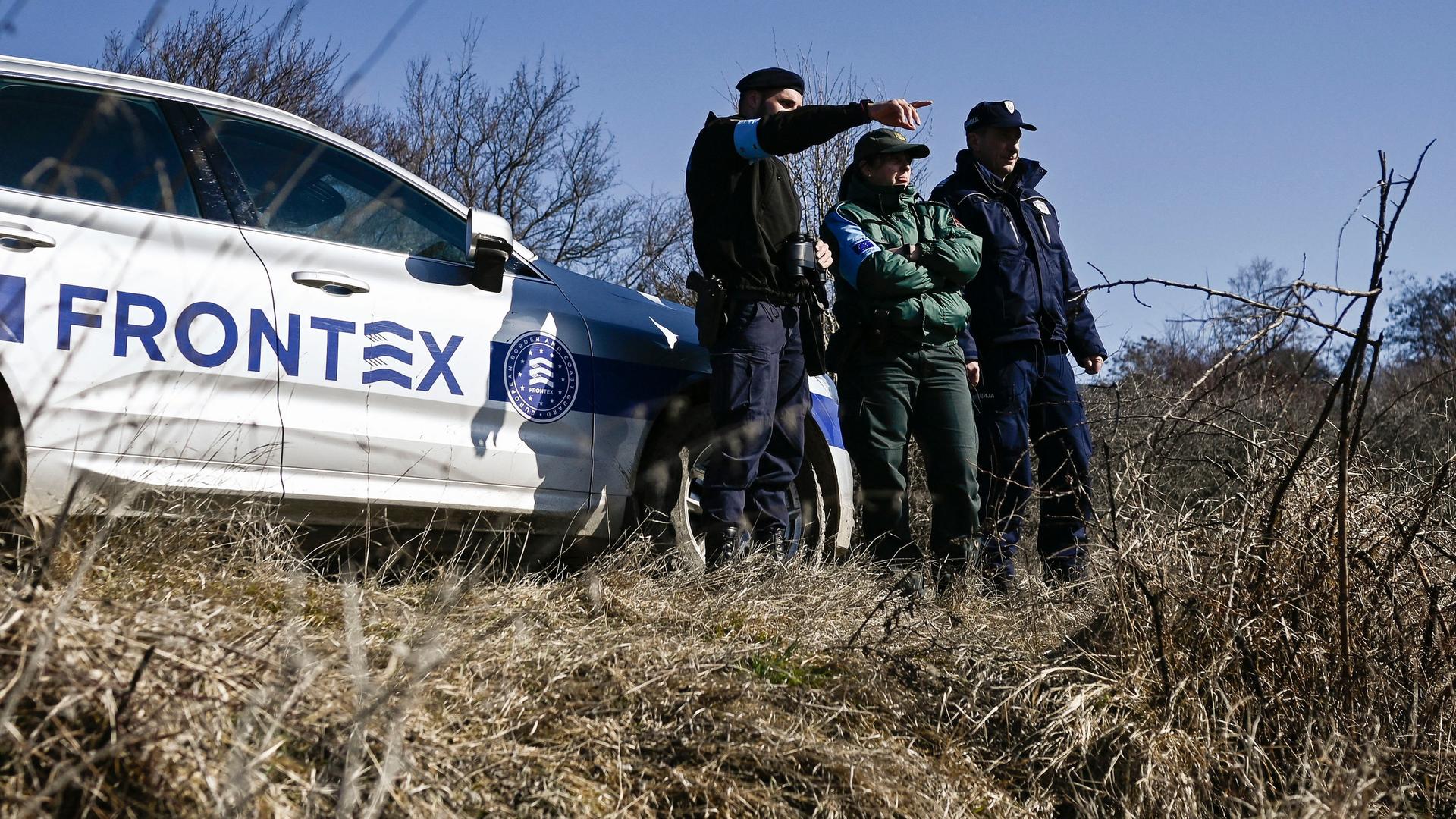
Sea-Watch, a German-based sea rescue organisation, has criticised a proposed European Union regulation to expand the powers and operations of Frontex, warning that the plan could increase border violence, surveillance and deportations of migrants and asylum seekers.
In a series of posts on X on October 27, the organisation condemned the proposal presented by the European Commission and European Commissioner for Migration, Magnus Brunner, arguing that it would transform Frontex, the EU border agency, into a more powerful force capable of pushing back people seeking international protection, including beyond EU borders.
Sea-Watch said the proposed regulation would significantly expand Frontex’s operations through the deployment of more armed border officials, increased surveillance and expanded deportation activities.
The organisation also raised concerns over the financial implications of the proposal, stating that the European Commission intends to allocate €12 billion to Frontex between 2028 and 2034.
It contrasted the proposed funding with the €26 million allocated annually to the EU Agency for Fundamental Rights, arguing that the spending priorities placed greater emphasis on border enforcement than on protecting people’s rights and welfare.
Sea-Watch further criticised the language used by the European Commission to justify the proposed changes, particularly references to external threats, security crises and dangerous migration.
According to the organisation, such descriptions reflect narratives promoted by far-right political movements and parties, which it said are increasingly influencing EU migration policies.
The rescue organisation also recalled allegations of human rights violations involving Frontex, including illegal pushbacks and cooperation with Libyan actors accused of crimes against humanity.
It noted that a case concerning Frontex’s alleged role in pushbacks to Libya is currently before the Court of Justice of the European Union.
Sea-Watch argued that security should not be defined solely by border protection and migration control, but should also include affordable housing, functioning public services, freedom from violence and respect for fundamental rights.
” We must not sacrifice human rights in the name of protecting them,” the organisation said.
It stressed that the proposed regulation has not yet become law, as negotiations are expected to take place between the European Parliament and the Council of the European Union.
However, Sea-Watch warned that increasing border controls, surveillance and deportations would not create a safer or more inclusive Europe.
The organisation called for opposition to the proposed expansion of Frontex’s powers, reiterating its campaign slogan, #AbolishFrontex.

Des migrants égyptiens et d’autres nationalités portés disparus ou présumés morts après le naufrage d’une embarcation au large de la Libye

Egyptian migrants, others feared dead, missing after boat sinks off Libya

Les traversées en Méditerranée occidentale augmentent de 26 %

Western Mediterranean crossings rise by 26%
Frontex se félicite de la baisse des franchissements irréguliers aux frontières de l’UE
-

 News Extra2 weeks ago
IOM’s Displacement Tracking Matrix monitors 97.2 million people in 2025
-
 News Extra1 week ago
SOS Humanity accuses Frontex of aiding migrant pushbacks to Libya
-

 News2 weeks ago
Libye : des centaines de migrants rapatriés, des renforts déployés à Tobrouk
-
 News Extra2 weeks ago
La Matrice de suivi des déplacements de l’OIM a suivi 97,2 millions de personnes en 2025
-
News2 weeks ago
Libya repatriates hundreds of migrants, deploys reinforcements to Tobruk
-
 News2 weeks ago
Ebola:DRC confirms 10,000 cases, NRC seeks scale-up
-
 News2 days ago
Sea-Watch condemns proposed EU plan to expand Frontex powers
-
 Features2 weeks ago
League of Arab States, IOM launch Arab Migration Data Network