
Features
How WSF changed ways participants see migration

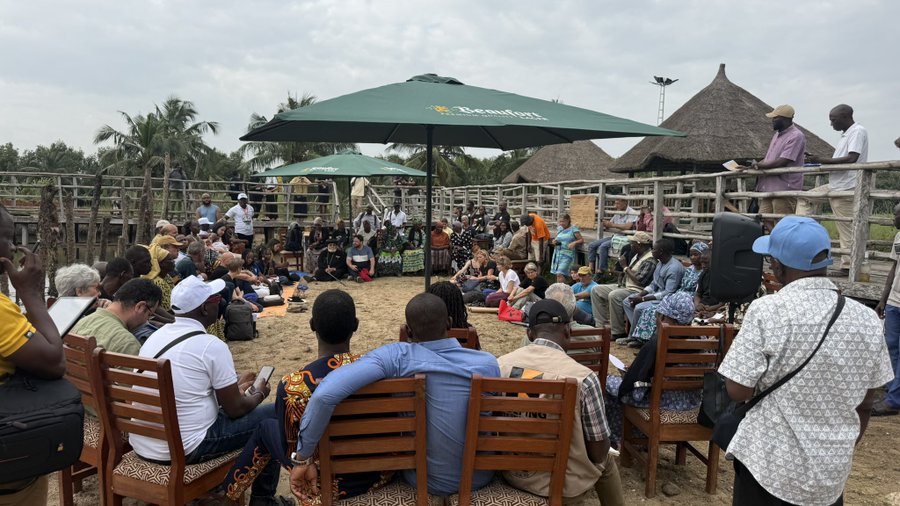
For many of the Nigerians who attended the just-concluded World Social Forum (WSF) in Cotonou, Benin, the experience was more than an international gathering of activists, civil society organisations, researchers and migration advocates.
For a group of Nigerian returnees organised as Network of People with Migration Experience, who were at the programme, it was a moment of questioning.
It was an opportunity to listen to voices from different parts of the world and, perhaps most importantly, to question some of the assumptions they had previously held about migration, migrants and the policies designed to control human mobility.
Across conversations on deportation, border externalisation, criminalisation, trafficking, climate change, reintegration and migrants’ rights, participants encountered a broader understanding of migration — one that placed human dignity and lived experience at the centre.
For some, it was an affirmation of what they already believed. For others, it was an uncomfortable but necessary shift in perspective.
From statistics to people
One of the strongest lessons emerging from the participants’ experiences was that migrants must be understood as human beings rather than statistics, policy subjects or security concerns.
Purity Franca Onikoliase, an advocate working on the rights and well-being of migrants and returnees, described the Forum as a “meaningful and transformative experience.”
She said the discussions helped her understand that migration is not simply about movement from one country to another.
It is also about human rights, dignity, protection, family, livelihoods and social justice.
The Forum, she noted, brought together migrants, returnees, survivors, civil society organisations, advocates and other stakeholders, allowing participants to encounter experiences that are often missing from official statistics and policy documents.
That same principle resonated with Alia Joke Oreoluwa, who returned from Cotonou with a stronger conviction that migrants should not merely be discussed by others.
“Migrants must be involved in designing policies, programmes and solutions that affect their lives,” she said, stressing that solutions should be informed by the real experiences and needs of affected people.
For her, the message was simple: nothing about migrants should happen without migrants.
Rethinking the meaning of “irregular migration”
For some participants, perhaps the most significant impact of the Forum was the challenge it posed to conventional narratives around irregular migration.
Rita Abu came to the Forum with an understanding shaped largely by her work with returning migrants. Her focus had often been on sensitising people about the dangers of irregular migration — trafficking, exploitation, death in the desert or at sea and other risks encountered along migration routes.
She encouraged people to use safer and regular pathways whenever they were available.
But Cotonou prompted a different question.
Why are people taking dangerous routes in the first place?
The question shifted the focus from the migrant’s decision to the conditions surrounding that decision.
Abu said she began to recognise that migration itself is not necessarily the problem. People have always moved in search of work, education, family reunification, safety and better opportunities.
What requires deeper examination, she realised, are the policies and border-control systems that can make migration increasingly difficult and, in some circumstances, more dangerous.
The experience left her with a question that continues to occupy her:
Why has safe migration become so difficult that people are willing to risk their lives to move?
Looking beyond Europe’s definition
Ejike Ezeonyido similarly described the Forum as an opportunity to move beyond what he had previously understood as the dominant European interpretation of migration.
The experience broadened his knowledge of migration and migrants’ rights, exposing him to experts and activists from different parts of the world.
He also encountered a range of migration working groups examining issues including externalisation, criminalisation, deportation, death and disappearance, and climate change and migration.
Perhaps most revealingly, he came to a personal realisation: he had, unknowingly, been promoting what he described as “migration MADE IN EUROPE.”
The Forum, he said, equipped him to participate in migration conversations from different contexts and perspectives.
That shift — from accepting dominant narratives to interrogating them — was echoed by Chylian Ify Azuh.
Azuh said the Forum provided “critical knowledge, transnational connections and solidarity,” while deepening her understanding of the power dynamics surrounding migration.
She encountered perspectives that went beyond familiar discussions of safe and irregular migration, trafficking, return and reintegration.
Conversations around freedom of movement, border externalisation and the criminalisation of migration challenged her previous understanding.
More importantly, she began asking difficult questions about how migration narratives are constructed.
Who and what is responsible for migrants’ vulnerabilities?
Who defines the problem and the solution?
And what are the consequences of those solutions?
For Azuh, the Forum was therefore not simply an educational experience. It became a moment of reflection on her own role in shaping migration narratives and a challenge to become more deliberate about confronting misinformation and what she described as corruption within the migration sector.
When borders move beyond borders
The issue of externalisation emerged repeatedly in participants’ reflections.
Yaramola Blessing arrived at the Forum with a perception that the struggle over migration was largely a confrontation between Europe and Africa — or between white people and Black people.
Cotonou changed that understanding.
She encountered people from different countries, communities and backgrounds who were also organising around migrant rights and justice.
That discovery gave her a sense that the struggle was not isolated to Africa or to individual activists. It was part of a wider global movement.
The discussions also helped her make sense of questions she had carried for years about migration policies, border controls and the European Union’s approach to migration.
Sessions on borders, frontiers and externalisation provided a framework for understanding how migration-control systems operate beyond Europe’s geographical borders and how their effects are felt in African countries.
She also developed a deeper understanding of xenophobia, recognising that hostility towards migrants is not driven solely by individual prejudice but can also be influenced by politics, policy, misinformation and fear.
The result was a stronger sense of purpose.
Blessing said she returned with better knowledge, language and confidence to advocate for migration justice, reintegration and survivors’ rights.
Deportation, return and the question of dignity
The Forum also forced participants to confront the experiences of people who have already made the journey and returned — voluntarily or through deportation.
For Udekwe Kennedy Obinna, one of the most eye-opening aspects of the Forum was learning more about deportation structures in Europe and the role of agencies such as Frontex.
He said the discussions exposed gaps that require greater engagement from civil society organisations and government actors in affected countries.
Such engagement, he argued, is necessary to identify loopholes, support local organisations and increase visibility for the experiences of victims, potential migrants and survivors.
But perhaps the most important lesson for him was the need to challenge the portrayal of deportees and returnees as criminals.
Returnees, he stressed, should not be automatically viewed through the lens of failure, illegality or criminality.
Their dignity and confidence must be restored.
That requires psychosocial support, stronger reintegration programmes and a broader recognition that returning migrants are people whose lives, aspirations and experiences continue beyond the end of a migration journey.
Knowledge, networks and renewed inspiration
Beyond the policy debates and critical conversations, the Forum also created something equally important: relationships.
Ajah Esther said she returned with three major gains — knowledge, new networks and inspiration.
Listening to movements from different parts of the world broadened her understanding of how people are fighting for justice and supporting reintegration.
The Forum also introduced her to organisations with which partnerships could potentially be developed.
But the most personal takeaway was the reminder that the work of migration advocates matters.
“Beyond the stereotype of storytelling lies our expertise,” she reflected.
That sense of solidarity was shared by other participants who described meeting activists and organisations that had spent years challenging policies they considered harmful to migrants.
For many, seeing that this work was being undertaken across countries transformed what could otherwise have been an overwhelming struggle into a shared one.
Migration requires regional solutions
Tobi Ayediran brought the conversation back to a fundamental reality: migration does not stop at national borders.
His major lesson from the Forum was that migration cannot be addressed by one country alone.
It is a regional issue requiring cooperation across borders, particularly in West Africa.
Migration is intertwined with unemployment, poverty, insecurity, climate change, trafficking, exploitation and the search for better opportunities. Consequently, responses must go beyond border enforcement and address the circumstances that shape people’s decisions to move.
Ayediran also emphasised the need for safe migration pathways, protection of migrants’ rights, prevention of trafficking and sustainable reintegration for returnees.
At the centre of all these interventions, he said, should be the person.
Behind every migration statistic is a human being with a story, dignity and aspirations.
From Cotonou to action
The most significant outcome of the World Social Forum may ultimately not be what participants learned in Cotonou, but what they do with that knowledge after returning home.
Their reflections reveal a common movement from simply discussing migration to questioning how migration is discussed.
They returned with new language for examining externalisation and border controls. They encountered international networks of solidarity. They were challenged to rethink assumptions about irregular migration, deportation and return. And they were reminded that migrants themselves must have a voice in the policies that shape their lives.
For some, the Forum confirmed existing convictions. For others, it disrupted long-held assumptions.
But across their experiences was a shared realisation: migration is too complex to be reduced to borders, statistics or warnings about dangerous journeys.
It is about people.
People who move in search of opportunity, safety, family and dignity.
People who face risks along the way.
People who are returned and must rebuild their lives.
And people whose voices must be heard when governments and organisations design the policies that determine how, where and under what conditions they can move.
The conversations in Cotonou may have ended, but the questions they generated remain.
If migration is a human reality, can migration policies be truly effective without putting people at their centre?
And if the challenges migrants face cross borders, can the solutions remain confined within them?
For the participants who gathered in Cotonou, the answer appears increasingly clear: migration does not stop at borders, so neither should solidarity, responsibility or the search for justice.








Features
Gaza : Près de deux millions de personnes ont besoin d’une aide d’urgence en matière d’hébergement
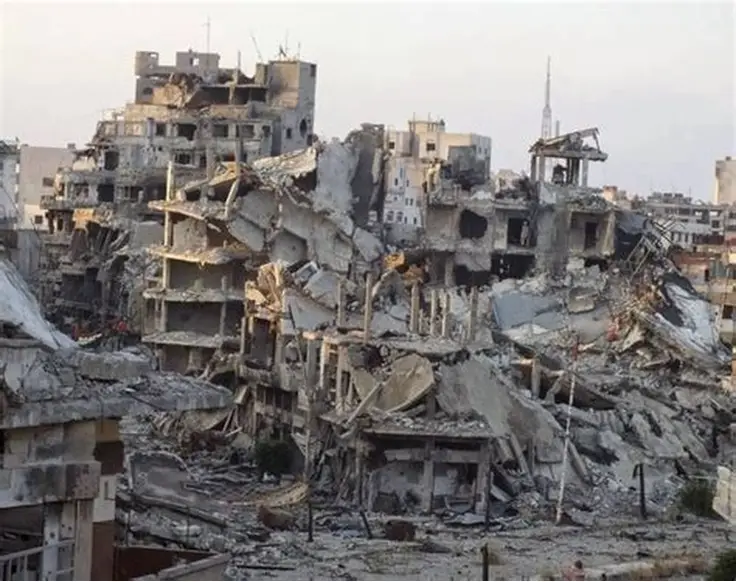
Près de deux millions de personnes, soit la quasi-totalité de la population de Gaza, ont toujours besoin d’une aide en matière d’hébergement, un an après l’annonce d’un cessez-le-feu. Alors que les pluies hivernales commencent, l’ensemble des approvisionnements prévus par les partenaires humanitaires intervenant dans le domaine de l’hébergement ne couvre qu’à peine 17 % des besoins identifiés pour l’hiver, a averti aujourd’hui Amy Pope, Directrice générale de l’Organisation internationale pour les migrations (OIM).
Après des années de déplacements et de destructions généralisées, les Palestiniens affrontent un quatrième hiver sans protection adéquate contre la pluie, les inondations et le froid. L’insuffisance des financements et les restrictions persistantes imposées par les autorités israéliennes à l’entrée de fournitures essentielles destinées aux abris empêchent les organisations humanitaires d’apporter une réponse à la hauteur des besoins.
« Les familles qui ont déjà subi des déplacements répétés et des pertes dévastatrices doivent pouvoir affronter l’hiver dans la sécurité et la dignité », a déclaré Pope. « Les matériaux destinés aux abris doivent pouvoir entrer rapidement, de manière prévisible et en quantités suffisantes pour répondre aux besoins. »
Plus de la moitié des tentes et des abris de fortune actuellement utilisés sont en mauvais état et doivent être remplacés. Les tentes sont conçues comme une mesure d’urgence temporaire et ne durent généralement que six à douze mois.
Faute d’autres solutions, de nombreuses familles vivent dans des bâtiments endommagés par la guerre qui présentent de graves risques pour leur vie. Le mois dernier seulement, des dizaines de personnes ont été tuées dans la ville de Gaza lorsqu’un bâtiment endommagé par la guerre s’est effondré. En août, un partenaire de l’OIM avait recensé plus de 3 600 structures jugées dangereuses et présentant un risque d’effondrement.
Le renforcement du phénomène El Niño devrait entraîner des précipitations plus abondantes, susceptibles de fragiliser davantage les bâtiments déjà dangereux, tandis que les systèmes de drainage fortement endommagés exposent les communautés aux inondations.
L’OIM et ses partenaires chargés de la gestion des sites ont recensé près de 1,8 million de personnes vivant dans des sites de déplacement, dont la plupart se trouvent dans des zones exposées aux risques d’inondation. Les eaux de crue pourraient endommager les abris, détruire les derniers biens des familles et contraindre les populations à se déplacer une nouvelle fois.
Environ 8 600 kits d’hébergement d’urgence de l’OIM sont prépositionnés à l’extérieur de Gaza et prêts à être acheminés, mais les autorités israéliennes continuent de leur refuser l’accès aux points de passage. Pendant ce temps, les équipes humanitaires utilisent, dans la mesure du possible, des matériaux disponibles localement et des matériaux récupérés. Ces efforts apportent un soutien temporaire limité, mais restent insuffisants pour répondre à l’ampleur des besoins en matière d’hébergement.
« Les solutions sont connues, les fournitures sont prêtes et les équipes humanitaires sont préparées à les acheminer », a déclaré Pope. « Un accès humanitaire immédiat et durable est essentiel pour protéger des vies, renforcer les abris endommagés et aider les familles à dépasser le stade des solutions temporaires. Toutes les parties doivent faciliter une action humanitaire fondée sur les principes humanitaires et soutenir une réponse à la hauteur de la gravité de la crise. »
L’OIM appelle à autoriser immédiatement et durablement l’entrée de tentes, de kits d’hébergement d’urgence, d’unités de logement de secours, de bois, d’outils et d’autres matériaux nécessaires pour renforcer les abris, réparer les habitations endommagées et aider les familles à trouver des logements plus sûrs.
Un accès prévisible aux équipements spécialisés, au carburant, aux pièces de rechange et aux matériaux de construction sera également essentiel pour permettre l’enlèvement des décombres et progresser vers un relèvement précoce.
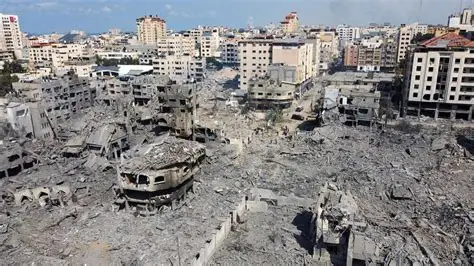
Nearly all of Gaza’s population, almost two million people, still require shelter assistance one year after a ceasefire was announced. As winter rain begins, the combined supply pipeline of humanitarian shelter partners covers barely 17 per cent of identified winter needs, the International Organization for Migration (IOM) Director General Amy Pope warned today.
After years of displacement and widespread destruction, Palestinians are facing a fourth winter without adequate protection from rain, flooding and cold. Insufficient funding and continuing Israeli authorities’ constraints on the entry of critical shelter supplies are preventing humanitarian organizations from responding at the scale required.
“Families who have already endured repeated displacement and devastating loss must be able to face the winter in safety and dignity,” Pope said. “Shelter materials must enter quickly, predictably and at the scale required.”
More than half of all tents and makeshift shelters currently in use are in poor condition that requires replacement. Tents are designed as a temporary emergency measure and generally last only six to 12 months.
With few alternatives available, many families are living in war-damaged buildings that pose serious risks to life. Just last month, dozens were killed in Gaza city when a war-damaged building collapsed. More than 3,600 structures were identified by an IOM partner in August as dangerous and at risk of collapse. The strengthening El Niño phenomenon is expected to bring heavier rainfall, which could further weaken unsafe buildings, while heavily damaged drainage systems leave communities exposed to flooding.
IOM and partners working in site management have identified nearly 1.8 million people living in displacement sites, most of them in areas at risk of flooding. Floodwaters could damage shelters, destroy families’ remaining possessions and force people to move once again.
Approximately 8,600 IOM emergency shelter kits are pre-positioned outside Gaza and ready for delivery but continue to be turned away at crossing points by the Israeli authorities. Meanwhile, humanitarian teams are using locally available and salvaged materials wherever possible. These efforts provide limited temporary support but are insufficient to meet widespread shelter needs.
“The solutions are known, the supplies are ready and humanitarian teams are prepared to deliver,” Pope said. “Immediate and sustained humanitarian access is essential to protect lives, strengthen damaged shelters, and help families move beyond temporary solutions. All parties must facilitate principled humanitarian action and support a response equal to the severity of the crisis.”
IOM calls for the immediate and sustained entry of tents, emergency shelter kits, relief housing units, wood, tools and other materials needed to reinforce shelters, repair damaged homes and support families seeking safer accommodation. Predictable access to specialized equipment, fuel, spare parts and construction materials will also be essential for debris removal and movement toward early recovery.
Features
Les immigrants Nigérians confrontés à des problèmes de santé mentale invisibles malgré leur réussite, alerte un expert
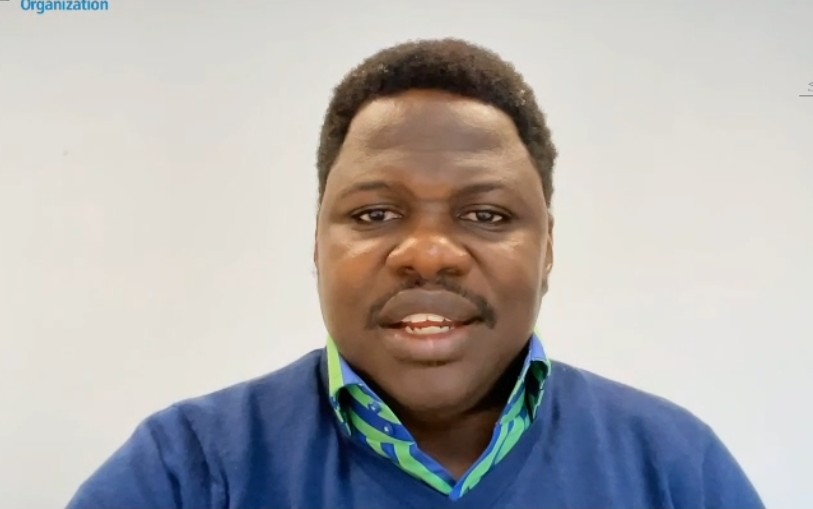
Les immigrants Nigérians peuvent connaître une réussite professionnelle et personnelle dans leurs pays d’accueil tout en faisant face à des problèmes de santé mentale souvent dissimulés, liés à la migration, aux changements identitaires et au stress prolongé, a déclaré Kehinde Ekpudu, un professionnel de la santé mentale.
Ekpudu, titulaire d’un MBA et d’un master en travail social, et travailleur social clinicien agréé (RCSW), a mis en lumière les conséquences psychologiques de la migration lors d’une présentation intitulée « Au-delà de la survie : santé mentale des immigrants nigérians — expériences vécues, identité et cerveau ».
Cette intervention a eu lieu lors du premier Sommet nigérian sur la santé mentale, organisé en ligne hier à l’occasion de la Journée mondiale de la santé mentale.
La présentation a examiné les liens entre la migration, l’identité, le cerveau et la santé mentale, en attirant l’attention sur les pressions émotionnelles auxquelles les immigrants peuvent être confrontés lorsqu’ils s’adaptent à la vie dans un nouveau pays.
« Lorsque nous parlons de la réussite des immigrants, nous célébrons leur capacité à s’en sortir. Mais que se passe-t-il lorsque la survie devient un mode de vie ? », a demandé Ekpudu, remettant en question la tendance à mesurer la réussite des immigrants principalement à travers leurs réalisations professionnelles et leur capacité d’adaptation.
Selon la présentation, les Nigérians n’arrivent pas dans leurs pays d’accueil dépourvus d’identité, d’expérience ou de références culturelles. La migration ne consiste pas simplement à passer d’un lieu géographique à un autre ; elle représente également une transition psychologique et identitaire.
La présentation a souligné que les immigrants peuvent être amenés à concilier simultanément plusieurs identités : nigériane, africaine, noire, canadienne, professionnelle, partenaire, parent, fils ou fille.
« La migration peut nous obliger à redéfinir certaines parties de nous-mêmes qui nous semblaient autrefois stables », indique le document.
Ekpudu a également cité une étude publiée en 2023 par Aluh et d’autres chercheurs, selon laquelle 51,7 % des immigrants nigérians participant à une étude menée au Canada présentaient un résultat positif au dépistage de la dépression.
La présentation a en outre relevé que le fait de résider au Canada depuis plus de dix ans était significativement associé à une probabilité plus élevée d’obtenir un résultat positif au dépistage de la dépression.
Ce constat remet en question l’idée selon laquelle les difficultés psychologiques liées à la migration diminuent nécessairement à mesure que les immigrants passent davantage de temps dans leur pays d’accueil.
Au-delà de la dépression, la présentation a identifié l’adaptation constante, l’incertitude et le stress chronique comme des facteurs susceptibles d’affecter le système nerveux et le bien-être émotionnel des immigrants.
Parmi les conséquences possibles figurent l’hypervigilance, l’anxiété, les troubles du sommeil, l’épuisement émotionnel, les difficultés de concentration et le burn-out.
« Parfois, ce qui ressemble à de la résilience de l’extérieur est en réalité un système nerveux qui est devenu très performant dans l’art de survivre », a déclaré Ekpudu.
La présentation a suggéré que des comportements souvent interprétés comme des signes de résilience peuvent parfois traduire les effets d’une pression psychologique prolongée, notamment lorsque les personnes se sentent obligées de rester fortes malgré leurs difficultés émotionnelles.
Elle a également examiné l’influence des attentes culturelles sur la manière dont les immigrants nigérians comprennent et expriment leurs problèmes de santé mentale.
Des expressions telles que « Je suis simplement fatigué », « Ce n’est que du stress », « Dieu m’aidera », « Je dois être plus fort », « D’autres personnes vivent des situations plus difficiles » et « Je ne peux pas craquer » ont été présentées comme des façons courantes de décrire ou d’aborder les difficultés émotionnelles sans reconnaître ouvertement ses besoins en matière de santé mentale.
Selon la présentation, ces réactions peuvent refléter la pression ressentie par certains immigrants, qui doivent rester forts, assumer leurs responsabilités familiales et continuer à rechercher la réussite, même lorsqu’ils traversent des difficultés émotionnelles.
Intitulée « Au-delà de la survie », la présentation a insisté sur la nécessité de prendre en compte les expériences vécues, les identités ainsi que le bien-être physique et psychologique des immigrants dans les discussions sur la santé mentale.
Elle a proposé un parcours allant de la survie à la confiance en soi, fondé sur trois principes : le sentiment d’appartenance, l’intégration et l’épanouissement.
Dans ce cadre, le sentiment d’appartenance consiste à pouvoir créer des liens sans renoncer à son identité ; l’intégration implique d’accepter et de concilier plusieurs identités ; tandis que l’épanouissement signifie reconnaître que la vie peut offrir davantage que la simple survie face aux difficultés quotidiennes.
« Je peux trouver ma place sans renoncer à moi-même », indique la présentation pour illustrer le premier principe.
Elle ajoute : « Je peux assumer plusieurs identités » et « Ma vie peut être davantage qu’une simple survie ».
La présentation a été réalisée dans le cadre des activités de Twin Ocean, dont la devise est : « Naviguer ensemble sur les vagues de la vie ».
Le sommet nigérian appelle à une approche inclusive des soins de santé mentale
Le coordonnateur du Sommet nigérian sur la santé mentale (NMHS), le Dr Oluyinka Oyeniji, a appelé à l’adoption d’une approche nationale inclusive des soins de santé mentale, qui tienne compte des expériences vécues par les patients, les aidants, les familles et les autres personnes affectées par les troubles mentaux.
Oyeniji a lancé cet appel hier dans son discours d’ouverture du premier Sommet nigérian sur la santé mentale, organisé pour commémorer la Journée mondiale de la santé mentale.
Le sommet, organisé en collaboration avec le Ladoke Akintola Neuroscience Group (LNG), a réuni des défenseurs de la santé mentale, des professionnels de santé, des chercheurs et d’autres acteurs concernés afin de discuter des défis et des possibilités d’amélioration des soins de santé mentale au Nigeria.
Selon Oyeniji, le sommet a été créé pour promouvoir des changements positifs dans le secteur de la santé mentale du pays et renforcer les efforts en faveur d’une réponse nationale coordonnée aux problèmes de santé mentale.
Il a déclaré que cette initiative revêtait une importance particulière à un moment où de nombreux Nigérians étaient confrontés à des problèmes de santé mentale, soit directement, soit en raison de leurs responsabilités en tant qu’aidants, membres de la famille ou amis.
Le coordonnateur a également souligné la démarche du gouvernement fédéral visant à dépénaliser la tentative de suicide, qu’il a qualifiée d’évolution importante après plus de quatorze années de plaidoyer.
Il a salué les acteurs qui ont maintenu la mobilisation en faveur de cette réforme et exhorté les Nigérians à soutenir les initiatives visant à améliorer les soins de santé mentale et à protéger les droits des personnes vivant avec des troubles mentaux.

Soudan : les attaques de drones perturbent les cours à El-Obeid, alerte le NRC

Sudan: Drone attacks disrupt school lessons in El Obeid- NRC

Sea-Watch secourt 227 migrants en Méditerranée en 48 heures

Sea-Watch rescues 227 migrants in Mediterranean within 48 hours

Un avocat ougandais exhorte l’UA à rejeter les accords migratoires avec l’Europe
-
 Features2 weeks ago
Gaza : Près de deux millions de personnes ont besoin d’une aide d’urgence en matière d’hébergement
-

 News Extra2 weeks ago
NACTAL conteste le rapport américain sur la traite des personnes et exige la reconnaissance des contributions des organisations de la société civile nigérianes
-
 News Extra2 weeks ago
Un avocat ougandais exhorte l’UA à rejeter les accords migratoires avec l’Europe
-
 News Extra1 week ago
Sudan: Drone attacks disrupt school lessons in El Obeid- NRC
-

 Features2 weeks ago
Nigerian immigrants face hidden mental health challenges despite success, expert warns
-
 Features2 weeks ago
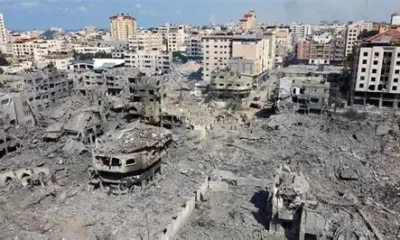
Gaza: About two million need urgent shelter assistance
-

 News Extra2 weeks ago
NACTAL faults US trafficking report, demands recognition of Nigerian CSOs’ contributions
-

 News Extra2 weeks ago
US to deport fresh set of Nigerians over alleged criminal offences