
News Extra
Migrants rescued after boat breaks down off Libya

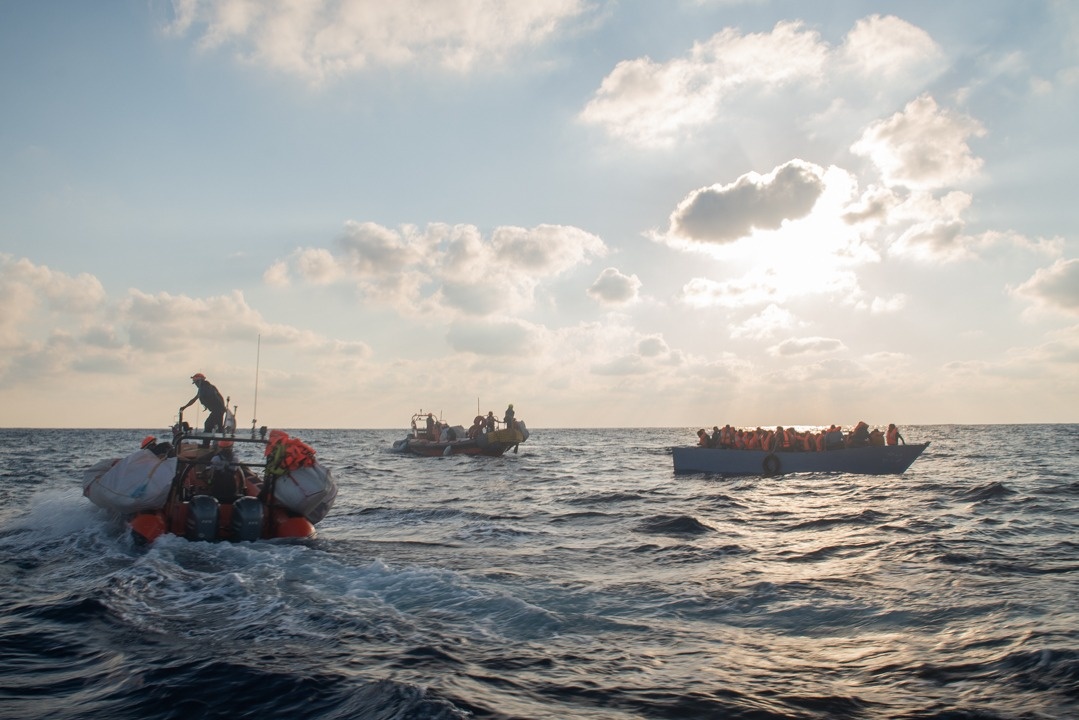
The humanitarian organisation SOS Méditerranée has rescued 14 migrants after their rubber boat broke down in the search-and-rescue zone off the Libyan coast.
The rescue was carried out on Friday by the organisation’s vessel, Ocean Viking, following an alert from Alarm Phone, a migrant distress hotline. SOS Méditerranée said its crew sailed overnight to the boat’s last known location after receiving the distress call.
The organisation said the inflatable boat was unseaworthy and had been drifting after its engine failed. Rescue teams also found that none of the 14 people aboard was wearing a life jacket.
Those rescued included three women and a girl. Most of the survivors were from Sudan, South Sudan and countries in the Horn of Africa, areas that have been affected by armed conflict, climate-related pressures and large-scale displacement.
SOS Méditerranée said the migrants were in stable condition but were suffering from exhaustion after spending a full day and night at sea. Some had also been exposed to fuel fumes for a prolonged period.
The survivors are receiving medical care and humanitarian assistance aboard Ocean Viking, which is expected to dock in the Italian port city of Brindisi on Monday, according to InfoMigrants.
The rescue comes amid continued efforts by humanitarian organisations to assist migrants attempting to cross the Mediterranean, one of the world’s most dangerous migration routes.





Les autorités libyennes ont intercepté et détenu plus de 2 100 migrants lors d’une série d’opérations menées à Tobrouk et dans ses environs, selon Migrant Rescue Watch.
Dans une série de publications sur X, l’organisation a indiqué que les forces de sécurité conjointes libyennes avaient mené une opération de grande envergure à Tobrouk visant des migrants sans papiers, au cours de laquelle plus de 2 000 personnes ont été arrêtées.
Les migrants ont ensuite été placés sous la responsabilité du Département libyen de lutte contre l’immigration clandestine (DCIM).
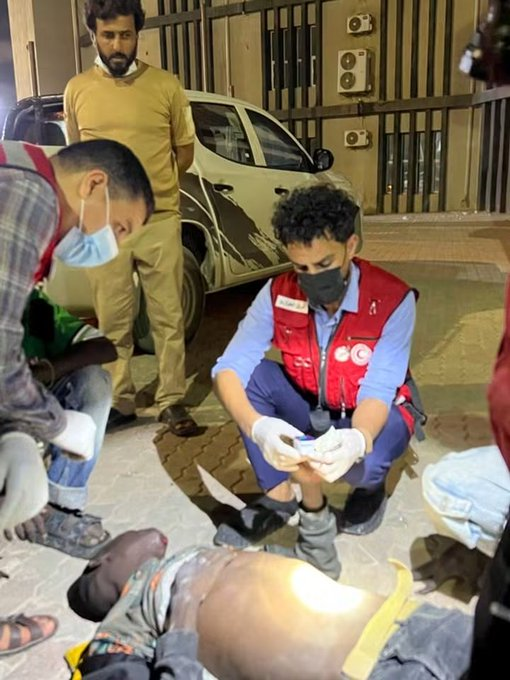
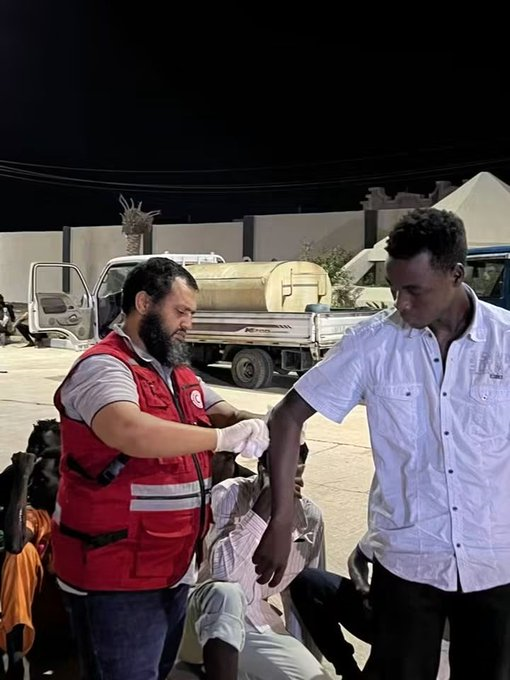
Le Croissant-Rouge libyen, section de Tobrouk, aurait lancé une intervention d’urgence à la suite de l’opération, fournissant aux migrants détenus une assistance humanitaire de base ainsi que des soins médicaux.
Lors d’une interception maritime distincte, le 23 septembre, les forces navales spéciales libyennes, connues sous le nom d’Al-Sa’iqa, ont intercepté un bateau pneumatique transportant 30 migrants au large de Tobrouk.
Selon Migrant Rescue Watch, les migrants tentaient de rejoindre la Grèce par voie maritime. Ils ont été débarqués à la base navale de Tobrouk avant d’être remis au DCIM.
Deux jours plus tôt, le 22 septembre, les garde-côtes libyens avaient intercepté un autre bateau pneumatique au large de Ras Al-Tin, à environ 45 milles nautiques au nord des côtes libyennes.
Le bateau transportait 33 migrants, dont 18 Bangladais et 15 ressortissants soudanais. Ils ont également été conduits à la base navale de Tobrouk avant d’être placés sous la responsabilité du DCIM.
Dans un autre incident, les garde-côtes libyens ont secouru 38 migrants soudanais à bord d’une embarcation à la dérive au large d’Ain Ghazala, à environ 36 milles nautiques au nord des côtes libyennes.
Les migrants secourus ont été ramenés à terre à la base navale de Tobrouk et remis au DCIM.
Ces incidents témoignent de la poursuite des interceptions de migrants tentant de traverser la Méditerranée centrale depuis la Libye vers l’Europe, ainsi que du recours à des détentions à grande échelle de migrants sans papiers à l’intérieur du pays.
Les informations publiées par Migrant Rescue Watch ne fournissent pas davantage de détails sur les conditions de détention ni sur la durée de détention des personnes transférées sous la responsabilité du DCIM.
Libyan authorities have intercepted and detained more than 2,100 migrants in a series of operations in and around Tobruk, according to Migrant Rescue Watch.
In a series of posts on X, the organisation reported that Libyan joint security forces carried out a large-scale operation in Tobruk targeting undocumented migrants, resulting in the apprehension of more than 2,000 people.
The migrants were subsequently transferred into the custody of Libya’s Department for Combating Illegal Migration (DCIM).
The Libyan Red Crescent, Tobruk branch, reportedly launched an emergency response following the operation, providing the detained migrants with basic humanitarian assistance and medical care.
In a separate maritime interception on September 23, the Libyan Special Naval Forces, known as Al-Sa’iqa, intercepted a rubber boat carrying 30 migrants off the coast of Tobruk.
According to Migrant Rescue Watch, the migrants were attempting to reach Greece by sea. They were disembarked at Tobruk Naval Base before being handed over to the DCIM.
Two days earlier, on September 22, the Libyan Coast Guard intercepted another rubber boat off Ras Al-Tin, about 45 nautical miles north of the Libyan coast.
The boat was carrying 33 migrants, comprising 18 Bangladeshis and 15 Sudanese nationals. They were also taken to Tobruk Naval Base and transferred to DCIM custody.
In another incident, the Libyan Coast Guard rescued 38 Sudanese migrants from a drifting boat off Ain Ghazala, about 36 nautical miles north of the coast.
The rescued migrants were brought ashore at Tobruk Naval Base and handed over to the DCIM.
The reported incidents highlight the continued interception of migrants attempting to cross the central Mediterranean from Libya towards Europe, as well as the large-scale detention of undocumented migrants inside Libya.
Migrant Rescue Watch’s reports did not provide further details on the conditions or duration of detention of those transferred to DCIM custody.
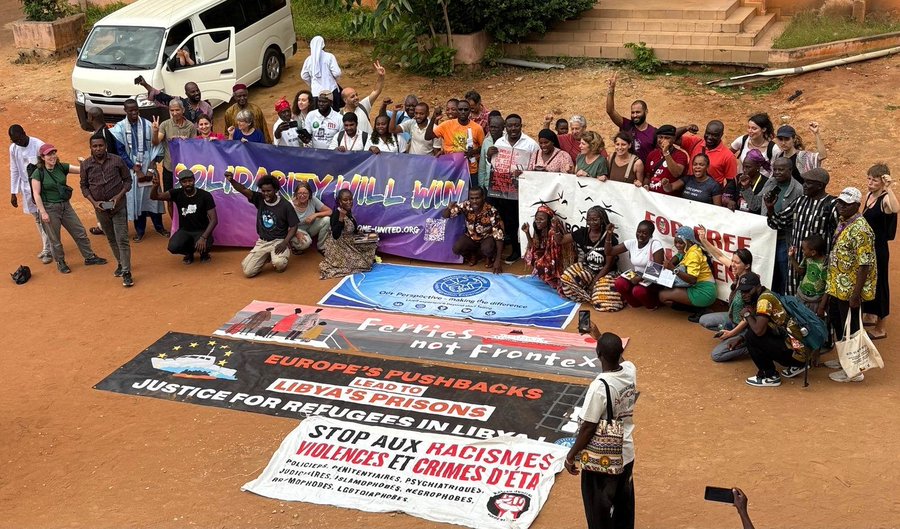
Cinq ans après le lancement par des réfugiés et migrants en Libye de la manifestation des « 100 jours » à la suite d’arrestations massives à Tripoli, Refugees in Libya réunira à Berlin des militants, des survivants, des avocats et des organisations dirigées par des migrants afin de revenir sur cette lutte et sur la quête de justice et de responsabilité.
L’événement, intitulé « Des rues de Tripoli à la CPI : cinq années de lutte et de solidarité avec les réfugiés en Libye », se tiendra le 3 octobre 2026 à la Spore Initiative, à Berlin.
La manifestation a débuté le 1er octobre 2021, après des descentes massives dans le quartier de Gargaresh, à Tripoli, au cours desquelles des milliers de réfugiés et de migrants ont été arrêtés. Alors que certains ont été conduits dans des centres de détention, d’autres se sont rassemblés devant le bureau du HCR, où ils sont restés pendant plus de trois mois pour réclamer protection, évacuation, liberté et la fin des violences et des abus en Libye.
Selon Refugees in Libya, cette protestation est devenue un moment déterminant pour l’organisation menée par des migrants et a continué de façonner son travail au cours des cinq années suivantes.
La rencontre de Berlin intervient alors que les procédures engagées contre Khaled El Hishri, ancien responsable de la prison de Mitiga, progressent devant la Cour pénale internationale (CPI).
La CPI a confirmé les 17 chefs d’accusation retenus contre El Hishri, portant notamment sur des crimes présumés contre l’humanité et des crimes de guerre, et a renvoyé l’affaire devant la chambre de première instance pour son procès.
Refugees in Libya a déclaré que cette affaire revêt une importance particulière pour les survivants ayant subi ou été témoins d’actes présumés de torture, de violences sexuelles, d’esclavage, de disparitions forcées et de meurtres à Mitiga et dans d’autres centres de détention.
L’organisation estime toutefois que l’affaire soulève également des questions plus larges sur le système de détention et de contrôle migratoire en Libye.
Elle affirme que, depuis des années, les réfugiés et les migrants sont confrontés à la détention, à l’exploitation et aux violences à travers la Libye, tandis que les personnes qui tentent de traverser la Méditerranée sont interceptées et renvoyées dans le pays.
Refugees in Libya s’interroge également sur le rôle des gouvernements et institutions européens dans le soutien aux structures impliquées dans l’interception et le confinement des migrants, estimant que les mécanismes de responsabilité devraient examiner l’ensemble du système plutôt que de se concentrer exclusivement sur les auteurs individuels.
L’événement examinera la procédure concernant El Hishri, la participation des survivants ainsi que les limites et les possibilités de la justice internationale.
Parmi les intervenants figureront David Yambio, de Refugees in Libya, et Allison West, du European Center for Constitutional and Human Rights (ECCHR). La discussion sera animée par Viola Castellano.
Les organisateurs ont indiqué que la rencontre cherchera également à déterminer comment les survivants peuvent participer aux processus judiciaires et politiques sans être réduits au simple rôle de témoins, et comment les procédures judiciaires peuvent contribuer à des actions collectives et à une mobilisation plus large.
Une deuxième session réunira des organisations dirigées par des migrants, des groupes de la diaspora africaine, des mouvements antiracistes, des avocats, des journalistes, des chercheurs, des artistes et d’autres acteurs afin de discuter de solidarité, de plaidoyer juridique et d’action collective.
Une exposition multimédia présentant des photographies, des témoignages et des documents issus de la manifestation des « 100 jours » accompagnera l’événement.
Refugees in Libya a précisé que cette rencontre ne vise pas seulement à commémorer la manifestation de 2021, mais aussi à examiner les conditions auxquelles les réfugiés et migrants continuent d’être confrontés en Libye.
Le programme débutera par une exposition à 15 h 30, suivie à 16 h d’une discussion consacrée aux cinq années d’organisation de Refugees in Libya. La session consacrée à l’affaire El Hishri devant la CPI est prévue à 16 h 45, avant un repas, des échanges informels et des discussions en petits groupes à partir de 18 h 45.
L’événement se déroulera en anglais, avec une entrée gratuite, à la Spore Initiative, Hermannstraße 86, Berlin-Neukölln.

Près de 4 000 migrants auraient été arrêtés lors d’une opération de répression de deux jours à Tobrouk

Nearly 4,000 migrants reportedly rounded up in two-day Tobruk crackdown

Libye : 310 migrants interpellés lors d’opérations à Tajoura, Umm Al-Faris et Tobrouk

Libya: 310 migrants apprehended in Tajoura, Umm Al-Faris, Tobruk operations

Libye : plus de 2 100 migrants interceptés et détenus lors d’opérations à Tobrouk
-
 Features3 weeks ago
How WSF changed ways participants see migration
-
 Features3 weeks ago
Reintegration or a facade? Nigerian returnees challenge promise of starting again
-

 Features3 weeks ago
Giving migrants a voice: How Alia is turning lived experience into action
-
 Features3 weeks ago
FSM : des participants nigérians et sénégalais pleurent des proches portés disparus ou décédés
-

 News2 weeks ago
Osita Osemene emerges NACTAL president with 95.65% votes
-
Features3 weeks ago
Donner une voix aux migrants : comment Alia transforme l’expérience vécue en action
-

 News Extra2 weeks ago
Osemene pledges inclusive leadership, stronger anti-trafficking action as NACTAL President-Elect
-
Features3 weeks ago
Comment le FSM a changé la perception des participants sur la migration