
News
Conditional ceasefire: Jan Egeland urges Israel, Hezbollah to commit to stopping attacks

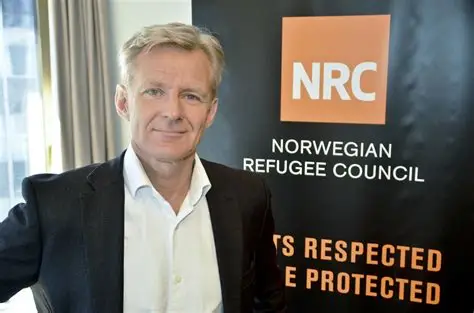
Following the conditional ceasefire announcement in Iran Tuesday night, Jan Egeland, the Norwegian Refugee Council’s (NRC) Secretary General, has urged all parties must to commit to ending hostilities across the region beyond this two-week agreement.
Egeland made the appeal in a statement on Wednesday.
The statement reads:
“The announced two-week ceasefire is a welcome reprieve for civilians across Iran, the Gulf and the wider region who have endured more than five weeks of violence. This must not be a short-lived window of hope before renewed violence. All parties must commit to ending hostilities across the region beyond this two-week agreement.
“This ceasefire must also include Lebanon, as announced by the Government of Pakistan. In the last hour, Israel launched the largest and most violent wave of airstrikes across Beirut, the South and the Bekaa. My colleagues are reporting horrifying scenes of so much destruction and many casualties. Israel and Hezbollah must commit to stopping their attacks, and Israel must withdraw from the Lebanese villages and territory it currently occupies. Our teams spoke to families today who told us when they heard the news about the ceasefire, they were ready to leave the collective shelters and return home, only to have their hopes shattered by renewed attacks in the south. A ceasefire excluding Lebanon risks fuelling further escalation and undermining any hope for stability.
“In Iran we are now focusing our efforts on urgently scaling up life-saving support to families whose lives have been devastated by this war. Alongside our local partners we have the capacity to help the millions of war displaced Iranians and Afghan refugees. We can operate freely, do independent needs assessments and provide cash directly to displaced families in addition to the supply of water and sanitation, emergency shelter, education and trauma care for women and children.
“But in a world that has found many billions of dollars to wage wars we do not even have the minimum 6 million we have asked for in emergency relief for 50,000 people in Iran who have lost everything. We have only received 2 million US dollars so far in emergency relief and will run out of money in May. We have briefed multiple donor countries, but only Norway and Sweden have so far responded with the needed funding. The broader humanitarian appeal for Iran is similarly underfunded with just one in every 20 dollars needed delivered.
“This lack of international support is also echoed in Lebanon where less than a third of the required funding has been delivered. Our teams across Lebanon have raced against time to provide urgent relief and upgrades for displaced people in collective shelters. We are providing emergency supplies, hygiene materials, clean water as well as education. Learning from 2024, we know that either to sustain the response for displaced people or to accompany returns after five intense weeks of violence, the need for support remains vast.
“Civilians cannot afford yet another ceasefire collapsing into a new round of bloodshed. This must be the foundation for a permanent ceasefire brings peace and stability for civilians across Iran, Lebanon and the wider region.”






Le Conseil norvégien pour les réfugiés (NRC) a appelé à un renforcement urgent des efforts humanitaires en République démocratique du Congo (RDC), après la confirmation de plus de 10 000 cas dans le cadre de l’épidémie en cours due au virus Bundibugyo.
L’épidémie a touché huit provinces du pays, exerçant une pression considérable sur des communautés déjà confrontées à une crise humanitaire prolongée. Elle est principalement concentrée dans l’est de la RDC, tandis que des signalements récents de cas au Kenya et au Nigeria suscitent des inquiétudes quant à une éventuelle propagation régionale.
Près de 5 000 décès auraient été confirmés en RDC seulement.
Cette épidémie survient dans un contexte de crise humanitaire persistante dans l’est de la RDC, où les violences, les déplacements forcés et l’accès limité aux services essentiels ont rendu de nombreuses communautés particulièrement vulnérables.
Le NRC, qui intervient dans le pays depuis plus de deux décennies, participe à la réponse à l’épidémie d’Ebola, notamment dans la province de l’Ituri, l’une des régions les plus touchées.
L’organisation appelle à une action durable et coordonnée afin de protéger les communautés, d’améliorer l’accès aux services essentiels et de répondre aux besoins des personnes affectées à la fois par l’épidémie et les déplacements de population.
« Lors de mes déplacements en Ituri, je constate à quel point la maladie frappe durement les communautés, et je suis frappée par l’ampleur des efforts supplémentaires nécessaires pour maîtriser cette épidémie », a déclaré Silvia Beccacece, responsable de l’équipe d’urgence du NRC.
« Depuis des années, les familles d’ici luttent contre les conséquences des violences extrêmes, des déplacements forcés et du manque de services essentiels. Ebola vient s’ajouter à ces difficultés, alors que beaucoup ont déjà épuisé leurs capacités à faire face à cette nouvelle épreuve.
« Il est clair que la réponse apportée est loin d’être proportionnelle à l’ampleur considérable de l’épidémie », a-t-elle ajouté.
Le NRC a souligné que la lutte contre Ebola nécessite une étroite coopération entre les autorités sanitaires, les organisations humanitaires, les groupes communautaires et les partenaires internationaux.
L’organisation a également appelé à mettre les communautés touchées au centre des interventions et à tenir compte des coutumes et traditions locales.
Elle a exhorté les bailleurs de fonds et les partenaires à accroître les financements et le soutien aux opérations humanitaires en RDC, en particulier dans les zones affectées par l’épidémie et les déplacements de population.
« La confirmation de 10 000 cas doit servir de signal d’alarme : la réponse actuelle ne parvient pas à prendre de l’avance sur l’épidémie et ne fournit pas aux communautés le soutien dont elles ont besoin pour maîtriser la transmission du virus », a déclaré Beccacece.
« Les signes avant-coureurs sont visibles de tous. Tout dépend désormais de la volonté des dirigeants d’en tenir compte et de prendre les mesures nécessaires », a-t-elle ajouté.
The Norwegian Refugee Council (NRC) has called for an urgent expansion of humanitarian efforts in the Democratic Republic of the Congo (DR Congo), following the confirmation of more than 10,000 cases in the ongoing Bundibugyo virus outbreak.
The outbreak has affected eight provinces in the country, placing enormous pressure on communities already struggling with a prolonged humanitarian crisis. The epidemic is concentrated in eastern DR Congo, while reports of recent cases in Kenya and Nigeria have raised concerns about a possible regional spread.
Nearly 5,000 deaths have reportedly been confirmed in DR Congo alone.
The outbreak comes amid a long-running humanitarian crisis in eastern DR Congo, where violence, forced displacement and limited access to essential services have left many communities vulnerable.
The NRC, which has operated in the country for more than two decades, is participating in the Ebola response, including in Ituri province, one of the areas most affected by the outbreak.
The organisation is urging sustained and coordinated action to protect communities, improve access to essential services and address the needs of people affected by both the outbreak and displacement.
“As I move around Ituri, I’m seeing just how hard the disease is hitting communities, and I am struck by how much more needs to be done to bring this outbreak under control,” said Silvia Beccacece, NRC’s emergency team leader.
“Families here have been struggling for years as a result of extreme violence, forced displacement, and the lack of essential services. Ebola comes on top of that, at a point where many have exhausted their ability to cope with the additional challenge it brings.
“The fact remains that this response is in no way proportionate to the vast scale of the outbreak,” she added.
The NRC stressed that combating Ebola requires close cooperation among health authorities, humanitarian organisations, community-based groups and international partners.
It also called for a response that places affected communities at the centre of interventions and takes local customs and traditions into account.
The organisation urged donors and partners to increase funding and support for humanitarian operations in DR Congo, particularly in areas affected by the outbreak and displacement.
“10,000 confirmed cases must be a wake-up call that this response is not getting ahead of the outbreak, and is not supporting communities with what they need to bring transmission under control,” Beccacece said.
“The warning signs are here for all to see: now it depends on whether leaders will take notice and take the required action,” she added.
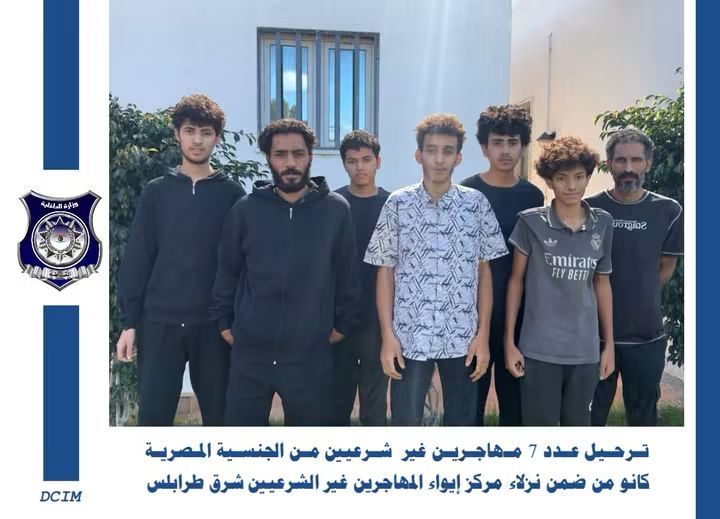
Le Département libyen de lutte contre la migration illégale (DCIM) a rapatrié ou transféré des centaines de migrants en vue de leur rapatriement depuis des centres de détention situés dans l’est du pays, tout en déployant des unités de renfort à Tobrouk afin de renforcer les opérations de lutte contre la migration irrégulière.
Ces informations ont été rapportées dans une série de publications sur X par Migrant Rescue Watch.
Le 15 octobre 2026, le DCIM a déployé des unités de renfort à Tobrouk pour soutenir sa branche locale dans la lutte contre la migration irrégulière dans la ville et les zones environnantes relevant de sa compétence.
Le même jour, l’agence a rapatrié sept migrants égyptiens détenus au centre de détention pour migrants de l’est de Tripoli, à Tajoura, via l’aéroport international de Mitiga, à Tripoli, selon Migrant Rescue Watch.
La veille, le 14 octobre, le DCIM de Tobrouk avait rapatrié ou transféré 209 migrants en vue de leur rapatriement. Les ressortissants égyptiens ont été renvoyés par le poste-frontière terrestre d’Emsaed, tandis que les autres migrants ont été transférés au centre de détention pour migrants de Quanafudah en vue de leur rapatriement.
Lors d’une opération distincte menée le 28 septembre, l’agence a transféré 297 migrants de différentes nationalités du centre de détention pour migrants de Tobrouk vers celui de Quanafudah, à Benghazi, en vue de leur rapatriement.
Le DCIM a également rapatrié ou transféré 250 migrants de différentes nationalités depuis le centre de détention pour migrants de Shahat le même jour, selon les publications.
Les rapports n’ont pas précisé les nationalités de l’ensemble des migrants concernés ni fourni davantage de détails sur leur situation et les modalités de leur retour.
Ces opérations interviennent dans un contexte de poursuite des mesures de contrôle migratoire dans l’est de la Libye, où les autorités continuent de procéder au transfert et au rapatriement de migrants détenus dans différents centres de rétention.

La Ligue des États arabes et l’OIM lancent le Réseau arabe des données sur les migrations
League of Arab States, IOM launch Arab Migration Data Network

Ebola : la RDC confirme 10 000 cas, le NRC appelle à un renforcement urgent de la réponse

Ebola:DRC confirms 10,000 cases, NRC seeks scale-up

Libye : des centaines de migrants rapatriés, des renforts déployés à Tobrouk
-
 Features3 weeks ago
Gaza : Près de deux millions de personnes ont besoin d’une aide d’urgence en matière d’hébergement
-

 News Extra3 weeks ago
NACTAL conteste le rapport américain sur la traite des personnes et exige la reconnaissance des contributions des organisations de la société civile nigérianes
-
 News Extra3 weeks ago
Un avocat ougandais exhorte l’UA à rejeter les accords migratoires avec l’Europe
-
 News Extra2 weeks ago
Sudan: Drone attacks disrupt school lessons in El Obeid- NRC
-
 Features3 weeks ago
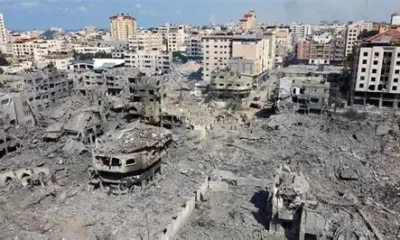
Gaza: About two million need urgent shelter assistance
-

 News Extra3 weeks ago
NACTAL faults US trafficking report, demands recognition of Nigerian CSOs’ contributions
-

 News Extra3 weeks ago
US to deport fresh set of Nigerians over alleged criminal offences
-
 News3 weeks ago
Ugandan lawyer urges AU to reject Europe’s migration deals