
News
Europe’s borders continue to kill as AlarmPhone describes December 2024, a deadly month in a deadly year


Alarmphone, an organisation that provides independent support for people crossing the Mediterranean Sea to the EU has described 2024 as a year that leaves nothing to celebrate as it laments that “Europe’s borders continue to kill!”
It said hundreds of people lost their lives in December alone, leaving thousands of relatives and friends in great despair.
With sadness and immense anger Alarmphone lists the shipwrecks the organisation know of.
Details below:
December 2024, a deadly month in a deadly year. Over the last days and weeks, many deadly incidents occurred along the migration routes in the Atlantic and the Mediterranean. While people in Europe and elsewhere have been enjoying the holiday season and end-of-year festivities, Europe’s borders continue to kill. We mourn all those who lost their lives and stand in solidarity with their loved ones.
As Alarm Phone, we support people in distress at sea along different maritime migration routes. In our activism, we directly witness the consequences of the violent European migration regime. We see how people are forced to take longer and more dangerous routes due to ever-expanding border surveillance and policies designed to ‘deter’ migration. We see how people are forced to stay invisible and hide from border guards, which makes their journeys even riskier. At the same time, some of the civil actors who respond to the rescue gap produced by European states’ refusal to rescue people in distress feel forced to end their operations due to the heavy criminalisation they face. In turn, this results in even more deadly shipwrecks and an increasing number of people being killed or going missing on their way to Europe.
Throughout the last month of 2024, many deadly incidents occurred along different routes – from the Atlantic to the Central Mediterranean to the Eastern Mediterranean. It is with great sadness and immense anger that we list the deadly shipwrecks we know of – hundreds of people who lost their lives in December alone, leaving thousands of relatives and friends in great despair and sadness. Even worse, we know that this is only the tip of the iceberg.
While the people who lost their lives are often only reported as numbers, we remember them as people and as individuals, with their own stories, families and friends. We mourn these deaths, deaths that were entirely preventable. These border crimes are the result of a machinery of migration control that costs billions of Euros every year. While it will not stop people from reclaiming their right to move and migrate as they need to, it causes death and destruction.
December 31: At least 6 shipwrecks from Libya and Tunisia
On the last day of the year alone, at least 6 shipwrecks along the Central Mediterranean route caused dozens of people to lose their lives, with even more people missing:
A boat with ~60 people that departed from Libya sank in international waters close to Tunisia on December 31.
⚫ Another shipwreck in the Central Med!
Yet another boat to which we had been alerted has shipwrecked. We never had direct contact to the 60 people on board but had alerted authorities to their distress. Hundreds of people died over the last days, when will this end? https://t.co/JMCd3GcAL1
— @alarmphone (@alarm_phone) January 2, 2025
Another shipwreck happened off Lampedusa on December 31, with 7 survivors who were rescued to Lampedusa, 20 people are missing. The boat departed from Zuwara in Libya.
One more boat from Libya shipwrecked 45nm off Tripoli at the same day, 20 people are known to be missing.
🔴 “20 persone cadute in mare”
“Possible presenza di 20 Persone in mare, cadute da una imbarcazione di migranti.
Acque internazionali della area SAR libica, 50 miglia nautiche NNW Tripoli.
Dispaccio ricevuto nel nostro terminale InMarSAT 🛰️: caso #SAR2761 – #SAR2772 , diffuso… pic.twitter.com/Mg3aPntQTJ
— Sergio Scandura (@scandura) January 1, 2025
Three boats which departed from Tunisia shipwrecked: One boat with ~60 people who left Sfax on December 27 cost 7 lives, the survivors were brought to Sfax.
We were alerted to two boats near the Tunisian island of Kerkennah. One boat carried 48 people and capsized – 3 bodies and 20 survivors were found, the rest are missing. The second boat carried 71 people on board. When it capsized, only 24 people survived. 21 bodies were found, everyone else remains missing. In both cases, authorities had been alerted and failed to rescue.
⚫ Two disasters off #Tunisia. According to the Tunisian authorities, the group of 71 people was found: 24 people survived, 21 bodies were found, the rest is missing.
Of the 48 people boat 20 people survived and so far minimum 3 dead were found, operations are ongoing.
— @alarmphone (@alarm_phone) January 1, 2025
At the end of 2024, the Italian Interior Minister declared that “the preventive measures against departures from Libya and Tunisia are working very well“. It is clear that this is untrue, and that people are still embarking in overcrowded boats due to daily raids from Tunisian police, mostly in Sfax, and the risk of deportation to the desert that people on the move face. These are not “preventive measures against departures” but a European policy of letting people die far from their coasts.
December 29: Shipwreck off Samos
Greek media reported the sinking of a boat in the area northeast of Samos. 30 people were reported rescued, 12 of which were children. We did not find further information about the circumstances of the shipwreck and if people are missing.
December 27: Boat missing in the Atlantic
SOS in the Atlantic for a boat with approximately 100 people. They could not be reached. We fear this boat has joined the 131 pirogues that have disappeared in 2024 trying to reach Spain, according to the organization Caminando Fronteras.
🆘 in the Atlantic! We have been alerted to a boat with ~100 people leaving Saint Louis, #Senegal, on 13/12. They cannot be reached and the Moroccan and Spanish authorities are not giving any information. We are worried and demand an immediate rescue!
— @alarmphone (@alarm_phone) December 23, 2024
December 22: A deadly disaster coordinated by MRCC Rabat
It is with great sadness that we learned that a rescue operation led to another disaster. On December 18, we informed Moroccan authorities as well as nearby ships about a boat in distress off the Sahara. After several days without updates on the situation, we learned on December 22, that during the rescue operation dozens of people died and only 9 are believed to have survived. Until today, we don’t know any details about the incident. We are outraged and saddened and call for clarification on the circumstances of the deadly operation.
🆘 ~88 people in distress in the Atlantic! A boat that left Sunday morning from #Mauritania is in trouble off the #Sahara. We are in contact with the boat and have informed authorities and nearby ships. We call for an immediate rescue! pic.twitter.com/h58UtONWHp
— @alarmphone (@alarm_phone) December 18, 2024
December 20: 8 people killed after being chased by the Hellenic Coast Guard. All of them dismembered by the propellers of the Coast Guard vessel. A ninth person died in hospital a few days later.
In an attempt to intercept a boat carrying an unknown number of people close to the Greek island of Rhodοs, 8 people lost their lives. When the boat of the Hellenic Coast Guard and the boat carrying the travelers collided, people fell into the sea. 18 people were rescued, 8 people died, with a ninth person, a woman, passing away at the hospital a few days later. An unknown number were missing. Some days later it was reported that the survivors of this horror were abandoned to sleep outside on the streets in Rhodos. Volunteers on the island reported to Iasonas Apostolopoulos that “the 8 dead, were all dismembered by propellers, including 3 women and a child.” They also reported that “the entire deck of the coast guard vessel was red with blood. One man was missing half his head from a propeller hit. One of the women was literally in pieces.”
December 19: Shipwreck in the Central Mediterranean – up to 15 people missing
Shipwreck in the Central Med. Despite our alerts for a boat that was taking in water, rescue did not come in time. Once on scene, the so-called Libyan Coast guard found 82 people. However, up to 15 people were reported missing or dead.
🆘! 96 people in distress in the Central Med!
We alerted authorities to a boat that is taking water quickly. According to a relative the situation is very tense!
Authorities are not assisting, we urge them to act and rescue now! pic.twitter.com/B438G4X59N
— @alarmphone (@alarm_phone) December 18, 2024
December 14: Withdrawal of rescue capacity – end of operations for Geo Barents
It is in this deadly month, in which hundreds of people lost their lives at sea, killed by lack of rescue, by being forced to be invisible, by having taken longer and more dangerous routes, that Médecins Sans Frontières announced that they have been forced to end their rescue operations at sea due to restrictive Italian laws and policies. Europe continues its attacks against the ones who migrate and the ones in solidarity with them, actively creating the conditions that make the Mediterranean and the Atlantic routes towards Europe a mass grave.
“MSF has been forced to end operations on our rescue vessel, Geo Barents, due to restrictive Italian laws and policies.”
Terrible news, the Italian lawfare against the #civilfleet continues. Our solidarity with @MSF_Sea – we will miss you at sea! https://t.co/b9IQsYY9vd
— @alarmphone (@alarm_phone) December 14, 2024
December 14: Shipwreck near Gavdos – up to 40 people feared dead
Near the Greek island of Gavdos, next to Crete, a boat carrying approximately 80 people shipwrecked. 37 people were rescued and around 40 people were missing and feared dead. So far, only 8 bodies have been found.
⚫ Shipwreck near #Crete
Greek media report that a boat with ~80 people shipwrecked 12,5 nautical miles southwest of the island of #Gavdos, near #Crete. So far, one person was found dead and ~37 were rescued, among them several injured.
— @alarmphone (@alarm_phone) December 14, 2024
December 12: 5 people died on the route to the Canary Islands
On December 10, we informed authorities about a boat that left on the 6th of December from Nouadhibou in Mauritania. Two days later, we learned that the boat arrived to the Canaries. However, five people did not survive the long and dangerous journey and had lost their lives. It was another border crime which took peoples’ lives.
🆘in the Atlantic! We were informed to a boat in distress with 84 people that left on 06/12 from #Nouadhibou in #Mauritania. We informed authorities and we urgently ask for rescue!
— @alarmphone (@alarm_phone) December 10, 2024
December 11: Shipwreck off the Tunisian coast – 9 people died, many more missing
On December 11, we were alerted to a boat carrying 130 people fleeing from the racist climate against black migrants in Tunisia. The group were in severe distress near the Tunisian city Sfax. The boat was reported to have capsized. Later, MRCC Tunis confirmed that 27 people were rescued, 9 bodies were found and many were were missing. We fear they also died.
🆘 ~130 people at risk off #Tunisia!
We were alerted to a large wooden boat near #Sfax that has reportedly capsized. While the situation is evolving, it seems some people were found by the Tunisian coastguard, while many others are said to have drowned. pic.twitter.com/XIiZraa8kz
— @alarmphone (@alarm_phone) December 11, 2024
December 7: Shipwreck in the Western Mediterranean – 9 people missing
A boat carrying 11 people left Morocco on November 26. Of the 11 people, only two arrived in Almeria, while nine people remained missing. Our thoughts are with their friends and families who were left without news of their loved ones.
⚫ #Shipwreck in the #WesternMed! 11 people left northern #Morocco on November 26. 2 people arrived in #Almeria while 9 people remain missing. Our solidarity and thoughts are with their friends and families who are left without news about their loved ones. #BordersKill
— @alarmphone (@alarm_phone) December 7, 2024
December 2: 3 boats missing between Tunisia and Italy
Alarm Phone was informed about 3 disappeared boats, which left from Tunisia towards Italy. In total, over 160 people were on these boats. Until today, we could not find confirmation on the whereabouts on any of these boats. These disappearances need to stop!!
🆘 2 boats missing off #Sfax, #Tunisia!
We were informed about 2 disappeared boats. One carrying 47 people who left on 27.11. and another group of 75 who left on 30.11. from Tunisia. Both are iron boats. Authorities provide no information. A search operation is urgently needed!
— @alarmphone (@alarm_phone) December 2, 2024
December 1: One person dies in the Western Mediterranean
A boat carrying 15 people arrived from Algeria to Spain. However, one person lost his life onboard.
The boat arrived to #Spain. Sadly, one of the people onboard lost his life. All of out thoughts are with his friends and family. #BordersKill #FreedomOfMovementForAll!
— @alarmphone (@alarm_phone) December 4, 2024
Our thoughts and solidarity with the friends and families of the ones who lost their lives, the ones missing, and all the ones who are still on the move – who face imprisonment, forced labour, and forced disappearance. We will continue to fight against the deadly border regime – and for freedom of movement and equal rights for all!
Tear down the deadly European border regime!
Fight the criminalisation of migration & the illegalisation of free movement!
Freedom of movement and equal rights for all!








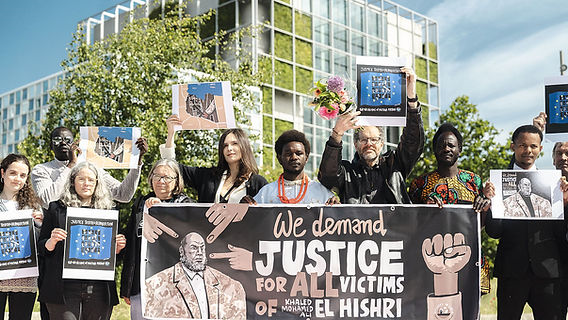
Human rights organisations and migrant rights advocates have welcomed the International Criminal Court’s (ICC) decision to confirm all 17 charges against Osama El-Hishri, describing it as a landmark step towards justice for victims of abuses committed at Libya’s notorious Mitiga Prison.
The ICC’s confirmation of the charges clears the way for El-Hishri to stand trial over allegations linked to murder, torture, sexual violence and other crimes allegedly committed against detainees at the prison in Tripoli.
Reacting to the decision, migrant distress network Alarm Phone described the ruling as “historic” for survivors of crimes committed at Mitiga Prison.
“The International Criminal Court confirmed all 17 charges against El-Hishri. This is a historic decision for survivors of crimes committed at Mitiga prison in Libya,” the organisation said in a statement posted on X.
Alarm Phone also echoed calls by refugee advocacy group Refugees in Libya, saying the prosecution should mark the beginning of broader efforts to hold perpetrators of abuses in Libya accountable.
Similarly, Sea-Watch International hailed the ICC’s decision, noting that the confirmation means the case will now proceed to trial.
The organisation alleged that El-Hishri was a senior member of Libya’s Special Deterrence Force (SDF/RADA) militia and headed parts of Mitiga Prison, where migrants and refugees were subjected to severe human rights violations.
“The ICC confirmed all 17 charges against El-Hishri today. The case is going to trial,” Sea-Watch International said.
It added that people on the move detained at Mitiga Prison had been subjected to murder, torture and sexual violence, describing the prosecution as an important step in addressing longstanding impunity for abuses against migrants in Libya.
Activist Yousef Ismail also welcomed the court’s decision, saying it represented the kind of justice victims had long demanded.
“This is the real number; this is the truth we seek. We always speak of justice and respect for human rights. The International Criminal Court has fairly proven 17 charges against the so-called ‘Hashri,’ the rapist and the gatekeeper of Mitiga,” he wrote on X.
The ICC’s decision has been widely viewed by rights advocates as a significant milestone in efforts to secure accountability for crimes allegedly committed against migrants and refugees held in Libya’s detention system.
Campaigners, however, stressed that the prosecution of El-Hishri should not be the end of international efforts, urging authorities to investigate other individuals allegedly responsible for serious human rights violations in Libya’s detention facilities.

A former Head of Policy Development and Evaluation at the UN Refugee Agency (UNHCR), Jeff Crisp, has suggested that the organization’s newly announced leadership appointments could signal a shift in its priorities away from refugee protection and asylum toward humanitarian assistance and development.
Reacting to the appointments in a post on X, Crisp said the selection of the agency’s new senior officials “suggest that the agency might be going to focus on humanitarian assistance & development issues rather than refugee protection & asylum.”
He added that his concerns were reinforced by UNHCR’s support for the European Union’s Pact on Migration and Asylum.
“A suspicion strengthened by UNHCR’s endorsement of the EU Pact on Migration & Asylum,” Crisp wrote.
His comments came shortly after United Nations Secretary-General António Guterres announced the appointments of Tressa Rae Finerty as Deputy High Commissioner for Refugees, Antón Leis García as Assistant High Commissioner for Operations, and Edem Wosornu as Assistant High Commissioner for Protection.
UN High Commissioner for Refugees Barham Salih welcomed the appointments, saying the three officials bring extensive experience in humanitarian affairs, international cooperation and refugee protection. They are expected to assume their duties in the coming weeks.
Crisp’s remarks reflect concerns held by some refugee rights advocates and migration experts who have argued that UNHCR faces increasing pressure to balance its traditional mandate of protecting refugees and defending the right to asylum with expanding responsibilities in humanitarian response, development cooperation and migration management.
The appointments come at a time when the agency is grappling with record levels of forced displacement worldwide, shrinking humanitarian funding and increasingly restrictive asylum policies in many parts of the world.
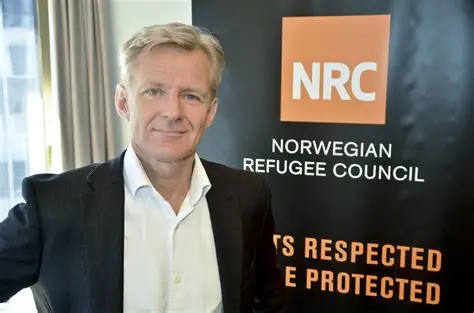
The Norwegian Refugee Council (NRC) has warned that the ongoing Bundibugyo Ebola outbreak in the Democratic Republic of Congo (DRC) is spreading in communities already devastated by years of armed conflict, displacement and inadequate access to basic services, urging the international community to step up funding and political support for the response.
In a statement, NRC’s Country Director in DR Congo, Eric Batonon, said the outbreak was unfolding in Ituri province, the current epicentre of the epidemic, where thousands of displaced people have spent years living in overcrowded shelters with poor sanitation and limited healthcare.
According to Batonon, prolonged violence by armed groups competing for control of land and mineral resources has forced millions from their homes, while the humanitarian crisis has received insufficient attention from donors and the international community.
He said these conditions had created an environment in which Ebola has been able to spread rapidly, contributing to the rising number of infections.
Batonon stressed that infection prevention and control measures must remain central to the response, adding that affected communities should play a leading role in shaping response strategies.
He said building trust and engaging directly with local populations would be critical to containing the outbreak, arguing that Ebola can only be effectively controlled when community priorities guide public health policies.
The NRC said it has intensified its Ebola response in eastern DRC through community awareness campaigns and preventive health measures. The organisation is establishing handwashing stations, distributing hygiene supplies and supporting efforts to reduce the risk of infection in affected communities.
It also said its teams are working to minimise disruptions to children’s education by helping schools operate safely during the outbreak.
In addition, NRC staff are assessing the impact of the epidemic on internally displaced persons in Ituri as well as neighbouring North and South Kivu provinces, where many people continue to live in overcrowded camps with inadequate sanitation facilities.
The findings, Batonon said, will help shape humanitarian interventions for some of the country’s most vulnerable populations.
The NRC noted that DR Congo has appeared on its annual list of the world’s most neglected displacement crises every year over the past decade, reflecting what it described as persistent international neglect of the humanitarian situation in the country’s east.
Batonon called on donors to provide flexible and sustained funding while increasing political engagement to ensure the Ebola response can outpace the spread of the disease and address the underlying humanitarian conditions that have worsened the outbreak.

ICC confirmation of 17 charges against El-Hishri draws praise from rights groups

Expert raises questions over UNHCR’s strategic direction after new leadership appointments

UN appoints new senior leadership for UNHCR

Migrant advocate laments death of asylum seeker, condemns Libya abuses

50 die as boat carrying about 60 people capsizes
-

 News2 weeks ago
Favour Henshaw appointed administrator of Platform for Cooperation on Mixed Migration
-
 News2 weeks ago
Lampedusa: built to accommodate 400 people, now holds thousands of migrants
-

 News Extra2 weeks ago
Pope urges European leaders to make greater investment in developing migrants’ countries of origin
-

 News1 week ago
IYAMIDR commends Okpebholo for ₦1m support to South Africa returnees
-
 News2 weeks ago
World silent as drone strikes, extreme hunger ravage El Obeid families
-
Features2 weeks ago
Lampedusa: Pope’s visit powerful reaffirmation migrants, refugees must remain at centre of global efforts
-
 Features2 weeks ago
IOM, UNDP, UNHCR, welcome growing investment in long-term solutions to internal displacement
-

 News Extra2 weeks ago
IYAMIDR urges Nigeria to sanction South Africa, support returnees