
News
2023: Over 3 million people internally displaced in Ethiopia- IOM Report

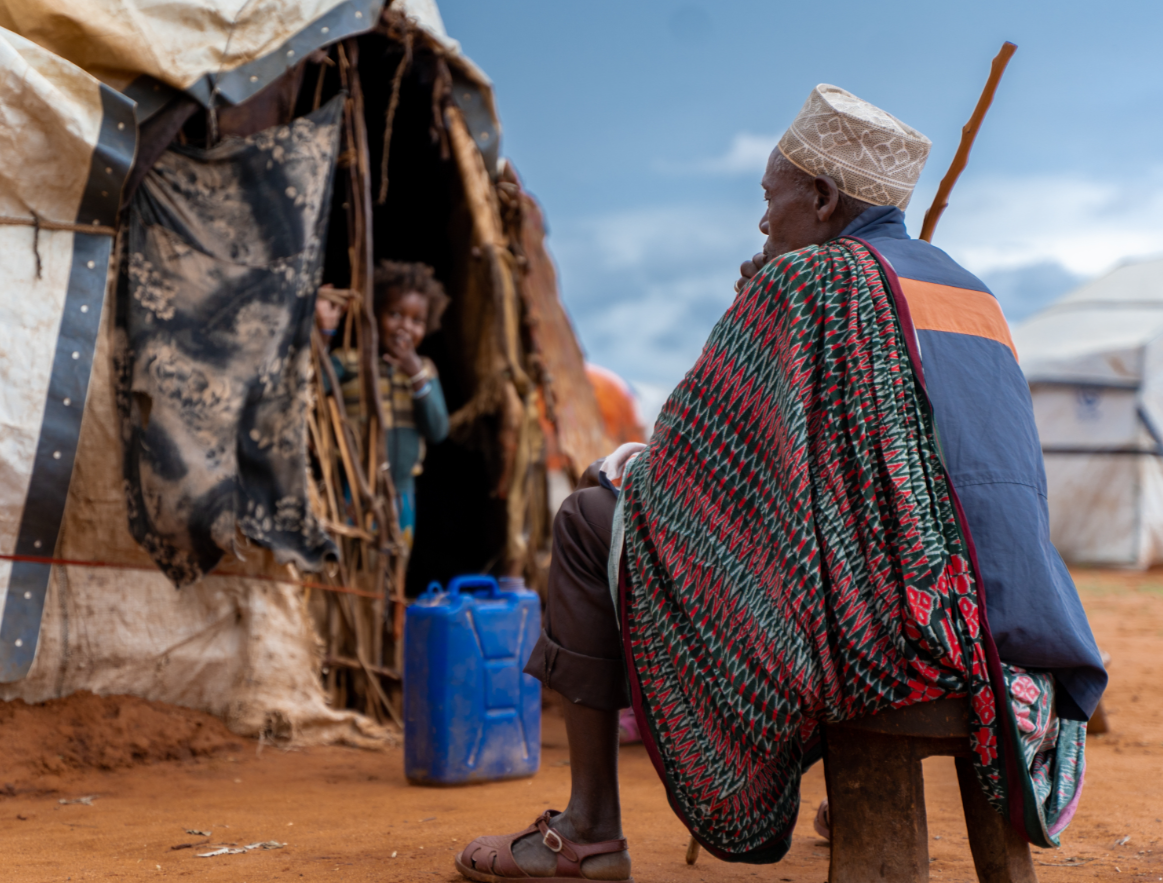
The latest National Displacement Report by the International Organization for Migration’s (IOM) Displacement Tracking Matrix (DTM says over three million people were internally displaced in Ethiopia by the end of last year.
The report shows that the majority – 69 per cent – of those displaced were a direct result of conflict, whereas drought and other climate induced events such as floods, landslides and fires on the other hand contributed to 17 per cent, and 9 per cent respectively.
“These findings will help IOM and its partners, including UN agencies, NGOs, government officials, embassies, and donors, to make data-driven interventions and solutions for displaced persons in Ethiopia,” said Abibatou Wane, Chief of Mission for IOM Ethiopia “IOM will continue to expand its assessment coverage across the country so that the needs of more IDPs can be assessed.”
Tigray region in the north hosts the highest number of Internally Displaced Persons (IDPs), primarily due to conflict whereas the Somali region in the east hosts the highest number of those internally displaced by drought. Ethiopia and other countries in the region were impacted by the worst drought in four decades.
As part of the National Displacement Report, a Village Assessment Survey (VAS) was also carried out to track IDPs who were returning from villages they moved to and went back to their places of origin within the country.
The report further shows that an estimated 2.54 million returning IDPs were identified in over 2,500 villages across 10 regions representing an increase of over 18,500 IDPs returning home since the last data was collected between August and September 2023. Most returnees were going back to Tigray (38 per cent), Amhara (37 per cent), and Afar (9 per cent) regions. The figures show.
Notes to Editors
DTM is the official source for displacement data in Ethiopia and coordinates with the Ethiopia Disaster Risk Management Commission.
This data was collected from over 2,600 sites across 11 regions in Ethiopia between November and December 2023.
The data presented above is indicative of the displacement and return in areas accessible to IOM enumerators, and which fall under the tools’ methodology of assessing locations with at least 20 households with IDPs or returning IDPs (who have returned since 1 January 2022). Many locations remain out of reach to partners due to insecurity, road inaccessibility and social tension.
According to the 2024 Humanitarian Needs Overview, 4.4 million IDPs are displaced across Ethiopia in both accessible and inaccessible locations.
This report is funded by the European Civil Protection and Humanitarian Aid Operations (ECHO), the Governments of Germany and Japan and the United States Agency for International Development (USAID).







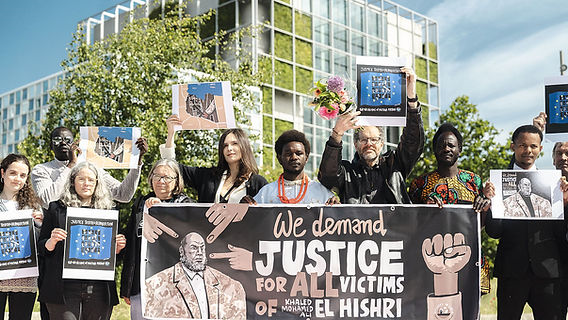
Human rights organisations and migrant rights advocates have welcomed the International Criminal Court’s (ICC) decision to confirm all 17 charges against Osama El-Hishri, describing it as a landmark step towards justice for victims of abuses committed at Libya’s notorious Mitiga Prison.
The ICC’s confirmation of the charges clears the way for El-Hishri to stand trial over allegations linked to murder, torture, sexual violence and other crimes allegedly committed against detainees at the prison in Tripoli.
Reacting to the decision, migrant distress network Alarm Phone described the ruling as “historic” for survivors of crimes committed at Mitiga Prison.
“The International Criminal Court confirmed all 17 charges against El-Hishri. This is a historic decision for survivors of crimes committed at Mitiga prison in Libya,” the organisation said in a statement posted on X.
Alarm Phone also echoed calls by refugee advocacy group Refugees in Libya, saying the prosecution should mark the beginning of broader efforts to hold perpetrators of abuses in Libya accountable.
Similarly, Sea-Watch International hailed the ICC’s decision, noting that the confirmation means the case will now proceed to trial.
The organisation alleged that El-Hishri was a senior member of Libya’s Special Deterrence Force (SDF/RADA) militia and headed parts of Mitiga Prison, where migrants and refugees were subjected to severe human rights violations.
“The ICC confirmed all 17 charges against El-Hishri today. The case is going to trial,” Sea-Watch International said.
It added that people on the move detained at Mitiga Prison had been subjected to murder, torture and sexual violence, describing the prosecution as an important step in addressing longstanding impunity for abuses against migrants in Libya.
Activist Yousef Ismail also welcomed the court’s decision, saying it represented the kind of justice victims had long demanded.
“This is the real number; this is the truth we seek. We always speak of justice and respect for human rights. The International Criminal Court has fairly proven 17 charges against the so-called ‘Hashri,’ the rapist and the gatekeeper of Mitiga,” he wrote on X.
The ICC’s decision has been widely viewed by rights advocates as a significant milestone in efforts to secure accountability for crimes allegedly committed against migrants and refugees held in Libya’s detention system.
Campaigners, however, stressed that the prosecution of El-Hishri should not be the end of international efforts, urging authorities to investigate other individuals allegedly responsible for serious human rights violations in Libya’s detention facilities.

A former Head of Policy Development and Evaluation at the UN Refugee Agency (UNHCR), Jeff Crisp, has suggested that the organization’s newly announced leadership appointments could signal a shift in its priorities away from refugee protection and asylum toward humanitarian assistance and development.
Reacting to the appointments in a post on X, Crisp said the selection of the agency’s new senior officials “suggest that the agency might be going to focus on humanitarian assistance & development issues rather than refugee protection & asylum.”
He added that his concerns were reinforced by UNHCR’s support for the European Union’s Pact on Migration and Asylum.
“A suspicion strengthened by UNHCR’s endorsement of the EU Pact on Migration & Asylum,” Crisp wrote.
His comments came shortly after United Nations Secretary-General António Guterres announced the appointments of Tressa Rae Finerty as Deputy High Commissioner for Refugees, Antón Leis García as Assistant High Commissioner for Operations, and Edem Wosornu as Assistant High Commissioner for Protection.
UN High Commissioner for Refugees Barham Salih welcomed the appointments, saying the three officials bring extensive experience in humanitarian affairs, international cooperation and refugee protection. They are expected to assume their duties in the coming weeks.
Crisp’s remarks reflect concerns held by some refugee rights advocates and migration experts who have argued that UNHCR faces increasing pressure to balance its traditional mandate of protecting refugees and defending the right to asylum with expanding responsibilities in humanitarian response, development cooperation and migration management.
The appointments come at a time when the agency is grappling with record levels of forced displacement worldwide, shrinking humanitarian funding and increasingly restrictive asylum policies in many parts of the world.
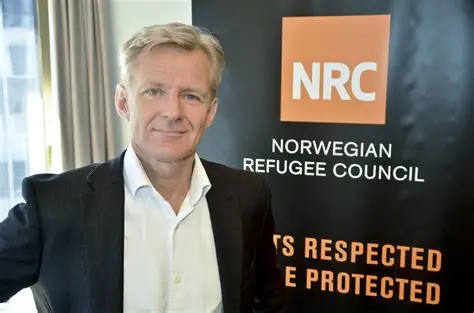
The Norwegian Refugee Council (NRC) has warned that the ongoing Bundibugyo Ebola outbreak in the Democratic Republic of Congo (DRC) is spreading in communities already devastated by years of armed conflict, displacement and inadequate access to basic services, urging the international community to step up funding and political support for the response.
In a statement, NRC’s Country Director in DR Congo, Eric Batonon, said the outbreak was unfolding in Ituri province, the current epicentre of the epidemic, where thousands of displaced people have spent years living in overcrowded shelters with poor sanitation and limited healthcare.
According to Batonon, prolonged violence by armed groups competing for control of land and mineral resources has forced millions from their homes, while the humanitarian crisis has received insufficient attention from donors and the international community.
He said these conditions had created an environment in which Ebola has been able to spread rapidly, contributing to the rising number of infections.
Batonon stressed that infection prevention and control measures must remain central to the response, adding that affected communities should play a leading role in shaping response strategies.
He said building trust and engaging directly with local populations would be critical to containing the outbreak, arguing that Ebola can only be effectively controlled when community priorities guide public health policies.
The NRC said it has intensified its Ebola response in eastern DRC through community awareness campaigns and preventive health measures. The organisation is establishing handwashing stations, distributing hygiene supplies and supporting efforts to reduce the risk of infection in affected communities.
It also said its teams are working to minimise disruptions to children’s education by helping schools operate safely during the outbreak.
In addition, NRC staff are assessing the impact of the epidemic on internally displaced persons in Ituri as well as neighbouring North and South Kivu provinces, where many people continue to live in overcrowded camps with inadequate sanitation facilities.
The findings, Batonon said, will help shape humanitarian interventions for some of the country’s most vulnerable populations.
The NRC noted that DR Congo has appeared on its annual list of the world’s most neglected displacement crises every year over the past decade, reflecting what it described as persistent international neglect of the humanitarian situation in the country’s east.
Batonon called on donors to provide flexible and sustained funding while increasing political engagement to ensure the Ebola response can outpace the spread of the disease and address the underlying humanitarian conditions that have worsened the outbreak.

ICC confirmation of 17 charges against El-Hishri draws praise from rights groups

Expert raises questions over UNHCR’s strategic direction after new leadership appointments

UN appoints new senior leadership for UNHCR

Migrant advocate laments death of asylum seeker, condemns Libya abuses

50 die as boat carrying about 60 people capsizes
-

 News3 weeks ago
Favour Henshaw appointed administrator of Platform for Cooperation on Mixed Migration
-

 News3 weeks ago
Lampedusa: built to accommodate 400 people, now holds thousands of migrants
-

 News Extra3 weeks ago
Pope urges European leaders to make greater investment in developing migrants’ countries of origin
-

 News2 weeks ago
IYAMIDR commends Okpebholo for ₦1m support to South Africa returnees
-
 News3 weeks ago
World silent as drone strikes, extreme hunger ravage El Obeid families
-
Features3 weeks ago
Lampedusa: Pope’s visit powerful reaffirmation migrants, refugees must remain at centre of global efforts
-

 Features3 weeks ago
IOM, UNDP, UNHCR, welcome growing investment in long-term solutions to internal displacement
-

 News Extra3 weeks ago
IYAMIDR urges Nigeria to sanction South Africa, support returnees