
News
Foreign workers to benefit from Ireland’s work permits


Ireland has concluded plans to attract foreign workers with work permits. The opportunity is open to people with critical skills who require permission to work in the country.
According to the Citizens Information Board, the scheme under the name the Critical Skills Employment Permit applies to countries outside the European Economic Area including the EU, Norway, Iceland and Liechtenstein, the United Kingdom, or Switzerland.
Ireland, with the programme, aims to address a shortage of skilled workers in the country with exists various sectors like production management, ICT, health and social services management, natural and social sciences, engineering, information technology, and telecommunications.
Additionally, roles are available for health workers, teaching professionals, business and administrative professionals, architects, artistic and media professionals, design, sports and fitness, as well as sales and marketing.
The Critical Skills Employment Permit is for skilled workers who are qualified in disciplines that are experiencing a deficit of qualifications and experience required for the proper functioning of the Irish economy.
These disciplines however require specialistion from candidates to qualify for a Critical Skills Employment Permit.
Who is eligible?
The Irish government those eligible are interested participants offered a job running for two years or more from a company or employer that is registered with revenue, trading in Ireland and registered with the Companies Registration Office.
The applicant must be directly employed and paid by their employer in Ireland. Job offers from recruitment agencies and other intermediaries are not acceptable for this permit.
It also disclosed that job offers must have a minimum of €32,000 in annual salary in an occupation that is on the Critical Skills Occupation List or an annual salary of €64,000 a year in an occupation that is not on the list.
Work permits cannot be obtained for companies where more than 50% of the employees are non-EEA nationals. This requirement may be waived in the case of start-up companies which are supported by Enterprise Ireland or IDA Ireland.
Further details iterate that permits have to be obtained before entering Ireland and applicants may also need to apply for a visa. The scheme requires qualified individuals to register and get an Irish Residence Permit once they arrive in Ireland.
Applicants who already live in Ireland and have a valid Irish Residence Permit (IRP) with stamp 1, 1G, 2, 2A or 3 permission can apply for the permit if they satisfy the criteria.
However, labour market needs tests are not required for the permit. This means that the employer does not need to advertise the job with the Department of Social Protection, European Employment Service (EURES) or in newspapers.
Who can apply?
The applicant can be the employer, the employee, a connected person or contractor, or an authorised agent. Payments are to be made by electronic fund transfer (EFT) to the Employment Permits Section of the Department of Enterprise, Trade and Employment at Earlsfort Centre, Lower Hatch Street, Dublin 2 D02 PW01, Ireland.
Applications can also be made online with the required documentation, using the Employment Permits Online System (EPOS), with a supplied checklist for assistance.



Le projet de budget de l’État norvégien pour 2027 ne prévoit pas d’affecter 1 % du revenu national brut du pays à l’aide internationale, malgré la hausse des recettes et des besoins humanitaires sans précédent, a déclaré le Conseil norvégien pour les réfugiés (NRC).
Le secrétaire général du NRC, Jan Egeland, a qualifié cette proposition de « surprenante et décevante », avertissant qu’elle envoie un mauvais signal alors que d’autres grands donateurs réduisent leur aide.
Selon M. Egeland, les réductions des financements humanitaires à l’échelle mondiale privent des millions de personnes déplacées par les conflits d’un abri adéquat, tandis que l’aide alimentaire et l’accès à l’éducation sont réduits.
La Norvège a maintenu ses contributions à l’aide au cours des deux dernières années, alors que d’autres grands donateurs annonçaient des coupes, a-t-il indiqué. Compte tenu de la richesse croissante du pays et de sa tradition humanitaire, la Norvège devrait continuer à soutenir les personnes dans le besoin, a ajouté M. Egeland.
Le NRC a appelé le Parlement norvégien à réviser le budget afin de porter les dépenses d’aide à 1 % du revenu national brut et de donner la priorité à l’aide d’urgence.

The Norwegian government’s proposed 2027 state budget does not allocate 1% of the country’s gross national income to international aid, despite rising revenues and record humanitarian needs, the Norwegian Refugee Council (NRC) said.
NRC Secretary General Jan Egeland called the proposal “surprising and disappointing,” warning that it sends the wrong signal as other major donors cut aid.
Egeland said global reductions in humanitarian funding were leaving millions of people displaced by conflict without adequate shelter, while food assistance and access to education were being reduced.
Norway had maintained its aid contributions over the past two years as other major donors announced cuts, he said. Given the country’s growing wealth and humanitarian tradition, Norway should continue supporting people in need, Egeland added.
The NRC urged Norway’s parliament to revise the budget to bring aid spending up to 1% of gross national income and prioritise emergency assistance.
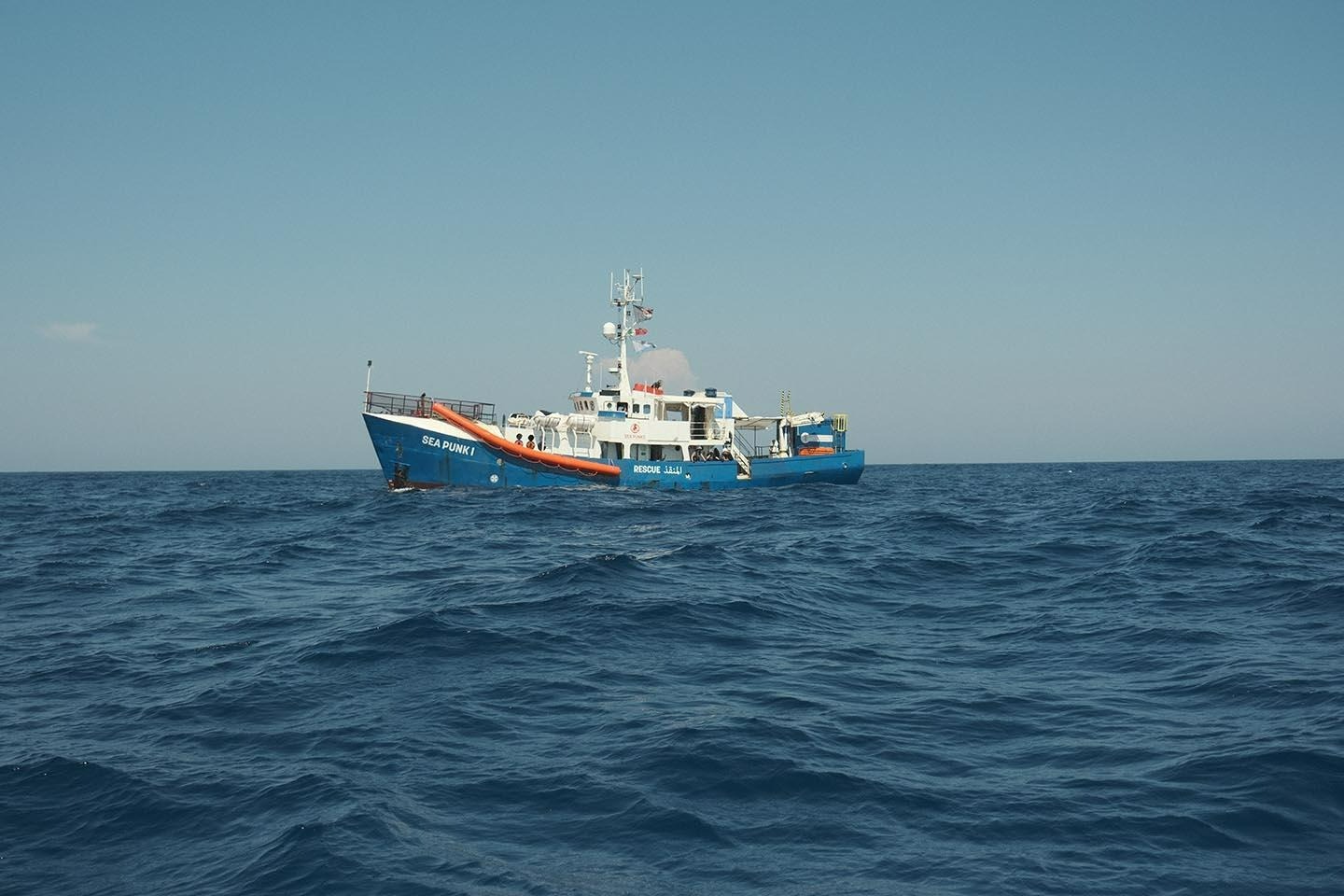
Italian authorities have detained the search-and-rescue vessel *Sea Punk I* for 15 days and imposed a €7,500 fine following the rescue of 20 people in international waters.
The rescue took place on Thursday, 10 September 2026, near the Bouri oil platform. The vessel’s crew said the operation was conducted in coordination with Italian authorities and in line with applicable conventions and international regulations.
Authorities cited the so-called Piantedosi Decree and accused the captain of failing to follow instructions from the so-called Libyan Coast Guard. The *Sea Punk I* is an alliance partner of the Justice Fleet, a coalition of civil search-and-rescue organisations and supporters.
The Justice Fleet said the detention brings the total number of days its vessels have been blocked by Italian authorities to more than 310 since the alliance was founded in November 2025. The *Sea Punk I* is the 11th Justice Fleet vessel to be detained.
Civil search-and-rescue organisations have documented almost 80 incidents of extreme violence by Libyan militias since 2016, most attributed to the so-called Libyan Coast Guard, according to the Justice Fleet. The group also says more than 27,000 people fleeing Libya were forcibly returned there last year, in violation of international law. It said refugees and migrants in the country face rising violence and death threats.
“While extreme violence against people on the move is currently unfolding in Libya, the Italian authorities want to force us to cooperate with the so-called Libyan Coast Guard. Not with us!” said Justice Fleet spokesperson Giulia Messmer, calling for an end to European cooperation with the force.
The Justice Fleet was founded in November 2025 by 13 search-and-rescue organisations, with support from civil society groups. It says its aims include challenging the detention of rescue vessels in Italy and opposing the outsourcing of migration control to Libyan actors.

Le budget d’aide proposé par la Norvège n’atteint pas l’objectif de 1 %, selon le NRC

Norway’s proposed aid budget falls short of 1% target, NRC says

Global powers fuel war as civilians die under drones, barrel bombs

Les autorités italiennes immobilisent un navire de sauvetage après avoir secouru 20 personnes
Italian authorities detain rescue vessel after saving 20 lives
-

 Features2 weeks ago
Retour volontaire assisté, assistance post-arrivée et réintégration : le rôle de l’OIM expliqué
-

 News2 weeks ago
Yémen :21 573 ménages déplacés dans sept gouvernorats
-

 News2 weeks ago
Ebola : Amy Pope appelle à un soutien urgent alors que la RDC fait face à la plus grande épidémie
-

 Features2 weeks ago
L’OIM explique son travail dans les pays qui accueillent des ressortissants de pays tiers
-

 Features2 weeks ago
L’OIM aide plus de 81 000 migrants à retourner dans leur pays depuis 115 pays
-

 Features2 weeks ago
IOM explains work in countries receiving third-country nationals
-

 Features2 weeks ago
Assisted Voluntary Return, Post-Arrival Assistance, and Reintegration: IOM’s Role Explained
-
 News2 weeks ago
Un tribunal de Naples annule la détention de 45 jours du Sea-Watch 5