
Features
Gaza a living hell- UNRWA Commissioner-General Philippe

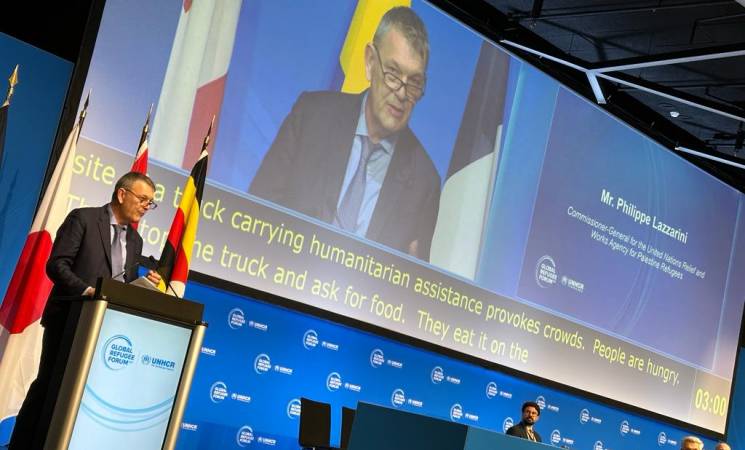
The United Nations Relief and Works Agency for Palestine Refugees in the Near East, (UNRWA) Commissioner-General
Philippe Lazzarini, has described Gaza as a living hell.
He made the remark while addressing the plenary of the Global Refugee Forum today December 13, 2023.
The address reads:
Excellencies,
Ladies and gentlemen,
I arrived in Geneva last night. Straight from Gaza.
My third time since the devastating war started.
I have to say, it is a living hell.
Most of Gaza’s population has been forcibly displaced, largely into the southern part of the Strip, Rafah.
Rafah is now hosting well over a million people. It used to be home to 280,000 people.
It lacks the infrastructure and resources to support such a population.
Inside our own warehouses, families live in tiny spaces that are separated by blankets hung on thin wooden structures.
Out in the open, flimsy shelters have emerged everywhere.
Rafah has become a tented community.
The spaces around UNRWA buildings are congested with shelters and desperate, hungry people.
Aid can no longer reach those who could not move to the south.
There is no more food to buy, even for those who can pay.
In the shops, the shelves are empty.
The sight of a truck carrying humanitarian assistance now provokes chaos. People are hungry. They stop the truck and ask for food, and they eat it on the street. I witnessed this firsthand when I entered into Gaza on Monday evening.
To call such scenes inhumane is an understatement.
Civil order is breaking down.
The people of Gaza are now crammed into less than one third of the original territory, near the Egyptian border.
It is unrealistic to think that people will remain resilient in the face of unlivable conditions of such magnitude.
Especially when the border is so close.
Excellencies,
I wrote to the President of the General Assembly last week, warning that UNRWA’s ability to fulfill its mandate in Gaza is severely limited.
The entire humanitarian response heavily relies on UNRWA’s capacity.
It is now on the verge of collapse.
UNRWA is still operating 8 health centres, out of 22.
We are sheltering more than a million people in our schools and other facilities.
Our social workers are supporting traumatized people as best they can.
We are still distributing whatever food we manage to bring in, but this is often as little as a bottle of water and a can of tuna per day, per family, often numbering 6 or 7 people.
This operational reality is not sustainable. Not for the population and not for the Agency.
More than 130 UNRWA staff are confirmed killed.
Many of our staff, who are themselves displaced, take their children to work with them to ensure that they are safe together or die together.
I asked one colleague how he managed to remain composed and offer help in a shelter. He told me that he looks for a corner in the building to cry 10 times a day.
Excellencies,
There is nowhere to feel safe in Gaza.
Civilian infrastructure and UN facilities have not been spared by the shelling.
I was horrified by images yesterday of an UNRWA school being blown up in the north of Gaza.
The people of Gaza are running out of time and options, as they face bombardment, deprivation, and disease in an ever-ever-shrinking space.
They are facing the darkest chapter of their history since 1948.
And it has been a painful history.
The events in Gaza are taking place against a backdrop of 75 years of displacement.
75 years of failure to find a just and lasting solution to the plight of Palestine Refugees.
During this time, they have been deprived of their basic human rights and their right to self-determination.
Throughout the region, many continue to live in overcrowded refugee camps with substandard living conditions, generation after generation.
For the last 75 years, the world has asked UNRWA to uphold the rights of Palestine Refugees.
And we have done so successfully, contributing to their development and to their feeling of stability as much as possible.
Over 2 million students have graduated from our schools, half of them girls.
Health indicators among this refugee community exceed WHO standards.
But today, and despite our successes, UNRWA suffers from chronic underfunding which impacts the quality of our services.
Upholding refugees’ rights is not only the responsibility of humanitarian and development actors. It is a responsibility shared with donors and Host countries.
I would like here to thank the countries who have hosted, for the last 7 decades, millions of Palestine Refugees.
I also thank our partners and donors for their support and trust.
But Palestine Refugees need a just solution, not just aid.
Today, they feel abandoned by the international community.
They feel betrayed as the world fails to act in the face of one of the worst humanitarian catastrophes of our time in Gaza.
They now believe that human lives are not equal and human rights are not universal.
This is a dangerous message, and it will have serious repercussions.
Excellencies,
The Global Refugee Forum represents the political will of the international community to affirm the human rights of all people fleeing war and other crises.
Whether it is Syrians, Somalis, Afghans or Palestinians, addressing the plight of refugees and upholding their rights require the political will to tackle the root causes of their displacement.
Refugees often stay in that status for far too long.
This is not unique to Palestine Refugees.
All refugees remain refugees until they receive a change of status, acquire citizenship, or return to their countries of origin.
Both UNHCR and UNRWA are the expression of a collective responsibility of United Nations Member States towards refugees.
The people of Gaza, like all people, long for safety, stability, and fulfilment.
This is also the forum where I must raise the alarm about the dehumanization that is rampant during this war.
The war in Gaza heavily relies on a media war.
Dehumanizing and derogatory language should not be normalized.
The lack of empathy only fuels divides, polarization, and hatred.
I am horrified at the smear campaigns that target Palestinians and all those who provide assistance and protection to them.
Our partners present here must help us push back against hatred and debunk repeated vulgar accusations.
It is disheartening that some longstanding partners are choosing to believe the barrage of misinformation that seeks to discredit UNRWA.
I urge our partners to remain vigilant, and not to act upon distorted facts.
I have, Excellencies, three calls today.
First, we need an immediate humanitarian ceasefire in Gaza and an end to the siege to let in sufficient aid. I welcome here the overwhelming support of 153 UN Member States at the General Assembly calling for an immediate humanitarian ceasefire.
Second, we must be able to roll out humanitarian assistance worthy of its name. It needs to be meaningful.
The day after the war in Gaza will be shaped by how we respond to the current crisis.
What can 100 trucks or so per day offer to 2.2 million people?
The high-level discussions about the number of trucks per day have taken up so much time and energy that I have no answer to a father of five in Rafah who asked me how he and his children can survive on one can of beans for three days.
We are very far from an adequate humanitarian response.
Third, collectively, we must ensure that International Humanitarian Law is still the regulating framework of the conflict. It cannot be selective or be re-interpretated.
To conclude, the Israel-Palestine conflict has been neglected for far too long. The political process needs to be revived urgently.
There is absolutely no alternative to a genuine political process to end the cycle of violence.
Israelis and Palestinians must both enjoy statehood, peace, and stability.
This will require dedicated efforts to help both societies heal and live side by side.
Thank you.


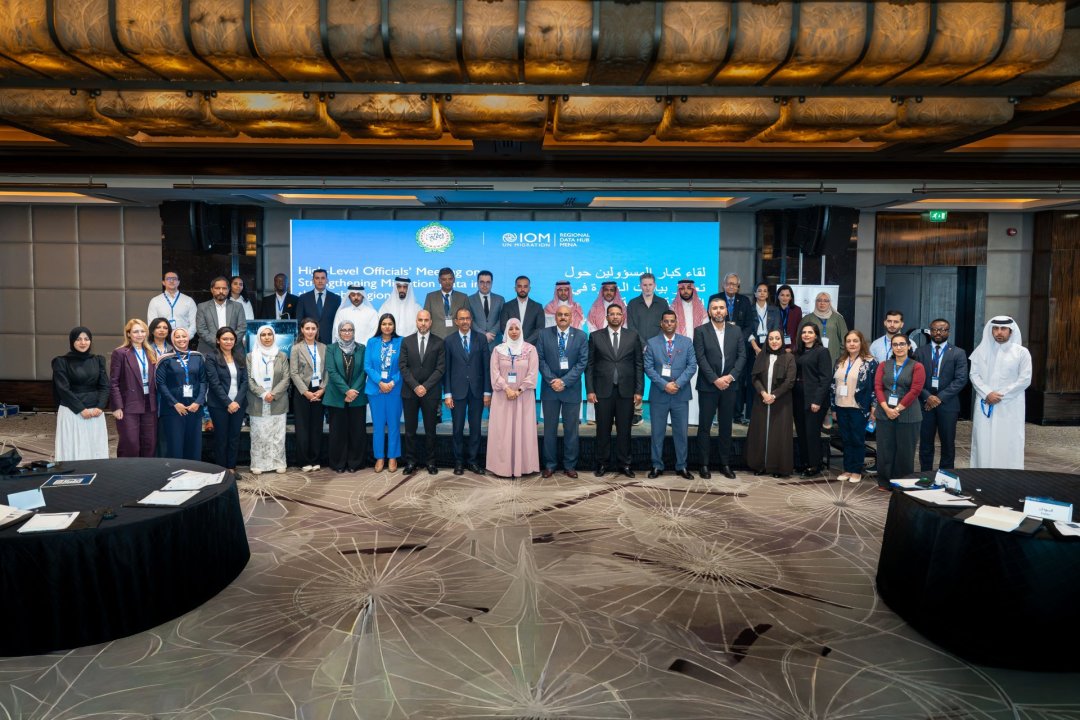
La Ligue des États arabes et l’Organisation internationale pour les migrations (OIM) ont officiellement lancé le Réseau arabe des données sur les migrations, le premier réseau arabe consacré aux données migratoires. Le lancement a eu lieu lors d’une cérémonie de signature au siège du Secrétariat général de la Ligue, au Caire, à l’occasion de l’adoption du premier plan d’action du Réseau pour la période 2026-2028.
Le Réseau constitue un mécanisme régional de coopération technique placé sous la direction des États arabes. Pour la première fois, il rassemble les offices nationaux de statistique et les organismes gouvernementaux chargés des données migratoires dans les 22 États arabes, au sein d’un cadre permanent d’action commune.
Les 22 États arabes accueillent environ 44,5 millions de migrants internationaux, soit près de 14,7 % du total mondial, tandis que 37,2 millions de personnes originaires des pays arabes vivent en dehors de leur pays d’origine, dont environ la moitié dans d’autres États arabes. Toutefois, les données migratoires restent dispersées entre plusieurs institutions et continuent de présenter des difficultés en matière de couverture, d’actualité et de comparabilité.
Le Réseau aidera les États arabes à harmoniser les concepts et les méthodologies, à échanger leurs expertises et à mieux comprendre les dynamiques migratoires dans les pays d’origine, de transit, de destination et de retour.
Le plan d’action a été signé par Mme Abeer Al-Jalahma, ministre plénipotentiaire et directrice du Département des statistiques et des bases de données de la Ligue des États arabes, et M. Justin MacDermott, directeur régional adjoint de l’OIM chargé des opérations pour le Moyen-Orient et l’Afrique du Nord. La cérémonie s’est déroulée en présence d’ambassadeurs et de représentants de missions diplomatiques, de directeurs généraux d’offices nationaux de statistique, de hauts responsables gouvernementaux ainsi que de partenaires régionaux et internationaux.
Elle a marqué la conclusion d’une réunion de deux jours de hauts responsables consacrée au renforcement des données migratoires dans la région arabe, tenue les 27 et 28 octobre. Cette rencontre a réuni des représentants de haut niveau de 13 États arabes : l’Algérie, Bahreïn, l’Égypte, l’Irak, la Jordanie, la Libye, la Mauritanie, le Maroc, le Qatar, l’Arabie saoudite, le Soudan, la Tunisie et le Yémen. Les participants ont examiné les priorités de l’action commune et contribué à l’élaboration du plan d’action avant son adoption.
« Le lancement du Réseau arabe des données sur les migrations marque une étape importante dans le processus de coopération statistique arabe. Pour la première fois, nos pays se réunissent autour d’une plateforme permanente consacrée aux données migratoires, dirigée par les États arabes et guidée par leurs priorités. Ce que nous avons mis en place aujourd’hui n’est pas simplement une nouvelle initiative, mais un langage statistique arabe commun au service des décideurs et qui reflète les réalités de nos populations », a déclaré Mme Abeer Al-Jalahma, ministre plénipotentiaire.
Pour l’OIM, Justin MacDermott a souligné : « Le lancement du Réseau arabe des données sur les migrations ne marque pas l’aboutissement de nos efforts, mais le début d’un nouveau chapitre de la coopération régionale, fondé sur la confiance, le partage des connaissances, l’appropriation nationale et l’action collective. »
Dans le cadre du plan d’action, le Réseau aura pour missions de :
– coordonner les travaux des équipes nationales de points focaux au sein des offices de statistique et des organismes gouvernementaux concernés ;
– harmoniser les concepts, les méthodologies et les classifications, et élaborer un cadre commun d’indicateurs aligné sur les Recommandations des Nations Unies de 2025 sur les statistiques des migrations internationales ;
– renforcer les capacités nationales, notamment dans les domaines des données administratives, de l’analyse géospatiale et de l’utilisation responsable de l’intelligence artificielle ;
– produire des analyses régionales conjointes, renforcer la protection des données et promouvoir leur partage responsable.
Les États arabes ont manifesté un engagement clair dès le lancement du Réseau, puisque dix pays ont déjà désigné leurs points focaux nationaux. Les délégations ont également présenté des propositions concrètes visant à développer davantage les mécanismes de fonctionnement du Réseau.
The League of Arab States and the International Organization for Migration (IOM) have formally launched the Arab Migration Data Network, the first Arab network dedicated to migration data. The launch took place at a signing ceremony at the headquarters of the League’s General Secretariat in Cairo, where the Network’s first Action Plan (2026-2028) was first adopted.
The Network is a regional mechanism for technical cooperation led by Arab States. For the first time, it brings together national statistical offices and government entities responsible for migration data across all 22 Arab States within a permanent framework for joint action.
The 22 Arab States host approximately 44.5 million international migrants, around 14.7 per cent of the global total, while 37.2 million people from Arab countries live outside their countries of origin, about half of them in other Arab States. Yet migration data remain spread across multiple institutions and continue to face challenges in coverage, timeliness and comparability.
The Network will help Arab States harmonize concepts and methodologies, exchange expertise, and build a clearer picture of migration across countries of origin, transit, destination and return.
The Action Plan was signed by H.E. Minister Plenipotentiary Abeer Al-Jalahma, Director of the Statistics and Databases Department at the League of Arab States, and Mr. Justin MacDermott, IOM Deputy Regional Director for Operations for the Middle East and North Africa. The ceremony was attended by ambassadors and representatives of diplomatic missions, directors-general of national statistical offices, senior government officials, and regional and international partners.
It concluded a two-day Senior Officials Meeting on Strengthening Migration Data in the Arab Region (27-28 October), which brought together high-level representatives from 13 Arab States: Algeria, Bahrain, Egypt, Iraq, Jordan, Libya, Mauritania, Morocco, Qatar, Saudi Arabia, Sudan, Tunisia and Yemen. Participants discussed priorities for joint action and helped shape the Action Plan ahead of its adoption.
“The launch of the Arab Migration Data Network marks a milestone in the journey of joint Arab statistical cooperation. For the first time, our countries are coming together around a permanent platform dedicated to migration data, led by Arab States and driven by their priorities. What we have built today is not simply a new initiative, but a shared Arab statistical language that serves decision-makers and reflects the realities of our people,” said H.E. Minister Plenipotentiary Abeer Al-Jalahma.
For IOM, Justin MacDermott noted: “The launch of the Arab Migration Data Network is not the culmination of our efforts; it is the beginning of a new chapter in regional cooperation, built on trust, shared knowledge, national ownership and collective action.”
Under the Action Plan, the Network will:
- coordinate the work of national focal point teams in statistical offices and relevant government entities;
- harmonize concepts, methodologies and classifications, and develop a common indicator framework aligne with the 2025 United Nations Recommendations on Statistics of International Migration;
- strengthen national capacities, including in administrative data, geospatial analysis and the responsible use of artificial intelligence; and produce joint regional analyses and strengthen data protection and responsible data sharing.
Arab States showed clear commitment from the outset, with 10 countries already designating national focal points. Delegations also presented practical proposals to further develop the Network’s working mechanisms.
Features
Gaza : Près de deux millions de personnes ont besoin d’une aide d’urgence en matière d’hébergement
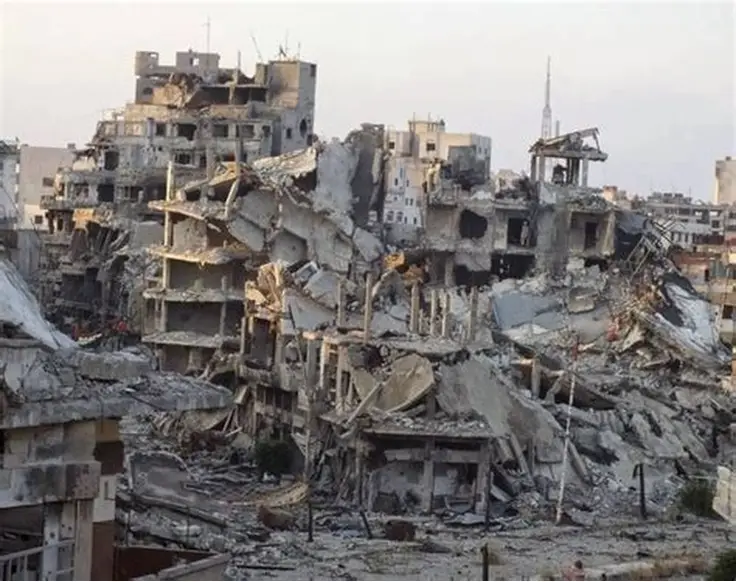
Près de deux millions de personnes, soit la quasi-totalité de la population de Gaza, ont toujours besoin d’une aide en matière d’hébergement, un an après l’annonce d’un cessez-le-feu. Alors que les pluies hivernales commencent, l’ensemble des approvisionnements prévus par les partenaires humanitaires intervenant dans le domaine de l’hébergement ne couvre qu’à peine 17 % des besoins identifiés pour l’hiver, a averti aujourd’hui Amy Pope, Directrice générale de l’Organisation internationale pour les migrations (OIM).
Après des années de déplacements et de destructions généralisées, les Palestiniens affrontent un quatrième hiver sans protection adéquate contre la pluie, les inondations et le froid. L’insuffisance des financements et les restrictions persistantes imposées par les autorités israéliennes à l’entrée de fournitures essentielles destinées aux abris empêchent les organisations humanitaires d’apporter une réponse à la hauteur des besoins.
« Les familles qui ont déjà subi des déplacements répétés et des pertes dévastatrices doivent pouvoir affronter l’hiver dans la sécurité et la dignité », a déclaré Pope. « Les matériaux destinés aux abris doivent pouvoir entrer rapidement, de manière prévisible et en quantités suffisantes pour répondre aux besoins. »
Plus de la moitié des tentes et des abris de fortune actuellement utilisés sont en mauvais état et doivent être remplacés. Les tentes sont conçues comme une mesure d’urgence temporaire et ne durent généralement que six à douze mois.
Faute d’autres solutions, de nombreuses familles vivent dans des bâtiments endommagés par la guerre qui présentent de graves risques pour leur vie. Le mois dernier seulement, des dizaines de personnes ont été tuées dans la ville de Gaza lorsqu’un bâtiment endommagé par la guerre s’est effondré. En août, un partenaire de l’OIM avait recensé plus de 3 600 structures jugées dangereuses et présentant un risque d’effondrement.
Le renforcement du phénomène El Niño devrait entraîner des précipitations plus abondantes, susceptibles de fragiliser davantage les bâtiments déjà dangereux, tandis que les systèmes de drainage fortement endommagés exposent les communautés aux inondations.
L’OIM et ses partenaires chargés de la gestion des sites ont recensé près de 1,8 million de personnes vivant dans des sites de déplacement, dont la plupart se trouvent dans des zones exposées aux risques d’inondation. Les eaux de crue pourraient endommager les abris, détruire les derniers biens des familles et contraindre les populations à se déplacer une nouvelle fois.
Environ 8 600 kits d’hébergement d’urgence de l’OIM sont prépositionnés à l’extérieur de Gaza et prêts à être acheminés, mais les autorités israéliennes continuent de leur refuser l’accès aux points de passage. Pendant ce temps, les équipes humanitaires utilisent, dans la mesure du possible, des matériaux disponibles localement et des matériaux récupérés. Ces efforts apportent un soutien temporaire limité, mais restent insuffisants pour répondre à l’ampleur des besoins en matière d’hébergement.
« Les solutions sont connues, les fournitures sont prêtes et les équipes humanitaires sont préparées à les acheminer », a déclaré Pope. « Un accès humanitaire immédiat et durable est essentiel pour protéger des vies, renforcer les abris endommagés et aider les familles à dépasser le stade des solutions temporaires. Toutes les parties doivent faciliter une action humanitaire fondée sur les principes humanitaires et soutenir une réponse à la hauteur de la gravité de la crise. »
L’OIM appelle à autoriser immédiatement et durablement l’entrée de tentes, de kits d’hébergement d’urgence, d’unités de logement de secours, de bois, d’outils et d’autres matériaux nécessaires pour renforcer les abris, réparer les habitations endommagées et aider les familles à trouver des logements plus sûrs.
Un accès prévisible aux équipements spécialisés, au carburant, aux pièces de rechange et aux matériaux de construction sera également essentiel pour permettre l’enlèvement des décombres et progresser vers un relèvement précoce.

La Ligue des États arabes et l’OIM lancent le Réseau arabe des données sur les migrations
League of Arab States, IOM launch Arab Migration Data Network

Ebola : la RDC confirme 10 000 cas, le NRC appelle à un renforcement urgent de la réponse

Ebola:DRC confirms 10,000 cases, NRC seeks scale-up

Libye : des centaines de migrants rapatriés, des renforts déployés à Tobrouk
-
 Features3 weeks ago
Gaza : Près de deux millions de personnes ont besoin d’une aide d’urgence en matière d’hébergement
-

 News Extra3 weeks ago
NACTAL conteste le rapport américain sur la traite des personnes et exige la reconnaissance des contributions des organisations de la société civile nigérianes
-
 News Extra3 weeks ago
Un avocat ougandais exhorte l’UA à rejeter les accords migratoires avec l’Europe
-
 News Extra2 weeks ago
Sudan: Drone attacks disrupt school lessons in El Obeid- NRC
-
 Features3 weeks ago
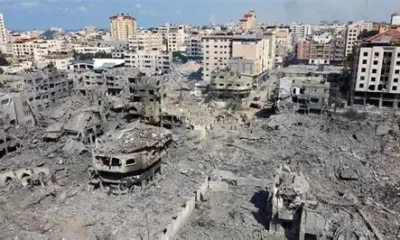
Gaza: About two million need urgent shelter assistance
-

 News Extra3 weeks ago
NACTAL faults US trafficking report, demands recognition of Nigerian CSOs’ contributions
-

 News Extra3 weeks ago
US to deport fresh set of Nigerians over alleged criminal offences
-
 News3 weeks ago
Ugandan lawyer urges AU to reject Europe’s migration deals