
News
Over 1,000 people missing in the mediterranean following Cyclone Harry?

What We Know — and What Remains Unaccounted For.
Writer: Refugees in Libya
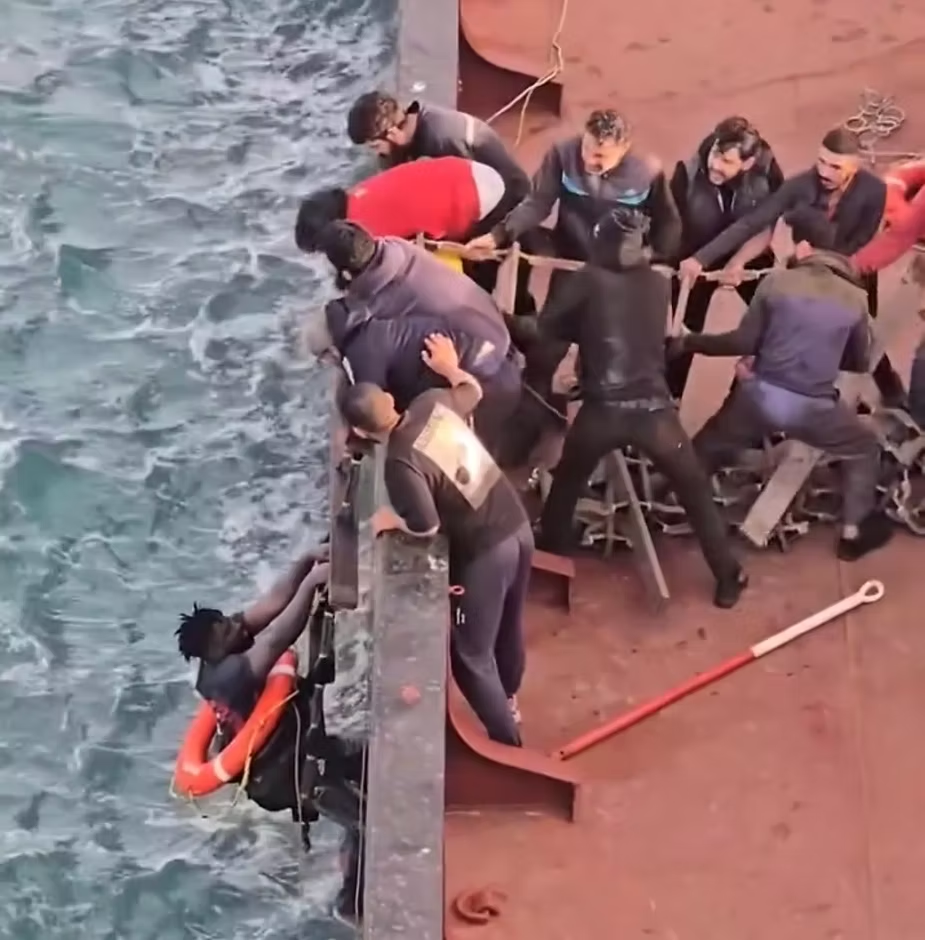
Screenshot from the rescue operation involving Ramadan Konte, a Sierra Leonean national 22 Jan 2026
Screenshot from the rescue operation involving Ramadan Konte, a Sierra Leonean national 22 Jan 2026
According to information transmitted through official maritime channels, at least 380 people were reported missing at sea as of 24 January, unaccounted for, for up to ten days following departures from Sfax on Tunisia’s eastern coast. This figure came from a single Search and Rescue (SAR) alert dispatch issued to “All Ships in Area” and transmitted via the Inmarsat network by the Italian Coast Guard MRCC.
The dispatch grouped eight separate SAR cases, corresponding to eight vessels that departed from Sfax between 14 and 21 January 2026, carrying the following numbers of people:
49, 54, 50, 51, 36, 42, 53, and 45 individuals — for a total of approximately 380 people.
As of 24 January, none of these vessels had been located, and no confirmed rescues linked to these eight SAR cases had been reported.
These departures coincided precisely with the period in which the Central Mediterranean, including the route from Sfax toward Lampedusa, was experiencing extreme maritime conditions: waves exceeding seven meters and wind gusts reaching over 54 knots, caused by Cyclone Harry. In other words, the boats did not simply disappear; they vanished during some of the most dangerous sea conditions recorded this season.
This is the official baseline. It is what maritime authorities themselves acknowledged on 24 January.
What follows goes beyond the baseline.
In the same period, footage emerged documenting the rescue of Ramadan Konte, a Sierra Leonean national and survivor of a shipwreck in the Central Mediterranean. According to his testimony, he departed from Sfax aboard a boat carrying around 50 people of different nationalities. The boat capsized. Konte survived more than 24 hours at sea before being spotted by a sailing vessel east of Tunisia and south of Malta. During the rescue, bodies were visible floating in the water. Konte lost his brother, his brother’s wife, his nephew, and at least 47 others.
He was later handed over to the Maltese Coast Guard.
Konte’s testimony matters not only for what it reveals about one shipwreck, but for what it confirms about the broader pattern: boats leaving Sfax during this period were entering lethal conditions with little to no chance of survival and no proactive rescue presence.
Alongside this, community-based monitoring paints a far wider and more alarming picture.
From 15 January onward, multiple convoys launched from different coastal points around Sfax — including areas locally referred to as kilometres 19, 21, 25, 27, 30, 31, 33, 35, and 38. According to testimonies collected from people who were meant to be on these boats but were forced to wait due to lack of money, as well as from relatives of those who departed, entire convoys never returned.
One smuggler alone, known locally as Mohamed “Mauritania,” is reported to have pushed five convoys, each carrying between 50 and 55 people. From kilometres 19 to 21, community sources speak of ten boats launched. From kilometre 30, seven boats departed; only one is confirmed to have reached Italy, in addition to Ramadan Konte’s survival. The rest remain unaccounted for.
From kilometres 33 and 38, seven more convoys were launched. Only one returned to the olive groves near Sfax. Survivors later said they believed being redirected to the desert saved their lives, as they witnessed shipwrecks at sea. When they later moved toward Mahdia, Tunisian police arrested them.
As days passed beyond 24 January, new names continued to surface — people known to have departed who were now unreachable, with no calls from Libya, no contact from detention, no confirmation of death, and no trace from the Algerian desert.
Our information remains fragmented and conflicting, not because of negligence, but because there is no central system recording departures, losses, or recoveries. Community organisers within our sister movement, Refugees in Tunisia, relatives of the missing, and trusted observers report different numbers: five boats from one location, ten from another, six over ten days, or five carrying around 180 people. These discrepancies do not cancel one another out; they point to a single reality — the scale exceeds what is officially acknowledged.
The human cost is immediate and devastating. Violent tensions have erupted between Ivorian and Guinean communities linked to the missing boats. Families are trapped in unbearable uncertainty. Our comrade (xxxx), who runs self-organised medical clinics, has five family members missing: his child, his two wives, and relatives. A well-known Nigerian human rights activist within our movement is also missing, having departed in another convoy.
Meanwhile, dozens of bodies have been recovered by Maltese authorities in the same period. On the days following 24 January, one additional body was recovered by teams onboard the Ocean Viking rescue ship in the Maltese Search and Rescue Region.
So what is the answer to the question in the title?
Do we know that over 1,000 people are missing?
Formally, no authority has confirmed that number.
But do we know that 380 people were officially listed as missing as of 24 January, that dozens of bodies have already surfaced, that entire convoys disappeared during a cyclone, and that community tracking suggests a far higher number of departures than those acknowledged in official SAR alerts?
Yes. Unequivocally.
What we are witnessing is not a lack of information, but lack of action.
At Refugees in Libya, we remain in contact with families and communities living through this uncertainty. We reiterate our urgent call to Italy, Malta, Spain, and the European Union to initiate immediate, transparent, and large-scale search and rescue operations and bring the people home whether dead or alive.









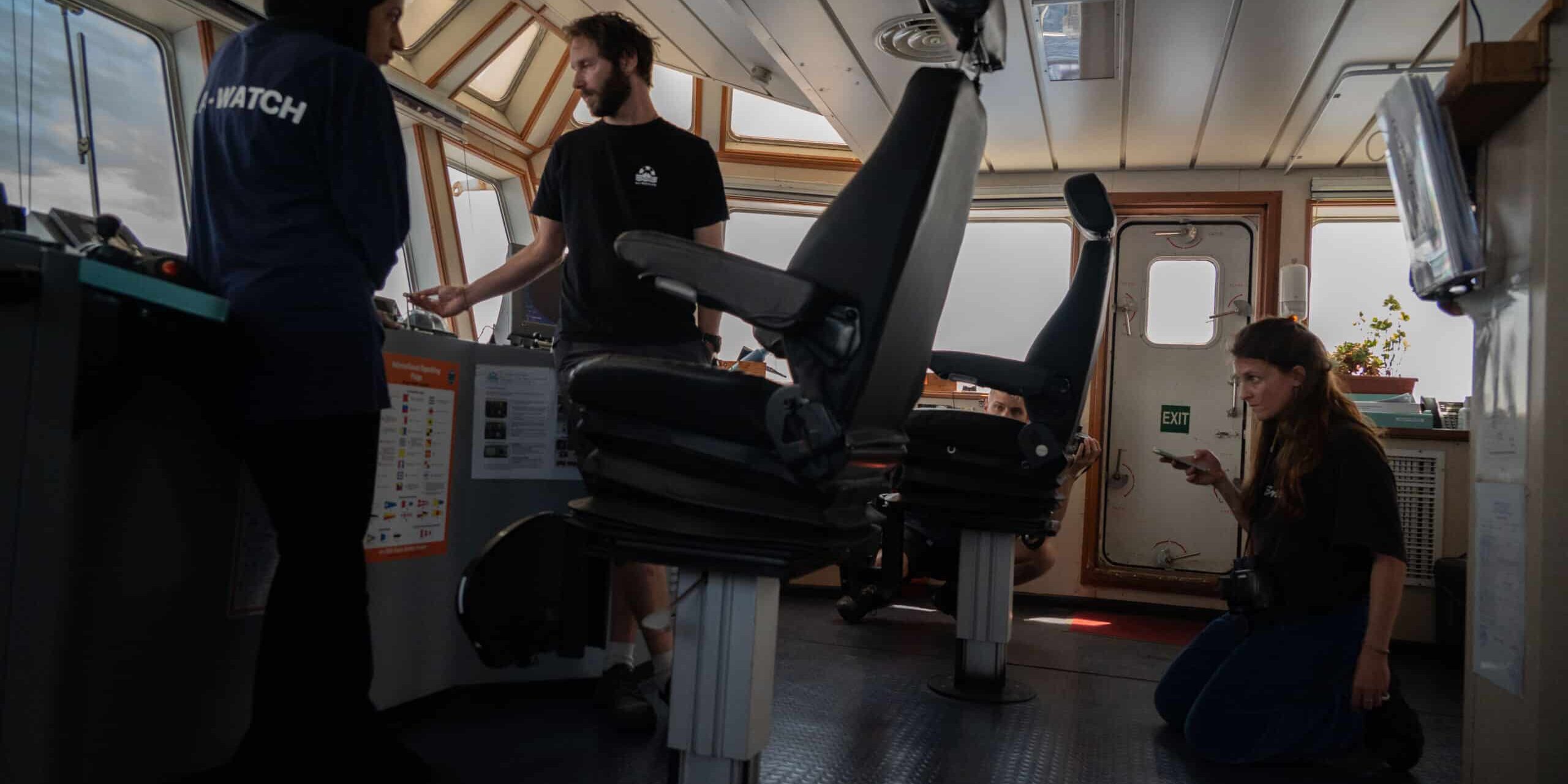
Sea-Watch is putting a new rescue vessel into service: With the Aurora 2, the organization is responding to the repeated detentions of civilian rescue ships by the Italian authorities. Now, Sea-Watch will remain operational even when one of its ships is detained. While one ship is blocked in port, the other will be available to carry out rescue missions. The far-right government’s strategy of limiting rescue operations through arbitrary detentions has therefore failed.
Julia Winkler, spokesperson for the organization Sea-Watch:
“Italy is detaining rescue ships to stop people from being rescued. With the Aurora 2, we are making sure this strategy fails. If one of our vessels is detained, the other will be ready to save lives. By expanding our fleet, we are fighting back against the far-right Italian government’s efforts to obstruct civilian search and rescue at sea.”
In the Mediterranean, speed is a matter of life and death. Every distress case is a race against time. That is why Sea-Watch operates not only the large vessel Sea-Watch 5 but also a smaller, faster ship—the Aurora. The Aurora reaches top speeds of up to 25 knots, allowing it to quickly reach people in distress at sea. With the Aurora 2, the organization is now specifically expanding its operational capabilities.
The acquisition of the Aurora 2 is a direct response to the far-right Italian government’s policy of systematically detaining civilian rescue ships. Since 2023, the Meloni cabinet has detained civilian sea rescue ships in port more than forty times. As a result, the entire civilian fleet has lost more than 900 days of operational time. The Aurora has also been blocked five times already. Italian courts subsequently overturned the rulings on several occasions. However, by the time the respective court decisions were issued, the Aurora had lost a total of 113 days of operational time.
With the Aurora 2, Sea-Watch is specifically countering this strategy. If one of the ships is detained, the other can continue to set sail and rescue people in distress at sea. In this way, the organization ensures its independence from bureaucratic blockades and guarantees the continuation of its rescue operations.
The detentions of civil search and rescue vessels are politically motivated and cost lives. The Mediterranean is one of the deadliest borders in the world. More than 34,000 people have been reported dead or missing since 2014. The actual number is estimated to be significantly higher. With its new ship, the Aurora 2, Sea-Watch can continue to quickly rescue people from drowning — even if one of its ships is blocked by the far-right Italian government.
Sea-Watch is part of the Justice Fleet, an alliance whose members are committed to upholding human rights and international maritime law. Its members refuse to comply with instructions provided for in the so-called Piantedosi Decree that conflict with international law and human rights obligations and are primarily intended to hinder rescue operations. As a result, their vessels are regularly detained by the Italian authorities. In recent months, Italian courts have overturned detention orders imposed on several Justice Fleet vessels in summary proceedings. Rulings on the overall legality of the Decree are still pending.
In response to the attack on the Sea-Watch 5 on Monday, 11 May 2026, the European Commission stated at its press conference on Wednesday, 12 May 2026, that EU cooperation with Libyan actors “prevented further violence.” Sea-Watch condemns this portrayal as a grotesque distortion of reality. Without the political, financial, and operational support of the EU, the so-called Libyan coast guard would neither possess boats nor the necessary infrastructure to operate at sea.
Julia Winkler, spokesperson for Sea-Watch:
“The EU has been working closely with actors in Libya for years, who are accused of committing the most serious crimes against people on the move, equipping them and enabling their operations at sea. Against this background, claiming that this very cooperation prevents violence is an absurd distortion of reality and is nothing short of cynical.”
A Commission spokesperson responded to questions regarding the violent attack on the Sea-Watch 5 on Monday, 11 May 2026, stating that it cannot be determined how many further attacks may have been prevented precisely due to consistent engagement (from 4:39). After the crew had rescued people in distress in international waters, Libyan militias opened fire and threatened to forcibly return the ship and those on board to Libya.
The attackers identified themselves as so-called Libyan Coast Guard. During the attack, the vessel involved was accompanied by the Murzuq 662 – a Bigliani-class ship handed over by Italy in June 2023 to Libyan actors as part of the EU–Libya cooperation framework SIBMMIL. Later the same day, the Sea-Watch 5 was also followed by the Ras Jadir 648, another vessel transferred by Italy to Libyan actors in May 2017.
Despite mayday calls being issued, neither Germany nor Italy, nor the EU naval mission EUNAVFOR MED IRINI provided assistance at sea on the day of the attack. On the contrary, on the same day the EU emphasised its intentions to expand cooperation and funding for Libyan actors in eastern Libya. These groups have been documented for years as responsible for torture, sexual violence, and kidnappings of people on the move. Without European support, such structures would not be operational in their current form.
For years, Sea-Watch and international organisations, including the United Nations, have documented serious human rights violations by Libyan militias and coast guard units with which they are closely linked. The political and legal responsibility of European actors is subject to ongoing international legal scrutiny. In 2022, the European Center for Constitutional and Human Rights filed a criminal complaint against senior representatives of the EU and its Member States for alleged crimes against humanity in connection with the EU–Libya cooperation.

SOS MEDITERRANEE has welcomed the recent decision of the Court of Chieti in Italy, which fully annuls the 20-day administrative detention imposed on the Ocean Viking in November 2023, together with the related fine and all associated sanctioning measures.
On 15 November 2023, Italian authorities detained the Ocean Viking in Ortona for 20 days and imposed a financial penalty under Decree Law No. 1/2023, known as the “Piantedosi Decree”. The case relates to a rescue operation conducted on 11 November 2023 in the Libyan Search and Rescue Region, during which our rescue ship rescued 34 people from a boat in distress after repeated unsuccessful attempts to obtain effective coordination from the Libyan maritime authorities.
In its first instance decision, the Court clearly confirmed that the Ocean Viking’s rescue operation was lawful, and that the captain “was faced with the necessity to intervene without delay” to protect human life. It also underscored the absence of effective coordination by the Libyan authorities, recognizing that the Ocean Viking was “the only vessel to intervene” to fulfill the duty to rescue at sea.
The judgment also reaffirmed that international maritime obligations under the UNCLOS, SOLAS and SAR Conventions prevail when human lives are at risk, and that sanctions cannot be imposed where state coordination is absent or inadequate. The decision recalls the Italian Constitutional Court’s ruling n°101/2025, which confirmed that national laws on sea rescue must comply with international law. In other words, no national law can be in contrast with the duty of saving lives at sea.
“This ruling confirms what we have consistently stated since November 2023: the Ocean Viking acted in full compliance with international maritime law and in the clear fulfilment of its maritime obligations,” said Soazic Dupuy, Director of Operations at SOS MEDITERRANEE. “Humanitarian rescue organisations must never be penalised for doing what authorities fail to do: ensuring timely and effective rescue for people in distress.” she concludes.
2026 is already among the deadliest years of the last decade. People continue to go missing at sea while the Italian government doubles down on efforts to prevent Search and Rescue NGOs from operating. This week, the Senate began discussing a new migration package that includes Provisions aimed at preventing Search and Rescue NGOs from entering Italian waters, yet another attempt to obstruct lifesaving operations.
On Saturday 16th, the captain of the Sea-Watch 5 was accused of facilitating irregular migration after completing a rescue operation following which the Libyan Coast Guard opened fire.
Despite repeated court rulings confirming the legality of civil rescue operations, Search and Rescue NGOs continue to face legal and administrative harassment for saving lives at sea. People in distress cannot wait for justice while lifesaving assistance is obstructed for political purposes.

Rights group reports rise in abuses, hate speech against migrants in Libya

New rescue vessel Aurora 2: Sea-Watch’s response to political blockades of civilian sea rescue
Sea-Watch strongly criticises EU response following attack on Sea-Watch 5

Court annuls 20-day administrative detention imposed on Ocean Viking

Neglect deepens as DRC appears on NRC’s list of top neglected displacement for 10 years
-
 News1 week ago
War has devastated life for millions of refugees, displaced
-

 Features1 week ago
Netherlands, IOM reaffirm partnership including new multi-year funding commitment
-
 Features1 week ago
Stabilization gains open pathway to development in Central African Republic: IOM Chief of Staff
-
 News Extra1 week ago
West and Central Africa urges more climate funding as displacement rises
-
 Features2 days ago
Ebola: Border closures alone risk driving movement underground and increasing transmission risks
-

 News Extra1 week ago
Diaspora remittances point to untapped potential in crisis response: New IOM report
-
 News Extra4 days ago
Nigeria leads Liberia, Ghana, others as US set to deport migrants
-
 Features4 days ago
Haiti hosts over 1million displaced persons