
News
Over 1,000 people missing in the mediterranean following Cyclone Harry?

What We Know — and What Remains Unaccounted For.
Writer: Refugees in Libya
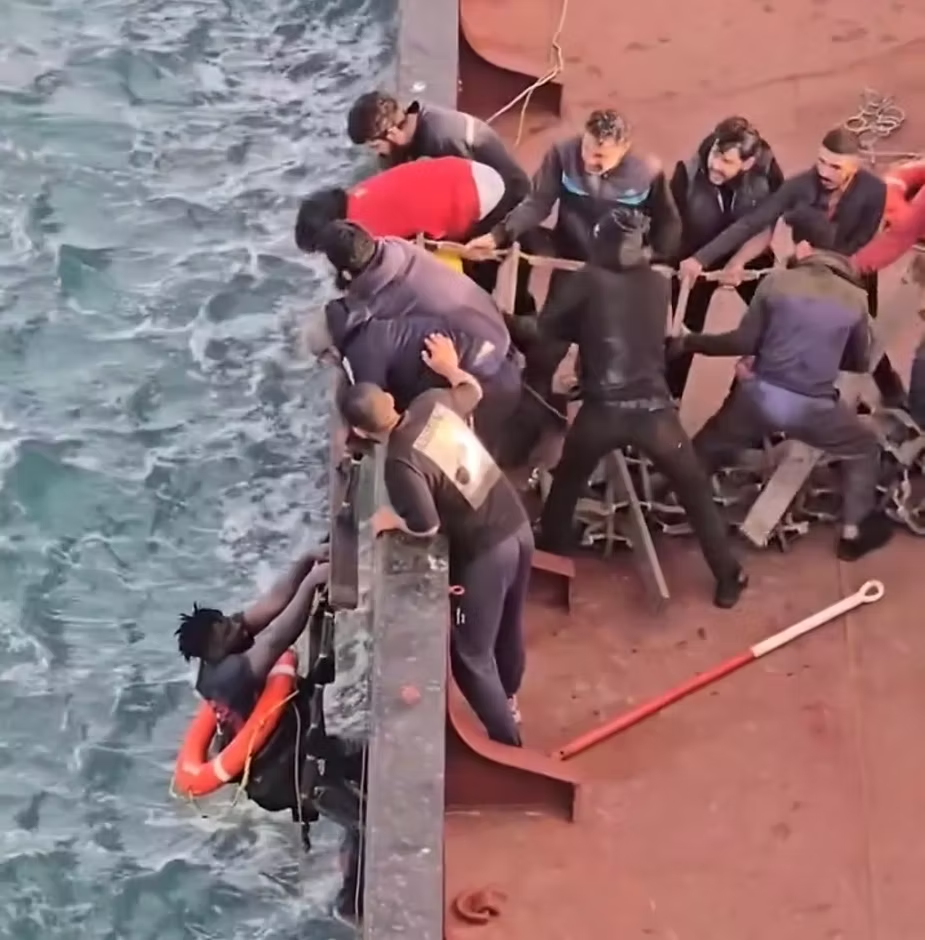
Screenshot from the rescue operation involving Ramadan Konte, a Sierra Leonean national 22 Jan 2026
Screenshot from the rescue operation involving Ramadan Konte, a Sierra Leonean national 22 Jan 2026
According to information transmitted through official maritime channels, at least 380 people were reported missing at sea as of 24 January, unaccounted for, for up to ten days following departures from Sfax on Tunisia’s eastern coast. This figure came from a single Search and Rescue (SAR) alert dispatch issued to “All Ships in Area” and transmitted via the Inmarsat network by the Italian Coast Guard MRCC.
The dispatch grouped eight separate SAR cases, corresponding to eight vessels that departed from Sfax between 14 and 21 January 2026, carrying the following numbers of people:
49, 54, 50, 51, 36, 42, 53, and 45 individuals — for a total of approximately 380 people.
As of 24 January, none of these vessels had been located, and no confirmed rescues linked to these eight SAR cases had been reported.
These departures coincided precisely with the period in which the Central Mediterranean, including the route from Sfax toward Lampedusa, was experiencing extreme maritime conditions: waves exceeding seven meters and wind gusts reaching over 54 knots, caused by Cyclone Harry. In other words, the boats did not simply disappear; they vanished during some of the most dangerous sea conditions recorded this season.
This is the official baseline. It is what maritime authorities themselves acknowledged on 24 January.
What follows goes beyond the baseline.
In the same period, footage emerged documenting the rescue of Ramadan Konte, a Sierra Leonean national and survivor of a shipwreck in the Central Mediterranean. According to his testimony, he departed from Sfax aboard a boat carrying around 50 people of different nationalities. The boat capsized. Konte survived more than 24 hours at sea before being spotted by a sailing vessel east of Tunisia and south of Malta. During the rescue, bodies were visible floating in the water. Konte lost his brother, his brother’s wife, his nephew, and at least 47 others.
He was later handed over to the Maltese Coast Guard.
Konte’s testimony matters not only for what it reveals about one shipwreck, but for what it confirms about the broader pattern: boats leaving Sfax during this period were entering lethal conditions with little to no chance of survival and no proactive rescue presence.
Alongside this, community-based monitoring paints a far wider and more alarming picture.
From 15 January onward, multiple convoys launched from different coastal points around Sfax — including areas locally referred to as kilometres 19, 21, 25, 27, 30, 31, 33, 35, and 38. According to testimonies collected from people who were meant to be on these boats but were forced to wait due to lack of money, as well as from relatives of those who departed, entire convoys never returned.
One smuggler alone, known locally as Mohamed “Mauritania,” is reported to have pushed five convoys, each carrying between 50 and 55 people. From kilometres 19 to 21, community sources speak of ten boats launched. From kilometre 30, seven boats departed; only one is confirmed to have reached Italy, in addition to Ramadan Konte’s survival. The rest remain unaccounted for.
From kilometres 33 and 38, seven more convoys were launched. Only one returned to the olive groves near Sfax. Survivors later said they believed being redirected to the desert saved their lives, as they witnessed shipwrecks at sea. When they later moved toward Mahdia, Tunisian police arrested them.
As days passed beyond 24 January, new names continued to surface — people known to have departed who were now unreachable, with no calls from Libya, no contact from detention, no confirmation of death, and no trace from the Algerian desert.
Our information remains fragmented and conflicting, not because of negligence, but because there is no central system recording departures, losses, or recoveries. Community organisers within our sister movement, Refugees in Tunisia, relatives of the missing, and trusted observers report different numbers: five boats from one location, ten from another, six over ten days, or five carrying around 180 people. These discrepancies do not cancel one another out; they point to a single reality — the scale exceeds what is officially acknowledged.
The human cost is immediate and devastating. Violent tensions have erupted between Ivorian and Guinean communities linked to the missing boats. Families are trapped in unbearable uncertainty. Our comrade (xxxx), who runs self-organised medical clinics, has five family members missing: his child, his two wives, and relatives. A well-known Nigerian human rights activist within our movement is also missing, having departed in another convoy.
Meanwhile, dozens of bodies have been recovered by Maltese authorities in the same period. On the days following 24 January, one additional body was recovered by teams onboard the Ocean Viking rescue ship in the Maltese Search and Rescue Region.
So what is the answer to the question in the title?
Do we know that over 1,000 people are missing?
Formally, no authority has confirmed that number.
But do we know that 380 people were officially listed as missing as of 24 January, that dozens of bodies have already surfaced, that entire convoys disappeared during a cyclone, and that community tracking suggests a far higher number of departures than those acknowledged in official SAR alerts?
Yes. Unequivocally.
What we are witnessing is not a lack of information, but lack of action.
At Refugees in Libya, we remain in contact with families and communities living through this uncertainty. We reiterate our urgent call to Italy, Malta, Spain, and the European Union to initiate immediate, transparent, and large-scale search and rescue operations and bring the people home whether dead or alive.




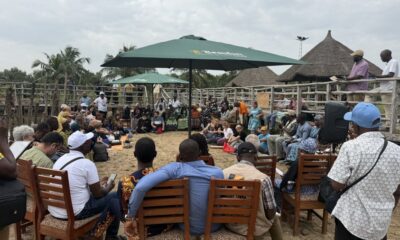

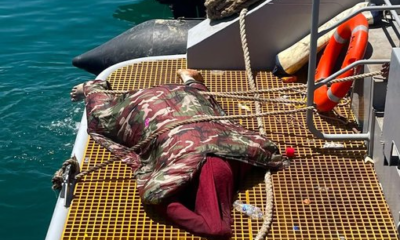

Le Conseil norvégien pour les réfugiés (NRC) a appelé à un renforcement urgent des efforts humanitaires en République démocratique du Congo (RDC), après la confirmation de plus de 10 000 cas dans le cadre de l’épidémie en cours due au virus Bundibugyo.
L’épidémie a touché huit provinces du pays, exerçant une pression considérable sur des communautés déjà confrontées à une crise humanitaire prolongée. Elle est principalement concentrée dans l’est de la RDC, tandis que des signalements récents de cas au Kenya et au Nigeria suscitent des inquiétudes quant à une éventuelle propagation régionale.
Près de 5 000 décès auraient été confirmés en RDC seulement.
Cette épidémie survient dans un contexte de crise humanitaire persistante dans l’est de la RDC, où les violences, les déplacements forcés et l’accès limité aux services essentiels ont rendu de nombreuses communautés particulièrement vulnérables.
Le NRC, qui intervient dans le pays depuis plus de deux décennies, participe à la réponse à l’épidémie d’Ebola, notamment dans la province de l’Ituri, l’une des régions les plus touchées.
L’organisation appelle à une action durable et coordonnée afin de protéger les communautés, d’améliorer l’accès aux services essentiels et de répondre aux besoins des personnes affectées à la fois par l’épidémie et les déplacements de population.
« Lors de mes déplacements en Ituri, je constate à quel point la maladie frappe durement les communautés, et je suis frappée par l’ampleur des efforts supplémentaires nécessaires pour maîtriser cette épidémie », a déclaré Silvia Beccacece, responsable de l’équipe d’urgence du NRC.
« Depuis des années, les familles d’ici luttent contre les conséquences des violences extrêmes, des déplacements forcés et du manque de services essentiels. Ebola vient s’ajouter à ces difficultés, alors que beaucoup ont déjà épuisé leurs capacités à faire face à cette nouvelle épreuve.
« Il est clair que la réponse apportée est loin d’être proportionnelle à l’ampleur considérable de l’épidémie », a-t-elle ajouté.
Le NRC a souligné que la lutte contre Ebola nécessite une étroite coopération entre les autorités sanitaires, les organisations humanitaires, les groupes communautaires et les partenaires internationaux.
L’organisation a également appelé à mettre les communautés touchées au centre des interventions et à tenir compte des coutumes et traditions locales.
Elle a exhorté les bailleurs de fonds et les partenaires à accroître les financements et le soutien aux opérations humanitaires en RDC, en particulier dans les zones affectées par l’épidémie et les déplacements de population.
« La confirmation de 10 000 cas doit servir de signal d’alarme : la réponse actuelle ne parvient pas à prendre de l’avance sur l’épidémie et ne fournit pas aux communautés le soutien dont elles ont besoin pour maîtriser la transmission du virus », a déclaré Beccacece.
« Les signes avant-coureurs sont visibles de tous. Tout dépend désormais de la volonté des dirigeants d’en tenir compte et de prendre les mesures nécessaires », a-t-elle ajouté.
The Norwegian Refugee Council (NRC) has called for an urgent expansion of humanitarian efforts in the Democratic Republic of the Congo (DR Congo), following the confirmation of more than 10,000 cases in the ongoing Bundibugyo virus outbreak.
The outbreak has affected eight provinces in the country, placing enormous pressure on communities already struggling with a prolonged humanitarian crisis. The epidemic is concentrated in eastern DR Congo, while reports of recent cases in Kenya and Nigeria have raised concerns about a possible regional spread.
Nearly 5,000 deaths have reportedly been confirmed in DR Congo alone.
The outbreak comes amid a long-running humanitarian crisis in eastern DR Congo, where violence, forced displacement and limited access to essential services have left many communities vulnerable.
The NRC, which has operated in the country for more than two decades, is participating in the Ebola response, including in Ituri province, one of the areas most affected by the outbreak.
The organisation is urging sustained and coordinated action to protect communities, improve access to essential services and address the needs of people affected by both the outbreak and displacement.
“As I move around Ituri, I’m seeing just how hard the disease is hitting communities, and I am struck by how much more needs to be done to bring this outbreak under control,” said Silvia Beccacece, NRC’s emergency team leader.
“Families here have been struggling for years as a result of extreme violence, forced displacement, and the lack of essential services. Ebola comes on top of that, at a point where many have exhausted their ability to cope with the additional challenge it brings.
“The fact remains that this response is in no way proportionate to the vast scale of the outbreak,” she added.
The NRC stressed that combating Ebola requires close cooperation among health authorities, humanitarian organisations, community-based groups and international partners.
It also called for a response that places affected communities at the centre of interventions and takes local customs and traditions into account.
The organisation urged donors and partners to increase funding and support for humanitarian operations in DR Congo, particularly in areas affected by the outbreak and displacement.
“10,000 confirmed cases must be a wake-up call that this response is not getting ahead of the outbreak, and is not supporting communities with what they need to bring transmission under control,” Beccacece said.
“The warning signs are here for all to see: now it depends on whether leaders will take notice and take the required action,” she added.
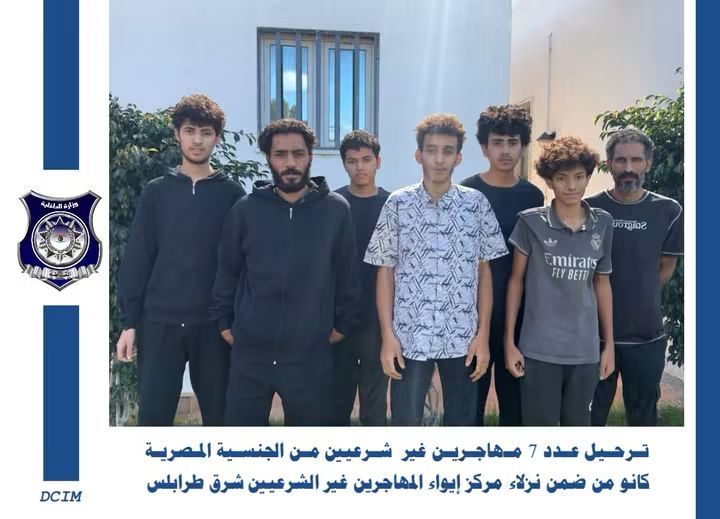
Le Département libyen de lutte contre la migration illégale (DCIM) a rapatrié ou transféré des centaines de migrants en vue de leur rapatriement depuis des centres de détention situés dans l’est du pays, tout en déployant des unités de renfort à Tobrouk afin de renforcer les opérations de lutte contre la migration irrégulière.
Ces informations ont été rapportées dans une série de publications sur X par Migrant Rescue Watch.
Le 15 octobre 2026, le DCIM a déployé des unités de renfort à Tobrouk pour soutenir sa branche locale dans la lutte contre la migration irrégulière dans la ville et les zones environnantes relevant de sa compétence.
Le même jour, l’agence a rapatrié sept migrants égyptiens détenus au centre de détention pour migrants de l’est de Tripoli, à Tajoura, via l’aéroport international de Mitiga, à Tripoli, selon Migrant Rescue Watch.
La veille, le 14 octobre, le DCIM de Tobrouk avait rapatrié ou transféré 209 migrants en vue de leur rapatriement. Les ressortissants égyptiens ont été renvoyés par le poste-frontière terrestre d’Emsaed, tandis que les autres migrants ont été transférés au centre de détention pour migrants de Quanafudah en vue de leur rapatriement.
Lors d’une opération distincte menée le 28 septembre, l’agence a transféré 297 migrants de différentes nationalités du centre de détention pour migrants de Tobrouk vers celui de Quanafudah, à Benghazi, en vue de leur rapatriement.
Le DCIM a également rapatrié ou transféré 250 migrants de différentes nationalités depuis le centre de détention pour migrants de Shahat le même jour, selon les publications.
Les rapports n’ont pas précisé les nationalités de l’ensemble des migrants concernés ni fourni davantage de détails sur leur situation et les modalités de leur retour.
Ces opérations interviennent dans un contexte de poursuite des mesures de contrôle migratoire dans l’est de la Libye, où les autorités continuent de procéder au transfert et au rapatriement de migrants détenus dans différents centres de rétention.

La Ligue des États arabes et l’OIM lancent le Réseau arabe des données sur les migrations
League of Arab States, IOM launch Arab Migration Data Network

Ebola : la RDC confirme 10 000 cas, le NRC appelle à un renforcement urgent de la réponse

Ebola:DRC confirms 10,000 cases, NRC seeks scale-up

Libye : des centaines de migrants rapatriés, des renforts déployés à Tobrouk
-
 Features3 weeks ago
Gaza : Près de deux millions de personnes ont besoin d’une aide d’urgence en matière d’hébergement
-

 News Extra3 weeks ago
NACTAL conteste le rapport américain sur la traite des personnes et exige la reconnaissance des contributions des organisations de la société civile nigérianes
-
 News Extra3 weeks ago
Un avocat ougandais exhorte l’UA à rejeter les accords migratoires avec l’Europe
-
 News Extra2 weeks ago
Sudan: Drone attacks disrupt school lessons in El Obeid- NRC
-
 Features3 weeks ago
Gaza: About two million need urgent shelter assistance
-

 News Extra3 weeks ago
NACTAL faults US trafficking report, demands recognition of Nigerian CSOs’ contributions
-

 News Extra3 weeks ago
US to deport fresh set of Nigerians over alleged criminal offences
-
 News3 weeks ago
Ugandan lawyer urges AU to reject Europe’s migration deals