
News
Over 1,000 people missing in the mediterranean following Cyclone Harry?

What We Know — and What Remains Unaccounted For.
Writer: Refugees in Libya
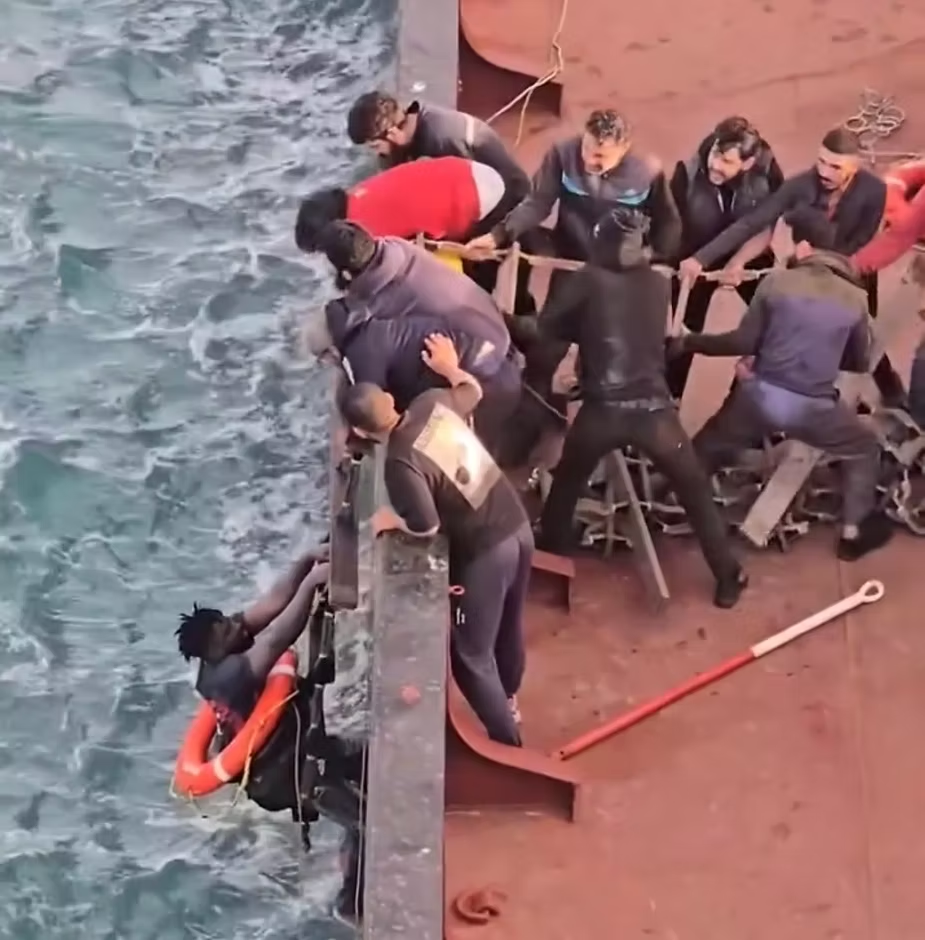
Screenshot from the rescue operation involving Ramadan Konte, a Sierra Leonean national 22 Jan 2026
Screenshot from the rescue operation involving Ramadan Konte, a Sierra Leonean national 22 Jan 2026
According to information transmitted through official maritime channels, at least 380 people were reported missing at sea as of 24 January, unaccounted for, for up to ten days following departures from Sfax on Tunisia’s eastern coast. This figure came from a single Search and Rescue (SAR) alert dispatch issued to “All Ships in Area” and transmitted via the Inmarsat network by the Italian Coast Guard MRCC.
The dispatch grouped eight separate SAR cases, corresponding to eight vessels that departed from Sfax between 14 and 21 January 2026, carrying the following numbers of people:
49, 54, 50, 51, 36, 42, 53, and 45 individuals — for a total of approximately 380 people.
As of 24 January, none of these vessels had been located, and no confirmed rescues linked to these eight SAR cases had been reported.
These departures coincided precisely with the period in which the Central Mediterranean, including the route from Sfax toward Lampedusa, was experiencing extreme maritime conditions: waves exceeding seven meters and wind gusts reaching over 54 knots, caused by Cyclone Harry. In other words, the boats did not simply disappear; they vanished during some of the most dangerous sea conditions recorded this season.
This is the official baseline. It is what maritime authorities themselves acknowledged on 24 January.
What follows goes beyond the baseline.
In the same period, footage emerged documenting the rescue of Ramadan Konte, a Sierra Leonean national and survivor of a shipwreck in the Central Mediterranean. According to his testimony, he departed from Sfax aboard a boat carrying around 50 people of different nationalities. The boat capsized. Konte survived more than 24 hours at sea before being spotted by a sailing vessel east of Tunisia and south of Malta. During the rescue, bodies were visible floating in the water. Konte lost his brother, his brother’s wife, his nephew, and at least 47 others.
He was later handed over to the Maltese Coast Guard.
Konte’s testimony matters not only for what it reveals about one shipwreck, but for what it confirms about the broader pattern: boats leaving Sfax during this period were entering lethal conditions with little to no chance of survival and no proactive rescue presence.
Alongside this, community-based monitoring paints a far wider and more alarming picture.
From 15 January onward, multiple convoys launched from different coastal points around Sfax — including areas locally referred to as kilometres 19, 21, 25, 27, 30, 31, 33, 35, and 38. According to testimonies collected from people who were meant to be on these boats but were forced to wait due to lack of money, as well as from relatives of those who departed, entire convoys never returned.
One smuggler alone, known locally as Mohamed “Mauritania,” is reported to have pushed five convoys, each carrying between 50 and 55 people. From kilometres 19 to 21, community sources speak of ten boats launched. From kilometre 30, seven boats departed; only one is confirmed to have reached Italy, in addition to Ramadan Konte’s survival. The rest remain unaccounted for.
From kilometres 33 and 38, seven more convoys were launched. Only one returned to the olive groves near Sfax. Survivors later said they believed being redirected to the desert saved their lives, as they witnessed shipwrecks at sea. When they later moved toward Mahdia, Tunisian police arrested them.
As days passed beyond 24 January, new names continued to surface — people known to have departed who were now unreachable, with no calls from Libya, no contact from detention, no confirmation of death, and no trace from the Algerian desert.
Our information remains fragmented and conflicting, not because of negligence, but because there is no central system recording departures, losses, or recoveries. Community organisers within our sister movement, Refugees in Tunisia, relatives of the missing, and trusted observers report different numbers: five boats from one location, ten from another, six over ten days, or five carrying around 180 people. These discrepancies do not cancel one another out; they point to a single reality — the scale exceeds what is officially acknowledged.
The human cost is immediate and devastating. Violent tensions have erupted between Ivorian and Guinean communities linked to the missing boats. Families are trapped in unbearable uncertainty. Our comrade (xxxx), who runs self-organised medical clinics, has five family members missing: his child, his two wives, and relatives. A well-known Nigerian human rights activist within our movement is also missing, having departed in another convoy.
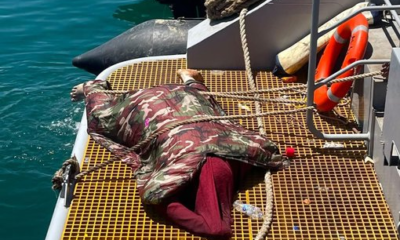
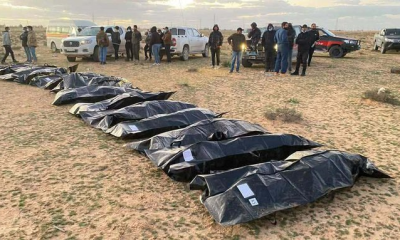
Meanwhile, dozens of bodies have been recovered by Maltese authorities in the same period. On the days following 24 January, one additional body was recovered by teams onboard the Ocean Viking rescue ship in the Maltese Search and Rescue Region.
So what is the answer to the question in the title?
Do we know that over 1,000 people are missing?
Formally, no authority has confirmed that number.
But do we know that 380 people were officially listed as missing as of 24 January, that dozens of bodies have already surfaced, that entire convoys disappeared during a cyclone, and that community tracking suggests a far higher number of departures than those acknowledged in official SAR alerts?
Yes. Unequivocally.
What we are witnessing is not a lack of information, but lack of action.
At Refugees in Libya, we remain in contact with families and communities living through this uncertainty. We reiterate our urgent call to Italy, Malta, Spain, and the European Union to initiate immediate, transparent, and large-scale search and rescue operations and bring the people home whether dead or alive.



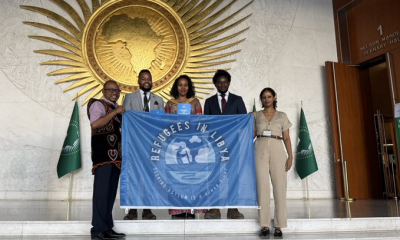

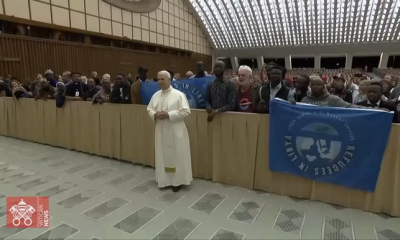


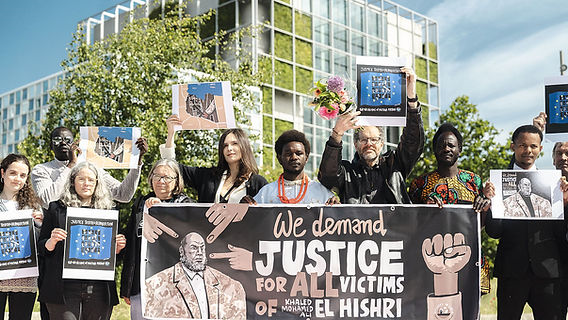
Human rights organisations and migrant rights advocates have welcomed the International Criminal Court’s (ICC) decision to confirm all 17 charges against Osama El-Hishri, describing it as a landmark step towards justice for victims of abuses committed at Libya’s notorious Mitiga Prison.
The ICC’s confirmation of the charges clears the way for El-Hishri to stand trial over allegations linked to murder, torture, sexual violence and other crimes allegedly committed against detainees at the prison in Tripoli.
Reacting to the decision, migrant distress network Alarm Phone described the ruling as “historic” for survivors of crimes committed at Mitiga Prison.
“The International Criminal Court confirmed all 17 charges against El-Hishri. This is a historic decision for survivors of crimes committed at Mitiga prison in Libya,” the organisation said in a statement posted on X.
Alarm Phone also echoed calls by refugee advocacy group Refugees in Libya, saying the prosecution should mark the beginning of broader efforts to hold perpetrators of abuses in Libya accountable.
Similarly, Sea-Watch International hailed the ICC’s decision, noting that the confirmation means the case will now proceed to trial.
The organisation alleged that El-Hishri was a senior member of Libya’s Special Deterrence Force (SDF/RADA) militia and headed parts of Mitiga Prison, where migrants and refugees were subjected to severe human rights violations.
“The ICC confirmed all 17 charges against El-Hishri today. The case is going to trial,” Sea-Watch International said.
It added that people on the move detained at Mitiga Prison had been subjected to murder, torture and sexual violence, describing the prosecution as an important step in addressing longstanding impunity for abuses against migrants in Libya.
Activist Yousef Ismail also welcomed the court’s decision, saying it represented the kind of justice victims had long demanded.
“This is the real number; this is the truth we seek. We always speak of justice and respect for human rights. The International Criminal Court has fairly proven 17 charges against the so-called ‘Hashri,’ the rapist and the gatekeeper of Mitiga,” he wrote on X.
The ICC’s decision has been widely viewed by rights advocates as a significant milestone in efforts to secure accountability for crimes allegedly committed against migrants and refugees held in Libya’s detention system.
Campaigners, however, stressed that the prosecution of El-Hishri should not be the end of international efforts, urging authorities to investigate other individuals allegedly responsible for serious human rights violations in Libya’s detention facilities.

A former Head of Policy Development and Evaluation at the UN Refugee Agency (UNHCR), Jeff Crisp, has suggested that the organization’s newly announced leadership appointments could signal a shift in its priorities away from refugee protection and asylum toward humanitarian assistance and development.
Reacting to the appointments in a post on X, Crisp said the selection of the agency’s new senior officials “suggest that the agency might be going to focus on humanitarian assistance & development issues rather than refugee protection & asylum.”
He added that his concerns were reinforced by UNHCR’s support for the European Union’s Pact on Migration and Asylum.
“A suspicion strengthened by UNHCR’s endorsement of the EU Pact on Migration & Asylum,” Crisp wrote.
His comments came shortly after United Nations Secretary-General António Guterres announced the appointments of Tressa Rae Finerty as Deputy High Commissioner for Refugees, Antón Leis García as Assistant High Commissioner for Operations, and Edem Wosornu as Assistant High Commissioner for Protection.
UN High Commissioner for Refugees Barham Salih welcomed the appointments, saying the three officials bring extensive experience in humanitarian affairs, international cooperation and refugee protection. They are expected to assume their duties in the coming weeks.
Crisp’s remarks reflect concerns held by some refugee rights advocates and migration experts who have argued that UNHCR faces increasing pressure to balance its traditional mandate of protecting refugees and defending the right to asylum with expanding responsibilities in humanitarian response, development cooperation and migration management.
The appointments come at a time when the agency is grappling with record levels of forced displacement worldwide, shrinking humanitarian funding and increasingly restrictive asylum policies in many parts of the world.
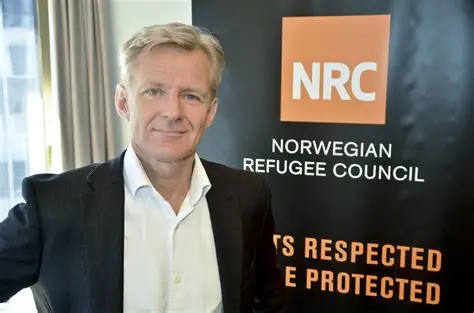
The Norwegian Refugee Council (NRC) has warned that the ongoing Bundibugyo Ebola outbreak in the Democratic Republic of Congo (DRC) is spreading in communities already devastated by years of armed conflict, displacement and inadequate access to basic services, urging the international community to step up funding and political support for the response.
In a statement, NRC’s Country Director in DR Congo, Eric Batonon, said the outbreak was unfolding in Ituri province, the current epicentre of the epidemic, where thousands of displaced people have spent years living in overcrowded shelters with poor sanitation and limited healthcare.
According to Batonon, prolonged violence by armed groups competing for control of land and mineral resources has forced millions from their homes, while the humanitarian crisis has received insufficient attention from donors and the international community.
He said these conditions had created an environment in which Ebola has been able to spread rapidly, contributing to the rising number of infections.
Batonon stressed that infection prevention and control measures must remain central to the response, adding that affected communities should play a leading role in shaping response strategies.
He said building trust and engaging directly with local populations would be critical to containing the outbreak, arguing that Ebola can only be effectively controlled when community priorities guide public health policies.
The NRC said it has intensified its Ebola response in eastern DRC through community awareness campaigns and preventive health measures. The organisation is establishing handwashing stations, distributing hygiene supplies and supporting efforts to reduce the risk of infection in affected communities.
It also said its teams are working to minimise disruptions to children’s education by helping schools operate safely during the outbreak.
In addition, NRC staff are assessing the impact of the epidemic on internally displaced persons in Ituri as well as neighbouring North and South Kivu provinces, where many people continue to live in overcrowded camps with inadequate sanitation facilities.
The findings, Batonon said, will help shape humanitarian interventions for some of the country’s most vulnerable populations.
The NRC noted that DR Congo has appeared on its annual list of the world’s most neglected displacement crises every year over the past decade, reflecting what it described as persistent international neglect of the humanitarian situation in the country’s east.
Batonon called on donors to provide flexible and sustained funding while increasing political engagement to ensure the Ebola response can outpace the spread of the disease and address the underlying humanitarian conditions that have worsened the outbreak.

ICC confirmation of 17 charges against El-Hishri draws praise from rights groups

Expert raises questions over UNHCR’s strategic direction after new leadership appointments

UN appoints new senior leadership for UNHCR

Migrant advocate laments death of asylum seeker, condemns Libya abuses

50 die as boat carrying about 60 people capsizes
-

 News2 weeks ago
Favour Henshaw appointed administrator of Platform for Cooperation on Mixed Migration
-

 News2 weeks ago
Lampedusa: built to accommodate 400 people, now holds thousands of migrants
-
 News Extra2 weeks ago
Pope urges European leaders to make greater investment in developing migrants’ countries of origin
-

 News1 week ago
IYAMIDR commends Okpebholo for ₦1m support to South Africa returnees
-

 Features3 weeks ago
EU, IOM, launch regional programme to help countries respond to climate displacement
-
 News2 weeks ago
World silent as drone strikes, extreme hunger ravage El Obeid families
-
Features2 weeks ago
Lampedusa: Pope’s visit powerful reaffirmation migrants, refugees must remain at centre of global efforts
-
 News Extra3 weeks ago
From Venezuela to Sudan, 2026 is make-or-break for millions in desperate need – NRC