
News Extra
Refugees In Libya takes Book of Shame to AU HQ, relives experiences in Libya, others

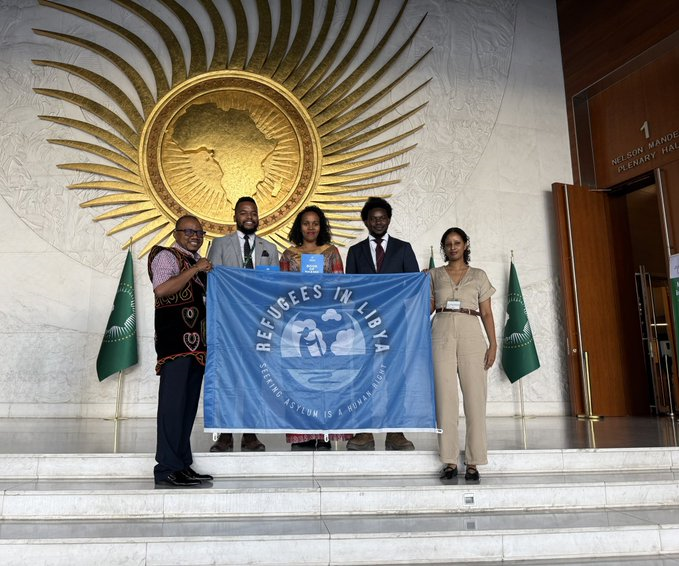
Refugees In Libya has taken its work Book of Shame to African Union Headquarters in Addis Ababa where it recounted the members ordeal in Libya and other parts of North Africa.
The group announced this in a post on its official X handle.
The post reads unedited:
The Book of Shame made it to the African Union HQ in Addis Ababa yesterday. We met with Ilwad Elmi Mohamed , the Head of the Youth Development and Engagement Division and Pempho Chabvuta, Partnerships and Member States Engagement Officer.
We discussed a range of issues, beginning with our experiences in Libya and North Africa, the founding of Refugees in Libya and the current situation in the region. We were not surprised to hear that they’re less informed about what is happening in Libya, and the realities of the treatment of black refugees and migrants on African soil. They said they believed that the situation in Libya had improved after the 2017 enslavement scandal. This concerns us, especially with the huge displacement caused by the war in Sudan.
They were visibly horrified by what we presented and described to them. We handed them copies of the Book of Shame and discussed the Italy–Libya Memorandum of Understanding as well as the situation on the Central Mediterranean Sea and Europe’s crimes on the African youth.
In conclusion, they expressed gratitude saying they had never had such encounter before. We are glad our passion was felt. They promised to make this a top priority, and to continue engaging us on different levels.
Ironically, the theme of the African Union this year is “Justice for Africans and People of African Descent Through Reparations”. We feel the matter in Libya and the region has largely been neglected. Africans must cooperate to make the region, and continent safe for Africans.
We hope the African Union takes what we have presented very very serious. We are ready to repurpose the role of the African Union to the interests of the African people and her youth.






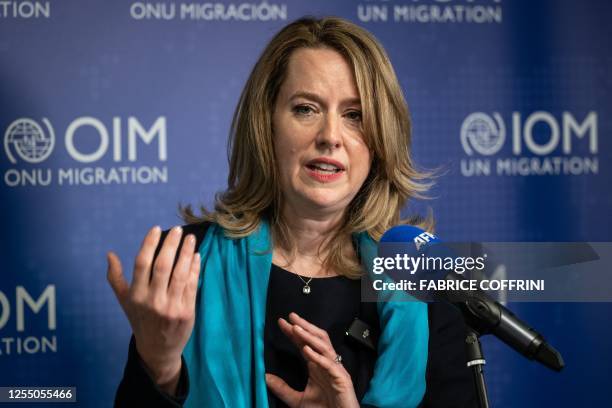
La Matrice de suivi des déplacements (DTM) de l’Organisation internationale pour les migrations (OIM) a suivi un total de 97,2 millions de personnes dans le monde en 2025, fournissant des données destinées à soutenir les interventions humanitaires, la recherche de solutions aux déplacements et les voies de migration régulière.
Selon les priorités stratégiques de la DTM pour la période 2026-2028, le programme a réalisé 706 386 entretiens auprès de ménages et collaboré avec 791 141 informateurs clés au cours de l’année.
Le rapport indique également que 95 % des Plans de réponse aux besoins humanitaires (HNRP), soit 19 plans sur 20, ont été élaborés sur la base des données et des analyses de la DTM.
À la fin de l’année 2025, la DTM comptait 76 opérations actives, après avoir mené des activités dans 91 pays au début de l’année. Les populations suivies comprenaient des personnes déplacées internes (PDI), des personnes de retour, des migrants et d’autres groupes de population.
Depuis plus de 20 ans, la DTM fournit des données et des analyses aux gouvernements ainsi qu’aux acteurs humanitaires, de la paix et du développement afin de favoriser une prise de décision fondée sur des données probantes lors des situations d’urgence, des phases de relèvement après une crise et des opérations migratoires.
Le Comité permanent interorganisations a officiellement reconnu la DTM en 2024 comme l’un des principaux fournisseurs de données nationales sur les personnes déplacées internes.
Dans sa stratégie pour la période 2026-2028, le programme a défini trois objectifs principaux : sauver des vies et protéger les personnes en déplacement, favoriser la recherche de solutions aux déplacements et faciliter les voies de migration régulière.
Dans le cadre de ses priorités en matière de réponse humanitaire, la DTM prévoit de renforcer la collecte et l’analyse des données, d’améliorer la coordination entre les acteurs humanitaires et de promouvoir une gestion sûre et éthique de l’information.
Le programme entend également améliorer l’interopérabilité des systèmes de données afin de faciliter le partage des informations entre les différentes plateformes et organisations. Il estime que le renforcement des structures opérationnelles permettra de soutenir aussi bien les interventions d’urgence rapides que la planification stratégique à long terme.
Priorité aux solutions durables aux déplacements
La DTM prévoit d’élargir ses activités en faveur de solutions durables pour les populations déplacées, en fournissant des données permettant aux gouvernements et à leurs partenaires de mieux comprendre les besoins, les vulnérabilités et les conditions de vie des personnes déplacées.
Cette stratégie s’appuie sur l’Indice des solutions et de la mobilité (SMI) de l’OIM, lancé en 2022 et mis en œuvre dans plus de 20 pays depuis son lancement.
Cet indice fournit des données et des analyses adaptées aux contextes locaux afin de soutenir des interventions à long terme dans les communautés touchées par les crises, notamment en matière de stabilisation, de relèvement et de solutions durables.
La DTM prévoit également de renforcer ses méthodologies de mesure des progrès vers des solutions durables, d’aider les autorités nationales à élaborer des réponses conçues et pilotées localement, et d’approfondir ses analyses sur l’emploi et les moyens de subsistance.
Le programme entend en outre renforcer ses partenariats avec les établissements universitaires, les banques multilatérales de développement et le secteur privé afin d’améliorer la collecte et l’analyse des données.
En partenariat avec l’Institut pour l’étude des migrations internationales de l’Université de Georgetown, l’OIM a lancé en 2023 le Rapport mondial périodique sur l’état des solutions aux déplacements internes (PROGRESS).
L’édition 2026 devrait devenir le premier rapport biennal interinstitutions couvrant l’ensemble du système des Nations unies sur les solutions aux déplacements internes. Sa coordination sera assurée avec le Centre de suivi des déplacements internes (IDMC), le Programme des Nations unies pour le développement (PNUD) et l’Agence des Nations unies pour les réfugiés (HCR).
Renforcer le suivi des routes migratoires
Afin de soutenir les voies de migration régulière, la DTM prévoit de renforcer son approche fondée sur les routes migratoires pour mieux comprendre les mouvements de population entre les pays et les régions.
Le programme souligne que les parcours migratoires sont souvent interconnectés et influencés par les conditions dans les pays d’origine et de transit, ainsi que par les évolutions géopolitiques plus générales.
Les activités de suivi des flux migratoires et les recherches ciblées visent à fournir des informations plus complètes sur les tendances migratoires, les caractéristiques des migrants, leurs vulnérabilités et leurs besoins en matière de protection.
La DTM prévoit également d’améliorer la qualité des données, de produire des analyses plus détaillées des routes migratoires et de renforcer la collaboration avec ses partenaires tout au long des parcours des migrants.
Son portail Global Overview of Migration Routes (Vue d’ensemble mondiale des routes migratoires) rassemble des informations sur le nombre de migrants, leurs caractéristiques démographiques, leurs nationalités, les tendances des déplacements, ainsi que les décès et les disparitions. Ces données aident les décideurs et les chercheurs à mieux comprendre les dynamiques migratoires.
Mobilité liée au climat et innovation technologique
La stratégie souligne également l’importance de comprendre les effets du changement climatique et des catastrophes sur la mobilité humaine.
Les évaluations climatiques et environnementales de la DTM visent à fournir des données probantes avant, pendant et après les catastrophes, afin d’aider les gouvernements et leurs partenaires à planifier des mesures anticipées, à renforcer la préparation aux catastrophes et à soutenir les communautés touchées.
Ces évaluations portent notamment sur les conditions climatiques de référence, les conséquences des situations d’urgence et la vulnérabilité aux risques tels que les sécheresses, les inondations et les cyclones.
Parallèlement, la DTM prévoit de moderniser ses systèmes de données et d’améliorer l’accessibilité et l’utilisation des informations grâce à l’innovation technologique.
En 2025, le programme comptait 496 experts techniques répartis entre des équipes nationales, régionales et mondiales. Ses opérations comprenaient le suivi des flux migratoires, le suivi des déplacements internes, l’évaluation des solutions durables et des situations post-crise, ainsi que la collecte de données sur la transhumance.
La stratégie définit trois priorités transversales pour la période 2026-2028 : développer des systèmes de données résilients et adaptatifs, améliorer l’accessibilité et l’utilisabilité des données de la DTM, et diversifier sa base de donateurs afin de garantir un financement durable.
Elle insiste également sur la nécessité de renforcer la coordination et de promouvoir des actions fondées sur des données probantes aux niveaux national, régional et mondial.
La DTM estime que des investissements soutenus dans les capacités du personnel, les systèmes techniques et l’appui organisationnel seront essentiels pour préserver sa capacité à répondre à l’évolution des besoins humanitaires et migratoires.

The International Organization for Migration’s (IOM) Displacement Tracking Matrix (DTM) monitored a total of 97.2 million people worldwide in 2025, providing data to support humanitarian responses, displacement solutions and regular migration pathways.
According to the DTM Strategic Priorities for 2026–2028, the programme conducted 706,386 household interviews and worked with 791,141 key informants during the year.
The report also said 95 per cent of Humanitarian Needs Response Plans (HNRPs), representing 19 out of 20 plans, were informed by DTM data and analysis.
At the end of 2025, DTM had 76 active operations, following activities in 91 countries at the beginning of the year. The population monitored included internally displaced persons (IDPs), returnees, migrants and other population groups.
For more than 20 years, DTM has provided data and analysis to governments and humanitarian, peace and development actors to support evidence-based decision-making during emergencies, post-crisis recovery and migration operations.
The Inter-Agency Standing Committee formally recognised DTM in 2024 as a leading provider of country-level data on internally displaced persons.
In its 2026–2028 strategy, the programme identified three main objectives: saving lives and protecting people on the move, driving solutions to displacement, and facilitating pathways for regular migration.
Under its humanitarian response priorities, DTM plans to strengthen data collection and analysis, improve coordination among humanitarian actors and promote the safe and ethical management of information.
The programme also intends to improve the interoperability of data systems, enabling information to be shared more efficiently across platforms and organisations. It said stronger operational structures would support both rapid emergency responses and longer-term strategic planning.
Focus on durable solutions to displacement
DTM plans to expand its work on durable solutions for displaced populations by providing data to help governments and partners understand the needs, vulnerabilities and circumstances of displaced people.
The strategy builds on IOM’s Solutions and Mobility Index (SMI), launched in 2022 and implemented in more than 20 countries since then.
The index provides context-specific data and analysis to support long-term responses in crisis-affected communities, including stabilisation, recovery and durable solutions.
DTM also plans to strengthen its methodologies for measuring progress towards solutions, support national authorities in developing locally owned responses and expand analysis of employment and livelihoods.
The programme further intends to deepen partnerships with academic institutions, multilateral development banks and the private sector to improve data collection and analysis.
In partnership with Georgetown University’s Institute for the Study of International Migration, IOM launched the Periodic Global Report on the State of Solutions to Internal Displacement (PROGRESS) in 2023.
The 2026 edition is expected to become the first biennial, inter-agency, United Nations system-wide report on solutions to internal displacement. It will be coordinated with the Internal Displacement Monitoring Centre, the United Nations Development Programme and the UN refugee agency, UNHCR.
Strengthening migration route monitoring
To support regular migration pathways, DTM plans to strengthen its route-based approach to understanding migration movements across countries and regions.
The programme said migration journeys are often interconnected and shaped by conditions in countries of origin and transit, as well as wider geopolitical developments.
Its Flow Monitoring activities and targeted research aim to provide more comprehensive information on migration patterns, migrants’ characteristics, vulnerabilities and protection needs.
DTM also plans to improve data quality, produce more detailed analysis of migration routes and strengthen collaboration with partners throughout migrants’ journeys.
Its Global Overview of Migration Routes portal brings together information on migrant numbers, demographics, nationalities, movement trends, deaths and disappearances to help policymakers and researchers understand migration dynamics.
Climate mobility and technological innovation
The strategy also highlights the importance of understanding how climate change and disasters affect human mobility.
DTM’s climate and environmental assessments are designed to provide evidence before, during and after hazards, helping governments and partners plan early action, strengthen disaster preparedness and support affected communities.
The assessments cover climate baselines, emergency impacts and vulnerability to hazards such as droughts, floods and cyclones.
Meanwhile, DTM plans to modernise its data systems and improve the accessibility and use of information through technological innovation.
In 2025, the programme had 496 technical experts across country, regional and global teams. Its operations included monitoring migration flows, tracking internal displacement, assessing durable solutions and post-crisis contexts, and collecting data on transhumance.
The strategy identifies three cross-cutting priorities for 2026–2028: building resilient and adaptive data systems, improving the accessibility and usability of DTM data, and diversifying its donor base to ensure sustainable funding.
It also emphasises stronger coordination and evidence-based action at national, regional and global levels.
DTM said sustained investment in staff capacity, technical systems and organisational support would be essential to maintaining its ability to respond to changing humanitarian and migration needs.
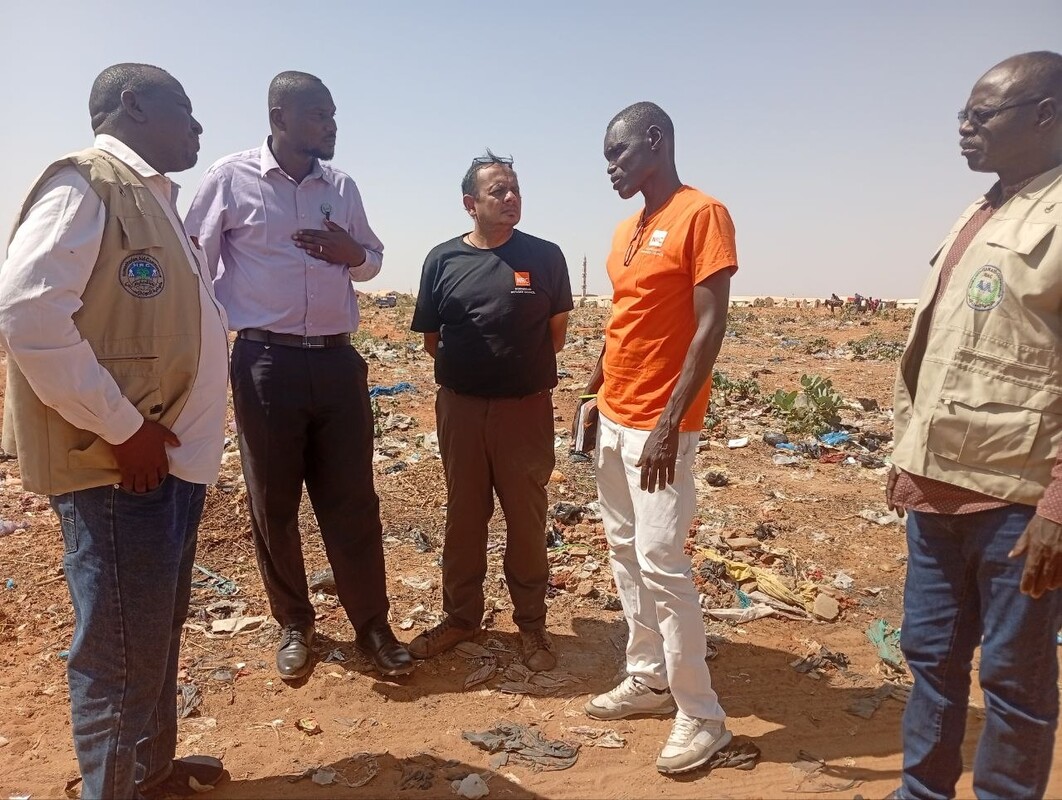
Children in El Obeid, North Kordofan State, are facing growing threats from drones flying overhead, forcing schools to suspend lessons and disrupting access to education, the Norwegian Refugee Council (NRC) has said.
Shashwat Saraf, NRC’s country director in Sudan, raised the alarm after visiting the city this week, saying children and teachers were struggling to continue learning amid growing security concerns.
“I visited a school where teachers told me they are being forced to regularly suspend lessons as a result of drones flying overhead,” Saraf said.
“It is an outrage that children should experience such things when simply trying to get education: they should not have to be brave just to attend school.”
According to the NRC, its learning centres in El Obeid have enrolled more than 5,500 pupils, while many other families are still seeking to enrol their children.
The organisation, working with its partner, the Alsalam Organisation for Rehabilitation and Development (AORD), supports children in catching up on missed lessons and managing the fear and stress associated with the conflict.
Drones have repeatedly struck civilian locations in El Obeid in recent weeks, including a university dormitory, a shelter for displaced families and warehouses in Sheikan locality containing more than 330,000 textbooks.
The city is home to more than 500,000 people, including tens of thousands displaced by fighting in other parts of Kordofan and Sudan.
“The places where people sleep have been hit from the air, and so have the books children need to learn,” Saraf said.
He added that the attacks had left families uncertain about their safety, while rising prices and limited access to clean water, safe sanitation and adequate shelter were worsening their living conditions.
“Each attack leaves families wondering what will be hit next,” he said.
The NRC also highlighted the difficult conditions facing students at a girls’ school in El Obeid, where about 1,200 pupils are enrolled but only three classrooms are available for use.
“Entering one of the classrooms meant trying not to step on one another,” Saraf said.
The organisation has built two additional classrooms and toilets at the school, supplied learning materials and trained teachers to support children affected by the conflict.
However, Saraf said the interventions remained insufficient to meet the growing needs.
“Children are willing, teachers are willing, parents are willing. What they are missing is the certainty that a school day can simply be a school day, without listening for drones or wondering when lessons might have to stop,” he said.
Beyond education, the NRC has provided cash assistance to 4,000 households and distributed 3,000 kits containing hygiene and shelter supplies, including blankets, plastic sheeting, sleeping mats, jerrycans and solar lamps.
It also plans to support community-led initiatives to strengthen efforts by residents already responding to the needs of affected families.
The organisation said its 12-month response plan for El Obeid requires $7.1 million to assist 107,000 people, but 65 per cent of the funding remains unmet.
Saraf called on parties to the conflict to protect civilians and essential infrastructure, stressing that attacks on civilians and the infrastructure they depend on are prohibited under international humanitarian law.
“The parties to this war must protect schools, homes, shelters and markets, and keep military assets away from civilian areas,” he said.
He also urged donors to provide immediate funding for water, shelter and education programmes to ensure that displaced people and host communities in El Obeid can access essential assistance.

La Matrice de suivi des déplacements de l’OIM a suivi 97,2 millions de personnes en 2025

IOM’s Displacement Tracking Matrix monitors 97.2 million people in 2025

Soudan : les attaques de drones perturbent les cours à El-Obeid, alerte le NRC

Sudan: Drone attacks disrupt school lessons in El Obeid- NRC

Sea-Watch secourt 227 migrants en Méditerranée en 48 heures
-
 Features2 weeks ago
Gaza : Près de deux millions de personnes ont besoin d’une aide d’urgence en matière d’hébergement
-

 News Extra2 weeks ago
NACTAL conteste le rapport américain sur la traite des personnes et exige la reconnaissance des contributions des organisations de la société civile nigérianes
-
 News Extra2 weeks ago
Un avocat ougandais exhorte l’UA à rejeter les accords migratoires avec l’Europe
-
 News Extra2 weeks ago
Sudan: Drone attacks disrupt school lessons in El Obeid- NRC
-

 Features2 weeks ago
Nigerian immigrants face hidden mental health challenges despite success, expert warns
-
 Features2 weeks ago
Gaza: About two million need urgent shelter assistance
-

 News Extra2 weeks ago
NACTAL faults US trafficking report, demands recognition of Nigerian CSOs’ contributions
-

 News Extra2 weeks ago
US to deport fresh set of Nigerians over alleged criminal offences