
News Extra
GMIAU report shows unaccompanied children suffering devastating delays in legal aid

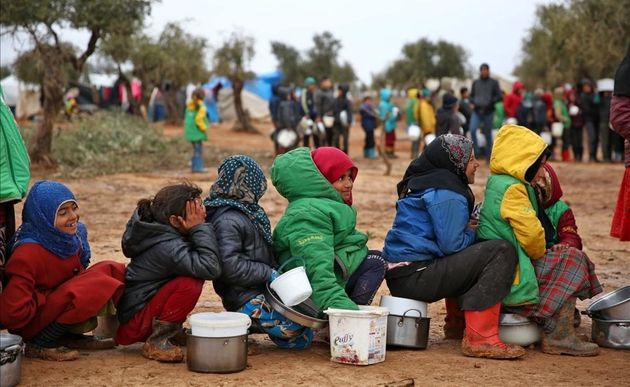
Greater Manchester Immigration Aid Unit ( GMIAU) report has revealed how devastating delays in the legal aid and asylum systems are leaving unaccompanied children in limbo for months and years.
The report is titled “We lost our lives when we arrived here”: Children in the UK’s asylum system.
GMIAU shared its findings thus:
“Our research has found devastating delays in the legal aid and asylum systems are leaving unaccompanied children in limbo for months and years.
What did we find in our report?
Faheem, a child we work with, told us how his expectations of life in the UK differed from reality. He didn’t find the safety and security we’d all want for a child fleeing violence. He’s been waiting 9 months for legal representation.
We used a wide range of evidence, including our own case data, displayed here. The Home Office’s own data shows a growing inability to make decisions. We also used information from our survey of legal practitioners and social workers, and from @LohstP’s research.
From interviews and discussions with children and young people in the asylum system we heard about the impact of months and years of delay on their mental health.
Children we work with have big dreams and talk about how much they want to pursue their education. But the level of delay they face puts that all at risk and the worry affects their ability to engage in class.
We heard from legal practitioners and social workers supporting young people, who told us how worried they were about children facing mental health crisis and exploitation.
👉What next?
The government is answering the crisis in the asylum system with more inflammatory scapegoating and lies about people seeking safety.
Our recommendations (more detail in the report) show how things could be different.
Our report highlights the Home Office’s reluctance to treat unaccompanied children as children and allow them their Children Act rights. Putting children in Home Office-run hotels is one symptom of this system-wide abuse.

News Extra
Osemene promet un leadership inclusif et une action renforcée contre la traite en tant que président élu de NACTAL

Le président élu du Network Against Child Trafficking, Abuse and Labour (NACTAL) Nigeria, le camarade Osita Osemene, s’est engagé à unir les membres et à renforcer les capacités de l’organisation pour lutter contre la traite des êtres humains, les abus et le travail des enfants au Nigeria et dans la région de l’Afrique de l’Ouest.
Osemene a pris cet engagement dans son discours d’acceptation après avoir été élu président de la NACTAL. Il a exprimé sa gratitude aux délégués pour la confiance qu’ils lui ont accordée et félicité la direction de l’organisation pour avoir créé un environnement favorable à la tenue d’une élection crédible et transparente.
Il a également salué les contributions du président sortant, estimant que le leadership et le travail de l’ancienne administration avaient contribué de manière importante au développement continu du réseau.
S’adressant aux membres, Osemene a déclaré que l’élection était désormais terminée et les a exhortés à laisser derrière eux les divisions.
« Il n’y a ni camps ni divisions. Il n’y a qu’une seule NACTAL Nigeria, et je suis le président de tous », a-t-il déclaré.
Le président élu a également remercié les ministères, départements et agences gouvernementales, les réseaux de la société civile, les organisations de développement et les partenaires internationaux pour leur soutien et leur collaboration avec la NACTAL.
Parmi les institutions et organisations citées figuraient la National Commission for Refugees, Migrants and Internally Displaced Persons (NCFRMI), la National Agency for the Prohibition of Trafficking in Persons (NAPTIP), l’Organisation internationale pour les migrations (OIM), le Centre international pour le développement des politiques migratoires (ICMPD), l’Organisation internationale du Travail (OIT), l’Union européenne, la GIZ, ActionAid, la Small and Medium Enterprises Development Agency of Nigeria (SMEDAN), la National Directorate of Employment (NDE), la National Senior Citizens Centre (NSCC), le Nigeria Immigration Service (NIS), la Nigerians in Diaspora Commission (NiDCOM), la National Human Rights Commission (NHRC), le ministère fédéral du Travail et de l’Emploi, la Commission de la CEDEAO et la Nigeria Police Force.
Osemene a déclaré que son administration s’appuierait sur cinq grandes priorités visant à repositionner la NACTAL et à accroître son impact.
Selon lui, ces priorités comprennent le renforcement des capacités et l’autonomisation économique ; l’inclusion et la transparence ; la durabilité institutionnelle ; le renforcement de la lutte contre la traite et de la mise en œuvre des politiques ; ainsi que le leadership régional au sein de la CEDEAO.
Il a souligné que le mandat confié à la nouvelle administration ne resterait pas une simple victoire électorale, mais serait transformé en un plan d’action.
« Le mandat que nous avons reçu est désormais un plan d’action », a-t-il déclaré, promettant de mettre en place une administration axée sur des résultats concrets et sur le renforcement des structures institutionnelles.
Osemene a également révélé que les travaux avaient déjà commencé autour de l’une des principales priorités de son administration. Il a indiqué que l’évaluation des capacités organisationnelles des organisations dirigées par des survivants, qu’il avait entamée avant l’élection, constituerait l’un des fondements du programme de renforcement des capacités prévu par la NACTAL.
Il a appelé les membres de la NACTAL, les anciens responsables, les coordinateurs zonaux et étatiques, les jeunes professionnels ainsi que les partenaires à soutenir la nouvelle administration dans l’accomplissement de son mandat.
« L’élection est terminée. Le mandat a été confié. Le travail commence maintenant », a déclaré Osemene.
Il s’est dit convaincu que, grâce aux efforts collectifs, la NACTAL Nigeria pourrait s’appuyer sur ses réalisations actuelles pour accroître son influence à l’échelle régionale.
« Ensemble, passons d’un leadership éprouvé à un leadership ouest-africain », a-t-il déclaré.
Osemene a conclu en sollicitant le soutien continu des membres et des partenaires et en priant pour le progrès de la NACTAL Nigeria et de la République fédérale du Nigeria.
News Extra
Osemene pledges inclusive leadership, stronger anti-trafficking action as NACTAL President-Elect

Comrade Osita Osemene, President-elect of the Network Against Child Trafficking, Abuse and Labour (NACTAL) Nigeria, has pledged to unite members and strengthen the organisation’s capacity to combat human trafficking, child abuse and labour across Nigeria and the West African region.
Osemene made the commitment in his acceptance speech after emerging as president-elect of NACTAL, where he expressed gratitude to delegates for the confidence reposed in him and commended the organisation’s leadership for providing an enabling environment for a credible and transparent election.
He also acknowledged the contributions of the outgoing president, describing the leadership and work of the former administration as important to the continued development of the network.
Addressing members, Osemene declared that the election had ended and urged members to put divisions behind them.
“There are no camps or divisions. There is only one NACTAL Nigeria, and I am President for all,” he said.
The president-elect also appreciated government ministries, departments and agencies, civil society networks, development organisations and international partners for their support and collaboration with NACTAL.
Among those acknowledged were the National Commission for Refugees, Migrants and Internally Displaced Persons (NCFRMI), National Agency for the Prohibition of Trafficking in Persons (NAPTIP), International Organization for Migration (IOM), International Centre for Migration Policy Development (ICMPD), International Labour Organization (ILO), European Union, GIZ, ActionAid, Small and Medium Enterprises Development Agency of Nigeria (SMEDAN), National Directorate of Employment (NDE), National Senior Citizens Centre (NSDC), Nigeria Immigration Service (NIS), Nigerians in Diaspora Commission (NiDCOM), National Human Rights Commission (NHRC), Federal Ministry of Labour and Employment, ECOWAS Commission and the Nigeria Police Force.
Osemene said his administration would pursue five major priorities aimed at repositioning NACTAL and expanding its impact.
These, according to him, include capacity building and economic empowerment; inclusion and transparency; institutional sustainability; stronger counter-trafficking and policy implementation; and regional leadership within ECOWAS.
He stressed that the mandate given to the new administration would not remain a mere electoral victory but would be translated into an action plan.
“The mandate we have received is now an action plan,” he said, promising to build an administration focused on practical results and stronger institutional structures.
Osemene further disclosed that work had already commenced towards one of the administration’s key priorities, noting that the organisational capacity assessment of survivor-led organisations which he began before the election would form part of the foundation for NACTAL’s planned capacity-building programme.
He called on NACTAL members, veterans, zonal and state coordinators, young professionals and partners to support the incoming administration in delivering on its mandate.
“The election is over. The mandate has been given. The work begins now,” Osemene declared.
He expressed confidence that through collective effort, NACTAL Nigeria could progress from its existing achievements to greater regional influence.
“Together, let us move from proven leadership to West African leadership,” he said.
Osemene concluded by seeking the continued support of members and partners and prayed for the progress of NACTAL Nigeria and the Federal Republic of Nigeria.
News Extra
Le défenseur des droits humains Mwanje appelle à mettre fin aux accords de « paiement contre confinement » lors du Forum social mondial

Le juriste ougandais et défenseur des droits humains, Mwanje Gideon, a appelé à mettre fin aux politiques migratoires qui permettent aux pays riches de transférer leurs responsabilités en matière de protection des réfugiés à des nations plus pauvres par le biais d’accords financiers et diplomatiques.
Mwanje a lancé cet appel lors du Forum social mondial (FSM) 2026 à Cotonou, au Bénin, où il est intervenu lors d’une table ronde de haut niveau intitulée : « Les refoulements de l’Europe conduisent les réfugiés dans les prisons de Libye : mettre fin aux accords de paiement contre confinement ».
Dans son intervention, Mwanje a critiqué ce qu’il a décrit comme l’externalisation croissante du contrôle migratoire par les riches pays occidentaux, avertissant que de tels accords transfèrent la charge de la protection internationale des pays développés vers les nations d’accueil plus pauvres.
« Lorsque les pays du Nord global concluent des accords de “paiement contre confinement”, sous-traitant leurs obligations juridiques internationales à des pays en développement, nous devons appeler cela par son vrai nom : une forme moderne de traite des esclaves », a déclaré Mwanje dans son discours du 6 août.
Il a estimé que les demandeurs d’asile étaient de plus en plus traités comme des marchandises dans les accords internationaux sur les migrations, les pays en développement recevant des aides financières, des financements pour les infrastructures ou un soutien diplomatique en échange de la prise en charge des migrants et des réfugiés.
Mwanje a utilisé l’analogie d’un riche homme d’affaires, « M. Sterling », pour expliquer cette pratique, comparant les pays riches à des propriétaires qui paient leurs voisins plus pauvres afin d’empêcher les migrants en situation de détresse d’atteindre leurs frontières.
« C’est cela, l’externalisation », a-t-il déclaré, estimant que cette politique ne résout pas les pressions migratoires, mais les transfère simplement vers des endroits où les pays riches sont moins susceptibles d’en voir les conséquences.
Le représentant de l’Afrique de l’Est a également averti que l’externalisation avait de graves conséquences pour les pays de la Communauté d’Afrique de l’Est (EAC), qui accueillent déjà d’importantes populations de réfugiés.
Selon lui, la région est de plus en plus exposée aux accords bilatéraux de paiement contre confinement et aux mécanismes de traitement des demandes d’asile hors du territoire, à la sous-traitance du contrôle migratoire aux pays de transit ainsi qu’à l’érosion des principes régionaux en matière d’asile.
Il a cité l’Ouganda et le Kenya comme exemples de pays qui accueillent déjà des millions de réfugiés tout en subissant des pressions pour assumer des responsabilités supplémentaires sans bénéficier d’un soutien structurel adéquat ni de mécanismes financiers durables.
Mwanje a également souligné l’importance du principe de non-refoulement, qui interdit le retour ou le transfert de réfugiés et de demandeurs d’asile vers des lieux où ils risquent d’être persécutés ou de subir de graves préjudices.
Il a fait valoir que les États ne pouvaient pas se soustraire à leurs obligations internationales simplement en transférant le traitement des demandes d’asile vers des pays tiers.
Selon le rapport, l’intervention de Mwanje a suscité un fort soutien des participants, qui lui ont réservé une longue ovation debout ainsi que des applaudissements nourris.
Au cours du forum, il a également échangé avec plusieurs organisations internationales, notamment Alarm Phone, Refugees in Libya, Borderline-Europe, EuroMed Rights et Afrique-Europe-Interact.
Ces organisations ont par la suite publié une déclaration commune intitulée « Nos corps ne sont pas des marchandises », dénonçant la marchandisation du contrôle migratoire et appelant à mettre fin aux accords de paiement contre confinement.
La déclaration s’est également opposée à la criminalisation de la mobilité et à la transformation de certaines régions d’Afrique du Nord et de l’Est en zones tampons pour les politiques migratoires européennes, tout en exhortant les États à respecter le principe de non-refoulement.
La mission de Mwanje au FSM, qui s’est déroulé du 2 au 10 août 2026, a également abouti à des recommandations visant à renforcer les réseaux régionaux de défense juridique, à accroître la mobilisation des jeunes et des étudiants en faveur des droits des réfugiés et à renforcer la responsabilité des gouvernements africains impliqués dans des accords migratoires avec des puissances étrangères.
Selon le rapport, cette mission a contribué à renforcer la voix de l’Afrique de l’Est dans les débats internationaux sur les migrations, la protection des réfugiés et l’externalisation des frontières.
Je peux aussi vous proposer une version française plus journalistique et naturelle, adaptée à la publication dans un média francophone.

Osemene promet un leadership inclusif et une action renforcée contre la traite en tant que président élu de NACTAL

Osemene pledges inclusive leadership, stronger anti-trafficking action as NACTAL President-Elect

Osita Osemene élu président de NACTAL avec 95,65 % des voix
Osita Osemene emerges NACTAL president with 95.65% votes

Réintégration ou façade ? Les migrants nigérians de retour remettent en question la promesse d’un nouveau départ
-

 News Extra3 weeks ago
Des manifestations éclatent après la mort de migrants dans le naufrage d’un bateau
-

 News Extra3 weeks ago
Alarm Phone rend hommage aux migrants morts en Méditerranée et exige des voies de passage sûres
-

 Interviews2 weeks ago
Oluwagbolahan Oluwatobi: Connecting Visa Advisory, Migration and Social Impact
-

 News Extra2 weeks ago
BOZA FII exige la fin des refoulements financés par Frontex et appelle à une justice migratoire
-

 News1 week ago
Senegalese activist turns brother’s death on Atlantic migration route into campaign for change
-
News3 weeks ago
Alarm Phone pays tribute to migrants who died crossing Mediterranean, demands safe passage
-

 News Extra2 weeks ago
Human rights advocate Mwanje calls for end to ‘cash-for-containment’ deals at World Social Forum
-
News3 weeks ago
Protests as migrants die after boat capsized