
Features
Minors stranded along the Eastern route


Amara* and Aisha*, aged 16 and 15 respectively, are from Harar in eastern Ethiopia. The two friends lived in the same part of the city, and were students at the same school, before they set off together on a journey that would change their lives.
A neighbour, Tigist*, had a sister who was financially successful in the Kingdom of Saudi Arabia. After securing a job, Tigist’s sister – like many migrants who travel from Ethiopia to the Gulf States in search of better economic opportunities – sent money back home, lifting the family out of poverty and even building a new house for their mother in Harar.
This story ignited dreams in Amara and Aisha’s minds; the teenagers saw this as a way to escape the extreme poverty in their hometown.
“We decided to go to Saudi Arabia, via Somalia and then Yemen, to find a better future for ourselves and our families,” said Aisha.
Tigist connected the young girls with a local smuggler who arranged their travel and sent them to a smuggler camp in Tog Wajaale, a border city between Somaliland and Ethiopia. The smuggler promised to guide them along the treacherous Eastern Migration Route, which runs from the Horn of Africa to the Arabian Peninsula and has long been one of the busiest migratory corridors on the continent.
“[The smuggler] told us that we would not pay anything until we reached Saudi Arabia. He said he would find a household where we could work as maids, to pay him back gradually,” recalled Aisha. “He promised he would find houses for both of us that would be close to each other so we wouldn’t be separated in Saudi Arabia.”
Young Ethiopian migrants walking on the main road between Garowe and Qardho, heading to Bossaso, Somalia. Photo: IOM/Said Fadhaye 2024
According to the International Organization for Migration (IOM), the number of children from Ethiopia travelling along the Eastern Route through Somalia is rising at an alarming rate. By June 2024, the number of children registered by IOM Somalia’s Migration Response Centres (MRCs) had doubled compared to the first half of the previous year. Many of these children leave home without any information about the journey ahead; most are completely unaware that they will have to cross a sea or pass through conflict zones to reach their intended destinations.
Amara and Aisha’s journey continued in Guumays, a village in the Sool region of Somalia. Here, another smuggler waited to take them out of the country as part of a bigger group of migrants, promising a semblance of safety for those who could pay the full amounts demanded for each person.
It wasn’t long before the girls learned of the nightmare they had stepped into.
Upon reaching the village of Guumays, the smugglers demanded a ransom of 30,000 Ethiopian birr (USD 520) from Amara and Aisha’s families, threatening them with torture and death if the money was not paid. Aisha’s family struggled to raise the money, and she was forced to endure a month-long stay in the smugglers’ camp, separated from Amara who was taken onward to Bossaso.
“Only after my father sold a cow, and sent the money for ransom, was I able to continue,” recalled Aisha.
Bossaso, on the northern coast of Somalia, is a key stop for migrants attempting to leave the Horn of Africa via the Red Sea. After reaching the city, Aisha regained hope, especially after reuniting with Amara – but the joy of reuniting was short-lived. The extortion did not stop as the smugglers demanded more money, subjecting the girls to physical abuse, starvation and constant threats until their families paid up.
Desperate and terrified, the girls escaped the smugglers in Bossaso and found refuge at the Bossaso MRC after learning about the centre from community members.
Run by IOM, the MRC in Bossaso is one of two such centres in Somalia that provide immediate, life-saving support to migrants in vulnerable situations like Amara and Aisha. This includes the provision of shelter, medical care and psychosocial counselling, as well as assisted voluntary return to migrants’ home countries.
Young migrants at a safe house where they were referred by the Bossaso MRC after enrolling for voluntary return support. Photo: IOM/Ismail Salad Osman 2024
So far this year, IOM Somalia had registered over 5,000 migrants at the MRC, marking an 85 per cent increase compared to the first half of the previous year. Among them, 1,782 were children – 35 per cent unaccompanied by either a parent or guardian. This represented a staggering 100 per cent increase in the number of children registered at the centre compared to the same period in 2023. These children, especially the girls, face heightened risks of abuse and exploitation by smugglers on their journeys along the Eastern Migration Route.
Like Amara and Aisha, the script is the same for many other children at the MRC – stranded in Somalia and lured by the promise of a better life across the Red Sea. Among them was 15-year-old Abdirizak* who shared his own harrowing story.
Abdirizak and his friend Ahmed* fell into the hands of traffickers in Las’anod, a city in northern Somalia that is grappling with conflict. The two boys were tortured, and Ahmed succumbed to his injuries.
“I had to bury my friend,” Abdirizak said, tears welling up in his eyes.
According to IOM’s Missing Migrants Project, at least 698 migrants went missing on the Eastern Migration Route in 2023; the actual number of fatalities is likely higher, as many tragedies go unreported. These missing migrants all embarked on the journey with the same hopes and dreams, but just like Ahmed, they either fell victim to smugglers, got caught in conflicts, or died at sea, never to be heard from again.
Migrants receive support from IOM to return to their home countries after registering with the IOM Migration Response Centres in Somalia. Photo: IOM/Ismail Salad Osman 2024
From the MRC, Abdirizak was taken to a safe house and provided with protection services, shelter, psychosocial support, medical assistance, and food as he waited along with many others to be assisted through IOM’s Assisted Voluntary Return programme. In 2024, IOM has supported the voluntary return of 148 migrants to their homes, of which 63 per cent were children.
By the end of June 2024, IOM had assisted 148 migrants, including Amara, Aisha, and Abdirizak, return to Ethiopia. The return programme, and IOM Somalia’s work in the MRCs, are funded by the US Department of State, Bureau of Population, Refugees and Migration (PRM); the Government of France; and the Kingdom of Norway. They are coordinated with Puntland’s Ministry of the Interior, the Ethiopian Consulate in Somalia, and Puntland’s Ministry of Women and Family Development.
*Names have been changed to protect identities.
Written by Ismail Salad Osman.





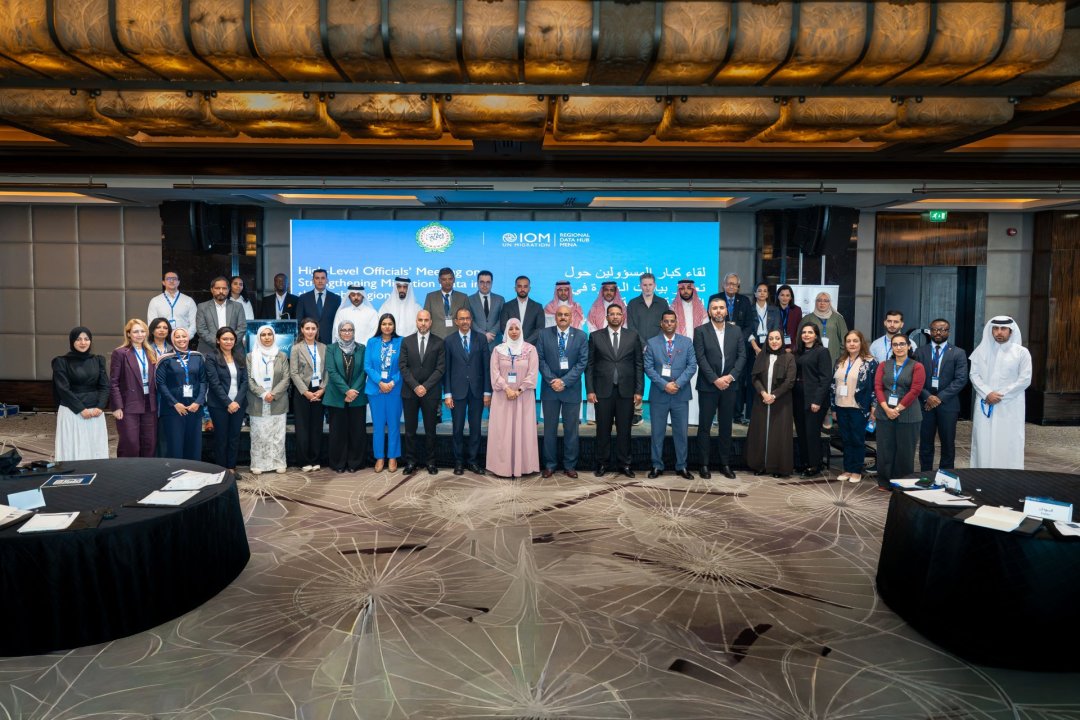
La Ligue des États arabes et l’Organisation internationale pour les migrations (OIM) ont officiellement lancé le Réseau arabe des données sur les migrations, le premier réseau arabe consacré aux données migratoires. Le lancement a eu lieu lors d’une cérémonie de signature au siège du Secrétariat général de la Ligue, au Caire, à l’occasion de l’adoption du premier plan d’action du Réseau pour la période 2026-2028.
Le Réseau constitue un mécanisme régional de coopération technique placé sous la direction des États arabes. Pour la première fois, il rassemble les offices nationaux de statistique et les organismes gouvernementaux chargés des données migratoires dans les 22 États arabes, au sein d’un cadre permanent d’action commune.
Les 22 États arabes accueillent environ 44,5 millions de migrants internationaux, soit près de 14,7 % du total mondial, tandis que 37,2 millions de personnes originaires des pays arabes vivent en dehors de leur pays d’origine, dont environ la moitié dans d’autres États arabes. Toutefois, les données migratoires restent dispersées entre plusieurs institutions et continuent de présenter des difficultés en matière de couverture, d’actualité et de comparabilité.
Le Réseau aidera les États arabes à harmoniser les concepts et les méthodologies, à échanger leurs expertises et à mieux comprendre les dynamiques migratoires dans les pays d’origine, de transit, de destination et de retour.
Le plan d’action a été signé par Mme Abeer Al-Jalahma, ministre plénipotentiaire et directrice du Département des statistiques et des bases de données de la Ligue des États arabes, et M. Justin MacDermott, directeur régional adjoint de l’OIM chargé des opérations pour le Moyen-Orient et l’Afrique du Nord. La cérémonie s’est déroulée en présence d’ambassadeurs et de représentants de missions diplomatiques, de directeurs généraux d’offices nationaux de statistique, de hauts responsables gouvernementaux ainsi que de partenaires régionaux et internationaux.
Elle a marqué la conclusion d’une réunion de deux jours de hauts responsables consacrée au renforcement des données migratoires dans la région arabe, tenue les 27 et 28 octobre. Cette rencontre a réuni des représentants de haut niveau de 13 États arabes : l’Algérie, Bahreïn, l’Égypte, l’Irak, la Jordanie, la Libye, la Mauritanie, le Maroc, le Qatar, l’Arabie saoudite, le Soudan, la Tunisie et le Yémen. Les participants ont examiné les priorités de l’action commune et contribué à l’élaboration du plan d’action avant son adoption.
« Le lancement du Réseau arabe des données sur les migrations marque une étape importante dans le processus de coopération statistique arabe. Pour la première fois, nos pays se réunissent autour d’une plateforme permanente consacrée aux données migratoires, dirigée par les États arabes et guidée par leurs priorités. Ce que nous avons mis en place aujourd’hui n’est pas simplement une nouvelle initiative, mais un langage statistique arabe commun au service des décideurs et qui reflète les réalités de nos populations », a déclaré Mme Abeer Al-Jalahma, ministre plénipotentiaire.
Pour l’OIM, Justin MacDermott a souligné : « Le lancement du Réseau arabe des données sur les migrations ne marque pas l’aboutissement de nos efforts, mais le début d’un nouveau chapitre de la coopération régionale, fondé sur la confiance, le partage des connaissances, l’appropriation nationale et l’action collective. »
Dans le cadre du plan d’action, le Réseau aura pour missions de :
– coordonner les travaux des équipes nationales de points focaux au sein des offices de statistique et des organismes gouvernementaux concernés ;
– harmoniser les concepts, les méthodologies et les classifications, et élaborer un cadre commun d’indicateurs aligné sur les Recommandations des Nations Unies de 2025 sur les statistiques des migrations internationales ;
– renforcer les capacités nationales, notamment dans les domaines des données administratives, de l’analyse géospatiale et de l’utilisation responsable de l’intelligence artificielle ;
– produire des analyses régionales conjointes, renforcer la protection des données et promouvoir leur partage responsable.
Les États arabes ont manifesté un engagement clair dès le lancement du Réseau, puisque dix pays ont déjà désigné leurs points focaux nationaux. Les délégations ont également présenté des propositions concrètes visant à développer davantage les mécanismes de fonctionnement du Réseau.
The League of Arab States and the International Organization for Migration (IOM) have formally launched the Arab Migration Data Network, the first Arab network dedicated to migration data. The launch took place at a signing ceremony at the headquarters of the League’s General Secretariat in Cairo, where the Network’s first Action Plan (2026-2028) was first adopted.
The Network is a regional mechanism for technical cooperation led by Arab States. For the first time, it brings together national statistical offices and government entities responsible for migration data across all 22 Arab States within a permanent framework for joint action.
The 22 Arab States host approximately 44.5 million international migrants, around 14.7 per cent of the global total, while 37.2 million people from Arab countries live outside their countries of origin, about half of them in other Arab States. Yet migration data remain spread across multiple institutions and continue to face challenges in coverage, timeliness and comparability.
The Network will help Arab States harmonize concepts and methodologies, exchange expertise, and build a clearer picture of migration across countries of origin, transit, destination and return.
The Action Plan was signed by H.E. Minister Plenipotentiary Abeer Al-Jalahma, Director of the Statistics and Databases Department at the League of Arab States, and Mr. Justin MacDermott, IOM Deputy Regional Director for Operations for the Middle East and North Africa. The ceremony was attended by ambassadors and representatives of diplomatic missions, directors-general of national statistical offices, senior government officials, and regional and international partners.
It concluded a two-day Senior Officials Meeting on Strengthening Migration Data in the Arab Region (27-28 October), which brought together high-level representatives from 13 Arab States: Algeria, Bahrain, Egypt, Iraq, Jordan, Libya, Mauritania, Morocco, Qatar, Saudi Arabia, Sudan, Tunisia and Yemen. Participants discussed priorities for joint action and helped shape the Action Plan ahead of its adoption.
“The launch of the Arab Migration Data Network marks a milestone in the journey of joint Arab statistical cooperation. For the first time, our countries are coming together around a permanent platform dedicated to migration data, led by Arab States and driven by their priorities. What we have built today is not simply a new initiative, but a shared Arab statistical language that serves decision-makers and reflects the realities of our people,” said H.E. Minister Plenipotentiary Abeer Al-Jalahma.
For IOM, Justin MacDermott noted: “The launch of the Arab Migration Data Network is not the culmination of our efforts; it is the beginning of a new chapter in regional cooperation, built on trust, shared knowledge, national ownership and collective action.”
Under the Action Plan, the Network will:
- coordinate the work of national focal point teams in statistical offices and relevant government entities;
- harmonize concepts, methodologies and classifications, and develop a common indicator framework aligne with the 2025 United Nations Recommendations on Statistics of International Migration;
- strengthen national capacities, including in administrative data, geospatial analysis and the responsible use of artificial intelligence; and produce joint regional analyses and strengthen data protection and responsible data sharing.
Arab States showed clear commitment from the outset, with 10 countries already designating national focal points. Delegations also presented practical proposals to further develop the Network’s working mechanisms.
Features
Gaza : Près de deux millions de personnes ont besoin d’une aide d’urgence en matière d’hébergement
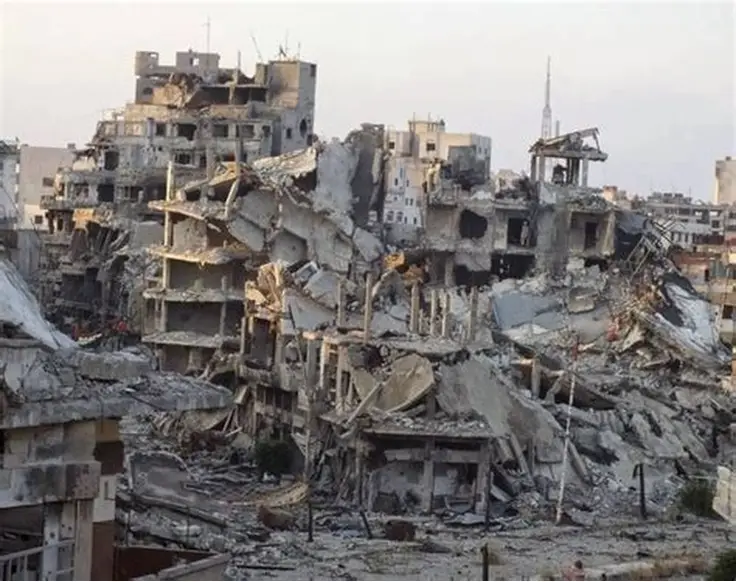
Près de deux millions de personnes, soit la quasi-totalité de la population de Gaza, ont toujours besoin d’une aide en matière d’hébergement, un an après l’annonce d’un cessez-le-feu. Alors que les pluies hivernales commencent, l’ensemble des approvisionnements prévus par les partenaires humanitaires intervenant dans le domaine de l’hébergement ne couvre qu’à peine 17 % des besoins identifiés pour l’hiver, a averti aujourd’hui Amy Pope, Directrice générale de l’Organisation internationale pour les migrations (OIM).
Après des années de déplacements et de destructions généralisées, les Palestiniens affrontent un quatrième hiver sans protection adéquate contre la pluie, les inondations et le froid. L’insuffisance des financements et les restrictions persistantes imposées par les autorités israéliennes à l’entrée de fournitures essentielles destinées aux abris empêchent les organisations humanitaires d’apporter une réponse à la hauteur des besoins.
« Les familles qui ont déjà subi des déplacements répétés et des pertes dévastatrices doivent pouvoir affronter l’hiver dans la sécurité et la dignité », a déclaré Pope. « Les matériaux destinés aux abris doivent pouvoir entrer rapidement, de manière prévisible et en quantités suffisantes pour répondre aux besoins. »
Plus de la moitié des tentes et des abris de fortune actuellement utilisés sont en mauvais état et doivent être remplacés. Les tentes sont conçues comme une mesure d’urgence temporaire et ne durent généralement que six à douze mois.
Faute d’autres solutions, de nombreuses familles vivent dans des bâtiments endommagés par la guerre qui présentent de graves risques pour leur vie. Le mois dernier seulement, des dizaines de personnes ont été tuées dans la ville de Gaza lorsqu’un bâtiment endommagé par la guerre s’est effondré. En août, un partenaire de l’OIM avait recensé plus de 3 600 structures jugées dangereuses et présentant un risque d’effondrement.
Le renforcement du phénomène El Niño devrait entraîner des précipitations plus abondantes, susceptibles de fragiliser davantage les bâtiments déjà dangereux, tandis que les systèmes de drainage fortement endommagés exposent les communautés aux inondations.
L’OIM et ses partenaires chargés de la gestion des sites ont recensé près de 1,8 million de personnes vivant dans des sites de déplacement, dont la plupart se trouvent dans des zones exposées aux risques d’inondation. Les eaux de crue pourraient endommager les abris, détruire les derniers biens des familles et contraindre les populations à se déplacer une nouvelle fois.
Environ 8 600 kits d’hébergement d’urgence de l’OIM sont prépositionnés à l’extérieur de Gaza et prêts à être acheminés, mais les autorités israéliennes continuent de leur refuser l’accès aux points de passage. Pendant ce temps, les équipes humanitaires utilisent, dans la mesure du possible, des matériaux disponibles localement et des matériaux récupérés. Ces efforts apportent un soutien temporaire limité, mais restent insuffisants pour répondre à l’ampleur des besoins en matière d’hébergement.
« Les solutions sont connues, les fournitures sont prêtes et les équipes humanitaires sont préparées à les acheminer », a déclaré Pope. « Un accès humanitaire immédiat et durable est essentiel pour protéger des vies, renforcer les abris endommagés et aider les familles à dépasser le stade des solutions temporaires. Toutes les parties doivent faciliter une action humanitaire fondée sur les principes humanitaires et soutenir une réponse à la hauteur de la gravité de la crise. »
L’OIM appelle à autoriser immédiatement et durablement l’entrée de tentes, de kits d’hébergement d’urgence, d’unités de logement de secours, de bois, d’outils et d’autres matériaux nécessaires pour renforcer les abris, réparer les habitations endommagées et aider les familles à trouver des logements plus sûrs.
Un accès prévisible aux équipements spécialisés, au carburant, aux pièces de rechange et aux matériaux de construction sera également essentiel pour permettre l’enlèvement des décombres et progresser vers un relèvement précoce.

Alarm Phone signale des appels de détresse de migrants au large de la Crète et le sauvetage de 53 personnes

Alarm Phone reports distress calls from migrants off Crete, rescue of 53 people

Comment les Nigérians perdent 75 milliards de nairas chaque année en demandes de visa

How Nigerians waste N.75trillion annually applying for visa

SOS Humanity accuse Frontex de faciliter les refoulements de migrants vers la Libye
-
 News Extra3 weeks ago
Sudan: Drone attacks disrupt school lessons in El Obeid- NRC
-
 News3 weeks ago
Sea-Watch rescues 227 migrants in Mediterranean within 48 hours
-
 News3 weeks ago
Sea-Watch secourt 227 migrants en Méditerranée en 48 heures
-
 News3 weeks ago
Soudan : les attaques de drones perturbent les cours à El-Obeid, alerte le NRC
-

 News Extra6 days ago
IOM’s Displacement Tracking Matrix monitors 97.2 million people in 2025
-
 News5 days ago
Libya repatriates hundreds of migrants, deploys reinforcements to Tobruk
-
News5 days ago
Libye : des centaines de migrants rapatriés, des renforts déployés à Tobrouk
-
 News Extra6 days ago
La Matrice de suivi des déplacements de l’OIM a suivi 97,2 millions de personnes en 2025