
News
Researcher condemns ‘criminalisation of solidarity’ in criticism of European border policies

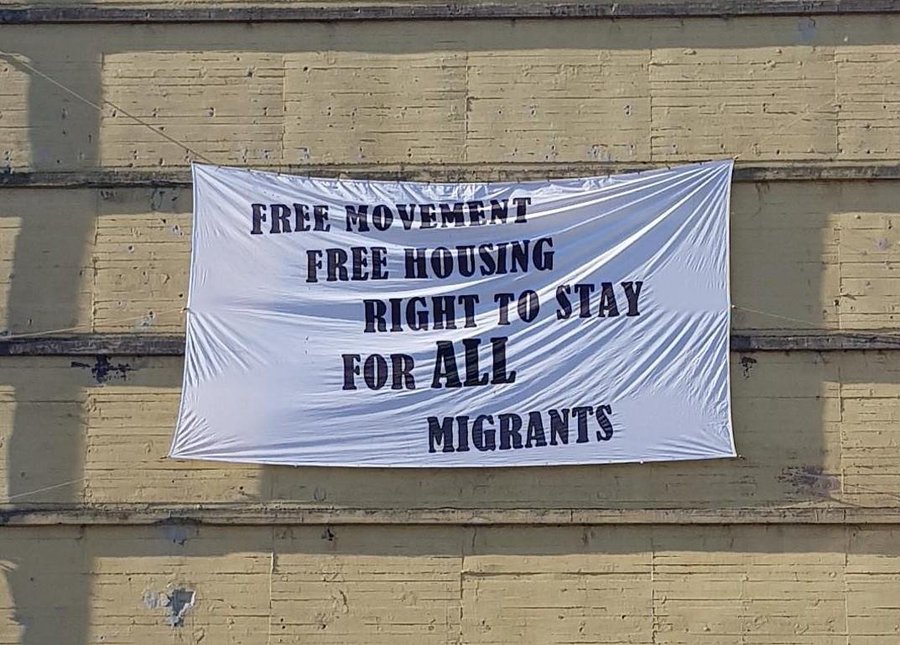
A PhD researcher in plant bioprotection, Jihed, has criticised what he described as the “criminalisation of solidarity” with migrants and refugees attempting to reach Europe, accusing far-right groups of presenting long-documented humanitarian activities as newly uncovered information.
In a series of posts on X, Jihed said solidarity efforts involving people stranded or at risk of drowning at Europe’s borders had been openly documented for more than 12 years.
“12 years of openly documented solidarity with people left to drown at Europe borders and far right suddenly presents it as a discovery,” he wrote.
According to him, attempts to portray such activities as suspicious investigations amount to a campaign against organisations and individuals assisting migrants.
“This is not journalism. It is the #criminalisation of solidarity dressed up as investigation,” he said, adding that Alarm Phone, a migrant emergency support network, had operated publicly and transparently.
Jihed called for greater scrutiny of European migration policies and border enforcement rather than investigations targeting solidarity networks.
“Investigate the system that lets children drown, forces people back into detention, works with abusive militias and turns borders into a business,” he wrote.
In another post, he criticised the continued interception of migrants in Libya, arguing that the system had not ended but had shifted its operations further inland.
He cited an announcement by Libya’s so-called “anti-illegal migration” agency that 15 Bangladeshi nationals had been detained in the Al Baydha area, near the coasts of Al Hamama and Al Haniya, before they could depart for Europe.
“The #Libya interception machine didn’t stop. It just moved onto land,” Jihed wrote.
He described the reported detention as part of the same broader border regime, arguing that the measures continue to expose migrants to repression and detention while preventing them from attempting the journey to Europe.
The posts come amid continuing debate over Europe’s migration policies, the role of Libyan authorities in intercepting migrants and the treatment of organisations and individuals involved in search-and-rescue and migrant solidarity activities.
Jihed’s comments represent his views and allegations concerning European and Libyan migration policies.




News
Près de 4 000 migrants auraient été arrêtés lors d’une opération de répression de deux jours à Tobrouk
Près de 4 000 migrants auraient été arrêtés à Tobrouk et dans ses environs, dans l’est de la Libye, en l’espace de deux jours, alors que les forces de sécurité libyennes intensifiaient une campagne visant des personnes présentées par les autorités comme des migrants en situation irrégulière.
Ces développements ont été rapportés dans une série de publications de Jihed (@brirmijihed), hacktiviste et chercheur doctorant spécialisé dans la bioprotection des plantes. Ses publications décrivent une vaste opération comprenant des arrestations terrestres et des interceptions en mer.
Selon Jihed, le porte-parole de la Direction de la sécurité d’Al-Batnan, le lieutenant Issa Al-Jarari, a confirmé que près de 4 000 migrants avaient été détenus en deux jours, chargés dans des camions et éloignés de Tobrouk.
Ces informations interviennent dans le contexte d’une importante opération de sécurité menée dans le district d’Al-Batnan. Des informations indépendantes publiées le 25 septembre ont confirmé que plus de 2 000 migrants avaient été arrêtés en l’espace de quelques heures lors d’une opération impliquant la police, la police militaire et le 519e bataillon d’infanterie. (Agenzia Nova)
La Direction de la sécurité d’Al-Batnan a déclaré que les personnes arrêtées étaient de différentes nationalités et que les autorités les considéraient comme résidant irrégulièrement en Libye. Elles auraient été remises à l’Autorité chargée de la lutte contre l’immigration clandestine pour les procédures administratives et leur transfert hors de Tobrouk. Le Croissant-Rouge libyen a fourni une assistance médicale et humanitaire pendant l’opération. (Agenzia Nova)
Jihed a indiqué qu’environ 2 000 personnes avaient été arrêtées dès le premier jour de la campagne, qualifiant l’opération de campagne d’arrestations massives alimentant le système libyen de détention et d’expulsion.
Interceptions en mer
La répression a également coïncidé avec des interceptions d’embarcations de migrants tentant de quitter la région de Tobrouk.
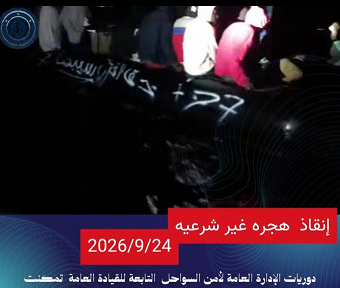
Dans une autre publication, Jihed a rapporté que, le 24 septembre, la branche de la sécurité côtière de Tobrouk avait intercepté, au large d’Aïn al-Ghazala, une embarcation transportant 38 ressortissants soudanais. Les migrants ont ensuite été débarqués.
Il a également indiqué que, le 23 septembre, les forces spéciales Al-Saiqa avaient intercepté une embarcation transportant 30 personnes à environ quatre milles nautiques de Tobrouk.
Ces incidents illustrent la double approche adoptée dans l’est de la Libye, les forces de sécurité ciblant les migrants aussi bien sur terre qu’en mer.
Tobrouk est devenue un point de départ de plus en plus important pour la route maritime vers la Crète. Des informations récentes indiquent que plus de 2 000 migrants ont été détenus lors de la dernière opération menée à Al-Batnan, alors que la pression s’intensifiait sur la route Tobrouk-Crète. (Agenzia Nova)
Préoccupations concernant la détention et les expulsions
Les dernières arrestations interviennent après une série d’éloignements de migrants depuis l’est de la Libye. Le 19 septembre, la branche d’Al-Batnan de la Direction chargée de la lutte contre l’immigration clandestine a indiqué avoir traité 202 migrants répartis en deux groupes. L’un des groupes a été conduit vers le poste-frontière d’Emsaed avec l’Égypte, tandis que l’autre a été transféré au centre de détention et d’expulsion de Ganfouda, près de Benghazi. (LibyaReview)
Des organisations de défense des droits humains ont déjà exprimé leur inquiétude face aux arrestations et expulsions à grande échelle dans l’est de la Libye, notamment lorsqu’elles concernent des ressortissants soudanais. Elles ont appelé à un examen individuel des dossiers et au respect du principe de non-refoulement avant tout retour vers un pays où les personnes concernées pourraient être exposées à des persécutions ou à de graves préjudices. (Agenzia Nova)
Alors que les autorités libyennes présentent ces opérations comme des mesures de sécurité et de contrôle de l’immigration, Jihed a décrit la campagne en des termes fortement critiques, affirmant que les arrestations massives constituaient une persécution organisée des migrants.
L’ampleur rapportée de l’opération et le transfert ultérieur des personnes détenues vers le système libyen de détention devraient accroître l’attention portée au traitement des migrants et des réfugiés dans l’est de la Libye.
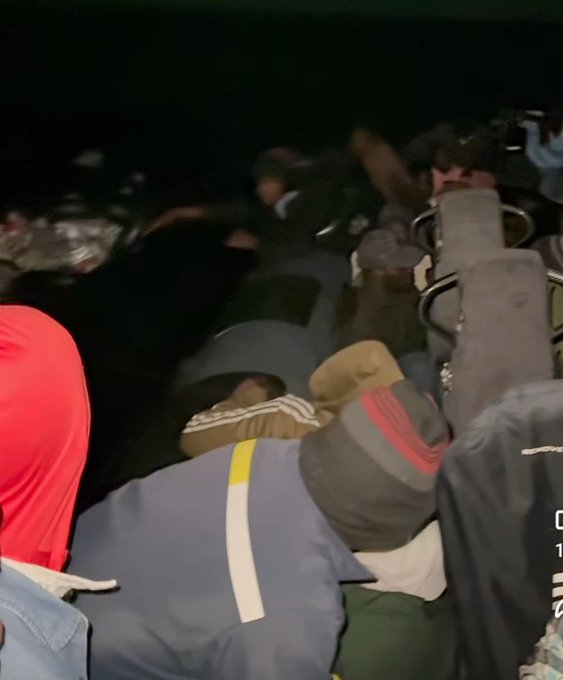
Nearly 4,000 migrants were reportedly rounded up in and around Tobruk in eastern Libya within two days as Libyan security forces intensified a campaign targeting people described by authorities as undocumented migrants.
The developments were reported in a series of posts by Jihed (@brirmijihed), a hacktivist and PhD researcher focusing on the bioprotection of plants. The posts described the campaign as a large-scale operation involving arrests on land and interceptions at sea.
According to Jihed, the spokesperson for the Al-Batnan Security Directorate, Lt. Issa Al-Jarari, confirmed that nearly 4,000 migrants had been detained over two days, loaded onto trucks and removed from Tobruk.
The claims come amid a major security operation in the Al-Batnan district. Independent reporting on September 25 confirmed that more than 2,000 migrants had been apprehended in a matter of hours during an operation involving police, military police and the 519th Infantry Battalion. (Agenzia Nova)
The Al-Batnan Security Directorate said those detained were people of different nationalities whom authorities considered to be residing in Libya irregularly. They were reportedly handed over to the Authority for Combating Illegal Migration for administrative procedures and transfer out of Tobruk. The Libyan Red Crescent provided medical and humanitarian assistance during the operation. (Agenzia Nova)
Jihed said the first day of the campaign alone saw around 2,000 people rounded up, describing the operation as a mass-arrest campaign feeding into Libya’s system of detention and deportation.
Sea interceptions
The crackdown has also coincided with interceptions of migrant boats attempting to leave the Tobruk area.
In another post, Jihed reported that on 24 September, the Coastal Security branch in Tobruk intercepted a boat carrying 38 Sudanese nationals off Ain al-Ghazala. The migrants were subsequently taken ashore.
He also reported that on 23 September, the Al-Saiqa Special Forces intercepted a boat carrying 30 people approximately four nautical miles off Tobruk.
The incidents highlight the dual approach being used in eastern Libya, with security forces targeting migrants both on land and at sea.
Tobruk has become an increasingly important departure point for the maritime route towards Crete. Recent reporting said more than 2,000 migrants were detained during the latest Al-Batnan operation as pressure increased along the Tobruk-Crete route. (Agenzia Nova)
Concerns over detention and deportation
The latest arrests follow a series of migrant removals from eastern Libya. On September 19, the Al-Batnan branch of the Directorate for Combating Illegal Migration said it had processed 202 migrants in two groups, with one group taken through the Emsaed border crossing with Egypt and another transferred to the Ganfouda detention and deportation centre near Benghazi. (LibyaReview)
Human rights organisations have previously raised concerns about large-scale arrests and removals in eastern Libya, particularly involving Sudanese nationals, and have called for individual screening and respect for the principle of non-refoulement before anyone is returned to a country where they may face persecution or serious harm. (Agenzia Nova)
While Libyan authorities have presented the operations as security and immigration-enforcement measures, Jihed characterised the campaign in strongly critical terms, alleging that the mass arrests amounted to organised persecution of migrants.
The reported scale of the operation, and the subsequent transfer of detainees into Libya’s detention system, is likely to intensify scrutiny of the treatment of migrants and refugees in eastern Libya.
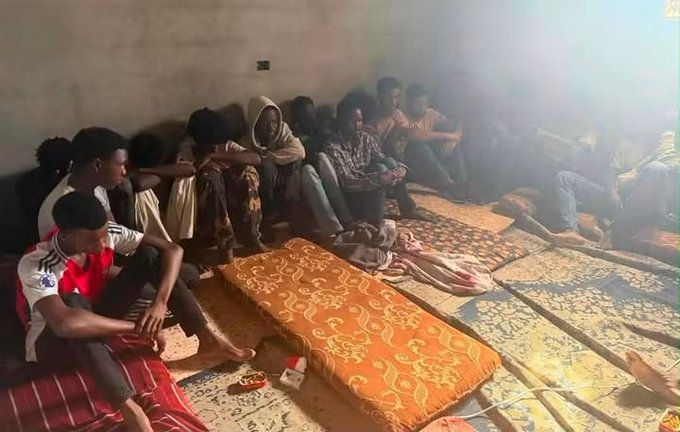
Libyan authorities have apprehended at least 310 undocumented migrants in separate security and anti-smuggling operations in Tajoura, Umm Al-Faris and Tobruk, according to posts by Migrant Rescue Watch.
The operations, carried out by Libya’s Department for Combating Illegal Migration (DCIM), involved raids on suspected migrant-smuggling locations and efforts to prevent attempted sea crossings.
On September 17, 2026, the DCIM Investigation and Arrest Department, acting on intelligence, raided a suspected human-smuggling site in the Tajoura area and arrested 21 migrants of different African nationalities.
According to Migrant Rescue Watch, the migrants were allegedly preparing to cross the Mediterranean by boat. They were subsequently transferred to the East Tripoli Immigration Detention Centre.
On the same day, the DCIM Derna Branch reportedly thwarted an attempted irregular sea crossing in the Umm Al-Faris area.
The operation resulted in the seizure of two boats and the apprehension of 37 migrants, identified as Egyptian and Sudanese nationals. They were transferred into DCIM custody for what the report described as legal action.
Earlier, on August 27, 2026, DCIM, working jointly with police, conducted security operations in Tobruk, targeting locations reportedly being used by undocumented migrants.
The operation resulted in the apprehension of 252 migrants of various nationalities, who were subsequently transferred to DCIM custody for completion of legal procedures and repatriation.
Taken together, the three operations involved 310 migrants, according to the figures published by Migrant Rescue Watch. The organisation’s posts describe the actions as part of Libya’s continuing efforts to disrupt irregular migration and human-smuggling networks.
Migrant Rescue Watch’s reporting has also documented other recent interceptions, arrests, transfers and repatriations involving migrants in Libya. (sotwe)
The figures and details in this report are based on information published by Migrant Rescue Watch; independent verification of the individual operations was not provided in the posts cited.

Près de 4 000 migrants auraient été arrêtés lors d’une opération de répression de deux jours à Tobrouk

Nearly 4,000 migrants reportedly rounded up in two-day Tobruk crackdown

Libye : 310 migrants interpellés lors d’opérations à Tajoura, Umm Al-Faris et Tobrouk

Libya: 310 migrants apprehended in Tajoura, Umm Al-Faris, Tobruk operations

Libye : plus de 2 100 migrants interceptés et détenus lors d’opérations à Tobrouk
-
 Features2 weeks ago
How WSF changed ways participants see migration
-
 Features2 weeks ago
Reintegration or a facade? Nigerian returnees challenge promise of starting again
-

 Features2 weeks ago
Giving migrants a voice: How Alia is turning lived experience into action
-
 Features2 weeks ago
FSM : des participants nigérians et sénégalais pleurent des proches portés disparus ou décédés
-

 News2 weeks ago
Osita Osemene emerges NACTAL president with 95.65% votes
-

 News Extra2 weeks ago
Osemene pledges inclusive leadership, stronger anti-trafficking action as NACTAL President-Elect
-
Features2 weeks ago
Donner une voix aux migrants : comment Alia transforme l’expérience vécue en action
-

 Features2 weeks ago
Beyond victim label: Nigerians turn stage into declaration of dignity at World Social Forum