
Uncategorized
Frontex’s internal reports confirm torture, paramilitary violence, pushbacks by Greek authorities- @ABoatReport

Frontex internal reports again confirm torture, paramilitary violence and pushbacks by greek authorities four, information by Aegean Boat Report has revealed.
According to the statement: “Separate findings by the Fundamental Rights Office of Frontex confirm what has long been denied: systematic human rights violations at Europe’s borders. The reports, based on investigations carried out between December 2025 and February 2026, document cases of torture, violent pushbacks, and the use of paramilitary groups operating alongside Greek authorities.
“These are not isolated incidents. They point to a pattern. ⸻ Paramilitary Violence Under Police Guidance In one case from June 2023 in Evros, a group of 61 people — including children — were attacked by masked men armed with clubs and knives. They were beaten, threatened with rape, subjected to sexual abuse, and forced back across the river to Turkey.
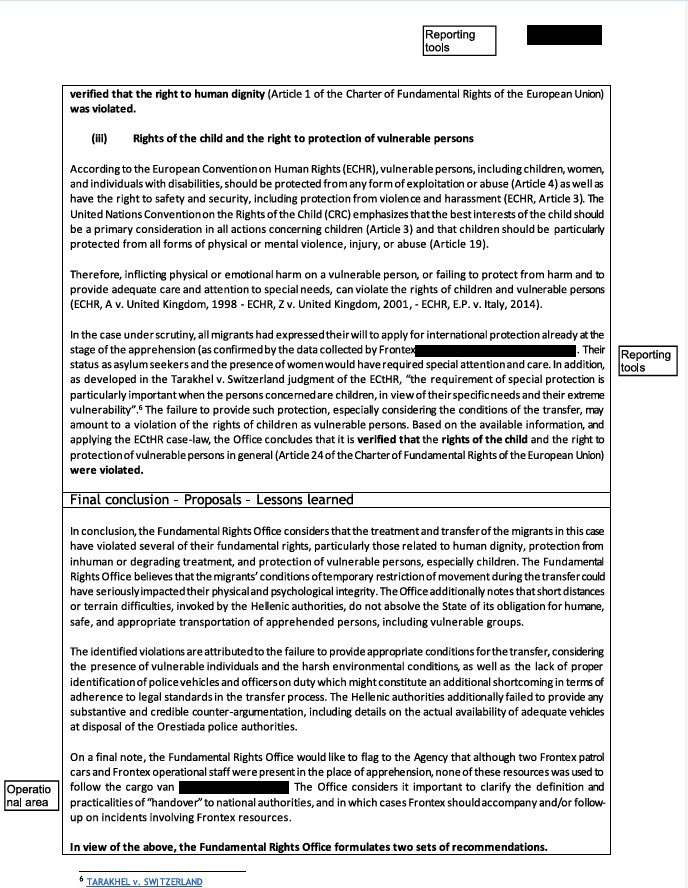
“The investigation confirms that these men operated under the guidance of Greek police officers. Testimonies describe extreme violence: • Beatings, kicks, and assaults targeting heads and bodies • A pregnant woman kicked in the abdomen • Death threats and threats of rape • Children subjected to degrading and sexualized treatment • People thrown into the water and nearly drowned Phones and belongings were confiscated. People were forcibly deported without any asylum procedure. This happened despite an interim order from the European Court of Human Rights explicitly prohibiting their removal. Many of those pushed back were later imprisoned in Turkey — exposing them to exactly the risks European law is meant to prevent. ⸻ Inhuman Treatment and Illegal Detention Other findings describe: • Migrants transported in unmarked, unventilated vans in extreme heat — without seats, windows, or identification of the vehicle • Children and vulnerable individuals subjected to degrading and dangerous conditions • Dozens of people detained for days in overcrowded, unsanitary cells in temperatures exceeding 35°C • Reports of violence by police, including against interpreters These conditions violate fundamental protections under EU law, including the prohibition of inhuman and degrading treatment.
Masked Units, Weapons and Pushbacks at Sea
In another case near Rhodes, migrants reported being intercepted by masked men in unmarked boats. Shots were reportedly fired to intimidate them. People were beaten, some lost consciousness. They were then transferred back to official Coast Guard vessels. Even where evidence could not fully confirm every detail, the Fundamental Rights Office concluded that abuse was likely and consistent across testimonies.
A Pattern of Obstruction
Across all four investigations, one element stands out: The consistent refusal of Greek authorities to cooperate. Key evidence was withheld. Identification of officers was not provided. Internal investigations lacked transparency or credibility. In one case, Frontex investigators were given only an 8-second video showing darkness. ⸻ This Is Not “Allegations” — This Is Evidence These findings confirm: • Violations of the prohibition of torture • Collective expulsions in breach of EU law • Systematic denial of the right to seek asylum • Exposure of people to persecution and imprisonment This is not border control. This is organized violence — documented, verified, and now confirmed by the EU’s own monitoring body.








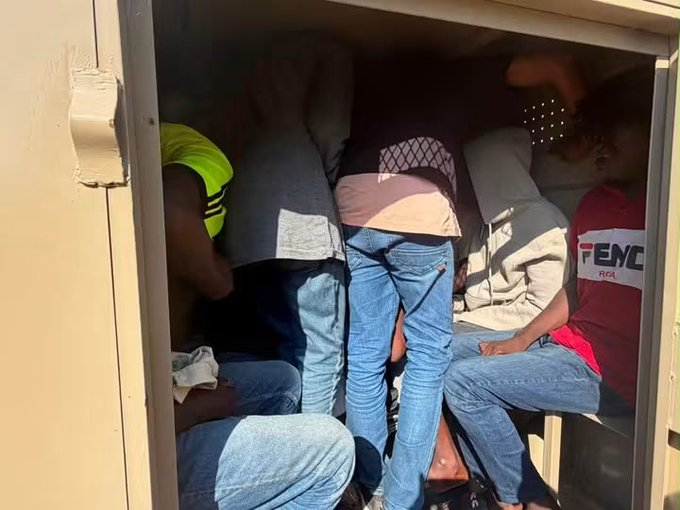
Les autorités libyennes ont interpellé au moins 310 migrants en situation irrégulière lors de plusieurs opérations de sécurité et de lutte contre le trafic de migrants menées à Tajoura, Umm Al-Faris et Tobrouk, selon des publications de Migrant Rescue Watch.
Les opérations, menées par le Département de lutte contre l’immigration clandestine (DCIM) de Libye, comprenaient des descentes dans des lieux soupçonnés d’être utilisés par des passeurs ainsi que des interventions visant à empêcher des tentatives de traversée maritime.
Le 17 septembre 2026, le Département des enquêtes et des arrestations du DCIM, agissant sur la base de renseignements, a effectué une descente dans un site soupçonné d’être utilisé pour le trafic de migrants dans la région de Tajoura et arrêté 21 migrants de différentes nationalités africaines.
Selon Migrant Rescue Watch, les migrants se préparaient à traverser la Méditerranée par bateau. Ils ont ensuite été transférés au centre de détention pour migrants de l’Est de Tripoli.
Le même jour, la branche du DCIM à Derna aurait déjoué une tentative de traversée maritime irrégulière dans la région d’Umm Al-Faris.
L’opération a permis de saisir deux embarcations et d’interpeller 37 migrants, identifiés comme étant de nationalités égyptienne et soudanaise. Ils ont été placés sous la garde du DCIM pour ce que le rapport présente comme des mesures légales.
Plus tôt, le 27 août 2026, le DCIM, en collaboration avec la police, a mené des opérations de sécurité à Tobrouk, ciblant des lieux qui auraient été utilisés par des migrants en situation irrégulière.
L’opération a conduit à l’interpellation de 252 migrants de différentes nationalités, qui ont ensuite été transférés sous la garde du DCIM pour l’accomplissement des procédures légales et leur rapatriement.
Au total, les trois opérations ont concerné 310 migrants, selon les chiffres publiés par Migrant Rescue Watch. Les publications de l’organisation présentent ces interventions comme faisant partie des efforts continus de la Libye pour perturber les réseaux de migration irrégulière et de trafic de migrants.
Les informations de Migrant Rescue Watch ont également fait état récemment d’autres interceptions, arrestations, transferts et rapatriements de migrants en Libye.
Les chiffres et les détails présentés dans cet article sont fondés sur les informations publiées par Migrant Rescue Watch ; les opérations individuelles mentionnées dans les publications citées n’ont pas fait l’objet d’une vérification indépendante.
Refugees in Libya, an organisation advocating for refugees and migrants, has raised concerns over the alleged sexual harassment of a young Black refugee girl by a taxi driver in Tripoli.
In a post published on X on August 23, the organisation identified the alleged perpetrator as Ali, also known by the nickname “Al-Boura,” and said he is a resident of Qasr Bin Ghashir, Tripoli.
According to Refugees in Libya, the incident occurred on August 17 when Ali allegedly sexually harassed the girl, who the organisation said was a minor.
The organisation said the girl repeatedly asked the driver to stop and told him that she was underage and did not consent to his touching her. Despite her objections, the driver allegedly continued.
Refugees in Libya said the girl recorded and later shared a video of the incident on TikTok because she was afraid to report the alleged crime through official channels.
The organisation claimed that reporting such an incident could expose the refugee to the risk of arrest before she could formally file a complaint, highlighting what it described as the vulnerability of refugee women and girls in Libya.
The video subsequently circulated widely on social media, prompting mixed reactions from Libyans. According to Refugees in Libya, some users called for Ali’s arrest, while others reportedly demanded the arrest and imprisonment of the girl, questioning why she had recorded the incident and accusing her of being an agent of Western interests.
The organisation said it has since lost contact with the girl and does not know her current whereabouts, while the video continues to circulate online.
Refugees in Libya also expressed concern that, despite information allegedly being made public about Ali’s whereabouts, there was still no evidence that law enforcement authorities had arrested him.
The organisation’s account could not independently establish whether an arrest had been made or verify the full circumstances surrounding the allegations.
The case has renewed concerns among refugee and migrant rights advocates about the protection of vulnerable migrants in Libya, particularly women and girls who may face barriers to reporting sexual violence and harassment.
Refugees in Libya called attention to the situation as part of its broader advocacy over the treatment and safety of refugees and migrants in the country.
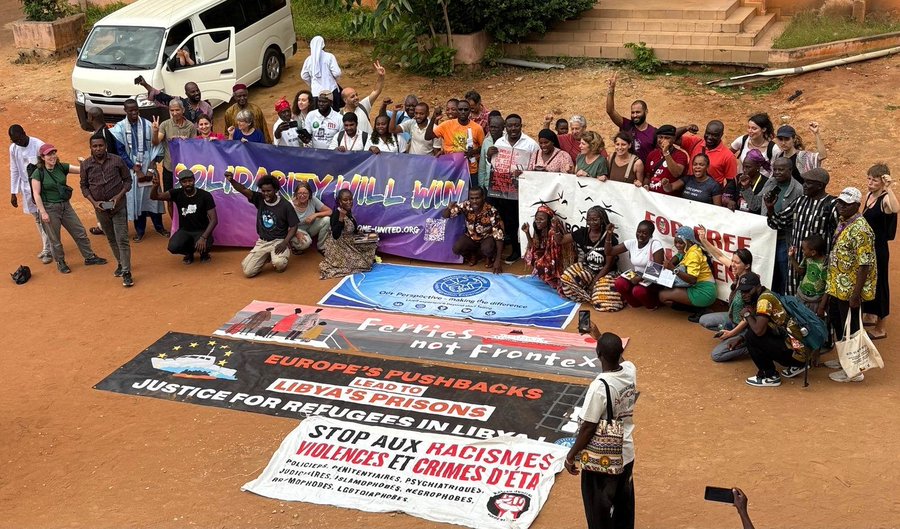
Fifty-eight organisations, movements and collectives have signed the Cotonou Manifesto for Freedom of Movement, calling for an end to the externalisation of border controls, the closure of detention centres and greater protection for people on the move.
The manifesto was developed collectively through the Migration Village at the recently held World Social Forum in Cotonou, Benin. It was authored and led by survivors of migration routes and supported by organisations working on migration, human rights and freedom of movement.
Titled “Our Bodies Are Not Your Borders,” the manifesto brings together victims, survivors, families, activists and organisations that said they were committed to dismantling what they described as a racist migration regime.
The signatories said many survivors had experienced deadly desert crossings, prisons, detention centres, deportation flights, pushbacks, racist attacks, abductions at sea, enslavement and other forms of inhumane treatment. They argued that the suffering and deaths of migrants had increasingly been used to justify restrictive migration policies.
The groups accused the European Union of being at the forefront of policies that externalise border controls into Africa, saying European governments have funded and supported governments, coastguards, militias, detention systems and surveillance infrastructure to prevent migrants from reaching European territory.
They specifically cited cooperation with countries including Tunisia, Libya, Morocco, Algeria, Niger, Mauritania and Senegal, arguing that such arrangements had transformed parts of Africa into places of detention and danger for migrants. Libya, they said, had become a “laboratory” for the system.
The manifesto also criticised the role of Frontex, accusing the European Border and Coast Guard Agency of contributing to pushbacks and facilitating the interception of refugee boats. It further criticised what it described as the extension of Europe’s migration security apparatus into African countries.
The organisations also expressed concern about the role of international agencies, including the International Organisation for Migration and UNHCR, arguing that terms such as “risk analysis,” “border management” and “voluntary return” can conceal policies aimed at tracking, containing and deporting migrants before they reach their intended destinations.
African governments were also criticised. The signatories said African states could not continue portraying themselves solely as victims of European migration policies while accepting funding to police Europe’s borders and participating in the detention, deportation and abandonment of Africans on the continent.
They also accused the African Union of failing to adequately respond to the treatment of African migrants and said the continent’s commitment to free movement remained severely restricted.
The manifesto called for an end to the externalisation of border control, the closure of detention and so-called return centres, and effective access to asylum. It also urged states to honour international human rights and refugee protection commitments and called for survivors and families of migrants who died along migration routes to participate in institutions and negotiations affecting their lives.
The signatories further called for freedom of movement and the right of people to choose where they live and travel safely. They demanded the abolition of visa systems, arguing that these systems disproportionately burden people from the Global South.
According to the manifesto, freedom of movement would promote economic, social and cultural ties between countries and peoples, while strengthening women’s and gender minorities’ ability to seek safety and freedom. The signatories also linked free movement to Pan-African unity and decolonisation.
The groups said migrants and their allies would continue building transnational networks and solidarity structures to challenge restrictive border systems and support people on the move.
The manifesto concluded with a series of declarations, including: “Our forced migration is not your invasion,” “Human beings are not your bargaining chips,” “Our bodies are not Europe’s borders,” and “Our lives are not Africa’s currency.”
Among the 58 signatories are Refugees in Libya, WatchTheMed Alarm Phone, Migreurop, SOSAPROFEM, Southern Africa Migration Network, Voice of Migrants Association, Female Returned Migrant Network, Migrants Lives Matter, Advocates Female Migrants Initiative and several other African, European and international organisations.
The manifesto said the Migration Village at the World Social Forum in Cotonou represented another step toward strengthening cooperation among movements and survivors in the continuing campaign for freedom of movement.
The manifestor was authored and led by survivors.
Supported by the following organizations, movements and collectives:
1. Advocates Female Migrants initiative (Nigeria)
2. Afrique-Europe Interact (transnational network)
3. Al Bawsala (Tunisia)
4. Alarme Phone Sahara
5. Alerte Migration Afrique (Burkina Faso)
6. Arab and Muslim Ethnicities and Diasporas Studies Program, San Francisco State University (USA)
7. Association des Mères des Disparus en Tunisie (Tunisia)
8. Association Éducation Togo (AET, Togo)
9. Association Malienne des Expulsés (AME, Mali)
10. Association Marocaine d’aide aux migrants en situation vulnérable (AMSV, Morocco)
11. Association Marocaine des droits humains (AMDH, Morocco)
12. Association Mauritanienne pour la Citoyenneté et le Développement (AMCD, Mauritania)
13. Association Nationale des Partenaires Migrants (ANPM, Senegal)
14. Association Togolaise des Expulsés (ATE, Togo)
15. Boza Fii (Senegal)
16. Caritas Dakar/PARI (Senegal)
17. Confédération générale autonome des travailleurs en Algérie (CGATA, Algeria)
18. Citoyennes Citoyens Debout Mauritanie (CCD, Mauritania)
19. Climáximo (Portugal)
20. Collective Against the Criminalization of Solidarity and Civic Engagement in Tunisia
21. Conseil des Migrants Subsahariens au Maroc (CMSM, Morocco)
22. CRID (France)
23. Direy Ben Gao/ RMSM (Mali)
24. Ebrima Migrant Situation Foundation (Gambia)
25. Female Returned Migrant network – FREMNET (Nigeria)
26. 50 Out of Many (Greece)
27. Groupe solidarité des groupements féminins au Togo
28. Jeunesses Nigérienne au Service du Développement Durable (JNSDD AIKIN KASA) (Niger)
29. KISA – Equality, Support, Antiracism (Cyprus)
30. Medico International
31. Mediterr
32. Migrants Lives Matter (Nigeria)
33. Migreurop (Euro-African network)
34. MV Louise Michel project
35. Network of Ex-Asylum Seekers – NEAS (Sierra Leone)
36. Network of People with Migration Experience (Nigeria)
37. Nomad 08 (Tunisia)
38. OGLMI – Terre de Liberté (Guinea)
39. ONG Opinion Éclairée (Ivory Coast)
40. ONG UNION FAIT LA FORCE (Benin)
41. Palestinian NGOs Network
42. Refugees in Libya (RiL)
43. Réseau Maghreb Sahel sur les Migrations
44. Réseau ROA-PRODMAC (African network)
45. Riposte internationale (Algeria)
46. Right2Protest Project Africa
47. Rootstv.tn (Tunisia)
48. Solidarités Asie France (SAF)
49. SOSAPROFEM (Senegal)
50. Southern Africa Migration Network (SAMIN)
51. Teaching Palestine: Pedagogical Praxis and the Indivisibility of Justice
52. trans-border.net Editorial Team
53. Un Monde Avenir (Cameroon)
54. Voice of Migrants Association – VOMA (Nigeria)
55. Voice of Talia Initiative Foundation (Nigeria)
56. WatchTheMed Alarm Phone
57. Welcome to Europe
58. We`ll Come United (Germany)

Jeff Crisp s’interroge sur la représentation des migrants à la Conférence de Vienne sur les migrations
Jeff Crisp questions migrant representation at Vienna Migration Conference

Le HCR dénonce le renvoi par la Malaisie de 1 476 personnes au Myanmar

UNHCR decries Malaysia’s return of 1,476 people to Myanmar

Deux morts, six disparus après le sauvetage de 28 personnes par le navire de Sea-Watch
-

 Features1 week ago
Retour volontaire assisté, assistance post-arrivée et réintégration : le rôle de l’OIM expliqué
-
 Interviews2 weeks ago
The Jamboree and Re-Exodus Fund: A Failed Reintegration Promise for Returnee Migrants
-

 Features1 week ago
Assisted Voluntary Return, Post-Arrival Assistance, and Reintegration: IOM’s Role Explained
-

 Features1 week ago
IOM explains work in countries receiving third-country nationals
-

 Features1 week ago
L’OIM explique son travail dans les pays qui accueillent des ressortissants de pays tiers
-
 News1 week ago
Yémen :21 573 ménages déplacés dans sept gouvernorats
-
 News Extra1 week ago
Ebola: Amy Pope seeks urgent support as DRC faces largest outbreak
-
 Features1 week ago
IOM helps more than 81,000 migrants return home from 115 countries