
News
Norwegian police allegations against me untrue-Tommy Olsen


Founder of Aegean Boat Report, Tommy Olsen has described allegations levelled against him by the Norwegian police as baseless and untrue. He said the move was a calculated attempt to silence him.
Olsen was arrested last week in connection with a European Arrest Warrant issued by Greece.
Olsen said: “As most of you know, I was arrested by Norwegian police last week in connection with a European Arrest Warrant issued by Greece, based on allegations I categorically reject. The accusations against me are: • participation in and membership of a criminal organization • facilitating the entry into Greek territory of third-country nationals, allegedly committed repeatedly, by two or more persons, for profit, and in the course of professional activity • facilitating the unlawful stay or resistance of third-country nationals, allegedly for profit and on a repeated basis None of these allegations are true. I have seen no credible evidence to substantiate them.”
For years, Olsen said “I have documented and published evidence of serious human rights violations against people on the move in the Aegean. These include violent pushbacks, illegal expulsions, abuse, and actions that have put countless lives at risk. The evidence is extensive. Yet accountability has remained absent. Europe has too often looked away in the name of border protection. The European Commission has for years continued to support Greek border operations despite mounting evidence of grave abuses.
“This has helped create a climate of impunity, where Greece has effectively become a testing ground for how far state violence can go without meaningful political consequences. On 14 June 2023, more than 600 people died off Pylos when the fishing vessel Adriana sank after an attempted intervention by the Greek Coast Guard. Despite the scale of the disaster, there has been no independent EU investigation, no infringement proceedings, and no accountability for those responsible.
“At the same time, Greek authorities have systematically targeted individuals and organisations that expose abuses. Judicial harassment, criminal investigations, arrests, and years-long legal proceedings have become tools of intimidation. The purpose is clear: to silence criticism, discourage documentation, and create a chilling effect on frontline defenders and whistleblowers. For more than six years, I have personally faced harassment and threats because of my work documenting abuses in Greece. Considerable effort has been invested in trying to silence me.”
Continuing, he said: “Now Norwegian authorities have been asked to act on Greece’s behalf. So far, it appears they are doing so without properly confronting the obvious political context of this case. I may have been naive in my faith in the Norwegian legal system. The idea that a whistleblower and human rights defender can be handed over to the very state authorities he has spent years scrutinising is deeply alarming.
“If those accused of serious abuses can issue an unfounded arrest warrant against a critic, and other European states simply comply, what message does that send? Who will dare to speak out? Who will continue documenting injustice? Frontline human rights defenders are essential to democracy, the rule of law, and accountability. Yet around the world, they are increasingly targeted through false accusations, judicial harassment, and arbitrary detention. The UN Declaration on Human Rights Defenders affirms the right to carry out peaceful human rights work without fear of criminalisation. States have an obligation to protect defenders, not help silence them. Right now, I believe Norwegian authorities have failed badly in that responsibility.”




News
Jeff Crisp s’interroge sur la représentation des migrants à la Conférence de Vienne sur les migrations
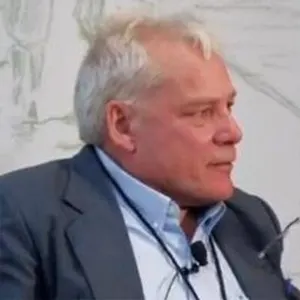
L’ancien responsable de la politique et de l’évaluation au HCR, Jeff Crisp, s’est interrogé sur la représentation des migrants à la prochaine Conférence de Vienne sur les migrations 2026, demandant combien de migrants y participeront par rapport aux responsables chargés des affaires intérieures, de la sécurité et du contrôle des frontières.
Crisp a soulevé cette question en réaction à une publication du Centre international pour le développement des politiques migratoires (ICMPD), annonçant l’ouverture des inscriptions pour suivre en ligne sa conférence annuelle phare.
« Combien de migrants seront présents à cette conférence ? Et combien de responsables des affaires intérieures, de la sécurité et du contrôle des frontières ? », a écrit Crisp.
L’ICMPD a indiqué que la 11e édition de la Conférence de Vienne sur les migrations se tiendra les 16 et 17 novembre et réunira des décideurs de haut niveau, des praticiens et des experts d’Europe et d’ailleurs pour un échange de haut niveau sur les politiques migratoires.
Dans sa publication, l’organisation n’a pas précisé combien de migrants ou de représentants d’organisations dirigées par des migrants participeraient à la conférence.
L’intervention de Crisp attire l’attention sur la composition des forums consacrés aux politiques migratoires, notamment sur la mesure dans laquelle les personnes ayant une expérience directe de la migration y sont représentées aux côtés des responsables gouvernementaux et des professionnels des politiques migratoires.
La Conférence de Vienne sur les migrations est organisée chaque année par l’ICMPD, une organisation internationale qui travaille avec les gouvernements et d’autres parties prenantes sur les politiques migratoires et de mobilité.
La conférence de 2026 doit se tenir à Vienne, avec un accès en ligne disponible pour les participants inscrits.
Former UNHCR policy chief Jeff Crisp has questioned the representation of migrants at the forthcoming Vienna Migration Conference 2026, asking how many migrants will participate compared with officials responsible for interior affairs, security and border control.
Crisp raised the question in response to a post by the International Centre for Migration Policy Development (ICMPD) announcing that registration had opened for the livestream of its annual flagship conference.
“How many migrants will be at this conference? And how many officials from the interior, security and border control establishment?” Crisp wrote.
ICMPD said the 11th edition of the Vienna Migration Conference will be held on November 16 and 17, bringing together senior decision-makers, practitioners and experts from Europe and beyond for a high-level exchange on migration policy.
The organisation did not indicate in the post how many migrants or representatives of migrant-led organisations would participate in the conference.
Crisp’s intervention draws attention to the composition of migration-policy forums, particularly the extent to which people with direct experience of migration are represented alongside government officials and policy practitioners.
The Vienna Migration Conference is organised annually by ICMPD, an international organisation that works with governments and other stakeholders on migration and mobility policy.
The 2026 conference is scheduled to take place in Vienna, with livestream access available to registered participants.

The UN refugee agency, UNHCR, has expressed concerns over Malaysia’s recent return of 1,476 people to Myanmar amid the country’s continuing conflict and dire human rights and humanitarian situation.
The UNHCR Assistant High Commissioner for Protection Edem Wosorn., in a statement said: “We are concerned by these returns at a time when people sent back to Myanmar may face serious risks, and some within the group may be in need of international protection.
“While authorities say the returns are voluntary, those returned had been held in immigration detention. This raises serious questions about whether decisions to return were genuinely free and informed. UNHCR did not have access to the individuals to assess this.”
UNHCR said it fully recognizes Malaysia’s sovereign responsibility to manage asylum and migration. However, it urged Malaysia to ensure that all returns are subject to robust safeguards, including individual assessments and access to protection procedures. Decisions to return must be voluntary and assessed outside detention settings.
Under the principle of non-refoulement, no one should be returned to a country where they may face persecution, torture or other serious threats to their life or freedom.
Until conditions in Myanmar allow for safe, dignified and sustainable returns, States must continue to provide access to asylum and uphold international protection obligations.
UNHCR added that it remains ready to work with Malaysia to strengthen national asylum and protection arrangements.
“Greater regional and international support is needed to advance a political solution to the crisis and end the hostilities in Myanmar. UNHCR calls on the international community to maintain support for countries in the region hosting refugees from Myanmar.”

Jeff Crisp s’interroge sur la représentation des migrants à la Conférence de Vienne sur les migrations
Jeff Crisp questions migrant representation at Vienna Migration Conference

Le HCR dénonce le renvoi par la Malaisie de 1 476 personnes au Myanmar

UNHCR decries Malaysia’s return of 1,476 people to Myanmar

Deux morts, six disparus après le sauvetage de 28 personnes par le navire de Sea-Watch
-

 Features1 week ago
Retour volontaire assisté, assistance post-arrivée et réintégration : le rôle de l’OIM expliqué
-
 Interviews2 weeks ago
The Jamboree and Re-Exodus Fund: A Failed Reintegration Promise for Returnee Migrants
-

 Features1 week ago
Assisted Voluntary Return, Post-Arrival Assistance, and Reintegration: IOM’s Role Explained
-

 Features1 week ago
IOM explains work in countries receiving third-country nationals
-

 Features1 week ago
L’OIM explique son travail dans les pays qui accueillent des ressortissants de pays tiers
-
 News1 week ago
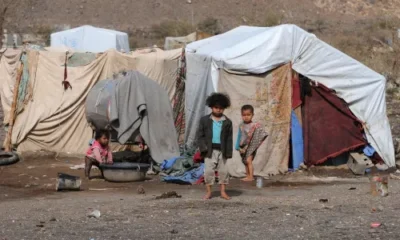
Yémen :21 573 ménages déplacés dans sept gouvernorats
-
 News Extra1 week ago
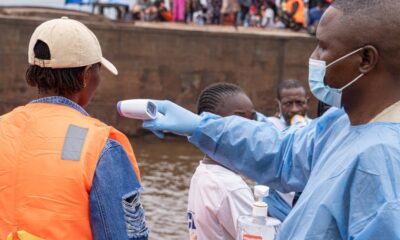
Ebola: Amy Pope seeks urgent support as DRC faces largest outbreak
-
 Features1 week ago
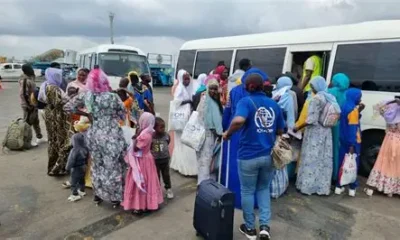
IOM helps more than 81,000 migrants return home from 115 countries