
News Extra
Agazuma applauds VNR, says event in line with EDMA’s mandate


Hon Chief Lucky Agazuma, the Director General Edo State Migration Agency (EDMA), has applauded the just concluded Voluntary National Review (VNR) on the implementation of the Global Compact for Safe, Orderly and Regular Migration (GCM) ahead of the 2026 International Migration Review Forum (IMRF).
He said the event is in line with the core mandate of EDMA.
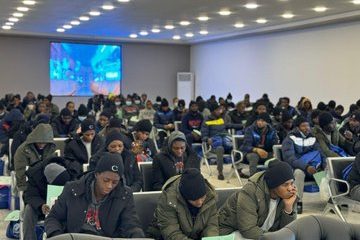
The event which was held between February 17 and 21 at the Lagos Continental Hotel, Victoria Island Lagos, had the International Organisation for Migration, other international partners, members of the civil society, federal and state government agencies among others in attendance.
Agazuma said the VNR was quite impressive, because “what we learnt is in line with what we do. It is in line with our core mandate.What we do in practical terms in EDMA, we are seeing here in theory. It will go a long way in shaping all we are doing, because it’s in line with the law.”
Agazuma said the lessons learnt will improve migration issues in Nigeria because “it has to do with policy document. Of course, it’s going to help.And it will go a long way to protect the migrant workers, the diaporans , and the rest of them. Because, for example, in the Gulf Nation, we know how people are suffering when they get to their employers. Automatically, they seize their documents, seize their residence permit, and enslave them. This will go a long way to reshapping all that, and avoid somebody treating Nigerians outside as if they are not from any nation.I think it’s going to help, and I must commend the federal government of Nigeria, I must commend the IOM, and, of course, all the relevant stakeholders who are present for this strategic meeting.”
Applauding the level of participation, he said: “ the engagement was quite good because we believe that no organization succeeds in isolation.
So, with this collaboration effort from the state level to federal level working together towards one goal, it’s going to yield a strategic result for Nigeria as a country.
When it comes to the area of migration, Nigeria is doing so well compared to other countries around the world.
And through the policies we have adopted so far, it’s going to help in reshaping and reducing the issue of irregular migration. For example, in the case of Edo, before now, we all know that Edo had been the hub of human trafficking. Since Governor Opkebholo who is a strategist emerged, I can tell you now that Edo has dropped in the area of irregular migration. Kano State and the rest are taking the lead. I must commend our governor, who is bringing out strategies. He brought out the rules and regulations’ strategies we should take.We followed the strategies and started getting awards.
“Other states, for example, Lagos State, Kano state, have started admiring what we are doing. As a matter of fact, we got a signal through the IOM that they will be coming to Edo to learn from us how we are doing it in Edo State. I repeat, Kano State and Lagos State are coming soon to join us in Edo State to learn from us what we are doing because the governor of Edo State, Senator Okpebholo is investing more on migration. As you can see, with his new developmental stride, where he spent billions on infrastructure, he knows that Edo people will stay back and enjoy those facilities. Therefore, that is helping to reduce this irregular migration, and creating job opportunities.”






News Extra
Ukraine: 87 per cent of displaced households have had to take at least one difficult step to cope
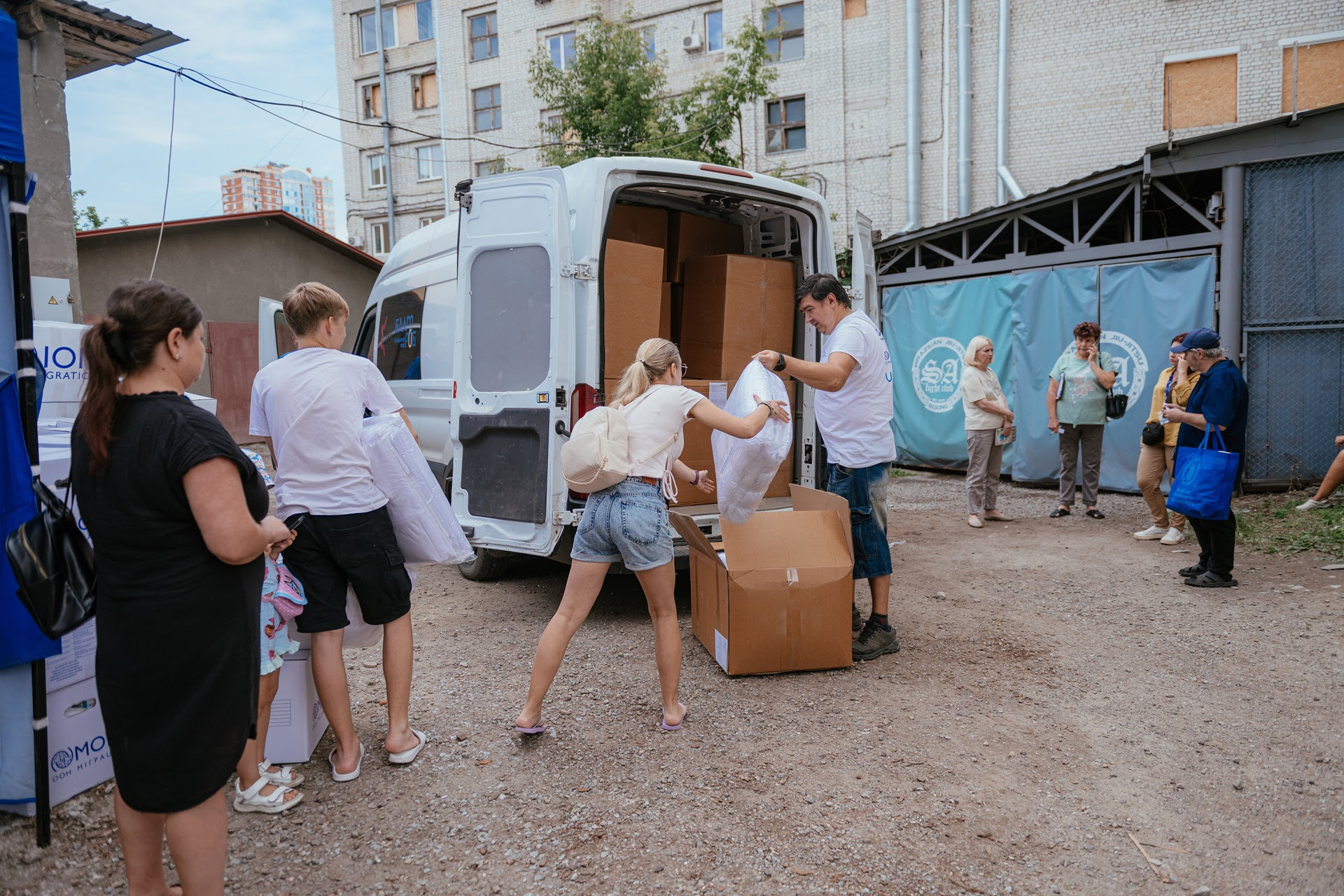
An estimated 3.9 million people remained internally displaced in Ukraine as of June 2026, according to a new report by the International Organization for Migration (IOM). While the number of internally displaced people has stayed at around 12 per cent of the population since 2023, the report shows that the longer displacement persists, the more families are struggling to meet their basic needs.
Nearly seven in ten internally displaced people have now been away from home for more than two years, underscoring the increasingly protracted nature of displacement in Ukraine. New displacement is also still happening: an estimated 132,000 people were forced to leave their homes between January and June this year alone.
“Stable displacement figures should not be mistaken for stable living conditions,” said Dejan Keserovic, Deputy Chief of Mission at IOM Ukraine. “Many displaced families are exhausting their savings, reducing essential expenses, including health care, and moving into less adequate housing as they try to meet their basic needs. Sustained support remains essential to help people regain stability and make informed, voluntary choices about their future.”
The report found that 87 per cent of displaced households have had to take at least one difficult step to cope. The most common include using up savings (75%), cutting back on utilities (59%) and reducing health spending (53%). One in five households also reported moving to lower-quality housing, while 17 per cent have fallen behind on rent.
The pressure has been building steadily — last winter’s harsh weather and long power and heating outages hit already-vulnerable families particularly hard.
Safety remains the biggest factor in people’s decisions about the future: 82 per cent of internally displaced people say they only want to return home once the fighting stops. At the same time, more people are considering settling permanently where they now live — interest in local integration increased from 51 per cent in March to 58 per cent in June 2026, highlighting the need to support displaced families wherever they are, while still keeping an eye on the risks of people returning too soon or unsafely.
Around 2.15 million individuals – 56 per cent of all those displaced in Ukraine – originally came from areas that were fully or partly occupied at the time of the survey. This group has faced longer displacement, greater hardship, and fewer options for going home.
The findings show why emergency aid alone isn’t enough. People need longer-term support with housing, jobs, health care, protection, and other essential services — so they can make informed, voluntary choices, whether that means settling where they are, moving elsewhere, or returning home safely once conditions allow.
The report is based on IOM’s latest survey of the Ukrainian population, carried out between 23 April and 30 June 2026, with support from the Government of Canada, the European Union, Sweden, and the Ukraine Humanitarian Fund.
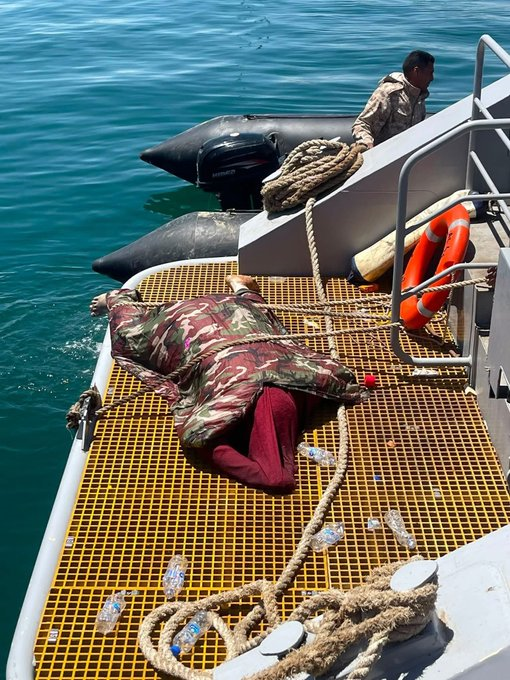
The Executive Director of Refugees in Libya, David Yambio, has mourned the death of a migrant whose body was recovered off the coast of Benghazi after reportedly being stranded at sea for 14 days, describing the incident as a stark reminder of the dangers faced by people fleeing conflict and persecution.
In a post on X, Yambio reflected on his own experience in Libya, saying that while detained in the North African country, he had often hoped that, if he were to die, it would be at sea rather than at the hands of violent militias.
According to him, the sea represented the only place where many migrants retained a sense of dignity, as they risked everything in pursuit of safety and international protection.
Yambio questioned what he described as a deeper humanitarian tragedy, arguing that many people seeking refuge would rather face the dangers of the Mediterranean than remain exposed to violence by armed groups in Libya.
He also criticised what he called Europe’s role in arming militias and accused African leaders of remaining silent in the face of abuses against migrants.
The activist said the photograph accompanying his post showed one of several people seeking protection who had been stranded at sea for two weeks. He noted that the man’s body, along with those of two others, was recovered off the coast of Benghazi a few days ago.
Ending his post on a poignant note, Yambio said the deceased asylum seeker had been portrayed as an “invader,” underscoring what he believes is the dehumanisation of migrants fleeing in search of safety.
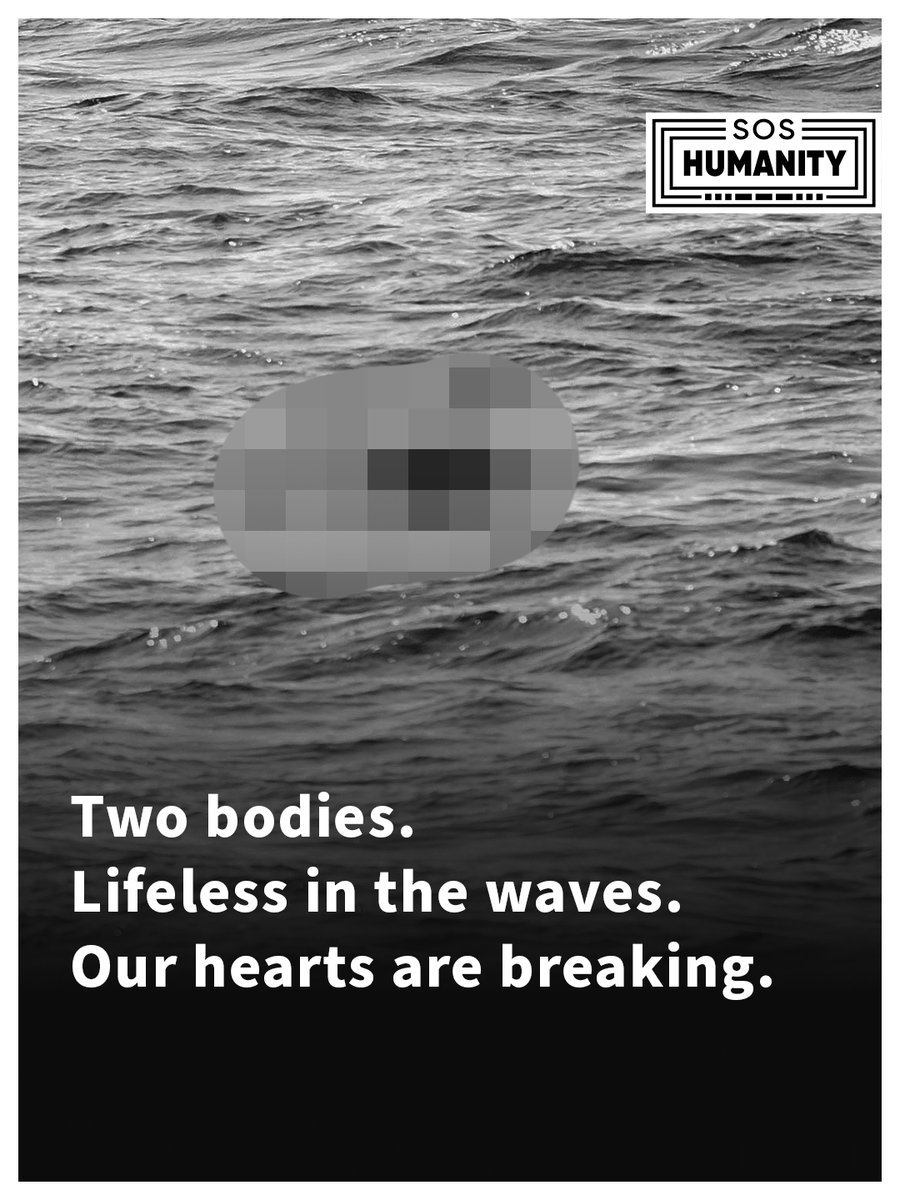
At least 50 migrants are feared dead or missing after a boat carrying about 60 people capsized off the eastern coast of Libya while attempting to cross the Mediterranean Sea to Europe, authorities have said.
The vessel overturned on Tuesday near Bardaa Island, off the coastal city of Tobruk, according to the Coast Guard in eastern Libya.
Officials said 10 passengers, including some women and children, survived by swimming to Bardaa Island. Search and rescue operations were still ongoing as authorities continued efforts to locate the remaining passengers.
The latest disaster is another in a series of deadly shipwrecks involving migrants departing from Libya, a major transit hub for people seeking to reach Europe in search of safety and better economic opportunities.
Just last month, another migrant boat sank off eastern Libya, leaving 51 people dead or missing.
Since the 2011 NATO-backed uprising that overthrew longtime ruler Moammar Gadhafi, Libya has remained politically unstable, making it a key departure point for migrants fleeing conflict, persecution and poverty across Africa and the Middle East.
Human traffickers frequently load migrants onto overcrowded and unseaworthy boats for the dangerous Mediterranean crossing, a route that has claimed thousands of lives over the years and remains one of the world’s deadliest migration corridors.

Migration Won the 2026 World Cup. It Is Still Treated Like a Crime at the Border

Ukraine: 87 per cent of displaced households have had to take at least one difficult step to cope

IOM assists over 3,500 victims of trafficking across 39 countries

ICC confirmation of 17 charges against El-Hishri draws praise from rights groups

Expert raises questions over UNHCR’s strategic direction after new leadership appointments
-

 News3 weeks ago
IYAMIDR commends Okpebholo for ₦1m support to South Africa returnees
-

 News Extra3 weeks ago
Solomon Okoduwa: An accomplished migration expert champions reforms, diaspora engagement
-
 Uncategorized3 weeks ago
Venezuela: IOM delivers support via in-kind cargo flight funded by DHL’s Disaster Response Team
-
 News3 weeks ago
‘AI has potential to transform humanitarian action’
-

 Features3 weeks ago
Sixth batch of Nigerians stranded in South Africa return home
-

 News Extra2 weeks ago
50 die as boat carrying about 60 people capsizes
-
 News3 weeks ago
Over 200 migrants intercepted in Sirte, Tobruk
-
 News Extra2 weeks ago
‘Eight people die in the Mediterranean per day’