
News Extra
CCCM worried as renewed Israeli military offensive across Gaza Strip displaces about 180,000 people

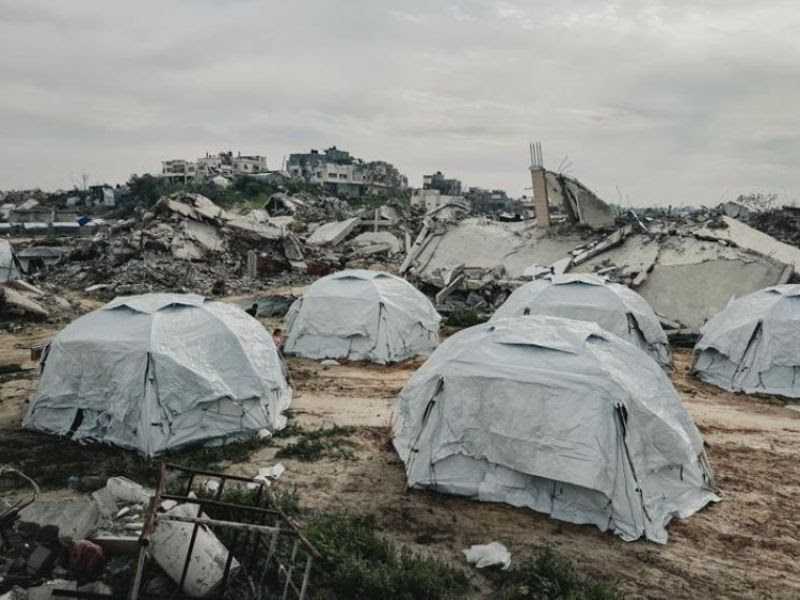
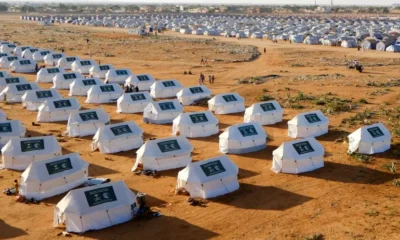
The Global Camp Coordination and Camp Management (CCCM) Cluster is deeply alarmed by the escalating humanitarian crisis resulting from the renewed Israeli military offensive across the Gaza Strip, which has forcibly displaced almost 180,000 people between 15-25 May.
The latest wave of displacement comes as direct attacks on sites have become common, including deadly airstrike on tents in the al-Mawasi area and a school-turned-shelter in Gaza city. Intensifying military operations across North Gaza, eastern Khan Younis, and eastern Deir al Balah over the past ten days have also caused numerous casualties.
The Global CCCM Cluster unequivocally condemns attacks on displacement sites in the strongest terms. These sites serve to protect displaced civilians, in line with the enduring obligation under international humanitarian law to ensure the safety and dignity of civilian populations in all circumstances.
As one Palestinian aid worker in al-Mawasi describes, civilians are facing deep exhaustion and trauma of repeated displacement. “I’m so tired. We’ve been forced to move before, and [our family] got split up—it didn’t help. My sibling died in a ‘safe’ zone after they bombed it. They call places safe, then attack them. I’d rather stay home with my family and face whatever comes, at least we all die together, rather than be separated.”
Since the collapse of the ceasefire on 18 March, nearly 616,000 people have been displaced—multiple times, some as many as ten. During the ceasefire, over half a million people went back to their homes, mostly in the North, to try to rebuild their lives. That fragile progress has now been reversed, as intensified military operations are once again displacing families away from the areas they had only recently returned to.
Humanitarian partners now estimate that 80 per cent of the Gaza Strip, originally only 365 square kilometers, is under displacement orders or marked as “no-go” zones. Nowhere in Gaza can be considered safe, however, as airstrikes and fighting affect the entire Strip. Civilians are being pushed into increasingly overcrowded and hazardous displacement sites. Since 18 March, over 260 sites hosting over 125,000 individuals have been impacted by displacement orders, forcing many to relocate once again, while others remain in place, still exposed to hostilities and lacking options for safer refuge.
With the ongoing aid blockade, there has been no guarantee of shelter, assistance, or protection for civilians. Constant movement restrictions and indiscriminate strikes on civilian infrastructure, including shelters, schools, hospitals, and tents, over the last 19 months have continuously exposed civilians to immense danger and raise grave concern.
Furthermore, the Cluster also raises significant concern over newly proposed alternative supply modalities. These arrangements risk circumventing established humanitarian coordination mechanisms, undermining humanitarian principles and putting civilians at further risk by promoting displacement without essential protection or adequate access to lifesaving services.
Humanitarian operations worldwide are guided strictly by the principles of humanity, neutrality, impartiality, and independence–these apply equally in Gaza. Aid must be delivered solely based on needs, not military or political considerations. Humanitarian actors must maintain the ability to meet people where they are, whether in communities or displacement sites, to assess risks, vulnerabilities, and deliver assistance to those most in need. The UN-coordinated plan to resume principled aid delivery is the only humanitarian solution to reach displaced communities in Gaza with the support they need to survive.
Despite severe restrictions, humanitarian partners have continued to deliver lifesaving assistance and essential services across Gaza. The primary obstacle remains not a lack of will or capacity, but the access constraints imposed by Israel.
The Global CCCM Cluster calls for an immediate end to attacks on displacement sites, unimpeded and sustained humanitarian access, and the protection of civilians irrespective of their location. We stand in solidarity with displaced communities in Gaza and reaffirm our commitment to a coordinated, community-led, and protection-centered humanitarian response.


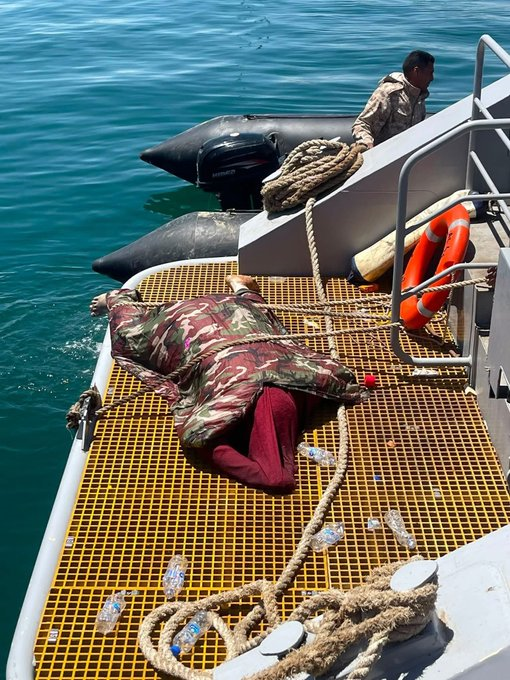
The Executive Director of Refugees in Libya, David Yambio, has mourned the death of a migrant whose body was recovered off the coast of Benghazi after reportedly being stranded at sea for 14 days, describing the incident as a stark reminder of the dangers faced by people fleeing conflict and persecution.
In a post on X, Yambio reflected on his own experience in Libya, saying that while detained in the North African country, he had often hoped that, if he were to die, it would be at sea rather than at the hands of violent militias.
According to him, the sea represented the only place where many migrants retained a sense of dignity, as they risked everything in pursuit of safety and international protection.
Yambio questioned what he described as a deeper humanitarian tragedy, arguing that many people seeking refuge would rather face the dangers of the Mediterranean than remain exposed to violence by armed groups in Libya.
He also criticised what he called Europe’s role in arming militias and accused African leaders of remaining silent in the face of abuses against migrants.
The activist said the photograph accompanying his post showed one of several people seeking protection who had been stranded at sea for two weeks. He noted that the man’s body, along with those of two others, was recovered off the coast of Benghazi a few days ago.
Ending his post on a poignant note, Yambio said the deceased asylum seeker had been portrayed as an “invader,” underscoring what he believes is the dehumanisation of migrants fleeing in search of safety.
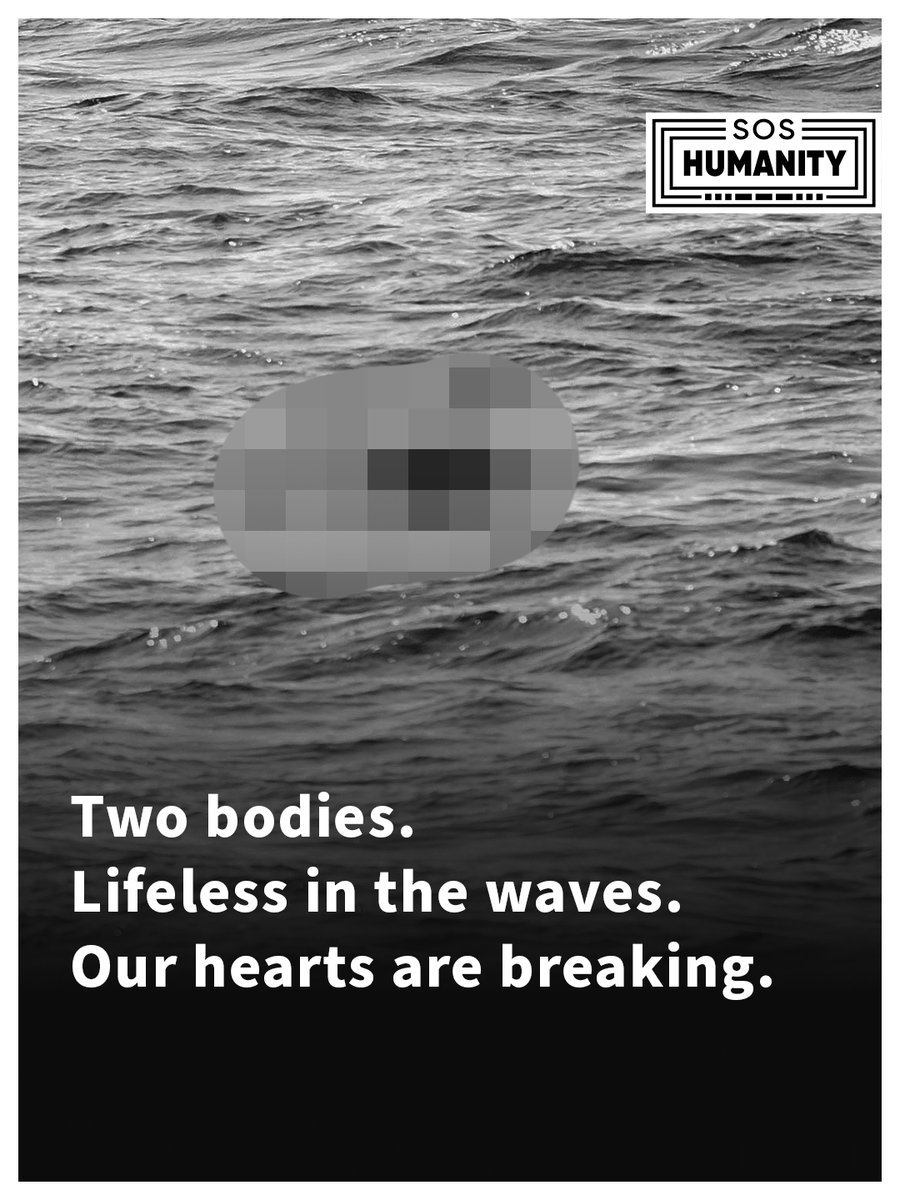
At least 50 migrants are feared dead or missing after a boat carrying about 60 people capsized off the eastern coast of Libya while attempting to cross the Mediterranean Sea to Europe, authorities have said.
The vessel overturned on Tuesday near Bardaa Island, off the coastal city of Tobruk, according to the Coast Guard in eastern Libya.
Officials said 10 passengers, including some women and children, survived by swimming to Bardaa Island. Search and rescue operations were still ongoing as authorities continued efforts to locate the remaining passengers.
The latest disaster is another in a series of deadly shipwrecks involving migrants departing from Libya, a major transit hub for people seeking to reach Europe in search of safety and better economic opportunities.
Just last month, another migrant boat sank off eastern Libya, leaving 51 people dead or missing.
Since the 2011 NATO-backed uprising that overthrew longtime ruler Moammar Gadhafi, Libya has remained politically unstable, making it a key departure point for migrants fleeing conflict, persecution and poverty across Africa and the Middle East.
Human traffickers frequently load migrants onto overcrowded and unseaworthy boats for the dangerous Mediterranean crossing, a route that has claimed thousands of lives over the years and remains one of the world’s deadliest migration corridors.
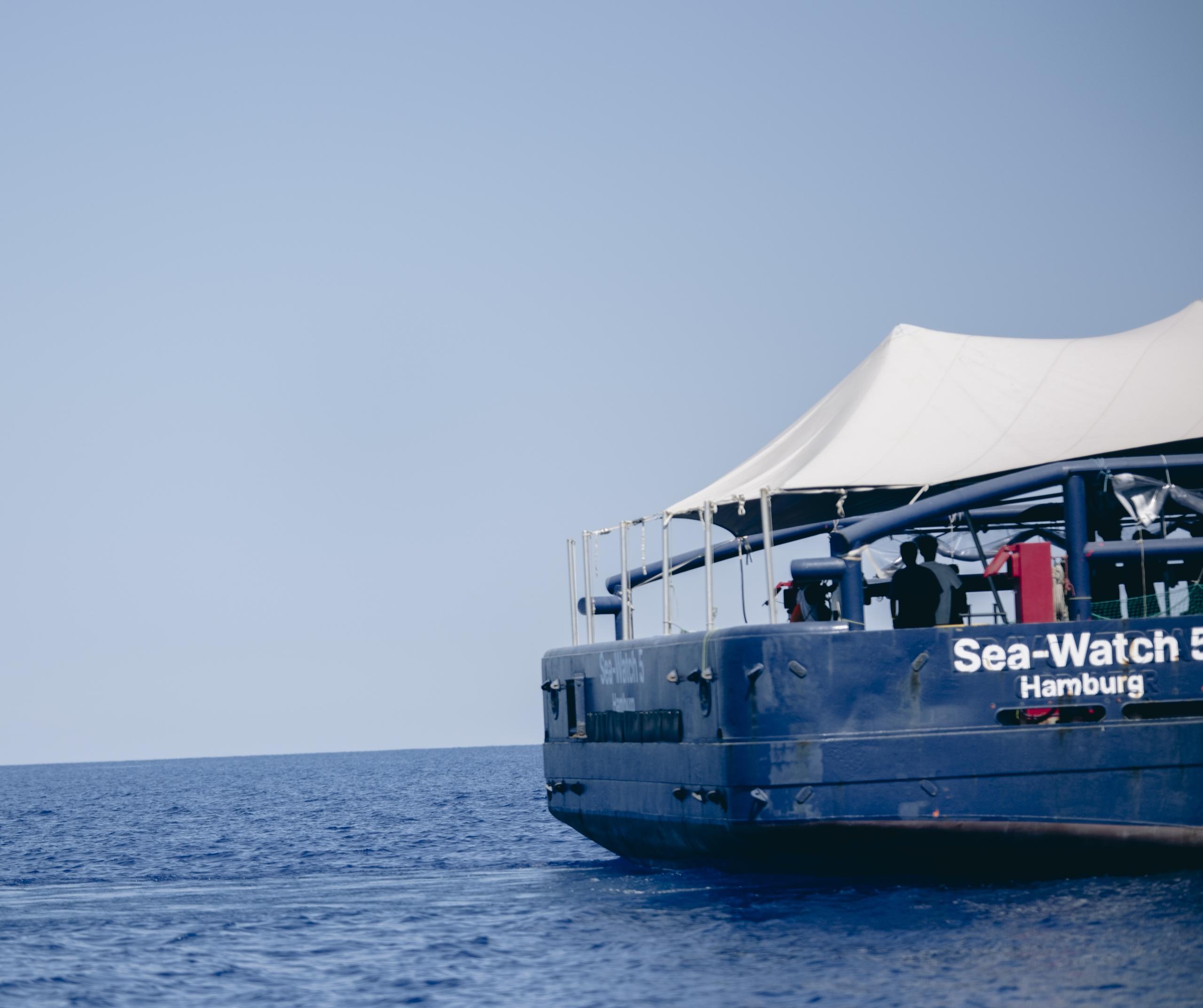
Sea-Watch International has announced that its rescue vessel, Sea-Watch 5, has returned to operations in the central Mediterranean after what it described as an attack by Libyan militias in May, saying it has already rescued 52 people in two separate operations.
In a post published on its verified X account, @seawatch_intl, the humanitarian organisation said 40 people were rescued on the first day of operations, followed by another 12 the next day. It added that one of the survivors, a pregnant woman, requires urgent medical care.
Sea-Watch also claimed that an average of eight people die every day while attempting to cross the Mediterranean Sea, renewing its criticism of European migration policies and rescue coordination.
The organisation accused the Italian government of assigning its rescue vessel to the northern port of Marina di Carrara, which it said is more than four days away from the rescue zone. According to Sea-Watch, the practice keeps humanitarian rescue ships away from areas where migrants are most at risk.
“To ensure that as few rescue ships as possible are in the rescue area, Italy sends us to the northern port Marina di Carrara, 4+ days away,” the group wrote, describing the decision as “cruel and irresponsible.”
Sea-Watch argued that the lengthy journey delays the disembarkation of rescued migrants and reduces the number of rescue vessels available to respond to emergencies at sea.
The organisation also directly criticised Italian Prime Minister Giorgia Meloni over the country’s migration policies, questioning the government’s approach to search-and-rescue operations in the Mediterranean.
Italian authorities have previously defended the assignment of distant ports to humanitarian vessels, saying the measure is part of efforts to manage migrant arrivals and coordinate disembarkation procedures.

ICC confirmation of 17 charges against El-Hishri draws praise from rights groups

Expert raises questions over UNHCR’s strategic direction after new leadership appointments

UN appoints new senior leadership for UNHCR

Migrant advocate laments death of asylum seeker, condemns Libya abuses

50 die as boat carrying about 60 people capsizes
-

 News2 weeks ago
Favour Henshaw appointed administrator of Platform for Cooperation on Mixed Migration
-
 News2 weeks ago
Lampedusa: built to accommodate 400 people, now holds thousands of migrants
-
 News3 weeks ago
Former UNHCR official sparks debate with ‘there is no such thing as a race’ comment
-
 Features3 weeks ago
1,500 young Chadians to benefit from EU, IOM funds
-
 News Extra2 weeks ago
Pope urges European leaders to make greater investment in developing migrants’ countries of origin
-

 News6 days ago
IYAMIDR commends Okpebholo for ₦1m support to South Africa returnees
-
 News2 weeks ago
World silent as drone strikes, extreme hunger ravage El Obeid families
-
Features2 weeks ago
Lampedusa: Pope’s visit powerful reaffirmation migrants, refugees must remain at centre of global efforts