
Features
EU Law and Life of Us the Black Migrants

 Refugees in Libya
- 8 hours ago

The Disappearing Law
There are places in this world where law protects you like a second skin. It walks with you into offices, hospitals, airports, schools, police stations &c. &c. It makes people speak gently to you. It ensures that your name is recorded properly, that your body is not touched without your consent. But for others, law vanishes at the moment of arrival. It fades with the accent in your voice or more quickly the darker your skin appears. It is torn like paper at the border. I know this because I arrived in Europe expecting the existence of Law for all, but instead the EU law is only positively effective for its natives.
The law that vanishes for us is not broken, it is working exactly as written, in footnotes and secret deals and non-binding agreements no one ever voted for. I have seen how the EU makes law a sophisticated tool, not to include us, but to protect itself from responsibility. The law becomes a border and borders become a weapon.
I write not to demand, but to ask. I have survived prisons that do not exist on official maps. I carry the memories of gun barrels pointed at children’s mouths. I watched men get sold like secondhand goods on Saturday markets and women traded for sexual pleasures. I do not bring threats with me, I bring trauma and the will to live. Yet the moment I cross into European space, I am no longer a human being. I became “irregular,” “illegal,” a “case number.” The law I thought would save me does not speak my name. It looks away.
So I begin to ask myself questions. Not legal questions, moral ones. What makes a person worthy of rescue? What kind of law recognizes suffering only when it carries the right skin, right language and right passport, right origin? If the idea of Europe is built on human rights, why are so many of us dying just outside its gates, or worse, inside its funded camps?
Borders as Instruments of Denial
The border I know of is not a line on a map. It is a decision. It decides who gets to live with dignity and who must learn to survive in fear. It is not a fence or a wall in the Balkans, it is a system that begins long before you reach it and follows you even after you cross it. I have walked through many such borders, and I have felt them shift shape. Sometimes they appear in uniforms. Other times in silence. But always, they hold the same question: Who are you to want safety here?
These borders are signed into existence through Memoranda of Understanding, Status Agreements, and informal legal instruments that give power to those who harm us and strip rights from those who survive. Immunity is granted to the powerful Almasri, Meloni, Salvini, Von Der Leyen &c. &c.. And abandonment is legalized for the vulnerable throughout.
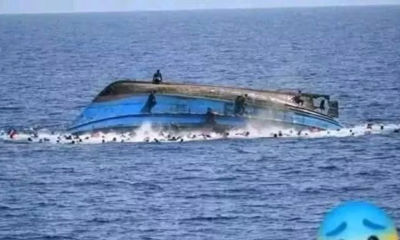
I have seen the Mediterranean not as tourists see it, but as the last road for the unwanted. It is the place where hope floats until it sinks. Boats packed with the desperate do not cross for adventure and never will. They cross because EU laws want us reduced to subjects it can criminalise under its language. But the sea is now a courtroom, and the waves deliver judgment. Some are rescued. Others are left to vanish, and even their names become salt.
Europe built its border not just on the edges of its land, but deep into the cities where we try to breathe. There is a border in the job interview, the hospital queue, the police station. A border in the way people flinch when they hear your accent. A border in the way you are asked to wait. And wait. And wait. The truth is simple: borders are not designed to protect EU states, they are designed to exclude people and demonstrate that its humane laws are not for everyone . And not just any people, but those whose skin or status or silence fits the shape of undesirable. Us the Black migrants.
Sometimes I wonder: what would happen if Europe opened its borders not just in geography, but in conscience? If it treated every body that washed ashore as a human being, not a subject to problematize. If it measured its greatness not by GDP, but by how few it lets drown or haunt with laws meant to make a civilised Europe.
But the system is too well designed. It does not fail, it functions exactly as intended.
I am not alone in confronting this invisible wall. Others, young, brave, unarmed stand in its path too. What happened to me in Libya, what followed me into Europe, what haunts every person who dares cross without permission, found a mirror in the story of El Hiblu 3. They too refused to return to death. They too believed that Europe would understand. What they received instead was prosecution.
The Accused Rescuers
I knew of Abdalla, Amara, and Khader long before the world called them the El Hiblu 3. In 2019, when I was still in Libya, incarcerated in Al Kararim concentration-like-camp after being pushed back to Libya from the middle of the Mediterranea. I heard what happened on that boat, a merchant ship that rescued over a hundred like me, only to attempt to return them to the very place I was rotting in. These three heroes, just teenagers, stood up. They translated. They protested. They refused to be delivered back to the horrors in Libya.
Three years later, after I had made it to Italy, I flew to Malta in March 2023 and stood outside the court to demand their release. I didn’t go as an activist. I went as someone who knew what Libya meant. I went as someone who knew that refusing to return there is not a crime, but an act of sanity, of life.
In April 2024, I was not just in the audience, I was part of the effort that saw them finally recognized for who they are: human rights defenders. Not criminals. Not threats. Not terrorists. But the irony was too heavy to ignore: they were not honored by the country they stood trial in.
They are still on trial. Every day, they must report to a police station in Malta. Their case has dragged on for more than four years. Their bodies are free, but the law still stalks them like a shadow.
And yet they live with more dignity than those who accuse them.
One of them is raising a daughter. He is raising her with patience and gentleness, despite being called a terrorist by a state that refuses to listen to the truth. I have seen him. I have spoken with them. And I can say with certainty: terrorists do not raise children with that kind of tenderness. Terrorists do not translate fear into safety. Terrorists do not protect women and children from being dragged back into hell.
But what about those who write the policies that sent them to court? What about the architects of lawlessness wearing suits in Brussels and Luxembourg?
Ylva Johansson, who oversees migration and Frontex under the banner of “Home Affairs.” Margaritis Schinas, who speaks of “Promoting our European Way of Life” while managing borders that have drowned thousands. Hans Leijtens, now heading Frontex, a body more famous for pushbacks than protection who ignorantly says: “I wish I didn’t have to send people back to Libya”. Siofra O’Leary, Koen Lenaerts, Fabrice Leggeri, all names attached to systems that criminalize courage and the will to live.
I wonder: do they have children? And if so, what do they tell them when they go home after work? That they made laws today that turned boys who saved lives into symbols of fear? That they upheld judgments that let countries deport people into death?
The real terrorism is not on those boats. It is in the boardrooms where decisions are made to treat rescue as disruption, protest as danger, humanity as threat.
But responsibility does not end at the Maltese shoreline. It stretches into the polished offices of Brussels, where Ursula von der Leyen continues to negotiate deals that outsource European border violence while calling it protection. Under her watch, millions are spent fortifying walls, funding Frontex, and rewarding countries like Libya for intercepting the very boats that carry people like Abdalla, Amara, and Khader. The EU speaks of stability. But if this is stability, it is one built on detained children and broken families.
In Malta itself, the courtroom where the El Hiblu 3 are judged is not untouched by…. Their case passed through the hands of Magistrate Donatella Frendo Dimech and Judge Aaron Bugeja, and now sits before Judge Consuelo Scerri Herrera. Long before guilt or innocence could be determined, they were already burdened by physical confinement and psychological torture.
I call them the accused rescuers because the law now punishes rescue. It punishes courage when it is in black skins. If those three boys had been European, they would have been celebrated. Instead, they stand trial in a country that accepted them only as cases to prosecute symbolically, not as humans.
I write this because what happened to them could have happened to me had I had the courage to stand off against being pushed back by the Lady Sham vessel just two months before theirs. And what is being done to others in Greece, in Italy, in detention centers across this continent, is being done in the name of law.
But I ask again: What is a law that condemns you for not dying quietly? What is a law that jails children for insisting on life?
The European Lie
There is something unspoken in Brussels, in the offices of Strasbourg, in the manipulative speeches of leaders who speak of unity, freedom, and rights. The lie is not in what they say. It is in what they choose not to see because EU laws for us are non-existent in its humane form as it consciously foresees.
I have sat across from institutions that speak the language of compassion. I have walked into those offices with papers, images and videos documenting torture, killings, detention, starvation, enslavement and rape. They nod, they take notes, and then nothing. The system does not break, it simply looks away. And that is its design.
I have walked through UN offices in Geneva and New York. I have heard the words “international protection” and “durable solutions.” But I have also read the EU Trust Fund contracts and Frontex training mandates that stretches to Libya, Tunisia, Algeria, Mauritania, Niger, Senegal, Morocco &c. &c. The law they speak of in public is not the law they practice.
This is a place where legality becomes a costume. It wears the robe of justice, but underneath it is a machinery of death and denial. You are legal if you are useful. You are visible if you are needed. And if not, you disappear even while you are still alive.
What makes it worse is that they believe their own myth. That they are the guardians of human rights. That their policies are necessary. That detaining thousands without charge, funding prisons in Libya, Tunisia and elsewhere, and letting people drown is somehow the price of order.
They will say they are protecting their borders. But the question is: from whom? From the woman raped in a detention centers in Tripoli? From the boy who watched his brother die in the desert? From the man who dug graves for others before escaping his own death? From Pato who lost his little daughter Marie and his wife Fati to the scorching heat of the Tunisian border?
The real threat is not us. It is the comfort that allows people to live near injustice without questioning it. The lie is not just in the politics, it is in the silence of everyday life I see across Europe. The silence of those who walk past our protests in Rome, Brussels, Geneva, Berlin and elsewhere. The silence of those who know what happens and say, “It’s complicated.” The silence that lets law become a tool for exclusion to the black skinned, be it within or out of the union.
I carry my documents. I follow the rules. But no document can erase the feeling that, in the eyes of this system, I was never meant to belong.
The Market of Misery
There is a saying: if suffering becomes predictable, someone is profiting. I used to think this was just a metaphor. But I have lived long enough to know it is a fact. Misery has become a business, one with budgets, contracts, and signatures behind closed doors.
What they call “migration management” is not about managing movement. It is about managing the optics of pain. It is about where people are allowed to suffer, and how far from European eyes it must happen to remain acceptable. And above all, it is about who gets paid to make it happen.
Every cage in Libya has a law that made it possible. Not a criminal law but a migration protocol, a disembarkation clause, a funding agreement signed in Rome, Brussels and Berlin. These are the legal tools that turn detention into policy and suffering into a conscious strategy.
I have seen the warehouses in Libya, where young men are hung upside down, electrocuted, and called “illegals.” I have met and spoken girls who were taken from those same places, pregnant from rape, their voices shaking not from shame but from the absence of anyone willing to listen. These are not rogue crimes, they are systems funded, maintained and delegated.
Europe does not carry out the torture itself. That would be too messy, too direct. It pays others to do it. Through deals. Through “partnerships.” Through millions sent to those who run prisons that have no name, no official oversight, but many, many bodies inside.
This is not a claim. It is a fact. I know this not because I read it in a report but because I lived inside it. I translated for those who screamed. I was made to clean blood with my bare hands. I was sold to a man who called himself commander and made us bend to his choosings. I was told, by men who said they did this because of money, that Europe was watching, and would do nothing.
And when the boats are intercepted at sea, when they are returned to these same places of horror, those who paid for the fuel, who provided the GPS, who trained the coast guards, they smile and call it “rescue.” assisted by Frontex.
How can something be called a rescue when it delivers people back into the arms of their torturers?
The answer is simple: when the goal is not saving lives, but saving the image of law worn in the boots of Frontex.
And in this market, the image of law is the most expensive product. The EU pays billions not to protect people, but to protect its narrative. It builds camps far from its borders, so it can say: “We are not doing it.” It funds detention centers under the name of “capacity building.” It provides equipment, training, surveillance, all under the language of order and cooperation.
UNHCR and IOM are part of this architecture. Their role is to manage the unmanageable, to put a blue stamp on a broken system. I have seen their offices. I have walked their corridors. In Geneva and New York, I told them what happens in Libya. But they already knew.
The truth is, this suffering is not accidental. It is engineered. Designed to discourage others from coming. To send a message that even if you survive the war, the hunger, the journey, you will not be welcomed. You will be processed, outsourced, denied.
Europe has outsourced its cruelty. And what shocks me most is not the brutality itself. It is the ease with which it is denied.
Sometimes I wonder: do those who draft these policies sleep well? Do they believe they are protecting something? A culture? A way of life? If so, at what cost?
Because I have met children who no longer cry. Not because they are brave, but because they ceased to exist. I have met women who no longer speak of what was done to them, not because they healed, but because they no longer hope to be believed. I have buried friends who died not just from wounds, but from the knowledge that the world had chosen to ignore them.
This market is not invisible. Its tracks are everywhere, in the surveillance drones above the desert, in the rubber stamps of unread asylum claims, in the eyes of those who smile in press conferences while thousands drown at the coast of Cutro or shot with water cannons at polish and hungarian borders.
They say the sea is dangerous. But for us the real danger lies on land in the decisions made, the deals signed, the lies printed in newspapers about “crisis” and “invasion.” There is no invasion. Only people fleeing what they did not choose, only people trying to live.
And yet, the system has turned their survival into a spectacle of punishment.
Who profits from that? This question, once asked, must never be unasked.
Questions of Belonging and Law
There comes a point in the journey when you stop asking when you will be free, and you begin to ask if freedom was ever meant for you.
Not freedom in the abstract sense, but in the simple acts of being seen, heard, held by a system that does not fear your skin, your accent, your origin. A freedom to walk without explanation past the mountains of Oulx or Ventimiglia . A freedom to knock on the door of law and not be left standing outside as in Rome with Lam Magok.
And so I ask: What is the purpose of law, if not to protect those most in need of protection?
When a man drowns reaching the shore of rights, who is responsible? The sea, or the inability of the institutions on the land? When a woman is raped in a detention center funded by EU money, is her pain local or exported by EU? If the hands that tortured me did not speak English or Italian or French, but were trained and equipped by governments that do, what meaning do their denials carry?
I ask them not to accuse, but to understand. Because something inside me still wants to believe in justice. Something in me refuses to accept that legality and morality must forever walk separate paths.
But perhaps this is the core of the crisis, not the arrival of people at borders, but the collapse of meaning within law itself. If law is not for the dark skinned combined, then who is it for? If our rights are negotiable, then are they rights at all?
The more I reflect, the more I see a pattern: those who hold the “right” skins, and passports are not asked to prove their humanity. They are presumed deserving. Their need is never criminalized. Their movement is a choice. But for the rest of us, existence becomes a burden we must constantly justify. We are told to wait, to comply, to be patient while the process unfolds. But the process has teeth that bite. And the waiting room is a place where many never leave.
There is also something deeper, a question of belonging. Who gets to belong to this world, not just legally, but wholly as a being? For me belonging is not just about documents. It is about recognition. It is about someone looking at you and saying, “You are part of this world. Your life has weight. Your voice matters.”
But when the law does not see you, you begin to disappear in other ways. You shrink your presence. You avoid the police, even when you are the victim. You learn not to get sick, because hospitals ask for papers before they ask what hurts. You learn not to dream too loudly. Because hope, in this context, is dangerous, it makes you believe that things might change.
I want to ask the people in power: what kind of society are you building when it is easier to die crossing a sea than to be welcomed on a shore? Oh dear Ita-Albania.
What vision of humanity allows some to carry the burden of proof, while others carry the privilege of exemption?
What is citizenship, if it becomes a shield for some and a weapon against others?
And perhaps most haunting of all: how many people must vanish before disappearance itself becomes a normal part of governance?
The law is supposed to be a light. But I have seen it used as a curtain pulled closed when we approach, so that suffering can be neatly hidden from those who claim to care.
And so I return to the question: what is the law for?
Between Exile and Silence
There are nights when I do not speak. Not because I have nothing to say, but because my body remembers what the world prefers to forget. In those moments, silence is not absence, it is my only language of survival. The only thing that remains after my voice is exhausted by pleading, explaining, justifying.
For me exile is not only the loss of land. It is the loss of recognition. You become a ghost inside living skin. You stand in lines that do not move. You write emails that return no answers. You tell your story so many times that you begin to wonder if it happened to someone else.
But I remember.
I remember the prison nights, when we slept in shifts because we were filled like objects who should not breathe. I remember the cold cement floors of the prisons. I remember the sound of bones breaking from tortures. I remember the smell of diesel in the overcrowded boat on the mediterranea. I remember the face of the man who stopped breathing beside me before dawn.
And I remember the silence of Europe when we screamed.
That silence still surrounds me. It follows me into train stations, airports, the European Parliament in Brussels, Strasbourg, UN offices in Geneva, house of deputies in Rome, into social offices where people avoid eye contact because they know. They know something terrible happened to me and continue to happen to those whose skin is like mine. They just do not want to be responsible for it.
I do not write this to provoke guilt. I have no interest in pity. Pity is cheap and temporary. I write because memory must become a mirror. I write because if we do not say what happened, the world will keep saying nothing happened.
There is a kind of loneliness that comes from surviving what others deny. A loneliness not just of the body, but of truth. You carry a knowledge others cannot hold. You walk in cities that speak of peace while their money funds cages. You learn to navigate systems built to delay your existence.
And still, you rise in the morning. You brush your teeth. You make phone calls. You help others. You build, not because the world has been kind, but because your dignity refuses to die.
They call us migrants, refugees, illegals. As if we are movements without meaning. But we are people. We are memories. We are proof that borders do not stop suffering; they export it.
Some will ask: what do you want?
I want the right to exist without fear. I want a world where no child learns to swim next to corpses. I want a law that does not vanish when I speak my name.
But until then, I will continue to speak. Even if my voice trembles. Even if it is ignored.
Because somewhere, someone is standing at another border, carrying everything they have left in a small bag, hoping that this time, the door will open.
And when it does, let the law be there not to stop them, but to welcome them.






Features
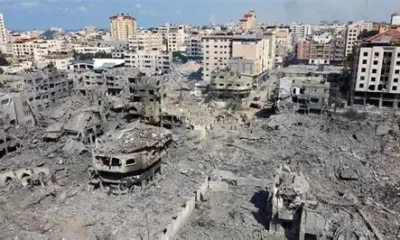
Gaza : Près de deux millions de personnes ont besoin d’une aide d’urgence en matière d’hébergement
Près de deux millions de personnes, soit la quasi-totalité de la population de Gaza, ont toujours besoin d’une aide en matière d’hébergement, un an après l’annonce d’un cessez-le-feu. Alors que les pluies hivernales commencent, l’ensemble des approvisionnements prévus par les partenaires humanitaires intervenant dans le domaine de l’hébergement ne couvre qu’à peine 17 % des besoins identifiés pour l’hiver, a averti aujourd’hui Amy Pope, Directrice générale de l’Organisation internationale pour les migrations (OIM).
Après des années de déplacements et de destructions généralisées, les Palestiniens affrontent un quatrième hiver sans protection adéquate contre la pluie, les inondations et le froid. L’insuffisance des financements et les restrictions persistantes imposées par les autorités israéliennes à l’entrée de fournitures essentielles destinées aux abris empêchent les organisations humanitaires d’apporter une réponse à la hauteur des besoins.
« Les familles qui ont déjà subi des déplacements répétés et des pertes dévastatrices doivent pouvoir affronter l’hiver dans la sécurité et la dignité », a déclaré Pope. « Les matériaux destinés aux abris doivent pouvoir entrer rapidement, de manière prévisible et en quantités suffisantes pour répondre aux besoins. »
Plus de la moitié des tentes et des abris de fortune actuellement utilisés sont en mauvais état et doivent être remplacés. Les tentes sont conçues comme une mesure d’urgence temporaire et ne durent généralement que six à douze mois.
Faute d’autres solutions, de nombreuses familles vivent dans des bâtiments endommagés par la guerre qui présentent de graves risques pour leur vie. Le mois dernier seulement, des dizaines de personnes ont été tuées dans la ville de Gaza lorsqu’un bâtiment endommagé par la guerre s’est effondré. En août, un partenaire de l’OIM avait recensé plus de 3 600 structures jugées dangereuses et présentant un risque d’effondrement.
Le renforcement du phénomène El Niño devrait entraîner des précipitations plus abondantes, susceptibles de fragiliser davantage les bâtiments déjà dangereux, tandis que les systèmes de drainage fortement endommagés exposent les communautés aux inondations.
L’OIM et ses partenaires chargés de la gestion des sites ont recensé près de 1,8 million de personnes vivant dans des sites de déplacement, dont la plupart se trouvent dans des zones exposées aux risques d’inondation. Les eaux de crue pourraient endommager les abris, détruire les derniers biens des familles et contraindre les populations à se déplacer une nouvelle fois.
Environ 8 600 kits d’hébergement d’urgence de l’OIM sont prépositionnés à l’extérieur de Gaza et prêts à être acheminés, mais les autorités israéliennes continuent de leur refuser l’accès aux points de passage. Pendant ce temps, les équipes humanitaires utilisent, dans la mesure du possible, des matériaux disponibles localement et des matériaux récupérés. Ces efforts apportent un soutien temporaire limité, mais restent insuffisants pour répondre à l’ampleur des besoins en matière d’hébergement.
« Les solutions sont connues, les fournitures sont prêtes et les équipes humanitaires sont préparées à les acheminer », a déclaré Pope. « Un accès humanitaire immédiat et durable est essentiel pour protéger des vies, renforcer les abris endommagés et aider les familles à dépasser le stade des solutions temporaires. Toutes les parties doivent faciliter une action humanitaire fondée sur les principes humanitaires et soutenir une réponse à la hauteur de la gravité de la crise. »
L’OIM appelle à autoriser immédiatement et durablement l’entrée de tentes, de kits d’hébergement d’urgence, d’unités de logement de secours, de bois, d’outils et d’autres matériaux nécessaires pour renforcer les abris, réparer les habitations endommagées et aider les familles à trouver des logements plus sûrs.
Un accès prévisible aux équipements spécialisés, au carburant, aux pièces de rechange et aux matériaux de construction sera également essentiel pour permettre l’enlèvement des décombres et progresser vers un relèvement précoce.
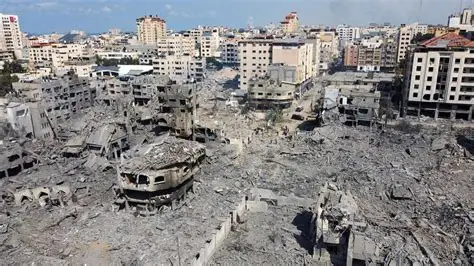
Nearly all of Gaza’s population, almost two million people, still require shelter assistance one year after a ceasefire was announced. As winter rain begins, the combined supply pipeline of humanitarian shelter partners covers barely 17 per cent of identified winter needs, the International Organization for Migration (IOM) Director General Amy Pope warned today.
After years of displacement and widespread destruction, Palestinians are facing a fourth winter without adequate protection from rain, flooding and cold. Insufficient funding and continuing Israeli authorities’ constraints on the entry of critical shelter supplies are preventing humanitarian organizations from responding at the scale required.
“Families who have already endured repeated displacement and devastating loss must be able to face the winter in safety and dignity,” Pope said. “Shelter materials must enter quickly, predictably and at the scale required.”
More than half of all tents and makeshift shelters currently in use are in poor condition that requires replacement. Tents are designed as a temporary emergency measure and generally last only six to 12 months.
With few alternatives available, many families are living in war-damaged buildings that pose serious risks to life. Just last month, dozens were killed in Gaza city when a war-damaged building collapsed. More than 3,600 structures were identified by an IOM partner in August as dangerous and at risk of collapse. The strengthening El Niño phenomenon is expected to bring heavier rainfall, which could further weaken unsafe buildings, while heavily damaged drainage systems leave communities exposed to flooding.
IOM and partners working in site management have identified nearly 1.8 million people living in displacement sites, most of them in areas at risk of flooding. Floodwaters could damage shelters, destroy families’ remaining possessions and force people to move once again.
Approximately 8,600 IOM emergency shelter kits are pre-positioned outside Gaza and ready for delivery but continue to be turned away at crossing points by the Israeli authorities. Meanwhile, humanitarian teams are using locally available and salvaged materials wherever possible. These efforts provide limited temporary support but are insufficient to meet widespread shelter needs.
“The solutions are known, the supplies are ready and humanitarian teams are prepared to deliver,” Pope said. “Immediate and sustained humanitarian access is essential to protect lives, strengthen damaged shelters, and help families move beyond temporary solutions. All parties must facilitate principled humanitarian action and support a response equal to the severity of the crisis.”
IOM calls for the immediate and sustained entry of tents, emergency shelter kits, relief housing units, wood, tools and other materials needed to reinforce shelters, repair damaged homes and support families seeking safer accommodation. Predictable access to specialized equipment, fuel, spare parts and construction materials will also be essential for debris removal and movement toward early recovery.
Features
Les immigrants Nigérians confrontés à des problèmes de santé mentale invisibles malgré leur réussite, alerte un expert
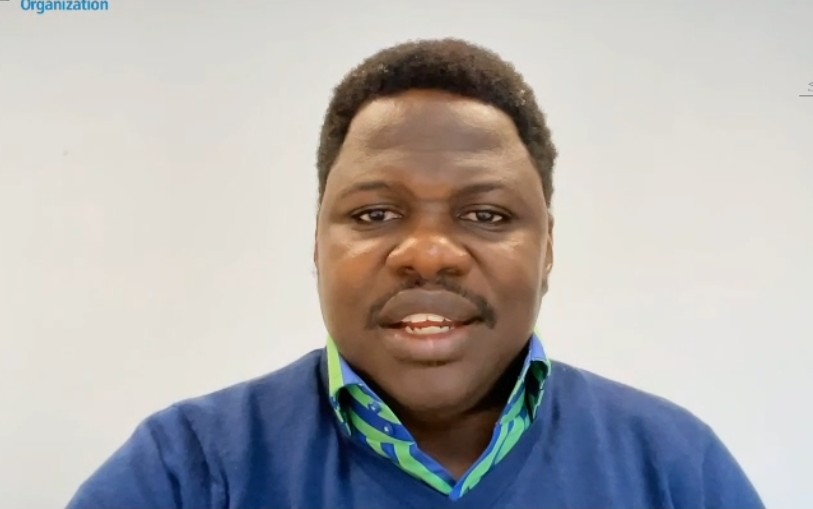
Les immigrants Nigérians peuvent connaître une réussite professionnelle et personnelle dans leurs pays d’accueil tout en faisant face à des problèmes de santé mentale souvent dissimulés, liés à la migration, aux changements identitaires et au stress prolongé, a déclaré Kehinde Ekpudu, un professionnel de la santé mentale.
Ekpudu, titulaire d’un MBA et d’un master en travail social, et travailleur social clinicien agréé (RCSW), a mis en lumière les conséquences psychologiques de la migration lors d’une présentation intitulée « Au-delà de la survie : santé mentale des immigrants nigérians — expériences vécues, identité et cerveau ».
Cette intervention a eu lieu lors du premier Sommet nigérian sur la santé mentale, organisé en ligne hier à l’occasion de la Journée mondiale de la santé mentale.
La présentation a examiné les liens entre la migration, l’identité, le cerveau et la santé mentale, en attirant l’attention sur les pressions émotionnelles auxquelles les immigrants peuvent être confrontés lorsqu’ils s’adaptent à la vie dans un nouveau pays.
« Lorsque nous parlons de la réussite des immigrants, nous célébrons leur capacité à s’en sortir. Mais que se passe-t-il lorsque la survie devient un mode de vie ? », a demandé Ekpudu, remettant en question la tendance à mesurer la réussite des immigrants principalement à travers leurs réalisations professionnelles et leur capacité d’adaptation.
Selon la présentation, les Nigérians n’arrivent pas dans leurs pays d’accueil dépourvus d’identité, d’expérience ou de références culturelles. La migration ne consiste pas simplement à passer d’un lieu géographique à un autre ; elle représente également une transition psychologique et identitaire.
La présentation a souligné que les immigrants peuvent être amenés à concilier simultanément plusieurs identités : nigériane, africaine, noire, canadienne, professionnelle, partenaire, parent, fils ou fille.
« La migration peut nous obliger à redéfinir certaines parties de nous-mêmes qui nous semblaient autrefois stables », indique le document.
Ekpudu a également cité une étude publiée en 2023 par Aluh et d’autres chercheurs, selon laquelle 51,7 % des immigrants nigérians participant à une étude menée au Canada présentaient un résultat positif au dépistage de la dépression.
La présentation a en outre relevé que le fait de résider au Canada depuis plus de dix ans était significativement associé à une probabilité plus élevée d’obtenir un résultat positif au dépistage de la dépression.
Ce constat remet en question l’idée selon laquelle les difficultés psychologiques liées à la migration diminuent nécessairement à mesure que les immigrants passent davantage de temps dans leur pays d’accueil.
Au-delà de la dépression, la présentation a identifié l’adaptation constante, l’incertitude et le stress chronique comme des facteurs susceptibles d’affecter le système nerveux et le bien-être émotionnel des immigrants.
Parmi les conséquences possibles figurent l’hypervigilance, l’anxiété, les troubles du sommeil, l’épuisement émotionnel, les difficultés de concentration et le burn-out.
« Parfois, ce qui ressemble à de la résilience de l’extérieur est en réalité un système nerveux qui est devenu très performant dans l’art de survivre », a déclaré Ekpudu.
La présentation a suggéré que des comportements souvent interprétés comme des signes de résilience peuvent parfois traduire les effets d’une pression psychologique prolongée, notamment lorsque les personnes se sentent obligées de rester fortes malgré leurs difficultés émotionnelles.
Elle a également examiné l’influence des attentes culturelles sur la manière dont les immigrants nigérians comprennent et expriment leurs problèmes de santé mentale.
Des expressions telles que « Je suis simplement fatigué », « Ce n’est que du stress », « Dieu m’aidera », « Je dois être plus fort », « D’autres personnes vivent des situations plus difficiles » et « Je ne peux pas craquer » ont été présentées comme des façons courantes de décrire ou d’aborder les difficultés émotionnelles sans reconnaître ouvertement ses besoins en matière de santé mentale.
Selon la présentation, ces réactions peuvent refléter la pression ressentie par certains immigrants, qui doivent rester forts, assumer leurs responsabilités familiales et continuer à rechercher la réussite, même lorsqu’ils traversent des difficultés émotionnelles.
Intitulée « Au-delà de la survie », la présentation a insisté sur la nécessité de prendre en compte les expériences vécues, les identités ainsi que le bien-être physique et psychologique des immigrants dans les discussions sur la santé mentale.
Elle a proposé un parcours allant de la survie à la confiance en soi, fondé sur trois principes : le sentiment d’appartenance, l’intégration et l’épanouissement.
Dans ce cadre, le sentiment d’appartenance consiste à pouvoir créer des liens sans renoncer à son identité ; l’intégration implique d’accepter et de concilier plusieurs identités ; tandis que l’épanouissement signifie reconnaître que la vie peut offrir davantage que la simple survie face aux difficultés quotidiennes.
« Je peux trouver ma place sans renoncer à moi-même », indique la présentation pour illustrer le premier principe.
Elle ajoute : « Je peux assumer plusieurs identités » et « Ma vie peut être davantage qu’une simple survie ».
La présentation a été réalisée dans le cadre des activités de Twin Ocean, dont la devise est : « Naviguer ensemble sur les vagues de la vie ».
Le sommet nigérian appelle à une approche inclusive des soins de santé mentale
Le coordonnateur du Sommet nigérian sur la santé mentale (NMHS), le Dr Oluyinka Oyeniji, a appelé à l’adoption d’une approche nationale inclusive des soins de santé mentale, qui tienne compte des expériences vécues par les patients, les aidants, les familles et les autres personnes affectées par les troubles mentaux.
Oyeniji a lancé cet appel hier dans son discours d’ouverture du premier Sommet nigérian sur la santé mentale, organisé pour commémorer la Journée mondiale de la santé mentale.
Le sommet, organisé en collaboration avec le Ladoke Akintola Neuroscience Group (LNG), a réuni des défenseurs de la santé mentale, des professionnels de santé, des chercheurs et d’autres acteurs concernés afin de discuter des défis et des possibilités d’amélioration des soins de santé mentale au Nigeria.
Selon Oyeniji, le sommet a été créé pour promouvoir des changements positifs dans le secteur de la santé mentale du pays et renforcer les efforts en faveur d’une réponse nationale coordonnée aux problèmes de santé mentale.
Il a déclaré que cette initiative revêtait une importance particulière à un moment où de nombreux Nigérians étaient confrontés à des problèmes de santé mentale, soit directement, soit en raison de leurs responsabilités en tant qu’aidants, membres de la famille ou amis.
Le coordonnateur a également souligné la démarche du gouvernement fédéral visant à dépénaliser la tentative de suicide, qu’il a qualifiée d’évolution importante après plus de quatorze années de plaidoyer.
Il a salué les acteurs qui ont maintenu la mobilisation en faveur de cette réforme et exhorté les Nigérians à soutenir les initiatives visant à améliorer les soins de santé mentale et à protéger les droits des personnes vivant avec des troubles mentaux.

Libye : des centaines de migrants rapatriés, des renforts déployés à Tobrouk
Libya repatriates hundreds of migrants, deploys reinforcements to Tobruk

La Matrice de suivi des déplacements de l’OIM a suivi 97,2 millions de personnes en 2025

IOM’s Displacement Tracking Matrix monitors 97.2 million people in 2025

Soudan : les attaques de drones perturbent les cours à El-Obeid, alerte le NRC
-
 Features2 weeks ago
Gaza : Près de deux millions de personnes ont besoin d’une aide d’urgence en matière d’hébergement
-

 News Extra2 weeks ago
NACTAL conteste le rapport américain sur la traite des personnes et exige la reconnaissance des contributions des organisations de la société civile nigérianes
-
 News Extra2 weeks ago
Un avocat ougandais exhorte l’UA à rejeter les accords migratoires avec l’Europe
-
 News Extra2 weeks ago
Sudan: Drone attacks disrupt school lessons in El Obeid- NRC
-
 Features3 weeks ago
Nigerian immigrants face hidden mental health challenges despite success, expert warns
-
 Features2 weeks ago
Gaza: About two million need urgent shelter assistance
-

 News Extra2 weeks ago
NACTAL faults US trafficking report, demands recognition of Nigerian CSOs’ contributions
-

 News Extra2 weeks ago
US to deport fresh set of Nigerians over alleged criminal offences