
Features
ENBIC: Who owns West Africa’s biometric data, and what role does IOM play?

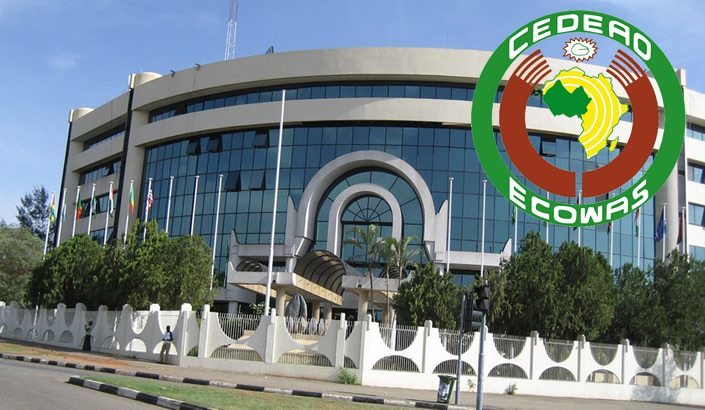
A small plastic card may soon become one of the most consequential documents carried by millions of West Africans.
The ECOWAS National Biometric Identity Card, ENBIC, is designed to make movement across the region easier, replace the old travel certificate and provide a more secure means of establishing identity. But beneath the promise of seamless travel lies a question that deserves far more public attention:
When a citizen submits fingerprints, facial images, biographical information and other identity details for an ECOWAS biometric card, who ultimately controls that information?
And, perhaps more importantly, where does the International Organization for Migration (IOM) fit into a system that involves the collection, verification, sharing and potentially cross-border use of some of the most sensitive information a person possesses?
These are not merely technological questions. They are questions of sovereignty, privacy, accountability and citizens’ rights.
A regional identity project with national fingerprints
ENBIC is not simply another identity card.
ECOWAS says the card was established pursuant to Decision A/DEC/01/12/14 and is intended to facilitate free movement, serve as proof of identity and residence, and increasingly function as a travel document. The regional body says the card can also support services such as national identification, financial services and e-commerce.
In Nigeria, the ENBIC application platform is operated through the Nigeria Immigration Service. The official portal invites Nigerian citizens to apply, reissue cards, correct information, track applications and book appointments.
That immediately raises an important distinction.
ENBIC may be a regional instrument, but the biometric information collected from a Nigerian citizen does not automatically become the property of a regional organisation—or of an international organisation involved in supporting the programme.
Indeed, Nigeria’s own data-protection framework places obligations on organisations that determine the purposes and means of processing personal information.
The Nigeria Immigration Service’s privacy policy identifies NIS as the data controller for its digital services and expressly includes facial images and fingerprints among the personal information it may collect.
That is significant.
It means that the public conversation should move beyond the simplistic question of “Who owns ENBIC?”
The more useful questions are:
Who is the data controller? Who is the processor? Where is the database hosted? Who can access it? Under what law? For what purpose? For how long? Can it be transferred outside Nigeria? And who can order its disclosure?
Those questions become particularly important when identity systems cross national boundaries.
IOM is involved—but involvement is not ownership
IOM’s participation in ENBIC is not new.
ECOWAS documented IOM’s involvement in the initiative as far back as 2016, when the organisation supported member states by examining opportunities and challenges associated with rolling out a national biometric identity card for ECOWAS countries.
In 2019, ECOWAS also said IOM supported an advocacy and sensitisation campaign on ENBIC in Nigeria, Benin and Togo. The exercise involved border officials, transporters and communities and was presented as part of efforts to improve free movement, border management and the fight against trafficking.
More recently, in September 2026, ECOWAS and IOM again engaged the Nigerian media on the ENBIC initiative, explaining its anticipated contribution to mobility, identity verification and border management.
But there is an important distinction that should not be lost in the public debate:
Supporting, advising, sensitising or providing technical assistance does not, by itself, establish ownership of citizens’ biometric information.
Publicly available ECOWAS and Nigerian documents reviewed for this story do not establish that IOM owns the ENBIC database.
What they do establish is that IOM has had a role in supporting aspects of the broader biometric identity and migration-management agenda.
That distinction is crucial because allegations that an international organisation “owns” citizens’ biometric data require evidence of legal ownership or data-controller status—not simply evidence of participation in a programme.
But who controls the information once borders disappear?
This is where the ENBIC debate becomes more complicated.
A biometric identity card is valuable precisely because different authorities can trust the identity attached to it.
ECOWAS is pursuing interoperability between national foundational identification systems and ENBIC. In February 2026, the regional body said its roadmap work was intended to establish pathways from national foundational ID systems to ENBIC and clarify the functions of stakeholders involved in planning, designing, developing, deploying, operating and managing the card throughout its life cycle.
Interoperability brings obvious benefits.
A traveller should not have to prove identity repeatedly at every border.
But interoperability also creates a governance challenge:
The more systems communicate, the more important it becomes to know exactly what information is being exchanged.
A border official may need to know that a person is who they claim to be.
That does not necessarily mean the official needs unrestricted access to the person’s entire identity record.
The difference between identity verification and identity surveillance is therefore one that policymakers cannot afford to ignore.
Biometrics are not ordinary data
A lost password can be changed.
A compromised fingerprint cannot.
A person can obtain a new passport number.
They cannot obtain a new set of fingerprints.
They cannot simply replace the face they were born with.
That is why biometric databases require a higher level of scrutiny.
IOM’s own 2026 publication on biometrics and identity management acknowledges the potential benefits of biometric systems while identifying risks involving privacy, discrimination, accountability, security, interoperability, “function creep” and misuse. It recommends attention to legal frameworks, data-protection impact assessments, cybersecurity, oversight and redress mechanisms.
The warning about function creep is particularly relevant.
A system created to facilitate travel could potentially acquire additional functions over time.
Today, ENBIC may primarily answer:
“Who is this traveller?”
Tomorrow, policymakers could be tempted to ask:
“Where has this person travelled?”
Or:
“Which government services has this person accessed?”
Or:
“Which security databases should this identity be compared against?”
Some of those uses may be lawful or legitimate under particular circumstances.
But the central principle remains:
A new use of biometric data should not simply be assumed because the technology makes it possible.
What does ECOWAS law say?
West Africa is not without data-protection rules.
The ECOWAS Supplementary Act on Personal Data Protection establishes principles governing the processing and transfer of personal data.
Among other provisions, it requires information about the identity of the data controller and the purposes for which information is being processed, and places conditions around transfers of personal data to countries outside ECOWAS.
ECOWAS has also acknowledged that its existing regional data-protection framework requires updating. In November 2024, experts from member states and national data-protection authorities met to validate a revised Supplementary Act designed to respond to changes in the digital environment.
That development is revealing.
Technology has moved rapidly.
Regional governance is trying to catch up.
And ENBIC sits directly in that gap.
Nigeria has its own privacy obligations
Nigeria’s Data Protection Act 2023 provides another layer of protection.
The Nigeria Data Protection Commission says the law regulates the processing of personal data, protects data subjects’ rights and establishes an independent regulator responsible for supervising data controllers and processors.
The NDPC also lists rights including the right to be informed, access personal information, seek rectification, object to processing, restrict processing and report concerns to the supervisory authority.
This creates an important accountability chain for ENBIC in Nigeria.
If NIS is collecting the information, citizens should be able to understand:
what information is collected;
why each category is collected;
who determines the purposes of processing;
which organisations process the information on behalf of NIS;
whether information is transferred outside Nigeria;
how long the information is retained;
who can access it;
how breaches are reported;
and what remedies are available to citizens.
The NIS privacy policy states that personal information may be shared with government agencies, security services, service providers, international immigration or border authorities where legally required, and law-enforcement agencies responding to valid requests or legal processes. It also says transfers outside Nigeria may occur where necessary for service provision or international cooperation, subject to legal and security safeguards.
For an ordinary citizen, however, “where legally required” should not end the conversation.
The next question should be:
Which law, which authority and which procedure?
The unanswered IOM questions
IOM’s involvement therefore deserves scrutiny—not because participation proves ownership, but because international organisations operating around identity systems can occupy influential positions in programme design, technical assistance, migration management and border governance.
The public deserves clarity on several issues.
1. Does IOM have any access to ENBIC biometric records?
If yes, what categories of information can it access?
Is the access direct or through another institution?
Is the access temporary, permanent or project-specific?
2. Is IOM a data controller, joint controller, processor or simply a programme-support organisation?
These are not interchangeable descriptions.
Each can carry different legal responsibilities.
3. Where is the data stored?
Is Nigerian ENBIC data physically hosted in Nigeria?
Is any component hosted elsewhere?
Who operates the servers?
Who holds encryption keys?
4. Can data move between ECOWAS countries?
If yes, what information is exchanged during border verification?
Does the receiving authority obtain the complete biometric record, a verification response, or only limited identity information?
5. What happens when an international partner leaves a project?
Does it retain copies?
Are those copies destroyed?
Who independently verifies deletion?
6. What happens after a data breach?
Who must notify affected citizens?
Which regulator investigates?
Which institution pays for remediation?
And can a citizen obtain compensation?
These questions are not accusations.
They are basic governance questions for any regional biometric system.
The sovereignty question
There is also a deeper issue.
Biometric identity systems are increasingly becoming part of the infrastructure through which governments understand their populations.
Whoever controls the infrastructure does not necessarily “own” the people—but can acquire significant power over how people are identified, verified and permitted to move.
That is why data governance should be treated as part of national and regional sovereignty.
Nigeria’s immigration authorities are already emphasising cybersecurity, data privacy and protection of critical information infrastructure as part of their digital transformation agenda.
The same principle should apply to regional identity infrastructure.
If ENBIC is to become a trusted regional credential, citizens need more than assurances that the card is secure.
They need to know who is accountable when something goes wrong.
The danger of confusing integration with unrestricted data sharing
There is a seductive logic behind digital integration:
One region.
One identity standard.
One interoperable system.
But regional integration does not have to mean unlimited information sharing.
A well-designed system can allow a border officer to verify that a traveller is legitimate without exposing every piece of information contained in that person’s identity profile.
This is where data minimisation becomes important.
Collect only what is necessary.
Use it only for clearly defined purposes.
Give access only to those who need it.
Keep it only as long as necessary.
And create an auditable trail showing who accessed what information and why.
These safeguards become even more important because the ECOWAS vision for ENBIC is broader than merely producing a plastic card. The Commission says the card is increasingly being developed as an instrument capable of supporting identification and other services beyond border travel.
The broader the system becomes, the greater the need for clearly defined boundaries.
A card is not the real story
The real story is the database behind the card.
The traveller sees a photograph, name, card number and security features.
Behind that card could sit fingerprints, facial information, biographical records and links to other identity systems.
That invisible infrastructure is where the real power lies.
And that is why the central question surrounding ENBIC should not simply be:
“Will this card make travelling across West Africa easier?”
It probably can.
The more difficult question is:
“Can West Africa build a regional identity system that makes movement easier without making citizens’ most sensitive information vulnerable to unnecessary access, indefinite retention or uncontrolled secondary use?”
That is the test that matters.
What IOM’s role should mean—and what it should not mean
IOM’s long-standing involvement in ENBIC and related identity-management discussions makes the organisation an important stakeholder in understanding the project’s development. But the available evidence does not establish that IOM owns Nigerian citizens’ ENBIC biometric data. ECOWAS and Nigerian authorities remain central actors in the system’s institutional and operational architecture.
That distinction should be preserved.
At the same time, international involvement should never be treated as a substitute for public accountability.
If IOM provides technical assistance, the public should be able to know the boundaries of that assistance.
If it processes information, the legal basis should be clear.
If it has no access to biometric databases, that should be clearly stated.
If it does have access, citizens deserve to know under what safeguards.
And if it does not control the data, the institutions that do should be clearly identified.
The questions West Africa cannot afford to postpone
ENBIC promises to make borders less cumbersome.
But digital borders can become invisible in another sense: citizens may never see the databases through which they are being identified.
That is precisely why transparency must precede convenience.
The ECOWAS Commission has acknowledged that the implementation of ENBIC requires clear institutional arrangements, legal considerations, infrastructure, risk management and coordination among stakeholders.
Those arrangements should be visible to the people whose identities are being digitised.
West Africans should not have to discover after a breach, a misuse or a disputed border decision who had access to their information.
They should know before handing over their fingerprints.
The fundamental principle is simple:
The citizen may carry the card, but the real power lies with whoever controls the data behind it.
And as West Africa moves toward increasingly interconnected identity systems, the question of who controls that power—and who can hold them accountable—must become part of the ENBIC conversation.



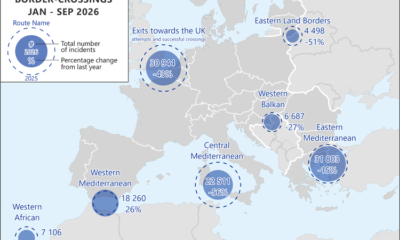

Le nombre de franchissements irréguliers des frontières de l’Union européenne (UE) a continué de diminuer au cours des neuf premiers mois de 2026, avec une baisse de près d’un tiers des détections par rapport à la même période de l’année dernière. Un peu plus de 91 000 franchissements ont été enregistrés, selon les données préliminaires recueillies par Frontex.
Cette baisse sur presque toutes les principales routes migratoires reflète la coopération soutenue avec les pays partenaires ainsi que les mesures préventives mises en place dans les principaux pays de départ, qui continuent de réduire le nombre d’embarcations prenant la mer en direction de l’Europe.
Au cours du seul mois de septembre, environ 14 300 franchissements ont été détectés, soit 28 % de moins qu’en septembre 2025, mais 11 % de plus qu’en août, en raison de l’amélioration des conditions le long des principaux corridors maritimes.
Cette période a également couvert le premier été complet d’application du Pacte de l’UE sur la migration et l’asile, qui instaure une procédure unique et harmonisée de filtrage aux frontières extérieures de l’Union. Les agents de Frontex apportent leur soutien aux États membres dans les principales étapes de cette nouvelle procédure, notamment la détermination de la nationalité des personnes arrivant sur le territoire, la collecte de données biométriques et la vérification des documents.
« Sur la plupart des routes menant vers l’Europe, moins de personnes tentent le voyage, et cette tendance s’est maintenue tout au long de l’été et jusqu’à l’automne. Mais la situation peut évoluer rapidement : les détections sur la route atlantique vers les îles Canaries ont été quatre fois plus nombreuses en septembre qu’en août. Les réseaux de passeurs ne disparaissent pas lorsque les chiffres diminuent. Ils se déplacent et attendent une occasion favorable. Notre mission est d’être prêts lorsqu’ils la trouvent », a déclaré le directeur exécutif de Frontex, Hans Leijtens.
Principaux faits marquants
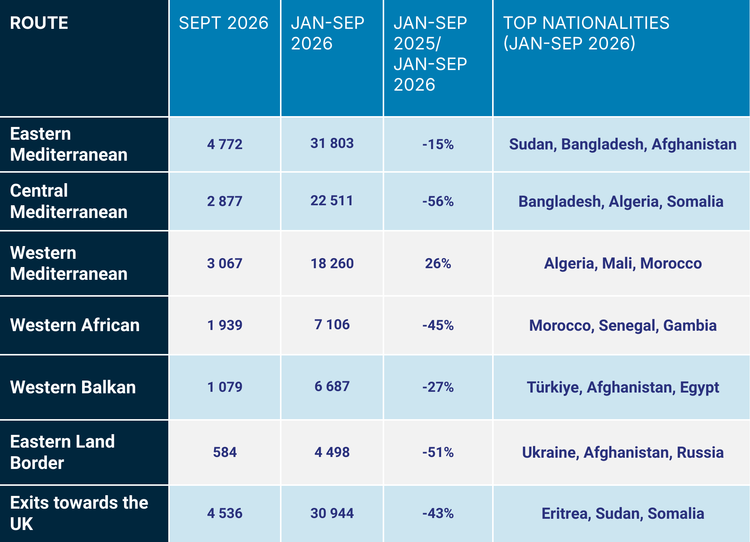
- La Méditerranée orientale et la Méditerranée centrale sont restées les routes les plus fréquentées, représentant ensemble près de 60 % de toutes les entrées irrégulières dans l’UE.
- La Méditerranée centrale a enregistré la plus forte baisse, avec une diminution de 56 % des détections par rapport à la même période de l’année dernière.
- La Méditerranée occidentale a été la seule grande route migratoire à enregistrer une hausse, avec une augmentation de 26 % des détections.
- Les détections sur la route de l’Afrique de l’Ouest ont fortement augmenté en septembre, même si cette route affiche toujours une baisse de 45 % sur les neuf premiers mois de l’année.
Le nombre global d’arrivées irrégulières continue de diminuer, mais le coût humain reste élevé. Selon l’Organisation internationale pour les migrations (OIM), près de 2 000 personnes ont perdu la vie en Méditerranée depuis le début de l’année. Chacun de ces décès rappelle les risques auxquels les personnes sont contraintes de s’exposer. Les réseaux de passeurs continuent de les envoyer en mer à bord d’embarcations surchargées et inaptes à la navigation, quelles que soient les conditions météorologiques.
Les évolutions au-delà des frontières extérieures de l’UE demeurent une source d’incertitude. Les retours à grande échelle de ressortissants afghans depuis l’Iran et le Pakistan continuent d’influencer les mouvements migratoires vers l’Europe, tandis que l’instabilité dans l’ensemble du Sahel pousse des personnes à partir en direction de l’Atlantique et de la Méditerranée occidentale.
Jusqu’à présent, ces évolutions ne se sont pas traduites par un changement significatif aux frontières extérieures de l’UE, mais Frontex continue de suivre la situation de près.
Avec 3 800 agents déployés aux frontières extérieures de l’UE, Frontex continue de soutenir les autorités nationales dans la protection des frontières européennes et le sauvetage de vies en mer.
Les routes migratoires les plus fréquentées
La Méditerranée orientale a été la route la plus fréquentée au cours des neuf premiers mois de l’année, avec environ 31 800 franchissements enregistrés, soit une baisse de 15 % par rapport à la même période de l’année dernière.
Le corridor reliant la Libye à la Crète a constitué le principal axe de cette route, devant les îles de la mer Égée orientale et la frontière terrestre avec la Türkiye, tandis que Chypre n’a représenté qu’une faible proportion des arrivées.
Les arrivées ont rebondi vers la fin de l’été après une baisse liée aux conditions météorologiques, et environ 4 800 franchissements ont été détectés en septembre. Les principales nationalités recensées étaient soudanaise, bangladaise et afghane.
La Méditerranée centrale a enregistré environ 22 500 arrivées, soit 56 % de moins qu’au cours de la même période de l’année dernière. Il s’agit de la baisse la plus importante parmi toutes les routes migratoires.
La Libye est restée le principal point de départ, représentant environ les trois quarts des arrivées sur cette route, devant les corridors tunisien et algérien. Les principales nationalités recensées étaient bangladaise, algérienne et somalienne.
La Méditerranée occidentale a été la seule grande route migratoire à enregistrer une hausse, avec environ 18 300 détections, soit une augmentation de 26 % sur un an.
Cette hausse s’est concentrée à la frontière terrestre, où les détections ont plus que doublé, tandis que les arrivées par voie maritime ont augmenté de 8 %.
L’Algérie est restée le principal pays de départ pour les traversées maritimes, les îles Baléares et le continent espagnol constituant les principales destinations. Les Baléares demeurent le point d’entrée le plus dangereux sur cette route.
Les principales nationalités recensées étaient algérienne, malienne et marocaine.
La route de l’Afrique de l’Ouest a enregistré environ 7 100 détections, soit une baisse de 45 %.
Les mesures préventives mises en œuvre par la Mauritanie, puis plus récemment par le Sénégal et la Gambie, en coopération avec l’Espagne et l’UE, ont considérablement réduit les départs. Les flux migratoires restent toutefois instables.
Les détections ont fortement augmenté en septembre, atteignant environ 1 900, soit quatre fois le chiffre enregistré en août. Des départs depuis le Maroc et la Gambie en direction des îles Canaries ont été signalés.
Les principales nationalités recensées étaient marocaine, sénégalaise et gambienne.
Les tentatives de départ vers le Royaume-Uni à travers la Manche, qui comprennent aussi bien les personnes ayant réussi à atteindre le Royaume-Uni que celles qui ont été empêchées de partir, ont diminué de 43 %, pour atteindre environ 30 900 cas, dont près de 4 500 enregistrés en septembre.
Les principales nationalités recensées étaient érythréenne, soudanaise et somalienne.
Les réseaux de passeurs ont de plus en plus recours à des embarcations pneumatiques de très grande capacité, communément appelées « méga-canots pneumatiques ». Un record de 230 personnes, dont plus de 20 enfants, a ainsi atteint le Royaume-Uni en août à bord d’une seule embarcation pneumatique.
L’accord signé entre le Royaume-Uni et la France en avril devrait permettre de renforcer davantage les patrouilles le long des côtes françaises au cours des prochains mois.
Features
Une opération menée par Frontex saisit plus de 700 véhicules et 34 bateaux et conduit à 334 arrestations en Europe
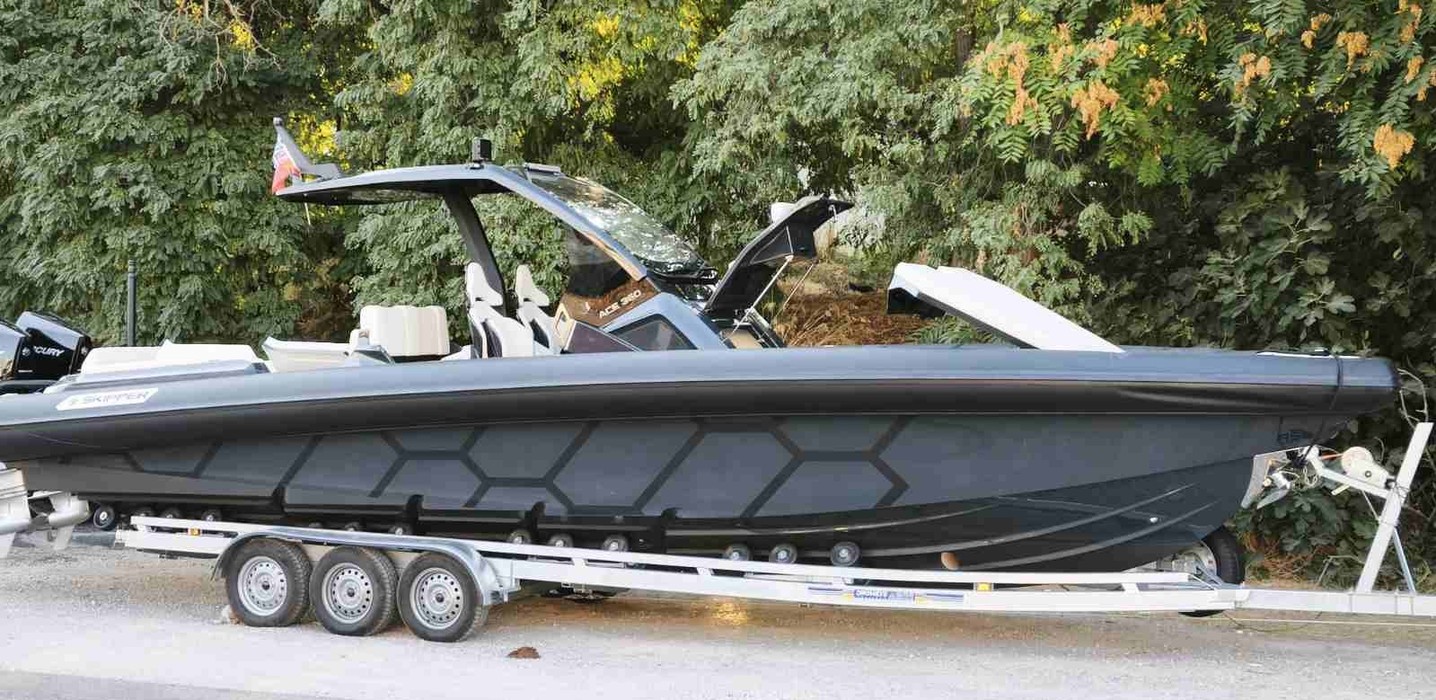
Une opération menée à l’échelle européenne par l’Agence européenne de garde-frontières et de garde-côtes (Frontex) a permis la saisie de plus de 700 véhicules, 34 bateaux et 41 moteurs de bateaux, ainsi que l’arrestation de 334 personnes soupçonnées d’être impliquées dans des activités criminelles transfrontalières.
Baptisée Joint Action Days (JAD) Mobile 9, cette opération a été menée dans 26 pays avec le soutien de l’Organisation internationale de police criminelle (INTERPOL), dans le but de lutter contre la criminalité transfrontalière, notamment le vol de véhicules, le trafic de migrants et le commerce illicite de marchandises.
Selon un communiqué publié par Frontex le 26 octobre, l’opération a également permis de détecter 2 202 migrants en situation irrégulière et de saisir plus de 7,4 tonnes de cocaïne, 2,3 tonnes de cannabis et plus de 10,6 millions de cigarettes.
Parmi les autres objets saisis figurent 115 pièces détachées de véhicules, 127 faux documents, 44 600 comprimés de benzodiazépines, plus de 3 160 litres d’alcool, 80 armes à feu, 17 autres armes et 3 466 cartouches de munitions.
Les autorités ont également récupéré des espèces non déclarées et des sommes présumées provenir d’activités criminelles, d’une valeur de 621 645 euros, 24 500 dollars, 20 000 livres sterling et 27 400 zlotys polonais.
L’opération a en outre permis de saisir 38 259 articles vestimentaires contrefaits, 2 773 parfums contrefaits et deux drones qui auraient été utilisés pour des activités de contrebande.
Les pays participants comprenaient notamment l’Autriche, la Bulgarie, la Croatie, la France, l’Allemagne, la Grèce, l’Italie, les Pays-Bas, la Pologne, le Portugal, l’Espagne et la Suisse, ainsi que d’autres pays européens et des États des Balkans occidentaux.
Le directeur exécutif de Frontex, Hans Leijtens, a déclaré que cette opération démontrait l’importance de la coopération internationale et du partage rapide des informations dans la lutte contre les réseaux criminels transfrontaliers.
« Une voiture volée peut franchir plusieurs frontières en très peu de temps. Si nous voulons l’arrêter, les informations doivent circuler tout aussi rapidement », a-t-il affirmé.
Il a ajouté que la coopération entre les services chargés de l’application de la loi permettait aux agents de différents pays d’échanger des renseignements et de coordonner leurs interventions.
Au cours de l’opération, les autorités ont effectué des contrôles sur 150 631 personnes, 129 286 véhicules, 39 322 documents, 2 721 bateaux et 1 393 moteurs de bateaux aux points de passage frontaliers et dans les ports.
Dans 75 cas, les résultats des contrôles ont révélé des liens avec des réseaux criminels et des individus classés parmi les réseaux et individus criminels les plus menaçants (Most Threatening Criminal Networks and Individuals, MTCNI), dans le cadre de la Plateforme pluridisciplinaire européenne contre les menaces criminelles (EMPACT).
Ces affaires ont donné lieu à 51 arrestations en lien avec ces activités en Grèce, en Lituanie, au Portugal et en Espagne. Les agents de Frontex ont également participé à 25 % de l’ensemble des détections de véhicules volés aux frontières extérieures de l’Union européenne.
Plusieurs enquêtes menées dans le cadre de l’opération ont mis en évidence les avantages du partage de renseignements entre pays.
Dans un premier cas, des informations échangées par l’intermédiaire du centre de coordination de Frontex ont permis d’identifier un véhicule volé en Allemagne et localisé sur une autoroute près de Varsovie, en Pologne.
À la suite de cet échange d’informations entre les autorités allemandes et polonaises, la police polonaise a intercepté le véhicule dans la périphérie de Varsovie et arrêté un suspect.
Dans une autre affaire, la coopération entre les autorités serbes et croates a permis d’intercepter un véhicule volé en France alors qu’il était transporté en direction de la Serbie.
Au port de Gênes, en Italie, les agents de Frontex, la police d’État italienne et INTERPOL ont identifié deux véhicules volés en Italie et destinés à la Tunisie. Ces véhicules étaient munis de documents d’immatriculation contrefaits et de numéros d’identification falsifiés.
Les autorités ont retrouvé leurs numéros d’identification d’origine à l’aide d’un lecteur de diagnostic embarqué.
Au poste-frontière de Tabanovce, en Macédoine du Nord, les agents de Frontex ont également aidé les autorités locales à détecter un permis de conduire slovène contrefait. Le document a été confisqué, le conducteur placé en détention et l’affaire transmise aux services compétents pour une enquête approfondie.
L’opération comprenait également des activités ciblant les bateaux volés en Croatie, sous la direction d’experts allemands et néerlandais avec le soutien de Frontex, ainsi que des campagnes de sensibilisation et des opérations de contrôle au port de Bari, en Italie.
En complément des opérations sur le terrain, Frontex a organisé des sessions de sensibilisation en ligne auxquelles ont participé environ 1 300 personnes. Ces sessions ont porté sur les techniques d’identification des véhicules, la fraude aux plaques d’immatriculation, la criminalité liée aux engins lourds et le vol de véhicules transfrontaliers.
L’agence a accueilli le centre de coordination de l’opération à son siège de Varsovie, du 28 septembre au 9 octobre 2026. Des représentants des pays participants y ont échangé des informations et coordonné leurs enquêtes en temps réel.
Les agents du corps permanent de Frontex ont apporté leur soutien aux autorités nationales aux postes-frontières, dans les ports et les aéroports, en effectuant des inspections supplémentaires, des vérifications de documents, des contrôles de véhicules et des entretiens.
INTERPOL a également déployé des représentants de son siège en France, de ses bureaux régionaux au Cameroun et en Côte d’Ivoire, ainsi que de ses Bureaux centraux nationaux au Canada et au Maroc, afin de contribuer à la recherche des véhicules volés et de faciliter leur saisie.
Des officiers de liaison de l’Organisation mondiale des douanes (OMD) ont également pris part à l’opération.
Frontex a coordonné l’opération dans le cadre de l’EMPACT, tandis que la France en assurait la direction opérationnelle.
L’agence a indiqué que cette opération démontrait comment le partage rapide de renseignements et la coopération directe entre les autorités nationales pouvaient renforcer les efforts visant à intercepter les véhicules volés et autres marchandises illicites avant qu’ils n’atteignent leurs destinations prévues.

A Europe-wide operation led by the European Border and Coast Guard Agency (Frontex) has resulted in the seizure of more than 700 vehicles, 34 boats and 41 boat engines, as well as the arrest of 334 people suspected of involvement in cross-border criminal activities.
The operation, known as Joint Action Days (JAD) Mobile 9, was conducted across 26 countries with support from the International Criminal Police Organisation (INTERPOL) to combat cross-border crime, including vehicle theft, human smuggling and the trafficking of illicit goods.
According to a statement published by Frontex on October 26, the operation also led to the detection of 2,202 irregular migrants and the seizure of more than 7.4 tonnes of cocaine, 2.3 tonnes of cannabis and over 10.6 million cigarettes.
Other items seized included 115 vehicle spare parts, 127 forged documents, 44,600 benzodiazepine pills, more than 3,160 litres of alcohol, 80 firearms, 17 other weapons and 3,466 rounds of ammunition.
Authorities also recovered undeclared cash and suspected proceeds of crime worth €621,645, $24,500, £20,000 and 27,400 Polish zlotys.
The operation further resulted in the seizure of 38,259 counterfeit clothing items, 2,773 counterfeit perfumes and two drones allegedly used for smuggling.
The participating countries included Austria, Bulgaria, Croatia, France, Germany, Greece, Italy, the Netherlands, Poland, Portugal, Spain and Switzerland, alongside other European countries and the Western Balkan states.
Frontex Executive Director Hans Leijtens said the operation demonstrated the importance of international cooperation and rapid information sharing in tackling cross-border criminal networks.
“A stolen car can cross several borders in a very short time. If we want to stop it, information has to travel just as quickly,” Leijtens said.
He added that cooperation among law enforcement agencies enabled officers in different countries to exchange intelligence and coordinate their responses.
During the operation, authorities conducted checks on 150,631 people, 129,286 vehicles, 39,322 documents, 2,721 boats and 1,393 boat engines at border crossing points and ports.
In 75 cases, the findings were linked to criminal networks and individuals classified as the Most Threatening Criminal Networks and Individuals (MTCNI) under the European Multidisciplinary Platform Against Criminal Threats (EMPACT).
The cases resulted in 51 related arrests in Greece, Lithuania, Portugal and Spain. Frontex officers were also involved in 25 per cent of all stolen vehicle detections at the European Union’s external borders.
Several investigations during the operation highlighted the benefits of cross-border intelligence sharing.
In one case, information exchanged through Frontex’s coordination centre helped identify a vehicle stolen in Germany and located on a motorway near Warsaw, Poland.
Following the exchange of information between German and Polish authorities, Polish police intercepted the vehicle on the outskirts of Warsaw and arrested a suspect.
In another incident, cooperation between Serbian and Croatian authorities led to the interception of a vehicle stolen in France while it was being transported towards Serbia.
At the port of Genoa in Italy, Frontex officers, the Italian State Police and INTERPOL identified two vehicles stolen in Italy and destined for Tunisia. The vehicles had counterfeit registration documents and falsified identification numbers.
Authorities recovered their original identification numbers using an onboard diagnostic reader.
At the Tabanovce border crossing in North Macedonia, Frontex officers also assisted local authorities in detecting a counterfeit Slovenian driving licence. The document was confiscated, the driver detained and the case referred for further investigation.
The operation also included activities targeting stolen boats in Croatia, led by experts from Germany and the Netherlands with Frontex support, as well as awareness campaigns and enforcement activities at the port of Bari in Italy.
Beyond the field operations, Frontex organised online awareness sessions attended by approximately 1,300 participants. The sessions covered vehicle identification techniques, licence plate fraud, heavy machinery crime and cross-border vehicle theft.
The agency hosted the operation’s coordination centre at its headquarters in Warsaw from September 28 to October 9, 2026, where representatives from participating countries exchanged information and coordinated investigations in real time.
Frontex Standing Corps officers supported national authorities at border crossing points, ports and airports through additional inspections, document verification, vehicle examinations and interviews.
INTERPOL also deployed representatives from its headquarters in France, regional bureaux in Cameroon and Côte d’Ivoire, and National Central Bureaux in Canada and Morocco to assist in tracing stolen vehicles and facilitating seizures.
Liaison officers from the World Customs Organisation also participated in the operation.
Frontex coordinated the operation under EMPACT, while France served as the operational leader of JAD Mobile 9.
The agency said the operation demonstrated how rapid intelligence sharing and direct cooperation among national authorities could improve efforts to intercept stolen vehicles and other illicit goods before they reached their intended destinations.

Des migrants égyptiens et d’autres nationalités portés disparus ou présumés morts après le naufrage d’une embarcation au large de la Libye

Egyptian migrants, others feared dead, missing after boat sinks off Libya

Les traversées en Méditerranée occidentale augmentent de 26 %

Western Mediterranean crossings rise by 26%
Frontex se félicite de la baisse des franchissements irréguliers aux frontières de l’UE
-

 News Extra2 weeks ago
IOM’s Displacement Tracking Matrix monitors 97.2 million people in 2025
-
 News Extra1 week ago
SOS Humanity accuses Frontex of aiding migrant pushbacks to Libya
-
 News2 weeks ago
Libya repatriates hundreds of migrants, deploys reinforcements to Tobruk
-
News2 weeks ago
Libye : des centaines de migrants rapatriés, des renforts déployés à Tobrouk
-

 News Extra2 weeks ago
La Matrice de suivi des déplacements de l’OIM a suivi 97,2 millions de personnes en 2025
-
 News2 days ago
Sea-Watch condemns proposed EU plan to expand Frontex powers
-

 News2 weeks ago
Ebola:DRC confirms 10,000 cases, NRC seeks scale-up
-

 Features2 weeks ago
League of Arab States, IOM launch Arab Migration Data Network