
News Extra
More Nigerians face deportation as Frontex role grows in Europe’s migrant return plans

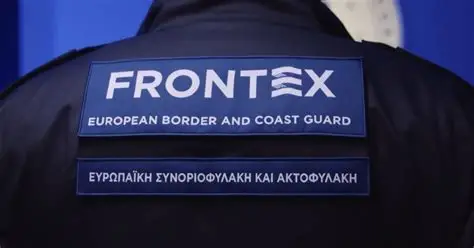
Germany deported at least 137 Nigerians between February and June 2026 in five charter-flight operations, highlighting the growing role of the European Border and Coast Guard Agency, Frontex, in Europe’s increasingly coordinated crackdown on migrants.
More Nigerians risk being deported in days ahead as German authorities had reportedly said it was bent on deporting 30, 000 of the citizens.
News Agency of Nigeria (NAN) had reported that a Security Adviser to the President of Germany, Dr Jan Hecker, had on May 15, 2018 told the Nigeria’s former Minister of Foreign Affairs, Geoffrey Onyeama, Germany had proposed a new process that would facilitate the smooth repatriation of over 30,000 illegal Nigerian migrants.
The Nigerians so far deported were returned to Lagos in successive operations involving German authorities and, in some cases, other European countries and Frontex, according to records compiled by Refugees4Refugees, a Germany-based migration advocacy organisation that monitors deportation arrivals in Nigeria.
The organisation documented the return of 27 Nigerians in February, 37 in March, 24 in April, 23 in May and 26 in June.
The February operation involved 27 people believed to be Nigerian nationals who were flown from Stuttgart to Lagos aboard a World2Fly charter aircraft.
A larger operation followed on March 10, when a charter flight carrying 50 deportees landed in Lagos after a joint European operation hosted by Germany and involving Spain, Austria and Belgium. Germany accounted for 37 of those returned, according to Refugees4Refugees.
The operation illustrates how deportations are increasingly moving beyond individual national governments to become coordinated European exercises, with Frontex providing support to member states in organising and implementing returns.
On April 9, another 24 Nigerians were deported aboard a charter aircraft from Frankfurt in an operation involving German authorities and Frontex. Further returns involving 23 Nigerians in May and 26 in June brought the number documented in the five operations to at least 137.
The figure does not represent Germany’s total deportations to Nigeria during the year and should not be regarded as a complete official count of Nigerians removed from the country.
Frontex at the centre of Europe’s return strategy
The deportations come as European governments strengthen cooperation on migration enforcement, including the use of Frontex to support return operations.
Frontex has increasingly become involved not only in securing the European Union’s external borders but also in coordinating and supporting the return of people who have no legal right to remain in member states.
The agency’s expanding role reflects a broader shift in European migration policy, in which border control, asylum enforcement and deportation are becoming more closely linked.
The trend is particularly notable because irregular migration into the European Union has been falling. Frontex reported that irregular border crossings into the bloc declined by nearly 40 percent during the first five months of 2026 compared with the same period a year earlier.
Despite the decline, European governments continue to push for faster asylum procedures and more efficient returns of people whose applications have been rejected or who otherwise lose their legal right to remain.
Germany, Europe’s largest economy, has made reducing irregular migration and increasing returns a key part of its immigration agenda under Chancellor Friedrich Merz.
Federal Police figures showed 20,625 unauthorised entries across Germany’s land, air and sea borders between January and May 2026. Monthly detections also fell from 5,801 in May 2025 to 3,761 in May 2026.
The figures indicate that Berlin is intensifying enforcement even as irregular arrivals decline.
Nigeria drawn into Europe’s coordinated return system
The repeated flights to Lagos also demonstrate how Europe’s migration enforcement increasingly extends beyond its borders.
The March operation, which brought together deportees from Germany, Spain, Austria and Belgium, is an example of how several European countries can pool resources for a single return operation.
Frontex’s involvement gives such operations a broader European dimension, allowing member states to cooperate on the logistical and operational aspects of returning migrants.
For countries such as Nigeria, the development means that migration enforcement is no longer confined to European territory. Cooperation with African governments is becoming an increasingly important component of Europe’s strategy to prevent irregular migration and facilitate the return of people whose asylum claims fail or who no longer have permission to remain.
Nigeria’s large population and diaspora, as well as its longstanding migration links with Europe, make it an important partner in the EU’s return framework.
The five documented flights therefore provide a glimpse into a wider policy shift: as Europe tightens migration controls, Frontex is playing an increasingly visible role in supporting coordinated returns, while African countries are becoming central to efforts to ensure that migrants who lose the right to remain in Europe can be sent back.
The 137 Nigerians documented by Refugees4Refugees represent only a fraction of European returns, but the operations demonstrate how the continent’s migration clampdown is increasingly organised across national borders and extended beyond Europe through cooperation with countries of origin.








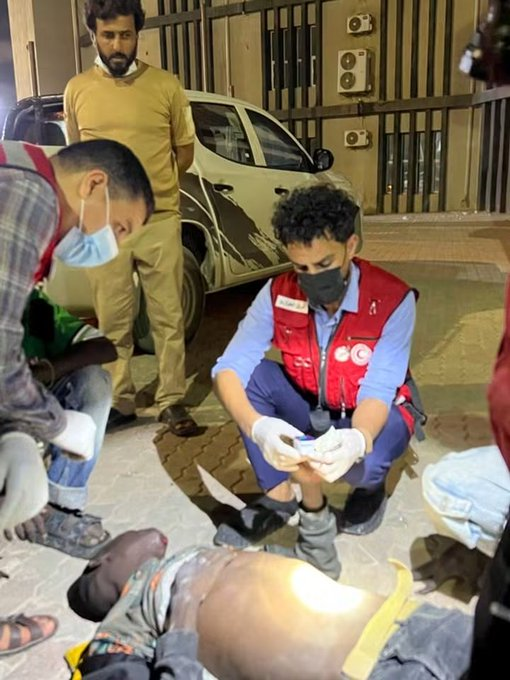
Les autorités libyennes ont intercepté et détenu plus de 2 100 migrants lors d’une série d’opérations menées à Tobrouk et dans ses environs, selon Migrant Rescue Watch.
Dans une série de publications sur X, l’organisation a indiqué que les forces de sécurité conjointes libyennes avaient mené une opération de grande envergure à Tobrouk visant des migrants sans papiers, au cours de laquelle plus de 2 000 personnes ont été arrêtées.
Les migrants ont ensuite été placés sous la responsabilité du Département libyen de lutte contre l’immigration clandestine (DCIM).
Le Croissant-Rouge libyen, section de Tobrouk, aurait lancé une intervention d’urgence à la suite de l’opération, fournissant aux migrants détenus une assistance humanitaire de base ainsi que des soins médicaux.
Lors d’une interception maritime distincte, le 23 septembre, les forces navales spéciales libyennes, connues sous le nom d’Al-Sa’iqa, ont intercepté un bateau pneumatique transportant 30 migrants au large de Tobrouk.
Selon Migrant Rescue Watch, les migrants tentaient de rejoindre la Grèce par voie maritime. Ils ont été débarqués à la base navale de Tobrouk avant d’être remis au DCIM.
Deux jours plus tôt, le 22 septembre, les garde-côtes libyens avaient intercepté un autre bateau pneumatique au large de Ras Al-Tin, à environ 45 milles nautiques au nord des côtes libyennes.
Le bateau transportait 33 migrants, dont 18 Bangladais et 15 ressortissants soudanais. Ils ont également été conduits à la base navale de Tobrouk avant d’être placés sous la responsabilité du DCIM.
Dans un autre incident, les garde-côtes libyens ont secouru 38 migrants soudanais à bord d’une embarcation à la dérive au large d’Ain Ghazala, à environ 36 milles nautiques au nord des côtes libyennes.
Les migrants secourus ont été ramenés à terre à la base navale de Tobrouk et remis au DCIM.
Ces incidents témoignent de la poursuite des interceptions de migrants tentant de traverser la Méditerranée centrale depuis la Libye vers l’Europe, ainsi que du recours à des détentions à grande échelle de migrants sans papiers à l’intérieur du pays.
Les informations publiées par Migrant Rescue Watch ne fournissent pas davantage de détails sur les conditions de détention ni sur la durée de détention des personnes transférées sous la responsabilité du DCIM.
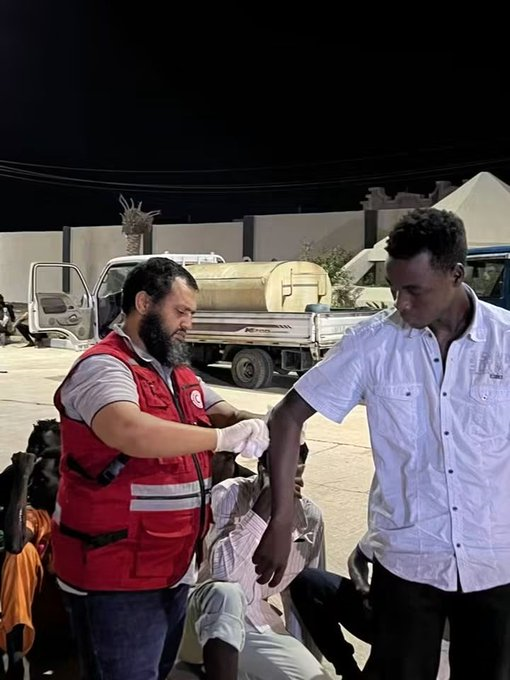
Libyan authorities have intercepted and detained more than 2,100 migrants in a series of operations in and around Tobruk, according to Migrant Rescue Watch.
In a series of posts on X, the organisation reported that Libyan joint security forces carried out a large-scale operation in Tobruk targeting undocumented migrants, resulting in the apprehension of more than 2,000 people.
The migrants were subsequently transferred into the custody of Libya’s Department for Combating Illegal Migration (DCIM).
The Libyan Red Crescent, Tobruk branch, reportedly launched an emergency response following the operation, providing the detained migrants with basic humanitarian assistance and medical care.
In a separate maritime interception on September 23, the Libyan Special Naval Forces, known as Al-Sa’iqa, intercepted a rubber boat carrying 30 migrants off the coast of Tobruk.
According to Migrant Rescue Watch, the migrants were attempting to reach Greece by sea. They were disembarked at Tobruk Naval Base before being handed over to the DCIM.
Two days earlier, on September 22, the Libyan Coast Guard intercepted another rubber boat off Ras Al-Tin, about 45 nautical miles north of the Libyan coast.
The boat was carrying 33 migrants, comprising 18 Bangladeshis and 15 Sudanese nationals. They were also taken to Tobruk Naval Base and transferred to DCIM custody.
In another incident, the Libyan Coast Guard rescued 38 Sudanese migrants from a drifting boat off Ain Ghazala, about 36 nautical miles north of the coast.
The rescued migrants were brought ashore at Tobruk Naval Base and handed over to the DCIM.
The reported incidents highlight the continued interception of migrants attempting to cross the central Mediterranean from Libya towards Europe, as well as the large-scale detention of undocumented migrants inside Libya.
Migrant Rescue Watch’s reports did not provide further details on the conditions or duration of detention of those transferred to DCIM custody.
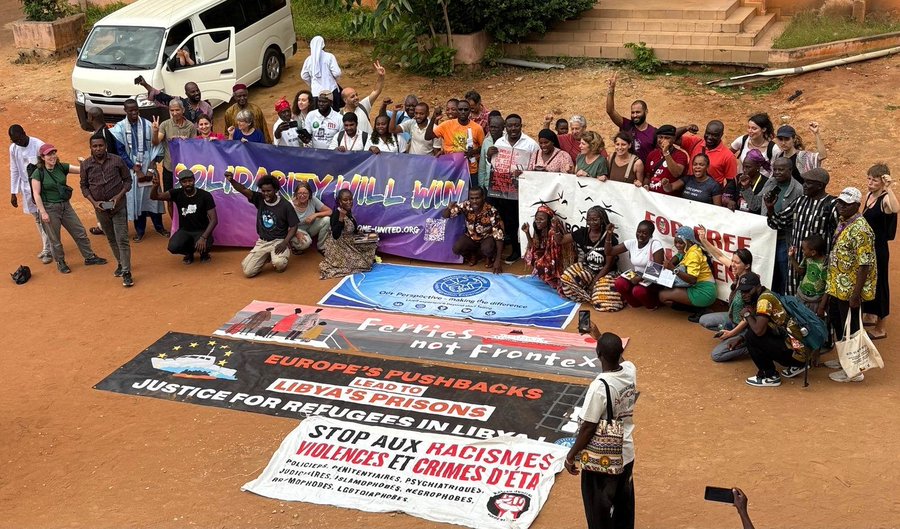
Cinq ans après le lancement par des réfugiés et migrants en Libye de la manifestation des « 100 jours » à la suite d’arrestations massives à Tripoli, Refugees in Libya réunira à Berlin des militants, des survivants, des avocats et des organisations dirigées par des migrants afin de revenir sur cette lutte et sur la quête de justice et de responsabilité.
L’événement, intitulé « Des rues de Tripoli à la CPI : cinq années de lutte et de solidarité avec les réfugiés en Libye », se tiendra le 3 octobre 2026 à la Spore Initiative, à Berlin.
La manifestation a débuté le 1er octobre 2021, après des descentes massives dans le quartier de Gargaresh, à Tripoli, au cours desquelles des milliers de réfugiés et de migrants ont été arrêtés. Alors que certains ont été conduits dans des centres de détention, d’autres se sont rassemblés devant le bureau du HCR, où ils sont restés pendant plus de trois mois pour réclamer protection, évacuation, liberté et la fin des violences et des abus en Libye.
Selon Refugees in Libya, cette protestation est devenue un moment déterminant pour l’organisation menée par des migrants et a continué de façonner son travail au cours des cinq années suivantes.
La rencontre de Berlin intervient alors que les procédures engagées contre Khaled El Hishri, ancien responsable de la prison de Mitiga, progressent devant la Cour pénale internationale (CPI).
La CPI a confirmé les 17 chefs d’accusation retenus contre El Hishri, portant notamment sur des crimes présumés contre l’humanité et des crimes de guerre, et a renvoyé l’affaire devant la chambre de première instance pour son procès.
Refugees in Libya a déclaré que cette affaire revêt une importance particulière pour les survivants ayant subi ou été témoins d’actes présumés de torture, de violences sexuelles, d’esclavage, de disparitions forcées et de meurtres à Mitiga et dans d’autres centres de détention.
L’organisation estime toutefois que l’affaire soulève également des questions plus larges sur le système de détention et de contrôle migratoire en Libye.
Elle affirme que, depuis des années, les réfugiés et les migrants sont confrontés à la détention, à l’exploitation et aux violences à travers la Libye, tandis que les personnes qui tentent de traverser la Méditerranée sont interceptées et renvoyées dans le pays.
Refugees in Libya s’interroge également sur le rôle des gouvernements et institutions européens dans le soutien aux structures impliquées dans l’interception et le confinement des migrants, estimant que les mécanismes de responsabilité devraient examiner l’ensemble du système plutôt que de se concentrer exclusivement sur les auteurs individuels.
L’événement examinera la procédure concernant El Hishri, la participation des survivants ainsi que les limites et les possibilités de la justice internationale.
Parmi les intervenants figureront David Yambio, de Refugees in Libya, et Allison West, du European Center for Constitutional and Human Rights (ECCHR). La discussion sera animée par Viola Castellano.
Les organisateurs ont indiqué que la rencontre cherchera également à déterminer comment les survivants peuvent participer aux processus judiciaires et politiques sans être réduits au simple rôle de témoins, et comment les procédures judiciaires peuvent contribuer à des actions collectives et à une mobilisation plus large.
Une deuxième session réunira des organisations dirigées par des migrants, des groupes de la diaspora africaine, des mouvements antiracistes, des avocats, des journalistes, des chercheurs, des artistes et d’autres acteurs afin de discuter de solidarité, de plaidoyer juridique et d’action collective.
Une exposition multimédia présentant des photographies, des témoignages et des documents issus de la manifestation des « 100 jours » accompagnera l’événement.
Refugees in Libya a précisé que cette rencontre ne vise pas seulement à commémorer la manifestation de 2021, mais aussi à examiner les conditions auxquelles les réfugiés et migrants continuent d’être confrontés en Libye.
Le programme débutera par une exposition à 15 h 30, suivie à 16 h d’une discussion consacrée aux cinq années d’organisation de Refugees in Libya. La session consacrée à l’affaire El Hishri devant la CPI est prévue à 16 h 45, avant un repas, des échanges informels et des discussions en petits groupes à partir de 18 h 45.
L’événement se déroulera en anglais, avec une entrée gratuite, à la Spore Initiative, Hermannstraße 86, Berlin-Neukölln.

Près de 4 000 migrants auraient été arrêtés lors d’une opération de répression de deux jours à Tobrouk

Nearly 4,000 migrants reportedly rounded up in two-day Tobruk crackdown

Libye : 310 migrants interpellés lors d’opérations à Tajoura, Umm Al-Faris et Tobrouk

Libya: 310 migrants apprehended in Tajoura, Umm Al-Faris, Tobruk operations

Libye : plus de 2 100 migrants interceptés et détenus lors d’opérations à Tobrouk
-
 Features2 weeks ago
How WSF changed ways participants see migration
-
 Features2 weeks ago
Reintegration or a facade? Nigerian returnees challenge promise of starting again
-

 Features2 weeks ago
Giving migrants a voice: How Alia is turning lived experience into action
-
 Features2 weeks ago
FSM : des participants nigérians et sénégalais pleurent des proches portés disparus ou décédés
-

 News2 weeks ago
Osita Osemene emerges NACTAL president with 95.65% votes
-

 News Extra2 weeks ago
Osemene pledges inclusive leadership, stronger anti-trafficking action as NACTAL President-Elect
-
Features2 weeks ago
Donner une voix aux migrants : comment Alia transforme l’expérience vécue en action
-

 Features2 weeks ago
Au-delà de l’étiquette de victime : des Nigérians transforment la scène en déclaration de dignité au Forum social mondial