
News Extra
‘It’s increasingly difficult to find skilled workers in Germany for widely dispersed construction sites’

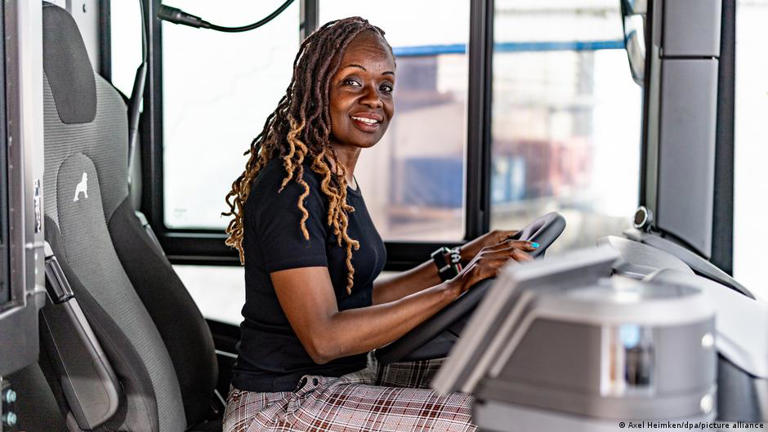
Germany has launched alliance to fairly recruit skilled workers, a report by DW says.
The report reads in full:
Guido Seifen is the managing director of the medium‑sized German company, Omexom Hochspannung, which employs around 500 people and builds major power lines. He said it has become increasingly difficult to find skilled workers in Germany for the widely dispersed construction sites. After all, the job often means giving up family life and a stable home during the week.
Seifen now hopes to recruit new skilled workers in Vietnam through a German‑Vietnamese development cooperation project. Vietnam is currently transitioning to renewable energy and is receiving support from the Deutsche Gesellschaft für Internationale Zusammenarbeit (GIZ). What Germany needs are overhead line technicians — and Vietnam’s electricity provider EVN has set up a dedicated training center to prepare workers for exactly that role.
Omexom wants to contribute its experience and expertise to the project. The company plans to bring EVN’s Vietnamese instructors to Germany for training, enabling them to deliver instruction that meets local standards, including certification from the German Chamber of Industry and Commerce. At the training center in Vietnam, GIZ is also establishing German language courses.
In the end, enough technicians are to be trained so that roughly half of them can be offered jobs in Germany — up to 200, Seifen said, calling it a “win‑win situation.”
Attracting foreign skilled workers to Germany while at the same time strengthening training structures and transferring knowledge in their countries of origin — these are the kinds of projects the federal government aims to support.
The Federal Ministry for Economic Cooperation and Development (BMZ) already works with many partners to train skilled workers, and now German industry is expected to join. The newly established alliance is called the “WE‑Fair alliance for the fair recruitment of skilled workers.”
“Germany needs qualified skilled workers,” said Development Minister Reem Alabali Radovan at the launch in Berlin. The country is aging rapidly. “The projections are clear: more than 20% of employees in Germany are at least 55 years old, and will retire within the next 10 years.”
Demographic researchers have calculated that Germany will need 400,000 foreign skilled workers each year over the next decade to fill the gaps. To reach that number, around 1.6 million people would have to immigrate to Germany annually.
Engaging with countries of origin on equal terms
“Recruitment from countries in Asia, Africa, and Latin America is becoming increasingly important for the German economy,” said Alabali Radovan. The populations there are young, often well-educated and continue to grow.
“Many young people in those countries are also looking for opportunities beyond their borders. The governments of these countries expect us, as the German federal government, to create and strengthen pathways for skilled migration.”
Placement is to take place according to transparent rules and be subject to oversight. This includes providing information on working conditions, wages and required qualifications. Training programs should prepare participants both for their home countries and for Germany. Costs and risks are to be shared, and potential skilled workers should be able to cover the costs of further training, or relocation.
German companies underestimate what it takes
“We often see companies assuming they will get a fully trained employee whom they can deploy immediately,” said Edith Otiende‑Lawani, a Kenya‑born managing director of a consulting firm who, through her association Giving Africa a New Face, supports the integration of migrants in the Munich area.
“The fairy‑tale notion is that people will arrive already speaking German, integrate quickly, be resilient and be enthusiastic about Germany and everything that comes with it,” said Otiende‑Lawani. But that’s not the reality.
“It’s not about forming a grammatically correct sentence — it’s about the fact that communication and leadership in German companies work differently,” added Gerhard Hain, who advises German businesses on intercultural matters. Even in everyday life, there are many hurdles that are difficult to overcome. “You have to be prepared for people who approach things differently from Germans in roughly 80% of cases.”
People also need a great deal of patience while they wait to come to Germany. Because of the enormous bureaucracy, it often takes years before a foreign skilled worker can actually start working in this country. Markus Lötzsch, chief executive of the Nuremberg Chamber of Industry and Commerce, has many stories to tell on the subject. Too many different authorities are responsible, and the immigration offices — especially in large cities — are chronically overburdened.
There are disappointments even with so‑called “express procedures,” Lötzsch explained. “Through our Welcome Desk, for example, we work with the immigration authorities as part of the accelerated skilled‑worker process. ‘Accelerated skilled‑worker process’ sounds great — it promises that everything will move quickly, and you even pay extra for it. So you assume it will actually be faster, but often that’s not the case at all.”
To provide relief, the Chamber of Commerce is investing money and staff to take over tasks such as the preliminary review of all required documents. “The immigration authority knows the documents come from a trusted partner, and then the process goes through more smoothly,” Lötzsch told DW.
Skilled workers are leaving again
“We shouldn’t only talk about people coming — we should also talk about them staying,” Lötzsch added. In 2024, for the first time, more people left Germany than moved to the country. Again and again, foreign skilled workers return to their home countries or move on to other places because their expectations in Germany were not met.
For entrepreneur Jasmin Arbabian-Vogel, much of this has to do with Germans’ attitudes toward immigrants. Germany is still attractive for foreign skilled workers. “But if we want to remain attractive, then the question is directly tied to how we treat the immigrants who are already here in the country,” she said.
Arbabian-Vogel runs a care and social services company in Hanover with 250 employees. Many of them are foreigners. “These are refugees and people who simply immigrated here at some point. Companies like mine, and many others as well, train them — only to later find out that they have just received a deportation notice, which basically means: it was nice working with you, but now goodbye,” she said.
Germany needs to adopt a different political and societal “mindset” toward immigrants. If that does not happen, the skilled‑worker alliance cannot succeed.






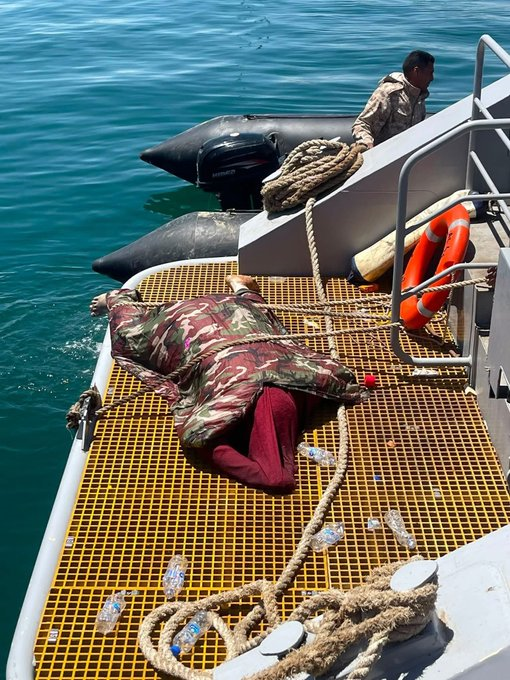
The Executive Director of Refugees in Libya, David Yambio, has mourned the death of a migrant whose body was recovered off the coast of Benghazi after reportedly being stranded at sea for 14 days, describing the incident as a stark reminder of the dangers faced by people fleeing conflict and persecution.
In a post on X, Yambio reflected on his own experience in Libya, saying that while detained in the North African country, he had often hoped that, if he were to die, it would be at sea rather than at the hands of violent militias.
According to him, the sea represented the only place where many migrants retained a sense of dignity, as they risked everything in pursuit of safety and international protection.
Yambio questioned what he described as a deeper humanitarian tragedy, arguing that many people seeking refuge would rather face the dangers of the Mediterranean than remain exposed to violence by armed groups in Libya.
He also criticised what he called Europe’s role in arming militias and accused African leaders of remaining silent in the face of abuses against migrants.
The activist said the photograph accompanying his post showed one of several people seeking protection who had been stranded at sea for two weeks. He noted that the man’s body, along with those of two others, was recovered off the coast of Benghazi a few days ago.
Ending his post on a poignant note, Yambio said the deceased asylum seeker had been portrayed as an “invader,” underscoring what he believes is the dehumanisation of migrants fleeing in search of safety.
At least 50 migrants are feared dead or missing after a boat carrying about 60 people capsized off the eastern coast of Libya while attempting to cross the Mediterranean Sea to Europe, authorities have said.
The vessel overturned on Tuesday near Bardaa Island, off the coastal city of Tobruk, according to the Coast Guard in eastern Libya.
Officials said 10 passengers, including some women and children, survived by swimming to Bardaa Island. Search and rescue operations were still ongoing as authorities continued efforts to locate the remaining passengers.
The latest disaster is another in a series of deadly shipwrecks involving migrants departing from Libya, a major transit hub for people seeking to reach Europe in search of safety and better economic opportunities.
Just last month, another migrant boat sank off eastern Libya, leaving 51 people dead or missing.
Since the 2011 NATO-backed uprising that overthrew longtime ruler Moammar Gadhafi, Libya has remained politically unstable, making it a key departure point for migrants fleeing conflict, persecution and poverty across Africa and the Middle East.
Human traffickers frequently load migrants onto overcrowded and unseaworthy boats for the dangerous Mediterranean crossing, a route that has claimed thousands of lives over the years and remains one of the world’s deadliest migration corridors.
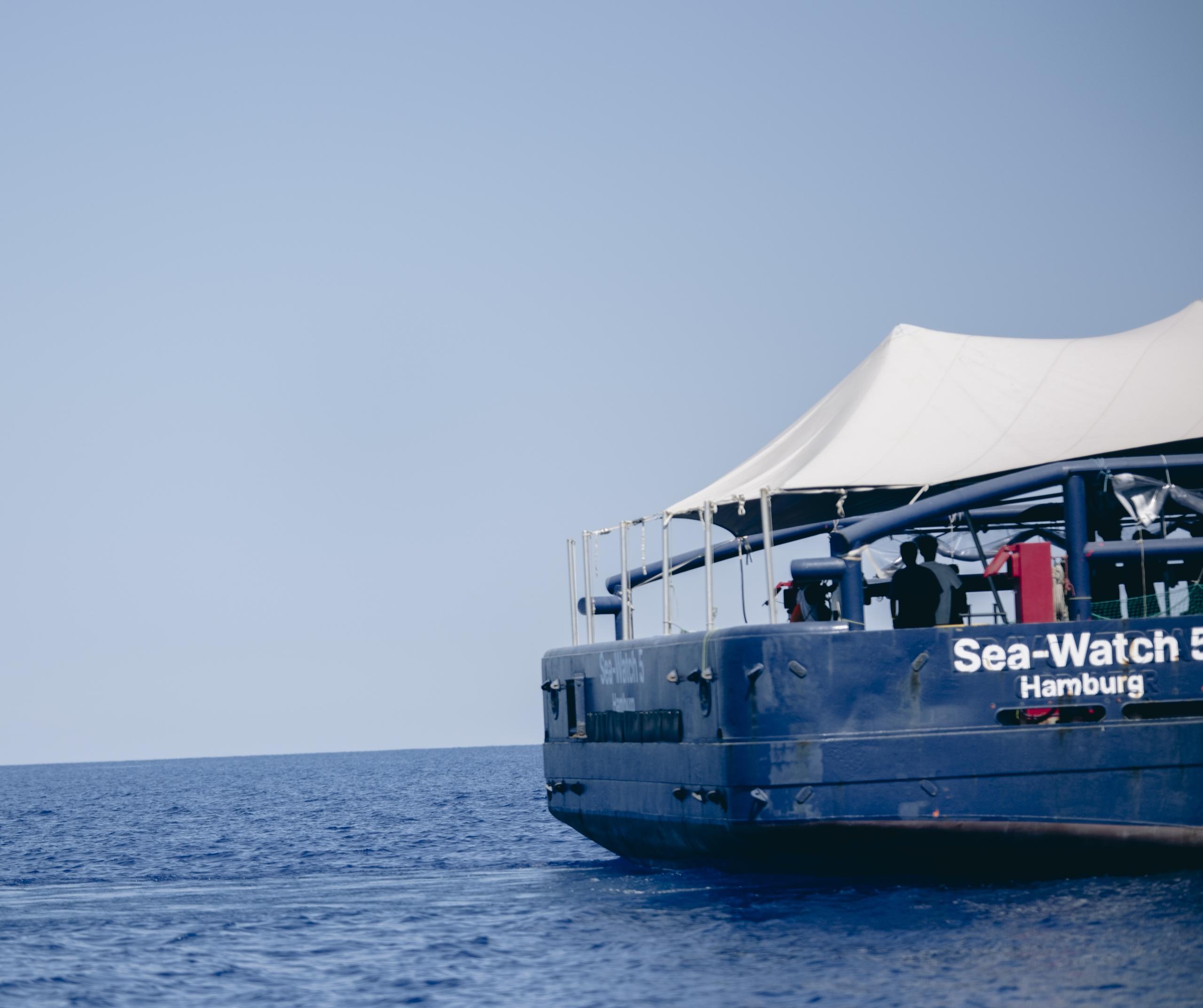
Sea-Watch International has announced that its rescue vessel, Sea-Watch 5, has returned to operations in the central Mediterranean after what it described as an attack by Libyan militias in May, saying it has already rescued 52 people in two separate operations.
In a post published on its verified X account, @seawatch_intl, the humanitarian organisation said 40 people were rescued on the first day of operations, followed by another 12 the next day. It added that one of the survivors, a pregnant woman, requires urgent medical care.
Sea-Watch also claimed that an average of eight people die every day while attempting to cross the Mediterranean Sea, renewing its criticism of European migration policies and rescue coordination.
The organisation accused the Italian government of assigning its rescue vessel to the northern port of Marina di Carrara, which it said is more than four days away from the rescue zone. According to Sea-Watch, the practice keeps humanitarian rescue ships away from areas where migrants are most at risk.
“To ensure that as few rescue ships as possible are in the rescue area, Italy sends us to the northern port Marina di Carrara, 4+ days away,” the group wrote, describing the decision as “cruel and irresponsible.”
Sea-Watch argued that the lengthy journey delays the disembarkation of rescued migrants and reduces the number of rescue vessels available to respond to emergencies at sea.
The organisation also directly criticised Italian Prime Minister Giorgia Meloni over the country’s migration policies, questioning the government’s approach to search-and-rescue operations in the Mediterranean.
Italian authorities have previously defended the assignment of distant ports to humanitarian vessels, saying the measure is part of efforts to manage migrant arrivals and coordinate disembarkation procedures.

ICC confirmation of 17 charges against El-Hishri draws praise from rights groups

Expert raises questions over UNHCR’s strategic direction after new leadership appointments

UN appoints new senior leadership for UNHCR

Migrant advocate laments death of asylum seeker, condemns Libya abuses

50 die as boat carrying about 60 people capsizes
-

 News2 weeks ago
Favour Henshaw appointed administrator of Platform for Cooperation on Mixed Migration
-
 News3 weeks ago
Former UNHCR official sparks debate with ‘there is no such thing as a race’ comment
-

 News2 weeks ago
Lampedusa: built to accommodate 400 people, now holds thousands of migrants
-

 News Extra2 weeks ago
Pope urges European leaders to make greater investment in developing migrants’ countries of origin
-

 News7 days ago
IYAMIDR commends Okpebholo for ₦1m support to South Africa returnees
-
 Features3 weeks ago
1,500 young Chadians to benefit from EU, IOM funds
-
 News2 weeks ago
World silent as drone strikes, extreme hunger ravage El Obeid families
-
Features2 weeks ago
Lampedusa: Pope’s visit powerful reaffirmation migrants, refugees must remain at centre of global efforts