
News Extra
Nigerian govt insists country won’t receive foreign deportees under UK migration deal


Nigerian government has issued a detailed clarification on the Nigeria-United Kingdom migration partnership signed during President Bola Ahmed Tinubu’s historic state visit to the UK, firmly dismissing claims that Nigeria had agreed to accept deported foreign nationals from Britain.
In a statement issued by the Special Adviser to the President on Information and Strategy, Mr Bayo Onanuga, the Presidency said it had become necessary to “debunk the raft of misinformation” surrounding the Memorandum of Understanding on immigration cooperation signed by the two countries on the sidelines of the visit.
According to the statement, the agreement was designed to strengthen cooperation between Nigeria and the United Kingdom on migration management, facilitate safe and regulated migration flows, and deepen bilateral efforts against irregular migration and related offences, all in line with the immigration and citizenship laws of both countries as well as relevant international treaties, conventions, protocols and charters.
The Presidency stressed that at no point in the 12-page memorandum was Nigeria required to accept non-Nigerian deportees from the UK, describing such reports as false and misleading.
It said the agreement clearly provides that only nationals of either country who no longer have the legal right to enter or remain in the territory of the other may be returned, and even then, only after due identification and verification processes have been completed.
“The memorandum on immigration cooperation, like other memoranda signed, aimed to strengthen the partnership between Nigeria and the United Kingdom,” the statement said.
It added that the MoU was signed by Nigeria’s Minister of Interior and the Secretary of State for the Home Department of the Government of the United Kingdom and Northern Ireland.
Giving details of the framework, the Presidency said the pact established a mechanism for regulated and safe migration between both countries, while encouraging further collaboration in tackling irregular migration and associated acts committed by citizens of either side.
It emphasised that a clear condition of the MoU is that the returnees involved must be bona fide nationals of the receiving country and that they must be treated with dignity and respect, with full regard to their human rights and fundamental freedoms.
The statement explained further that the law enforcement agencies of both countries would take steps to protect the interests and well-being of each other’s citizens and mitigate possible tensions arising from migration matters.
One of the key points highlighted by the Presidency was that, unlike previous situations in which deported migrants often returned with nothing, the new agreement guarantees that returnees can travel back with their legally acquired personal belongings.
It cited Article 12 of the memorandum as reinforcing that protection, stating that every returnee would be given ample opportunity to make adequate arrangements for the transfer or disposal of property in the territory of the requesting party, under the supervision of the mission of the requested party.
The Presidency also drew attention to another major safeguard in the MoU, which allows migrants facing deportation to pursue claims under domestic or international human rights laws before any removal is effected.
It explained that such appeals may arise where an affected person has been lawfully resident in the requesting country for most of his or her life and has become socially and culturally integrated there.
Another ground for appeal, it said, may be where the person would face significant obstacles integrating into the country to which he or she is to be deported.
On the actual process for return, the statement referenced Article 9 of the MoU, which outlines the conditions under which a migrant may be repatriated.
According to the Presidency, before departure, identification checks must be conducted by officers of the requested country in the territory of the requesting country, with another layer of checks to be carried out on arrival by competent authorities of the receiving country.
It said the requesting country would coordinate all returns with the officers of the requested country, while return flights could be undertaken either on scheduled commercial aircraft or on chartered aircraft arranged specifically for that purpose.
The requesting country, it added, is also required to provide flight details and particulars of each returnee five working days before the actual date of return.
The statement further explained that returns may be effected with an original valid passport. However, where the requesting country can biometrically match a returnee to a visa application previously made in the territory of the requested country, an expedited process may be used through a UK Letter.
Similarly, it said that where biometric matching is not possible but there is strong evidence of nationality, including a copy of a passport, passport number or national identity card, the same expedited return procedure may still be adopted through a UK Letter.
The Presidency said the MoU also protects against wrongful deportation, noting that if the requested party is not satisfied with the identity of a proposed returnee within five working days after submission of the UK Letter, detailed reasons must be presented, and the removal would then be deferred.
Even where a deportation had already taken place, the statement said the agreement provides that if subsequent evidence shows that the person returned is not in fact a national of the receiving country, the requesting country must take the person back at its own cost and by the most efficient means possible.
It explained that such a request must be made within 10 working days of the return exercise and carried out within 14 working days after the request has been accepted.
The Presidency said this provision alone showed that Nigeria had not agreed to become a dumping ground for foreign nationals.
It also pointed to Article 9, subsection 3, of the MoU as proof that Nigeria had not surrendered its sovereign authority over documentation of returnees to the UK.
According to the statement, it remains the sole responsibility of the Nigeria Immigration Service to issue and handle any Nigerian documentation required under domestic law, including digital acknowledgement of receipt of a UK Letter, ahead of the notified date of return.
The Presidency stressed that this process is distinct from the UK Letter procedure and remains exclusively within the powers of Nigerian authorities, including handling travel documents and any onward transmission required to enable entry into Nigeria.
Beyond return procedures, the statement said Article 11 of the MoU provides a package of reintegration assistance for returnees upon arrival in the receiving country.
It said every returnee would be able to access basic on-arrival and reintegration support, with short-term assistance covering airport reception, temporary accommodation, onward transportation, care and provision packs, and small cash support.
Medium-term assistance, according to the Presidency, may include help with tracing and reuniting with family members, support in obtaining in-country documentation, referrals to local services, as well as mental well-being and counselling services where necessary.
It added that longer-term support may provide access to a Returnee Education and Entrepreneurship Fund intended to promote sustainable reintegration, with beneficiaries receiving help to access the local job market, establish businesses, undertake vocational training or further education, and explore legal migration opportunities.
The statement noted that both parties had also agreed to keep each other informed as quickly as practicable should their domestic legislation on reintegration support change, or if there is any alteration to the overall non-legally mandated reintegration package.
The Presidency said the latest MoU was not without precedent, pointing out that similar migration agreements had been signed between Nigeria and the UK in 2012, 2017 and 2022.
It added that the new memorandum would run for an initial five-year period and could be renewed for another five years if both countries so agree.
While urging the media to avoid sensational or inaccurate reporting on the matter, the Presidency said news organisations should always seek clarification whenever they are uncertain about any aspect of public policy or international agreements.
It maintained that a proper reading of the document showed that the partnership was essentially about safe, lawful and dignified migration management, rather than any surrender of Nigeria’s sovereignty or acceptance of non-Nigerian deportees.










L’agence des Nations Unies pour les réfugiés, le HCR, s’est inquiétée du récent renvoi par la Malaisie de 1 476 personnes au Myanmar, alors que le conflit se poursuit dans le pays et que la situation en matière de droits humains et sur le plan humanitaire demeure extrêmement grave.
Dans une déclaration, le Haut-Commissaire adjoint du HCR chargé de la protection, Edem Wosorn, a déclaré : « Nous sommes préoccupés par ces renvois, car les personnes renvoyées au Myanmar pourraient être exposées à de graves risques, et certaines d’entre elles pourraient avoir besoin d’une protection internationale.
« Bien que les autorités affirment que ces retours sont volontaires, les personnes renvoyées étaient détenues dans des centres d’immigration. Cela soulève de sérieuses questions quant au caractère véritablement libre et éclairé des décisions de retour. Le HCR n’a pas eu accès à ces personnes pour pouvoir l’évaluer. »
Le HCR a déclaré reconnaître pleinement la responsabilité souveraine de la Malaisie en matière de gestion de l’asile et des migrations. Il a toutefois exhorté la Malaisie à veiller à ce que tous les retours soient soumis à de solides garanties, notamment à des évaluations individuelles et à un accès aux procédures de protection. Les décisions de retour doivent être volontaires et évaluées en dehors de tout contexte de détention.
En vertu du principe de non-refoulement, nul ne devrait être renvoyé dans un pays où il pourrait être exposé à des persécutions, à la torture ou à d’autres menaces graves pour sa vie ou sa liberté.
Tant que les conditions au Myanmar ne permettront pas des retours sûrs, dignes et durables, les États doivent continuer à garantir l’accès à l’asile et à respecter leurs obligations en matière de protection internationale.
Le HCR a ajouté qu’il restait prêt à travailler avec la Malaisie afin de renforcer les dispositifs nationaux d’asile et de protection.
« Un soutien régional et international accru est nécessaire pour faire progresser une solution politique à la crise et mettre fin aux hostilités au Myanmar. Le HCR appelle la communauté internationale à maintenir son soutien aux pays de la région qui accueillent des réfugiés du Myanmar. »
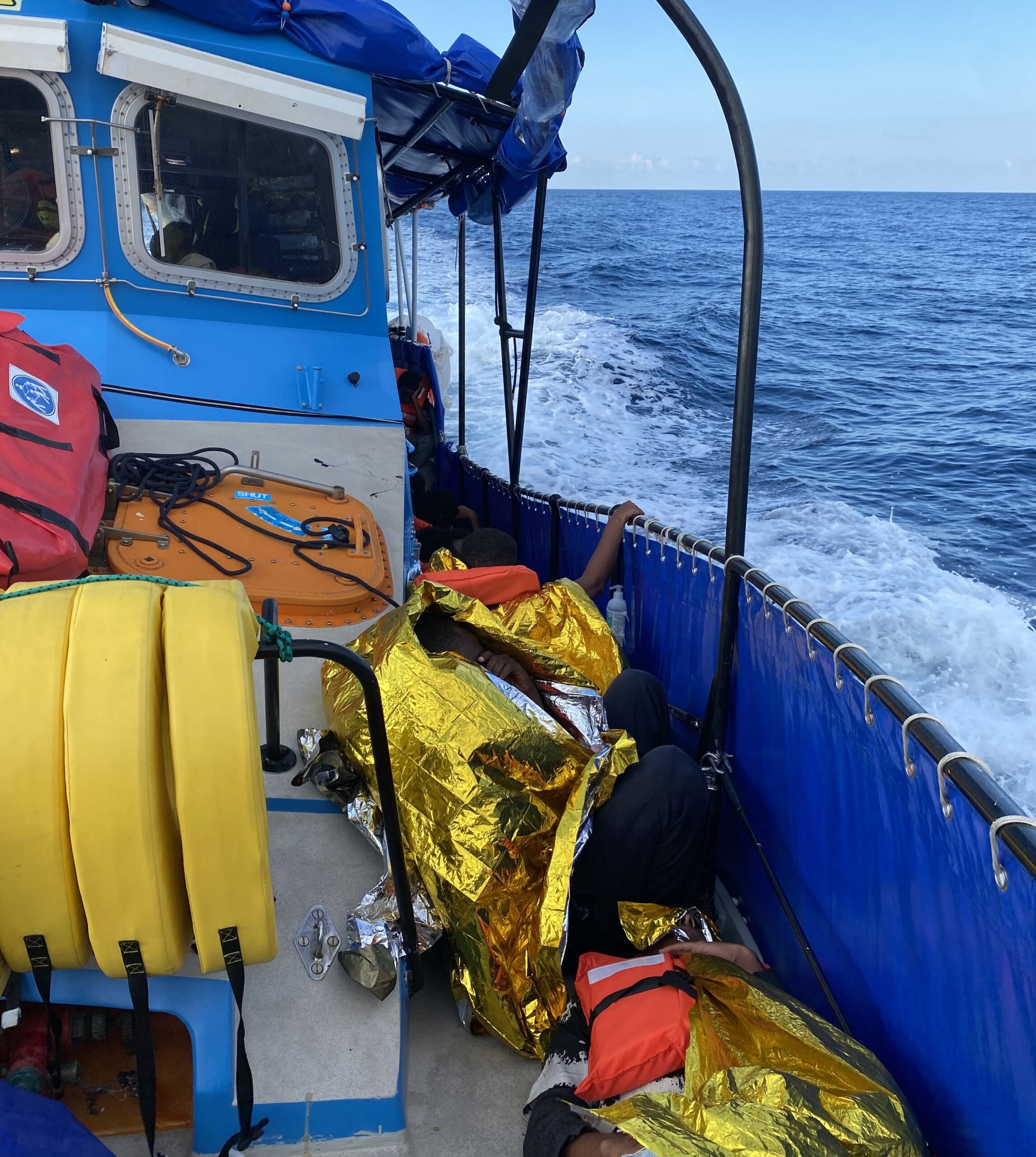
L’équipage de sauvetage de Sea-Watch affirme avoir secouru 28 personnes après un naufrage dans les eaux internationales tôt le 29 septembre, récupérant deux corps et apprenant auprès des survivants qu’au moins six personnes sont toujours portées disparues, dont trois enfants d’une même famille.
Selon Sea-Watch, son navire de sauvetage Aurora a découvert une embarcation pneumatique presque dégonflée vers 4 heures du matin, après que la ligne d’urgence civile Alarm Phone eut alerté les autorités de la présence du bateau.
Cinq survivants et deux corps, dont celui d’un enfant, ont été retrouvés à bord de l’embarcation pneumatique, a indiqué l’organisation.
Sea-Watch a déclaré que les 23 autres survivants du naufrage avaient atteint la plateforme gazière Hasdrubal, située dans les eaux internationales relevant de la zone de recherche et de sauvetage de la Tunisie.
Avec l’autorisation du Centre tunisien de coordination des opérations de sauvetage maritime, l’Aurora s’est ensuite dirigé vers la plateforme, où son équipage a distribué des gilets de sauvetage et embarqué les autres survivants. Sea-Watch a indiqué qu’un jeune enfant figurait parmi les personnes secourues.
L’organisation a déclaré que les survivants avaient signalé la disparition d’au moins six personnes, dont trois enfants d’une même famille. Elle a ajouté qu’il n’était pas encore établi si l’enfant dont le corps a été récupéré était l’un des trois enfants portés disparus.
Les autorités italiennes ont ensuite désigné Lampedusa comme port sûr pour le navire, et l’Aurora fait actuellement route vers cette destination, selon Sea-Watch.
La porte-parole de Sea-Watch, Julia Winkler, a lié cet incident aux critiques de l’organisation à l’égard des politiques migratoires européennes, affirmant que les gouvernements présentaient la baisse du nombre d’arrivées comme un succès alors que des personnes continuaient de mourir ou de disparaître en mer.
Sea-Watch a également appelé à la mise en place d’un programme européen de sauvetage maritime géré par les États, estimant que le sauvetage en mer constitue une obligation plutôt qu’une mesure laissée à la discrétion des autorités.
L’organisation affirme que plus de 1 970 personnes sont mortes ou portées disparues en Méditerranée en 2026 alors qu’elles cherchaient à obtenir une protection. Ce chiffre, ainsi que l’évaluation faite par Sea-Watch des politiques européennes de dissuasion migratoire, constitue des affirmations de l’organisation qui n’ont pas été vérifiées de manière indépendante dans les informations fournies.

A Sea-Watch rescue crew says it rescued 28 people from a shipwreck in international waters early on September 29, recovering two bodies and learning from survivors that at least six people remain missing, including three children from the same family.
According to Sea-Watch, its rescue vessel Aurora found a nearly deflated rubber boat at about 4 a.m. after the civilian emergency hotline Alarm Phone alerted authorities to the boat.
Five survivors and two bodies, including the body of a child, were found on the rubber boat, the organisation said.
Sea-Watch said the other 23 survivors from the shipwreck had reached the Hasdrubal gas platform, which is located in international waters within Tunisia’s search and rescue zone.
With permission from the Tunisian Maritime Rescue Coordination Centre, the Aurora then proceeded to the platform, where its crew distributed life jackets and brought the remaining survivors aboard. Sea-Watch said a small child was among those rescued.
The organisation said survivors reported that at least six people were missing, including three children from one family. It added that it was not yet known whether the child whose body was recovered was one of the three missing children.
The Italian authorities subsequently assigned Lampedusa as the vessel’s safe port, and the Aurora is now heading there, according to Sea-Watch.
Sea-Watch spokesperson Julia Winkler linked the incident to the organisation’s criticism of European migration policies, saying governments were presenting declining arrival figures as a success while people continued to die or disappear at sea.
Sea-Watch also called for a state-run European maritime rescue programme, describing maritime rescue as an obligation rather than a discretionary measure.
The organisation said more than 1,970 people had died or gone missing in the Mediterranean in 2026 while seeking protection. That figure and Sea-Watch’s assessment of European deterrence policies are claims made by the organisation and were not independently verified in the information provided.

Jeff Crisp s’interroge sur la représentation des migrants à la Conférence de Vienne sur les migrations
Jeff Crisp questions migrant representation at Vienna Migration Conference

Le HCR dénonce le renvoi par la Malaisie de 1 476 personnes au Myanmar

UNHCR decries Malaysia’s return of 1,476 people to Myanmar

Deux morts, six disparus après le sauvetage de 28 personnes par le navire de Sea-Watch
-

 Features1 week ago
Retour volontaire assisté, assistance post-arrivée et réintégration : le rôle de l’OIM expliqué
-

 Interviews2 weeks ago
The Jamboree and Re-Exodus Fund: A Failed Reintegration Promise for Returnee Migrants
-

 Features1 week ago
Assisted Voluntary Return, Post-Arrival Assistance, and Reintegration: IOM’s Role Explained
-

 Features1 week ago
IOM explains work in countries receiving third-country nationals
-

 Features1 week ago
L’OIM explique son travail dans les pays qui accueillent des ressortissants de pays tiers
-
 News1 week ago
Yémen :21 573 ménages déplacés dans sept gouvernorats
-
 News Extra1 week ago
Ebola: Amy Pope seeks urgent support as DRC faces largest outbreak
-

 Interviews2 weeks ago
Le Jamboree et le Fonds du réexode : une promesse échouée de réintégration des migrants de retour