
News Extra
Thousands of displaced people in El Salvador, Guatemala, Honduras, Mexico lose access to vital services, protection as donors’ support shrinks


The Norwegian Refugee Council (NRC) has disclosed that funding cuts are devastating the humanitarian response in northern Central America despite needs persisting.
The NRC made this disclosure in a statement made available to voiceforafricanmigrants.org
According to the statemen : “Many thousands of displaced and violence-affected people in El Salvador, Guatemala, Honduras, and Mexico have lost access to vital services and protection due to a dramatic scale-back in support by donors which is also reducing the capacity of the humanitarian organisations to provide assistance. It is vital that donors do not turn their backs on this burgeoning humanitarian crisis.
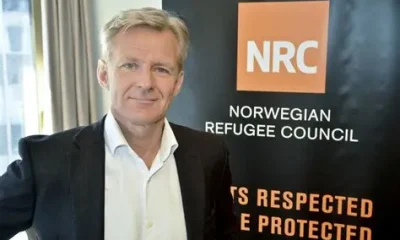
“Families in northern Central America who have been forced to flee their homes and whose lives have been turned upside down by violence have been almost invisible to much of the international community for years. Aid cuts now risk erasing them completely from global consciousness. In 2026, we fear the plight of people in need in Central America will worsen as international donors neglect deepens,” said Giorgio Lentini, NRC’s country director for North Central America and Mexico.
“The funding cuts mean many national and international aid organisations are being forced to reduce or even close operations in the region, leaving large gaps in services. This will no doubt mean vulnerable people will go without the support they so desperately need.”
Countries in the region make up the majority of the lowest funded humanitarian responses in 2025 – with Honduras being the lowest funded globally with just over 10 per cent of the required funding delivered. This follows the extremely low levels of funding witnessed in 2023 and 2024, when the United States (US) delivered the majority of humanitarian funding for the region, and many other large donors were absent. Since aid cuts at the start of the year, funding from the US has now evaporated and other donors including Sweden and Switzerland are also making cuts or even closing their programmes in Central America.
“The lack of support from international donors has forced NRC to take drastic action in the region. At the end of this year, NRC will end all work in Guatemala and will close in El Salvador next year. We have also been forced to drastically scale down and adapt our work in both Honduras and Mexico,” said Lentini.
Across the region, NRC provides protection, legal assistance and emergency education to people who have been forced to flee their homes due to widespread violence. In 2024, NRC supported more than 80,000 people across the four countries but will be only able to support a fraction of this number in 2026 and beyond. By the end of 2025 we are forced to reduce our teams and operations by approximately 70 per cent. We are doing all we can to find other avenues of support for people in need of humanitarian assistance.
Across the region, the humanitarian situation remains dire. Ongoing violence continues to force people to flee from their homes – some displaced within their countries, others forced to seek protection abroad. Meanwhile, disasters and floods are also leaving people in need of urgent support. On top of these challenges, an increasing number of refugees and migrants are left with no option but to remain in dangerous situations in Honduras, Guatemala, and Mexico, and it is expected that needs will grow next year, just as a lack of funding is crippling the aid response, and safe pathways to access protection are shrinking.
In June, the United Nations launched a ‘hyper-prioritised plan’ in response to aid cuts which resulted in the 2.2 million people previously targeted cross Honduras, Guatemala and El Salvador being left out of the plan. They now risk going completely unsupported. In 2026, no country in Central America will have a dedicated humanitarian needs and response plan, risking further escalating the neglect.
“Donors, including development donors and the private sector, must recognise and address the vast needs that are perpetuating across northern Central America and Mexico. It’s vital that they step up so people facing such extreme levels of violence are not abandoned overnight,” added Lentini.







News Extra
Le défenseur des droits humains Mwanje appelle à mettre fin aux accords de « paiement contre confinement » lors du Forum social mondial
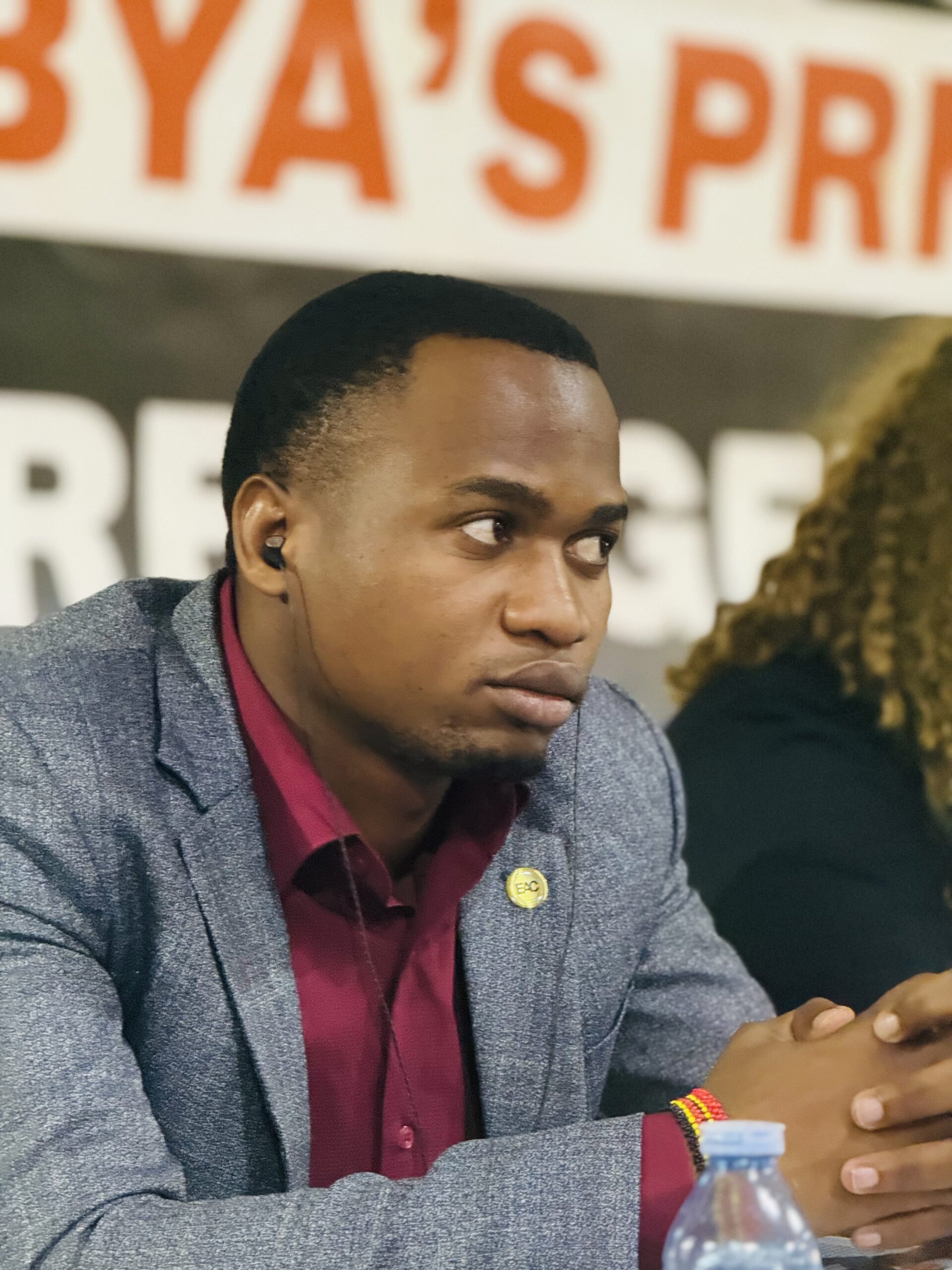
Le juriste ougandais et défenseur des droits humains, Mwanje Gideon, a appelé à mettre fin aux politiques migratoires qui permettent aux pays riches de transférer leurs responsabilités en matière de protection des réfugiés à des nations plus pauvres par le biais d’accords financiers et diplomatiques.
Mwanje a lancé cet appel lors du Forum social mondial (FSM) 2026 à Cotonou, au Bénin, où il est intervenu lors d’une table ronde de haut niveau intitulée : « Les refoulements de l’Europe conduisent les réfugiés dans les prisons de Libye : mettre fin aux accords de paiement contre confinement ».
Dans son intervention, Mwanje a critiqué ce qu’il a décrit comme l’externalisation croissante du contrôle migratoire par les riches pays occidentaux, avertissant que de tels accords transfèrent la charge de la protection internationale des pays développés vers les nations d’accueil plus pauvres.
« Lorsque les pays du Nord global concluent des accords de “paiement contre confinement”, sous-traitant leurs obligations juridiques internationales à des pays en développement, nous devons appeler cela par son vrai nom : une forme moderne de traite des esclaves », a déclaré Mwanje dans son discours du 6 août.
Il a estimé que les demandeurs d’asile étaient de plus en plus traités comme des marchandises dans les accords internationaux sur les migrations, les pays en développement recevant des aides financières, des financements pour les infrastructures ou un soutien diplomatique en échange de la prise en charge des migrants et des réfugiés.
Mwanje a utilisé l’analogie d’un riche homme d’affaires, « M. Sterling », pour expliquer cette pratique, comparant les pays riches à des propriétaires qui paient leurs voisins plus pauvres afin d’empêcher les migrants en situation de détresse d’atteindre leurs frontières.
« C’est cela, l’externalisation », a-t-il déclaré, estimant que cette politique ne résout pas les pressions migratoires, mais les transfère simplement vers des endroits où les pays riches sont moins susceptibles d’en voir les conséquences.
Le représentant de l’Afrique de l’Est a également averti que l’externalisation avait de graves conséquences pour les pays de la Communauté d’Afrique de l’Est (EAC), qui accueillent déjà d’importantes populations de réfugiés.
Selon lui, la région est de plus en plus exposée aux accords bilatéraux de paiement contre confinement et aux mécanismes de traitement des demandes d’asile hors du territoire, à la sous-traitance du contrôle migratoire aux pays de transit ainsi qu’à l’érosion des principes régionaux en matière d’asile.
Il a cité l’Ouganda et le Kenya comme exemples de pays qui accueillent déjà des millions de réfugiés tout en subissant des pressions pour assumer des responsabilités supplémentaires sans bénéficier d’un soutien structurel adéquat ni de mécanismes financiers durables.
Mwanje a également souligné l’importance du principe de non-refoulement, qui interdit le retour ou le transfert de réfugiés et de demandeurs d’asile vers des lieux où ils risquent d’être persécutés ou de subir de graves préjudices.
Il a fait valoir que les États ne pouvaient pas se soustraire à leurs obligations internationales simplement en transférant le traitement des demandes d’asile vers des pays tiers.
Selon le rapport, l’intervention de Mwanje a suscité un fort soutien des participants, qui lui ont réservé une longue ovation debout ainsi que des applaudissements nourris.
Au cours du forum, il a également échangé avec plusieurs organisations internationales, notamment Alarm Phone, Refugees in Libya, Borderline-Europe, EuroMed Rights et Afrique-Europe-Interact.
Ces organisations ont par la suite publié une déclaration commune intitulée « Nos corps ne sont pas des marchandises », dénonçant la marchandisation du contrôle migratoire et appelant à mettre fin aux accords de paiement contre confinement.
La déclaration s’est également opposée à la criminalisation de la mobilité et à la transformation de certaines régions d’Afrique du Nord et de l’Est en zones tampons pour les politiques migratoires européennes, tout en exhortant les États à respecter le principe de non-refoulement.
La mission de Mwanje au FSM, qui s’est déroulé du 2 au 10 août 2026, a également abouti à des recommandations visant à renforcer les réseaux régionaux de défense juridique, à accroître la mobilisation des jeunes et des étudiants en faveur des droits des réfugiés et à renforcer la responsabilité des gouvernements africains impliqués dans des accords migratoires avec des puissances étrangères.
Selon le rapport, cette mission a contribué à renforcer la voix de l’Afrique de l’Est dans les débats internationaux sur les migrations, la protection des réfugiés et l’externalisation des frontières.
Je peux aussi vous proposer une version française plus journalistique et naturelle, adaptée à la publication dans un média francophone.
News Extra
Human rights advocate Mwanje calls for end to ‘cash-for-containment’ deals at World Social Forum
Ugandan legal scholar and human rights advocate, Mwanje Gideon, has called for an end to migration policies that allow wealthy countries to transfer their refugee protection responsibilities to poorer nations through financial and diplomatic arrangements.
Mwanje made the call at the World Social Forum (WSF) 2026 in Cotonou, Benin, where he spoke on a high-level panel titled, “Europe’s Pushbacks Lead to Libya’s Prisons for Refugees: Stopping Cash-for-Containment Deals.”
In his intervention, Mwanje criticised what he described as the growing externalisation of migration control by wealthy Western nations, warning that such arrangements shift the burden of international protection from developed countries to poorer host nations.
“When Global North nations strike ‘cash-for-containment’ deals, outsourcing their international legal obligations to developing countries, we must call it what it truly is—a modern slave trade,” Mwanje said in his address on August 6.
He argued that asylum seekers were increasingly being treated as commodities in international migration agreements, with developing countries receiving financial packages, infrastructure funding or diplomatic leverage in exchange for taking responsibility for migrants and refugees.
Mwanje used an analogy involving a wealthy businessman, “Mr. Sterling,” to explain the practice, likening wealthy countries to property owners who pay poorer neighbours to prevent desperate migrants from reaching their borders.
“That is externalization,” he said, arguing that the policy does not resolve migration pressures but merely transfers them to places where wealthy countries are less likely to witness the consequences.
The East African representative also warned that externalisation was having serious implications for countries in the East African Community, which already host large refugee populations.
According to him, the region is increasingly being exposed to bilateral cash-for-containment and offshore asylum-processing arrangements, the subcontracting of migration control to transit countries, and the erosion of regional asylum principles.
He cited Uganda and Kenya as examples of countries already hosting millions of refugees while facing pressure to assume additional responsibilities without adequate structural support or sustainable financial arrangements.
Mwanje further stressed the importance of the principle of non-refoulement, which prohibits the return or transfer of refugees and asylum seekers to places where they face persecution or serious harm.
He argued that states could not evade their international obligations simply by transferring asylum processing to third countries.
The report said Mwanje’s intervention attracted strong support from participants, culminating in a prolonged standing ovation and sustained applause from delegates.
During the forum, he also engaged with international organisations including Alarm Phone, Refugees in Libya, Borderline-Europe, EuroMed Rights and Afrique-Europe-Interact.
The organisations subsequently issued a joint declaration under the theme “Our Bodies Are Not Commodities,” condemning the monetisation of migration control and calling for an end to cash-for-containment arrangements.
The declaration also opposed the criminalisation of movement and the transformation of parts of North and East Africa into buffer zones for European migration policies, while urging states to respect the principle of non-refoulement.
Mwanje’s mission to the WSF, which ran from August 2 to 10, 2026, also resulted in recommendations for stronger regional legal defence networks, increased youth and student advocacy on refugee rights, and greater accountability for African governments involved in migration agreements with foreign powers.
The report said the mission helped elevate East Africa’s voice in international debates on migration, refugee protection and the externalisation of borders.
News Extra
BOZA FII exige la fin des refoulements financés par Frontex et appelle à une justice migratoire
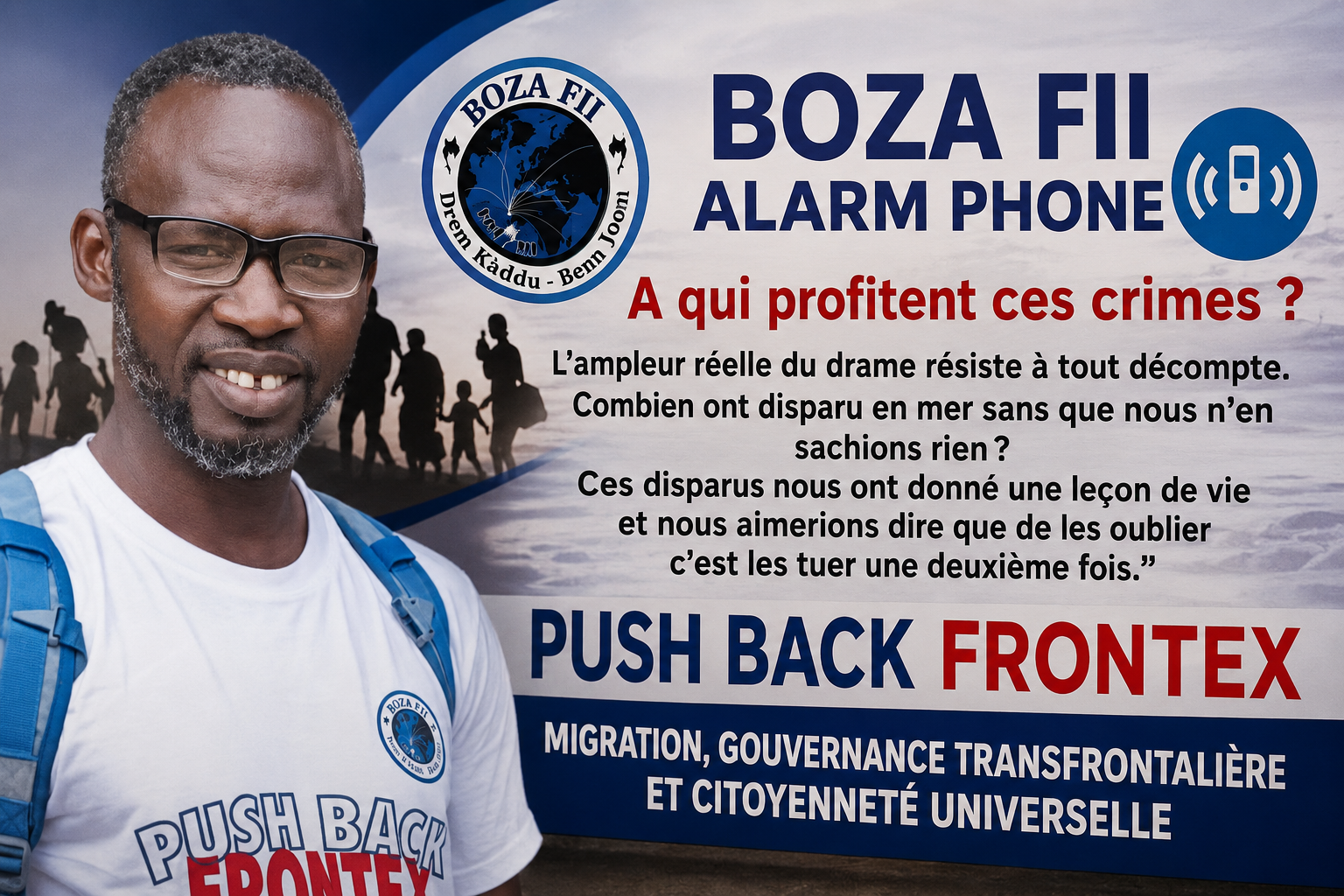
Le mouvement BOZA FII a renouvelé son appel à mettre immédiatement fin à ce qu’il qualifie de refoulements financés par Frontex, exigeant davantage de transparence dans les accords migratoires entre les pays européens et africains, ainsi qu’un système migratoire qui place la dignité humaine au-dessus du contrôle des frontières.
S’exprimant lors de la cinquième édition de la campagne « 72H Push-back Frontex » à Sokone, un représentant du mouvement a déclaré que la lutte contre les politiques migratoires restrictives était étroitement liée au combat plus large pour la démocratie, la bonne gouvernance et les droits humains.
L’intervenant a accusé les politiques européennes de contrôle des frontières de transformer la mer Méditerranée, les frontières et les routes migratoires désertiques en ce qu’il a décrit comme des « cimetières à ciel ouvert », estimant que les refoulements exposent les migrants à des dangers et violent le droit international.
« Frontex n’est pas simplement une agence de surveillance ; c’est le bras armé d’une Europe forteresse qui a choisi de refouler les personnes en détresse plutôt que de leur tendre la main », a déclaré l’intervenant.
Il a souligné que les migrants ne devraient pas être considérés comme des menaces pour la sécurité, affirmant que nombre d’entre eux sont victimes d’un système mondial et de circonstances indépendantes de leur volonté.
Selon lui, le mouvement BOZA FII repose sur deux principes fondamentaux : le droit des personnes à rester dans leur pays d’origine dans des conditions garantissant une vie digne, et le droit de circuler librement.
L’intervenant a également établi un lien entre les migrations, la mauvaise gouvernance et les difficultés démocratiques dans les pays africains, notamment au Togo. Il a affirmé que la mauvaise gouvernance et la concentration des richesses entre les mains d’une minorité poussent souvent les jeunes à chercher des opportunités ailleurs, parfois au péril de leur vie.
« La mauvaise gouvernance est le premier passeur de nos jeunes », a-t-il déclaré, ajoutant que la lutte contre Frontex devait également inclure des exigences de reddition de comptes envers les dirigeants africains.
Il a exhorté les gouvernements africains à ne pas sacrifier leurs citoyens « sur l’autel » de la diplomatie migratoire et a encouragé les militants de BOZA FII à rester engagés dans la campagne.
BOZA FII a formulé trois principales revendications : la cessation immédiate du financement des refoulements par Frontex, la transparence totale des accords migratoires entre l’Europe et les États africains, ainsi que l’instauration d’une véritable justice migratoire donnant la priorité aux êtres humains plutôt qu’aux barrières frontalières.
L’intervenant a conclu par un appel à la solidarité internationale et à la poursuite du combat pour la dignité des peuples.
« On ne repousse pas la pauvreté avec des murs ; on la guérit par la justice. »

Réintégration ou façade ? Les migrants nigérians de retour remettent en question la promesse d’un nouveau départ

Comment le FSM a changé la perception des participants sur la migration

FSM : des participants nigérians et sénégalais pleurent des proches portés disparus ou décédés

Au-delà de l’étiquette de victime : des Nigérians transforment la scène en déclaration de dignité au Forum social mondial

Donner une voix aux migrants : comment Alia transforme l’expérience vécue en action
-
 News Extra2 weeks ago
Des manifestations éclatent après la mort de migrants dans le naufrage d’un bateau
-
News Extra3 weeks ago
La Libye intercepte 87 migrants alors que trois personnes meurent et que plusieurs autres sont portées disparues
-
 News3 weeks ago
La Méditerranée transformée en « cimetière par politique » — Chercheur
-
News3 weeks ago
Mediterranean turned to cemetery by policy – Researcher
-
News3 weeks ago
Libya Intercepts 87 migrants as three die, several others missing
-
 News Extra2 weeks ago
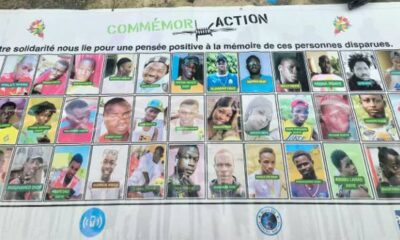
Alarm Phone rend hommage aux migrants morts en Méditerranée et exige des voies de passage sûres
-
News2 weeks ago
Alarm Phone pays tribute to migrants who died crossing Mediterranean, demands safe passage
-

 News Extra2 weeks ago
Human rights advocate Mwanje calls for end to ‘cash-for-containment’ deals at World Social Forum