
Features
Statement of solidarity with the Freedom Flotilla

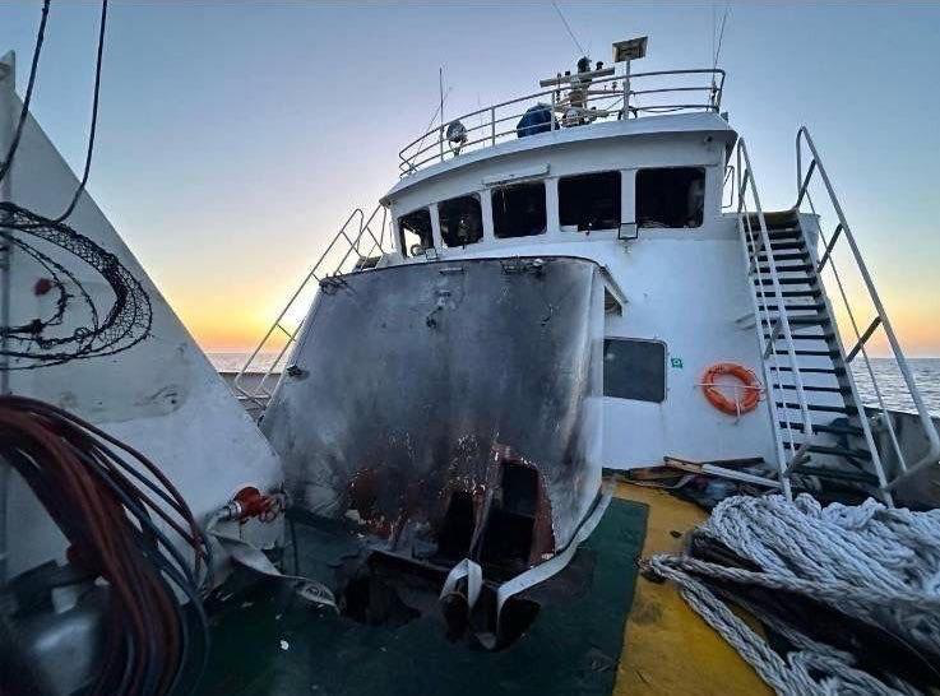
The ship Conscience after the drone attack. Photo: Freedom Flotilla Coalition
In the face of the ongoing genocide in Gaza and following the drone attack, we stand together in solidarity with the Freedom Flotilla!
On 2nd May in the early morning, we witnessed yet another violation of international humanitarian law: the ship Conscience, part of the Freedom Flotilla, bound for Gaza to deliver humanitarian aid and medicines, was attacked by two drones. Hours before the attack, Israeli Airforce C-130 Hercules flew towards Malta and flight tracking shows it was flying at a low altitude over eastern Malta. Although the Israeli military has declined to comment, the Freedom Flotilla strongly suspects that it was Israeli drones that fired shots at the unarmed vessel, causing a fire and risking to kill the crew and the volunteers onboard (the evidence has been collected here). Following the Mayday call launched by the crew, a Cypriot cargo ship arrived on the scene and proceeded to extinguish the fire. The crew refused to abandon the vessel, as this would have meant leaving the ship unattended and probably caused the loss of the humanitarian aid it was carrying.
Palestine has been occupied by Israel since 1948, when 700,000 Palestinians were expelled from their homes and land. Since then, we have witnessed the proliferation of Israeli settlements considered illegal under international law, and Israel has imposed an apartheid regime on Palestinian people. While violence has been structural to this regime, following the Hamas-led attack across the Gaza fence on 7 October 2023 in which over 800 civilians were killed, we have witnessed an unprecedented escalation in which the state of Israel has been carrying out systematic genocidal operations aimed at eliminating the Palestinian population residing in the Gaza Strip.
Since then, there have been over 52,000 deaths, including more than 17,400 children, but there are many others who remain missing, thus the real death toll could be even higher. Journalists, humanitarian workers, doctors, as well as ambulances and hospitals have been systematically targeted by Israeli attacks, in clear violation of international humanitarian law.
The Israeli siege, which has resulted in the almost complete prevention of access to basic necessities, including food and medicine, as well as medical equipment for the treatment of the sick and injured, and the destruction of the country’s health infrastructure, has been an essential tool in Israel’s genocidal plan.
Faced with the starvation imposed on the population of Gaza and the severe shortage of medicines, the Freedom Flotilla set out to break the siege by bringing essential goods into the country.
Breaking the siege should have been the task of European, Western and Arab states that continue to call themselves democratic while supporting Israel. Yet once again, members of civil society needed to act, putting their own lives at risk.
We recall how on 31st May 2010 the Israeli Defence Forces attacked the Freedom Flotilla while it was en route to deliver humanitarian aid, causing the death of 10 people. Unfortunately, as underlined by an activist of the project, «We live in times where ships carrying the most advanced weaponry in the world pass freely, and ships carrying urgent humanitarian aid to a starving population burn».
While Prime Minister Netanyahu plans to implement a ‘final solution’ that will confine the entire population of Gaza in 45 square kilometres and allow Israel to occupy the remaining 90% of the Strip, we condemn the European Parliament’s refusal to discuss the unacceptable and potentially lethal attack on the Freedom Flotilla and to condemn the ethnic cleansing and genocide of the Palestinian people.
We strongly condemn the deliberate attack on a civilian vessel carrying essential goods and medical aid.
We condemn the silence and inaction of Western and Arab states in defence of the people of Gaza and in the face of yet another explicit crime committed by Israel, confirming its full and complete impunity.
We stand in solidarity with those who continue to resist in Gaza in the face of relentless attempts at extermination by Israeli forces, as well as with those who, like the crew of the Freedom Flotilla, continue to stand alongside them, denounce these acts and take action to stop the genocide.
First signatories
- Al Bawsala / Tunisia
- Alternative Intervention of Lawyers, Athens
- Aktionstage Enough
- Aswat Nissa
- ASGI – Association for Juridical Studies on Immigration
- Association Beity – Tunisia
- Anti-Apartheid movement (AAM)
- Avocats Sans Frontières (ASF)
- Bewegung für den Sozialismus
- Border Forensics
- booq Palermo – Bibliofficina di quartiere
- Cantine Tambouille
- Center for Research and Elaboration for Democracy
- Centhra Malaysia
- Chile Lawyers for Palestine
- Collectif National pour la Reconnaissance des Crimes Coloniaux
- CORPORACION JURIDICA ALTERNATIVA CIUDADANA (Corpojurídica AC) – Colombia
- Comité pour le respect des libertés et des droits de l’Homme en Tunisie – CRLDHT
- Convenzione dei diritti nel Mediterraneo
- Damj, the Tunisian Association for Justice and Equality
- de:criminalize
- Fédération des tunisiens citoyens des deux Rives – FTCR (France)
- Feministisches Streikkollektiv Zürich
- Figli delle chiancarelle
- Fundación Solidaire
- Gruppo Melitea
- Italiani Senza Cittadinanza
- iuventa-crew
- Jüdische Stimme für Demokratie und Gerechtigkeit in Israel/Palästina (JVJP), Switzerland
- Il Centro di ricerca ed elaborazione per la democrazia ( CRED)
- KEERFA MOVEMENT UNITED AGAINST RACISM AND FASCIST THREAT
- LasciateCIEntrare/MaipiuCie
- Legal Clinic on Migration and Asylum University of Roma Tre
- LEGAL TEAM ITALIA
- LIMINAL
- MALDUSA Project
- Mediterranea Saving Humans
- Mesdhe (Albania)
- migration-control.info project
- Missing Voices (REER)
- Movement for Debt and Reparations
- Mv LOUISE MICHEL
- Nachaz Dissonances Tunisia
- NOMAD08 TUNISIA
- PAL Commission on War Crimes, Justice, Reparations, and Return, Co-Counsel to Freedom Flotilla Coalition
- Palestina e lirë (Albania)
- Palestine Solidarity Alliance
- r42-SailAndRescue
- Rizomi.Lab
- Reclaim The Sea CIC
- Refugees platform In Egypt (RPE)
- Salvamento Maritimo Humanitario- SMH
- SAR Malta
- SARAH-Seenotrettung
- Sea Punks e.V.
- Seasters Coop
- THFwelcome e.V.
- Tunisian Association for the Defense of Individual Freedoms
- Tunisian Forum for Social and Economic Rights FTDES
- USA Peace Council
- WeAreOkay
- Watch the Med AlarmPhone
- Worldwide Lawyers Association (WOLAS) as co-counsel to Freedom Flotilla Coalition
- Ya Basta Bologna
–
- Lamis J. Deek, Director of Legal and Diplomatic Affairs- PAL Commission on War Crimes, Justice, Reparations, and Return. Co-counsel To Freedom Flotilla
- Amadou Mbow, Président de l’Association Mauritanienne pour la citoyenneté et développement.
- Ridha Tlili, Film maker
- Pablo Andrés Araya Zacarías, Abogados Chilenos por Palestina, PAL Commission
- Dimitra Linardaki Lawyer, Athens
- Εvgenia Kouniaki, Lawyer, Alternative Intervention of Lawyers, Athens
- Ridwana Ibrahim
- Ioanna stentoumi
- Thanasis Kampagiannis, Lawyer, ex councillor in the Board of Directors in the Athens Bar Association
- Pablo Azarcaya, Attorney, Chile, PAL Law Commission, Chile for Palestine
- Evgenia Kouniaki, Attorney, Greece, PAL Law Commission, Alternative Intervention
- Daniel Kovalik, Attorney, USA, PAL Law Commission, Peace Council USA
- Petros Constantinou,coordinator KEERFA GREECE
- Sabrine Fourek
- Leonor aurrekoetxea
- Eleni Solomakou, Jurist/PhD Candidate NKUA
- Chryssa Maramatha
- DIMITRIW ZOTOS Athhens Bar accosiation No 9067
- Mountada Ettajdid, Tunis





The United Nations has announced a new set of senior appointments to the leadership of the UN Refugee Agency (UNHCR), with Secretary-General António Guterres naming Tressa Rae Finerty as Deputy High Commissioner for Refugees, Antón Leis García as Assistant High Commissioner for Operations, and Edem Wosornu as Assistant High Commissioner for Protection.
The appointments, announced on Saturday, are expected to take effect in the coming weeks.
The three officials will occupy the most senior positions within UNHCR, supporting the High Commissioner in leading the agency’s global response to the protection and assistance of refugees, stateless persons and other people forced to flee their homes.
Welcoming the appointments, UN High Commissioner for Refugees Barham Salih expressed confidence that the incoming officials would strengthen the agency’s response to the growing global displacement crisis.
“I warmly welcome these appointments and look forward to working closely with Tressa, Anton and Edem,” Salih said.
“Their leadership, experience and commitment will be invaluable as UNHCR responds to displacement challenges around the world. Together, we will work to continue strengthening protection, expanding opportunities for self-reliance and pursuing lasting solutions that help refugees rebuild their lives with dignity.”
Finerty, a career member of the U.S. Senior Foreign Service, currently serves as Chargé d’Affaires at the United States Mission to the United Nations and Other International Organizations in Geneva. She previously served as Deputy Chief of Mission in Geneva and Deputy Executive Secretary in the Office of the U.S. Secretary of State. Her diplomatic career has also included postings at the U.S. Mission to the United Nations in New York and embassies in Malaysia, Iraq, Armenia and Thailand. In addition, she has taught refugee policy at New York University and Georgetown University.
Leis García currently heads the Spanish Agency for International Development Cooperation (AECID), Spain’s development and humanitarian agency. He has previously held senior positions at the Organisation for Economic Co-operation and Development (OECD), the Office of the President of the Spanish Government, and international financial institutions including the African Development Bank and the World Bank Group.
Wosornu currently serves as Director of the Crisis Response Division at the United Nations Office for the Coordination of Humanitarian Affairs (OCHA) and chairs the Inter-Agency Standing Committee Emergency Directors Group. She has held several senior headquarters and field positions within OCHA and began her United Nations career as an intern at UNHCR before working in the private legal sector in the United Kingdom.
The newly appointed officials will replace Kelly T. Clements, Deputy High Commissioner; Raouf Mazou, Assistant High Commissioner for Operations; and Ruvendrini Menikdiwela, Assistant High Commissioner for Protection, whose terms are coming to an end.
Paying tribute to the outgoing leaders, Salih praised their contributions to the agency’s humanitarian mission.
“The organization owes a profound debt of gratitude to Kelly, Raouf and Ruven for their exceptional service and dedication,” he said. “Their leadership has strengthened UNHCR’s ability to protect and assist millions of displaced and stateless people around the world.”
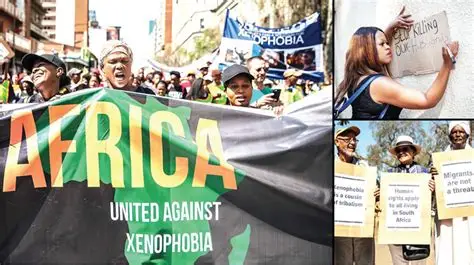
The final batch of 40 stranded Nigerians evacuated from South Africa has arrived at the Murtala Muhammed International Airport (MMIA) in Lagos, bringing to a close the Federal Government’s evacuation exercise that returned a total of 1,174 citizens.
The returnees landed on Friday night aboard a chartered Air Peace flight, marking the sixth and final phase of the evacuation programme.
In a statement issued on Saturday, the Director of Media, Public Relations and Protocols of the Nigerians in Diaspora Commission (NiDCOM), Abdur-Rahman Balogun, said the exercise was carried out through six flights operated by Air Peace and ValueJet.
According to the commission, the first five batches brought home 258, 266, 262, 282 and 66 Nigerians, while the final chartered Air Peace flight evacuated the remaining 40 stranded citizens.
Balogun said the returnees expressed appreciation to President Bola Tinubu for approving the evacuation from South Africa. They also thanked the Minister of Foreign Affairs, Bianca Odumegwu-Ojukwu, the Acting Nigerian Ambassador to South Africa, Temitope Alexander-Ajayi, and NiDCOM Chairman and Chief Executive Officer, Abike Dabiri-Erewa, for facilitating their safe return.
The evacuees were received at the airport by NiDCOM officials, who also announced a series of support packages from government agencies, corporate organisations and individuals.
According to the statement, Governor Hope Uzodimma of Imo State approved a grant of N1 million for each returnee from the state. Telecommunications company MTN also donated free SIM packs with N50,000 worth of data and pledged to credit each returnee’s bank account with N100,000.
Officials from the Edo and Delta State governments similarly announced assistance for their indigenes among the evacuees.
The commission added that the JAAL Foundation pledged empowerment support for 50 female returnees, while the General Overseer of Omega Power Ministries Worldwide, Apostle Dr Chibuzor Gift Chinwe, was commended for providing free accommodation for about 52 returnees, skills acquisition opportunities for their families and free education for their children up to university level.
The returnees also acknowledged Pastor Bolaji Idowu of Harvesters Church for donating N100,000 each to 66 evacuees, while real estate firm Cruxstone provided financial support to the first batch of returnees.
Balogun said officials of the National Emergency Management Agency (NEMA), the National Commission for Refugees, Migrants and Internally Displaced Persons (NCFRMI), the Nigerian Immigration Service (NIS), the Federal Airports Authority of Nigeria (FAAN), the National Identity Management Commission (NIMC) and other security agencies were present at the airport to receive and document the returnees.
“The returnees were full of gratitude for the donations, support and warm welcome received,” the statement said.
The UN Refugee Agency, UNHCR, and the UN Migration Agency, IOM have welcomed the entry into force today of the European Union’s Pact on Migration and Asylum as an opportunity to move beyond crisis-driven responses and implement a more predictable, fair and effective approach to the issues across Europe.
EU Member States should seize this moment to strengthen migration management and refugee protection while advancing solidarity and responsibility-sharing in line with European values and international obligations, the agencies’ chiefs said.
“The Pact’s entry into full effect today is an important step toward a more predictable and coherent European migration system. What matters now is steady implementation over time that is effective, humane, sustainably resourced and grounded in cooperation,” said Amy Pope, Director General of the International Organization for Migration. “The priority is turning the reforms into practical results for States, communities, and people on the move.”
The Pact aims to make EU asylum systems more efficient and consistent, offering a structured framework for Member State cooperation. This can reduce backlogs while maintaining the quality of assessments, provide greater certainty for asylum-seekers, and enable refugees to begin rebuilding their lives and contributing to their communities sooner.
“This Pact is an important step in the right direction, advancing shared responsibility and more predictable, sustainable approaches across the European Union,” said Barham Salih, UN High Commissioner for Refugees. “UNHCR stands ready to support all Member States in strengthening asylum systems – ensuring access to protection for those in need, upholding human rights and dignity, and enabling safe, lawful and dignified returns for those not in need of international protection.”
IOM and UNHCR welcome the EU’s renewed focus on partnerships with all affected countries. Reducing irregular movements means addressing root causes, ensuring access to protection, tackling smuggling networks, and enabling safe, regular pathways. The organizations will continue to support route-based approaches that ensure policies deliver on protection, dignity and shared responsibility, while contributing to sustainable solutions that benefit both countries and communities along migration routes.
UNHCR and IOM welcome several key elements of the Pact, including earlier identification of people with specific needs, strengthened legal assistance, and new independent monitoring mechanisms at external borders. Returns of those with no legal right to stay must be both effective and humane. Alongside enforcement, they should ensure access to informed voluntary return, early case management, and reintegration support, working with countries of origin, transit and first asylum as part of a balanced approach that upholds dignity and fundamental rights.
These measures can help ensure that asylum processing and return procedures are faster and fairer, reducing uncertainty for asylum-seekers while strengthening public confidence in the migration and asylum system.
UNHCR and IOM stress that implementation will be the decisive test. Procedures must be carried out with adequate safeguards to ensure that no one is returned or transferred to a situation where they may face persecution, conflict or other forms of serious harm.

ICC confirmation of 17 charges against El-Hishri draws praise from rights groups

Expert raises questions over UNHCR’s strategic direction after new leadership appointments

UN appoints new senior leadership for UNHCR

Migrant advocate laments death of asylum seeker, condemns Libya abuses

50 die as boat carrying about 60 people capsizes
-

 News3 weeks ago
Favour Henshaw appointed administrator of Platform for Cooperation on Mixed Migration
-

 News2 weeks ago
IYAMIDR commends Okpebholo for ₦1m support to South Africa returnees
-

 News3 weeks ago
Lampedusa: built to accommodate 400 people, now holds thousands of migrants
-
 News Extra3 weeks ago
Pope urges European leaders to make greater investment in developing migrants’ countries of origin
-
 News3 weeks ago
World silent as drone strikes, extreme hunger ravage El Obeid families
-
Features3 weeks ago
Lampedusa: Pope’s visit powerful reaffirmation migrants, refugees must remain at centre of global efforts
-

 News Extra3 weeks ago
IYAMIDR urges Nigeria to sanction South Africa, support returnees
-

 Features3 weeks ago
IOM, UNDP, UNHCR, welcome growing investment in long-term solutions to internal displacement