
Features
Income gaps, others driving migration -World Bank

The World Bank has listed income gaps, demographic and climate change among others as drivers of migration.
According to the World Bank “Migration contributes significantly to human development, shared prosperity, and poverty alleviation. Managing migration’s drivers and impacts allows origin and destination countries to share the gains.”
It said current crises are increasing migration pressures with complex regional and strategic implications. An estimated 286 million people live outside of their countries of birth, including 32.5 million refugees as of mid-2022. Over 750 million migrate within their countries, with a further 59 million people displaced within their own countries by the end of 2021.
There is increasing demand for World Bank support at the country and global level to help with the orderly migration and protection of migrants. Addressing the underlying drivers of migration is key to leveraging the movement of people for economic growth and poverty alleviation. At the same time, migration has already had an important development impact at both origin and destination countries through remittances, innovation and diaspora financing.
The World Bank is a custodian of three Sustainable Development Goals (SDGs) related to migration: reducing recruitment costs for migrant workers (indicator 10.7.1), reducing remittance costs (10.c.1), and increasing the volume of remittances (indicator 17.3.2).
Note: The World Bank’s strategy, results, and global partnerships addressing displacement arising from fragility, conflict, and violence (FCV) are set out in more detail here.
Main drivers of migration
Income gaps across countries are a powerful driver of migration. Large income gaps persist between high-income and low-income countries in both low- and high-skill occupations. Widening income inequality within origin countries, especially low-income countries, is another powerful push factor. For many poor people whose labor is their only asset, migration to a richer country offers an opportunity to escape poverty. The poorest of the poor, however, tend to migrate internally, as they are unable to afford the costs associated with moving abroad.
Demographic change is increasingly shaping our future. Based on current trajectories, by 2030 the working-age populations in developing countries are projected to increase by 552 million and these nations will need to generate sufficient jobs to reach their targets for poverty reduction and growth. These projections indicate a significant increase in migration pressures in the coming decade, especially from South Asia and Sub-Saharan Africa.
At the same time, developing countries are already, or will be, experiencing faster societal aging at much lower income levels than developed countries and need to prepare for it. Timely policy action can turn global aging into a source of inclusive economic growth. It can also improve outcomes for all, e.g., through labor migration across countries at different stages of demographic transition.
Climate change is expected to exacerbate the pressure on vulnerable people to migrate. Latest model based simulations suggest that climate change may lead to decreasing crop productivity, shortages of water, and rising sea levels, which may induce as many as 216 million people to move, although most would move within their country rather than internationally.
Fragility, conflict, and violence (FCV) leads to forced displacement, which must be addressed with collective action by origin countries, host countries, and the international community. Studies by World Bank include Forcibly Displaced, a groundbreaking report in partnership with UNHCR that analyzed data to understand the scope of the forced displacement challenge and articulated a development approach to resolving the crisis. A subsequent paper set out recommendations to further step up the Bank’s support to conflict-induced internally displaced persons (IDPs) and their hosts.
Other push and pull factors include social exclusion and discrimination; corruption; lack of education, health care, and social security; and marriage opportunities. Diaspora networks are also a driver of migration. Policy changes in both origin and destination countries can influence migration decisions and demand for migrant workers.
Sharing the gains of migration
Global welfare gains from increased cross-border labor mobility could be several times larger than those from full trade liberalization. Migrants and their families tend to gain the most in terms of increases in income and better access to education and health services. However, these gains are hindered by discrimination and difficult working conditions that immigrants from low and middle-income countries face in host countries.
Origin countries can benefit through increased remittances, investments, trade, and transfers of skill and technology, resulting in reduced poverty and unemployment. In 2022, remittance flows to low and middle-income countries are expected to reach $630 billion, more than three times the total of development aid. Remittances are on track to overtake flows of foreign direct investment to developing countries. On the negative side, emigration of skilled workers can affect the delivery of health and education services in small economies.
High-income destination countries also benefit from migration through increased supplies of labor, skills, innovation, and entrepreneurship. Migrants pay taxes and contribute to social security systems. According to one study, 83 % of the native-born population in the 22 richest OECD countries have experienced a welfare gain as a result of immigration from non-OECD countries.
However, evidence on the effect of immigration on the wages of native-born workers in destination countries remains mixed: some studies indicate small negative impacts on wages of lower-skilled native-born workers, whereas others indicate positive impacts when immigrants are skilled and complement the native-born workforce.
The Global Compact for Migration and the UN Migration Network
The Global Compact for Safe, Orderly, and Regular Migration (Global Compact on Migration, or GCM) was formally endorsed by the UN General Assembly in December 19, 2018. The GCM establishes a nonbinding cooperative framework for international cooperation on migration. It covers migration induced by climate change, including displacement due to natural disasters. The compact emphasizes respect for the human rights of migrants, while also respecting the sovereignty of states and the limits of their obligations under international law.
In January 2019, the United Nations established a Network on Migration consisting of 38 organizational members of the UN system, including the World Bank, that have mandates touching on migration. The GCM explicitly calls on the World Bank’s Global Knowledge Partnership on Migration and Development (KNOMAD), to improve data- and policy-oriented analytical activities.


La Ligue des États arabes et l’Organisation internationale pour les migrations (OIM) ont officiellement lancé le Réseau arabe des données sur les migrations, le premier réseau arabe consacré aux données migratoires. Le lancement a eu lieu lors d’une cérémonie de signature au siège du Secrétariat général de la Ligue, au Caire, à l’occasion de l’adoption du premier plan d’action du Réseau pour la période 2026-2028.
Le Réseau constitue un mécanisme régional de coopération technique placé sous la direction des États arabes. Pour la première fois, il rassemble les offices nationaux de statistique et les organismes gouvernementaux chargés des données migratoires dans les 22 États arabes, au sein d’un cadre permanent d’action commune.
Les 22 États arabes accueillent environ 44,5 millions de migrants internationaux, soit près de 14,7 % du total mondial, tandis que 37,2 millions de personnes originaires des pays arabes vivent en dehors de leur pays d’origine, dont environ la moitié dans d’autres États arabes. Toutefois, les données migratoires restent dispersées entre plusieurs institutions et continuent de présenter des difficultés en matière de couverture, d’actualité et de comparabilité.
Le Réseau aidera les États arabes à harmoniser les concepts et les méthodologies, à échanger leurs expertises et à mieux comprendre les dynamiques migratoires dans les pays d’origine, de transit, de destination et de retour.
Le plan d’action a été signé par Mme Abeer Al-Jalahma, ministre plénipotentiaire et directrice du Département des statistiques et des bases de données de la Ligue des États arabes, et M. Justin MacDermott, directeur régional adjoint de l’OIM chargé des opérations pour le Moyen-Orient et l’Afrique du Nord. La cérémonie s’est déroulée en présence d’ambassadeurs et de représentants de missions diplomatiques, de directeurs généraux d’offices nationaux de statistique, de hauts responsables gouvernementaux ainsi que de partenaires régionaux et internationaux.
Elle a marqué la conclusion d’une réunion de deux jours de hauts responsables consacrée au renforcement des données migratoires dans la région arabe, tenue les 27 et 28 octobre. Cette rencontre a réuni des représentants de haut niveau de 13 États arabes : l’Algérie, Bahreïn, l’Égypte, l’Irak, la Jordanie, la Libye, la Mauritanie, le Maroc, le Qatar, l’Arabie saoudite, le Soudan, la Tunisie et le Yémen. Les participants ont examiné les priorités de l’action commune et contribué à l’élaboration du plan d’action avant son adoption.
« Le lancement du Réseau arabe des données sur les migrations marque une étape importante dans le processus de coopération statistique arabe. Pour la première fois, nos pays se réunissent autour d’une plateforme permanente consacrée aux données migratoires, dirigée par les États arabes et guidée par leurs priorités. Ce que nous avons mis en place aujourd’hui n’est pas simplement une nouvelle initiative, mais un langage statistique arabe commun au service des décideurs et qui reflète les réalités de nos populations », a déclaré Mme Abeer Al-Jalahma, ministre plénipotentiaire.
Pour l’OIM, Justin MacDermott a souligné : « Le lancement du Réseau arabe des données sur les migrations ne marque pas l’aboutissement de nos efforts, mais le début d’un nouveau chapitre de la coopération régionale, fondé sur la confiance, le partage des connaissances, l’appropriation nationale et l’action collective. »
Dans le cadre du plan d’action, le Réseau aura pour missions de :
– coordonner les travaux des équipes nationales de points focaux au sein des offices de statistique et des organismes gouvernementaux concernés ;
– harmoniser les concepts, les méthodologies et les classifications, et élaborer un cadre commun d’indicateurs aligné sur les Recommandations des Nations Unies de 2025 sur les statistiques des migrations internationales ;
– renforcer les capacités nationales, notamment dans les domaines des données administratives, de l’analyse géospatiale et de l’utilisation responsable de l’intelligence artificielle ;
– produire des analyses régionales conjointes, renforcer la protection des données et promouvoir leur partage responsable.
Les États arabes ont manifesté un engagement clair dès le lancement du Réseau, puisque dix pays ont déjà désigné leurs points focaux nationaux. Les délégations ont également présenté des propositions concrètes visant à développer davantage les mécanismes de fonctionnement du Réseau.
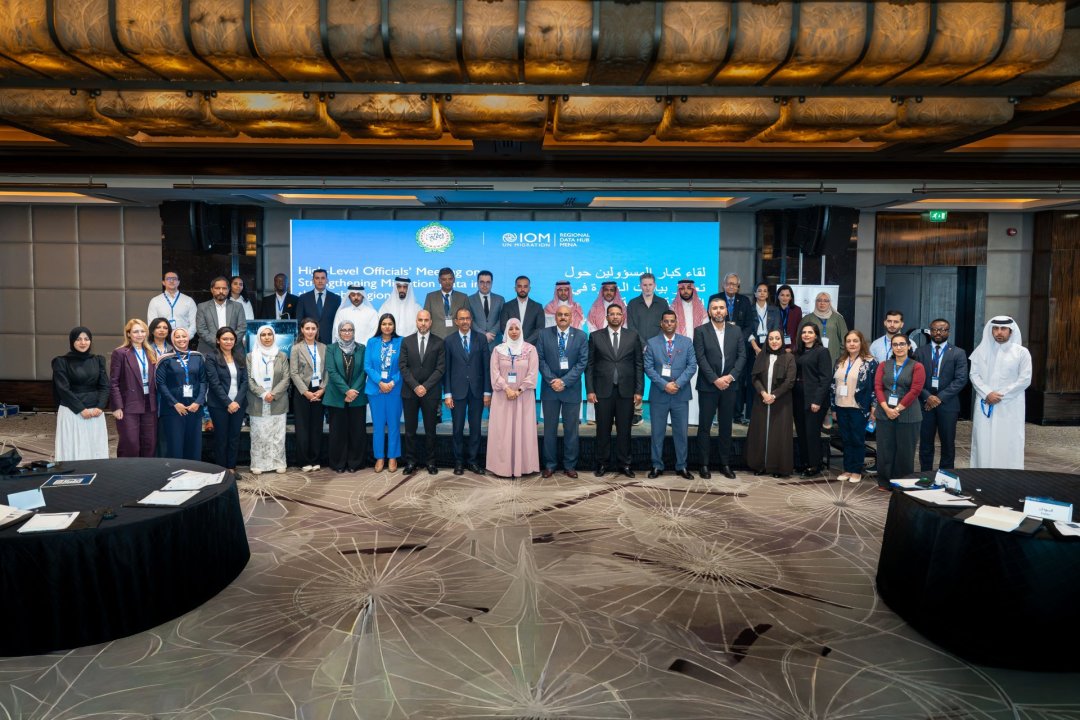
The League of Arab States and the International Organization for Migration (IOM) have formally launched the Arab Migration Data Network, the first Arab network dedicated to migration data. The launch took place at a signing ceremony at the headquarters of the League’s General Secretariat in Cairo, where the Network’s first Action Plan (2026-2028) was first adopted.
The Network is a regional mechanism for technical cooperation led by Arab States. For the first time, it brings together national statistical offices and government entities responsible for migration data across all 22 Arab States within a permanent framework for joint action.
The 22 Arab States host approximately 44.5 million international migrants, around 14.7 per cent of the global total, while 37.2 million people from Arab countries live outside their countries of origin, about half of them in other Arab States. Yet migration data remain spread across multiple institutions and continue to face challenges in coverage, timeliness and comparability.
The Network will help Arab States harmonize concepts and methodologies, exchange expertise, and build a clearer picture of migration across countries of origin, transit, destination and return.
The Action Plan was signed by H.E. Minister Plenipotentiary Abeer Al-Jalahma, Director of the Statistics and Databases Department at the League of Arab States, and Mr. Justin MacDermott, IOM Deputy Regional Director for Operations for the Middle East and North Africa. The ceremony was attended by ambassadors and representatives of diplomatic missions, directors-general of national statistical offices, senior government officials, and regional and international partners.
It concluded a two-day Senior Officials Meeting on Strengthening Migration Data in the Arab Region (27-28 October), which brought together high-level representatives from 13 Arab States: Algeria, Bahrain, Egypt, Iraq, Jordan, Libya, Mauritania, Morocco, Qatar, Saudi Arabia, Sudan, Tunisia and Yemen. Participants discussed priorities for joint action and helped shape the Action Plan ahead of its adoption.
“The launch of the Arab Migration Data Network marks a milestone in the journey of joint Arab statistical cooperation. For the first time, our countries are coming together around a permanent platform dedicated to migration data, led by Arab States and driven by their priorities. What we have built today is not simply a new initiative, but a shared Arab statistical language that serves decision-makers and reflects the realities of our people,” said H.E. Minister Plenipotentiary Abeer Al-Jalahma.
For IOM, Justin MacDermott noted: “The launch of the Arab Migration Data Network is not the culmination of our efforts; it is the beginning of a new chapter in regional cooperation, built on trust, shared knowledge, national ownership and collective action.”
Under the Action Plan, the Network will:
- coordinate the work of national focal point teams in statistical offices and relevant government entities;
- harmonize concepts, methodologies and classifications, and develop a common indicator framework aligne with the 2025 United Nations Recommendations on Statistics of International Migration;
- strengthen national capacities, including in administrative data, geospatial analysis and the responsible use of artificial intelligence; and produce joint regional analyses and strengthen data protection and responsible data sharing.
Arab States showed clear commitment from the outset, with 10 countries already designating national focal points. Delegations also presented practical proposals to further develop the Network’s working mechanisms.
Features
Gaza : Près de deux millions de personnes ont besoin d’une aide d’urgence en matière d’hébergement
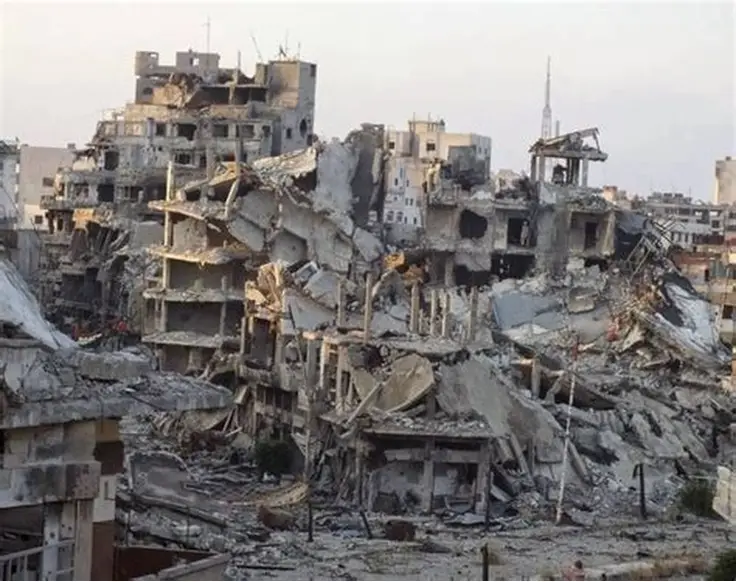
Près de deux millions de personnes, soit la quasi-totalité de la population de Gaza, ont toujours besoin d’une aide en matière d’hébergement, un an après l’annonce d’un cessez-le-feu. Alors que les pluies hivernales commencent, l’ensemble des approvisionnements prévus par les partenaires humanitaires intervenant dans le domaine de l’hébergement ne couvre qu’à peine 17 % des besoins identifiés pour l’hiver, a averti aujourd’hui Amy Pope, Directrice générale de l’Organisation internationale pour les migrations (OIM).
Après des années de déplacements et de destructions généralisées, les Palestiniens affrontent un quatrième hiver sans protection adéquate contre la pluie, les inondations et le froid. L’insuffisance des financements et les restrictions persistantes imposées par les autorités israéliennes à l’entrée de fournitures essentielles destinées aux abris empêchent les organisations humanitaires d’apporter une réponse à la hauteur des besoins.
« Les familles qui ont déjà subi des déplacements répétés et des pertes dévastatrices doivent pouvoir affronter l’hiver dans la sécurité et la dignité », a déclaré Pope. « Les matériaux destinés aux abris doivent pouvoir entrer rapidement, de manière prévisible et en quantités suffisantes pour répondre aux besoins. »
Plus de la moitié des tentes et des abris de fortune actuellement utilisés sont en mauvais état et doivent être remplacés. Les tentes sont conçues comme une mesure d’urgence temporaire et ne durent généralement que six à douze mois.
Faute d’autres solutions, de nombreuses familles vivent dans des bâtiments endommagés par la guerre qui présentent de graves risques pour leur vie. Le mois dernier seulement, des dizaines de personnes ont été tuées dans la ville de Gaza lorsqu’un bâtiment endommagé par la guerre s’est effondré. En août, un partenaire de l’OIM avait recensé plus de 3 600 structures jugées dangereuses et présentant un risque d’effondrement.
Le renforcement du phénomène El Niño devrait entraîner des précipitations plus abondantes, susceptibles de fragiliser davantage les bâtiments déjà dangereux, tandis que les systèmes de drainage fortement endommagés exposent les communautés aux inondations.
L’OIM et ses partenaires chargés de la gestion des sites ont recensé près de 1,8 million de personnes vivant dans des sites de déplacement, dont la plupart se trouvent dans des zones exposées aux risques d’inondation. Les eaux de crue pourraient endommager les abris, détruire les derniers biens des familles et contraindre les populations à se déplacer une nouvelle fois.
Environ 8 600 kits d’hébergement d’urgence de l’OIM sont prépositionnés à l’extérieur de Gaza et prêts à être acheminés, mais les autorités israéliennes continuent de leur refuser l’accès aux points de passage. Pendant ce temps, les équipes humanitaires utilisent, dans la mesure du possible, des matériaux disponibles localement et des matériaux récupérés. Ces efforts apportent un soutien temporaire limité, mais restent insuffisants pour répondre à l’ampleur des besoins en matière d’hébergement.
« Les solutions sont connues, les fournitures sont prêtes et les équipes humanitaires sont préparées à les acheminer », a déclaré Pope. « Un accès humanitaire immédiat et durable est essentiel pour protéger des vies, renforcer les abris endommagés et aider les familles à dépasser le stade des solutions temporaires. Toutes les parties doivent faciliter une action humanitaire fondée sur les principes humanitaires et soutenir une réponse à la hauteur de la gravité de la crise. »
L’OIM appelle à autoriser immédiatement et durablement l’entrée de tentes, de kits d’hébergement d’urgence, d’unités de logement de secours, de bois, d’outils et d’autres matériaux nécessaires pour renforcer les abris, réparer les habitations endommagées et aider les familles à trouver des logements plus sûrs.
Un accès prévisible aux équipements spécialisés, au carburant, aux pièces de rechange et aux matériaux de construction sera également essentiel pour permettre l’enlèvement des décombres et progresser vers un relèvement précoce.

La Ligue des États arabes et l’OIM lancent le Réseau arabe des données sur les migrations
League of Arab States, IOM launch Arab Migration Data Network

Ebola : la RDC confirme 10 000 cas, le NRC appelle à un renforcement urgent de la réponse

Ebola:DRC confirms 10,000 cases, NRC seeks scale-up

Libye : des centaines de migrants rapatriés, des renforts déployés à Tobrouk
-
 Features3 weeks ago
Gaza : Près de deux millions de personnes ont besoin d’une aide d’urgence en matière d’hébergement
-

 News Extra3 weeks ago
NACTAL conteste le rapport américain sur la traite des personnes et exige la reconnaissance des contributions des organisations de la société civile nigérianes
-
 News Extra3 weeks ago
Un avocat ougandais exhorte l’UA à rejeter les accords migratoires avec l’Europe
-
 News Extra2 weeks ago
Sudan: Drone attacks disrupt school lessons in El Obeid- NRC
-
 Features3 weeks ago
Gaza: About two million need urgent shelter assistance
-

 News Extra3 weeks ago
NACTAL faults US trafficking report, demands recognition of Nigerian CSOs’ contributions
-

 News Extra3 weeks ago
US to deport fresh set of Nigerians over alleged criminal offences
-
 News3 weeks ago
Ugandan lawyer urges AU to reject Europe’s migration deals