
News Extra
IGAD concludes meeting on Kampala Declaration on jobs, livelihoods self-reliance for refugees, returnees

The Intergovernmental Authority on Development (IGAD) has concluded the Uganda national level meeting on the Kampala Declaration on Jobs, Livelihoods and self-reliance for refugees, returnees and host communities for Uganda.
This two-day Uganda national meeting brought together refugees and refugee representatives, the Refugee Investment Network, representatives from the Office of the Prime Minister, Interior and Immigration, refugee hosting district administration, Foreign Affairs, Refugee Affairs, Labour, Social Protection, Planning, Finance and Treasury, Agriculture, Education/TVET, the private sector and particularly banking services providers and microfinance institutions engaged in displacement setting.
The main objective was to engage government and private sector counterparts, the Washington, DC-headquartered Refugee Investment Network (RIN) and IGAD for the purposes of developing roadmaps that provide practical steps that government refugee departments and private sector actors can take to promote refugee economic inclusion and empowerment.
Speaking at the opening session on September 21, Ms Otto Lucy, Principal Social Development Officer at Ministry of Gender, Labour and Social Development said: “Government of Uganda is committed to make the realization of self-reliance and resilience of refugees, returnees and host communities a reality through providing a conducive environment for them and implementation of the Jobs and Livelihood Integrated Response Plan with the Ministries, Departments and Agencies (MDAs), Refugee Hosting Districts, Private Sector, Partners and Refugees themselves. We are currently working with partners to develop minimum standard indicators for measuring Self-reliance of refugees and host-communities in Uganda.”
Ms Yemisrach Benalfew, Coordinator for the Strengthening of the IGAD Migration Policy Implementation Project (SIMPI) decalared: “The Kampala declaration is a holistic commitment made by IGAD member states in 2019 to find durable solutions in the IGAD region. The national consultation is a testament of the role of various key stakeholders –government offices including from refugee hosting areas, private sectors, banks, refugee led organisations, and partners – to support the self-reliance of refugees in Uganda. Organised under the framework of the Nairobi Declaration and IGAD Support Platform, this first national meeting will highlight national achievements, priorities, and opportunities to invest on refugees in Uganda. The government of Uganda, with the largest refugees in the IGAD region, is also a country with various innovative approaches on livelihood and self-reliance. IGAD is pleased to collaborate with the Government of Germany through GIZ and Refugees Investment Network (RIN) for this national meeting in Uganda.”
Ms Milena Adnyanata, Advisor at the Gesellschaft für Internationale Zusammenarbeit (GIZ) took the floor: “The German government through the Gesellschaft für Internationale Zusammenarbeit (GIZ) walks hand in hand with IGAD in implementing the Kampala Declaration since its signing in 2019. We support IGAD in holding the annual regional Kampala Declaration Forum and the first round of national consultations like the one happening here in Uganda. These exchange platforms allow different line ministries as well as private sector, CSOs and refugee representatives to engage in meaningful discussions and puts the whole-of-government and whole-of-society approach into practice. Currently, the German development cooperation backs IGADs efforts in developing a comprehensive M&E Framework that enables IGADs member states to track the implementation progress of the Kampala Declaration in a systematic way.”
Mr Danny Cutherell, Africa Director for the Refugee Investment Network spoke at the opening:
“I’d like to start by saying thanks to the many people who made this exciting event possible. First, to our donors, GIZ and the Hilton Foundation, who have provided the resources that allow this event to happen. Second, to the IGAD, who have done a a huge amount of work to plan and carry out this meeting. The coordination and logistics involved in pulling off something like this are substantial, and we truly appreciate it. Finally, we’d like to thank all of you in attendance for taking time out of your busy lives to join us for these two days of important discussion about refugee economic inclusion. We’re very excited to be having this discussion in Uganda. Uganda is unique in the way it supports refugee self-reliance through its progressive and welcoming refugee policy. In this regard, it’s a leader in the region, and we look forward to working with IGAD and other actors to support Ugandan efforts to promote greater private sector engagement of refugees as employees, customers, entrepreneurs and suppliers of goods and services.”
The two-day meeting concluded with recommendations on improving the enabling environment, private sector engagement, livelihood programing for refugees’ self-reliance. Emphasis given for meaningful inclusion of refugees from planning to monitoring of livelihood programming. IGAD thanks government of Uganda, refugee led organisations, private sector -financial inclusion operators, GIZ and RIN for their active engagement.
The meeting was financially supported by the Government of Germany through GIZ.
Background
The IGAD Kampala Declaration on Jobs, Livelihoods, and Self-Reliance for Refugees, Returnees and Host Communities was adopted by IGAD member states in Kampala, Uganda in March 2019. The Declaration represents a significant commitment by IGAD member states to promote the economic self-reliance of refugees, returnees and host communities, and to work towards a more sustainable and durable solutions to displacement in the IGAD region.
—





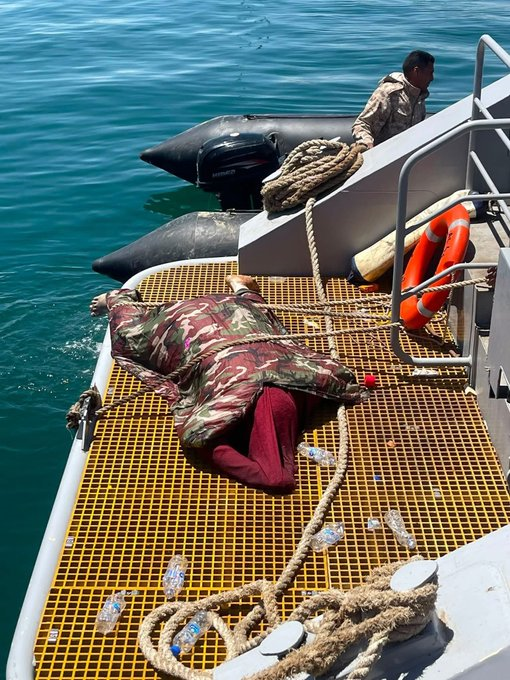
The Executive Director of Refugees in Libya, David Yambio, has mourned the death of a migrant whose body was recovered off the coast of Benghazi after reportedly being stranded at sea for 14 days, describing the incident as a stark reminder of the dangers faced by people fleeing conflict and persecution.
In a post on X, Yambio reflected on his own experience in Libya, saying that while detained in the North African country, he had often hoped that, if he were to die, it would be at sea rather than at the hands of violent militias.
According to him, the sea represented the only place where many migrants retained a sense of dignity, as they risked everything in pursuit of safety and international protection.
Yambio questioned what he described as a deeper humanitarian tragedy, arguing that many people seeking refuge would rather face the dangers of the Mediterranean than remain exposed to violence by armed groups in Libya.
He also criticised what he called Europe’s role in arming militias and accused African leaders of remaining silent in the face of abuses against migrants.
The activist said the photograph accompanying his post showed one of several people seeking protection who had been stranded at sea for two weeks. He noted that the man’s body, along with those of two others, was recovered off the coast of Benghazi a few days ago.
Ending his post on a poignant note, Yambio said the deceased asylum seeker had been portrayed as an “invader,” underscoring what he believes is the dehumanisation of migrants fleeing in search of safety.
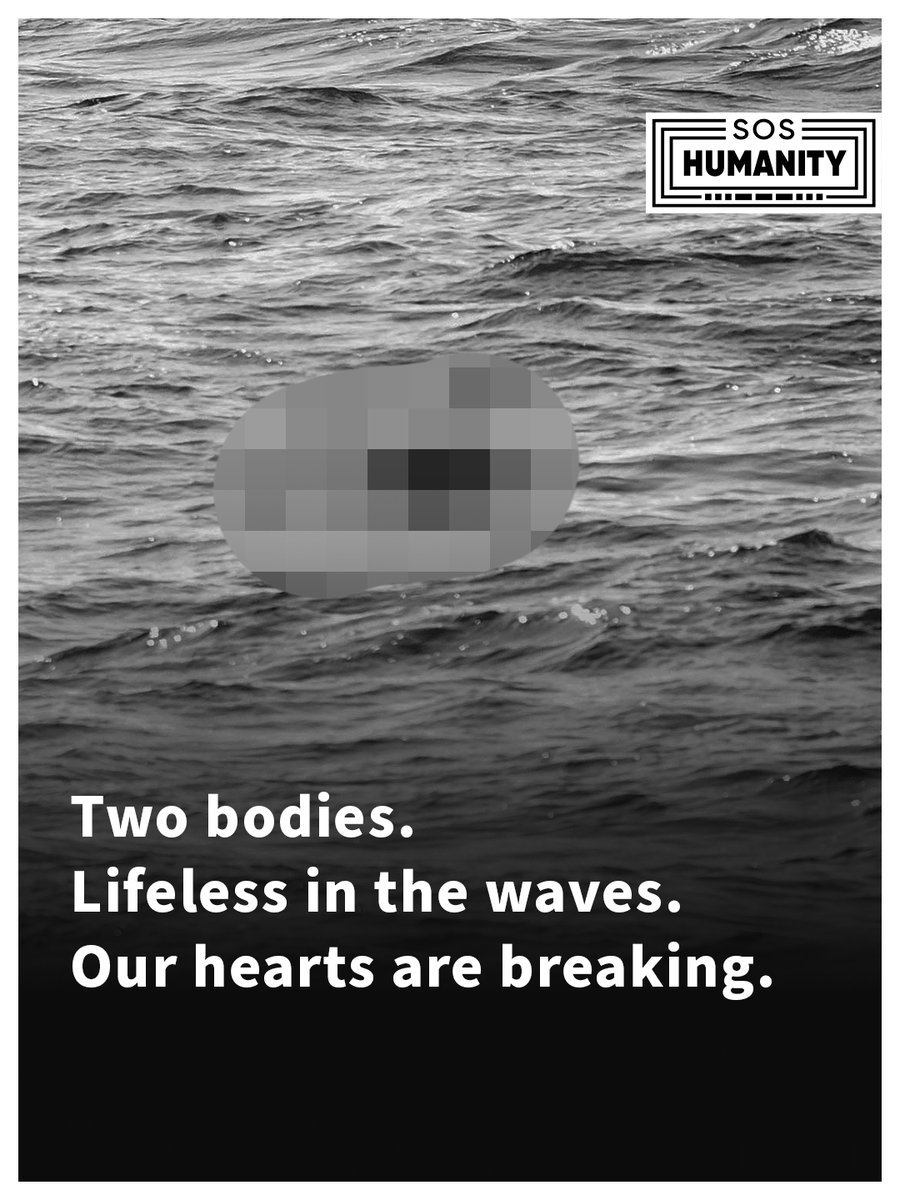
At least 50 migrants are feared dead or missing after a boat carrying about 60 people capsized off the eastern coast of Libya while attempting to cross the Mediterranean Sea to Europe, authorities have said.
The vessel overturned on Tuesday near Bardaa Island, off the coastal city of Tobruk, according to the Coast Guard in eastern Libya.
Officials said 10 passengers, including some women and children, survived by swimming to Bardaa Island. Search and rescue operations were still ongoing as authorities continued efforts to locate the remaining passengers.
The latest disaster is another in a series of deadly shipwrecks involving migrants departing from Libya, a major transit hub for people seeking to reach Europe in search of safety and better economic opportunities.
Just last month, another migrant boat sank off eastern Libya, leaving 51 people dead or missing.
Since the 2011 NATO-backed uprising that overthrew longtime ruler Moammar Gadhafi, Libya has remained politically unstable, making it a key departure point for migrants fleeing conflict, persecution and poverty across Africa and the Middle East.
Human traffickers frequently load migrants onto overcrowded and unseaworthy boats for the dangerous Mediterranean crossing, a route that has claimed thousands of lives over the years and remains one of the world’s deadliest migration corridors.
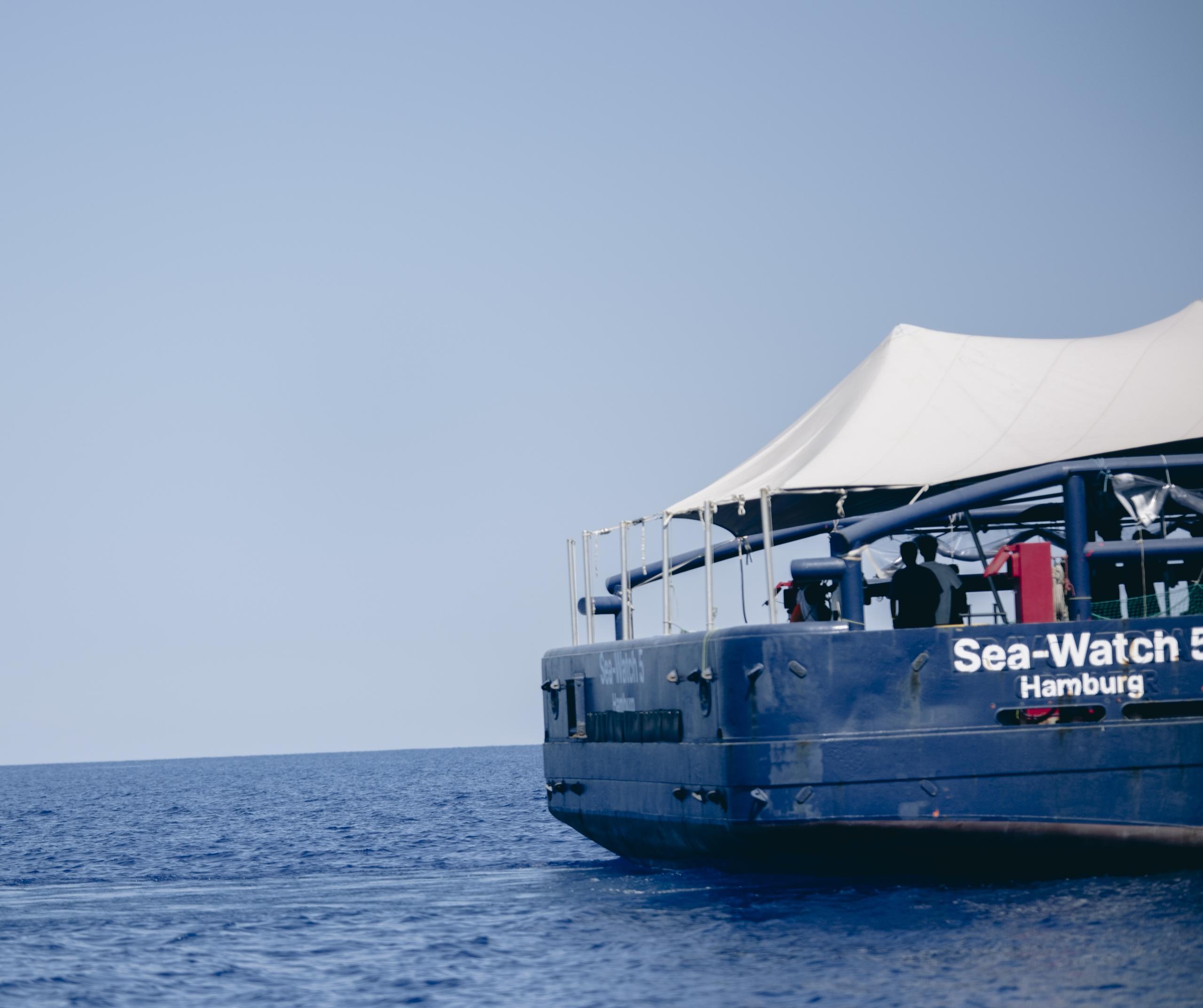
Sea-Watch International has announced that its rescue vessel, Sea-Watch 5, has returned to operations in the central Mediterranean after what it described as an attack by Libyan militias in May, saying it has already rescued 52 people in two separate operations.
In a post published on its verified X account, @seawatch_intl, the humanitarian organisation said 40 people were rescued on the first day of operations, followed by another 12 the next day. It added that one of the survivors, a pregnant woman, requires urgent medical care.
Sea-Watch also claimed that an average of eight people die every day while attempting to cross the Mediterranean Sea, renewing its criticism of European migration policies and rescue coordination.
The organisation accused the Italian government of assigning its rescue vessel to the northern port of Marina di Carrara, which it said is more than four days away from the rescue zone. According to Sea-Watch, the practice keeps humanitarian rescue ships away from areas where migrants are most at risk.
“To ensure that as few rescue ships as possible are in the rescue area, Italy sends us to the northern port Marina di Carrara, 4+ days away,” the group wrote, describing the decision as “cruel and irresponsible.”
Sea-Watch argued that the lengthy journey delays the disembarkation of rescued migrants and reduces the number of rescue vessels available to respond to emergencies at sea.
The organisation also directly criticised Italian Prime Minister Giorgia Meloni over the country’s migration policies, questioning the government’s approach to search-and-rescue operations in the Mediterranean.
Italian authorities have previously defended the assignment of distant ports to humanitarian vessels, saying the measure is part of efforts to manage migrant arrivals and coordinate disembarkation procedures.

ICC confirmation of 17 charges against El-Hishri draws praise from rights groups

Expert raises questions over UNHCR’s strategic direction after new leadership appointments

UN appoints new senior leadership for UNHCR

Migrant advocate laments death of asylum seeker, condemns Libya abuses

50 die as boat carrying about 60 people capsizes
-

 News2 weeks ago
Favour Henshaw appointed administrator of Platform for Cooperation on Mixed Migration
-
 News2 weeks ago
Lampedusa: built to accommodate 400 people, now holds thousands of migrants
-
 News Extra2 weeks ago
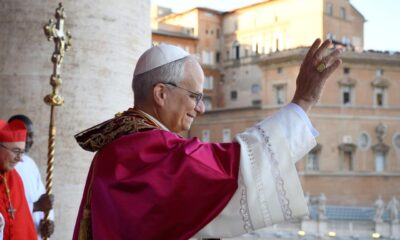
Pope urges European leaders to make greater investment in developing migrants’ countries of origin
-

 News1 week ago
IYAMIDR commends Okpebholo for ₦1m support to South Africa returnees
-
 News2 weeks ago
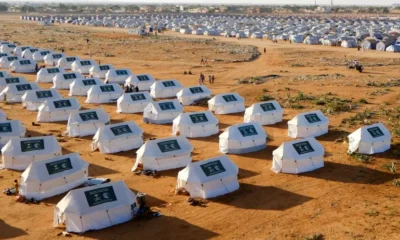
World silent as drone strikes, extreme hunger ravage El Obeid families
-
Features2 weeks ago
Lampedusa: Pope’s visit powerful reaffirmation migrants, refugees must remain at centre of global efforts
-

 Features2 weeks ago
IOM, UNDP, UNHCR, welcome growing investment in long-term solutions to internal displacement
-

 News Extra2 weeks ago
IYAMIDR urges Nigeria to sanction South Africa, support returnees