
News Extra
IGAD concludes meeting on Kampala Declaration on jobs, livelihoods self-reliance for refugees, returnees

The Intergovernmental Authority on Development (IGAD) has concluded the Uganda national level meeting on the Kampala Declaration on Jobs, Livelihoods and self-reliance for refugees, returnees and host communities for Uganda.
This two-day Uganda national meeting brought together refugees and refugee representatives, the Refugee Investment Network, representatives from the Office of the Prime Minister, Interior and Immigration, refugee hosting district administration, Foreign Affairs, Refugee Affairs, Labour, Social Protection, Planning, Finance and Treasury, Agriculture, Education/TVET, the private sector and particularly banking services providers and microfinance institutions engaged in displacement setting.
The main objective was to engage government and private sector counterparts, the Washington, DC-headquartered Refugee Investment Network (RIN) and IGAD for the purposes of developing roadmaps that provide practical steps that government refugee departments and private sector actors can take to promote refugee economic inclusion and empowerment.
Speaking at the opening session on September 21, Ms Otto Lucy, Principal Social Development Officer at Ministry of Gender, Labour and Social Development said: “Government of Uganda is committed to make the realization of self-reliance and resilience of refugees, returnees and host communities a reality through providing a conducive environment for them and implementation of the Jobs and Livelihood Integrated Response Plan with the Ministries, Departments and Agencies (MDAs), Refugee Hosting Districts, Private Sector, Partners and Refugees themselves. We are currently working with partners to develop minimum standard indicators for measuring Self-reliance of refugees and host-communities in Uganda.”
Ms Yemisrach Benalfew, Coordinator for the Strengthening of the IGAD Migration Policy Implementation Project (SIMPI) decalared: “The Kampala declaration is a holistic commitment made by IGAD member states in 2019 to find durable solutions in the IGAD region. The national consultation is a testament of the role of various key stakeholders –government offices including from refugee hosting areas, private sectors, banks, refugee led organisations, and partners – to support the self-reliance of refugees in Uganda. Organised under the framework of the Nairobi Declaration and IGAD Support Platform, this first national meeting will highlight national achievements, priorities, and opportunities to invest on refugees in Uganda. The government of Uganda, with the largest refugees in the IGAD region, is also a country with various innovative approaches on livelihood and self-reliance. IGAD is pleased to collaborate with the Government of Germany through GIZ and Refugees Investment Network (RIN) for this national meeting in Uganda.”
Ms Milena Adnyanata, Advisor at the Gesellschaft für Internationale Zusammenarbeit (GIZ) took the floor: “The German government through the Gesellschaft für Internationale Zusammenarbeit (GIZ) walks hand in hand with IGAD in implementing the Kampala Declaration since its signing in 2019. We support IGAD in holding the annual regional Kampala Declaration Forum and the first round of national consultations like the one happening here in Uganda. These exchange platforms allow different line ministries as well as private sector, CSOs and refugee representatives to engage in meaningful discussions and puts the whole-of-government and whole-of-society approach into practice. Currently, the German development cooperation backs IGADs efforts in developing a comprehensive M&E Framework that enables IGADs member states to track the implementation progress of the Kampala Declaration in a systematic way.”
Mr Danny Cutherell, Africa Director for the Refugee Investment Network spoke at the opening:
“I’d like to start by saying thanks to the many people who made this exciting event possible. First, to our donors, GIZ and the Hilton Foundation, who have provided the resources that allow this event to happen. Second, to the IGAD, who have done a a huge amount of work to plan and carry out this meeting. The coordination and logistics involved in pulling off something like this are substantial, and we truly appreciate it. Finally, we’d like to thank all of you in attendance for taking time out of your busy lives to join us for these two days of important discussion about refugee economic inclusion. We’re very excited to be having this discussion in Uganda. Uganda is unique in the way it supports refugee self-reliance through its progressive and welcoming refugee policy. In this regard, it’s a leader in the region, and we look forward to working with IGAD and other actors to support Ugandan efforts to promote greater private sector engagement of refugees as employees, customers, entrepreneurs and suppliers of goods and services.”
The two-day meeting concluded with recommendations on improving the enabling environment, private sector engagement, livelihood programing for refugees’ self-reliance. Emphasis given for meaningful inclusion of refugees from planning to monitoring of livelihood programming. IGAD thanks government of Uganda, refugee led organisations, private sector -financial inclusion operators, GIZ and RIN for their active engagement.
The meeting was financially supported by the Government of Germany through GIZ.
Background
The IGAD Kampala Declaration on Jobs, Livelihoods, and Self-Reliance for Refugees, Returnees and Host Communities was adopted by IGAD member states in Kampala, Uganda in March 2019. The Declaration represents a significant commitment by IGAD member states to promote the economic self-reliance of refugees, returnees and host communities, and to work towards a more sustainable and durable solutions to displacement in the IGAD region.
—






The UK has reopened its resettlement scheme to new refugee referrals, with roughly one in four expected to be Afghan women and girls or Palestinian refugees.
Home Secretary Shabana Mahmood said the UK Resettlement Scheme would provide a safe and legal route for people fleeing war and persecution. Referrals will be made in partnership with the UN Refugee Agency and the International Refugee Assistance Project.
The process has reopened immediately, working with local authorities. The first arrivals are expected before the end of the year.
The reopening comes alongside plans for three community-sponsored routes announced in November 2025. Applications for charities and non-profits to sponsor refugees through community and university placements are due to open in October, with the first arrivals expected in autumn 2027. Applications for a work sponsorship route, in which companies host refugees, are expected to open in spring 2027.
Sponsors will provide accommodation, integration support and help finding work. The government expects arrivals across the resettlement scheme and the three new routes to number in the hundreds initially, rising to the low thousands as illegal migration falls. An annual cap will apply.
People admitted through the routes will be placed on a five-year path to permanent settlement, the government said. It described the policy as part of its effort to encourage capped, legal routes and deter irregular migration.
The Home Office also cited enforcement figures, saying more than 48,000 attempted small-boat crossings had been stopped since the general election. It reported that more than 80,000 people with no right to remain in the UK had been removed since July 2024.
L’agence des Nations Unies pour les réfugiés, le HCR, s’est inquiétée du récent renvoi par la Malaisie de 1 476 personnes au Myanmar, alors que le conflit se poursuit dans le pays et que la situation en matière de droits humains et sur le plan humanitaire demeure extrêmement grave.
Dans une déclaration, le Haut-Commissaire adjoint du HCR chargé de la protection, Edem Wosorn, a déclaré : « Nous sommes préoccupés par ces renvois, car les personnes renvoyées au Myanmar pourraient être exposées à de graves risques, et certaines d’entre elles pourraient avoir besoin d’une protection internationale.
« Bien que les autorités affirment que ces retours sont volontaires, les personnes renvoyées étaient détenues dans des centres d’immigration. Cela soulève de sérieuses questions quant au caractère véritablement libre et éclairé des décisions de retour. Le HCR n’a pas eu accès à ces personnes pour pouvoir l’évaluer. »
Le HCR a déclaré reconnaître pleinement la responsabilité souveraine de la Malaisie en matière de gestion de l’asile et des migrations. Il a toutefois exhorté la Malaisie à veiller à ce que tous les retours soient soumis à de solides garanties, notamment à des évaluations individuelles et à un accès aux procédures de protection. Les décisions de retour doivent être volontaires et évaluées en dehors de tout contexte de détention.
En vertu du principe de non-refoulement, nul ne devrait être renvoyé dans un pays où il pourrait être exposé à des persécutions, à la torture ou à d’autres menaces graves pour sa vie ou sa liberté.
Tant que les conditions au Myanmar ne permettront pas des retours sûrs, dignes et durables, les États doivent continuer à garantir l’accès à l’asile et à respecter leurs obligations en matière de protection internationale.
Le HCR a ajouté qu’il restait prêt à travailler avec la Malaisie afin de renforcer les dispositifs nationaux d’asile et de protection.
« Un soutien régional et international accru est nécessaire pour faire progresser une solution politique à la crise et mettre fin aux hostilités au Myanmar. Le HCR appelle la communauté internationale à maintenir son soutien aux pays de la région qui accueillent des réfugiés du Myanmar. »
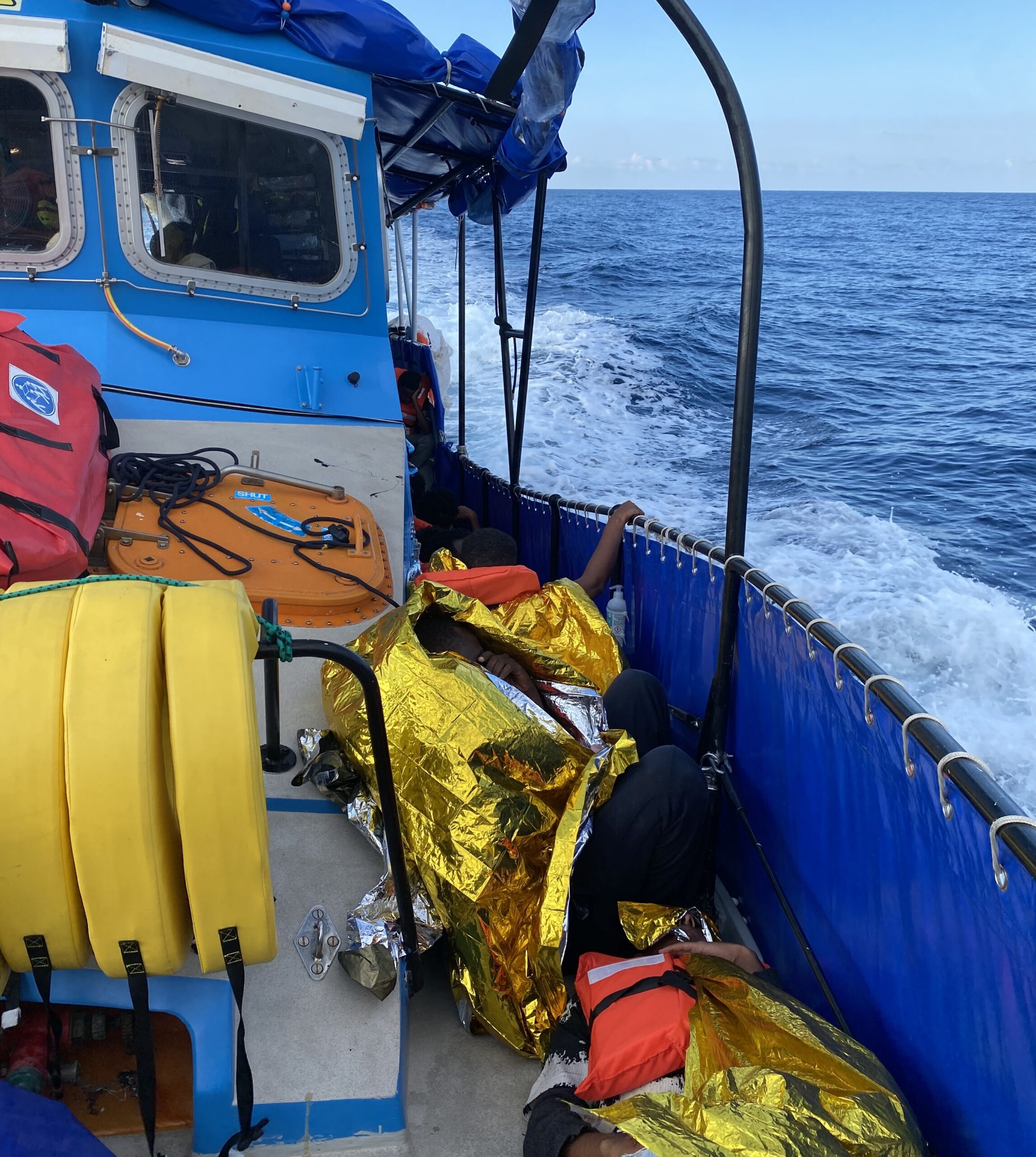
L’équipage de sauvetage de Sea-Watch affirme avoir secouru 28 personnes après un naufrage dans les eaux internationales tôt le 29 septembre, récupérant deux corps et apprenant auprès des survivants qu’au moins six personnes sont toujours portées disparues, dont trois enfants d’une même famille.
Selon Sea-Watch, son navire de sauvetage Aurora a découvert une embarcation pneumatique presque dégonflée vers 4 heures du matin, après que la ligne d’urgence civile Alarm Phone eut alerté les autorités de la présence du bateau.
Cinq survivants et deux corps, dont celui d’un enfant, ont été retrouvés à bord de l’embarcation pneumatique, a indiqué l’organisation.
Sea-Watch a déclaré que les 23 autres survivants du naufrage avaient atteint la plateforme gazière Hasdrubal, située dans les eaux internationales relevant de la zone de recherche et de sauvetage de la Tunisie.
Avec l’autorisation du Centre tunisien de coordination des opérations de sauvetage maritime, l’Aurora s’est ensuite dirigé vers la plateforme, où son équipage a distribué des gilets de sauvetage et embarqué les autres survivants. Sea-Watch a indiqué qu’un jeune enfant figurait parmi les personnes secourues.
L’organisation a déclaré que les survivants avaient signalé la disparition d’au moins six personnes, dont trois enfants d’une même famille. Elle a ajouté qu’il n’était pas encore établi si l’enfant dont le corps a été récupéré était l’un des trois enfants portés disparus.
Les autorités italiennes ont ensuite désigné Lampedusa comme port sûr pour le navire, et l’Aurora fait actuellement route vers cette destination, selon Sea-Watch.
La porte-parole de Sea-Watch, Julia Winkler, a lié cet incident aux critiques de l’organisation à l’égard des politiques migratoires européennes, affirmant que les gouvernements présentaient la baisse du nombre d’arrivées comme un succès alors que des personnes continuaient de mourir ou de disparaître en mer.
Sea-Watch a également appelé à la mise en place d’un programme européen de sauvetage maritime géré par les États, estimant que le sauvetage en mer constitue une obligation plutôt qu’une mesure laissée à la discrétion des autorités.
L’organisation affirme que plus de 1 970 personnes sont mortes ou portées disparues en Méditerranée en 2026 alors qu’elles cherchaient à obtenir une protection. Ce chiffre, ainsi que l’évaluation faite par Sea-Watch des politiques européennes de dissuasion migratoire, constitue des affirmations de l’organisation qui n’ont pas été vérifiées de manière indépendante dans les informations fournies.

Global powers fuel war as civilians die under drones, barrel bombs

Les autorités italiennes immobilisent un navire de sauvetage après avoir secouru 20 personnes
Italian authorities detain rescue vessel after saving 20 lives

20 000 enfants arrivent en Europe sans parent ni tuteur

20,000 children reach Europe without parent, guardian
-

 Features2 weeks ago
Retour volontaire assisté, assistance post-arrivée et réintégration : le rôle de l’OIM expliqué
-
 News2 weeks ago
Yémen :21 573 ménages déplacés dans sept gouvernorats
-

 Features2 weeks ago
L’OIM explique son travail dans les pays qui accueillent des ressortissants de pays tiers
-
 News2 weeks ago
Ebola : Amy Pope appelle à un soutien urgent alors que la RDC fait face à la plus grande épidémie
-
 Features2 weeks ago
L’OIM aide plus de 81 000 migrants à retourner dans leur pays depuis 115 pays
-

 Features2 weeks ago
IOM explains work in countries receiving third-country nationals
-
 Features2 weeks ago
Assisted Voluntary Return, Post-Arrival Assistance, and Reintegration: IOM’s Role Explained
-
 News2 weeks ago
Un tribunal de Naples annule la détention de 45 jours du Sea-Watch 5