
Uncategorized
10 Artists who retired from music and made a comeback
Temporibus autem quibusdam et aut officiis debitis aut rerum necessitatibus saepe eveniet ut et voluptates.


Quis autem vel eum iure reprehenderit qui in ea voluptate velit esse quam nihil molestiae consequatur, vel illum qui dolorem eum fugiat quo voluptas nulla pariatur.
Temporibus autem quibusdam et aut officiis debitis aut rerum necessitatibus saepe eveniet ut et voluptates repudiandae sint et molestiae non recusandae. Itaque earum rerum hic tenetur a sapiente delectus, ut aut reiciendis voluptatibus maiores alias consequatur aut perferendis doloribus asperiores repellat.
Lorem ipsum dolor sit amet, consectetur adipisicing elit, sed do eiusmod tempor incididunt ut labore et dolore magna aliqua. Ut enim ad minim veniam, quis nostrud exercitation ullamco laboris nisi ut aliquip ex ea commodo consequat.
Nemo enim ipsam voluptatem quia voluptas sit aspernatur aut odit aut fugit, sed quia consequuntur magni dolores eos qui ratione voluptatem sequi nesciunt.
Et harum quidem rerum facilis est et expedita distinctio. Nam libero tempore, cum soluta nobis est eligendi optio cumque nihil impedit quo minus id quod maxime placeat facere possimus, omnis voluptas assumenda est, omnis dolor repellendus.
Nulla pariatur. Excepteur sint occaecat cupidatat non proident, sunt in culpa qui officia deserunt mollit anim id est laborum.
Sed ut perspiciatis unde omnis iste natus error sit voluptatem accusantium doloremque laudantium, totam rem aperiam, eaque ipsa quae ab illo inventore veritatis et quasi architecto beatae vitae dicta sunt explicabo.
“Duis aute irure dolor in reprehenderit in voluptate velit esse cillum dolore eu fugiat”
Neque porro quisquam est, qui dolorem ipsum quia dolor sit amet, consectetur, adipisci velit, sed quia non numquam eius modi tempora incidunt ut labore et dolore magnam aliquam quaerat voluptatem. Ut enim ad minima veniam, quis nostrum exercitationem ullam corporis suscipit laboriosam, nisi ut aliquid ex ea commodi consequatur.
At vero eos et accusamus et iusto odio dignissimos ducimus qui blanditiis praesentium voluptatum deleniti atque corrupti quos dolores et quas molestias excepturi sint occaecati cupiditate non provident, similique sunt in culpa qui officia deserunt mollitia animi, id est laborum et dolorum fuga.


Refugees in Libya, an organisation advocating for refugees and migrants, has raised concerns over the alleged sexual harassment of a young Black refugee girl by a taxi driver in Tripoli.
In a post published on X on August 23, the organisation identified the alleged perpetrator as Ali, also known by the nickname “Al-Boura,” and said he is a resident of Qasr Bin Ghashir, Tripoli.
According to Refugees in Libya, the incident occurred on August 17 when Ali allegedly sexually harassed the girl, who the organisation said was a minor.
The organisation said the girl repeatedly asked the driver to stop and told him that she was underage and did not consent to his touching her. Despite her objections, the driver allegedly continued.
Refugees in Libya said the girl recorded and later shared a video of the incident on TikTok because she was afraid to report the alleged crime through official channels.
The organisation claimed that reporting such an incident could expose the refugee to the risk of arrest before she could formally file a complaint, highlighting what it described as the vulnerability of refugee women and girls in Libya.
The video subsequently circulated widely on social media, prompting mixed reactions from Libyans. According to Refugees in Libya, some users called for Ali’s arrest, while others reportedly demanded the arrest and imprisonment of the girl, questioning why she had recorded the incident and accusing her of being an agent of Western interests.
The organisation said it has since lost contact with the girl and does not know her current whereabouts, while the video continues to circulate online.
Refugees in Libya also expressed concern that, despite information allegedly being made public about Ali’s whereabouts, there was still no evidence that law enforcement authorities had arrested him.
The organisation’s account could not independently establish whether an arrest had been made or verify the full circumstances surrounding the allegations.
The case has renewed concerns among refugee and migrant rights advocates about the protection of vulnerable migrants in Libya, particularly women and girls who may face barriers to reporting sexual violence and harassment.
Refugees in Libya called attention to the situation as part of its broader advocacy over the treatment and safety of refugees and migrants in the country.
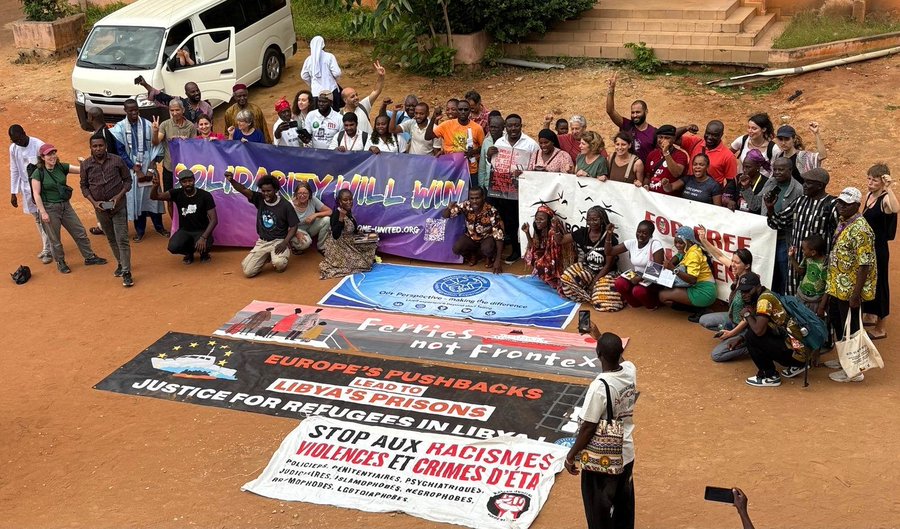
Fifty-eight organisations, movements and collectives have signed the Cotonou Manifesto for Freedom of Movement, calling for an end to the externalisation of border controls, the closure of detention centres and greater protection for people on the move.
The manifesto was developed collectively through the Migration Village at the recently held World Social Forum in Cotonou, Benin. It was authored and led by survivors of migration routes and supported by organisations working on migration, human rights and freedom of movement.
Titled “Our Bodies Are Not Your Borders,” the manifesto brings together victims, survivors, families, activists and organisations that said they were committed to dismantling what they described as a racist migration regime.
The signatories said many survivors had experienced deadly desert crossings, prisons, detention centres, deportation flights, pushbacks, racist attacks, abductions at sea, enslavement and other forms of inhumane treatment. They argued that the suffering and deaths of migrants had increasingly been used to justify restrictive migration policies.
The groups accused the European Union of being at the forefront of policies that externalise border controls into Africa, saying European governments have funded and supported governments, coastguards, militias, detention systems and surveillance infrastructure to prevent migrants from reaching European territory.
They specifically cited cooperation with countries including Tunisia, Libya, Morocco, Algeria, Niger, Mauritania and Senegal, arguing that such arrangements had transformed parts of Africa into places of detention and danger for migrants. Libya, they said, had become a “laboratory” for the system.
The manifesto also criticised the role of Frontex, accusing the European Border and Coast Guard Agency of contributing to pushbacks and facilitating the interception of refugee boats. It further criticised what it described as the extension of Europe’s migration security apparatus into African countries.
The organisations also expressed concern about the role of international agencies, including the International Organisation for Migration and UNHCR, arguing that terms such as “risk analysis,” “border management” and “voluntary return” can conceal policies aimed at tracking, containing and deporting migrants before they reach their intended destinations.
African governments were also criticised. The signatories said African states could not continue portraying themselves solely as victims of European migration policies while accepting funding to police Europe’s borders and participating in the detention, deportation and abandonment of Africans on the continent.
They also accused the African Union of failing to adequately respond to the treatment of African migrants and said the continent’s commitment to free movement remained severely restricted.
The manifesto called for an end to the externalisation of border control, the closure of detention and so-called return centres, and effective access to asylum. It also urged states to honour international human rights and refugee protection commitments and called for survivors and families of migrants who died along migration routes to participate in institutions and negotiations affecting their lives.
The signatories further called for freedom of movement and the right of people to choose where they live and travel safely. They demanded the abolition of visa systems, arguing that these systems disproportionately burden people from the Global South.
According to the manifesto, freedom of movement would promote economic, social and cultural ties between countries and peoples, while strengthening women’s and gender minorities’ ability to seek safety and freedom. The signatories also linked free movement to Pan-African unity and decolonisation.
The groups said migrants and their allies would continue building transnational networks and solidarity structures to challenge restrictive border systems and support people on the move.
The manifesto concluded with a series of declarations, including: “Our forced migration is not your invasion,” “Human beings are not your bargaining chips,” “Our bodies are not Europe’s borders,” and “Our lives are not Africa’s currency.”
Among the 58 signatories are Refugees in Libya, WatchTheMed Alarm Phone, Migreurop, SOSAPROFEM, Southern Africa Migration Network, Voice of Migrants Association, Female Returned Migrant Network, Migrants Lives Matter, Advocates Female Migrants Initiative and several other African, European and international organisations.
The manifesto said the Migration Village at the World Social Forum in Cotonou represented another step toward strengthening cooperation among movements and survivors in the continuing campaign for freedom of movement.
The manifestor was authored and led by survivors.
Supported by the following organizations, movements and collectives:
1. Advocates Female Migrants initiative (Nigeria)
2. Afrique-Europe Interact (transnational network)
3. Al Bawsala (Tunisia)
4. Alarme Phone Sahara
5. Alerte Migration Afrique (Burkina Faso)
6. Arab and Muslim Ethnicities and Diasporas Studies Program, San Francisco State University (USA)
7. Association des Mères des Disparus en Tunisie (Tunisia)
8. Association Éducation Togo (AET, Togo)
9. Association Malienne des Expulsés (AME, Mali)
10. Association Marocaine d’aide aux migrants en situation vulnérable (AMSV, Morocco)
11. Association Marocaine des droits humains (AMDH, Morocco)
12. Association Mauritanienne pour la Citoyenneté et le Développement (AMCD, Mauritania)
13. Association Nationale des Partenaires Migrants (ANPM, Senegal)
14. Association Togolaise des Expulsés (ATE, Togo)
15. Boza Fii (Senegal)
16. Caritas Dakar/PARI (Senegal)
17. Confédération générale autonome des travailleurs en Algérie (CGATA, Algeria)
18. Citoyennes Citoyens Debout Mauritanie (CCD, Mauritania)
19. Climáximo (Portugal)
20. Collective Against the Criminalization of Solidarity and Civic Engagement in Tunisia
21. Conseil des Migrants Subsahariens au Maroc (CMSM, Morocco)
22. CRID (France)
23. Direy Ben Gao/ RMSM (Mali)
24. Ebrima Migrant Situation Foundation (Gambia)
25. Female Returned Migrant network – FREMNET (Nigeria)
26. 50 Out of Many (Greece)
27. Groupe solidarité des groupements féminins au Togo
28. Jeunesses Nigérienne au Service du Développement Durable (JNSDD AIKIN KASA) (Niger)
29. KISA – Equality, Support, Antiracism (Cyprus)
30. Medico International
31. Mediterr
32. Migrants Lives Matter (Nigeria)
33. Migreurop (Euro-African network)
34. MV Louise Michel project
35. Network of Ex-Asylum Seekers – NEAS (Sierra Leone)
36. Network of People with Migration Experience (Nigeria)
37. Nomad 08 (Tunisia)
38. OGLMI – Terre de Liberté (Guinea)
39. ONG Opinion Éclairée (Ivory Coast)
40. ONG UNION FAIT LA FORCE (Benin)
41. Palestinian NGOs Network
42. Refugees in Libya (RiL)
43. Réseau Maghreb Sahel sur les Migrations
44. Réseau ROA-PRODMAC (African network)
45. Riposte internationale (Algeria)
46. Right2Protest Project Africa
47. Rootstv.tn (Tunisia)
48. Solidarités Asie France (SAF)
49. SOSAPROFEM (Senegal)
50. Southern Africa Migration Network (SAMIN)
51. Teaching Palestine: Pedagogical Praxis and the Indivisibility of Justice
52. trans-border.net Editorial Team
53. Un Monde Avenir (Cameroon)
54. Voice of Migrants Association – VOMA (Nigeria)
55. Voice of Talia Initiative Foundation (Nigeria)
56. WatchTheMed Alarm Phone
57. Welcome to Europe
58. We`ll Come United (Germany)
Uncategorized
Venezuela: IOM delivers support via in-kind cargo flight funded by DHL’s Disaster Response Team
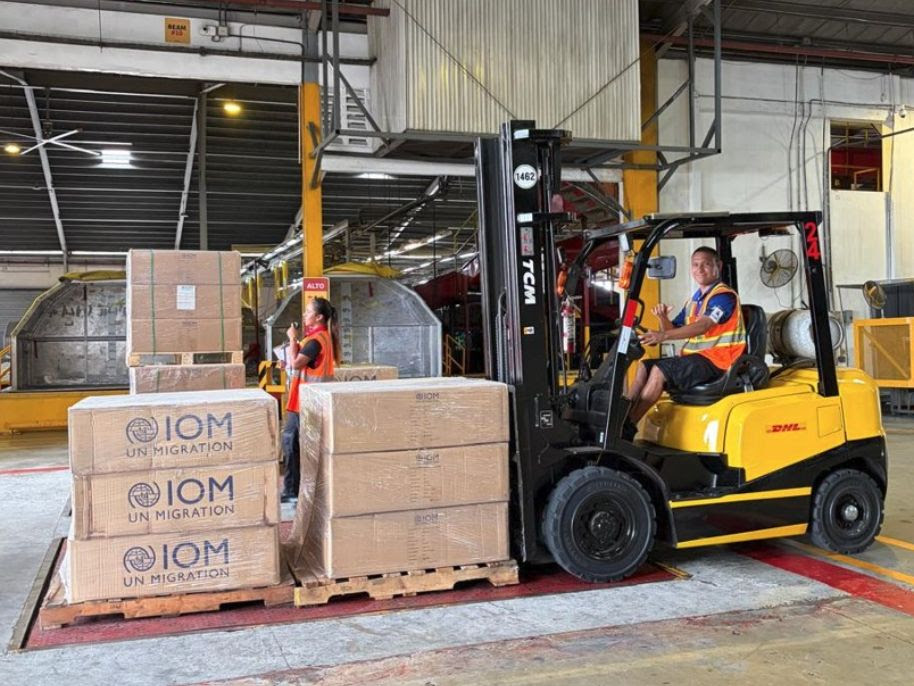
UN agency, the International Organization for Migration (IOM) has airlifted core relief supplies to support affected communities in Venezuela following the devastating earthquake on 24 June 2026, which caused widespread damage and urgent humanitarian needs.
“For families dealing with the aftermath of an earthquake, whether and when they receive initial assistance can make a big difference for how they are able to recover,” said Kim Eling, IOM Senior Director for Strategy and External Engagement. “Our partnership with DHL demonstrates how strategic collaboration with the private sector can help humanitarian organizations deliver essential assistance more quickly, ensuring affected communities receive the support they need when every moment counts.”
The humanitarian cargo was transported from IOM’s global stocks hub in Panama to Caracas on an in-kind cargo flight arranged and funded by DHL’s Disaster Response Team. The flight arrived at Simón Bolívar International Airport on 7 July 2026, carrying essential relief items, including jerry cans, solar lamps, and indoor privacy partitions, to support emergency shelter operations.
The movement was coordinated through close collaboration between IOM, the Government of Venezuela, and the United Nations Humanitarian Response Depot (UNHRD) in Panama. This joint effort enabled efficient planning, rapid execution, and timely delivery of assistance to communities most affected by the earthquake.
IOM sincerely thanks DHL’s Disaster Response Team for its generous in-kind logistics support, which was vital to the rapid mobilization and transport of IOM humanitarian supplies during this critical emergency.
This operation highlights IOM’s continued commitment to preparedness, rapid emergency response, and effective humanitarian supply chain coordination, using strategic partnerships and global prepositioning capacities to deliver life-saving assistance to crisis-affected populations.

Défendre les plus vulnérables :

Fighting for the vulnerable: How Udekwe Kennedy Obinna Is giving migrants a voice and a chance at safer futures

Une militante sénégalaise transforme la mort de son frère sur la route migratoire de l’Atlantique en combat pour le changement
Senegalese activist turns brother’s death on Atlantic migration route into campaign for change

La déportation traumatisante d’Abdulai Daramy soulève des inquiétudes concernant l’accord avec les États-Unis
-
 Features3 weeks ago
Sea-Watch 5 découvre huit corps dans un état avancé de décomposition
-
 Features3 weeks ago
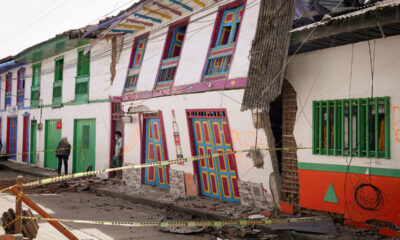
Un séisme meurtrier aggrave la grave crise humanitaire en Colombie
-

 News3 weeks ago
Trois autres corps sans vie retrouvés après les 11 découverts par SOS Méditerranée
-
 News Extra3 weeks ago
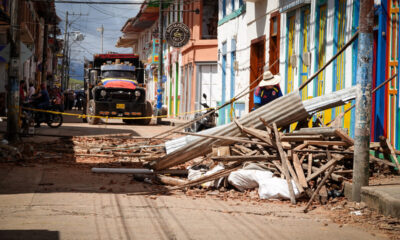
Colombia: Conflict-affected families lose everything again after deadly earthquake
-
News3 weeks ago
Three more bodies found in Mediterranean after 11 discovered by SOS Méditerranée
-
News Extra3 weeks ago
Colombie : les familles touchées par le conflit perdent une nouvelle fois tout après le séisme meurtrier
-
 News Extra2 weeks ago
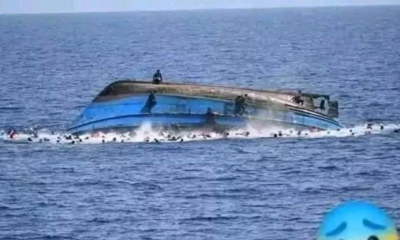
Des manifestations éclatent après la mort de migrants dans le naufrage d’un bateau
-
Features3 weeks ago
Deadly earthquake compounds Colombia’s severe humanitarian crisis