
News
Ugandan lawyer urges AU to reject Europe’s migration deals

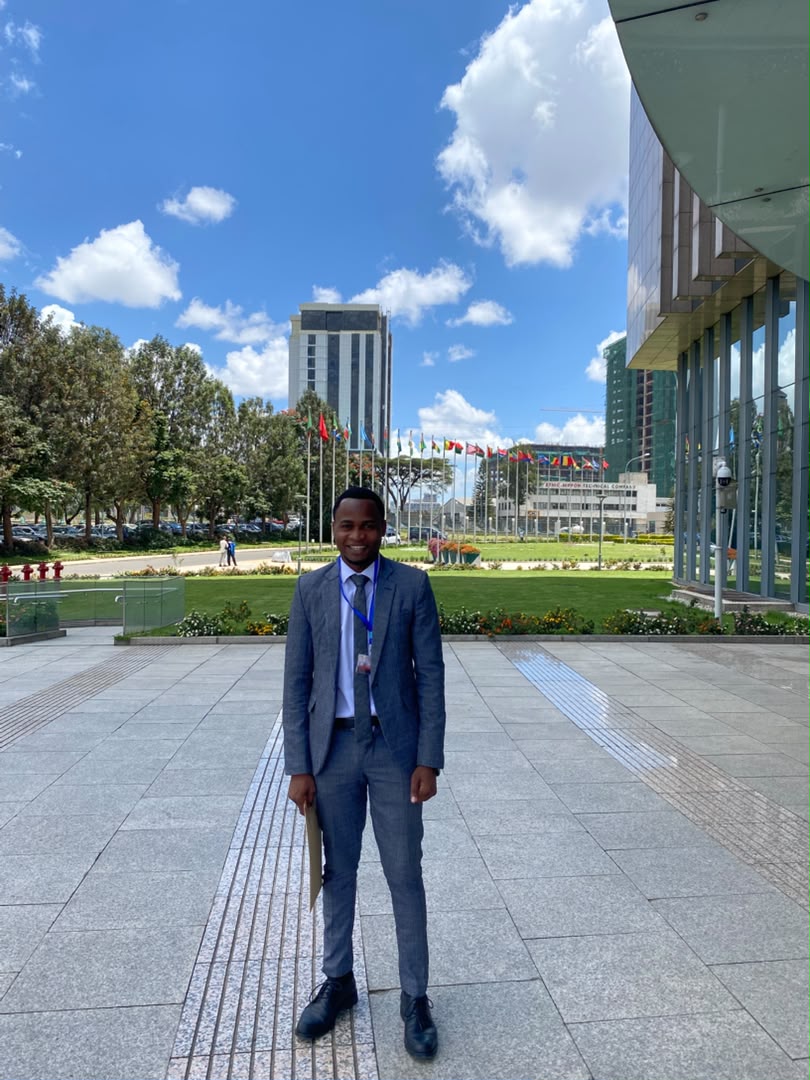
A Ugandan lawyer and youth advocate, Mwanje Gideon, has called on the African Union (AU) to urgently introduce a continental digital currency, invest in youth development, remove barriers to movement across Africa and reject migration agreements that turn African countries into offshore detention centres for European nations.
Gideon, alias Batapa, born on 8th April 2000, in Bamunaniika, Luwero, Uganda said the measures were necessary to accelerate Africa’s economic integration, strengthen its sovereignty, create employment opportunities for young people and protect the dignity of migrants and asylum seekers.
He made the appeal in a letter dated September 10, 2026, addressed to the Chairperson of the African Union Commission at the AU headquarters in Addis Ababa, Ethiopia. He physically went to submit the letter at the AU headquarters.
In the letter titled “Urgent Priorities for Africa’s Economic Integration, Youth, and Sovereignty,” the Kampala-based lawyer acknowledged the progress made towards continental unity through the establishment of the Organisation of African Unity, its transformation into the African Union and the introduction of the African Continental Free Trade Area (AfCFTA).
He, however, expressed concern that Africa continued to face significant economic, political and migration challenges despite decades of commitments to regional integration.
According to him, the rapidly changing global political and economic landscape demands urgent and practical measures to safeguard Africa’s future.
Gideon identified four priority areas requiring immediate intervention by the continental body.
Calls for African digital currency
On economic integration, the lawyer advocated the development of a secure continental digital currency specifically designed to facilitate cross-border trade among African countries.
He argued that the current reliance on foreign currencies for transactions between African countries was undermining regional trade and draining valuable financial resources from the continent.
“Today, a trader in East Africa selling goods to West Africa often has to convert local money into foreign currencies first, paying heavy transaction fees and losing valuable capital along the way,” he said.
Gideon maintained that although the long-term ambition of establishing a unified African currency remained important, businesses could not afford to wait indefinitely for its realisation.
He proposed the introduction of a digital Afro currency that would enable African businesses to conduct transactions seamlessly across borders.
“A digital Afro currency would allow African businesses to buy and sell from one another seamlessly, keep financial value within our continent, and build real economic independence,” he stated.
He said such an initiative would strengthen intra-African trade, reduce transaction costs and accelerate the continent’s economic integration.
Seeks investment in sports, technology for African youth
The lawyer also urged African governments to prioritise investment in sports infrastructure, technology development, digital education and innovation centres as part of efforts to tackle youth unemployment.
He noted that Africa, despite having the world’s youngest population, continued to struggle with inadequate employment and economic opportunities for millions of young people.
According to him, the global sports industry generates more than $500 billion annually through broadcasting rights, sponsorships, merchandise, sports tourism and other commercial activities.
Gideon cited Senegalese football star Sadio Mané and Egyptian international Mohamed Salah as examples of African athletes whose success had contributed to economic development in their home countries.
He claimed that Mané had invested more than $20 million in his hometown of Bambali, Senegal, supporting projects ranging from healthcare and education to agro-industrial development.
According to him, the investments have created employment opportunities, reduced poverty and strengthened the local economy.
He also highlighted Salah’s contributions to healthcare, youth development and community infrastructure in Egypt.
Gideon argued that developing more internationally competitive African athletes could generate substantial foreign exchange earnings and stimulate local economic growth.
“If Africa produces 1,000 elite athletes operating at Sadio Mané or Mohamed Salah’s market value across various international disciplines, the economy would see a direct capital injection exceeding $500 million in foreign currency inflows, transfer fees, and player remittances,” he said.
He urged the AU and member states to recognise sports as a major economic sector rather than merely a recreational activity.
“Sports are no longer just recreation; they are a major global industry that creates millions of jobs, builds local economies, and unites communities,” he said.
He added that investments in technology hubs, innovation centres and digital education would equip young Africans with the skills required to develop globally competitive products without leaving their home countries.
“Investing in our youth is the most critical economic investment Africa can make today,” Gideon declared.
Demands visa-free movement across Africa
On regional mobility, Gideon expressed concern that African citizens continued to encounter restrictive immigration procedures, high visa fees and lengthy processing times when travelling between countries on the continent.
He described the situation as inconsistent with Africa’s ambition to achieve economic and political integration.
The lawyer particularly criticised travel restrictions affecting African citizens attending meetings, conducting business or participating in civil society activities in cities hosting major continental institutions.
He identified Addis Ababa, Ethiopia, and Banjul, The Gambia, among important diplomatic destinations where easier movement should be guaranteed.
Gideon called on the African Union to introduce a mandatory policy granting African passport holders free visa-on-arrival access for at least four days when visiting member states hosting major continental headquarters.
According to him, the proposed arrangement would enable entrepreneurs, civil society representatives and other African citizens to conduct legitimate activities without unnecessary immigration difficulties.
“This short pass would give visitors enough time to complete their business calmly, rather than rushing through important meetings just to avoid immigration penalties,” he explained.
He maintained that removing unnecessary travel barriers would promote regional cooperation, strengthen people-to-people relations and bring the continent closer to achieving a borderless Africa.
Warns against Europe’s migration externalisation policies
Gideon also called for stronger African Union intervention against the externalisation of European migration and border control policies to African countries.
He expressed concern over arrangements under which European governments seek agreements with African states to host, process or detain migrants and asylum seekers in exchange for financial assistance or development funding.
The lawyer warned that such agreements could undermine Africa’s sovereignty and expose vulnerable migrants to human rights violations.
“Exchanging human beings for money is a deeply dangerous path that echoes the darkest chapters of our continent’s history,” he said.
He argued that wealthy countries should not transfer their international refugee protection responsibilities to African nations through financial arrangements.
According to him, the responsibility to protect people fleeing persecution must be shared in accordance with international refugee law and the principle of non-refoulement, which prohibits returning individuals to places where they face serious threats to their lives or freedom.
“Western nations must not be allowed to contract out their international duties simply because African hospitality, our spirit of Karibu, is warm and welcoming,” he stated.
Gideon urged the African Union to investigate existing migration cooperation agreements between African and European countries to determine whether they comply with international human rights standards.
He also called on the continental body to publicly condemn agreements that compromise migrant dignity in exchange for financial benefits.
“The African Union must investigate all existing migration deals, publicly condemn those that trade human dignity for funds, and warn member states against entering into arrangements that turn our land into offshore detention centers,” he said.
The lawyer maintained that African countries must resist becoming holding centres for migrants rejected or transferred by European governments.
He stressed that Africa’s traditional hospitality should not be exploited to justify arrangements that shift migration management responsibilities away from countries with obligations to protect asylum seekers.
Urges AU to demonstrate stronger leadership
Gideon concluded by urging the African Union Commission to demonstrate decisive leadership in advancing continental economic independence, youth empowerment, freedom of movement and migrant protection.
He maintained that the proposed initiatives were interconnected and essential to achieving a prosperous, united and sovereign Africa.
According to him, a continental digital currency would facilitate trade, investment in sports and technology would empower young people, relaxed travel restrictions would strengthen integration, while rejecting exploitative migration agreements would protect Africa’s dignity and independence.
He said millions of Africans were looking to the continental organisation to translate its longstanding commitments into practical policies that would improve their lives.
“These four priorities—a digital currency for trade, youth development through sports and tech, borderless Africa, easier travel to continental hubs, and the defense of human dignity against unfair migration deals—are essential steps for a truly sovereign Africa,” he said.
“With those four points, if realised, we shall start to see a unified Africa,” Gideon added.




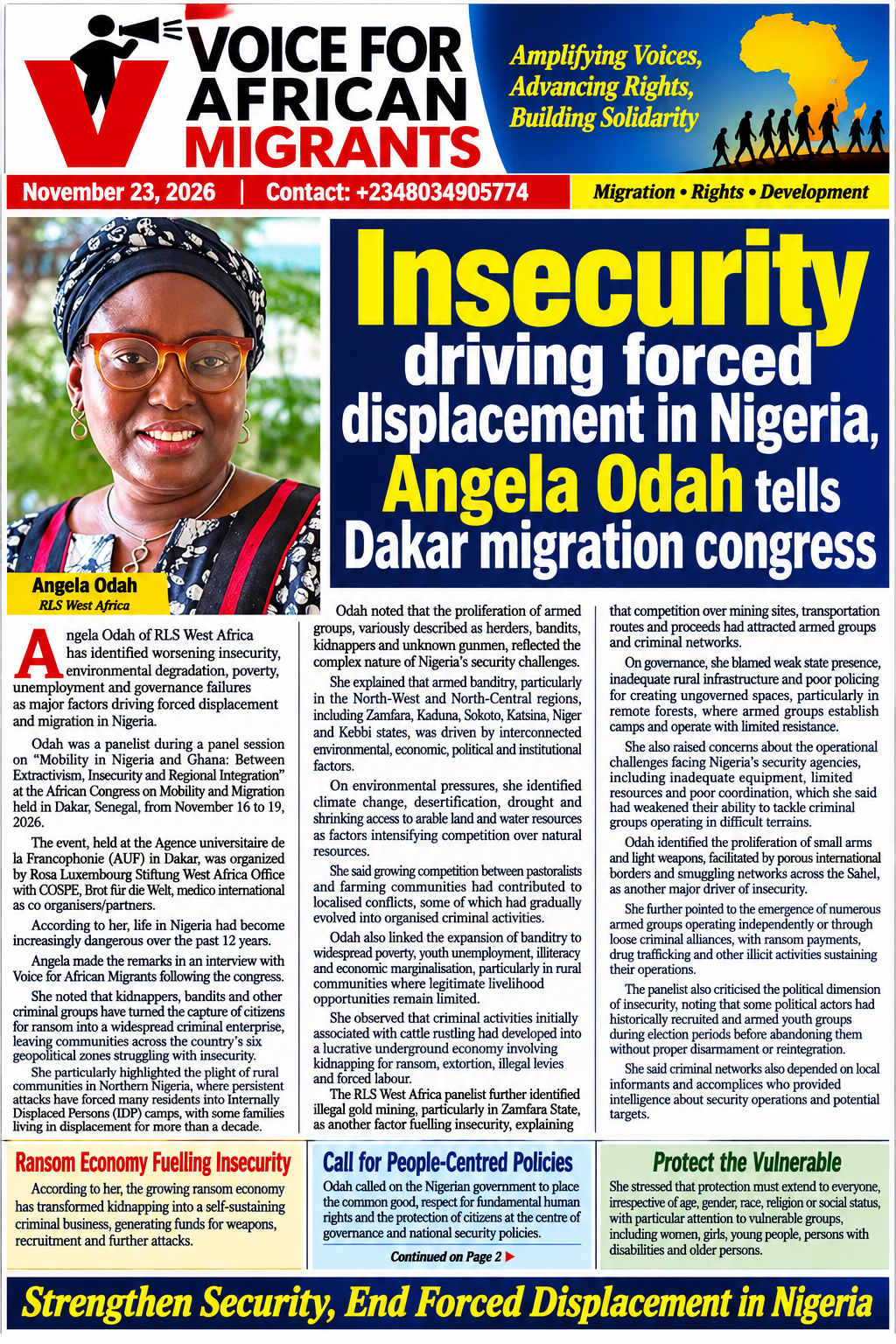
Angela Odah of RLS West Africa has identified worsening insecurity, environmental degradation, poverty, unemployment and governance failures as major factors driving forced displacement and migration in Nigeria.
Odah was a panelist during a panel session on “Mobility in Nigeria and Ghana: Between Extractivism, Insecurity and Regional Integration” at the African Congress on Mobility and Migration held in Dakar, Senegal, from November 16 to 19, 2026.
The event, held at the Agence universitaire de la Francophonie (AUF) in Dakar, was organized by Rosa Luxembourg Stiftung West Africa Office with COSPE, Brot für die Welt, medico international as co organisers/partners.
According to her, life in Nigeria had become increasingly dangerous over the past 12 years.
Angela made the remarks in an interview with Voice for African Migrants following the congress.
She noted that kidnappers, bandits and other criminal groups have turned the capture of citizens for ransom into a widespread criminal enterprise, leaving communities across the country’s six geopolitical zones struggling with insecurity.
She particularly highlighted the plight of rural communities in Northern Nigeria, where persistent attacks have forced many residents into Internally Displaced Persons (IDP) camps, with some families living in displacement for more than a decade.
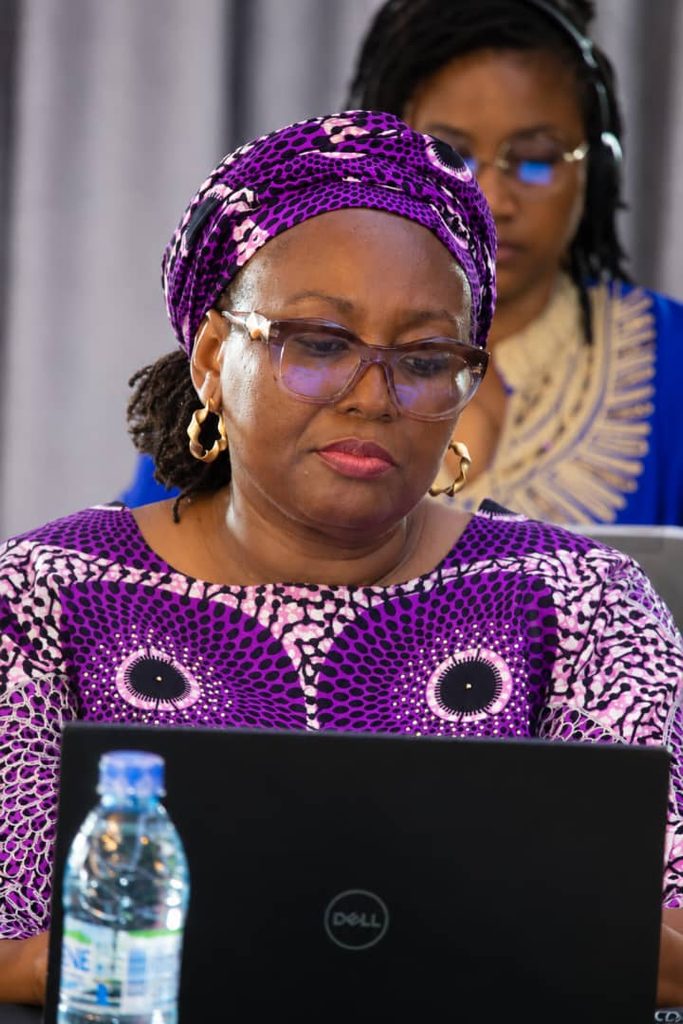
Odah noted that the proliferation of armed groups, variously described as herders, bandits, kidnappers and unknown gunmen, reflected the complex nature of Nigeria’s security challenges.
She explained that armed banditry, particularly in the North-West and North-Central regions, including Zamfara, Kaduna, Sokoto, Katsina, Niger and Kebbi states, was driven by interconnected environmental, economic, political and institutional factors.
On environmental pressures, she identified climate change, desertification, drought and shrinking access to arable land and water resources as factors intensifying competition over natural resources.
She said growing competition between pastoralists and farming communities had contributed to localised conflicts, some of which had gradually evolved into organised criminal activities.
Odah also linked the expansion of banditry to widespread poverty, youth unemployment, illiteracy and economic marginalisation, particularly in rural communities where legitimate livelihood opportunities remain limited.
She observed that criminal activities initially associated with cattle rustling had developed into a lucrative underground economy involving kidnapping for ransom, extortion, illegal levies and forced labour.
The RLS West Africa panelist further identified illegal gold mining, particularly in Zamfara State, as another factor fuelling insecurity, explaining that competition over mining sites, transportation routes and proceeds had attracted armed groups and criminal networks.
On governance, she blamed weak state presence, inadequate rural infrastructure and poor policing for creating ungoverned spaces, particularly in remote forests, where armed groups establish camps and operate with limited resistance.
She also raised concerns about the operational challenges facing Nigeria’s security agencies, including inadequate equipment, limited resources and poor coordination, which she said had weakened their ability to tackle criminal groups operating in difficult terrains.
Odah identified the proliferation of small arms and light weapons, facilitated by porous international borders and smuggling networks across the Sahel, as another major driver of insecurity.
She further pointed to the emergence of numerous armed groups operating independently or through loose criminal alliances, with ransom payments, drug trafficking and other illicit activities sustaining their operations.
The panelist also criticised the political dimension of insecurity, noting that some political actors had historically recruited and armed youth groups during election periods before abandoning them without proper disarmament or reintegration.
She said criminal networks also depended on local informants and accomplices who provided intelligence about security operations and potential targets.
According to her, the growing ransom economy has transformed kidnapping into a self-sustaining criminal business, generating funds for weapons, recruitment and further attacks.
Odah called on the Nigerian government to place the common good, respect for fundamental human rights and the protection of citizens at the centre of governance and national security policies.
She stressed that protection must extend to everyone, irrespective of age, gender, race, religion or social status, with particular attention to vulnerable groups, including women, girls, young people, persons with disabilities and older persons.
She also urged the government to strengthen the capacity, professionalism, accountability and operational effectiveness of security institutions to address terrorism, banditry and other security threats.
Odah further called for the prioritisation of the resettlement, reintegration and protection of displaced communities, stressing that addressing insecurity must go beyond military operations to include restoring livelihoods, rebuilding affected communities and guaranteeing the rights and safety of displaced persons.
Her intervention highlighted the links between insecurity, resource competition, economic exclusion and forced mobility, underscoring the need for rights-based governance and sustainable solutions to displacement in Nigeria.
News
Des migrants égyptiens et d’autres nationalités portés disparus ou présumés morts après le naufrage d’une embarcation au large de la Libye

Des dizaines de migrants égyptiens et d’autres nationalités sont présumés morts ou portés disparus après le naufrage d’une embarcation au large des côtes libyennes, alors qu’ils tentaient de traverser la Méditerranée pour rejoindre l’Europe, selon des médias égyptiens.
L’embarcation aurait quitté la ville de Tobrouk, dans l’est de la Libye, jeudi soir, mais aurait commencé à sombrer quelques kilomètres seulement après son départ, poussant les passagers à lancer des appels de détresse.
Des sources citées par le journal égyptien Al-Masry Al-Youm ont indiqué que des vents violents et l’obscurité avaient entravé les opérations de sauvetage. Six personnes ont été secourues, tandis que le sort des autres passagers demeure inconnu.
Les équipes de recherche ont poursuivi leurs opérations le long des côtes libyennes afin de retrouver d’éventuels survivants, de localiser les migrants portés disparus et de récupérer les corps.
Le nombre exact de passagers à bord de l’embarcation ainsi que le bilan humain confirmé n’étaient pas immédiatement connus.
Selon le média, les migrants auraient rejoint la Libye par l’intermédiaire de réseaux de traite des êtres humains, qui les auraient retenus dans des entrepôts avant d’organiser leur traversée maritime vers l’Europe en échange d’argent.
Des habitants du village de Sindbis, situé dans le gouvernorat égyptien de Qalyubia, ont déclaré à Al-Masry Al-Youm qu’entre 22 et 27 jeunes hommes de leur localité auraient été à bord de l’embarcation. Des jeunes originaires de villages voisins auraient également participé à cette traversée.
Un habitant a indiqué que le groupe avait quitté le village environ un mois auparavant, en prenant un bus pour Alexandrie avant de poursuivre son voyage vers la Libye par voie maritime. Leurs familles auraient perdu tout contact avec eux plusieurs heures après leur embarquement.
La plupart des jeunes hommes portés disparus auraient moins de 20 ans et étaient à la recherche d’opportunités d’emploi à l’étranger, a ajouté cet habitant.
Ce nouveau naufrage met en évidence les dangers persistants auxquels sont confrontés les migrants qui tentent de rejoindre l’Europe par les voies migratoires irrégulières en Méditerranée depuis la Libye, où les traversées maritimes périlleuses et les réseaux de traite des êtres humains continuent d’exposer les migrants à l’exploitation et aux pertes en vies humaines.
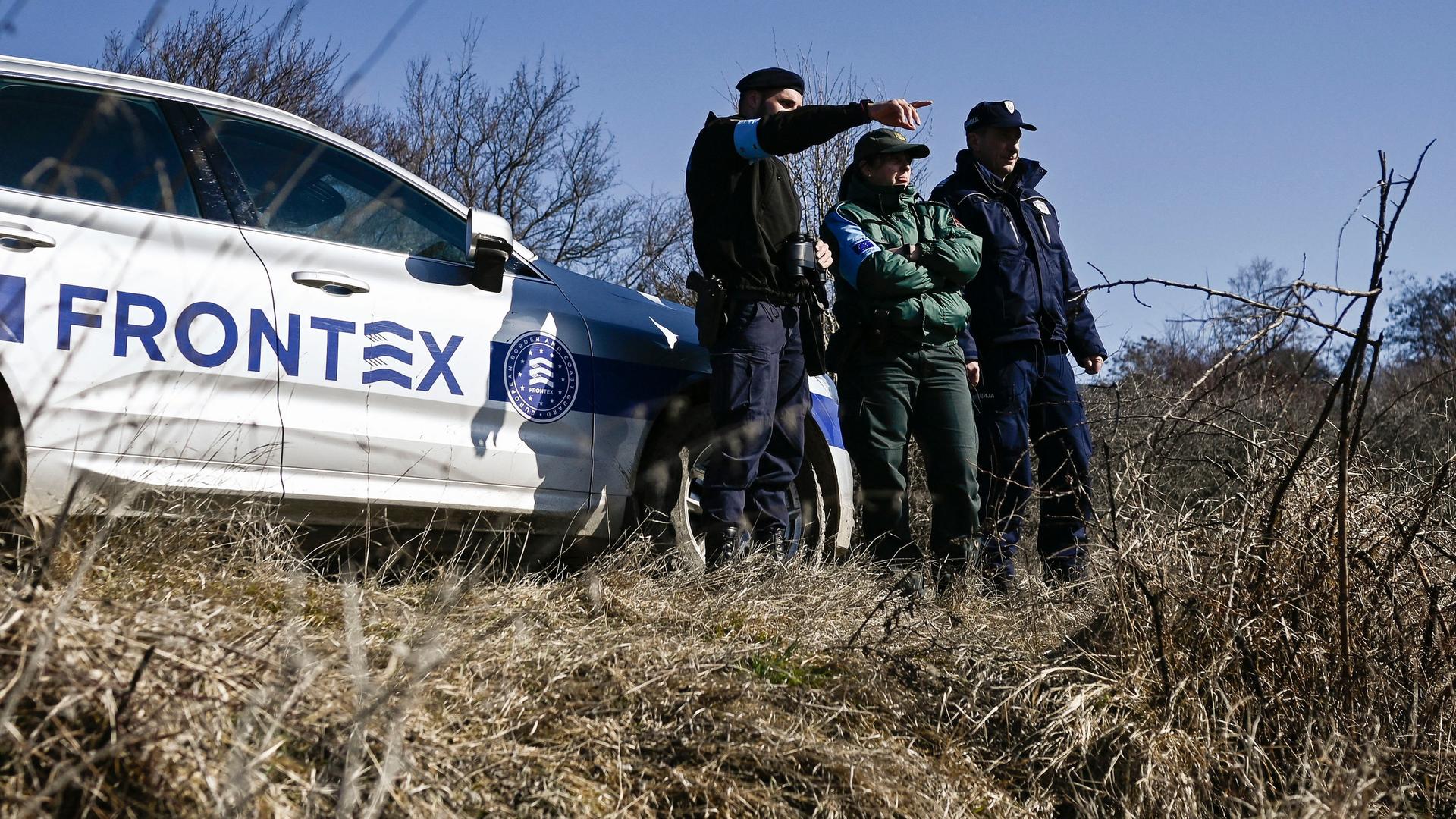
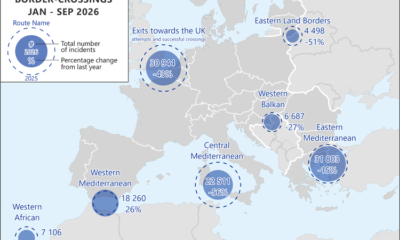
Les arrivées irrégulières dans l’Union européenne ont diminué sur la plupart des principales routes migratoires au cours des neuf premiers mois de 2026, bien que les traversées sur la route de la Méditerranée occidentale aient augmenté de 26 %, selon les chiffres publiés par l’Agence européenne de garde-frontières et de garde-côtes (Frontex).
Les données couvrant la période de janvier à septembre 2026 montrent que la route de la Méditerranée orientale a enregistré le plus grand nombre de franchissements irréguliers des frontières, avec 31 803 détections, soit une baisse de 15 % par rapport à la même période en 2025.
La route de la Méditerranée centrale arrive en deuxième position avec 22 511 détections, marquant une baisse de 56 %, tandis que celle de la Méditerranée occidentale a enregistré 18 260 traversées, soit une augmentation de 26 %.
La route de l’Afrique de l’Ouest a enregistré 7 106 traversées, en baisse de 45 %, tandis que celle des Balkans occidentaux a comptabilisé 6 687 franchissements, soit une diminution de 27 %.
Par ailleurs, les détections le long de la frontière terrestre orientale ont chuté de 51 %, pour s’établir à 4 498.
Les départs en direction du Royaume-Uni ont également diminué, avec 30 944 détections enregistrées au cours de cette période de neuf mois, soit une baisse de 43 % par rapport à la période correspondante en 2025.
Chiffres du mois de septembre
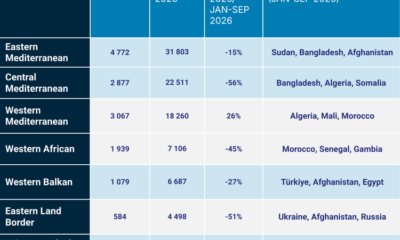
Pour le seul mois de septembre, la route de la Méditerranée orientale a enregistré 4 772 traversées irrégulières, le chiffre le plus élevé parmi les routes surveillées par Frontex.
La Méditerranée occidentale arrive ensuite avec 3 067 traversées, tandis que la Méditerranée centrale en a enregistré 2 877.
La route de l’Afrique de l’Ouest a comptabilisé 1 939 traversées, contre 1 079 dans les Balkans occidentaux et 584 à la frontière terrestre orientale.
Par ailleurs, 4 536 départs en direction du Royaume-Uni ont été enregistrés au cours du mois.
Principales nationalités
Les ressortissants soudanais, bangladais et afghans ont constitué les principales nationalités détectées sur la route de la Méditerranée orientale au cours des neuf premiers mois de 2026.
Sur la route de la Méditerranée centrale, les Bangladais, les Algériens et les Somaliens arrivaient en tête, tandis que les Algériens, les Maliens et les Marocains étaient les nationalités les plus fréquemment détectées sur la route de la Méditerranée occidentale.
Sur la route de l’Afrique de l’Ouest, les principales nationalités étaient les Marocains, les Sénégalais et les Gambiens.
Les ressortissants turcs, afghans et égyptiens étaient les plus fréquemment détectés sur la route des Balkans occidentaux, tandis que les Ukrainiens, les Afghans et les Russes arrivaient en tête à la frontière terrestre orientale.
Concernant les départs vers le Royaume-Uni, les Érythréens, les Soudanais et les Somaliens constituaient les principales nationalités recensées.
Ces chiffres mettent en évidence les différentes tendances migratoires aux frontières extérieures de l’Europe. Alors que la plupart des routes ont enregistré des baisses importantes, la Méditerranée occidentale a connu une augmentation des traversées au cours de la période étudiée.

Sierra Leonean activist decries govt’s secretive third-country deportation agreements

Un militant sierra-léonais dénonce les accords secrets du gouvernement sur l’expulsion de migrants vers des pays tiers

Congrès de Dakar : L’Afrique doit aller au-delà des traités sur la migration et passer à leur mise en œuvre effective – Expert juridique
Dakar congress: Africa must move beyond migration treaties to practical implementation- Legal expert

L’insécurité, facteur de déplacement forcé au Nigeria, affirme Angela Odah au congrès de Dakar sur les migrations
-
 News3 weeks ago
Sea-Watch condemns proposed EU plan to expand Frontex powers
-

 Interviews4 days ago
Extraction des ressources, fardeau de la dette alimentant la migration forcée depuis l’Afrique, selon un journaliste lors du congrès de Dakar
-
 News Extra3 weeks ago
Sea-Watch renouvelle son appel à mettre fin au financement européen des garde-côtes libyens
-
News Extra3 weeks ago
Sea-Watch condamne le projet de l’UE visant à étendre les pouvoirs de Frontex
-
 Interviews4 days ago
Resource extraction, debt burden fuelling forced migration from Africa, journalist tells Dakar congress
-
 News Extra2 weeks ago
Frontex celebrates drop in irregular crossings into EU
-
 News Extra2 weeks ago
Western Mediterranean crossings rise by 26%
-
 Features4 days ago
Egypt’s asylum law exposes refugees to deportation, rights violations – Rights group