
Features
Reintegration or a facade? Nigerian returnees challenge promise of starting again


At the World Social Forum in Cotonou, Nigerian return migrants questioned the promise of reintegration, arguing that returning people home without addressing trauma, poverty, stigma and the reasons they left is not the same as helping them rebuild their lives.
For many migration programmes, the story appears simple: a migrant leaves, encounters difficulties, returns home and receives support to start again.
But for Nigerian return migrants who gathered at the World Social Forum in Cotonou in 2026, the reality is far more complicated.
Behind the language of assisted voluntary return and reintegration are stories of detention, coercion, trauma, stigma, inadequate training, failed businesses and a painful question that echoed through the panel discussion:
Reintegration into what?
The participants did not speak as statistics or beneficiaries of migration programmes. They spoke as people who had lived through the migration system and returned to confront many of the same social and economic conditions that had pushed them to leave.
Their central argument was stark: physical return is not reintegration.
And where programmes present packages, training or financial assistance as evidence of successful reintegration while deeper problems remain unresolved, they described the process as a “reintegration façade.”
“I Was Sent on My Way”
For Udo, the failure began almost immediately after returning to Nigeria.
He said he came back in a severely distressed mental state after being held in what he described as a notorious detention centre. What he needed, he said, was medical attention, psychological support and time to recover.
Instead, he was lodged for one night.
The following morning, he was sent on his way.
Two months later, he was recalled for business training and given a small amount of money to start a business he had no prior knowledge of. He was also paired with people he did not know as business partners.
For Udo, the arrangement was almost destined to fail.
The experience, he said, destroyed much of the confidence he had left in the reintegration process.
His story exposes one of the central weaknesses raised at the Forum: support cannot be meaningful if it is disconnected from the person’s actual condition, skills, interests and circumstances.
A returnee who has just emerged from detention and trauma may need counselling before entrepreneurship. Someone without business experience may require sustained training and mentorship rather than a small start-up grant. And someone whose original reasons for migrating remain unchanged may find little reason to believe that returning home has solved anything.
“The push factor of my migration was still evident and untreated,” Ude’s testimony suggested.
That, for him, was the fundamental contradiction.
He had been returned.
But he had not been rebuilt.
When “Voluntary” Does Not Feel Voluntary
For several participants, the problem begins even before reintegration—with the word “voluntary.”
Rhoda questioned whether a return can genuinely be called voluntary when a migrant is detained and returning home appears to be the only available route out.
“If someone is in detention and the only option available to them to leave that situation is to return to their country, can we really say that the return is voluntary?” she asked.
Awe offered an even more personal account.
He described his return from Libya as anything but voluntary, saying he was confronted with conditions in which remaining appeared to mean risking his life.
He recalled being presented with two choices: return to Nigeria or remain in Libya amid violence and insecurity.
“I had to return back instead of staying in Libya to die,” his testimony stated.
For the participants, such experiences challenge the neat language often used to describe return programmes.
A decision made under detention, fear, violence, insecurity or the absence of realistic alternatives may technically be recorded as a return, but the participants argued that the circumstances surrounding that decision matter.
Consent cannot be understood separately from the conditions under which it is given.
The Business Package Is Not the Person
Another major criticism centred on the economic component of reintegration.
The participants questioned a model in which returnees are frequently directed towards small businesses and short vocational courses, as though entrepreneurship were a universal solution to the complex consequences of migration.
Rhoda put the question simply:
Why should entrepreneurship be the answer for everybody?
Some returnees want employment. Others want to return to school. Some want to learn technology, pursue a profession or develop a completely different career.
The problem, she argued, is what happens when programmes are designed for returnees without being designed with them.
Olu made the same point from a broader perspective.
For him, reintegration must empower migrants rather than become a mechanism for discouraging migration.
People with lived experience, he argued, must be involved in shaping migration and reintegration policies.
“Nothing about migrants without the voice of migrants,” was the principle underpinning his intervention.
Ido was particularly critical of the vocational training component of reintegration programmes.
He argued that training lasting only a few days or a few months cannot necessarily produce competent artisans or professionals capable of sustaining themselves in competitive markets.
He cited examples of returnees being trained as tailors, barbers, hairstylists and solar-energy installers within very short periods.
The question is not whether these skills are useful.
It is whether the intervention provides enough time, equipment, mentorship, market access and follow-up for those skills to become sustainable livelihoods.
A sewing machine, barbering kit or business grant may make for an attractive programme statistic.
But a returnee’s survival cannot be measured by the number of items contained in a reintegration package.
The Trauma That Does Not Appear in the Package
Perhaps the most persistent concern raised at Cotonou was the psychological dimension of return.
Immaculate argued that reintegration must recognize the whole person.
A migrant may return carrying trauma from detention, violence, exploitation, disappointment and dangerous journeys. Those experiences do not disappear at the border.
Yet economic support can sometimes dominate reintegration programmes while psychosocial care receives less attention.
The result can be a person who has technically received “reintegration assistance” but remains emotionally and socially unable to rebuild.
Immaculate posed a series of questions that go beyond whether a package has been delivered:
Is the business sustainable?
Does the returnee have access to counselling?
Is the family supportive?
Are there employment opportunities?
Has the community accepted the person?
And what happens when the initial assistance runs out?
These questions point to a different definition of reintegration—one based not on delivery of assistance, but on whether a person’s life is actually improving.
From Survivor to “Success Story”
Ife and Ewa raised another uncomfortable dimension: the way return migrants’ stories can be used by institutions and campaigns.
Ife described a situation in which migrants are invited to recount experiences of trauma, only for those stories to become tools for discouraging others from migrating.
The returnee’s suffering becomes a campaign message.
The migrant’s pain becomes evidence.
The survivor becomes a warning.
But what happens to the person behind the story?
Ife challenged the tendency to portray migrants primarily as helpless victims, arguing that their skills, knowledge, resilience and capacity to create change are frequently overlooked.
The labels can be damaging.
Returnees may be described as victims, greedy, ungrateful, entitled, unruly or insatiable, while their abilities and aspirations disappear behind the label.
The participants called for a shift from the victim narrative towards one that recognizes return migrants as people with agency.
That does not mean denying the trauma they experienced.
It means refusing to allow trauma to become their entire identity.
“They Covered Their Noses”
Ewa’s testimony brought the issue of stigma into sharp focus.
She recalled returning to Nigeria in 2017 and encountering people who presented themselves as humanitarians but responded to survivors with discrimination.
She remembered people covering their noses because they believed survivors smelled.
It was a small gesture, but for her it represented something much larger: the humiliation that can accompany return.
Instead of being welcomed with dignity, survivors can return to judgment.
Some are told they were greedy.
Others are told they should never have travelled.
Some are made to feel that the abuse, exploitation or violence they experienced was ultimately their own fault.
For survivors, such attitudes can compound trauma rather than heal it.
Ewa also recounted experiences in which organizations allegedly took returnees to rehabilitation centres without adequate consent, restricted communication with families and placed people in skills programmes they had not chosen.
She said she had to fight for her own release before she could return to her family.
Her account raises a fundamental principle for reintegration programmes:
Support should never become another form of control.
A System Designed Without the People It Claims to Help?
Ara described reintegration as a mechanism that can be used to control migrants and consolidate power rather than provide the support promised.
Ido went further, arguing that the concept of reintegration can allow European migration policies to distance themselves from the consequences of those policies while responsibility is shifted onto African governments.
His criticism reflects a broader concern expressed during the Forum about externalization—the shifting of migration-control responsibilities beyond Europe’s borders.
For the participants, this creates a troubling sequence.
Movement is restricted.
People become stranded or detained.
They return under difficult circumstances.
They receive limited assistance.
Their stories are then used to discourage other migrants from making similar journeys.
And all of this can be presented as a successful reintegration intervention.
Ife captured the contradiction bluntly:
After restricting people’s freedom of movement and returning them under difficult circumstances, institutions then use their experiences to advance migration-control agendas—and call that reintegration.
Reintegration Must Begin With Listening
The Nigerian participants at the World Social Forum were not simply rejecting support.
They were demanding a different kind of support.
One that begins with listening.
One that recognizes that returnees are not identical.
One that does not assume that everyone wants to become an entrepreneur.
One that provides psychosocial support alongside economic assistance.
One that offers meaningful training rather than short courses designed primarily to tick programme boxes.
One that includes long-term follow-up.
One that respects consent and freedom of choice.
And, above all, one that allows returnees to participate in designing the interventions that are supposed to rebuild their lives.
The participants’ argument is ultimately about accountability.
A reintegration programme should not be judged simply by how many people returned, how many received packages, how many attended training or how many businesses were launched.
The more difficult questions are:
Did the person recover?
Did the business survive?
Did they find meaningful work?
Did their mental health improve?
Did their family and community accept them?
Did they regain control over their lives?
And are the conditions that drove them to migrate still there?
If the answer to these questions is no, then a return may have taken place—but reintegration remains incomplete.
The Question Cotonou Leaves Behind
The debate at the World Social Forum did not end with a rejection of reintegration.
Instead, it demanded that the word itself be taken more seriously.
For Ude, reintegration failed because a traumatized person was given inadequate support and expected to build an unfamiliar business.
For Rhoda, the word “voluntary” deserves scrutiny when people make decisions under detention or extreme pressure.
For Awe, return was a choice made against the backdrop of danger.
For Ido, short vocational training and inadequate economic interventions cannot deliver the independence programmes promise.
For Immaculate, reintegration must extend beyond a package to encompass mental health, family, community, employment and sustainability.
For Olu, migrants with lived experience must have a seat at the table.
For Ife, returnees must not be reduced to stories of suffering that serve other people’s agendas.
For Ewa, dignity must be at the centre of the return experience.
And for Ara, the power dynamics behind reintegration must be confronted.
Together, their testimonies point towards one uncomfortable conclusion:
A person cannot be reintegrated simply because they have been returned.
Reintegration is not a suitcase handed over at the airport.
It is not a cash grant.
It is not a three-month skills course.
It is not a photograph of a returnee receiving equipment.
And it is certainly not a success story written before the returnee has had the chance to rebuild.
True reintegration must mean restoring agency, dignity, opportunity, belonging and hope.
Until those things become central to the process, the question raised in Cotonou will remain difficult to escape:
Reintegration into what?








Features
Gaza : Près de deux millions de personnes ont besoin d’une aide d’urgence en matière d’hébergement
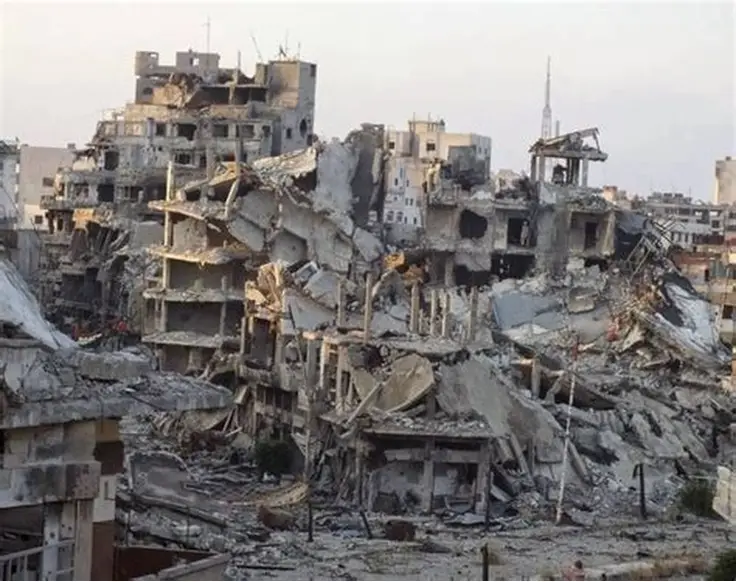
Près de deux millions de personnes, soit la quasi-totalité de la population de Gaza, ont toujours besoin d’une aide en matière d’hébergement, un an après l’annonce d’un cessez-le-feu. Alors que les pluies hivernales commencent, l’ensemble des approvisionnements prévus par les partenaires humanitaires intervenant dans le domaine de l’hébergement ne couvre qu’à peine 17 % des besoins identifiés pour l’hiver, a averti aujourd’hui Amy Pope, Directrice générale de l’Organisation internationale pour les migrations (OIM).
Après des années de déplacements et de destructions généralisées, les Palestiniens affrontent un quatrième hiver sans protection adéquate contre la pluie, les inondations et le froid. L’insuffisance des financements et les restrictions persistantes imposées par les autorités israéliennes à l’entrée de fournitures essentielles destinées aux abris empêchent les organisations humanitaires d’apporter une réponse à la hauteur des besoins.
« Les familles qui ont déjà subi des déplacements répétés et des pertes dévastatrices doivent pouvoir affronter l’hiver dans la sécurité et la dignité », a déclaré Pope. « Les matériaux destinés aux abris doivent pouvoir entrer rapidement, de manière prévisible et en quantités suffisantes pour répondre aux besoins. »
Plus de la moitié des tentes et des abris de fortune actuellement utilisés sont en mauvais état et doivent être remplacés. Les tentes sont conçues comme une mesure d’urgence temporaire et ne durent généralement que six à douze mois.
Faute d’autres solutions, de nombreuses familles vivent dans des bâtiments endommagés par la guerre qui présentent de graves risques pour leur vie. Le mois dernier seulement, des dizaines de personnes ont été tuées dans la ville de Gaza lorsqu’un bâtiment endommagé par la guerre s’est effondré. En août, un partenaire de l’OIM avait recensé plus de 3 600 structures jugées dangereuses et présentant un risque d’effondrement.
Le renforcement du phénomène El Niño devrait entraîner des précipitations plus abondantes, susceptibles de fragiliser davantage les bâtiments déjà dangereux, tandis que les systèmes de drainage fortement endommagés exposent les communautés aux inondations.
L’OIM et ses partenaires chargés de la gestion des sites ont recensé près de 1,8 million de personnes vivant dans des sites de déplacement, dont la plupart se trouvent dans des zones exposées aux risques d’inondation. Les eaux de crue pourraient endommager les abris, détruire les derniers biens des familles et contraindre les populations à se déplacer une nouvelle fois.
Environ 8 600 kits d’hébergement d’urgence de l’OIM sont prépositionnés à l’extérieur de Gaza et prêts à être acheminés, mais les autorités israéliennes continuent de leur refuser l’accès aux points de passage. Pendant ce temps, les équipes humanitaires utilisent, dans la mesure du possible, des matériaux disponibles localement et des matériaux récupérés. Ces efforts apportent un soutien temporaire limité, mais restent insuffisants pour répondre à l’ampleur des besoins en matière d’hébergement.
« Les solutions sont connues, les fournitures sont prêtes et les équipes humanitaires sont préparées à les acheminer », a déclaré Pope. « Un accès humanitaire immédiat et durable est essentiel pour protéger des vies, renforcer les abris endommagés et aider les familles à dépasser le stade des solutions temporaires. Toutes les parties doivent faciliter une action humanitaire fondée sur les principes humanitaires et soutenir une réponse à la hauteur de la gravité de la crise. »
L’OIM appelle à autoriser immédiatement et durablement l’entrée de tentes, de kits d’hébergement d’urgence, d’unités de logement de secours, de bois, d’outils et d’autres matériaux nécessaires pour renforcer les abris, réparer les habitations endommagées et aider les familles à trouver des logements plus sûrs.
Un accès prévisible aux équipements spécialisés, au carburant, aux pièces de rechange et aux matériaux de construction sera également essentiel pour permettre l’enlèvement des décombres et progresser vers un relèvement précoce.
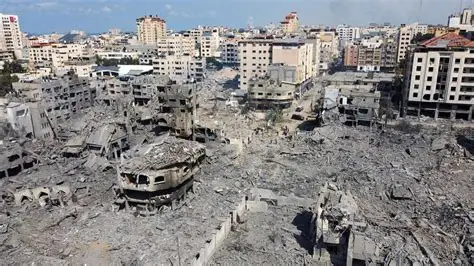
Nearly all of Gaza’s population, almost two million people, still require shelter assistance one year after a ceasefire was announced. As winter rain begins, the combined supply pipeline of humanitarian shelter partners covers barely 17 per cent of identified winter needs, the International Organization for Migration (IOM) Director General Amy Pope warned today.
After years of displacement and widespread destruction, Palestinians are facing a fourth winter without adequate protection from rain, flooding and cold. Insufficient funding and continuing Israeli authorities’ constraints on the entry of critical shelter supplies are preventing humanitarian organizations from responding at the scale required.
“Families who have already endured repeated displacement and devastating loss must be able to face the winter in safety and dignity,” Pope said. “Shelter materials must enter quickly, predictably and at the scale required.”
More than half of all tents and makeshift shelters currently in use are in poor condition that requires replacement. Tents are designed as a temporary emergency measure and generally last only six to 12 months.
With few alternatives available, many families are living in war-damaged buildings that pose serious risks to life. Just last month, dozens were killed in Gaza city when a war-damaged building collapsed. More than 3,600 structures were identified by an IOM partner in August as dangerous and at risk of collapse. The strengthening El Niño phenomenon is expected to bring heavier rainfall, which could further weaken unsafe buildings, while heavily damaged drainage systems leave communities exposed to flooding.
IOM and partners working in site management have identified nearly 1.8 million people living in displacement sites, most of them in areas at risk of flooding. Floodwaters could damage shelters, destroy families’ remaining possessions and force people to move once again.
Approximately 8,600 IOM emergency shelter kits are pre-positioned outside Gaza and ready for delivery but continue to be turned away at crossing points by the Israeli authorities. Meanwhile, humanitarian teams are using locally available and salvaged materials wherever possible. These efforts provide limited temporary support but are insufficient to meet widespread shelter needs.
“The solutions are known, the supplies are ready and humanitarian teams are prepared to deliver,” Pope said. “Immediate and sustained humanitarian access is essential to protect lives, strengthen damaged shelters, and help families move beyond temporary solutions. All parties must facilitate principled humanitarian action and support a response equal to the severity of the crisis.”
IOM calls for the immediate and sustained entry of tents, emergency shelter kits, relief housing units, wood, tools and other materials needed to reinforce shelters, repair damaged homes and support families seeking safer accommodation. Predictable access to specialized equipment, fuel, spare parts and construction materials will also be essential for debris removal and movement toward early recovery.
Features
Les immigrants Nigérians confrontés à des problèmes de santé mentale invisibles malgré leur réussite, alerte un expert
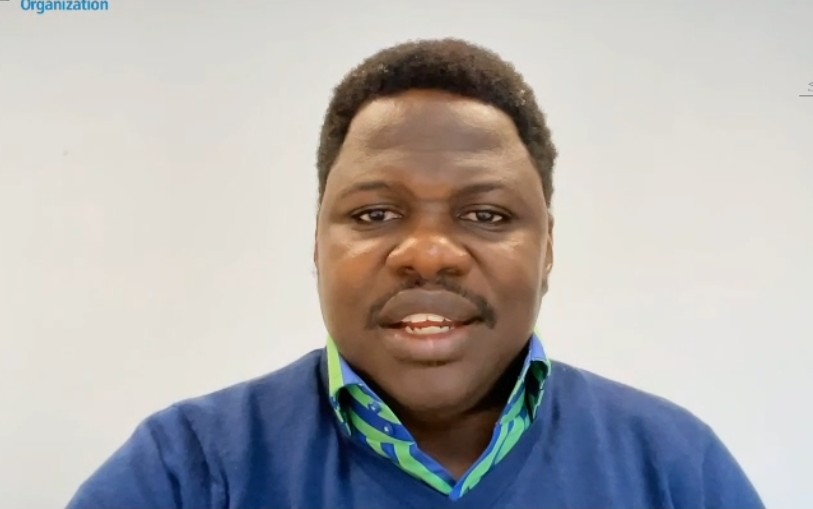
Les immigrants Nigérians peuvent connaître une réussite professionnelle et personnelle dans leurs pays d’accueil tout en faisant face à des problèmes de santé mentale souvent dissimulés, liés à la migration, aux changements identitaires et au stress prolongé, a déclaré Kehinde Ekpudu, un professionnel de la santé mentale.
Ekpudu, titulaire d’un MBA et d’un master en travail social, et travailleur social clinicien agréé (RCSW), a mis en lumière les conséquences psychologiques de la migration lors d’une présentation intitulée « Au-delà de la survie : santé mentale des immigrants nigérians — expériences vécues, identité et cerveau ».
Cette intervention a eu lieu lors du premier Sommet nigérian sur la santé mentale, organisé en ligne hier à l’occasion de la Journée mondiale de la santé mentale.
La présentation a examiné les liens entre la migration, l’identité, le cerveau et la santé mentale, en attirant l’attention sur les pressions émotionnelles auxquelles les immigrants peuvent être confrontés lorsqu’ils s’adaptent à la vie dans un nouveau pays.
« Lorsque nous parlons de la réussite des immigrants, nous célébrons leur capacité à s’en sortir. Mais que se passe-t-il lorsque la survie devient un mode de vie ? », a demandé Ekpudu, remettant en question la tendance à mesurer la réussite des immigrants principalement à travers leurs réalisations professionnelles et leur capacité d’adaptation.
Selon la présentation, les Nigérians n’arrivent pas dans leurs pays d’accueil dépourvus d’identité, d’expérience ou de références culturelles. La migration ne consiste pas simplement à passer d’un lieu géographique à un autre ; elle représente également une transition psychologique et identitaire.
La présentation a souligné que les immigrants peuvent être amenés à concilier simultanément plusieurs identités : nigériane, africaine, noire, canadienne, professionnelle, partenaire, parent, fils ou fille.
« La migration peut nous obliger à redéfinir certaines parties de nous-mêmes qui nous semblaient autrefois stables », indique le document.
Ekpudu a également cité une étude publiée en 2023 par Aluh et d’autres chercheurs, selon laquelle 51,7 % des immigrants nigérians participant à une étude menée au Canada présentaient un résultat positif au dépistage de la dépression.
La présentation a en outre relevé que le fait de résider au Canada depuis plus de dix ans était significativement associé à une probabilité plus élevée d’obtenir un résultat positif au dépistage de la dépression.
Ce constat remet en question l’idée selon laquelle les difficultés psychologiques liées à la migration diminuent nécessairement à mesure que les immigrants passent davantage de temps dans leur pays d’accueil.
Au-delà de la dépression, la présentation a identifié l’adaptation constante, l’incertitude et le stress chronique comme des facteurs susceptibles d’affecter le système nerveux et le bien-être émotionnel des immigrants.
Parmi les conséquences possibles figurent l’hypervigilance, l’anxiété, les troubles du sommeil, l’épuisement émotionnel, les difficultés de concentration et le burn-out.
« Parfois, ce qui ressemble à de la résilience de l’extérieur est en réalité un système nerveux qui est devenu très performant dans l’art de survivre », a déclaré Ekpudu.
La présentation a suggéré que des comportements souvent interprétés comme des signes de résilience peuvent parfois traduire les effets d’une pression psychologique prolongée, notamment lorsque les personnes se sentent obligées de rester fortes malgré leurs difficultés émotionnelles.
Elle a également examiné l’influence des attentes culturelles sur la manière dont les immigrants nigérians comprennent et expriment leurs problèmes de santé mentale.
Des expressions telles que « Je suis simplement fatigué », « Ce n’est que du stress », « Dieu m’aidera », « Je dois être plus fort », « D’autres personnes vivent des situations plus difficiles » et « Je ne peux pas craquer » ont été présentées comme des façons courantes de décrire ou d’aborder les difficultés émotionnelles sans reconnaître ouvertement ses besoins en matière de santé mentale.
Selon la présentation, ces réactions peuvent refléter la pression ressentie par certains immigrants, qui doivent rester forts, assumer leurs responsabilités familiales et continuer à rechercher la réussite, même lorsqu’ils traversent des difficultés émotionnelles.
Intitulée « Au-delà de la survie », la présentation a insisté sur la nécessité de prendre en compte les expériences vécues, les identités ainsi que le bien-être physique et psychologique des immigrants dans les discussions sur la santé mentale.
Elle a proposé un parcours allant de la survie à la confiance en soi, fondé sur trois principes : le sentiment d’appartenance, l’intégration et l’épanouissement.
Dans ce cadre, le sentiment d’appartenance consiste à pouvoir créer des liens sans renoncer à son identité ; l’intégration implique d’accepter et de concilier plusieurs identités ; tandis que l’épanouissement signifie reconnaître que la vie peut offrir davantage que la simple survie face aux difficultés quotidiennes.
« Je peux trouver ma place sans renoncer à moi-même », indique la présentation pour illustrer le premier principe.
Elle ajoute : « Je peux assumer plusieurs identités » et « Ma vie peut être davantage qu’une simple survie ».
La présentation a été réalisée dans le cadre des activités de Twin Ocean, dont la devise est : « Naviguer ensemble sur les vagues de la vie ».
Le sommet nigérian appelle à une approche inclusive des soins de santé mentale
Le coordonnateur du Sommet nigérian sur la santé mentale (NMHS), le Dr Oluyinka Oyeniji, a appelé à l’adoption d’une approche nationale inclusive des soins de santé mentale, qui tienne compte des expériences vécues par les patients, les aidants, les familles et les autres personnes affectées par les troubles mentaux.
Oyeniji a lancé cet appel hier dans son discours d’ouverture du premier Sommet nigérian sur la santé mentale, organisé pour commémorer la Journée mondiale de la santé mentale.
Le sommet, organisé en collaboration avec le Ladoke Akintola Neuroscience Group (LNG), a réuni des défenseurs de la santé mentale, des professionnels de santé, des chercheurs et d’autres acteurs concernés afin de discuter des défis et des possibilités d’amélioration des soins de santé mentale au Nigeria.
Selon Oyeniji, le sommet a été créé pour promouvoir des changements positifs dans le secteur de la santé mentale du pays et renforcer les efforts en faveur d’une réponse nationale coordonnée aux problèmes de santé mentale.
Il a déclaré que cette initiative revêtait une importance particulière à un moment où de nombreux Nigérians étaient confrontés à des problèmes de santé mentale, soit directement, soit en raison de leurs responsabilités en tant qu’aidants, membres de la famille ou amis.
Le coordonnateur a également souligné la démarche du gouvernement fédéral visant à dépénaliser la tentative de suicide, qu’il a qualifiée d’évolution importante après plus de quatorze années de plaidoyer.
Il a salué les acteurs qui ont maintenu la mobilisation en faveur de cette réforme et exhorté les Nigérians à soutenir les initiatives visant à améliorer les soins de santé mentale et à protéger les droits des personnes vivant avec des troubles mentaux.

Soudan : les attaques de drones perturbent les cours à El-Obeid, alerte le NRC

Sudan: Drone attacks disrupt school lessons in El Obeid- NRC

Sea-Watch secourt 227 migrants en Méditerranée en 48 heures

Sea-Watch rescues 227 migrants in Mediterranean within 48 hours

Un avocat ougandais exhorte l’UA à rejeter les accords migratoires avec l’Europe
-
 Features2 weeks ago
Gaza : Près de deux millions de personnes ont besoin d’une aide d’urgence en matière d’hébergement
-

 News Extra2 weeks ago
NACTAL conteste le rapport américain sur la traite des personnes et exige la reconnaissance des contributions des organisations de la société civile nigérianes
-
 News Extra2 weeks ago
Un avocat ougandais exhorte l’UA à rejeter les accords migratoires avec l’Europe
-
 News Extra1 week ago
Sudan: Drone attacks disrupt school lessons in El Obeid- NRC
-

 Features2 weeks ago
Nigerian immigrants face hidden mental health challenges despite success, expert warns
-
 Features2 weeks ago
Gaza: About two million need urgent shelter assistance
-

 News Extra2 weeks ago
NACTAL faults US trafficking report, demands recognition of Nigerian CSOs’ contributions
-

 News Extra2 weeks ago
US to deport fresh set of Nigerians over alleged criminal offences