
News
IOM applauds Nigerian govt, NCFRMI’s commitment to strengthening migration management


The International Organisation for Migration (IOM) has applauded the Federal Government and the National Commission for Refugees, Migrants and Internally Displaced Persons (NCFRMI) for their commitment to strengthening migration management in line with the Global Compact for Safe, Orderly and Regular Migration (GCM).
IOM’s Chief of Mission in Nigeria, Sharon Dimanche made the remarks while welcoming participants to the meeting on Voluntary National Review (VNR) on the implementation of the Global Compact for Safe, Orderly and Regular Migration (GCM) ahead of the 2026 International Migration Review Forum (IMRF).
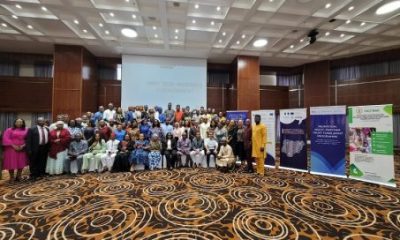
The event which was held between February 17 and 21 at the Lagos Continental Hotel, Victoria Island Lagos, had other international partners, members of the civil society, federal and state government agencies among others in attendance.
Addressing the participants, Dimanche also acknowledged “the support of our partners, especially the European Union and the Migration Multi-Partner Trust Fund (MMPTF), whose continued investment is enabling inclusive dialogue, stronger coordination, and practical progress across key areas of migration governance in Nigeria.”
She noted that Nigeria has long demonstrated leadership as a champion country of the GCM, adding that “this is reflected in important national milestones, including the validation of the revised National Migration Policy, the development of the integrated National Implementation Plan, and successive voluntary reviews, both the 2022 voluntary review and the 2024 national GCM review. These efforts underscore Nigeria’s strong ownership of the GCM framework and its whole-of-government, whole-of-society approach.
“As we stand on the threshold of the 2026 IMRF, scheduled for May, today’s meeting comes at a pivotal moment. Globally, the UN Network on Migration has outlined a clear IMRF roadmap, including timelines for voluntary national reports, guidance for roundtable inputs, and opportunities to strengthen multi-stakeholder engagement.”
At country level, she said “this meeting is an essential platform to coordinate our preparations: to reflect on achievements since the last IMRF cycle; to assess progress on GCM-related indicators and priorities; and to identify the actions needed for Nigeria’s effective representation at the Forum.”
Continuing, Dimanche said “our task at this engagement is threefold: To jointly undertake Nigeria’s voluntary national review on the GCM, being conducted during this VNR Workshop in Lagos. This workshop constitutes Nigeria’s formal national review process ahead of the IMRF, bringing together government ministries, UN agencies, civil society, and key stakeholders to assess progress since the 2022 voluntary review and the 2024 national GCM review. Through plenary discussions and structured breakout sessions co-led by relevant Government MDAs and UN entities, we will validate evidence, document good practices, identify persistent challenges, and agree on renewed commitments that will inform Nigeria’s inputs to the IMRF roundtables and the overall national position for the Forum.
“To ensure a shared understanding of Nigeria’s IMRF 2026 timeline and entry points for coordinated UN support, including key milestones such as finalizing the voluntary national review/report, articulating renewed pledges, and developing Nigeria’s contributions to the IMRF roundtables.
“To strengthen coordination across government, UNNM entities, civil society, and development partners, recognizing that effective engagement at the IMRF requires not only technical preparation, but also coherent messaging, clarity of institutional roles, and harmonized support.”
She emphasized that Nigeria’s participation in IMRF 2026 is not merely a reporting exercise. “It is an opportunity to showcase national innovations, elevate strategic priorities, and contribute to shaping the global migration agenda. It is also an opportunity to renew pledges grounded in evidence, and to advocate for strengthened partnerships and resources to address multidimensional migration challenges—from data and evidence generation, to protection, labour mobility, migration and development, and governance.
“The IOM Nigeria Mission remains fully committed to supporting the Government of Nigeria and the UN Network on Migration to ensure that Nigeria approaches the IMRF with a unified voice, solid evidence, and clear priorities. With your expertise and collective dedication, and with the valued support of partners and our generous donors, the MMPTF and the European Union, I am confident that our deliberations will yield actionable outcomes, strengthened coordination, and a clear roadmap toward both the VNR process and effective participation at the IMRF.”









Le Conseil norvégien pour les réfugiés (NRC) a appelé à un renforcement urgent des efforts humanitaires en République démocratique du Congo (RDC), après la confirmation de plus de 10 000 cas dans le cadre de l’épidémie en cours due au virus Bundibugyo.
L’épidémie a touché huit provinces du pays, exerçant une pression considérable sur des communautés déjà confrontées à une crise humanitaire prolongée. Elle est principalement concentrée dans l’est de la RDC, tandis que des signalements récents de cas au Kenya et au Nigeria suscitent des inquiétudes quant à une éventuelle propagation régionale.
Près de 5 000 décès auraient été confirmés en RDC seulement.
Cette épidémie survient dans un contexte de crise humanitaire persistante dans l’est de la RDC, où les violences, les déplacements forcés et l’accès limité aux services essentiels ont rendu de nombreuses communautés particulièrement vulnérables.
Le NRC, qui intervient dans le pays depuis plus de deux décennies, participe à la réponse à l’épidémie d’Ebola, notamment dans la province de l’Ituri, l’une des régions les plus touchées.
L’organisation appelle à une action durable et coordonnée afin de protéger les communautés, d’améliorer l’accès aux services essentiels et de répondre aux besoins des personnes affectées à la fois par l’épidémie et les déplacements de population.
« Lors de mes déplacements en Ituri, je constate à quel point la maladie frappe durement les communautés, et je suis frappée par l’ampleur des efforts supplémentaires nécessaires pour maîtriser cette épidémie », a déclaré Silvia Beccacece, responsable de l’équipe d’urgence du NRC.
« Depuis des années, les familles d’ici luttent contre les conséquences des violences extrêmes, des déplacements forcés et du manque de services essentiels. Ebola vient s’ajouter à ces difficultés, alors que beaucoup ont déjà épuisé leurs capacités à faire face à cette nouvelle épreuve.
« Il est clair que la réponse apportée est loin d’être proportionnelle à l’ampleur considérable de l’épidémie », a-t-elle ajouté.
Le NRC a souligné que la lutte contre Ebola nécessite une étroite coopération entre les autorités sanitaires, les organisations humanitaires, les groupes communautaires et les partenaires internationaux.
L’organisation a également appelé à mettre les communautés touchées au centre des interventions et à tenir compte des coutumes et traditions locales.
Elle a exhorté les bailleurs de fonds et les partenaires à accroître les financements et le soutien aux opérations humanitaires en RDC, en particulier dans les zones affectées par l’épidémie et les déplacements de population.
« La confirmation de 10 000 cas doit servir de signal d’alarme : la réponse actuelle ne parvient pas à prendre de l’avance sur l’épidémie et ne fournit pas aux communautés le soutien dont elles ont besoin pour maîtriser la transmission du virus », a déclaré Beccacece.
« Les signes avant-coureurs sont visibles de tous. Tout dépend désormais de la volonté des dirigeants d’en tenir compte et de prendre les mesures nécessaires », a-t-elle ajouté.
The Norwegian Refugee Council (NRC) has called for an urgent expansion of humanitarian efforts in the Democratic Republic of the Congo (DR Congo), following the confirmation of more than 10,000 cases in the ongoing Bundibugyo virus outbreak.
The outbreak has affected eight provinces in the country, placing enormous pressure on communities already struggling with a prolonged humanitarian crisis. The epidemic is concentrated in eastern DR Congo, while reports of recent cases in Kenya and Nigeria have raised concerns about a possible regional spread.
Nearly 5,000 deaths have reportedly been confirmed in DR Congo alone.
The outbreak comes amid a long-running humanitarian crisis in eastern DR Congo, where violence, forced displacement and limited access to essential services have left many communities vulnerable.
The NRC, which has operated in the country for more than two decades, is participating in the Ebola response, including in Ituri province, one of the areas most affected by the outbreak.
The organisation is urging sustained and coordinated action to protect communities, improve access to essential services and address the needs of people affected by both the outbreak and displacement.
“As I move around Ituri, I’m seeing just how hard the disease is hitting communities, and I am struck by how much more needs to be done to bring this outbreak under control,” said Silvia Beccacece, NRC’s emergency team leader.
“Families here have been struggling for years as a result of extreme violence, forced displacement, and the lack of essential services. Ebola comes on top of that, at a point where many have exhausted their ability to cope with the additional challenge it brings.
“The fact remains that this response is in no way proportionate to the vast scale of the outbreak,” she added.
The NRC stressed that combating Ebola requires close cooperation among health authorities, humanitarian organisations, community-based groups and international partners.
It also called for a response that places affected communities at the centre of interventions and takes local customs and traditions into account.
The organisation urged donors and partners to increase funding and support for humanitarian operations in DR Congo, particularly in areas affected by the outbreak and displacement.
“10,000 confirmed cases must be a wake-up call that this response is not getting ahead of the outbreak, and is not supporting communities with what they need to bring transmission under control,” Beccacece said.
“The warning signs are here for all to see: now it depends on whether leaders will take notice and take the required action,” she added.
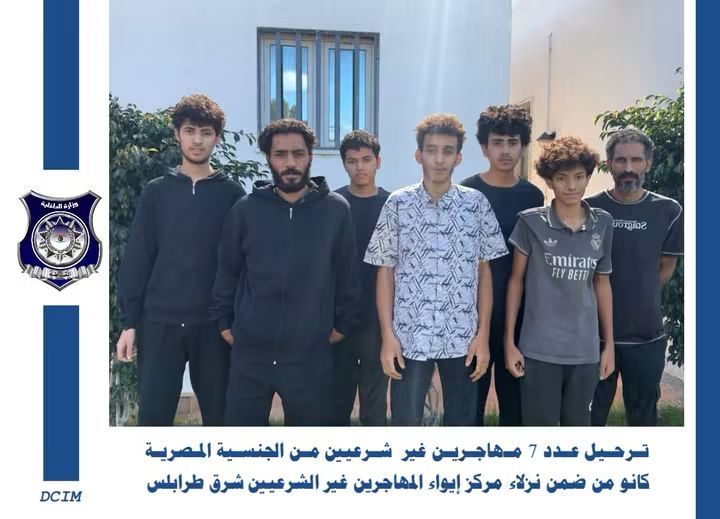
Le Département libyen de lutte contre la migration illégale (DCIM) a rapatrié ou transféré des centaines de migrants en vue de leur rapatriement depuis des centres de détention situés dans l’est du pays, tout en déployant des unités de renfort à Tobrouk afin de renforcer les opérations de lutte contre la migration irrégulière.
Ces informations ont été rapportées dans une série de publications sur X par Migrant Rescue Watch.
Le 15 octobre 2026, le DCIM a déployé des unités de renfort à Tobrouk pour soutenir sa branche locale dans la lutte contre la migration irrégulière dans la ville et les zones environnantes relevant de sa compétence.
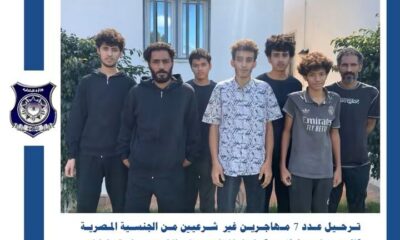
Le même jour, l’agence a rapatrié sept migrants égyptiens détenus au centre de détention pour migrants de l’est de Tripoli, à Tajoura, via l’aéroport international de Mitiga, à Tripoli, selon Migrant Rescue Watch.
La veille, le 14 octobre, le DCIM de Tobrouk avait rapatrié ou transféré 209 migrants en vue de leur rapatriement. Les ressortissants égyptiens ont été renvoyés par le poste-frontière terrestre d’Emsaed, tandis que les autres migrants ont été transférés au centre de détention pour migrants de Quanafudah en vue de leur rapatriement.
Lors d’une opération distincte menée le 28 septembre, l’agence a transféré 297 migrants de différentes nationalités du centre de détention pour migrants de Tobrouk vers celui de Quanafudah, à Benghazi, en vue de leur rapatriement.
Le DCIM a également rapatrié ou transféré 250 migrants de différentes nationalités depuis le centre de détention pour migrants de Shahat le même jour, selon les publications.
Les rapports n’ont pas précisé les nationalités de l’ensemble des migrants concernés ni fourni davantage de détails sur leur situation et les modalités de leur retour.
Ces opérations interviennent dans un contexte de poursuite des mesures de contrôle migratoire dans l’est de la Libye, où les autorités continuent de procéder au transfert et au rapatriement de migrants détenus dans différents centres de rétention.

La Ligue des États arabes et l’OIM lancent le Réseau arabe des données sur les migrations
League of Arab States, IOM launch Arab Migration Data Network

Ebola : la RDC confirme 10 000 cas, le NRC appelle à un renforcement urgent de la réponse

Ebola:DRC confirms 10,000 cases, NRC seeks scale-up

Libye : des centaines de migrants rapatriés, des renforts déployés à Tobrouk
-
 News Extra3 weeks ago
Un avocat ougandais exhorte l’UA à rejeter les accords migratoires avec l’Europe
-
 News Extra2 weeks ago
Sudan: Drone attacks disrupt school lessons in El Obeid- NRC
-
 News3 weeks ago
Ugandan lawyer urges AU to reject Europe’s migration deals
-
 News2 weeks ago
Sea-Watch rescues 227 migrants in Mediterranean within 48 hours
-
 News2 weeks ago
Sea-Watch secourt 227 migrants en Méditerranée en 48 heures
-
 News2 weeks ago
Soudan : les attaques de drones perturbent les cours à El-Obeid, alerte le NRC
-

 News Extra5 days ago
IOM’s Displacement Tracking Matrix monitors 97.2 million people in 2025
-
 News4 days ago
Libya repatriates hundreds of migrants, deploys reinforcements to Tobruk