
News Extra
Moldova invests in modern infrastructure, digital tools to tackle human trafficking, others


As part of its efforts towards strengthening the country’s ability to identify and stop cross-border crimes including human trafficking networks before they occur and enhancing national security while facilitating safe cross-border travel, the Republic of Moldova, with support from the International Organization for Migration (IOM) and the United Nations Countering Terrorist Travel (CT Travel) Programme, has inaugurated the new headquarters of its Passenger Information Unit (PIU),.
“The inauguration of the Passenger Information Unit headquarters is an important step in the state’s ability to anticipate risks and protect the security of citizens,” stated Minister of Internal Affairs, Daniella Misail-Nichitin. “We are investing in modern infrastructure, digital tools, and well-trained people so that decisions are based on accurate data and the authorities’ response is rapid and coordinated, for the benefit of every citizen of the Republic of Moldova.”
Based within the General Inspectorate of Border Police (GIBP), the PIU brings key services under one roof so that alerts can be assessed faster and acted on sooner. The Unit combines expertise from Moldova’s Border Police, National Police, Customs Service, and the Security and Intelligence Service.
“This inauguration marks a significant milestone for Moldova’s commitment to strengthening border security, migration governance, and international cooperation,” said IOM Chief of Mission in Moldova, Ester Ruiz de Azua. “It not only enhances national security and institutional resilience but also reflects Moldova’s alignment with EU accession principles.”
The PIU is equipped with the United Nations’ advanced “goTravel” software and strengthened operational and technical capacities for passenger data collection, analysis, and rapid response. Moldova becomes the seventh country to adopt this system, following Norway, Luxembourg, Botswana, Georgia, the Philippines and Mongolia.
“The establishment of the PIU marks a significant step in strengthening our national security and aligning the Republic of Moldova with European standards in passenger information management. We are grateful to our international partners, the International Organization for Migration and the United Nations Office for Counter Terrorism, for their support and continued cooperation,” mentioned the Head of the General Inspectorate of Border Police, Ruslan Galușca.
The CT Travel Programme assists Member States in leveraging passenger information in line with international standards, privacy laws, and human rights principles. Led by UNOCT, the Programme is implemented through a ‘One-UN’ partnership with the United Nations Counter-Terrorism Executive Directorate (CTED), the United Nations Office on Drugs and Crime (UNODC), the International Civil Aviation Organization (ICAO), the United Nations Office of Information and Communication Technology (UNOICT), the International Criminal Police Organization (INTERPOL), and IOM.
“The year 2025 marked a transformative year that elevated Moldova as a successful model for implementation and partnership in the region and beyond,” said Ms. Christine Erika Bradley, Head of the Countering Terrorist Travel Section, Special Projects and Innovation Branch, United Nations Office of Counter-Terrorism (UNOCT) “This milestone reflects Moldova’s unwavering commitment to strengthening its border security and counter-terrorism capabilities in line with international standards and UN Security Council resolutions.”
About the CT Travel Programme
The Republic of Moldova joined the CT Travel Programme in 2021, signing a Memorandum of Understanding in 2022. The PIU began operations in a temporary location in February 2025, and the go Travel system went live in April 2025. Throughout this process, CT Travel worked closely with IOM Moldova to refurbish the permanent PIU building, provide equipment, and deliver specialized training for PIU staff.

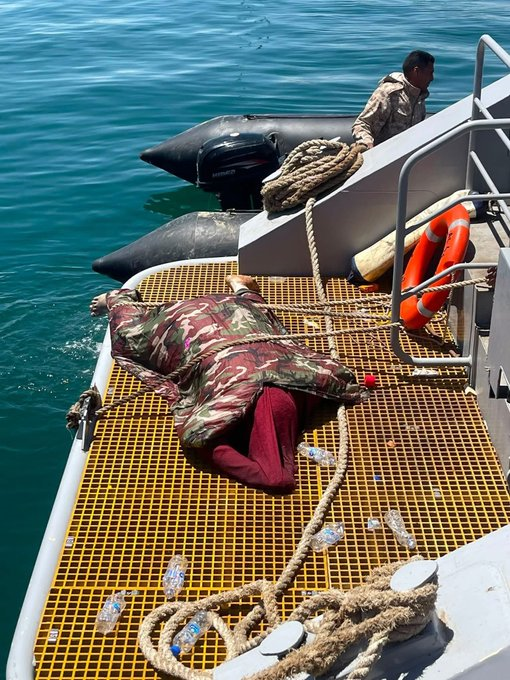
The Executive Director of Refugees in Libya, David Yambio, has mourned the death of a migrant whose body was recovered off the coast of Benghazi after reportedly being stranded at sea for 14 days, describing the incident as a stark reminder of the dangers faced by people fleeing conflict and persecution.
In a post on X, Yambio reflected on his own experience in Libya, saying that while detained in the North African country, he had often hoped that, if he were to die, it would be at sea rather than at the hands of violent militias.
According to him, the sea represented the only place where many migrants retained a sense of dignity, as they risked everything in pursuit of safety and international protection.
Yambio questioned what he described as a deeper humanitarian tragedy, arguing that many people seeking refuge would rather face the dangers of the Mediterranean than remain exposed to violence by armed groups in Libya.
He also criticised what he called Europe’s role in arming militias and accused African leaders of remaining silent in the face of abuses against migrants.
The activist said the photograph accompanying his post showed one of several people seeking protection who had been stranded at sea for two weeks. He noted that the man’s body, along with those of two others, was recovered off the coast of Benghazi a few days ago.
Ending his post on a poignant note, Yambio said the deceased asylum seeker had been portrayed as an “invader,” underscoring what he believes is the dehumanisation of migrants fleeing in search of safety.
At least 50 migrants are feared dead or missing after a boat carrying about 60 people capsized off the eastern coast of Libya while attempting to cross the Mediterranean Sea to Europe, authorities have said.
The vessel overturned on Tuesday near Bardaa Island, off the coastal city of Tobruk, according to the Coast Guard in eastern Libya.
Officials said 10 passengers, including some women and children, survived by swimming to Bardaa Island. Search and rescue operations were still ongoing as authorities continued efforts to locate the remaining passengers.
The latest disaster is another in a series of deadly shipwrecks involving migrants departing from Libya, a major transit hub for people seeking to reach Europe in search of safety and better economic opportunities.
Just last month, another migrant boat sank off eastern Libya, leaving 51 people dead or missing.
Since the 2011 NATO-backed uprising that overthrew longtime ruler Moammar Gadhafi, Libya has remained politically unstable, making it a key departure point for migrants fleeing conflict, persecution and poverty across Africa and the Middle East.
Human traffickers frequently load migrants onto overcrowded and unseaworthy boats for the dangerous Mediterranean crossing, a route that has claimed thousands of lives over the years and remains one of the world’s deadliest migration corridors.
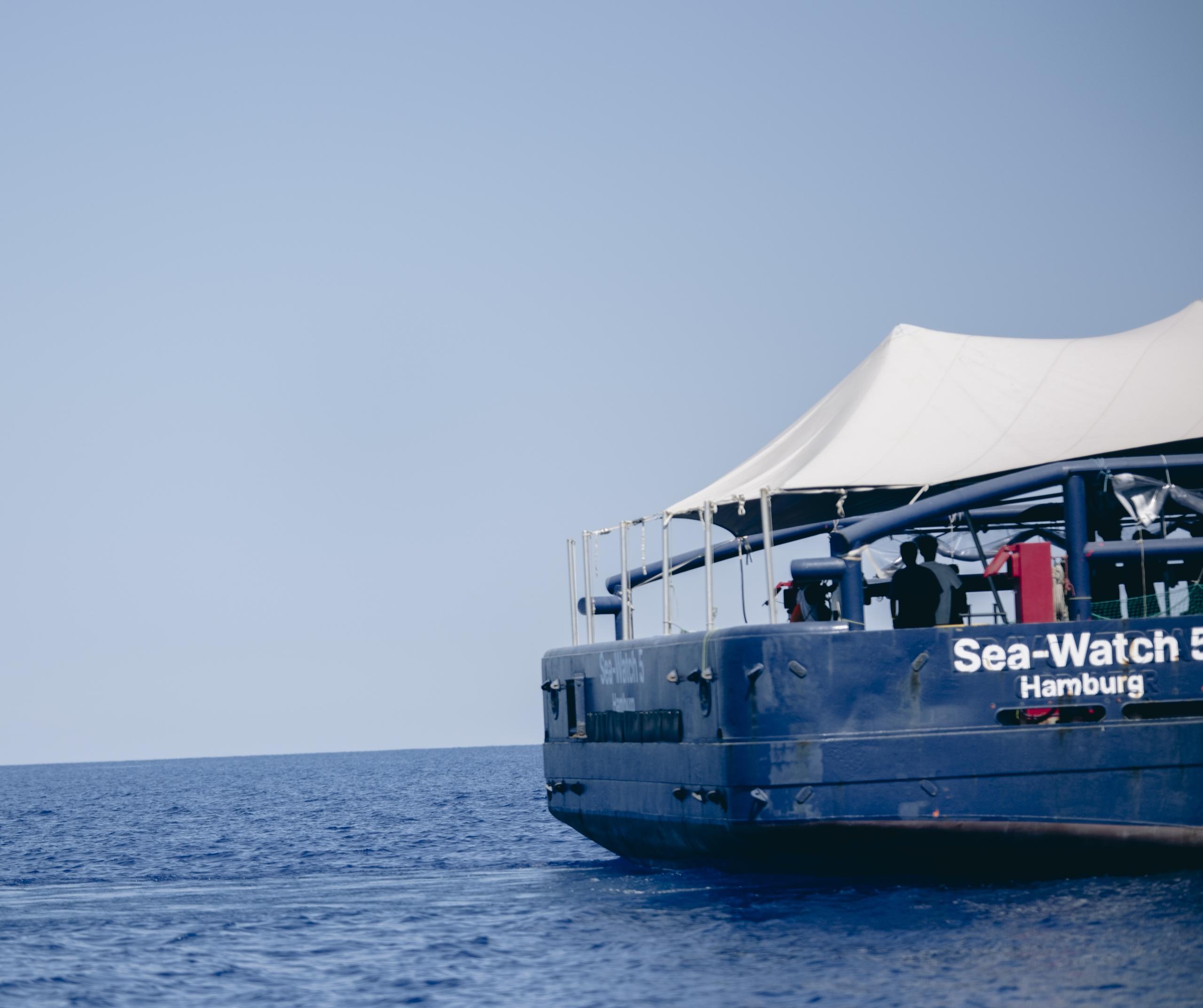
Sea-Watch International has announced that its rescue vessel, Sea-Watch 5, has returned to operations in the central Mediterranean after what it described as an attack by Libyan militias in May, saying it has already rescued 52 people in two separate operations.
In a post published on its verified X account, @seawatch_intl, the humanitarian organisation said 40 people were rescued on the first day of operations, followed by another 12 the next day. It added that one of the survivors, a pregnant woman, requires urgent medical care.
Sea-Watch also claimed that an average of eight people die every day while attempting to cross the Mediterranean Sea, renewing its criticism of European migration policies and rescue coordination.
The organisation accused the Italian government of assigning its rescue vessel to the northern port of Marina di Carrara, which it said is more than four days away from the rescue zone. According to Sea-Watch, the practice keeps humanitarian rescue ships away from areas where migrants are most at risk.
“To ensure that as few rescue ships as possible are in the rescue area, Italy sends us to the northern port Marina di Carrara, 4+ days away,” the group wrote, describing the decision as “cruel and irresponsible.”
Sea-Watch argued that the lengthy journey delays the disembarkation of rescued migrants and reduces the number of rescue vessels available to respond to emergencies at sea.
The organisation also directly criticised Italian Prime Minister Giorgia Meloni over the country’s migration policies, questioning the government’s approach to search-and-rescue operations in the Mediterranean.
Italian authorities have previously defended the assignment of distant ports to humanitarian vessels, saying the measure is part of efforts to manage migrant arrivals and coordinate disembarkation procedures.

ICC confirmation of 17 charges against El-Hishri draws praise from rights groups

Expert raises questions over UNHCR’s strategic direction after new leadership appointments

UN appoints new senior leadership for UNHCR

Migrant advocate laments death of asylum seeker, condemns Libya abuses

50 die as boat carrying about 60 people capsizes
-

 News2 weeks ago
Favour Henshaw appointed administrator of Platform for Cooperation on Mixed Migration
-
 News2 weeks ago
Lampedusa: built to accommodate 400 people, now holds thousands of migrants
-

 News Extra2 weeks ago
Pope urges European leaders to make greater investment in developing migrants’ countries of origin
-

 News1 week ago
IYAMIDR commends Okpebholo for ₦1m support to South Africa returnees
-
 News2 weeks ago
World silent as drone strikes, extreme hunger ravage El Obeid families
-
Features2 weeks ago
Lampedusa: Pope’s visit powerful reaffirmation migrants, refugees must remain at centre of global efforts
-
 Features2 weeks ago
IOM, UNDP, UNHCR, welcome growing investment in long-term solutions to internal displacement
-
 News Extra2 weeks ago
June 2025-26: Arrivals in Italy by sea decreases by 30 percent