
Features
2,310 Nigerians removed from US in 10 years

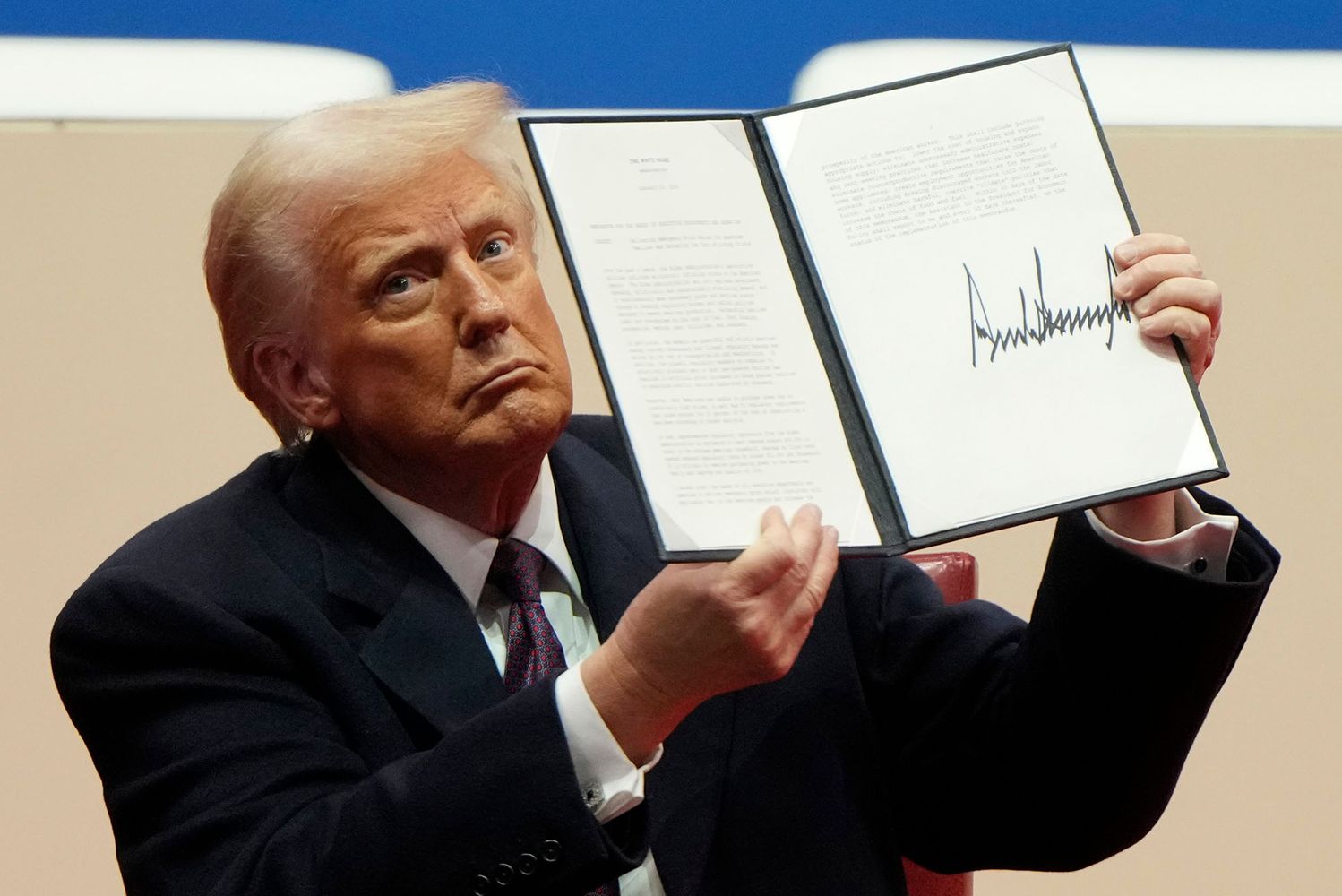
2,310 Nigerians have been removed from USA by the United States Immigration and Customs Enforcement between 2014 and 2024.
A review of the agency’s annual reports and appendices, according a report by The Punch also revealed that 20 removals have been recorded so far in 2025, bringing the total since 2014 to 2,330, with 3,690 more remaining under watch.
The year-by-year figures are drawn from ICE’s 2014, 2015 and 2016 statistical reports, the 2018 Enforcement and Removal Operations report, and the 2024 Annual Report’s country-by-country appendix, which captures figures from 2019.
Across the 11 years, Sunday PUNCH notes that Nigerian removals fell by roughly 47.1%, from 261 in 2014 to 138 in 2024.
The trend has dwindled over the years, as ICE removed 261 Nigerians in 2014, 224 in 2015 and 242 in 2016.
The number rose in 2017 (312) and 2018 (369) before easing in 2019 (286) and 2020 (199).
Post-COVID constraints led to a significant decline in removals, with numbers plummeting to 78 in 2021 and 49 in 2022.
However, it rebounded in 2023 (152) and plateaued at 138 in 2024. This resulted in the removal of 2,310 Nigerians between 2014 and 2024.
Although removals fell from 286 Nigerians in 2019 to 138 in 2024—a 51.7 per cent decline over the six years—ICE’s country-by-country deportation ledger showed that Nigerian removals spiked during Donald Trump’s first two full years in office, 2018 and 2019, and are expected to rise under a renewed crackdown.
Across Africa, ICE data show Nigeria with the largest total removals over the period, followed by Somalia (1,539), Ghana (1,380), Senegal (1,122), Kenya (858), Egypt (771), Liberia (632), Guinea (626), Mauritania (611), Democratic Republic of the Congo (508), Cameroon (475), Gambia (399), Morocco (376), Angola (348), Ethiopia (328), Sierra Leone (309), and South Africa (288).
Eritrea also follows with 285, Ivory Coast/Côte d’Ivoire (243), Cape Verde (234), Mali (219), South Sudan (199), Burkina Faso (163), Tanzania (137), Sudan (131), Algeria (120), Uganda (118), Guinea-Bissau (107), Benin (93), Zimbabwe (91), Niger (85), Djibouti (67), Tunisia (66), Rwanda (65), Seychelles (63), Equatorial Guinea (61), Gabon (60), Mozambique (55), Zambia (53), Lesotho (47), Namibia (42), Burundi (41), Botswana (39), Eswatini/Swaziland (37), Chad (36), The Comoros (28).
Meanwhile, several others, including Madagascar (3), São Tomé and Príncipe (1), Somaliland and Eritrea saw single- or low-single-digit removals.
Globally, Mexico accounted for the single largest volume of removals, with approximately 907,748 removals over the 11 years, followed by Guatemala (307,325), Honduras (225,347), and El Salvador (134,906). Colombia followed with 34,215 removals, Ecuador (30,816), Dominican Republic (19,961), Nicaragua (17,989), Peru (14,159) and Brazil (13,529).
The report attributed the spike to the Electronic Nationality Verification expansion programme, which shortened the paperwork cycle by allowing consular officers to clear identity checks electronically rather than in person.
Officials say the ENV cut manifest approval times from weeks to days and allowed weekend-chartered flights to countries such as Mauritania, Senegal, and Ghana.
Since the first tenure of Trump, the ICE reports show at least 1,166 Nigerians removed in 2017–2020 (312 in 2017, 369 in 2018, 286 in 2019 and 199 in 2020).
From 2024 to date, the count stands at about 158.
According to ICE’s current count, about 20 Nigerian removals have been recorded as of January 2025.
The agency says the figures remain preliminary and will be updated periodically as case outcomes are confirmed.
In January 2017, Trump signed Executive Order 13768, which broadened ICE’s enforcement to include anyone without lawful status.
ICE arrest numbers jumped 30 per cent that year as Nigerian removals rose accordingly.
In 2019, ICE carried out 267,258 removals, the highest yearly total in nearly a decade. That year, the number of Nigerian removals rose to 286.
This was part of a long list of 3,690 Nigerians whom ICE had identified and placed on its non-detained docket by late 2020, as revealed in January 2025.
Nigeria had the second-highest number of nationals facing deportation in Africa at the time, after Somalia’s 4,090 cases.
In 2021, President Joe Biden directed ICE to prioritise the most serious criminals and recent entrants for removal, leading to a sharp drop in deportation numbers.
ICE removals fell to about 59,000 in 2021, the lowest in decades, and Nigerian removals dropped to 78 that year.
The following year, even fewer Nigerians (49) were sent home amid pandemic-related travel restrictions and continued cautious enforcement.
But a Supreme Court ruling in July 2024 allowed the Department of Homeland Security to fully reinstate those guidelines, prioritising public safety and national security cases.
ICE defines “removal” as the confirmed compulsory movement of a non-citizen out of the United States following an order of removal.
Under U.S. law, deportation or “removal” can be carried out only after confirmation that a non-citizen is inadmissible or deportable. Grounds for deportation include certain criminal convictions, fraud and misrepresentation; security and terrorism concerns; immigration violations such as unlawful presence and illegal entry; and specific conduct like marriage fraud or false claims to citizenship.
This often follows a final removal order issued by an immigration judge or administratively, via mechanisms such as expedited removal at the border.
Once an order of removal is final, ICE’s Enforcement and Removal Operations division must secure travel documents, field medical clearances and book a commercial seat or, more commonly for West-African returns, a dedicated charter flight.
The agency says electronic verification has shaved days off that timeline, which explains the surge in removals in 2024.
In carrying out Trump’s recent deportation order, Immigration and Customs Enforcement agents have raided several establishments suspected of harbouring illegal immigrants and made arrests.
At a meeting with US Ambassador to Nigeria, Richard Mills Jr., in February 2025, Nigeria’s Minister of State for Foreign Affairs, Ambassador Bianca Odumegwu-Ojukwu, called on the United States to ensure a humane deportation process for Nigerians.
“We are asking as a country whether they will be given ample time to handle their assets or will they just be bundled into planes and repatriated?” she queried, highlighting concerns over the emotional and financial impact on deportees and their families.
She argued that deportations, particularly for persons with no history of violent crime, should not be traumatic or abrupt.
The Nigerians in Diaspora Commission has earlier said it is ready to welcome Nigerians deported from the US.
“The Federal Government has set up an inter-agency committee, comprising the Ministry of Foreign Affairs, NiDCOM, Ministry of Humanitarian Affairs and Office of the National Security Adviser, should there be mass deportation of Nigerians from the US,” NiDCOM’s Director of Media and Corporate Affairs, Abdur-Rahman Balogun, said in an interview.









Features
Un militant des droits humains tire à nouveau la sonnette d’alarme face à la prolongation de la protestation et aux préoccupations relatives aux droits à Agadez
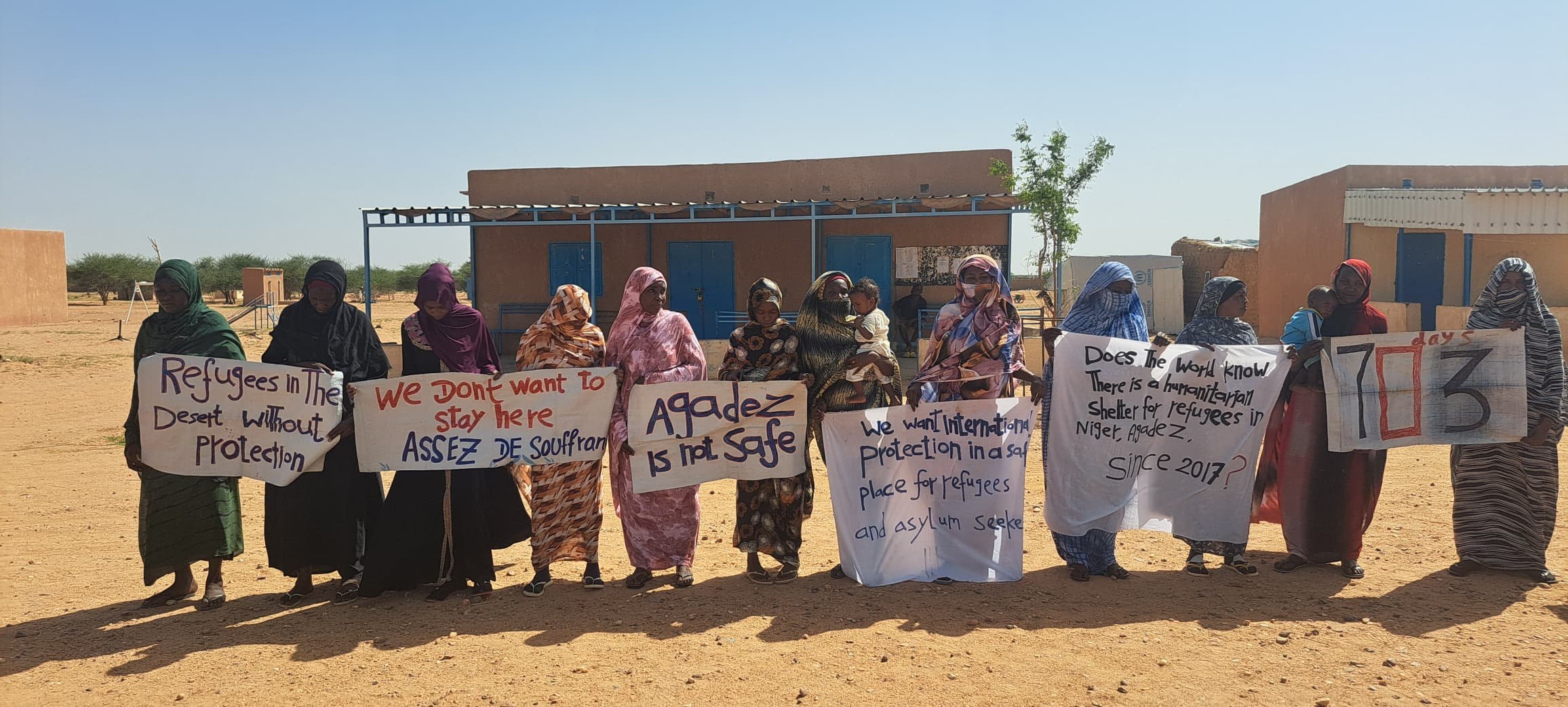
Yousef Ismail, membre de Refugees in Niger, a de nouveau alerté sur la situation humanitaire prolongée des réfugiés du camp humanitaire d’Agadez, au Niger, affirmant que leur manifestation pacifique se poursuit depuis plus d’un an et demeure sans solution.
Dans une série de publications, Ismail a indiqué que les réfugiés du camp manifestaient pacifiquement depuis 703 jours, réclamant une meilleure protection, la reconnaissance de leurs droits et l’accès à la protection internationale.
« La protection internationale est notre priorité », a déclaré Ismail, appelant la communauté internationale et les organisations de défense des droits humains à intervenir.
Il a décrit la situation dans le camp d’Agadez comme étant de plus en plus préoccupante et a accusé les organisations humanitaires ainsi que la communauté internationale de ne pas répondre suffisamment aux besoins des réfugiés qui, selon lui, ont fui leurs foyers à la recherche de sécurité et d’une nouvelle vie.
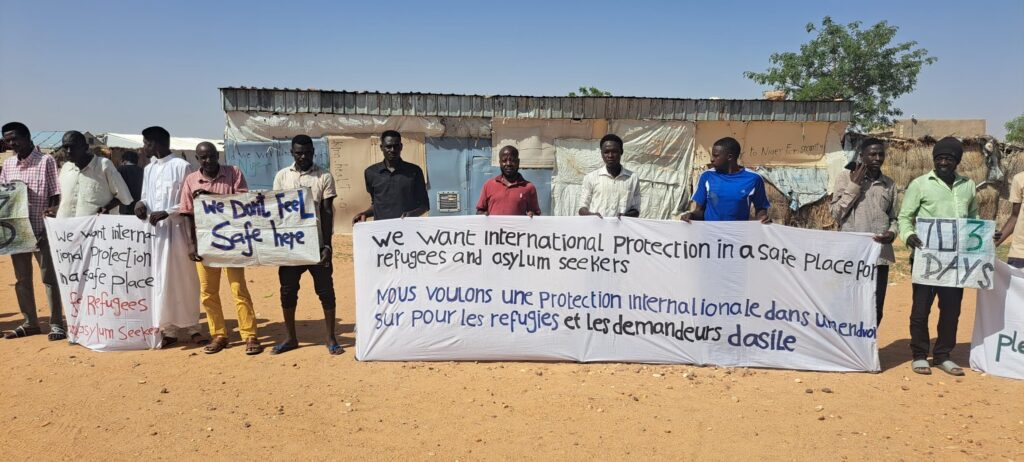
Ismail a exhorté les organisations internationales et de défense des droits humains à se rendre dans le camp afin d’évaluer directement la situation.
« La communauté internationale et les organisations de défense des droits humains doivent se rendre au centre humanitaire d’Agadez, où les réfugiés protestent depuis plus d’un an », a-t-il déclaré, avertissant que les réfugiés ont besoin d’une intervention urgente.
Il a également remis en question l’exactitude des déclarations faites par certaines organisations humanitaires concernant leur prise en charge des réfugiés vulnérables, affirmant que ceux bloqués à Agadez avaient, dans les faits, été abandonnés.
« N’abandonnez pas des personnes innocentes », a-t-il déclaré, soulignant que les réfugiés qui fuient des situations dangereuses devraient bénéficier d’une protection plutôt que d’être laissés dans une incertitude prolongée.
Six réfugiés auraient été expulsés vers la frontière tchadienne
Dans une autre publication, Ismail a commémoré ce qu’il a décrit comme une violation des droits humains survenue le 21 août 2025 au camp humanitaire d’Agadez.
Selon son récit, six réfugiés auraient été arrêtés puis expulsés vers la frontière avec le Tchad après avoir, selon les allégations, été déchus de leur statut de réfugié.
Il a présenté cet incident comme faisant partie de préoccupations plus larges concernant le traitement et la protection des réfugiés dans le camp.
Ismail a également attiré l’attention sur ce qu’il décrit comme la dégradation des conditions humanitaires à Agadez, réitérant son appel en faveur d’une protection et d’une intervention internationales.
Les publications ne fournissent pas de documents indépendants ni de réactions officielles des autorités nigériennes ou des organisations mises en cause par Ismail. Les allégations n’ont donc pas pu être vérifiées de manière indépendante sur la base des informations disponibles.
La prolongation de la protestation met en lumière des préoccupations plus larges concernant la protection des réfugiés et des migrants bloqués au Niger, notamment ceux qui recherchent une réinstallation, l’asile ou d’autres formes de protection internationale.
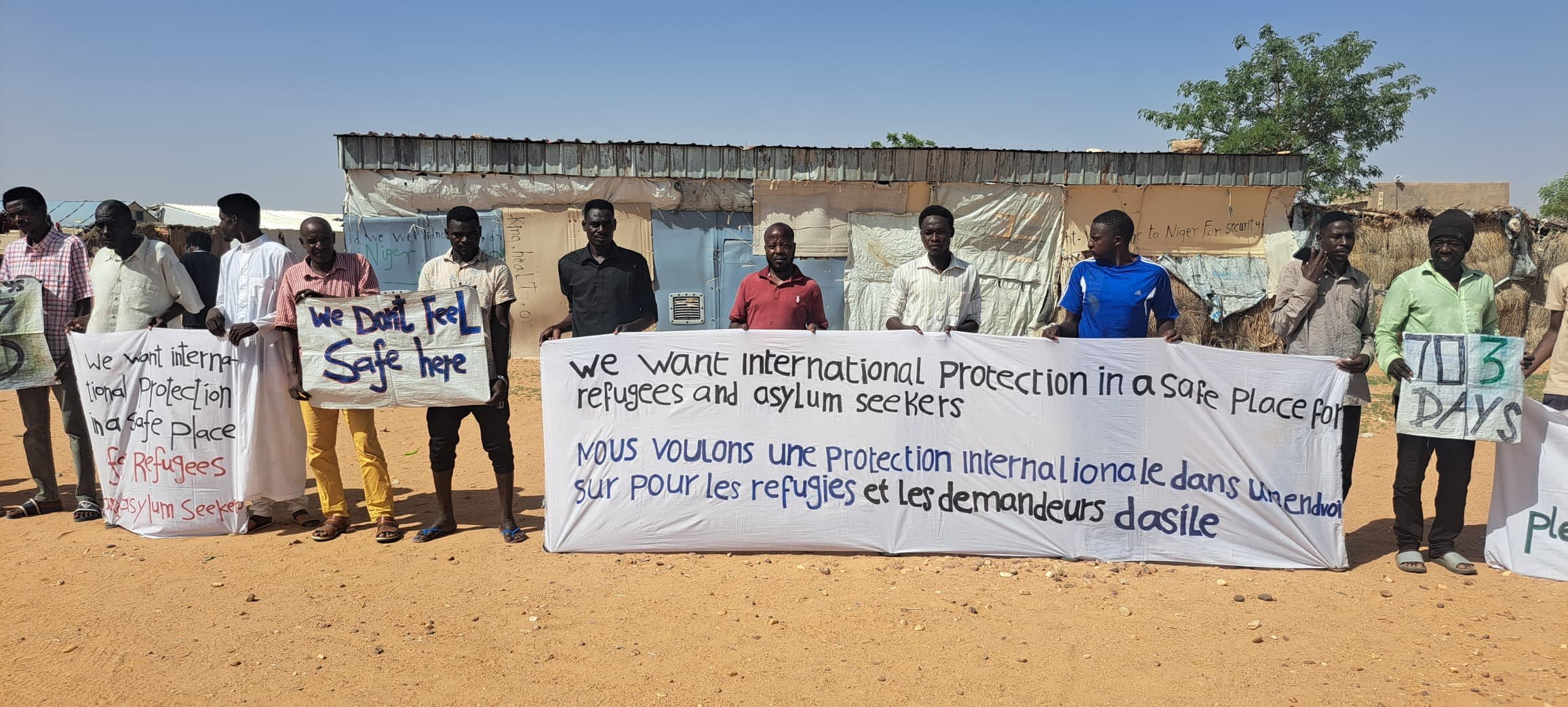
A member of Refugees in Niger, Yousef Ismail, has raised fresh concerns over the prolonged humanitarian situation facing refugees at the Agadez humanitarian camp in Niger, saying their peaceful protest has continued for more than a year and remains unresolved.
In a series of posts, Ismail said refugees at the camp had been demonstrating peacefully for 703 days, demanding greater protection, recognition of their rights and access to international protection.
“International protection is our priority,” Ismail said, while calling on the international community and human rights organisations to intervene.
He described the situation at the Agadez camp as increasingly dire and accused humanitarian organisations and the international community of failing to adequately respond to the needs of refugees who, according to him, fled their homes in search of safety and a new life.
Ismail urged international and human rights organisations to visit the camp and assess the situation directly.
“The international community and human rights organizations must go to the Agadez humanitarian center, where refugees have been protesting for over a year,” he said, warning that the refugees urgently need intervention.
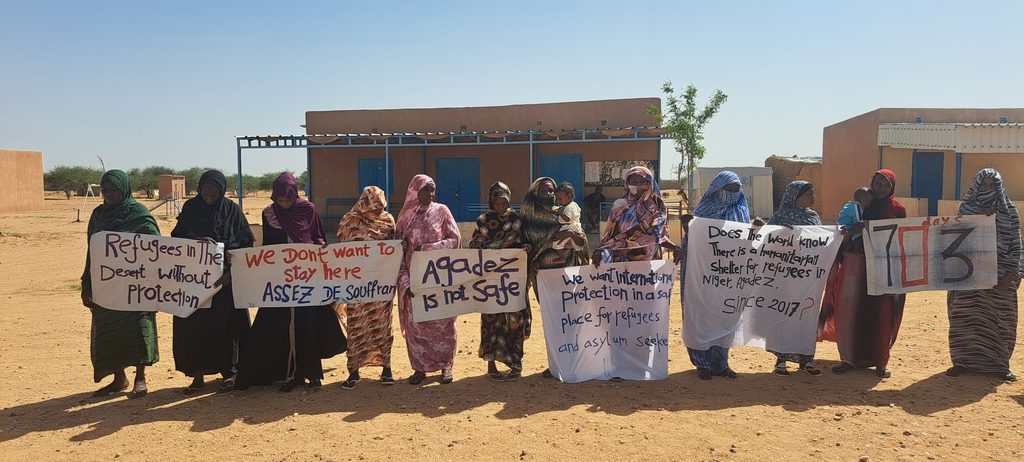
He also questioned the accuracy of statements made by humanitarian organisations about their treatment of vulnerable refugees, alleging that those stranded in Agadez had effectively been abandoned.
“Do not abandon innocent people,” he said, stressing that refugees fleeing danger should receive protection rather than being left in prolonged uncertainty.
Six refugees allegedly expelled to Chad border
In another post, Ismail commemorated what he described as a human rights violation that occurred on August 21, 2025, at the Agadez Humanitarian Camp.
According to his account, six refugees were arrested and subsequently expelled to the border with Chad after allegedly being stripped of their refugee status.
He presented the incident as part of broader concerns over the treatment and protection of refugees in the camp.
Ismail also called attention to what he described as the deteriorating humanitarian conditions in Agadez, reiterating his demand for international protection and intervention.
The posts did not provide independent documentation or official responses from Nigerien authorities or the organisations criticised by Ismail. The allegations therefore could not be independently verified from the information provided.
The prolonged protest highlights wider concerns surrounding the protection of refugees and migrants stranded in Niger, particularly those seeking resettlement, asylum or other forms of international protection.
Features
Externalisation des frontières : l’activiste latino-américain Paulo Illes appelle à une alliance mondiale pour défendre les migrants

Le président du No Borders Network, Paulo Illes, a appelé à la création d’une alliance internationale contre l’externalisation des frontières, avertissant que les gouvernements du monde entier transfèrent de plus en plus les responsabilités liées au contrôle des migrations au-delà de leurs propres territoires.
Illes a lancé cet appel lors du Forum social mondial qui vient de s’achever en République du Bénin.
Il a participé à une table ronde consacrée à l’externalisation des frontières.
Illes y a présenté la perspective latino-américaine sur la gouvernance des migrations et ses implications pour l’Afrique, l’Amérique latine et l’Europe.
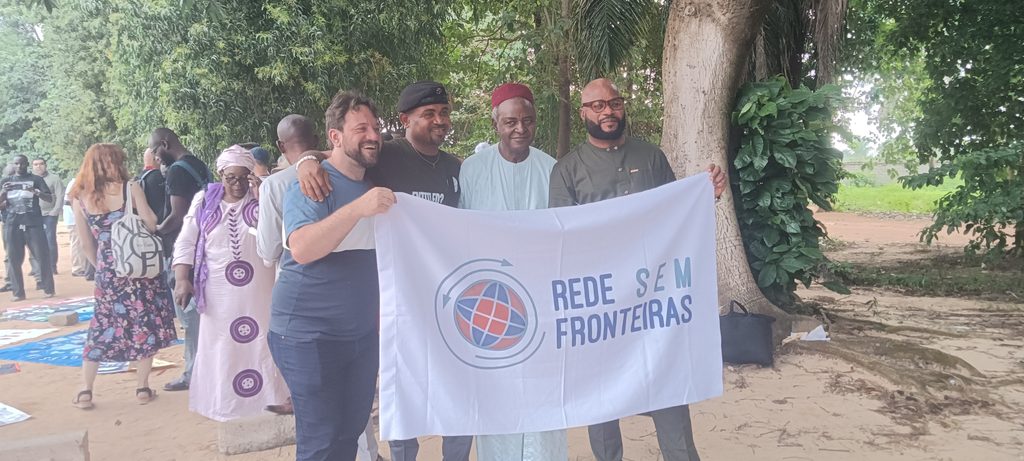
Il a expliqué que, bien que les routes migratoires diffèrent selon les régions, les pays sont confrontés à une tendance politique similaire, caractérisée par l’expansion de politiques visant à empêcher les migrants d’atteindre leurs destinations finales.
Selon lui, la mondialisation croissante de l’externalisation des frontières exige une réponse tout aussi coordonnée de la part des organisations de la société civile, des communautés de migrants et des défenseurs des droits humains.
Illes a présenté le No Borders Network comme un réseau international de la société civile qui relie des organisations d’Amérique latine et de la péninsule Ibérique pour défendre les droits des migrants et des réfugiés.
Il a expliqué que l’externalisation des frontières en Amérique latine avait dépassé le cadre des contrôles frontaliers traditionnels pour devenir un système plus large de gestion de la mobilité humaine.
« En Amérique latine, l’externalisation des frontières revêt des caractéristiques particulières. Plus qu’une simple politique migratoire, elle représente un changement dans la manière dont les États gouvernent la mobilité humaine », a-t-il déclaré.
Illes a expliqué que les frontières devenaient de plus en plus des réseaux de mécanismes de contrôle répartis entre plusieurs pays, plutôt que de simples limites géographiques.
Il a identifié deux grandes dimensions de cette politique en Amérique latine : les efforts visant à contrôler les flux migratoires vers les États-Unis et les mesures destinées à anticiper les politiques européennes de contrôle des migrations.
Selon lui, plusieurs pays situés le long des routes migratoires ont assumé des responsabilités de confinement, rendant de plus en plus difficile pour les migrants d’atteindre leurs pays de destination.
Il a ajouté que l’externalisation s’opérait également par l’intermédiaire des aéroports internationaux, des régimes de visas, des procédures consulaires, du partage d’informations sur les migrations et de mesures administratives susceptibles de limiter l’accès à l’asile et à la protection internationale.
Illes a soutenu que ce qui était externalisé n’était pas seulement le contrôle des frontières, mais également la responsabilité de la protection internationale.
Il a déclaré que les pays de destination transféraient de plus en plus à d’autres États la responsabilité d’empêcher les migrants de poursuivre leur parcours et, dans certains cas, d’accueillir des personnes qui chercheraient autrement à bénéficier des systèmes internationaux d’asile.
Il a cité le Brésil comme exemple des contradictions entourant la gouvernance des migrations, soulignant que le pays disposait d’une législation migratoire axée sur les droits humains, de programmes de visas humanitaires et d’initiatives de parrainage communautaire, tout en subissant parallèlement la pression de la tendance internationale à contenir les migrations.
« L’externalisation prend différentes formes selon les régions du monde, mais ses objectifs restent les mêmes : repousser les frontières plus loin, rendre l’accès à la protection plus difficile et transférer les responsabilités internationales », a-t-il déclaré.
Résistance de la société civile
Illes a déclaré que la société civile organisée demeurait une source majeure de résistance à l’expansion des politiques d’externalisation.
Il a cité les mouvements sociaux, les universités, les Églises, les syndicats, les organisations de migrants et les groupes de la société civile parmi les acteurs qui développent des réponses alternatives aux politiques migratoires restrictives.
Il a indiqué que le No Borders Network travaillait à mettre en relation des organisations de différents pays, à partager des informations, à élaborer des positions communes, à mener des actions de plaidoyer politique et à renforcer les alternatives concrètes en matière d’accueil et d’intégration des migrants.
Selon lui, la résistance ne devrait pas se limiter à dénoncer les violations des droits humains, mais devrait également inclure l’élaboration d’alternatives viables.
« Notre stratégie n’est pas simplement de résister. Il s’agit de construire un autre modèle de gouvernance des migrations, fondé sur les droits humains, la solidarité et une responsabilité internationale partagée », a-t-il déclaré.
Il a appelé au renforcement des réseaux internationaux de la société civile, à la mise en place d’informations fiables sur les nouvelles formes d’externalisation des frontières, à un suivi permanent des violations des droits humains et à une action conjointe auprès des gouvernements et des organisations internationales.
Il a également plaidé en faveur de politiques d’accueil et d’intégration plus solides ainsi que d’une plus grande participation des migrants aux décisions qui affectent leur vie.
Appel à une alliance internationale
Illes a proposé que le Forum social mondial laisse un héritage concret en renforçant une Alliance internationale contre l’externalisation des frontières.
Selon lui, une telle alliance pourrait mettre en relation les organisations de la société civile, coordonner le plaidoyer politique, partager des informations, réagir rapidement aux violations des droits humains et élaborer des alternatives aux politiques de confinement des migrations.
« Les gouvernements ont déjà construit une architecture internationale pour contrôler la mobilité humaine. C’est maintenant à notre tour de construire une architecture internationale fondée sur la solidarité, la coopération et la défense des droits humains », a-t-il déclaré.
Il a également invité les participants à une conférence internationale prévue les 26 et 27 novembre à São Paulo, au Brésil, à l’occasion du 10e anniversaire du Forum social mondial sur les migrations.
Illes a indiqué que cette conférence chercherait à renforcer la coopération entre les organisations de la société civile, les mouvements sociaux, les chercheurs et les dirigeants de communautés de migrants engagés en faveur de politiques migratoires fondées sur les droits humains et la solidarité.
Il a averti que la criminalisation de la mobilité humaine se propageait dans différentes régions du monde, les migrants étant de plus en plus présentés comme des menaces, tandis que le confinement se substitue à la solidarité.
Selon lui, le débat devrait finalement dépasser la seule question des politiques migratoires pour aborder la question fondamentale de la mobilité humaine et de la protection de la dignité humaine.
« Si nous acceptons que la migration constitue une menace, l’externalisation apparaîtra toujours comme légitime », a-t-il déclaré.
« Mais si nous réaffirmons que la migration est un droit humain et que la protection des vies constitue une obligation internationale partagée, alors une autre forme de gouvernance des migrations n’est pas seulement possible : elle est nécessaire. »

Défendre les plus vulnérables :

Fighting for the vulnerable: How Udekwe Kennedy Obinna Is giving migrants a voice and a chance at safer futures

Une militante sénégalaise transforme la mort de son frère sur la route migratoire de l’Atlantique en combat pour le changement
Senegalese activist turns brother’s death on Atlantic migration route into campaign for change

La déportation traumatisante d’Abdulai Daramy soulève des inquiétudes concernant l’accord avec les États-Unis
-
 Features3 weeks ago
Sea-Watch 5 découvre huit corps dans un état avancé de décomposition
-

 News3 weeks ago
Trois autres corps sans vie retrouvés après les 11 découverts par SOS Méditerranée
-

 News Extra3 weeks ago
Colombia: Conflict-affected families lose everything again after deadly earthquake
-
News3 weeks ago
Three more bodies found in Mediterranean after 11 discovered by SOS Méditerranée
-
 Features3 weeks ago
Un séisme meurtrier aggrave la grave crise humanitaire en Colombie
-
News Extra3 weeks ago
Colombie : les familles touchées par le conflit perdent une nouvelle fois tout après le séisme meurtrier
-
 News Extra2 weeks ago
Des manifestations éclatent après la mort de migrants dans le naufrage d’un bateau
-
Features3 weeks ago
Deadly earthquake compounds Colombia’s severe humanitarian crisis