
News Extra
One in 30 persons are migrants-IOM

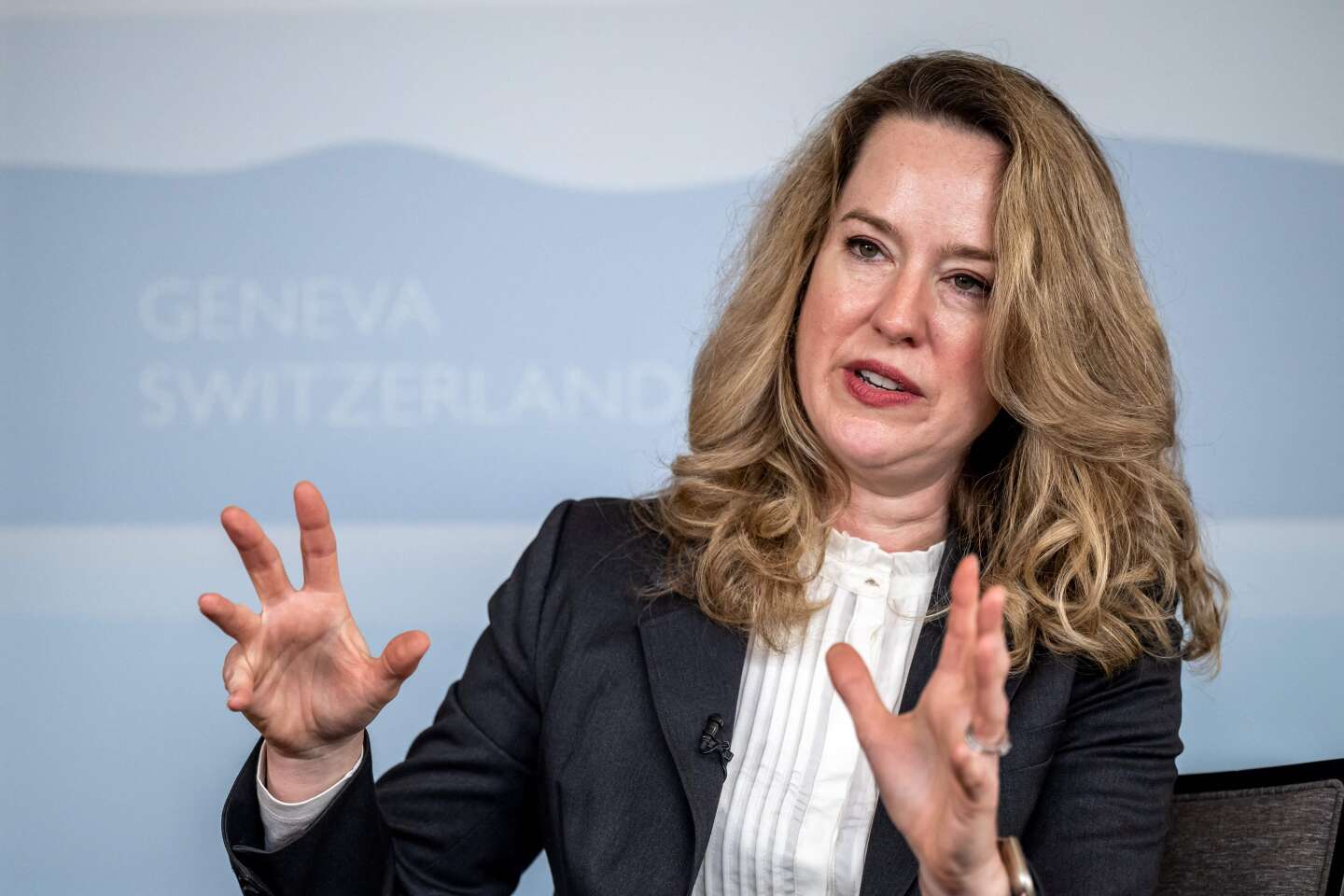
One in 30 persons are migrants, a post on the website (https://www.iom.int/about-migration) of the International Organization for Migration (IOM) reveals.
The post said: “In most discussions on migration, the starting point is usually numbers. Understanding changes in scale, emerging trends and shifting demographics related to global social and economic transformations, such as migration, help us make sense of the changing world we live in and plan for the future. The current global estimate is that there were around 281 million international migrants in the world in 2020, which equates to 3.6 per cent of the global population.”
Overall, it said “the estimated number of international migrants has increased over the past five decades. The total estimated 281 million people living in a country other than their countries of birth in 2020 was 128 million more than in 1990, and over three times the estimated number in 1970.”
IOM in the post defined the word migrant as: “An umbrella term, not defined under international law, reflecting the common lay understanding of a person who moves away from his or her place of usual residence, whether within a country or across an international border, temporarily or permanently, and for a variety of reasons. The term includes a number of well-defined legal categories of people, such as migrant workers; persons whose particular types of movements are legally-defined, such as smuggled migrants; as well as those whose status or means of movement are not specifically defined under international law, such as international students.”
At the international level, it said “no universally accepted definition for “migrant” exists. The present definition was developed by IOM for its own purposes and it is not meant to imply or create any new legal category.”
On internal displacement, it said “more than 59 million people are currently displaced within their own countries – uprooted by conflict, violence and disasters. Internally displaced persons (IDPs) often live in overcrowded, unsanitary locations where jobs and services are few. These dire circumstances have now worsened due to the health risks and socio-economic impacts of the pandemic.”
The post noted that the IOM is present before, during and after crises – working alongside national and local authorities and other international organizations. The Organization provided protection and assistance to more than 21 million IDPs and six million people in affected host communities in 2019.
“IOM also plays an active role in global initiatives that seek to resolve internal displacement – including the UN High-Level Panel on Internal Displacement, an initiative launched by the Secretary-General in February 2020 to drive bold solutions to this global crisis and the GP20 Platform, which promotes the Guiding Principles on Internal Displacement.”

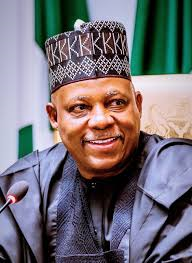
Vice President Kashim Shettima has made a strong case for global migration, saying nations and cities around the world have historically been shaped not only by indigenous populations but also by immigrants.
Shettima argued that migration remained a major driver of development, innovation and economic growth, stressing that countries could benefit significantly from the skills, businesses, knowledge and ideas migrants bring to their host societies.
The Vice President spoke on Saturday during a meeting with the Director-General of the World Trade Organisation (WTO), Dr Ngozi Okonjo-Iweala, on the sidelines of the ongoing BRICS Leaders’ Summit in New Delhi, India.
According to a statement by his Senior Special Assistant on Media and Communications, Stanley Nkwocha, Shettima cited the achievements of Nigerians in the diaspora as evidence of the positive contributions migrants make to countries of destination.
“Nations are built by immigrants. Even cities are built by people who came from outside, not just by the locals. That goes to show that we have so much to gain from global migration,” he said.
Shettima highlighted the educational and professional accomplishments of Nigerians living abroad, particularly in the United States.
He cited a recent Pew Research Center analysis of 2024 US Census Bureau data, which found that 67 per cent of Nigerian-born Black immigrants aged 25 and above in the United States held at least a bachelor’s degree—the highest proportion among the major Black immigrant groups examined.
The Vice President also reaffirmed Nigeria’s commitment to the WTO and the multilateral trading system, insisting that no country could afford to isolate itself from the global community.
He pledged Nigeria’s continued support for the WTO’s efforts to strengthen multilateralism and promote an international system based on cooperation rather than isolation.
“I believe the world is greater than one nation. We will continue to support the WTO in championing the cause of multilateralism. We are essentially one human family and interconnected. You cannot divorce yourself from the global community,” Shettima said.
He also commended Okonjo-Iweala for her leadership of the WTO, urging her to continue deploying her experience and expertise to advance global development.
“You are doing a very wonderful job at the WTO, but you still have a lot to contribute to humanity,” he told the WTO chief.
News Extra
Osemene promet un leadership inclusif et une action renforcée contre la traite en tant que président élu de NACTAL

Le président élu du Network Against Child Trafficking, Abuse and Labour (NACTAL) Nigeria, le camarade Osita Osemene, s’est engagé à unir les membres et à renforcer les capacités de l’organisation pour lutter contre la traite des êtres humains, les abus et le travail des enfants au Nigeria et dans la région de l’Afrique de l’Ouest.
Osemene a pris cet engagement dans son discours d’acceptation après avoir été élu président de la NACTAL. Il a exprimé sa gratitude aux délégués pour la confiance qu’ils lui ont accordée et félicité la direction de l’organisation pour avoir créé un environnement favorable à la tenue d’une élection crédible et transparente.
Il a également salué les contributions du président sortant, estimant que le leadership et le travail de l’ancienne administration avaient contribué de manière importante au développement continu du réseau.
S’adressant aux membres, Osemene a déclaré que l’élection était désormais terminée et les a exhortés à laisser derrière eux les divisions.
« Il n’y a ni camps ni divisions. Il n’y a qu’une seule NACTAL Nigeria, et je suis le président de tous », a-t-il déclaré.
Le président élu a également remercié les ministères, départements et agences gouvernementales, les réseaux de la société civile, les organisations de développement et les partenaires internationaux pour leur soutien et leur collaboration avec la NACTAL.
Parmi les institutions et organisations citées figuraient la National Commission for Refugees, Migrants and Internally Displaced Persons (NCFRMI), la National Agency for the Prohibition of Trafficking in Persons (NAPTIP), l’Organisation internationale pour les migrations (OIM), le Centre international pour le développement des politiques migratoires (ICMPD), l’Organisation internationale du Travail (OIT), l’Union européenne, la GIZ, ActionAid, la Small and Medium Enterprises Development Agency of Nigeria (SMEDAN), la National Directorate of Employment (NDE), la National Senior Citizens Centre (NSCC), le Nigeria Immigration Service (NIS), la Nigerians in Diaspora Commission (NiDCOM), la National Human Rights Commission (NHRC), le ministère fédéral du Travail et de l’Emploi, la Commission de la CEDEAO et la Nigeria Police Force.
Osemene a déclaré que son administration s’appuierait sur cinq grandes priorités visant à repositionner la NACTAL et à accroître son impact.
Selon lui, ces priorités comprennent le renforcement des capacités et l’autonomisation économique ; l’inclusion et la transparence ; la durabilité institutionnelle ; le renforcement de la lutte contre la traite et de la mise en œuvre des politiques ; ainsi que le leadership régional au sein de la CEDEAO.
Il a souligné que le mandat confié à la nouvelle administration ne resterait pas une simple victoire électorale, mais serait transformé en un plan d’action.
« Le mandat que nous avons reçu est désormais un plan d’action », a-t-il déclaré, promettant de mettre en place une administration axée sur des résultats concrets et sur le renforcement des structures institutionnelles.
Osemene a également révélé que les travaux avaient déjà commencé autour de l’une des principales priorités de son administration. Il a indiqué que l’évaluation des capacités organisationnelles des organisations dirigées par des survivants, qu’il avait entamée avant l’élection, constituerait l’un des fondements du programme de renforcement des capacités prévu par la NACTAL.
Il a appelé les membres de la NACTAL, les anciens responsables, les coordinateurs zonaux et étatiques, les jeunes professionnels ainsi que les partenaires à soutenir la nouvelle administration dans l’accomplissement de son mandat.
« L’élection est terminée. Le mandat a été confié. Le travail commence maintenant », a déclaré Osemene.
Il s’est dit convaincu que, grâce aux efforts collectifs, la NACTAL Nigeria pourrait s’appuyer sur ses réalisations actuelles pour accroître son influence à l’échelle régionale.
« Ensemble, passons d’un leadership éprouvé à un leadership ouest-africain », a-t-il déclaré.
Osemene a conclu en sollicitant le soutien continu des membres et des partenaires et en priant pour le progrès de la NACTAL Nigeria et de la République fédérale du Nigeria.
News Extra
Osemene pledges inclusive leadership, stronger anti-trafficking action as NACTAL President-Elect

Comrade Osita Osemene, President-elect of the Network Against Child Trafficking, Abuse and Labour (NACTAL) Nigeria, has pledged to unite members and strengthen the organisation’s capacity to combat human trafficking, child abuse and labour across Nigeria and the West African region.
Osemene made the commitment in his acceptance speech after emerging as president-elect of NACTAL, where he expressed gratitude to delegates for the confidence reposed in him and commended the organisation’s leadership for providing an enabling environment for a credible and transparent election.
He also acknowledged the contributions of the outgoing president, describing the leadership and work of the former administration as important to the continued development of the network.
Addressing members, Osemene declared that the election had ended and urged members to put divisions behind them.
“There are no camps or divisions. There is only one NACTAL Nigeria, and I am President for all,” he said.
The president-elect also appreciated government ministries, departments and agencies, civil society networks, development organisations and international partners for their support and collaboration with NACTAL.
Among those acknowledged were the National Commission for Refugees, Migrants and Internally Displaced Persons (NCFRMI), National Agency for the Prohibition of Trafficking in Persons (NAPTIP), International Organization for Migration (IOM), International Centre for Migration Policy Development (ICMPD), International Labour Organization (ILO), European Union, GIZ, ActionAid, Small and Medium Enterprises Development Agency of Nigeria (SMEDAN), National Directorate of Employment (NDE), National Senior Citizens Centre (NSDC), Nigeria Immigration Service (NIS), Nigerians in Diaspora Commission (NiDCOM), National Human Rights Commission (NHRC), Federal Ministry of Labour and Employment, ECOWAS Commission and the Nigeria Police Force.
Osemene said his administration would pursue five major priorities aimed at repositioning NACTAL and expanding its impact.
These, according to him, include capacity building and economic empowerment; inclusion and transparency; institutional sustainability; stronger counter-trafficking and policy implementation; and regional leadership within ECOWAS.
He stressed that the mandate given to the new administration would not remain a mere electoral victory but would be translated into an action plan.
“The mandate we have received is now an action plan,” he said, promising to build an administration focused on practical results and stronger institutional structures.
Osemene further disclosed that work had already commenced towards one of the administration’s key priorities, noting that the organisational capacity assessment of survivor-led organisations which he began before the election would form part of the foundation for NACTAL’s planned capacity-building programme.
He called on NACTAL members, veterans, zonal and state coordinators, young professionals and partners to support the incoming administration in delivering on its mandate.
“The election is over. The mandate has been given. The work begins now,” Osemene declared.
He expressed confidence that through collective effort, NACTAL Nigeria could progress from its existing achievements to greater regional influence.
“Together, let us move from proven leadership to West African leadership,” he said.
Osemene concluded by seeking the continued support of members and partners and prayed for the progress of NACTAL Nigeria and the Federal Republic of Nigeria.

Le Jamboree et le Fonds du réexode : une promesse échouée de réintégration des migrants de retour

The Jamboree and Re-Exodus Fund: A Failed Reintegration Promise for Returnee Migrants

Nigeria makes case for global migration

Osemene promet un leadership inclusif et une action renforcée contre la traite en tant que président élu de NACTAL

Osemene pledges inclusive leadership, stronger anti-trafficking action as NACTAL President-Elect
-

 News2 weeks ago
Senegalese activist turns brother’s death on Atlantic migration route into campaign for change
-
 Features1 week ago
How WSF changed ways participants see migration
-
 Features1 week ago
Reintegration or a facade? Nigerian returnees challenge promise of starting again
-
 Features3 weeks ago
Un militant des droits humains tire à nouveau la sonnette d’alarme face à la prolongation de la protestation et aux préoccupations relatives aux droits à Agadez
-
 Features7 days ago
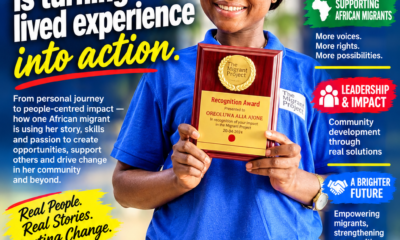
Giving migrants a voice: How Alia is turning lived experience into action
-
Features7 days ago
Donner une voix aux migrants : comment Alia transforme l’expérience vécue en action
-

 Interviews3 weeks ago
Abdulai Daramy’s traumatic deportation raises concerns over US deal
-
News3 weeks ago
NEAS strengthens migration advocacy at 17th World Social Forum