
News Extra
Seebrücke International remembers victims of Hoyerswerda pogrom

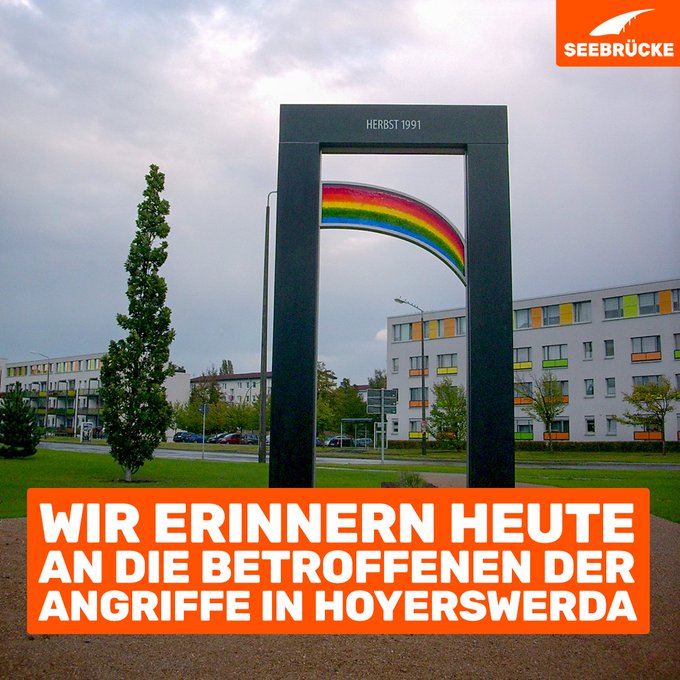
Seebrücke International has remembered victims of Hoyerswerda pogrom noting that it did not forget the role of German politics, the media and the “so-called bourgeois centre in the attacks.”
Sharing information about the incident, Seebrücke an international movement that wants safe passages and an end of the criminalisation of civil sea rescue, said: “33 years ago, between 17 and 23 September 1991, a pogrom took place in Hoyerswerda (Saxony) that lasted for days. Contract workers and refugees were attacked by a racist mob and their accommodation was attacked with Molotov cocktails.
“The police and politicians reacted by deporting many contract workers to Mozambique. The refugees were taken away to the applause of up to 1,000 Germans and distributed to other places.
Some organised themselves and fled together to West Berlin for fear of further attacks – with the support of autonomous refugee groups from Berlin.
“Although there had already been right-wing extremist attacks and murders of refugees and migrants before 1991, the pogrom in Hoyerswerda is often seen as the beginning of a whole series of pogroms, including Rostock-Lichtenhagen and Mölln.”
Two years after Hoyerswerda, Seebrücke International said “the so-called asylum compromise was passed, which largely removed the right to asylum from the German constitution. Now, 33 years later, politicians are discussing removing the right to asylum from the Basic Law altogether.We must not allow this to happen!
“We remember those affected by the attacks in Hoyerswerda and do not forget the role of German politics, the media and the so-called bourgeois centre in the attacks. #NoForgetting.”

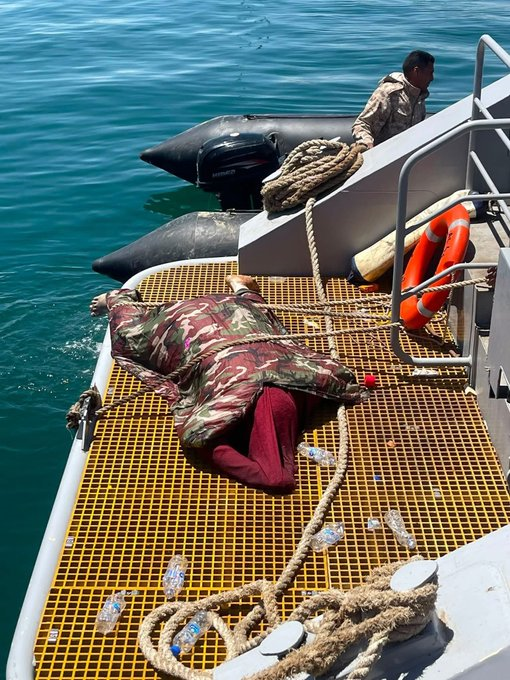
The Executive Director of Refugees in Libya, David Yambio, has mourned the death of a migrant whose body was recovered off the coast of Benghazi after reportedly being stranded at sea for 14 days, describing the incident as a stark reminder of the dangers faced by people fleeing conflict and persecution.
In a post on X, Yambio reflected on his own experience in Libya, saying that while detained in the North African country, he had often hoped that, if he were to die, it would be at sea rather than at the hands of violent militias.
According to him, the sea represented the only place where many migrants retained a sense of dignity, as they risked everything in pursuit of safety and international protection.
Yambio questioned what he described as a deeper humanitarian tragedy, arguing that many people seeking refuge would rather face the dangers of the Mediterranean than remain exposed to violence by armed groups in Libya.
He also criticised what he called Europe’s role in arming militias and accused African leaders of remaining silent in the face of abuses against migrants.
The activist said the photograph accompanying his post showed one of several people seeking protection who had been stranded at sea for two weeks. He noted that the man’s body, along with those of two others, was recovered off the coast of Benghazi a few days ago.
Ending his post on a poignant note, Yambio said the deceased asylum seeker had been portrayed as an “invader,” underscoring what he believes is the dehumanisation of migrants fleeing in search of safety.
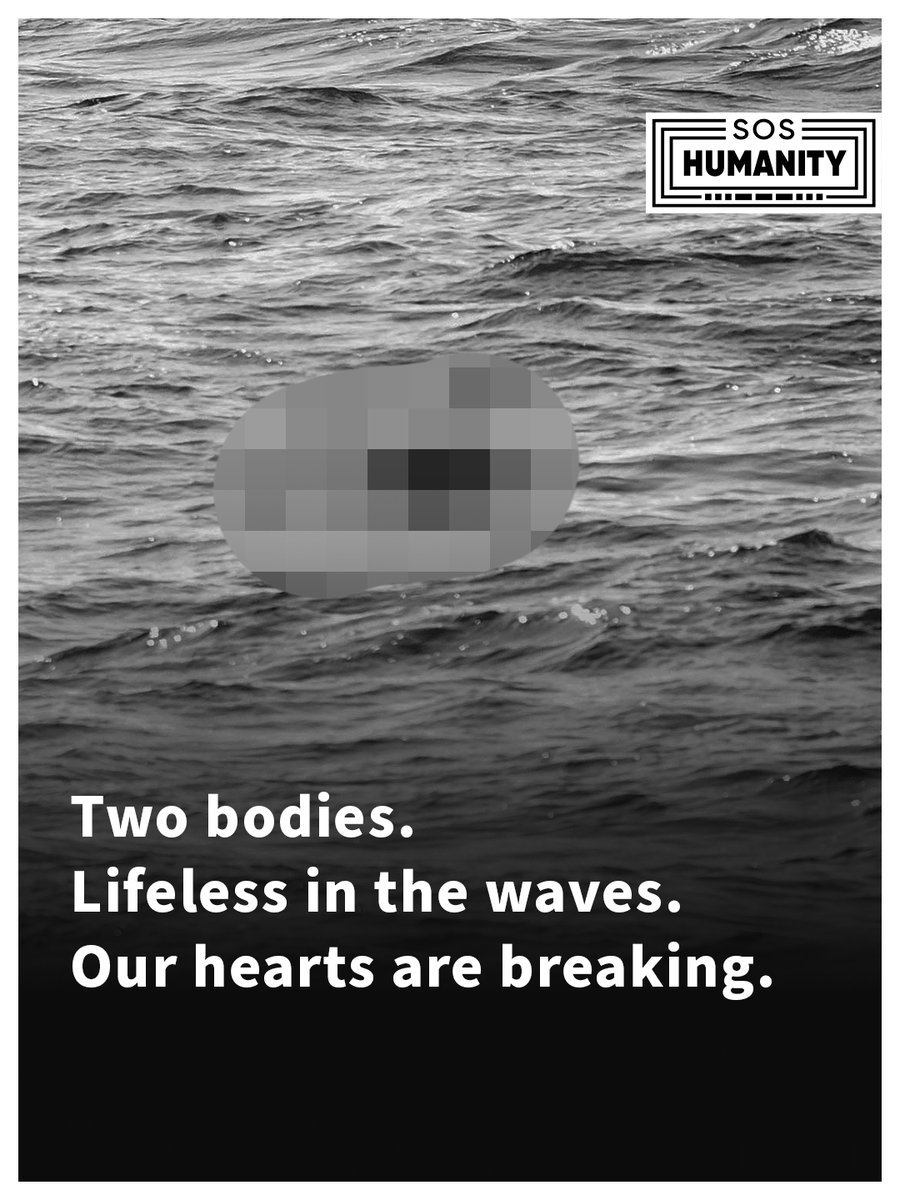
At least 50 migrants are feared dead or missing after a boat carrying about 60 people capsized off the eastern coast of Libya while attempting to cross the Mediterranean Sea to Europe, authorities have said.
The vessel overturned on Tuesday near Bardaa Island, off the coastal city of Tobruk, according to the Coast Guard in eastern Libya.
Officials said 10 passengers, including some women and children, survived by swimming to Bardaa Island. Search and rescue operations were still ongoing as authorities continued efforts to locate the remaining passengers.
The latest disaster is another in a series of deadly shipwrecks involving migrants departing from Libya, a major transit hub for people seeking to reach Europe in search of safety and better economic opportunities.
Just last month, another migrant boat sank off eastern Libya, leaving 51 people dead or missing.
Since the 2011 NATO-backed uprising that overthrew longtime ruler Moammar Gadhafi, Libya has remained politically unstable, making it a key departure point for migrants fleeing conflict, persecution and poverty across Africa and the Middle East.
Human traffickers frequently load migrants onto overcrowded and unseaworthy boats for the dangerous Mediterranean crossing, a route that has claimed thousands of lives over the years and remains one of the world’s deadliest migration corridors.
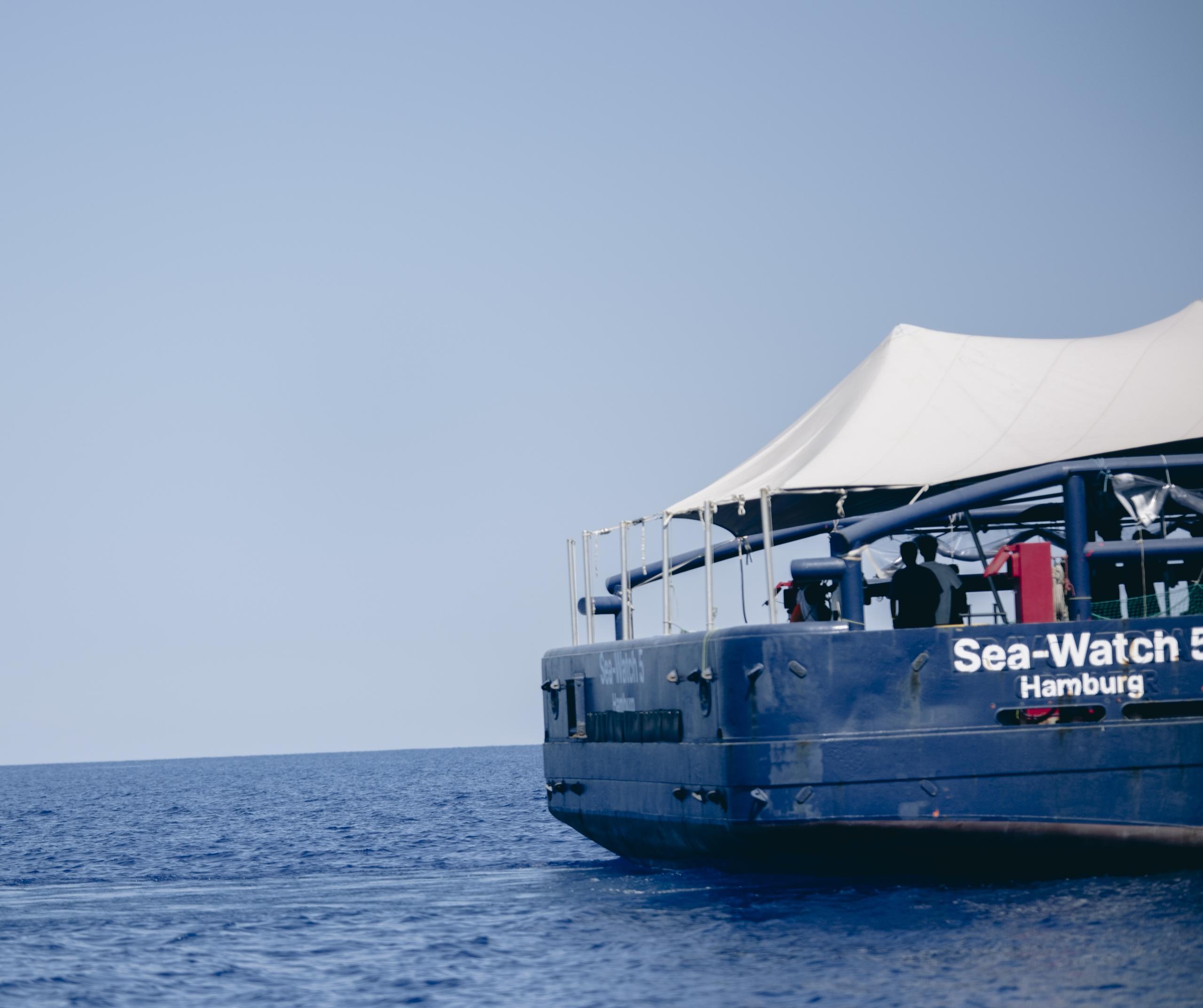
Sea-Watch International has announced that its rescue vessel, Sea-Watch 5, has returned to operations in the central Mediterranean after what it described as an attack by Libyan militias in May, saying it has already rescued 52 people in two separate operations.
In a post published on its verified X account, @seawatch_intl, the humanitarian organisation said 40 people were rescued on the first day of operations, followed by another 12 the next day. It added that one of the survivors, a pregnant woman, requires urgent medical care.
Sea-Watch also claimed that an average of eight people die every day while attempting to cross the Mediterranean Sea, renewing its criticism of European migration policies and rescue coordination.
The organisation accused the Italian government of assigning its rescue vessel to the northern port of Marina di Carrara, which it said is more than four days away from the rescue zone. According to Sea-Watch, the practice keeps humanitarian rescue ships away from areas where migrants are most at risk.
“To ensure that as few rescue ships as possible are in the rescue area, Italy sends us to the northern port Marina di Carrara, 4+ days away,” the group wrote, describing the decision as “cruel and irresponsible.”
Sea-Watch argued that the lengthy journey delays the disembarkation of rescued migrants and reduces the number of rescue vessels available to respond to emergencies at sea.
The organisation also directly criticised Italian Prime Minister Giorgia Meloni over the country’s migration policies, questioning the government’s approach to search-and-rescue operations in the Mediterranean.
Italian authorities have previously defended the assignment of distant ports to humanitarian vessels, saying the measure is part of efforts to manage migrant arrivals and coordinate disembarkation procedures.

ICC confirmation of 17 charges against El-Hishri draws praise from rights groups

Expert raises questions over UNHCR’s strategic direction after new leadership appointments

UN appoints new senior leadership for UNHCR

Migrant advocate laments death of asylum seeker, condemns Libya abuses

50 die as boat carrying about 60 people capsizes
-

 News3 weeks ago
Favour Henshaw appointed administrator of Platform for Cooperation on Mixed Migration
-
 News3 weeks ago
Lampedusa: built to accommodate 400 people, now holds thousands of migrants
-

 News2 weeks ago
IYAMIDR commends Okpebholo for ₦1m support to South Africa returnees
-
 News Extra3 weeks ago
Pope urges European leaders to make greater investment in developing migrants’ countries of origin
-
Features3 weeks ago
Lampedusa: Pope’s visit powerful reaffirmation migrants, refugees must remain at centre of global efforts
-
 News3 weeks ago
World silent as drone strikes, extreme hunger ravage El Obeid families
-

 Features3 weeks ago
IOM, UNDP, UNHCR, welcome growing investment in long-term solutions to internal displacement
-
 News Extra3 weeks ago
June 2025-26: Arrivals in Italy by sea decreases by 30 percent